
Academia Aesthetics 101: Classic, Dark, Light & More
Table of Contents
A well-worn paperback tucked into a leather satchel. A tweed blazer over a soft knit. Loafers clicking across a campus quad. “Academia” fashion begins with these familiar images, but it is not one uniform look.
Academia is an umbrella term for internet-born aesthetics that romanticize learning, research, and the places associated with them. Its different branches share a broad wardrobe vocabulary including tailored separates and vintage-inspired layers amongst other things. They also share an affection for old books, archives, galleries, and lecture halls. What varies between subaesthetics is the atmosphere.
Dark academia imagines candlelit libraries, Gothic novels, and rain-darkened stone buildings. Light academia moves into sunlit reading rooms, poetry, and gardens. Classic academia (not to be confused with Preppy) leans closest to collegiate tradition, with blazers, Oxford shirts, and polished loafers. From there, the category expands outward: art academia with its studio mess and museum-going; green academia’s botany, ecology, and field notes; theatre academia in drama and costume history; while ocean academia brings in marine research and coastal imagery.
That flexibility is part of why academia remains so appealing. It offers readers and dressers ways to turn personal interests into a visual language. You do not have to attend an elite university, own a first edition, or dress like a character in a period drama to participate.
While much of academia’s most recognizable imagery draws on idealized versions of old European and American institutions, the most interesting academia styles do not require a narrow elite lineage.
This guide maps the major academia aesthetics, from the foundational dark, light, and classic styles to creative, field-study, and internet-born micro-aesthetics. Think of it less as a rulebook than a starting point: a way to identify the mood, materials, and cultural references you love, then make them your own.
The foundational spectrum
If academia aesthetics are a family of looks, dark, light, and classic academia are the foundation. All three borrow from the same basics of tailoring, knitwear, plaid, leather shoes and vintage layers. The difference is in the emotional atmosphere. Dark academia is shadowy and dramatic; light academia is gentle and sunlit; classic academia is polished, traditional, and closest to recognizable collegiate style.
These labels aren’t strict dress codes. A navy blazer can belong to any of the three. What changes is how you style it: with dark wool trousers and a turtleneck for dark academia, cream knitwear and lighter fabrics for light academia, or an Oxford shirt and loafers for classic academia.
The 10-Piece Capsule
Oxford button-down shirt — the single most load-bearing piece. Crisp white or ivory reads Light/Romantic; a warm cream or slightly oversized fit reads Dark; unbuttoned over a black turtleneck reads Gothic.
Structured wool blazer — herringbone or tweed for Dark, unstructured linen for Light, fitted black wool for Gothic, dusty rose or soft camel for Romantic.
Pleated midi skirt — plaid wool for Dark/Gothic, linen or cotton solid for Light, floral or soft plaid for Romantic.
Fine-knit turtleneck — the layering workhorse. Forest green, burgundy, or black for Dark/Gothic; cream or oatmeal for Light; dusty pink or lavender for Romantic.
Wide-leg tailored trousers — charcoal or brown for Dark, cream or tan for Light, black for Gothic. This is also your Ballet Academia crossover piece if you pair it with a leotard-style top and cardigan.
Chunky cable-knit cardigan — the "cozy library" piece. Works oversized and neutral for almost every dialect; color does the differentiating (moss/brown for Dark, cream for Light, black for Gothic, blush for Romantic).
Knee-high socks or opaque tights — cheap to swap, huge mood impact. This is honestly your best low-cost dialect-switcher in the whole capsule.
Penny loafers or oxford flats — the one piece that barely changes across dialects at all, which is exactly why it belongs here — it's the connective tissue.
Wool coat or trench — camel/brown for Dark, cream for Light, black wool or a longer Victorian-cut coat for Gothic.
Structured leather satchel or messenger bag — cognac or brown leather for Dark/Light, black for Gothic, a woven or embroidered version for Romantic.
Classic academia
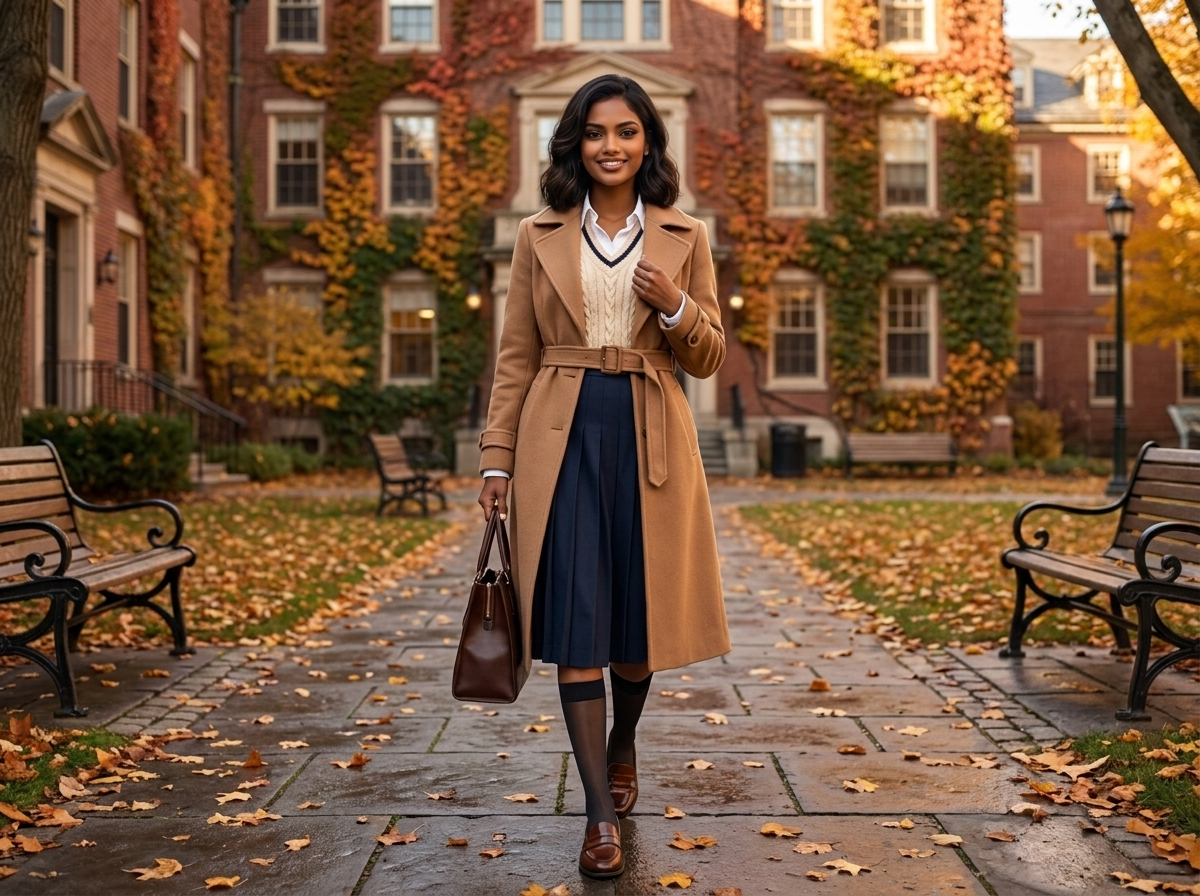
Classic academia is the most straightforward interpretation of the genre. It takes its cues from traditional collegiate clothing—blazers, rugby shirts, Oxford button-downs, sweater vests, loafers, tartan, school colors, and trench coats—without dark academia’s Gothic intensity or light academia’s dreamy softness.
Think of classic academia as the branch most likely to work for someone who wants a genuine everyday wardrobe rather than a moodboard. Its clothes can look at home on a campus, at a library, in a casual office, at a bookstore, or on a weekend walk. It values tidy proportions, quality-looking basics, and repetition: the same well-loved blazer, the same leather shoes, the same striped shirt, worn in different combinations.
Classic academia’s core mood:
Traditional, organized, polished, and collegiate
More preppy and uniform-adjacent than dark or light academia
Practical enough for everyday dressing
Less about a specific emotion than about an enduring heritage wardrobe
Classic academia palette:
Navy, burgundy, forest green, and charcoal
Camel, tan, cream, and crisp white
Gray, black, and brown as grounding neutrals
Tartan, stripes, checks, and school-color combinations
Classic academia wardrobe staples:
Navy, brown, gray, or plaid blazers
Oxford shirts and striped button-downs
Rugby shirts, polo knits, and Breton stripes
Sweater vests, crewneck knits, and V-neck cardigans
Pleated skirts, chinos, tailored trousers, and straight-leg jeans
Trench coats, pea coats, barn jackets, and wool overcoats
Penny loafers, brogues, boat shoes, or ankle boots
Leather belts, structured totes, modest watches, and simple scarves
An easy classic academia outfit: Wear a navy blazer over a white or pale-blue Oxford shirt, add straight-leg khaki or charcoal trousers, then finish with penny loafers and a brown leather belt. A striped knit, school-color scarf, or sweater vest can shift the look more visibly toward the aesthetic without making it feel like a uniform.
[Looking for the crested-blazer, country-club version instead? That's Preppy, not Academia]
Dark academia
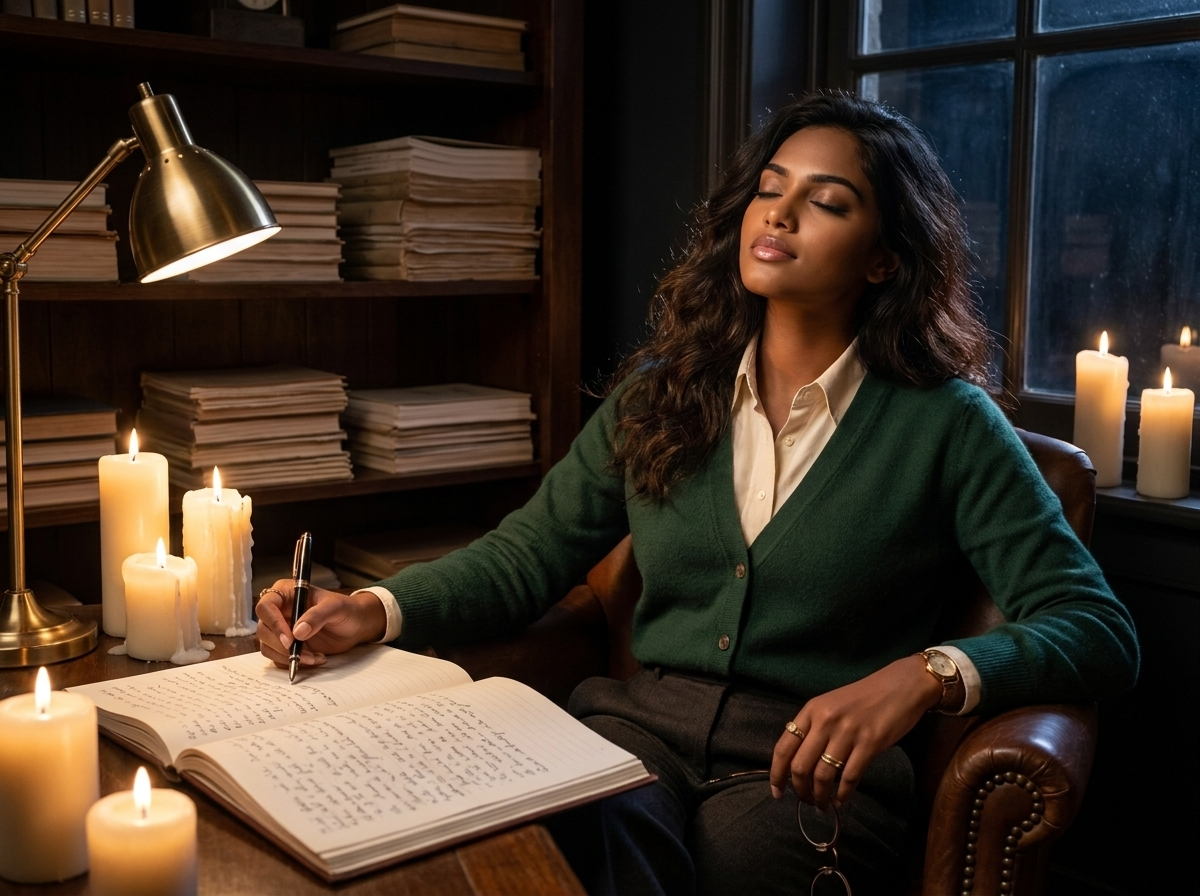
Dark academia is the best-known branch of the broader academia aesthetic. It romanticizes the serious, mysterious side of intellectual life: Gothic novels, rainy afternoons, and old libraries.
The fashion side blends elements associated with interwar, mid-century, Oxbridge, Ivy, and prep-school clothing, filtered through contemporary thrift culture and internet mood boarding.
Dark academia’s core mood:
Brooding, introspective, literary, and slightly theatrical
Autumnal and wintery rather than summery
Intellectualism presented as intense, private, and sometimes a little dangerous
More Gothic and melancholic than simply “school uniform” style
Dark academia palette:
Espresso, chocolate, tobacco, and dark brown
Charcoal, black, and deep gray
Oxblood, burgundy, and muted wine red
Forest green, deep navy, and antique cream
Dark academia wardrobe staples:
Tweed or wool blazers
Turtlenecks and fine-gauge sweaters
Cardigans and sweater vests
Pleated trousers, high-waisted trousers, and plaid skirts
Long wool coats, trench coats, and structured outerwear
Oxford shoes, brogues, loafers, or dark leather boots
Leather satchels, vintage watches, scarves, and round or wire-frame glasses
An easy dark academia outfit: Pair charcoal pleated trousers with a cream or brown turtleneck, a thrifted tweed blazer, dark leather loafers, and a structured brown bag. Add one personal detail—a vintage ring, a narrow scarf, or a worn paperback—rather than piling on every scholarly prop at once.
[For a further breakdown on Dark Academia as an aesthetic, check out What is Dark Academia?]
[Looking for a similar literary aesthetic? Check out Poetcore.]
Light academia

Light academia shares dark academia’s devotion to literature, art, vintage-inspired clothing, and the pleasures of learning. But where dark academia imagines a storm outside the library windows, light academia opens them. It is the warm, calm, and optimistic side of the family: poetry in a garden, art books in a café, a bright reading room, a museum afternoon, or a soft cardigan thrown over a collared shirt.
Fashion coverage often frames light academia as dark academia’s brighter counterpart. Both styles use tailored trousers, blazers, cardigans, Oxford-style shirts, and bookish accessories, but light academia favors lighter colors, softer or more lightweight fabrics, and a less doom-tinged mood.
Light academia’s core mood:
Gentle, hopeful, romantic, and studious
Airy, daytime-oriented, and often spring or early-autumn coded
Focused on curiosity, friendship, quiet rituals, and the joy of learning
Softer and less severe than dark academia
Light academia palette:
Cream, ivory, oat, beige, and warm white
Camel, tan, khaki, and soft brown
Pale gray and muted warm neutrals
Dusty blue, light sage, soft yellow, blush, and faded lavender as accent colors
Light academia wardrobe staples:
Cream cardigans and fine knit sweaters
Soft blazers and lightly structured jackets
Oxford shirts, Peter Pan collars, delicate blouses, and subtle stripes
Pleated skirts, A-line skirts, light tailored trousers, and wide-leg linen trousers
Cable-knit vests and lightweight sweater vests
Loafers, Mary Janes, ballet flats, or understated sneakers
Canvas totes, lighter leather bags, silk scarves, dainty jewelry, and warm-toned glasses
Because light academia relies on softness, fabric is important. Linen, cotton, fine wool, light knits, soft corduroy, and airy woven shirts. A pale palette alone does not make an outfit light academia; the scholarly references are what keep it connected to the wider category.
Light academia overlaps with cottagecore, coquette, romantic academia, and librarian chic. Cottagecore is more pastoral and domestic; coquette emphasizes girlish, flirtatious styling; romantic academia leans more overtly toward historical romance, lace, letters, and ornate detail. Light academia can borrow from all of those styles, but it remains rooted in the visual language of study, books, and museums.
An easy light academia outfit: Start with high-waisted camel trousers or a tan plaid skirt. Add a white button-down or cream knit, then finish with a light cardigan, brown loafers or Mary Janes, and a canvas or tan leather tote. If you want more color, use a dusty-blue scarf or sage-green socks rather than replacing the neutral base.
The Creative Disciplines
After dark, light, and classic academia establish the basic wardrobe, the category becomes more personal. Creative-discipline academias apply the same love of learning, vintage references, and layered dressing to a cultural world: the studio, the stage, the conservatory, or the poetry collection.
These labels are less rigid than dark or light academia. You don’t to dress like a nineteenth-century painter to try art academia, for example; a paint-smudged canvas tote, a textured knit, and a few museum-inspired colors may be enough. Online aesthetic communities have proliferated these subgenres around shared interests in literature, art, music, and performance, rather than around a single fixed historical fashion tradition.
Art academia
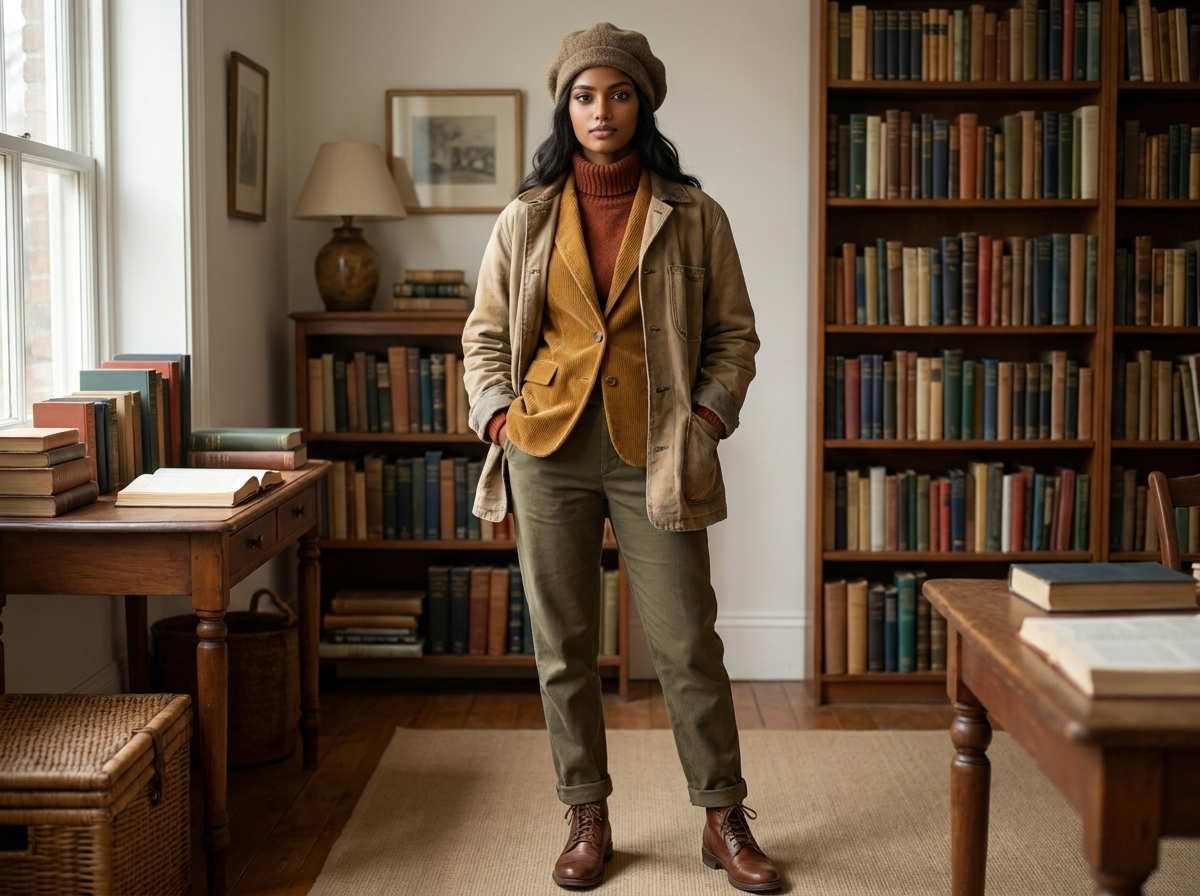
Art academia imagines the academic world as a studio practice. It is for the person who would rather spend an afternoon sketching in a museum, paging through an exhibition catalogue, browsing a university art library, or carrying a portfolio across campus than sitting in a formal lecture hall.
Compared with classic academia, art academia is usually more relaxed, colorful, and slightly undone. It retains the intellectual references—books, museums, old buildings, art history, research—but makes room for paint, texture, handmade details, and clothes that look as though they could survive a real day of making things.
The Cultural Context:
Art history as concentration
Actual studio practice maintained
MoMA, Tate, and Uffizi as pilgrimage sites
Museum membership current
Frida Kahlo, Georgia O'Keeffe, and Louise Bourgeois as references
Reads: "I have a critique tomorrow and I am nervous"
Who This Suits Now:
The person who studies or practices visual art and dresses accordingly.
Art Academia’s Core Mood
Curious, tactile, expressive, and observant
More studio-like than collegiate
Creative and slightly eccentric rather than perfectly polished
Grounded in museum-going, art history, sketchbooks, exhibitions, and material experimentation
Color Palette
Rust, terracotta, ochre, mustard, brick red, and burnt orange
Olive, moss, faded denim, dusty blue, and muted teal
Black, cream, brown, and charcoal as practical grounding colors
Occasional saturated accents that resemble a favorite paint pigment or artwork
Art Academia Wardrobe Staples:
Oversized button-downs, artist shirts, and loose linen tops
Roomy trousers, carpenter pants, corduroys, and wide-leg jeans
Cardigans, textured pullovers, and sweater vests
Chore coats, work jackets, vintage blazers, and utility overshirts
Canvas totes, crossbody bags, and bags large enough for notebooks or supplies
Loafers, clogs, practical boots, canvas sneakers, or Mary Janes
Scarves, berets, enamel pins, handmade jewelry, and visually interesting glasses
Texture is especially useful here: corduroy, linen, worn denim, cotton canvas, soft knits, leather, and wool make the outfit feel collected rather than corporate. A structured blazer belongs in art academia, but it may look better with looser trousers, a graphic art-book tote, or a colorful scarf than a formal outfit.
Art academia overlaps with art-school style, indie fashion, creative workwear, and some versions of French-girl dressing. Its academic element comes from love of museums, visual research, and art history—not just wearing a beret.
An easy art-academia outfit: Start with a faded-blue Oxford shirt or loose striped tee, add rust corduroy trousers and a moss-green chore coat, then finish with brown clogs or worn-in leather loafers. Carry a canvas tote with a sketchbook, notebook, or museum catalogue. The goal is not “paint-splattered costume”; it is the appearance of someone who actually makes, studies, or looks closely at art.
Theatre academia
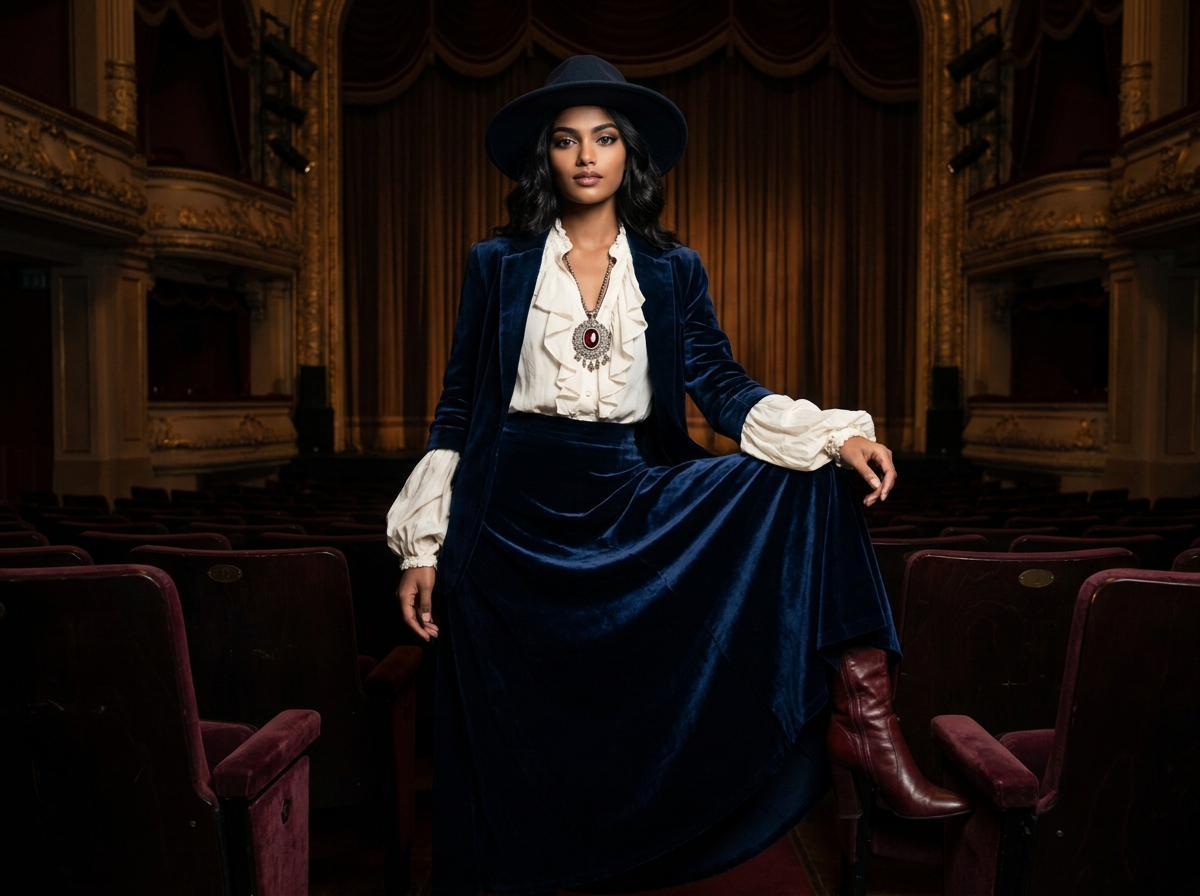
Theatre academia is adjacent to Gothic fashion, balletcore, Old Hollywood, and romantic academia. its focus on the study and practice of theatre. You should look like a theatre student or devoted thespian, not like you’re going to a costume party.
Theatre academia borrows from dark academia’s richness, romantic academia’s softness, and classic academia’s tailoring. But theatre academia is a little more expressive. This is the branch where velvet, a puffed sleeve, or a vintage-looking brooch can feel entirely at home.
The label is often described in online aesthetic communities as an academia style focused on studying dramaturgy and theatre; it may include Old Hollywood references, though that is a optional rather than a requirement.
The mood:
Dramatic, literary, historic, expressive, and slightly backstage
Interested in Shakespeare, Greek tragedy, playwriting, costume history, and performance
More ornate than classic academia, but not necessarily impractical
Often moody, but able to be playful, flamboyant, or romantic
The palette:
Black, charcoal, ink navy, and dark brown
Burgundy, wine, oxblood, plum, and deep red
Antique cream, faded gold, tobacco, and muted jewel tones
Occasional theatrical accents: emerald, sapphire, aubergine, or rich teal
Key wardrobe pieces:
Tweed blazers, waistcoats, and long coats
Velvet jackets, velvet hair ribbons, or a single velvet accessory
Dramatic blouses, soft collars, ruffles, puff sleeves, or lace details
Pleated trousers, wide-leg trousers, midi skirts, and vintage-cut dresses
Thick tights, patterned socks, or subtly textured hosiery
Loafers, lace-up boots, Mary Janes, heeled ankle boots, or low formal shoes
Scarves, antique-looking jewelry, brooches, rings, theatre-ticket or playbill-style accessories
An easy theatre-academia outfit: Wear black or dark-brown trousers with a cream blouse or soft collared shirt, add a burgundy cardigan or waistcoat, and top it with a long charcoal coat. Choose loafers or lace-up boots and one theatrical element like a velvet ribbon, a vintage brooch, or a patterned scarf, instead of adding too much at once.
Music academia
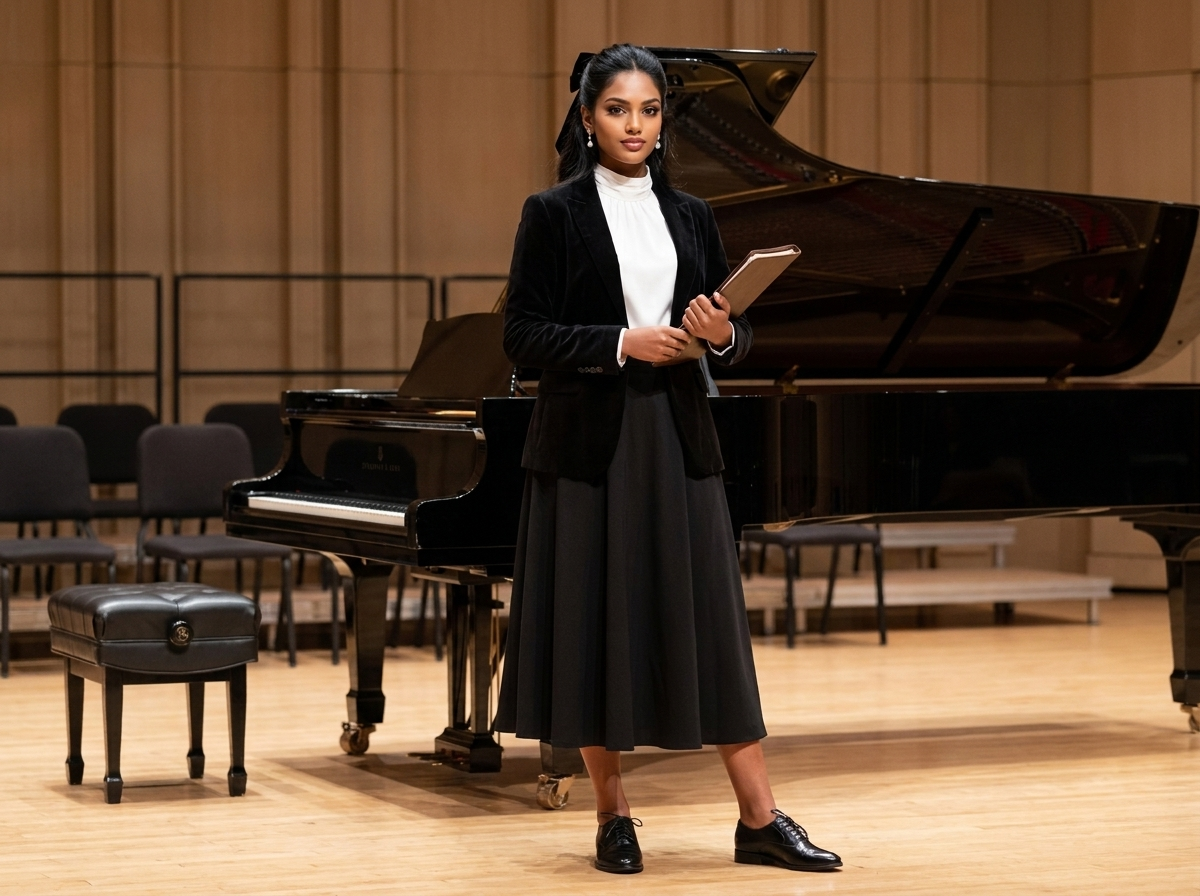
Music academia is inflected by conservatory training. It's the aesthetic of the violinist who is also finishing a musicology PhD, of the choral scholar, of the composer with tenure. The wardrobe combines Academia's structural grammar with performance-appropriate formality..
It overlaps with beatnik style, classic academia, theatre academia, French-inspired minimalism, and vintage formalwear. The key difference is that it should suggest a relationship to music.
This is one of the most adaptable branches because it can run from minimalist concertwear to vintage jazz-club dressing.
The Culture:
Actual conservatory training assumed
Bach, Brahms, and Schubert as core reference
Performance schedule maintained
Music history studied academically
Reads: "I have a recital next Thursday"
The mood
Introspective, refined, disciplined, and creative
Less conventionally “academic” than classic academia, but more formal than art academia
Built around practice, performance, listening, collecting, and study
Capable of being minimalist, vintage, romantic, or jazz-inflected
The palette:
Black, charcoal, navy, espresso, cream, and soft gray
Burgundy, oxblood, muted plum, deep green, and muted blue as accents
Metallic details in antique gold or silver
In some jazz- or retro-inspired versions: tobacco, cognac, warm brown, and richer jewel tones
Key wardrobe pieces:
Fine-gauge turtlenecks, crewneck knits, and soft button-downs
Black or charcoal trousers, pleated skirts, and simple midi dresses
Wool blazers, long coats, cardigans, and tailored vests
Understated loafers, ankle boots, Mary Janes, ballet flats, or polished low heels
Structured shoulder bags, briefcase-like totes, or practical crossbody bags
Small jewelry, watches, scarves, and music-themed details used sparingly
An easy music-academia outfit: Combine black wide-leg trousers with a soft ivory knit and a long charcoal coat. Add burgundy loafers or ankle boots, a structured shoulder bag, and a slim scarf. For a more jazz-inspired version, swap the ivory knit for a striped button-down, add a brown blazer, and choose warm leather accessories.
Romantic academia
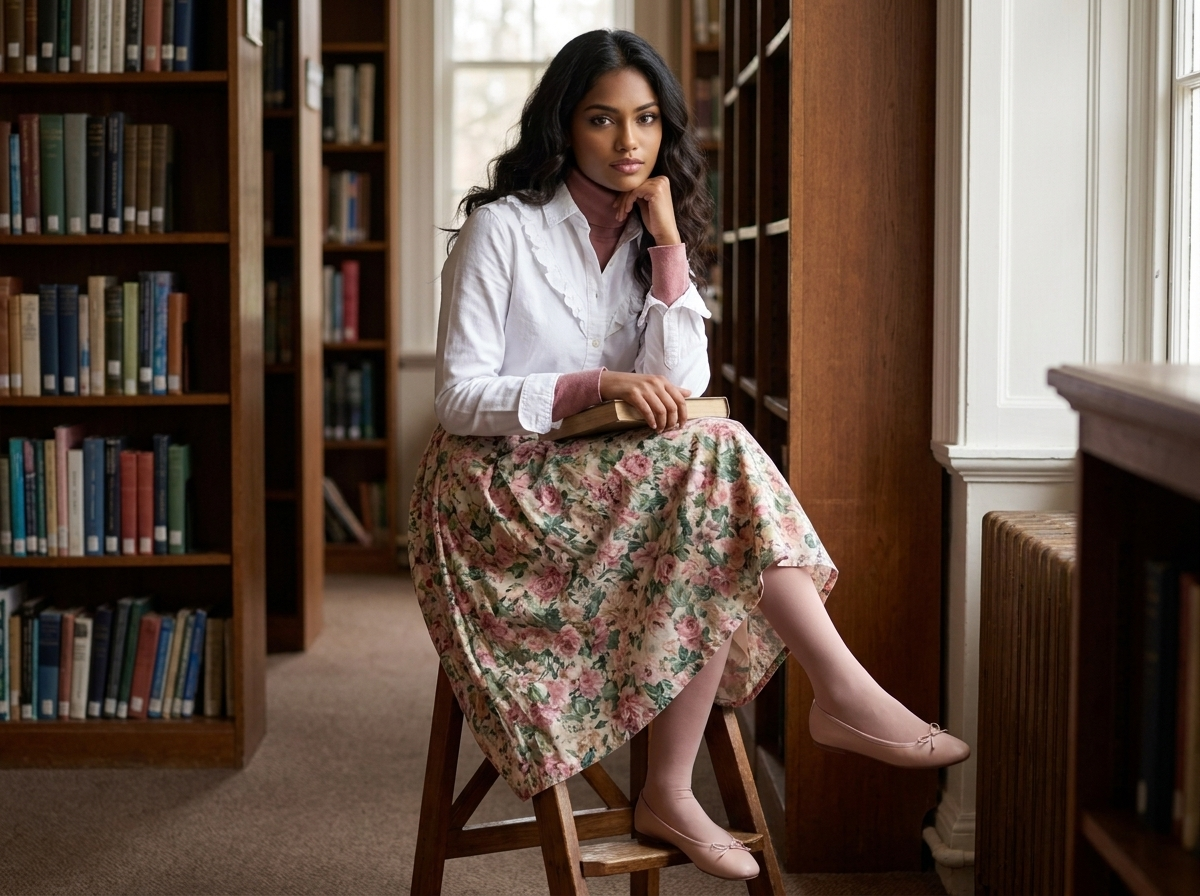
Romantic academia draws on poetry, Romantic-era art and literature, historical romance, letters, pressed flowers, diary pages, old gardens, ruins, philosophical daydreaming, and the emotional intensity of a novel read at the wrong hour of the night.
It is closely related to light academia, but not interchangeable with it. Light academia has a broad, optimistic interest in study. Romantic academia narrows the focus toward love, longing, artistic feeling, nature, individualism, and the dramatic emotional register associated with Romantic literature and art. Community guides make that distinction explicitly, identifying love and romantic literature as central to romantic academia rather than secondary decorative motifs.
The mood:
Tender, wistful, literary, and emotionally expressive
Rooted in poetry, letters, novels, gardens, and Romantic-era cultural references
Softer than dark academia, but often more intense and ornate than light academia
Feminine, masculine, or androgynous depending on silhouette; it should not be treated as inherently one gendered look
The palette:
Cream, ivory, soft brown, and warm beige
Blush, faded rose, dusty mauve, and muted red
Dusty blue, pale lavender, sage, and soft green
Burgundy, antique gold, or dark brown for a more autumnal version
Key wardrobe pieces:
Fine cardigans, turtlenecks, collared shirts, and draped blouses
Lace, ruffles, subtle bows, soft collars, and delicate trims
Satin or flowing midi skirts, pleated skirts, wide-leg trousers, and high-waisted jeans
Soft dresses, floral prints, antique-inspired silhouettes, or one period-influenced piece
Blazers, trench coats, long coats, and sweater vests to retain the academic element
Ballet flats, loafers, Mary Janes, lace-up boots, or low heels
Pearl-like jewelry, lockets, ribbons, brooches, silk scarves, and vintage bags
Romantic academia overlaps with coquette, cottagecore, Regency-inspired dressing, and vintage romance. Its distinction lies in the scholarly and literary frame: poetry rather than simply bows; museums and old novels rather than only pastoral domesticity; soft tailoring, library references, and historical art alongside the florals and lace.
An easy romantic-academia outfit: Wear a cream cardigan over a blouse with a delicate collar, then add a brown or burgundy midi skirt, opaque tights, and Mary Janes. Carry a structured vintage-style bag and choose a small locket or scarf. For a less overtly feminine take, try a soft white shirt under a camel cardigan with wide-leg brown trousers, loafers, and a silk neck scarf.
Research and Field Studies
Where Scholarly and Creative both live indoors (the library, the studio, the concert hall), this cluster lives outdoors and in the working environments of knowledge-making: the field station, the greenhouse, the specimen bench, the expedition tent. The shared silhouette loosens further than even Art did — it has to accommodate weather, movement, dirt, and long days on foot.
Science Academia

Science Academia is the functional anchor of the Research & Field Study wing.
Unlike dark academia, which often imagines knowledge as secretive or emotionally fraught, science academia frames learning as curiosity in action. It is about asking questions, recording evidence, and spending time with the physical world—whether that means a telescope, a specimen drawer, an old chemistry text, or a notebook full of diagrams.
The signature tension is scholarly polish meets laboratory function: crisp shirts and fine knits kept simple, the palette pulled toward clinical whites, cool greys, and steel blues, with fabrics chosen to be sturdy and low-maintenance rather than luxurious. It stays firmly academic through its seriousness, but every choice answers to use first. This is the least ornamented academia dialect so far, and for good reason.
The Cultural Context:
Marie Curie as patron saint
Rosalind Franklin as tragic hero
Actual scientific research being conducted
Cosmos (both versions) as sacred text
Field notebooks as artifact
Reads: "I am running an experiment and it is going poorly"
The mood:
Curious, methodical, observant, and practical
Intellectual without needing to look overly formal
Vintage-scientific rather than futuristic or high-tech
Rooted in research, field notes, collections, and the history of scientific discovery
The palette:
White, cream, warm gray, and charcoal
Navy, ink blue, muted green, and olive
Brown, tobacco, rust, and faded khaki
Small accents in burgundy, mustard, or brass-like gold
Key wardrobe pieces:
Oxford shirts, striped cotton shirts, and fine-gauge turtlenecks
Sweater vests, cardigans, utility vests, and simple crewneck knits
Straight-leg trousers, corduroys, chinos, and workwear-inspired pants
Chore jackets, field jackets, lab-coat-inspired overshirts, and practical blazers
Leather boots, loafers, canvas sneakers, or sturdy lace-up shoes
Crossbody satchels, canvas totes, watches, practical glasses, and small scientific or celestial jewelry
A useful rule is to avoid turning “science” into a costume. A literal lab coat, goggles, or novelty molecular-print outfit may work for a themed event, but it usually reads less like everyday fashion. The more wearable interpretation is a field jacket over a striped shirt, a corduroy trouser, sturdy shoes, and a bag that could actually hold a notebook or laptop.
Science academia overlaps with classic academia, green academia, workwear, museum-core, and some versions of vintage outdoors dressing. The visual emphasis is on research and investigation rather than campus tradition, romantic literature, or status.
An easy science-academia outfit: Wear olive straight-leg trousers with a cream Oxford shirt and navy cardigan. Add a brown field jacket, dark leather lace-up boots, and a canvas crossbody bag. A watch, thin metal-frame glasses, or subtle star-chart jewelry can add personality without making the outfit literal.
Green academia

Green academia is one of the most developed research-oriented branches. It combines the bookish, vintage, and academic qualities with life sciences like botany, geology, or zoology, and even gardening and the natural world.
Its central image is someone carrying a field journal, visiting a greenhouse, or spending a wet afternoon in a natural-history museum. It often shares some motifs with goblincore—mushrooms, feathers, rocks, insects, moss, found objects—but green academia is more interested in learning, environmental science, and observation.
Green Academia is less about florals as pretty decoration and more about the study of plants. One way to think of the difference, floral decoration uses flowers as surface embellishment, while a botanical approach begins with close observation of real specimens and their recognizable forms.
The mood:
Earthy, contemplative, practical, and quietly curious
Grounded in plants, animals, weather, ecosystems, and field research
More outdoorsy than classic academia, but more scholarly than cottagecore or goblincore
Calm rather than austere; nature is a subject of study, not merely decoration
The palette:
Moss, olive, sage, forest green, and deep evergreen
Bark brown, espresso, tobacco, and rust
Cream, oatmeal, beige, and warm gray
Mustard, burgundy, and muted navy as supporting colors
Key wardrobe pieces:
Oversized cardigans, knit vests, crewnecks, and turtlenecks
Neutral Oxford shirts, floral blouses, soft striped shirts, and practical base layers
Corduroy trousers, dark jeans, cargo-inspired trousers, overalls, and long skirts
Field jackets, corduroy blazers, aviator-style jackets, peacoats, and rain-ready outerwear
Hiking boots, lace-up boots, brogues, loafers, or weatherproof clogs
Satchels, crossbody bags, scarves, botanical pins, silver or gold jewelry, and glasses
Green academia is best when you have layers that can handle a damp path, a bag that holds a notebook, colors borrowed from bark and leaves, and one small botanical reference. Botany field-study style turns the aesthetic from the library shelf to the greenhouse, garden, and field notebook.
Ocean academia

Science was the dry indoor bench. Green is the damp forest floor and greenhouse. Ocean is salt, wind, and changeable light. Picture the marine biologist, the oceanographer, or the coastal ecologist.
It is a smaller and less standardized branch than dark, light, or green academia, so it is best presented as an evolving community label rather than a fixed style category. Community descriptions characterize it as an academia-adjacent look with a blue, black, and gray palette; ocean motifs; and a more casual approach invoking laboratory and field work.
Ocean academia overlaps with nautical style, fisherman-core, coastal grandmother, and dark academia. Its difference is the scholarly coastal lens.
The Cultural Context:
Jacques Cousteau as founding figure
Moby Dick as literary reference
Rachel Carson as scientific inspiration
Actual marine biology or oceanography studied
New England coastal towns as backdrop
Reads: "I am tracking a whale population"
The mood:
Windswept, reflective, practical, and coastal
Scientific and maritime rather than resort-like
Influenced by marine research, navigation, natural history, weather, and sea literature
Often quieter and moodier than stereotypical “nautical” fashion
The palette:
Navy, ink blue, slate, storm gray, and charcoal
Cream, sand, oyster, and weathered white
Sea glass green, faded teal, and muted aqua
Brown leather, rust, and brass as grounding accents
Key wardrobe pieces:
Fisherman knits, ribbed sweaters, cardigans, and navy turtlenecks
Breton stripes, cotton button-downs, and chambray shirts
Navy trousers, washed denim, gray trousers, and practical skirts
Raincoats, waxed jackets, peacoats, field jackets, and wind-resistant outerwear
Canvas sneakers, leather boots, loafers, deck-shoe-inspired footwear, or practical waterproof boots
Canvas totes, crossbody bags, map-print or sea-glass-inspired jewelry, and silk scarves
An easy ocean-academia outfit: Pair navy trousers with a cream fisherman sweater, then add a faded-blue rain jacket or gray peacoat. Finish with brown leather boots, a canvas shoulder bag, and one restrained coastal reference, such as a sea-glass pendant or a blue silk scarf.
Ocean academia is strongest when it’s not performative. You just need layers for changing weather, shoes that can handle a wet path, and colors borrowed from deep water, fog, driftwood, and storm clouds. Marine-biology-inspired dressing gives the aesthetic its practical core, turning sea imagery into a wardrobe for observation, research, and real coastal life.
History and archaeology academia

History and archaeology academia are closely related but can be treated together in an overview because both are built around archives, artifacts, museums, maps, manuscripts, old photographs, historic buildings, research travel, and the physical traces of the past.
Popular culture has long associated archaeology with imperial “explorer” fantasies, i.e. Indiana Jones, the image of a Western adventurer looking for treasures. A better modern version centers preservation, cultural stewardship, and archival work.
The mood:
Archival, curious, historic, worldly, and hands-on
More travel- and fieldwork-oriented than classic academia
Less ornate than theatre or romantic academia
Grounded in material history: objects, textiles, maps, excavation notes, catalogues, and collections
The palette:
Khaki, sand, beige, cream, and tobacco
Olive, rust, terracotta, and muted ochre
Dark brown, charcoal, and navy for contrast
Antique gold, oxblood, and faded indigo as accent colors
Key wardrobe pieces:
Linen or cotton button-downs, soft turtlenecks, and practical knits
Wide-leg trousers, chinos, corduroys, long skirts, and durable jeans
Chore jackets, safari-inspired overshirts used sparingly, field jackets, and heritage blazers
Trench coats, wool coats, and weatherproof outer layers
Leather belts, boots, brogues, loafers, scarves, and structured satchels
Map-inspired scarves, vintage watches, antique-looking jewelry, and museum-shop accessories
An easy history-and-archaeology-academia outfit: Wear an ivory cotton shirt with olive wide-leg trousers and a brown belt. Add a camel utility jacket or corduroy blazer, dark leather ankle boots, and a structured satchel. A vintage-inspired watch or patterned silk scarf can provide an archival detail without overwhelming the outfit.
The practical difference
The research-and-field-study cluster is where academia style becomes most useful in daily life. Instead of prioritizing a pristine, elite-campus image, these aesthetics allow for boots that can handle rain, bags that hold notebooks, and clothes that can be thrifted, layered, and worn repeatedly.
A simple formula for any of these styles is:
Start with one academic staple: a button-down, cardigan, sweater vest, tailored trouser, or blazer.
Add one practical layer: a field jacket, chore coat, peacoat, raincoat, or sturdy knit.
Ground it with useful footwear and a real bag: boots, loafers, canvas tote, satchel, or crossbody.
Finish with one subject-specific reference: botanical jewelry for green academia, a storm-blue scarf for ocean academia, a vintage watch for history academia, or understated celestial imagery for science academia.
Your goal is to translate field study values into a wardrobe that can work in real weather and real life.
Internet Micro-Aesthetics
The final cluster includes labels that are less stable than the previous ones we’ve covered. They are largely community-made, internet-native micro-aesthetics. They’re useful as shortcuts for a mood, discipline, or a personality type, but not fixed fashion traditions.
In online aesthetic culture, new labels can quickly emerge and overlap. Chaotic academia, for instance, is sometimes framed as a loose offshoot of dark academia rather than a wholly separate style.
Treat these terms as flexible invitations to experiment.
Chaotic academia

Chaotic academia is the rumpled, overloaded, late-for-seminar version. Where classic academia is pristine and dark academia is intellectual moody, chaotic academia makes room for the less photogenic realities of intellectual life: cold coffee, untidy notes, and missed deadlines personified.
It is not just “messy clothing.” At its best, it rejects the belief that learning is neat and tidy. Community descriptions emphasize its eclectic mix of vintage, preppy, and bohemian, along with mismatched colors, textures, and oversized proportions.
Other guides describe it as a more unruly version of academia: ripped jeans, paint-marked cardigans or blazers, loose laces, and a deliberately unprim appearance rather than an immaculate uniform.
Cultural Context:
The absent-minded professor archetype
A Beautiful Mind aesthetic sincerely embraced
Academic hoarding treated as identity
Marginalia in every book
Sticky notes on every surface
Actual research being conducted, not just aesthetic
Reads: "I have a theory and I cannot find my notes"
The mood:
Curious, overstimulated, creative, restless, and self-aware
Intellectual without perfectionism
Thrifted, layered, improvised, and slightly unruly
More “I have three books open and forgot lunch” than “I own a private library”
The palette:
Brown, black, charcoal, navy, burgundy, and dark green as an academic base
Mustard, rust, cobalt, faded red, or patterned accents
Plaid, stripes, checks, and occasionally clashing prints
Colors chosen for personality rather than strict coordination
Key wardrobe pieces:
Oversized cardigans, rumpled blazers, and worn-in knitwear
Wide-leg trousers, corduroys, thrifted jeans, patched or distressed denim
Graphic tees under old shirts, jumpers, or sweaters
Mismatched socks, loose scarves, patterned tights, and layered jewelry
Messenger bags, overfilled totes, canvas backpacks, and battered satchels
Loafers, lace-up boots, scuffed sneakers, or shoes with chunky soles
Pins, bookish patches, scribbled notebooks, and handmade accessories
An easy chaotic-academia outfit: Start with a striped shirt under an oversized brown cardigan, then add dark jeans or corduroys and scuffed loafers or boots. Carry a canvas tote with a notebook and a visible keychain or pin. Add one unexpected element instead of just mismatching everything.
Cryptid Academia

Cryptid academia is a niche, internet-native offshoot of academia aesthetics that combines bookish research culture with cryptidcore: folklore, local legends, alleged creatures, paranormal cases, and conspiracy lore. It is less about formal university life than dark or classic academia, and more about the romance of amateur inquiry like a flashlight in a canvas backpack, a folklore book from a used shop, or a late-night walk near a lake.
Cryptidcore is frequently grouped with adventurecore, goblincore, cabincore, and related outdoorsy internet aesthetics. Cryptid academia makes the clearest case for itself when it adds something those looks do not necessa have: the research.
The mood:
Mysterious, curious, folkloric, eccentric, and archive-minded
Gothic or earthy rather than glossy and glamorous
Research-oriented, even when the subject is speculative or supernatural
More whimsical than dark academia, though the two can overlap
The palette:
Black, ink navy, espresso, charcoal, and dark brown
Forest green, moss, plum, burgundy, rust, and deep teal
Antique cream, parchment, muted gold, and tarnished silver
Occasional animalistic or woodland accents: bark, bone, mushroom, stone, and feather tones
Key wardrobe pieces:
Oversized cardigans, dark knitwear, turtlenecks, and soft blouses
Long skirts, wide-leg trousers, corduroys, and vintage-cut dresses
Wool blazers, long coats, capes used sparingly, and textured outerwear
Lace-up boots, loafers, Mary Janes, or sturdy leather ankle boots
Antique-looking rings, lockets, botanical or celestial jewelry, charm necklaces, and unusual pins
Structured satchels, old-looking books, field-notebook-style bags, scarves, and brooches
An easy cryptid-academia outfit: Wear olive cargo-inspired trousers with a faded graphic tee, a moss cardigan, and a brown field jacket. Add sturdy boots, a canvas crossbody, and a small patch or enamel pin. The resulting look should suggest a folklore archivist or amateur naturalist, not a full creature costume.
Cottage academia
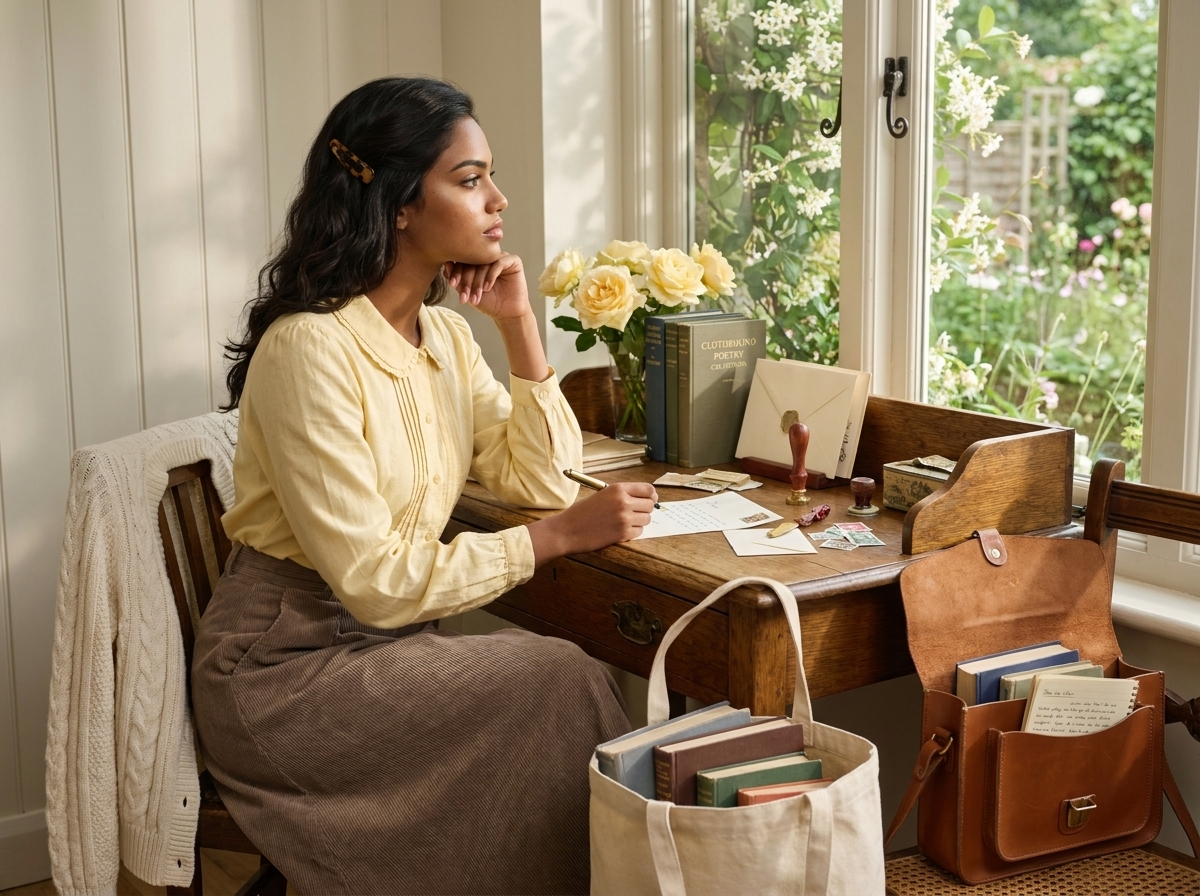
Cottage academia blends academia’s love of books and study with cottagecore’s gardens, natural fabrics, and handmade warmth. It is softer and more domestic than green academia: think reading beside an open window or keeping a garden journal, rather than dressing for a day of botanical fieldwork.
The Mood
Bookish, gentle, cozy, and quietly curious
Pastoral without needing to look like a period costume
Rooted in small rituals: reading, letter writing, gardening, sewing, and mending
Less formal than classic academia and less research-focused than green academia
The Palette
Cream, ivory, oatmeal, and warm white
Sage, moss, olive, and soft fern green
Mushroom brown, tan, rust, and terracotta
Faded blue, dusty rose, butter yellow, and muted lavender
Small florals, gingham, soft plaid, and botanical prints
Cultural context
Cottagecore romanticizes rural life, domestic crafts, and nature; the academia element adds reading, writing, and libraries.
It overlaps with light academia’s softness and green academia’s nature references, but its center of gravity is domestic and literary rather than collegiate or scientific.
Public libraries, community gardens, repaired clothes, and local landscapes offer ways to make the look personal.
Key wardrobe pieces
Collared cotton blouses, Oxford shirts, and softly gathered tops
Cardigans, cable-knit sweaters, and knit vests
Corduroy trousers, relaxed jeans, midi skirts, and understated floral dresses
Chore coats, quilted jackets, relaxed blazers, and practical raincoats
Loafers, Mary Janes, clogs, and lace-up boots
Canvas totes, book-sized satchels, botanical scarves, and handmade or vintage jewelry
Light academia imagines the sunlit library or campus garden. Green academia studies plants and ecosystems through field guides, botany, and ecology. Cottage academia is more domestic and literary: reading outdoors, keeping a garden journal, mending a sweater, or bringing a little handmade warmth into an ordinary study day.
Ballet academia
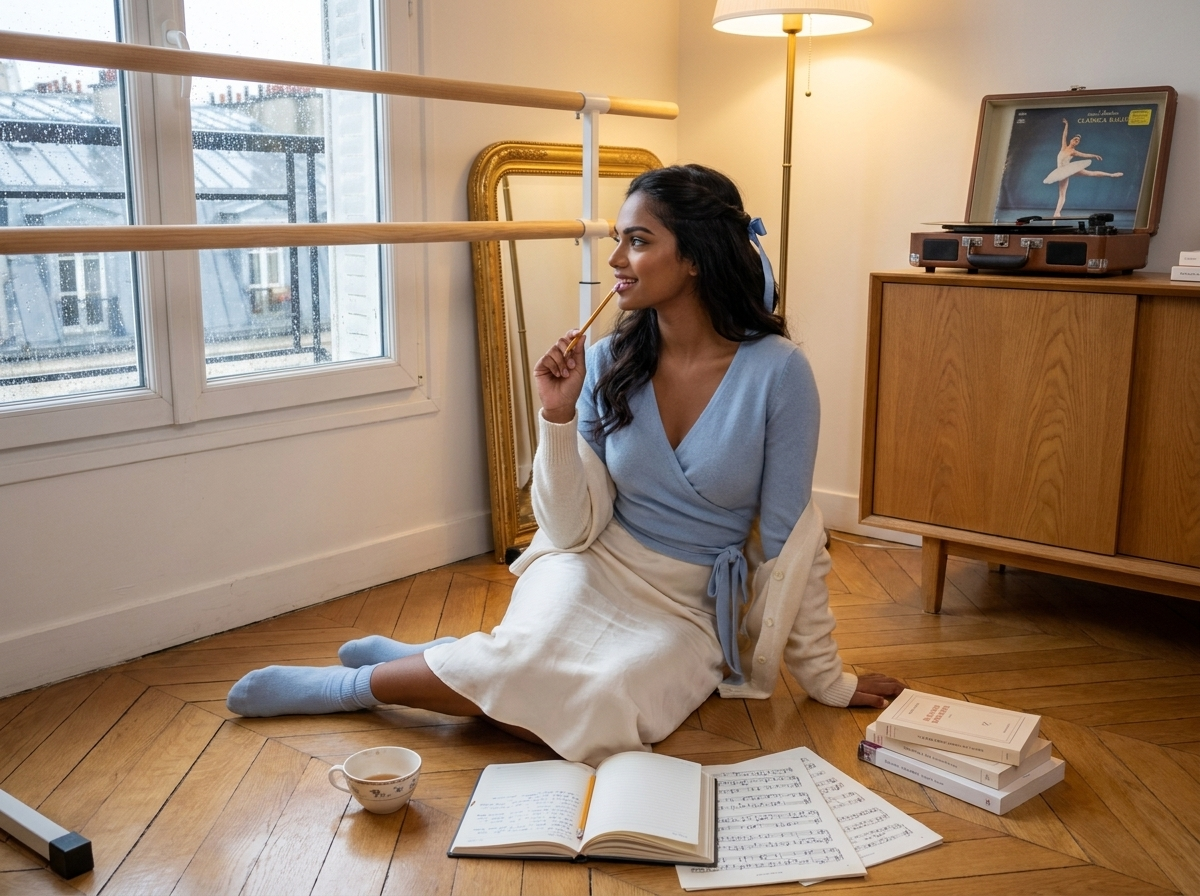
Ballet academia is a niche, internet-native blend of academia style and balletcore. It brings a bookish, study-minded sensibility to ballet-inspired dressing: rehearsal knits, wrap layers, soft skirts, and a practical bag for a day spent between the library and the studio. It is less about looking performance ready than about the work surrounding dance, like practice, choreography notes, and costume history.
Unlike balletcore on its own, ballet academia needs an academic anchor. Balletcore takes inspiration from dancers’ practice clothes and stage costumes, often translating wrap sweaters, tights, leg warmers, ribbons, and flats into everyday fashion. Ballet academia might pair one of those details with a collared shirt, tailored trousers, a cardigan, or a book-sized tote.
The mood:
Disciplined, graceful, studious, and quietly expressive
More rehearsal room than opening-night performance
Soft and romantic, but grounded by practical layers
Interested in dance as an art to practice and study, not just an image of effortless elegance
The palette:
Ivory, cream, oatmeal, and soft white
Ballet pink, dusty rose, mauve, and pale lavender
Heather gray, taupe, mushroom, and warm brown
Black, charcoal, navy, or burgundy for a more restrained, rehearsal-inspired look
Key wardrobe pieces:
Wrap cardigans, fitted knits, soft crewnecks, and fine-gauge turtlenecks
Collared shirts, simple bodysuits, and long-sleeve tops
Tailored trousers, knit skirts, pleated midi skirts, and comfortable dark jeans
A soft blazer, trench coat, or long wool coat to bring in the academia element
Everyday ballet flats, Mary Janes, loafers, or practical ankle boots
Tights, leg warmers, hair ribbons, and a wrap skirt used sparingly
A structured tote or satchel large enough for books, a notebook, and daily essentials
An easy ballet-academia outfit: Wear charcoal wide-leg trousers with an ivory wrap cardigan over a pale-blue collared shirt. Add black ballet flats or loafers, a long wool coat, and a book-sized tote. A ribbon in your hair or soft knit leg warmers can provide one dancerly detail without turning the outfit into a rehearsal costume.
Ballet academia is closest to music and theatre academia, but it favors the visual language of dance: movement, warm-up layers, and rehearsal clothes. For ordinary streetwear, choose fashion ballet flats rather than pointe shoes.
Other Niche Academia Aesthetics
Beyond the better-known dark, light, classic, romantic, art, theatre, science, green, and ocean branches, academia has accumulated a long tail of internet-native labels. Most are micro-aesthetics or community shorthand—useful for describing a specific mood, subject, or setting, but not as fixed categories with one agreed wardrobe.
Aesthetics databases mix internet aesthetics, established fashion styles, subcultures, historical eras, and fiction or music genres, which helps explain why the boundaries are so porous.
Study and Personality Aesthetics
These labels are usually about how someone experiences academic life rather than a particular discipline.
Coffee-shop Academia: Writing, reading, cafés, laptop work, bookshop browsing, rainy-day journaling. Cardigans, relaxed trousers, trench coats, worn leather bags, loafers or boots
Sleepy Academia: Late-night reading, early lectures, oversized comfort, soft study rituals. Oversized sweaters, soft trousers, scarves, slouchy bags, muted warm neutrals
Bookshop Academia: Independent-bookstore browsing, literary events, used books, zines, and staff-pick energy. Corduroy, work jackets, knitwear, canvas totes, casual tailoring, comfortable boots
Subject-Specific Aesthetics
These labels attach academia to a field of study. Some have distinct visual potential; others share traits with more established aesthetics like classic, dark, light, or green-academia wardrobe.
Medical Academia: Anatomy texts, clinical research, hospital libraries, medical illustration, lab study. White, gray, navy, muted green; clean lines, practical layers, structured bags, minimal jewelry
Law Academia: Legal research, courtrooms, debate, law libraries, briefs and casebooks. Blazers, crisp shirts, tailored trousers, loafers, dark neutrals, structured work totes
Classics Academia: Greek and Roman texts, sculpture, ancient languages, ruins, mythology. Dark academia, theatre academia, draped knits, tweed, cream, black, burgundy, antique-inspired jewelry
Religious Studies Academia: Manuscripts, iconography, sacred architecture, textual history, comparative study. Dark or history academia; modest layers, wool, rich deep tones, archival accessories
Fashion Academia: Costume history, fashion archives, textile study, runway research, fashion illustration. Art academia plus tailored vintage pieces, expressive accessories, fabric-rich layering.
Place and Setting Aesthetics
Rather than centering a discipline, these use a study environment or regional fantasy as their organizing principle.
Library academia: Reading rooms, archival stacks, manuscripts, cardigans, wool, modest layers, practical bags, soft light. A useful cousin to librarian-core.
Rainy-day academia: A mood rather than a discipline—trench coats, umbrellas, wool scarves, dark knits, leather shoes, stormy neutrals.
Coastal academia: A broader setting aesthetic than ocean academia, with maritime literature, lighthouses, striped knits, weatherproof outerwear, navy, gray, cream, and driftwood brown.
Ivy academia: Elite U.S. college imagery—brick quads, varsity references, varsity-style jackets, Oxford shirts, navy, burgundy, tweed, leather shoes. Note: This draws on real class-coded institutional imagery.
Museum academia: Gallery sketching, art history, exhibition catalogues, dark coats, understated tailoring, comfortable shoes for walking, tote bags.
The More Whimsical Labels
Internet aesthetics often become specific enough to describe a specific fantasy.
Mermaid academia: Ocean academia filtered through myth, marine lore, shells, iridescence, sea-glass colors, and fantasy storytelling. It is less fieldwork-focused than marine-biology styling.
Royal academia: Formal heritage dressing, crests, tartan, equestrian references, wool coats, pleated skirts, and institutionally coded polish.
Princess academia: A softer, more fantastical version of royal or romantic academia, usually emphasizing gowns, lace, bows, palace libraries, and fairy-tale literature.
Victorian academia: Victorian literature, mourning dress, museums, natural history, ornate trims, high collars, dark wool, and historical silhouettes.
Regency academia: Jane Austen, Romantic literature, letter writing, soft empire-inspired lines, cream, pale blue, gloves, ribbons, and subtle historical references.
Medieval academia: Manuscripts, monasteries, illuminated texts, Gothic architecture, earthy wool, deep reds, parchment tones, and antique-metal details.
Renaissance academia: Art history, humanism, portraiture, rich textiles, jewel tones, old libraries, ornate jewelry, and historical silhouettes.
Hybrid Aesthetics: New Proposals for the Academia-Curious
Now for the more interesting territory. The following are hybrid proposals — combinations of established Academia subaesthetics with other aesthetic systems that produce something new. Each has real logical grounding and could plausibly develop into a full subaesthetic.
Classic Academia × Old Money = "Legacy Academia"
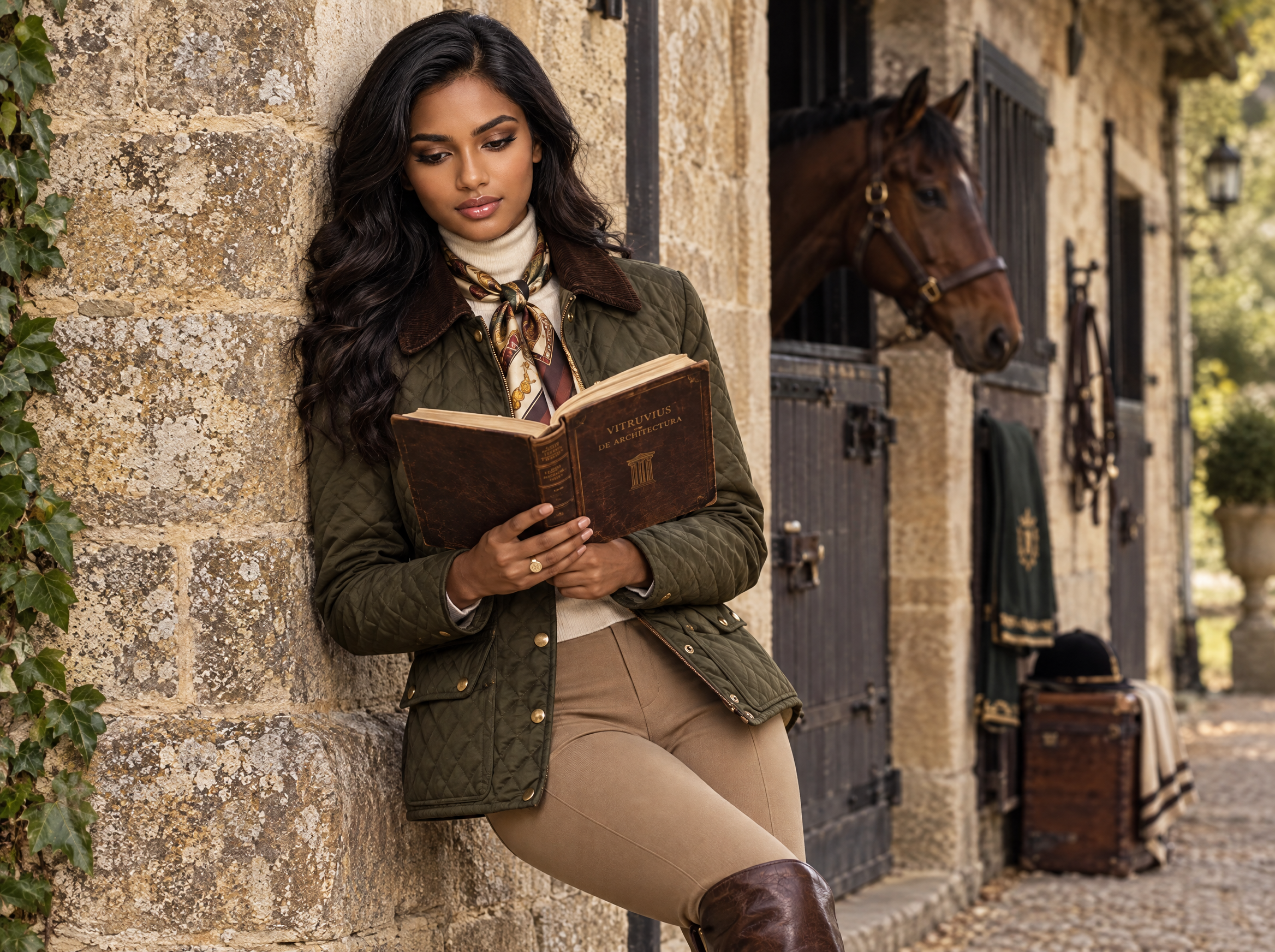
Legacy Academia is Classic Academia's mid-century Ivy grammar crossed with Old Money's buy-to-hand-down philosophy. It's warmer than Dark and less bookish than Light.. Fabrics are the durable naturals in their best grades and the palette runs deep, warm, and aged: camel, navy, cream, charcoal, cordovan, and oatmeal. Its subject is continuity: the library, the coat, the name, all held in trust and passed forward.
The Concept:
Combine Classic Academia's mid-century Ivy grammar with Old Money's investment-piece philosophy and heritage-brand focus. The result is quality Academia. Every piece looks either inherited or bought to be. Nothing looks costume.
The Uniform:
Cashmere crewneck sweater in cream or camel
White oxford shirt with a subtle contrast collar
Grey wool trousers, tailored precisely
Belgian loafers or Alden penny loafers
Cashmere overcoat in camel or charcoal
Vintage Rolex Datejust or Cartier Tank
Signet ring with a family crest (actual or invented)
Leather briefcase, aged but maintained
Reads: "This blazer was my father's"
The Palette:
Camel, navy, cream, cordovan
Everything looks aged and cared-for
Nothing new, nothing flashy
Reads: "I inherited my library"
Why It Works:
Old Money is having a moment, and its natural affinity with Classic Academia's mid-century preppy sensibility makes this hybrid particularly fluent. It formalizes what wealthy academic families have looked like for eighty years.
Dark Academia × Cottagecore = "Rural Scholar"
The Concept:
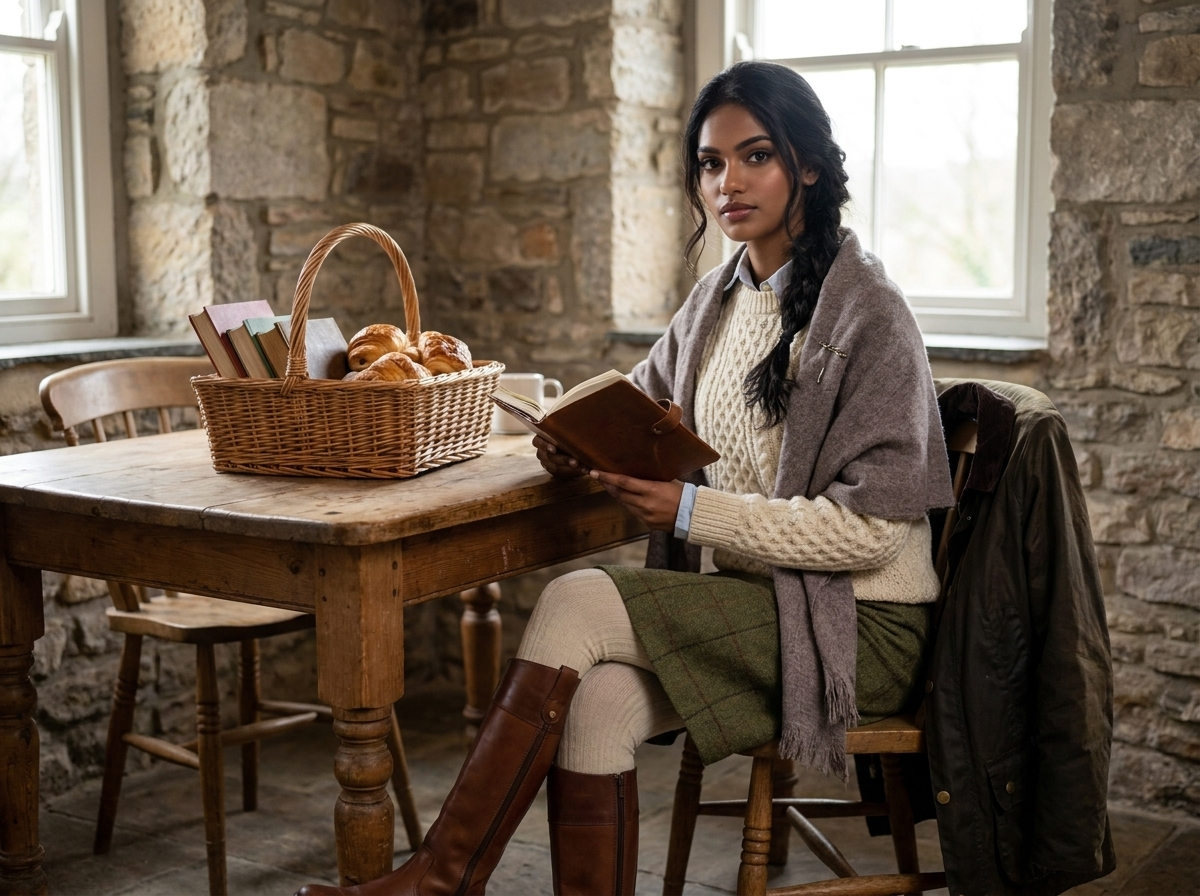
Take Dark Academia's intellectual grammar out of the Oxford quadrangle and place it in an English country cottage. The result is Academia that has retreated from the institution to the archive — the scholar who has left the university to write their book in a converted barn.
Rural Scholar is Dark Academia's intellectual grammar and gravity crossed with Cottagecore's rural, domestic, seasonal sensibility. Its governing principle is scholarship without the institution. It keeps everything that made Dark Academia serious and subtracts the Gothic, competitive melancholy and replaces it with Cottagecore's warmth and its handcraft.
It's warmer than Dark and more rigorous than Cottage. Fabrics are the country naturals in their honest weights and the palette runs warm and weathered.
The Uniform:
Cream cable-knit fisherman's sweater over an oxford shirt
Wool tweed skirt or pleated wool trousers
Cream wool tights or knee socks
Leather riding boots or sturdy brogues
Barbour jacket over the sweater
Wool shawl draped over the shoulders
Leather-bound journal actually used
Wicker basket carrying books and pastries
Hair loose or braided, unstyled
The Cultural Reference Points:
Possession by A.S. Byatt as founding text
The Brontës' Haworth as pilgrimage
Actual gardening alongside actual scholarship
Herbal knowledge as academic discipline
Reads: "I am writing my dissertation in a farmhouse"
Why It Works:
Dark Academia has been searching for a more sustainable, less institutional register for years, and combining it with Cottagecore's rural sensibility gives it somewhere to go. This hybrid retains the intellectual weight while adding livability.
Romantic Academia × Coquette = "Sighing Scholar"
The Concept:
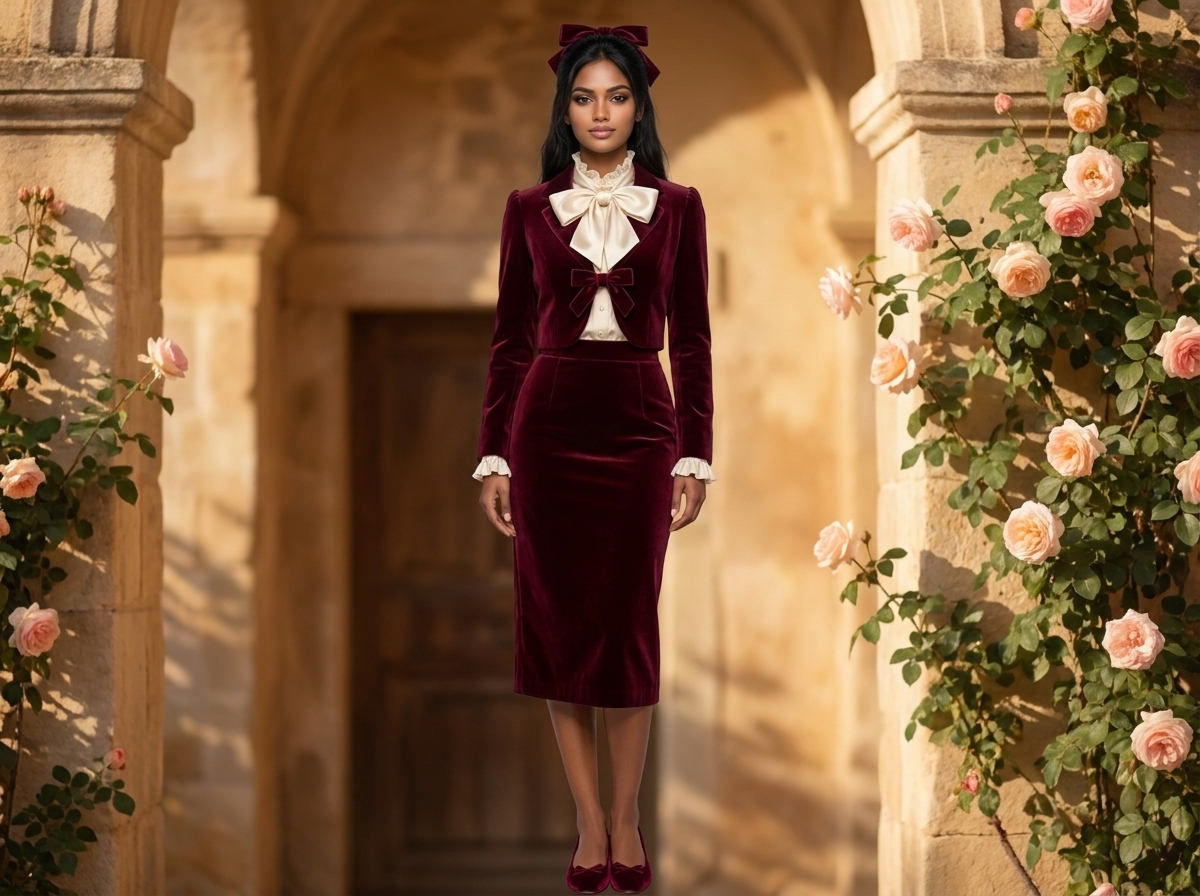
Combine Romantic Academia's poetry-forward emotional register with Coquette's bows, ribbons, and softness. The result is Academia at its most feminine and lyrical — the aesthetic of the young woman who genuinely believes she is Elizabeth Barrett Browning.
Sighing Scholar is Romantic Academia's poetry-forward emotional register crossed with Coquette's bows and ribbons. Its governing principle is feeling as a discipline. It keeps everything that made Romantic Academia literary and adds Coquette's tenderness. It's softer than any pure academia dialect and more grounded than pure Coquette. Fabrics are the tender, romantic textiles and the palette runs rich and blushing: cream and ivory, oxblood and rose, forest green, dusty pink, gold, and the faded sepia of old letters.
The Uniform:
Ruffled cream blouse with a satin ribbon at the throat
Velvet skirt in oxblood or forest green
Cream tights or lace stockings
Ballet flats with ribbon ties
Cropped velvet blazer
Multiple bows: hair, throat, cardigan
Cameo brooch pinned to a ribbon choker
Small leather notebook filled with poetry
Pressed flowers between pages
The Cultural Reference Points:
Elizabeth Barrett Browning as patron saint
Christina Rossetti as reference
Actual love letters composed
Fresh flowers in every room
Reads: "How do I love thee? Let me count the ways."
Why It Works:
Coquette has been dominant among young women for two years, and combining it with Romantic Academia gives Coquette the intellectual grounding it sometimes lacks. Both aesthetics share commitments to ribbons, softness, and the 19th century.
Dark Preppy × Art Academia × Black Minimalism × French Girl = Atelier Noir
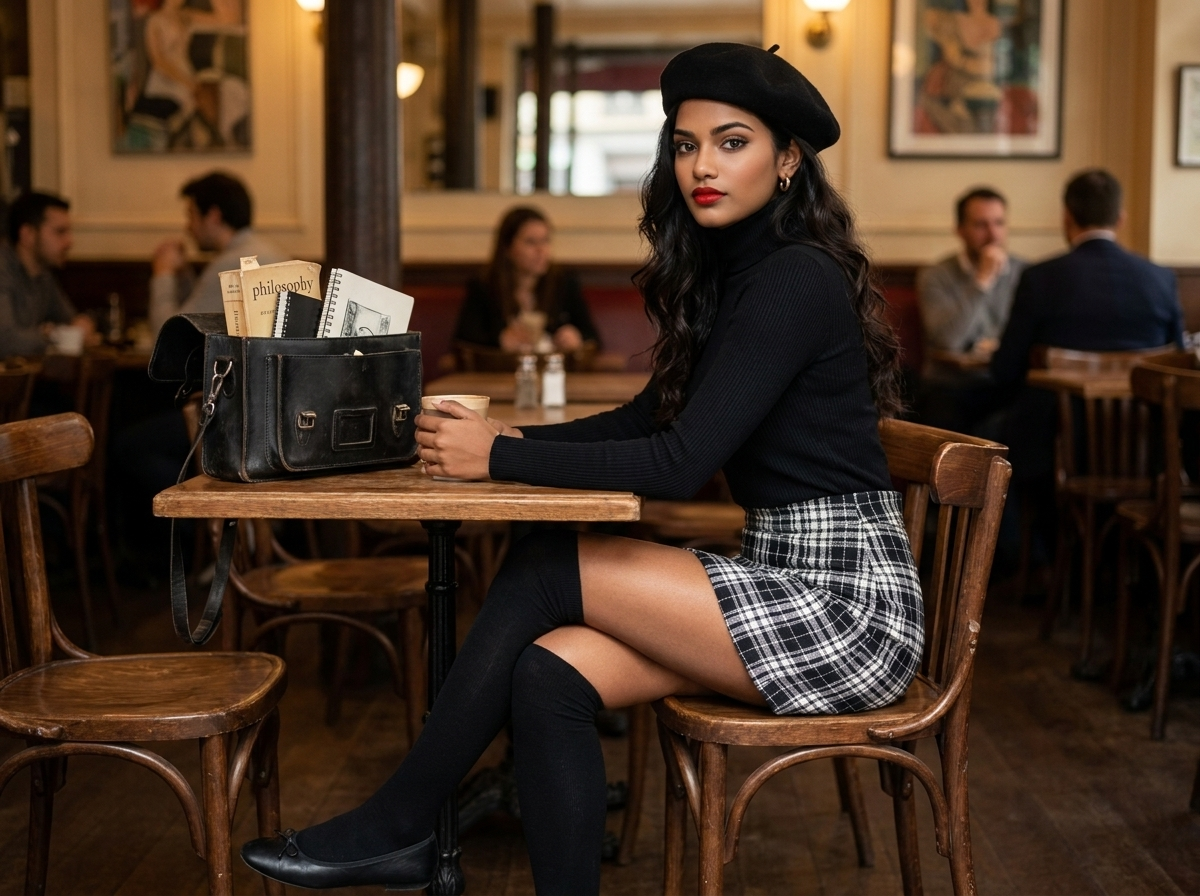
Atelier Noir combines Dark Preppy's tailored collegiate structure, Art Academia's studio practice and painterly texture, Black Minimalism's ornament-free discipline, and French Girl’s effortless Parisian ease, collapsed onto a single axis. The studio and the library are the same black space, she paints in the morning and writes in the afternoon without changing clothes. It keeps academia's seriousness of the work entirely intact but strips away every warm or decorative note replacing them with restraint, structure, and a single register of near-total black.
It is the most pared-down aesthetic in the whole family and, paradoxically, one of the most textured. Fabrics are the disciplined naturals in their finest weights and the palette is almost monastic: black, charcoal, ash grey, ink, and one bone-white note, with the occasional single stain of raw sienna or oxblood where the studio has bled through.
Conclusion
The many branches of academia style can makes it tempting to spend hours searching for that special label that perfectly fits you. But they are different ways to combine a shared love of learning with specific colors, clothes, places, and subjects.
You might borrow dark academia’s wool coat but prefer light academia’s cream knitwear. You might like the flexibility of green academia’s flexibility and cottage academia’s softness with a theatrical ribbon or cryptid pin. None of those combinations needs a new name . Start with clothes you already love, then let a book, a field guide, or a rehearsal room suggest the details.
Academia style is at its best when the clothes work for the life you have. You do not need access to a grand campus, an impressive library, or a new wardrobe. A public-library card, a well-loved cardigan, and an interest are more than enough.
