
Librarian Chic: The Preppy-Academia Trend Taking Over Fall 2026
Table of Contents
Every few seasons, the fashion world decides that the absolute coolest thing a woman can be is someone who actually reads books. This is one of those seasons.
"Librarian chic"—also known as "librariancore," "book club chic," or first cousin to "poetcore"—is the preppy, school-obsessed branch of the fall 2026 fashion cycle. The clothes are basically supposed to show that you have strong opinions…about books.
This trend isn’t brand new. Librarian chic sits right at the intersection of two styles that already refuse to die—preppy and dark academia. It takes the preppy starter pack (the button-down shirt, the vest, the loafer, and the tie) and mixes it with the moody vibe of dark academia (layering, mystery, and looking like you spent all weekend indoors). Best of all, it throws out the annoying parts. No snobby country club crest nonsense, or vampire-Gothic costume vibes. It just makes you look like a person who knows stuff.
A Brief History of Aggressive Literacy
The Evolution:
Mid-century film: The fictional librarian archetype is born (glasses off, hair down, cinematic)
1990s: Women-in-menswear reaches its first peak (Diane Keaton, Annie Hall's long shadow)
2015-2020: Dark academia dominates Tumblr and then TikTok
2022-2023: Preppy revives via Miu Miu's pleated skirts and Bella Hadid's oxfords
2024-2025: "Old money" and quiet luxury absorb the polished-scholar look
February–March 2026: FW26 shows deliver the actual thesis (Prada, Tory Burch, Miu Miu)
Fall 2026: Librarian chic becomes the season's most legible trend
What Happened on the Fall 2026 Runways
It is worth getting the timeline right here, because a lot of fashion TikTok has confused it: librarian chic actually came from the fall/winter 2026 collections shown back in February and March across New York, London, Milan, and Paris. These clothes were designed for the cold weather we're dealing with right now, which is why the trend feels so ready-to-wear instead of being awkwardly recycled from summer resort wear.
The most prominent argument for this trend came from Prada in Milan. Designers Miuccia Prada and Raf Simons built their whole collection around layering. Prada also argued that patterned tights are an actual fashion choice, not just a desperate attempt to not freeze to death. If you want to understand the main rule of librarian chic, that show is your ultimate rulebook.
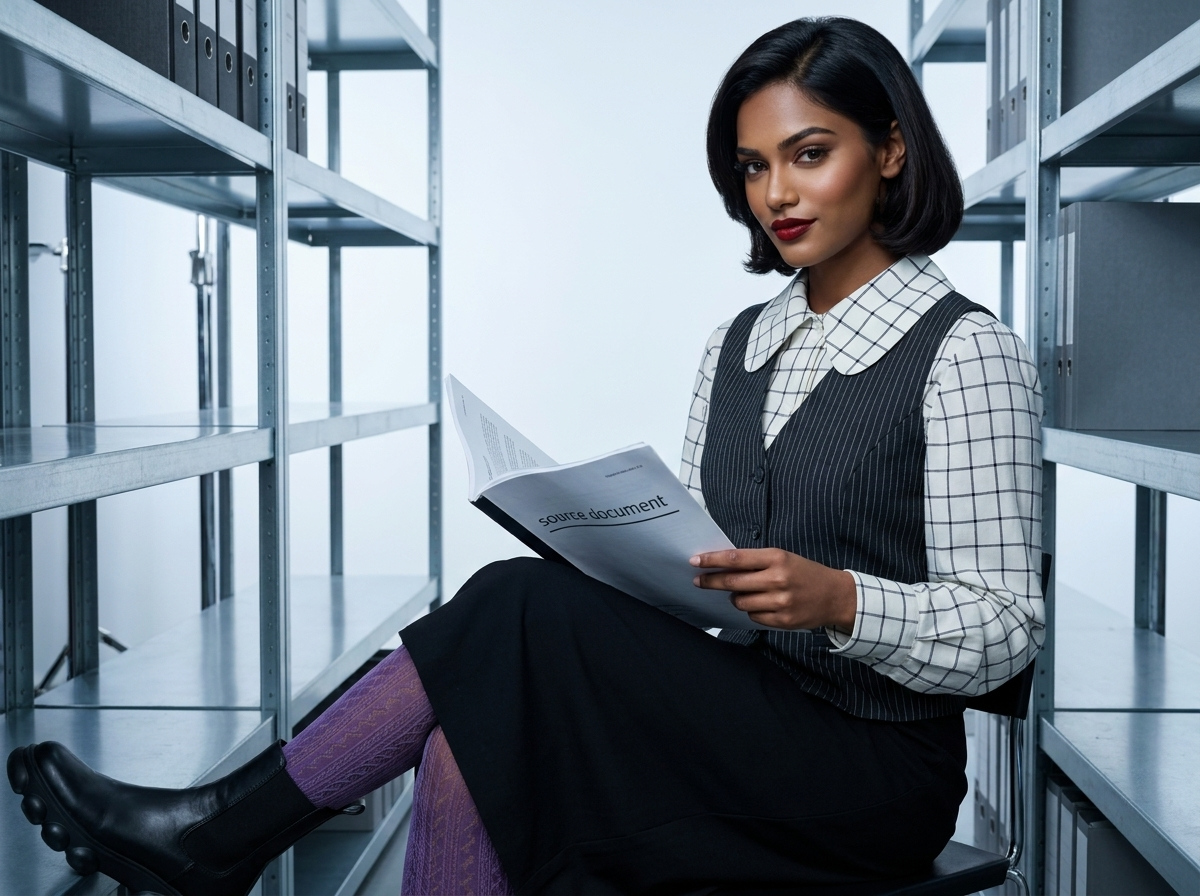
Tory Burch, over at Sotheby's in New York, gave us the warmest, most literal version of the trend. Her fall collection was packed with fuzzy, textured Shetland wool sweaters layered over shirts with round Peter Pan collars, bright apricot and saffron corduroy pants taken straight out of her dad's actual closet, and cozy cardigans with hand-sewn details. It was prep school meets cozy folklore. That is the exact cozy mood this trend wants, and Tory Burch got there first.
Miu Miu's contribution was a bit more indirect—Miuccia Prada's Paris show focused on tiny nineties suits, loafers, and those viral bubble-soled boots. All of these fit the look, even if the show’s main story was giant winter coats . But across the whole fashion month, the loudest message was the return of the necktie. Yes, office wear is back, complete with button-down shirts and ties, giving a resurgence to a major early-nineties "women-in-menswear" vibe.
On the street and the red carpet, the trend has already split into two different languages. Actress Dove Cameron wore the super neat version with a crisp white button-down and bright red tie. Meanwhile, Emma Corrin has been rocking a mustard-yellow dress over a short-sleeve polo shirt, the wackier version. Both are 100% librarian chic. The gap shows you just how much room you have to play.
The Cultural Catalysts
Why It's Landing Right Now:
Dark academia fatigue (the candles were doing too much)
Preppy exhaustion (the crests were doing too much)
Return-to-office wardrobes needed a story
The necktie's comeback across fashion month
Post-quiet-luxury appetite for texture and layering
General cultural fondness for women who read
Style Icons:
Dove Cameron: The polished dialect — white button-down, red tie, nothing extraneous
Emma Corrin: The eccentric dialect — mustard dress over short-sleeved polo, shouldn't work, does
Diane Keaton (foundational): The Annie Hall precedent
Miuccia Prada (perennial): The intellectual-in-a-collar prototype
Every mid-century film librarian: The fictional wardrobe the trend is named for
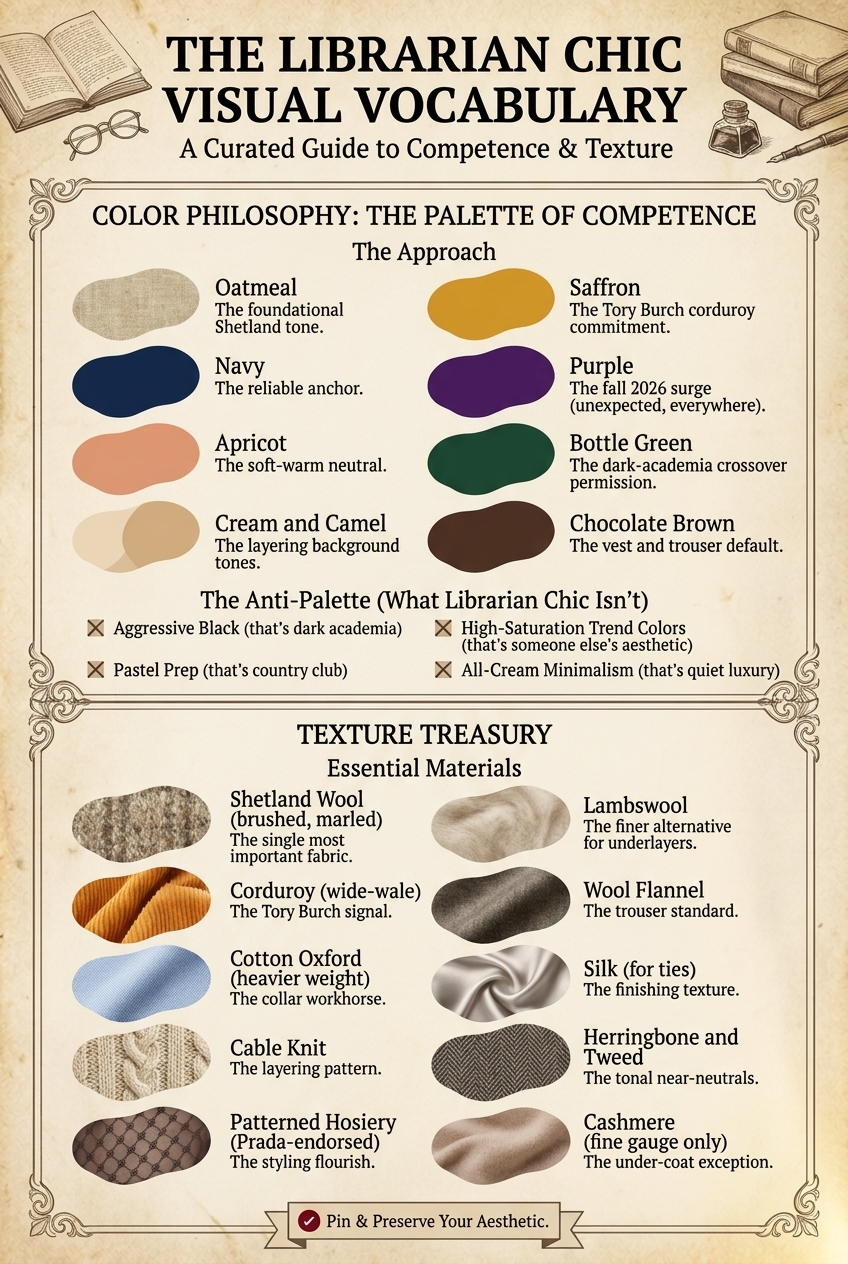
The Four Things Holding Librarian Chic Together

If you strip away all the fancy fashion show styling, librarian chic relies on four main items.
Layering
You aren't layering just to stay warm—you're layering so people can read your outfit like a book. Someone looking at you should be able to count every piece: a shirt collar poking out of a vest neckline, under a cardigan, under a big coat. This is where the trend rewards effort and punishes lazy dressers.
The Necktie
This is the trend's trademark, but also its biggest trap. Worn right, it does more work than any other item—making you look confident, a little rebellious, and totally cool. Worn wrong, you end up looking like you're wearing a cheap schoolgirl costume. The safest bet is a real silk or wool necktie, knotted loosely enough so you don't choke your collar, in a color that complements your shirt instead of matching it. Dove Cameron's red-on-white outfit is the perfect blueprint because of the high contrast.
The Vest
The vest is the absolute workhorse of this trend. Sweater vests, tailored suit vests, or even quilted vests over sweaters create a cool, visible edge without adding bulky sleeves. A vest is also the fastest way to turn a boring shirt-and-pants combo into an outfit, which is why it does the heavy lifting.
Pattern mixing separates the true fashion experts from the beginners. It's also the part where most people mess up, so it deserves a serious chat.
Pattern Mixing Without Looking Like a Vintage Couch
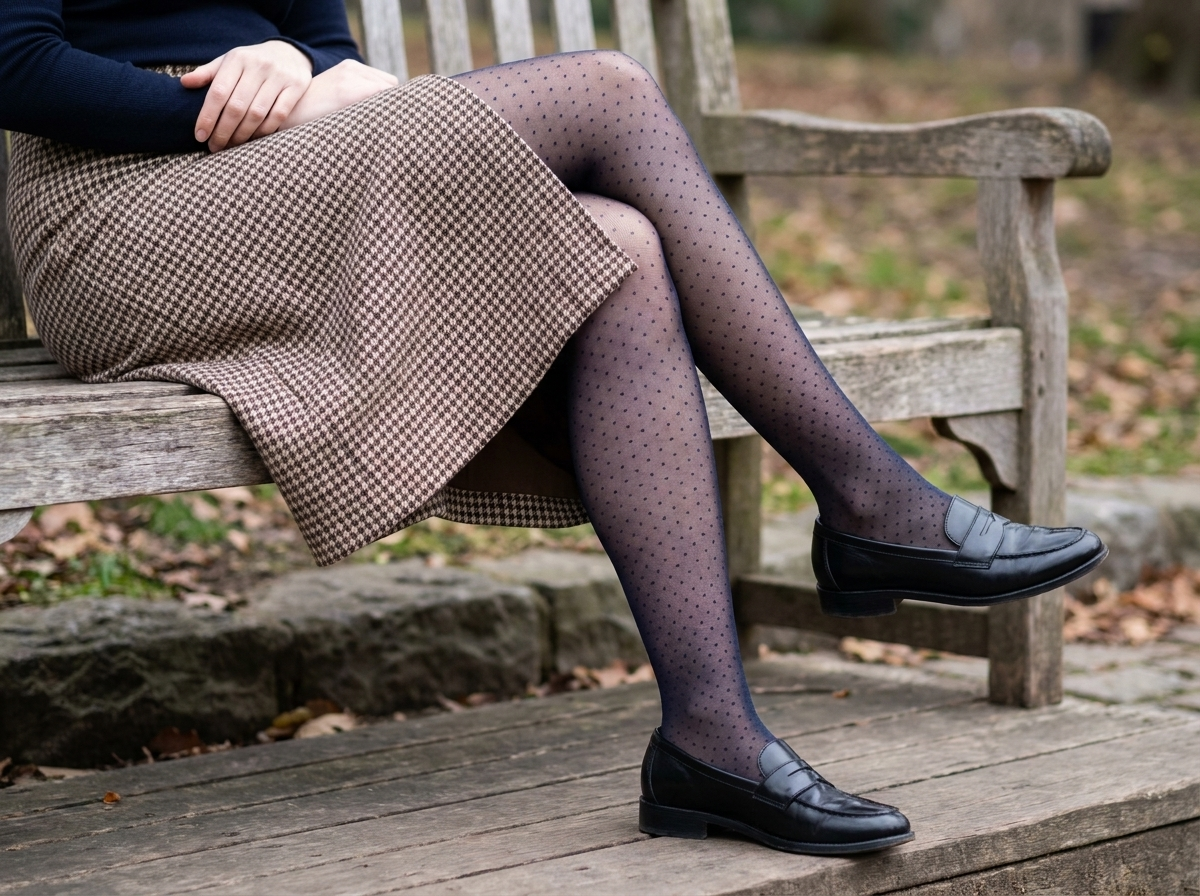
The biggest mistake people make is treating pattern mixing like a scary dare. It isn't. It's just an organization problem, and it follows boring rules in a good way.
First, change the size. Two patterns that are the exact same size will fight for attention; a giant check pattern under a tiny pinstripe won't, because your eyes see one as the main focus and the other as the background. Second, keep one color the same across both patterns. If you have a tiny thread of navy blue in your plaid and a solid navy blue background in your stripes, your eyes will have a place to rest, making the combo look planned instead of a total accident.
Keep the total pattern count low. The magic formula is two patterns plus one solid color. You can try three patterns, but only if one of them is so quiet it basically acts as a plain color—like a fuzzy tweed, a soft herringbone, or a super faint stripe. Also, put the loudest pattern where people will only see it some of the time: bold plaid pants under a quiet cardigan work much better than the reverse, because the plain sweater is what people focus on when you're sitting down at lunch.
The one truly modern trick this season is using textures as patterns. Wearing a cable-knit sweater against corduroy pants and wool flannel is technically three solid colors, but your eyes read it as mixed patterns anyway. It is way easier to pull off than mixing actual busy prints. If you are new to this, definitely start here.
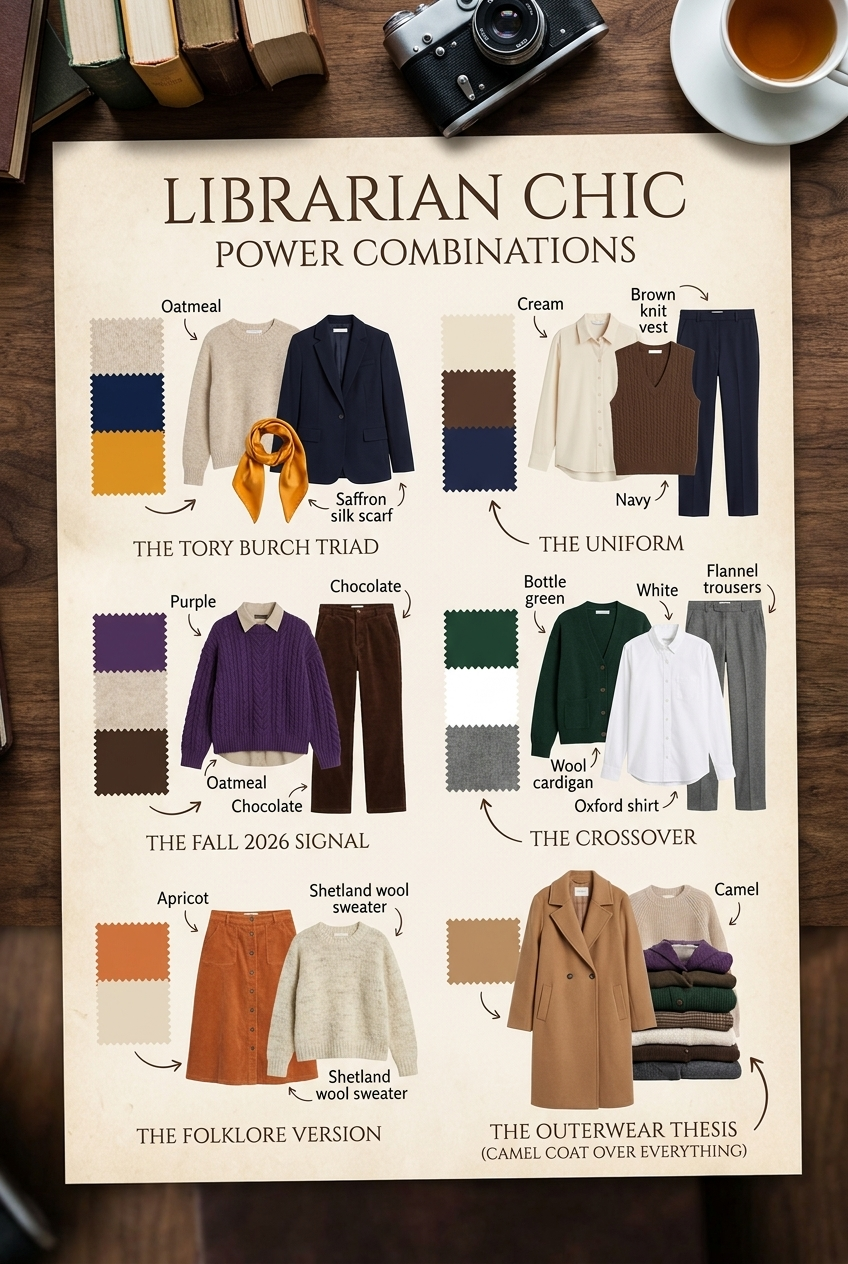
Where to Shop Librarian Chic: Investment, Mid-Range, Accessible
High-End. This is a trend where spending the big bucks pays off. If you're going to splurge, spend it on a high-quality Shetland or lambswool vest and a thin cardigan that can fit under a coat without making you look like the Michelin Man. Tory Burch is the best brand for these key pieces. Prada and Miu Miu are great for inspiration, though Miu Miu's loafers hold their resale value so well they're almost a smart investment. For the big coat over everything, The Row and Bottega Veneta both showed gorgeous outerwear this season that carries the whole outfit.
Mid-Range.J.Crew is the obvious anchor with oxfords, Shetlands, and sweater vests. Sézane does a softer, slightly French version of the look. Massimo Dutti and COS cover the sleek, tailored end, especially for suit vests and wide-leg trousers. Boden is great for cool collars, including those round Peter Pan shapes Tory Burch brought back. Ann Taylor is also worth checking out for cardigans in a massive range of colors, which is crucial when you're building a whole layering system.
Affordable. Go thrift shopping first! Almost every core piece in this trend was made way better twenty or thirty years ago than it is today. Vintage Brooks Brothers oxfords, old Shetland sweaters from Land's End and L.L. Bean, men's silk ties from thrift store bins, and secondhand vests are everywhere and super cheap on ThredUp, The RealReal, Depop, and eBay.
Plus, these older, vintage cuts layer much better because they were designed for it. Just search by fabrics like "wool" or "cotton" and eras instead of using the trend name, because sellers won't tag it that way. The only exceptions are tights and base-layer turtlenecks, which you should buy brand new for hygiene and best fit.
The Starter Ten
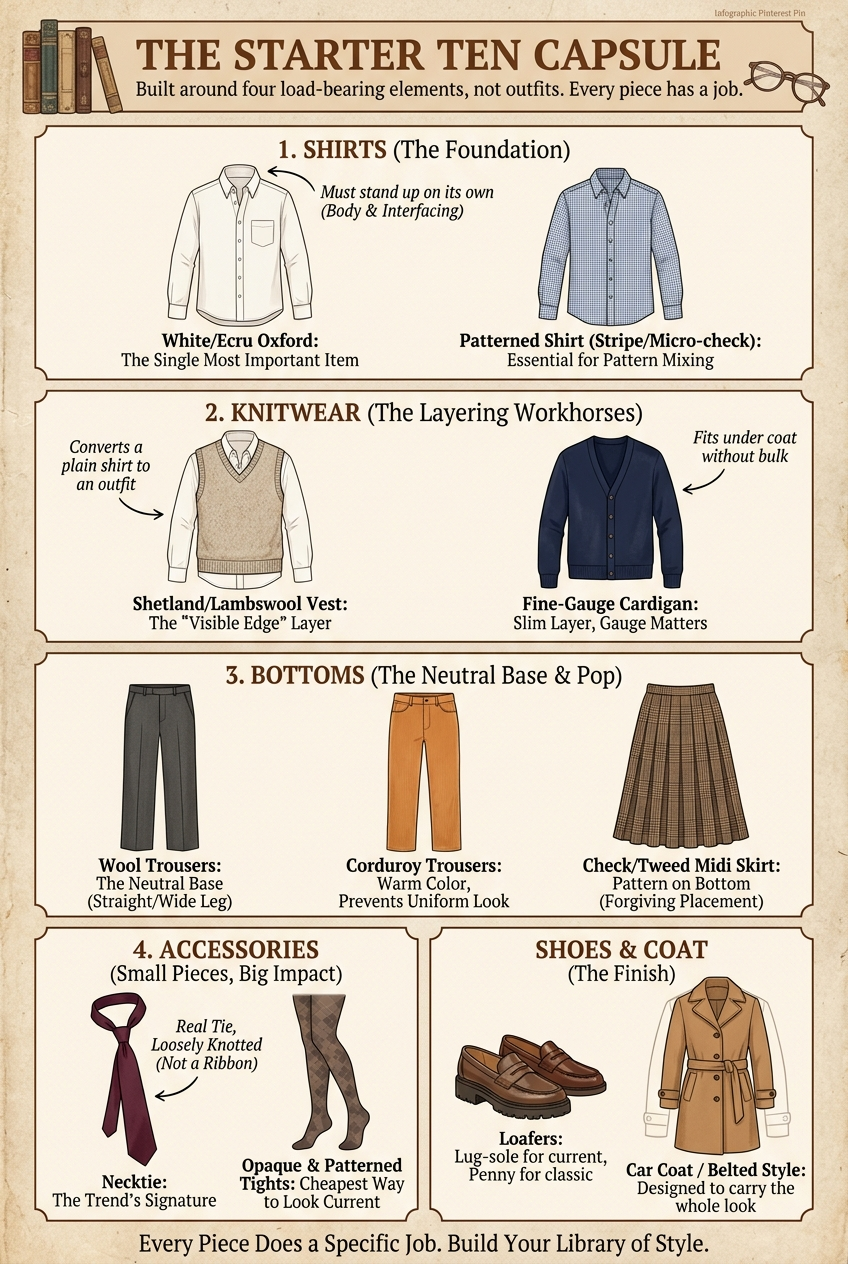
Most people buy the tie and the glasses first and then discover they own two props and nothing to wear them with. The capsule below is built around the four load-bearing elements rather than around outfits, and every piece does a specific job.
Tops: The Foundational Collars
Start with two shirts, not one.
The white or ecru oxford button-down is the single most important item here. It needs enough body and interfacing to stand up on its own under a vest, because a collapsing collar takes the whole look down with it. The second shirt should carry a pattern like a fine stripe or a micro-check. People tend to skip this piece, which is why their pattern mixing never gets off the ground. With one shirt in the closet there’s nothing to mix.
Shirts and Blouses:
Oxford button-down (white or blue): The uniform base
Peter Pan collar blouse: The Tory Burch endorsement, the Boden specialty
Pussy-bow blouse: The romantic option
Silk blouse with visible collar: The polished dialect
Short-sleeved polo (worn as a layer): The Emma Corrin move
Turtleneck as base layer: The Prada-endorsed under-layer
Knitwear
This is where your money goes.
A Shetland or lambswool sweater vest in oatmeal or navy is the workhorse of the entire wardrobe. It’s a layer with a visible edge without adding a sleeve, and it converts a plain shirt to an outfit in one move. The fine-gauge cardigan is its counterpart, and here gauge matters more than fiber. It has to fit under a coat without bulking at the shoulder.
Knitwear:
Sweater vest (Shetland or lambswool): The workhorse
Cardigan (fine-gauge, buttoned partway): The professor pull
Cable-knit pullover: The texture layer
Marled Shetland crewneck: The Tory Burch grail
Fair Isle or embroidered cardigan: The folkloric detail
Tonal argyle vest: The pattern-as-near-neutral
The Vest: The Workhorse
Shetland sweater vest (oatmeal, saffron, navy): The foundational piece
Tailored waistcoat (wool, herringbone, tweed): The suiting version
Quilted vest over knitwear: The outdoor-preppy crossover
Fair Isle vest: The folkloric option
Cable-knit vest: The texture-forward choice
Argyle vest: The pattern move
Why It Works:
Creates a visible layer edge without a sleeve to manage
Converts a plain shirt-and-trouser outfit into something composed
Photographs well at every scale
Works sitting down (unlike a jacket)
Layers under a coat without bulk
Bottoms: The Trouser Question
Three bottoms cover everything.
Wool trousers in a straight or wide leg are the neutral base. Corduroy trousers in a warm color, like the apricot and saffron register Tory Burch featured, keep the capsule from calcifying into a uniform. The check or tweed midi skirt, pleated or A-line, puts pattern on the bottom half, which is the more forgiving placement.
Trousers
Corduroy trousers (apricot, saffron, chocolate): The Tory Burch signal
Wool flannel trousers (gray, navy, camel): The tailored default
Wide-leg trousers: The Miu Miu-adjacent silhouette
Pleated front trousers: The archival preppy move
Cropped trousers with visible sock: The Prada-adjacent styling
Suit trousers as separates: The office crossover
Skirts
Pleated midi skirt (wool): The universal go-to
A-line wool skirt: The classic
Corduroy skirt: The Tory Burch echo
Long tweed skirt: The dark-academia neighbor
Below-knee kilt-adjacent: The traditional move
The Uniform Dresses
One-Piece Solutions:
Wool shirt dress: The layering-ready base
Mustard midi (Emma Corrin-coded): The eccentric dialect
Pinafore over turtleneck: The advanced move
Corduroy dress: The texture play
Long-sleeved wool dress with visible collar: The polished dialect
Styling Strategy:
Always with a visible collar underneath or attached
Always with hosiery (patterned, per Prada)
Always layered with a vest or cardigan
Never on its own (the layering is the point)
Accessories: The Details That Do Real Work
The two small pieces are doing outsized work.
A necktie in silk or wool, in a complementary color is the trend's signature. It should be a real tie, not a schoolgirl ribbon, knotted loosely. Opaque and patterned tights are the cheapest way to look like you've been paying attention.
The Necktie: The Trend's Signature
Silk ties in argumentative colors: The Dove Cameron template
Wool ties in tonal palettes: The softer everyday version
Vintage men's ties from any thrift bin: The best source
Knotted loosely at a comfortable collar: Never strangled
Long and loose (not knotted high): The forgiving version
In a color that argues with the shirt: Red on white, mustard on navy, purple on cream
The Hosiery Question (Newly Important)
Prada's Endorsement:
Patterned tights are a styling decision, not a weather concession
Pointelle, ribbed, and textured knits over sheer
Argyle tights as pattern-mixing (with a solid skirt)
Colored opaques in oatmeal, navy, chocolate, saffron
Buy new (always — hygiene, fit consistency, the work they do this season)
The Bag Territory
The Carry Culture:
Leather satchel (structured, worn): The academic archetype
Longchamp Le Pliage (unironic): The functional classic
Vintage doctor's bag: The archive move
Tote bag (canvas, from an actual bookstore): The intellectual flex
Small structured shoulder bag: The polished dialect
Briefcase (yes, really): The advanced commitment
The Glasses Question
Wire-frame round (Harry Potter-adjacent, but restrained): The scholar signal
Tortoiseshell rectangular: The professional dialect
Vintage 1990s frames: The archival authenticity
Prescription glasses actually worn: The purest version
Reading glasses on a chain: The advanced move (grandmother-coded, in a good way)
The prop trap: Non-prescription clear-lens glasses read as costume
Jewelry: Minimal and Specific
The Approach:
Signet ring (family or self-gifted): The single flourish
Small pearl studs or huggie hoops: The default
Watch (leather strap, small face): The wrist commitment
Locket or thin chain: The narrative piece
Cameo brooch (advanced): The dark-academia crossover
Zero stacking, zero statement: The rule
Shoes and Coat
Finish with loafers and one coat that can carry the whole outfit. On the shoes, lug-sole reads more current and penny reads more classically preppy, whichever you prefer.
The Loafer Hierarchy
The Foundation Tier:
Miu Miu loafers: The value-holding investment
G.H. Bass Weejuns: The heritage authentic
Gucci horsebit (vintage): The archive dig
Cole Haan basic loafer: The wearable value
Sebago Classic Dan: The prep-Normcore crossover
The Elevated Options:
Miu Miu bubble-soled boots: The FW26 collectible
Chelsea boots (leather, dark): The dark-academia neighbor
Oxford lace-ups: The full menswear commitment
Mary Janes (thick sole): The Miu Miu-adjacent
Riding boots (knee-high): The traditional move
Outerwear: The Coat That Ends the Layering
Across the board, Fall 2026 outerwear was designed to be the entire look, which means a belted style or a good car coat will finish everything in this capsule.
Coats and Jackets:
The Row-adjacent minimal coat: Built to be the whole outfit
Bottega Veneta-style outerwear: Structural, quiet, ends the sentence
Camel wool coat (any era): The universal solution
Belted trench (Burberry-coded): The Peter Pan collar's best friend
Loden coat (folkloric): The Tory Burch mood
Vintage tweed overcoat: The archive move
Wool duffle coat: The academic-adjacent option
Styling Strategy:
Long enough to cover the vest hem
Structured enough to hold the layers underneath
Never puffy (this isn't Gorpcore)
Colors resolutely tonal — camel, navy, forest, chocolate
Buttoned or belted, not draped
Should look like it was inherited even when new
The Cardigan Alternative to a Coat
Layering-Specific:
Long grandpa cardigan as outerwear
Belted cardigan as a jacket substitute
Cardigan under blazer over shirt over vest (advanced)
Cardigan buttoned partway, collar peeking out (the signature move)
Investment Strategy
Splurge On:
One proper Shetland or lambswool vest (fit matters most here)
A fine-gauge cardigan that fits under a coat without bulk
Miu Miu loafers or a comparable investment shoe
The coat that ends the outfit
A silk tie or two (real, not novelty)
Save On:
Oxford shirts (J.Crew, or vintage Brooks Brothers)
Ties (thrift bins, always)
Waistcoats (secondhand, better than new)
Basic knitwear (Uniqlo and Uniqlo x Lemaire are quietly perfect)
Trousers (Massimo Dutti and COS for the tailored end)
The Face
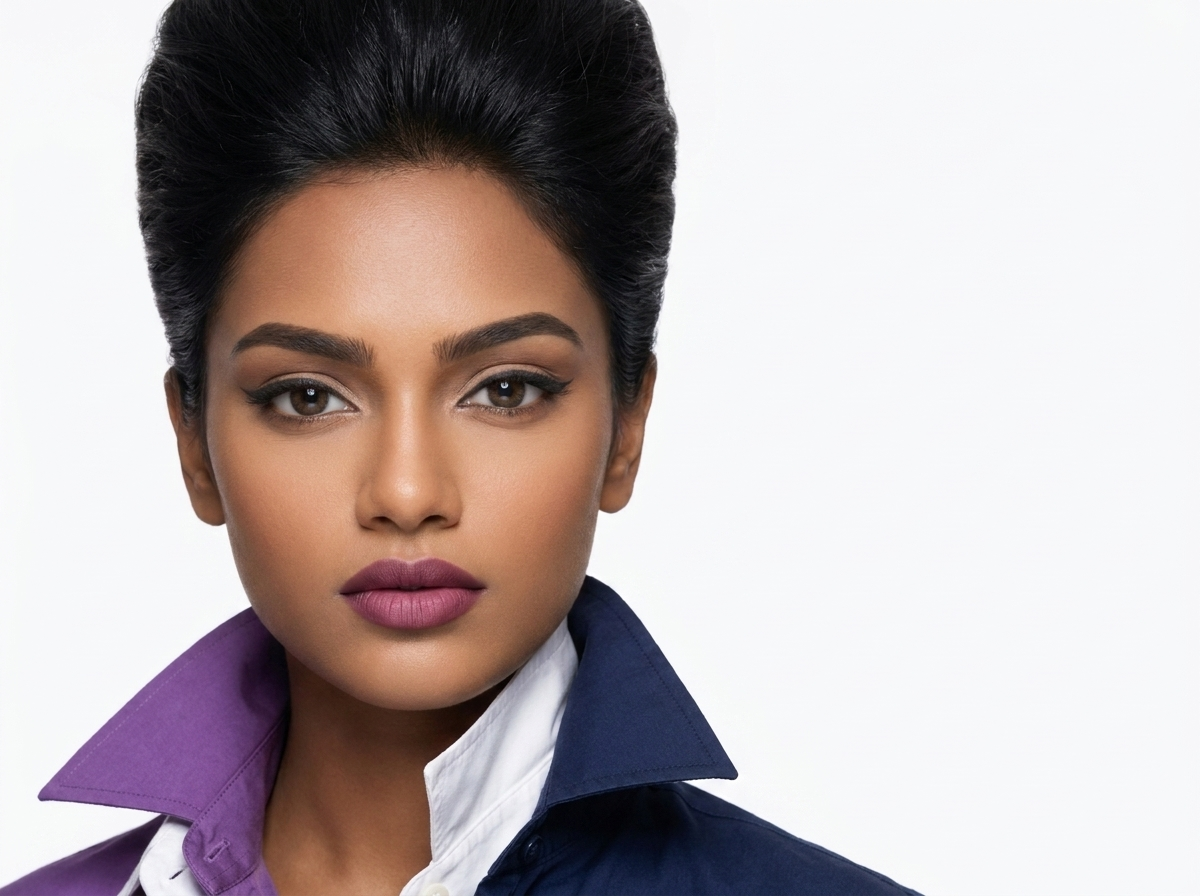
Here is the season's ture contradiction. Librarian chic is about looking like a person with a system. Fall 2026 beauty is the opposite. The clean-girl look of the last several years has been retired in favor of smudged liner and visible dark circles.
The resolution is simple and it is the only rule in this section: pick one place to be undone. If the eye is smudged, the mouth is neat. If the lip is saturated, the eye is clean.
Doing both at once reads as someone who slept in the periodicals room, which is a different aesthetic with a different set of problems.
The Philosophy:
Skin-first: SPF, moisturizer, actual skincare
Cream blush: The warmth without the paint
Tinted lip balm: The lip situation
Brown mascara: Softer than black
Groomed brows: Natural shape, filled sparingly
Bare mouth or a muted matte: Never glossy, never bold red (that's a different aesthetic)
The Reference Desk
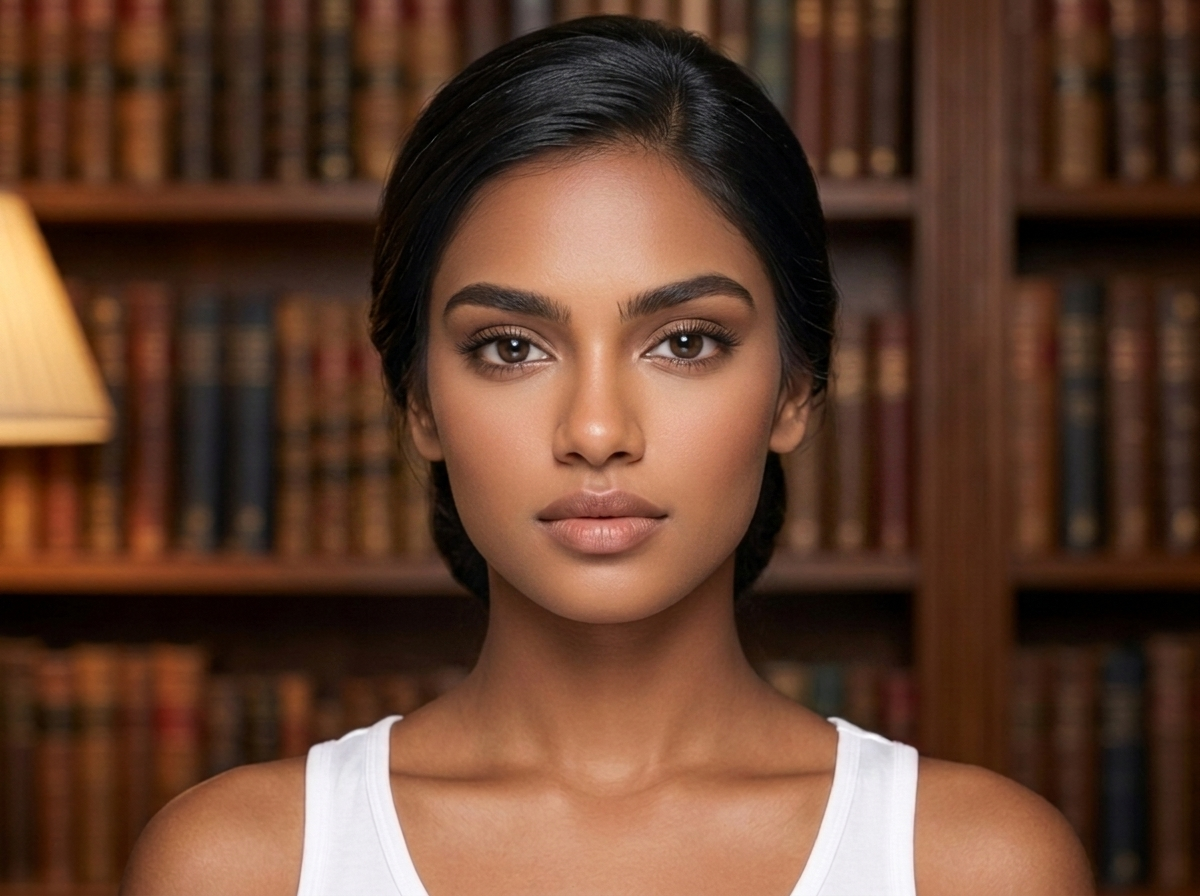
The polished dialect.
Skin stays clean and minimal. Dior held that line, and Pat McGrath's work at Fendi took the no-makeup makeup further, sculpting the eyes and lips with neutral taupes. The brow does the structural work here — brushed up and defined, in the way Emilia Wickstead used it to give shape to an otherwise bare face.
It is the tie of the face: one decisive element holding everything together.
Then a berry blush kept high on the cheek and diffused, and a lip in blotted berry-brown, pressed in with a fingertip. Nothing on the eye but mascara.
The Reading Room
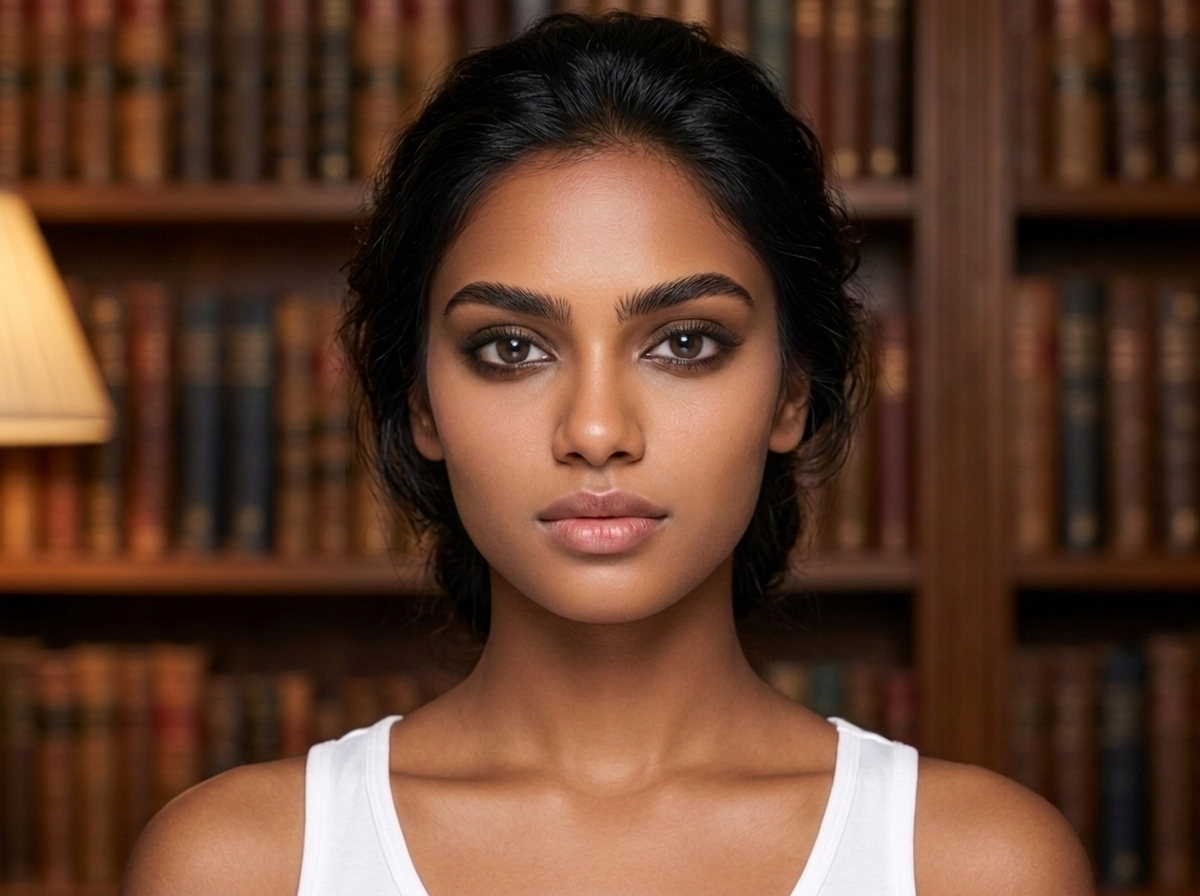
This is the everyday version and the one most people will wear, and it comes from the same show that anchors the clothing.
Prada's fall beauty look was smudged, raccoon-ish eyeliner with exaggerated dark circles, minimal foundation, and hair left tousled. The adjustment that makes it wearable: work a dark brown pencil into the upper and lower lash line with a fingertip instead of black, keep it slightly heavier under the eye than over it, and stop before it becomes a shape.
Lip stays bare or balmy. Skin stays real. It takes under three minutes.
Glasses Change the Math
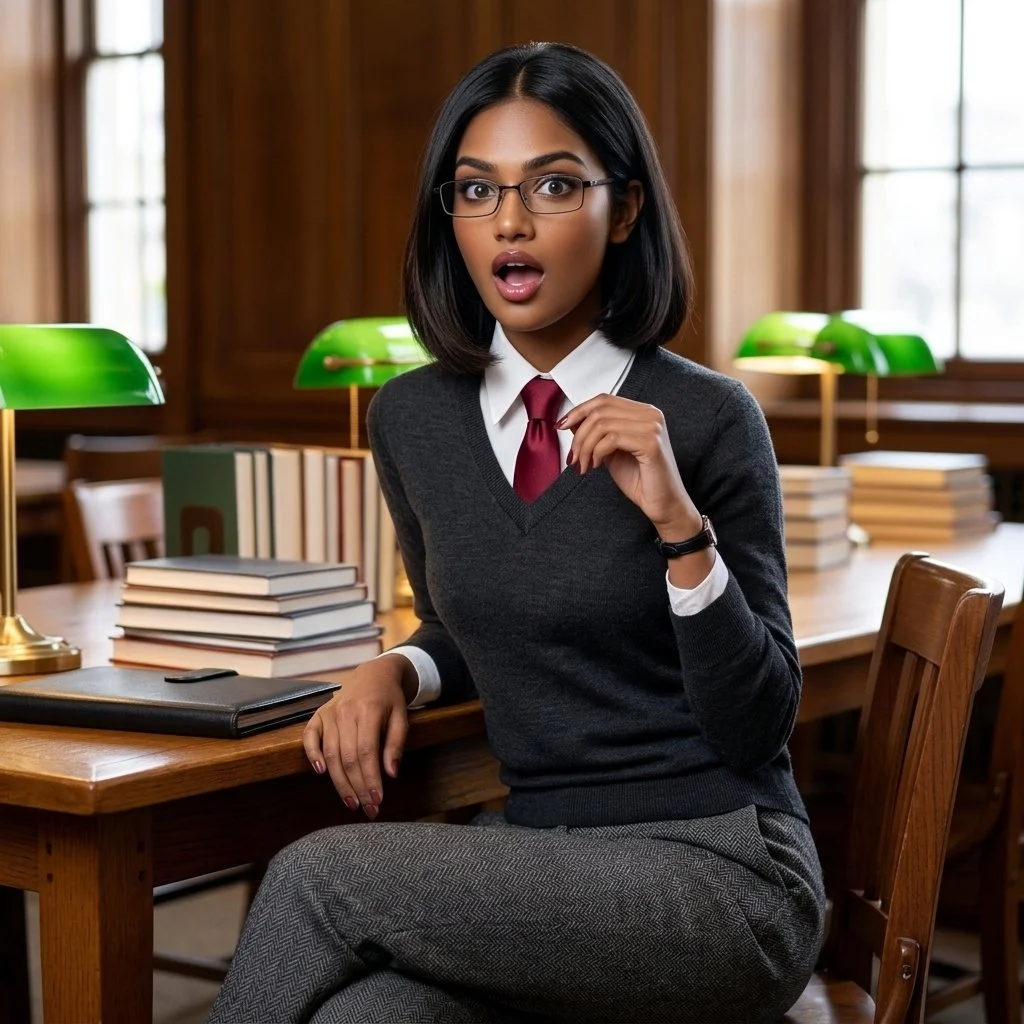
Nobody writing about this trend mentions that frames rewrite where makeup should go.
A heavy acetate frame casts a real shadow across the under-eye and visually shortens the lash line, which means the smudged look above will disappear.
Under heavy frames, skip the under-eye liner and put the definition on the upper lash line where it clears the rim. Wire frames leave the eye exposed, so you need less than you think. And the prescription matters more than the frame: strong minus lenses visually shrink the eye, so liner should sit outside the lash line.
Hair and Nails
We’ll touch on this briefly, because both are doing real signaling work this season.
The deep side part came back hard, as shown with Saint Laurent’s slicked hair into low twisted buns with a side part, and Dior and Victoria Beckham’s loose, side-parted low ponytails. It is the single cheapest way to look like you've read the season.
The Librarian Chic Mane:
Cuts and Styles:
The low bun (soft, not tight): The universal option
The half-up (with a ribbon): The romantic dialect
The blunt bob: The polished commitment
Loose waves with a middle part: The eccentric option
Braid, loose: The folkloric echo
Short pixie or crop: The advanced statement
Style Statements:
Never overly styled or heat-heavy
Ribbons and grosgrain bows permitted
Barrettes and clips (velvet, tortoiseshell) welcome
Fringe if you have it, brushed, not styled
Air-dry with product, not without
Nails: Short and Considered
Nails short and bare, which happens to be both the runway position and what makes sense on someone who handles books.
Clean and short: The maximum
Buffed natural: The polished version
Sheer pink or nude polish: The exception
Deep burgundy (short only): The dark-academia crossover
No length, no art, no gel: The rule
Grandmother's rings on ungroomed hands: Acceptable
The Five Dialects
Librarian chic is not one look. The capsule above is the shared grammar. What follows is what people actually do with it — five dialects that use the same vocabulary and arrive somewhere entirely different. Most people already lean toward one without having named it.
The Polished Librarian
Librarian chic with every edge pressed.
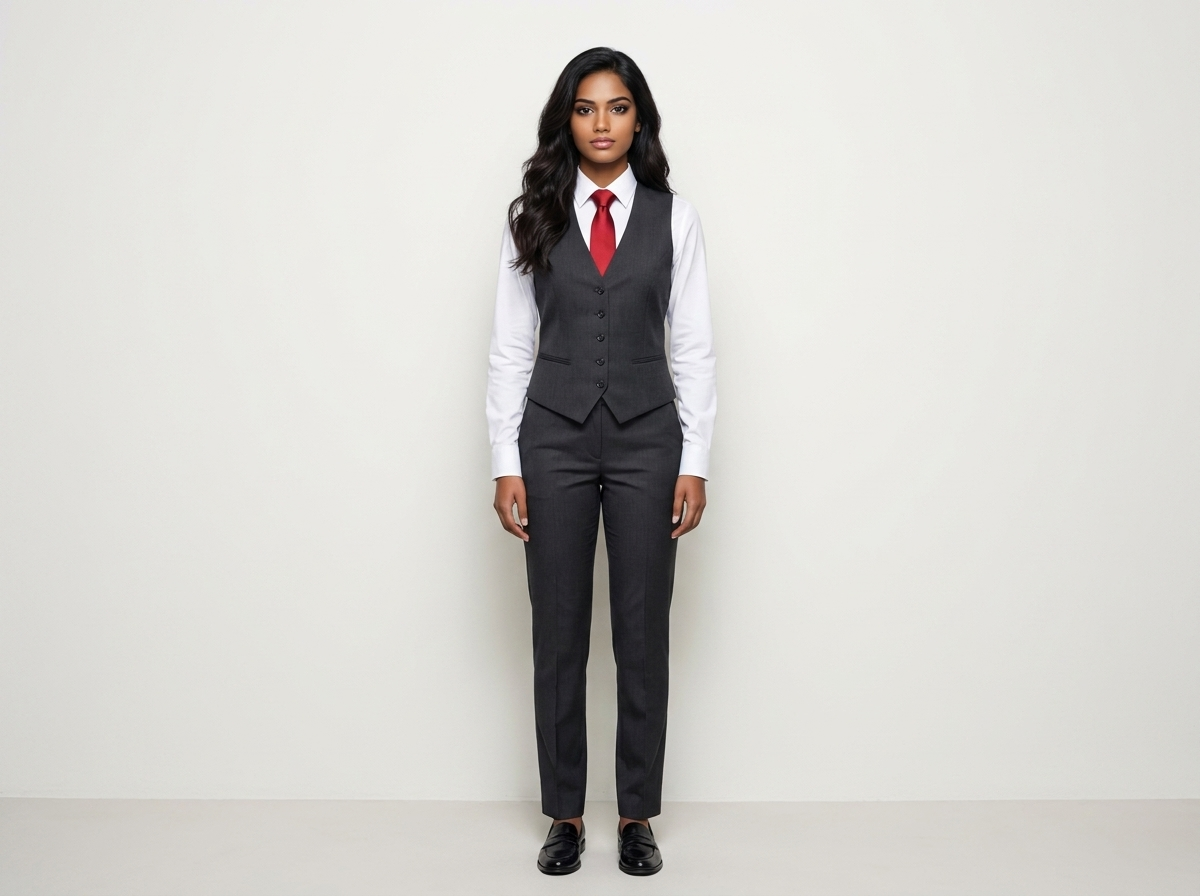
The vibe: You are the person who knows exactly where it is. Nothing about the outfit is improvised or negotiable. The clothes demonstrate your competence, announced before you open your mouth.
Everything is pressed and buttoned: a stark white shirt closed at the collar, a knotted saturated tie, a tailored waistcoat, creased trousers. The palette stays tight — charcoal, white, navy, one accent color. Nothing oversized or slouchy.
This is the dialect with the highest ceiling and the least margin for error. When it fails it reads as a hotel concierge, and the difference is usually one accessory too many. If you are wearing this version, the discipline is subtraction: take one thing off before you leave.
COLOR PALETTE
Stark white and true black (maximum contrast)
Charcoal grey (the neutral doing most of the work)
Navy (the only softened option permitted)
One saturated accent per outfit — scarlet, burgundy, forest
No pattern larger than a pinstripe
Metallics kept to gold, and kept small
WARDROBE SPECIFICS
White oxford with a structured collar (must stand up unaided)
Tailored waistcoat (fitted, never slouchy)
Silk necktie in a saturated color
Trousers with a real pressed crease
Knee-covering pencil or A-line midi skirt
Fine-gauge merino crewneck (thin enough to layer flat)
Structured single-breasted blazer
Opaque tights in navy or black, no runs, no exceptions
Slim leather belt matched exactly to the shoe
Tortoiseshell or fine wire frames, kept clean
STYLING APPROACH
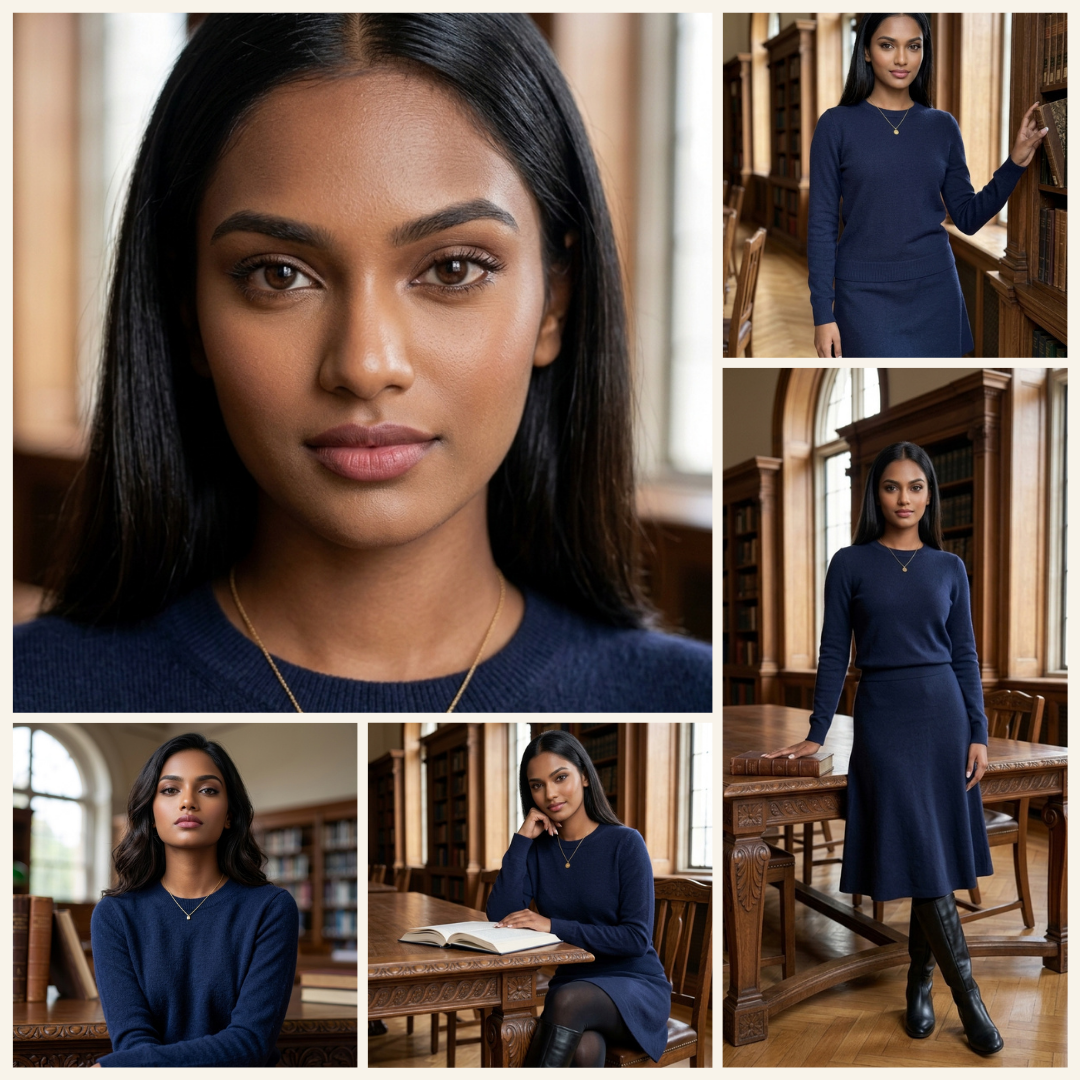
Subtraction, not addition — remove one thing before leaving
Every edge crisp: pressed, buttoned, tucked
Two colors plus one accent, maximum
Nothing oversized, nothing draped, nothing accidental
Tie knotted properly rather than loosened for effect
Hair controlled — deep side part, low twist, nothing loose
One piece of jewelry, metallic, small
SHOES
Polished black leather penny loafers
Low block-heel Oxford pumps
Knee-high riding boots in black
Pointed leather flats (the sharpest option in the set)
The Eccentric Librarian
Librarian chic meets poetcore and refuses to pick
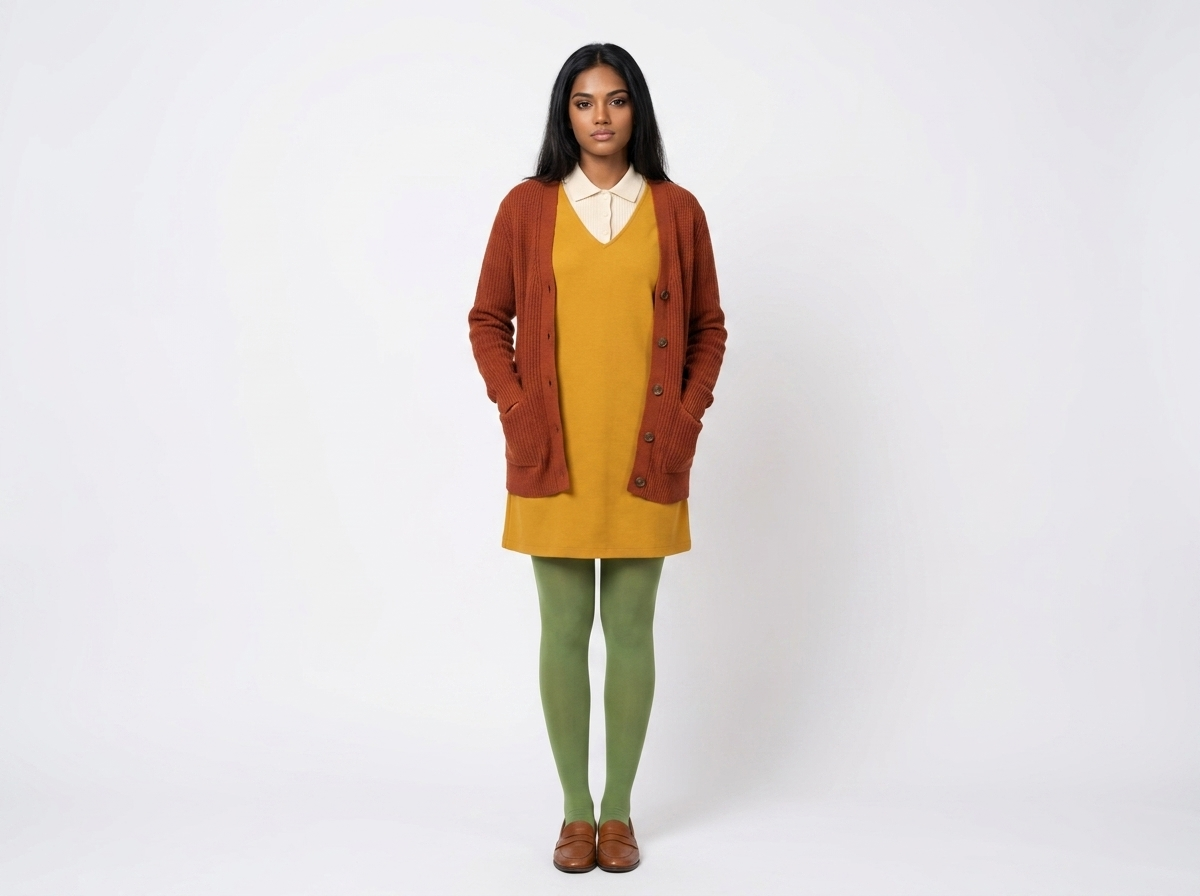
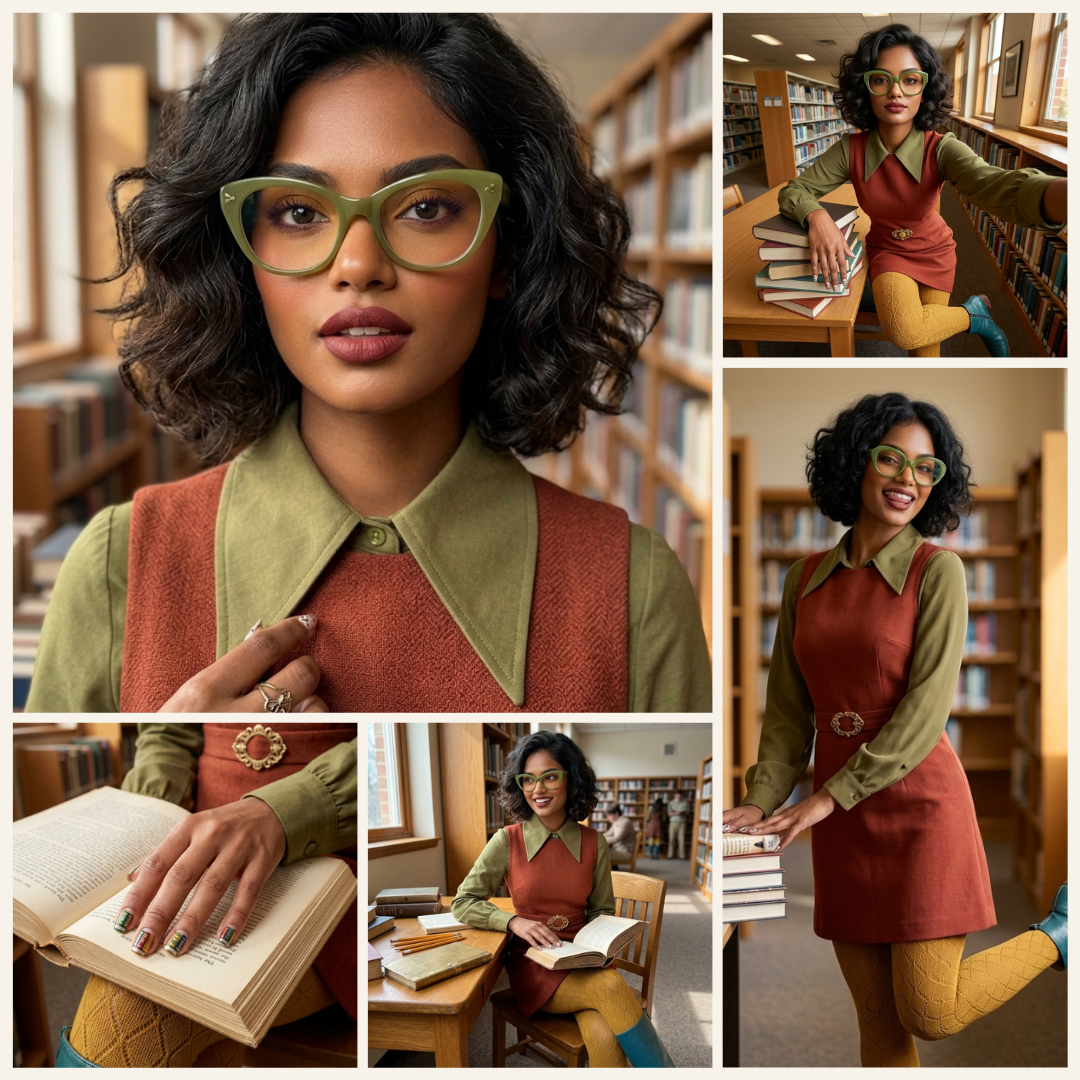
This is the dialect that layers a dress over a polo shirt, puts mustard tights under a rust skirt, and wears a cardigan that argues with everything else in the outfit. It overlaps heavily with what we know as literary chic or poetcore — preppy staples with a bookish, slightly impractical logic.
Half-hearted eccentricity reads as someone who got dressed in the dark. Full commitment is someone with a developed eye who stopped asking permission. This dialect ages best, because it doesn't rely on trends.
COLOR PALETTE
Mustard and saffron (the anchor color)
Rust and brick (the warm argument)
Pea green and dulled olive
Plum and dusty rose
Colors that genuinely clash, worn together with total composure
One color repeating somewhere as the only concession to order
WARDROBE SPECIFICS
A dress worn over a shirt (the signature move — polo, turtleneck or oxford beneath)
Patterned tights in a color nobody expected
Cardigan with visible mending or contrast buttons
Pleated skirt in an odd, slightly wrong color
Vintage brooch, pinned somewhere unusual
Crocheted or hand-knit vest (visibly handmade)
Wide-collar seventies-cut blouse
Corduroy pinafore or shift
Silk scarf at the neck or knotted in the hair
Round or deliberately oversized frames
STYLING APPROACH
Commitment is the whole trick — half-hearted reads as an accident
Three clashing colors, worn calmly and without comment
Layer garments that were never designed to layer
Mix eras freely: seventies blouse, nineties cardigan, forties brooch
Pattern on pattern, with the scales deliberately mismatched
Nothing matches on purpose, but one color repeats somewhere
Ages better than any other dialect, because it depends on nothing being current
SHOES
Mary Janes with a strap and a low heel
Two-tone or colored loafers
Ankle boots in an unexpected color
Clogs, worn with visible patterned socks
The '90s Office Librarian
Office siren's wardrobe minus the sultriness
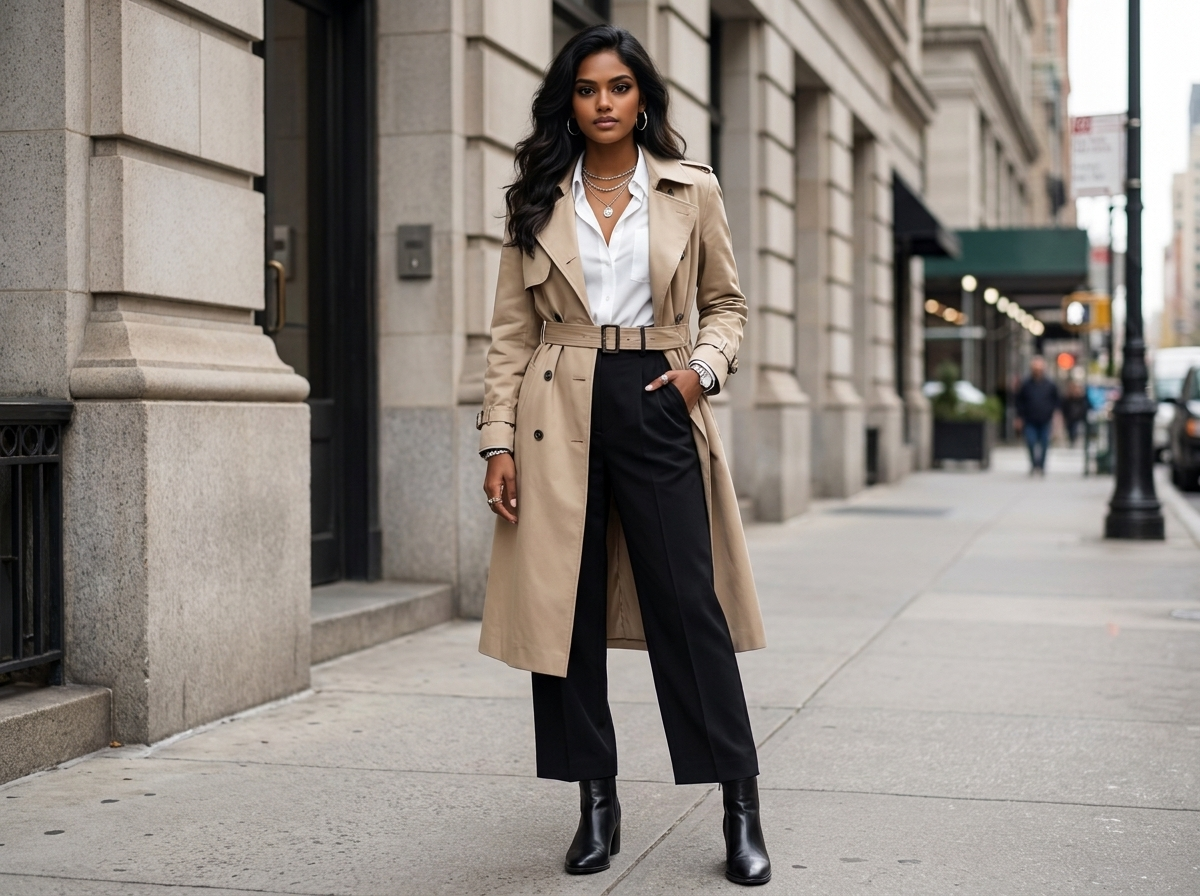
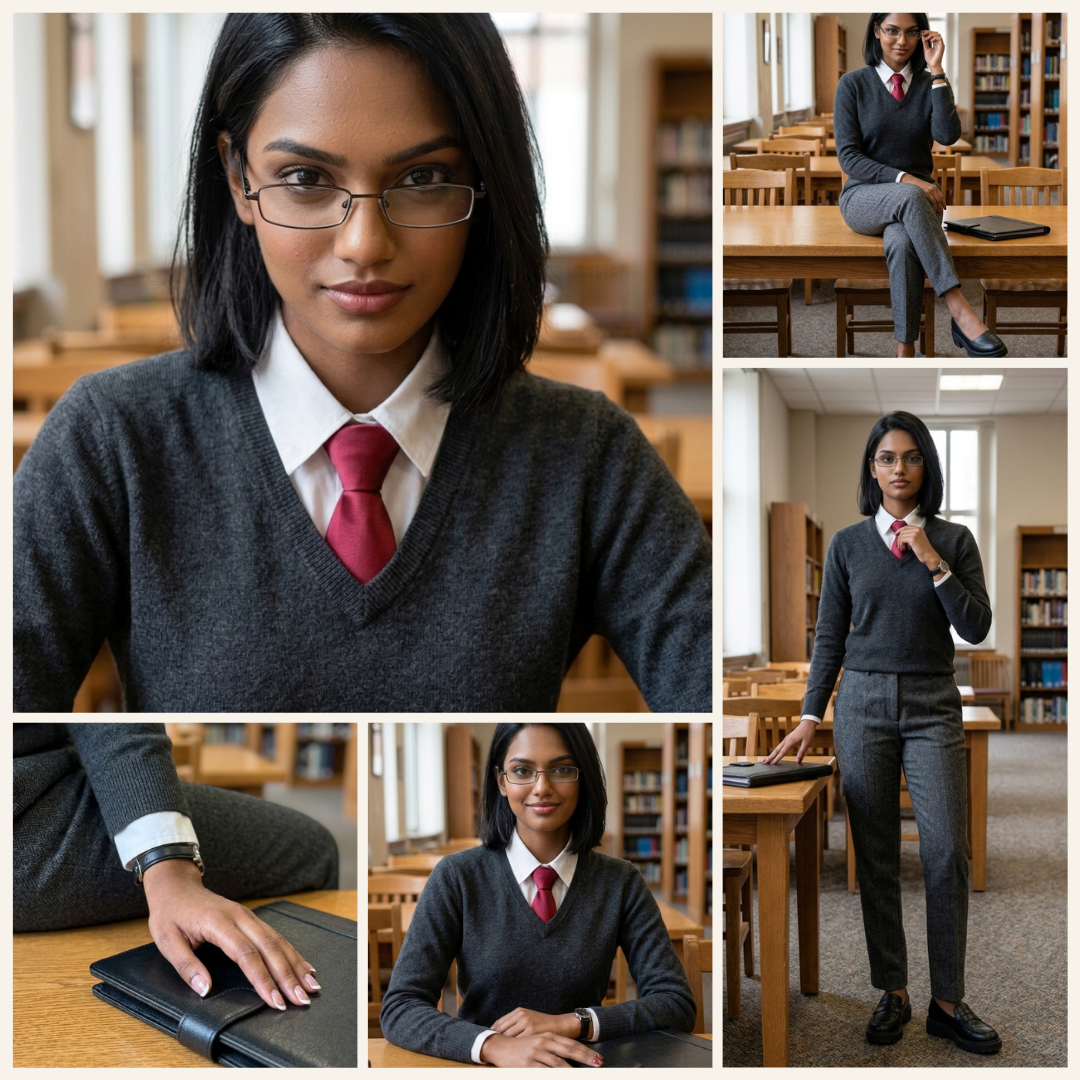
More corporate than the rest. Oversized black blazer, stark white shirt, a jewel-toned tie, wide-leg trousers, a deep side part. The contrast is sharper than the core palette allows. This is the one dialect where black and white do the heavy lifting instead of oatmeal and brown.
It sits close to the aesthetic that has been running on TikTok as office siren, sometimes called corp-core, which has been building since late 2023 around eighties through Y2K corporate dressing: pencil skirts, blazers, heels, and small oval glasses. The two share a wardrobe and diverge completely on intent.
Office siren is about sexualized corporate power, and the sultriness is the entire proposition. The '90s office librarian is about competence. They intentionally take the sexuality out of it with knee-covering hems, looser blouses, flat shoes.
If you have been drawn to office siren but found the heels and the pencil skirts too much of a costume, this is what you’re looking for.
COLOR PALETTE
True black and stark white (the spine of the whole thing)
Charcoal and slate
Jewel-tone accents — emerald, sapphire, oxblood
Camel as the single warm note permitted
Silver hardware, not gold
Nothing oatmeal, beige, or softened
WARDROBE SPECIFICS
Oversized black blazer (borrowed proportions, strong shoulder)
Stark white shirt, crisply pressed
Jewel-tone silk tie
Wide-leg black trousers with a full break
Straight knee-length skirt (covering, not pencil-tight)
Fine black turtleneck
Long wool overcoat or belted trench
Slim leather briefcase or structured shoulder bag
Small oval or rectangular frames
Opaque black hosiery
STYLING APPROACH
Contrast harder than the core palette allows
Oversize the top half, keep the bottom half clean
Deep side part, hair sleek or pulled back entirely
Deliberately uncoquettish: covering hems, flat shoes, loose blouses
Where office siren adds sultriness, this subtracts it — that is the whole distinction
One jewel-tone accent per outfit, never two
Nothing fitted enough to read as a silhouette statement
SHOES
Flat black leather loafers
Kitten-heel slingback (the only heel this dialect permits)
Ankle boots on a low stacked heel
Black lace-up derbies
The Archivist
If Librarian Chic and Minimalism had a baby.

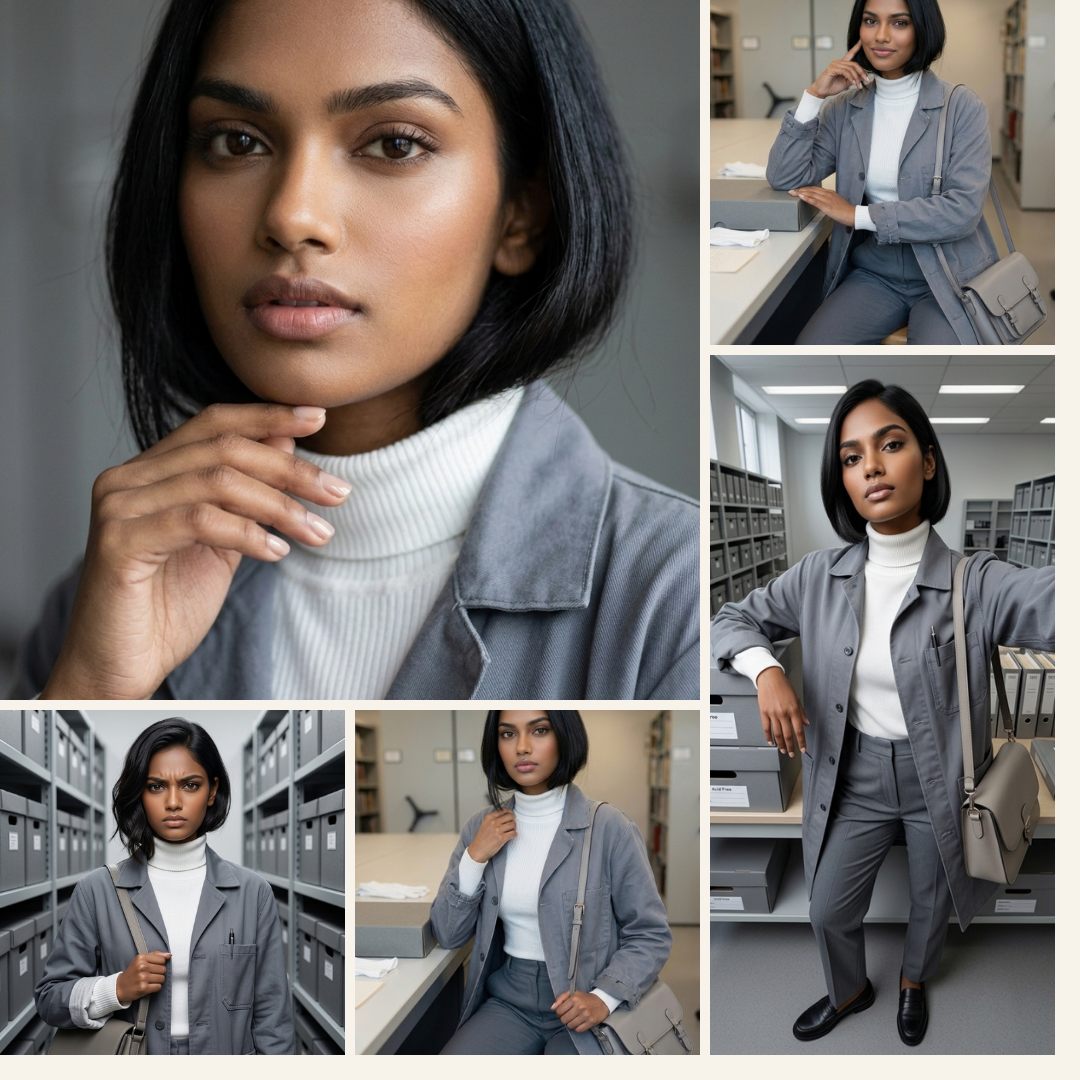
The only dialect that entirely abandons the warm palette. Grey, bone, black, white, and nothing else. No pattern. The pieces turn utilitarian with: a cotton work smock, a boxy overshirt, and flat lace-up shoes. Everything is chosen for practicality rather than Instagram.
This is where librarian chic touches minimalism, and it is the version for people who find the tie and the pattern mixing fussy. The accessories go functional or disappear: a watch, a plain leather strap, cotton gloves if you actually handle old paper.
What makes it read as this aesthetic rather than as generic minimalism is the structure. The collar is still visible and the layers still have countable edges. Strip those out and you've just got grey clothes.
COLOR PALETTE
Bone, chalk and off-white
The full grey range, warm through cool
True black, used sparingly and structurally
No accent color at any point (the only dialect with none)
No pattern of any kind, including stripe
Texture carries everything color would: canvas, linen, brushed wool, cotton twill
WARDROBE SPECIFICS
Cotton work smock or utility coat
Boxy overshirt in grey or bone
White collared shirt, sleeves permanently rolled
Grey wide-leg trousers
Unstructured grey wool cardigan (plain horn buttons or none)
Heavy cotton or linen apron
White cotton gloves (functional, not decorative)
Plain leather watch strap
Canvas or unlined leather satchel
Wire-frame or clear acetate glasses
STYLING APPROACH
Every choice justified by function before appearance
Structure stays: visible collar, countable layer edges
Decoration removed entirely — no jewelry, brooches or scarves
Sleeves rolled, always, as a permanent condition
If it cannot be worked in, it does not go on
Texture substitutes for color and has to do real work
The failure mode: strip out the structure and it is simply grey clothes
SHOES
Flat black leather lace-ups
Grey or white canvas plimsolls
Unpolished derbies (patina permitted, shine is not)
Plain flat ankle boots with no visible hardware
The Grad Assistant
Geek chic's direct descendant — polished staples thrown on in ninety seconds.
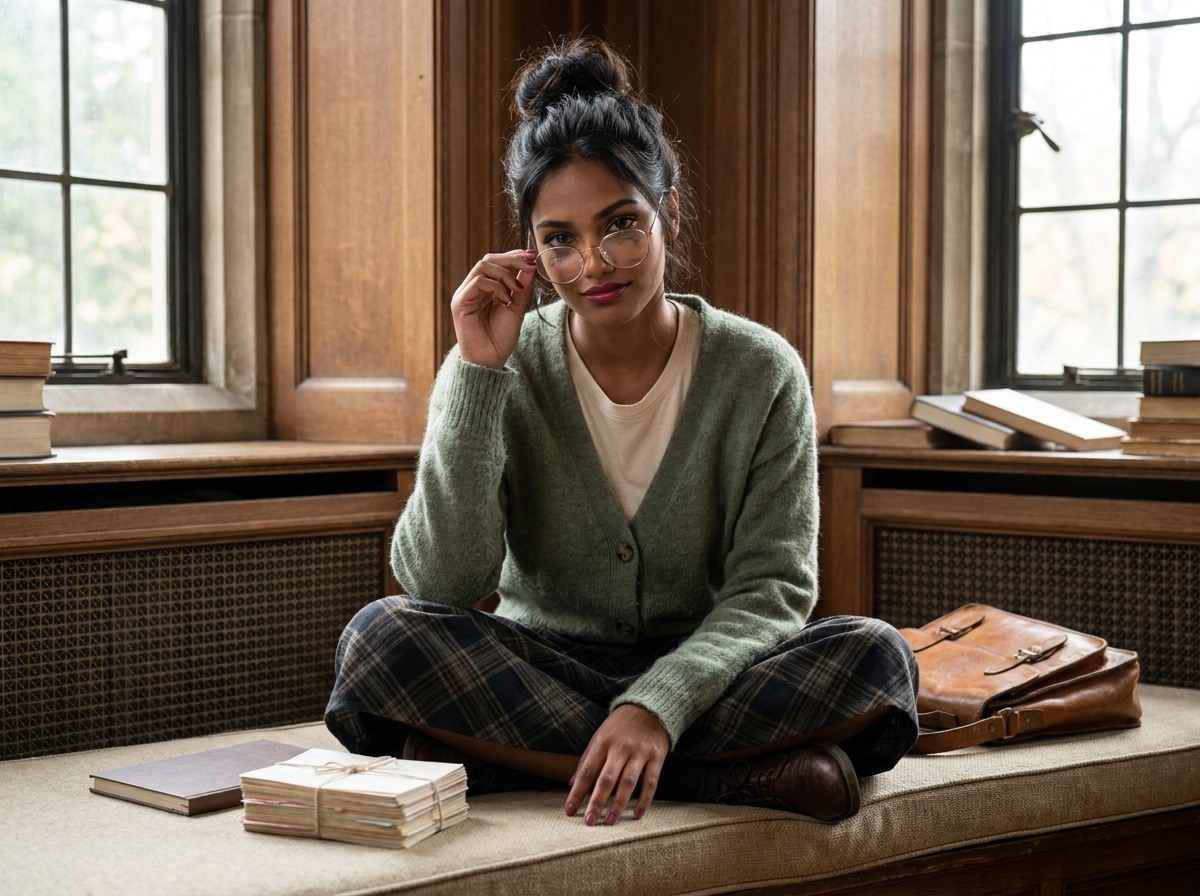
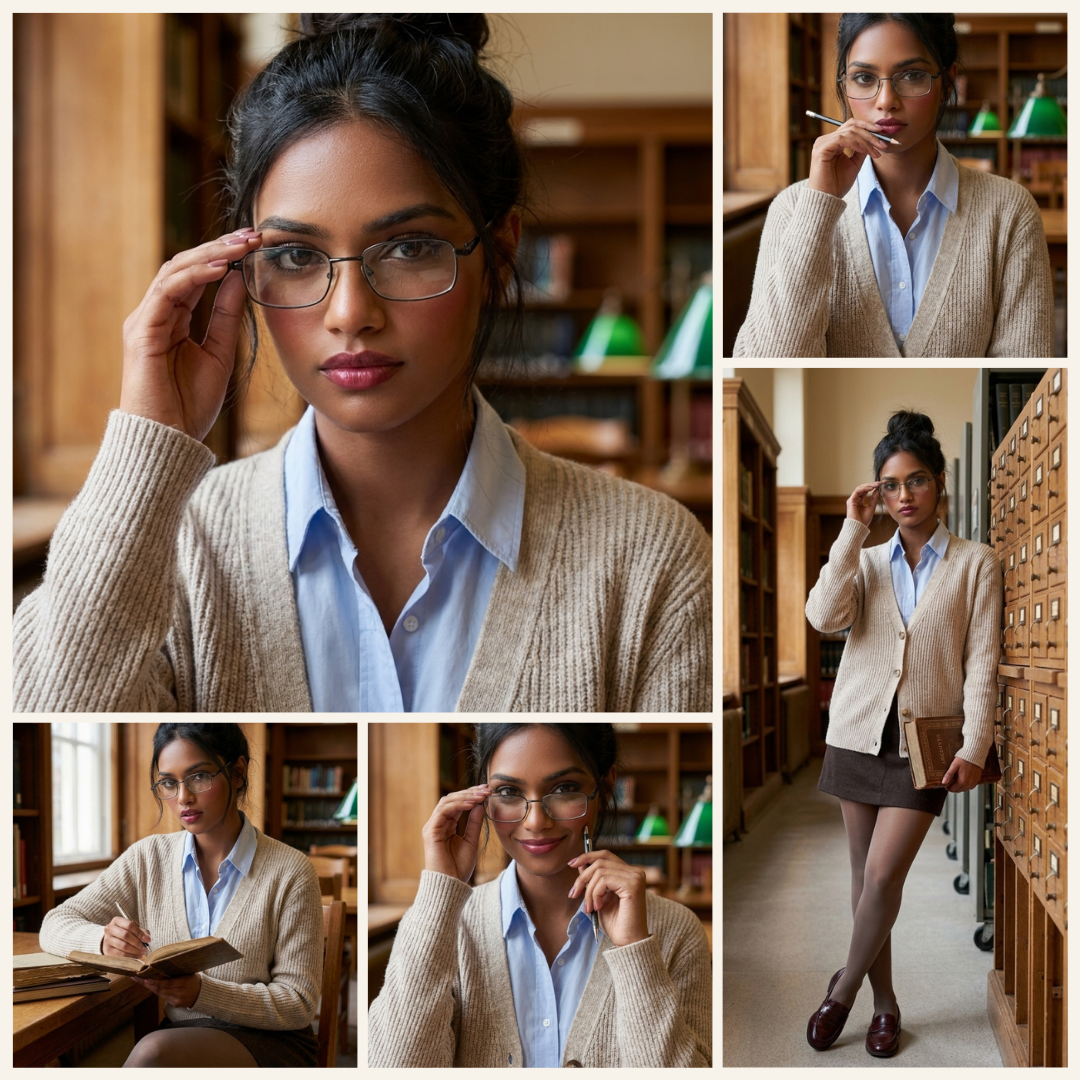
The youngest and the cheapest, and the one most people are wearing. Everything is thrifted and a size too big. Picture an oversized men's oxford with the sleeves pushed up, a moth-holed Shetland vest, corduroys that needed a belt, a canvas tote carrying more than it should. Sneakers instead of loafers. The whole thing looks assembled over eighteen months rather than bought in an afternoon, because it was.
This dialect has a direct line back to geek chic, which ran through 2024 on the charm of someone who owns polished staples and threw them on in ninety seconds. It is also the most honest version of the aesthetic, since it is the only one whose price point matches the fantasy. Actual academic workers do not dress like the polished dialect. They dress like this, and they layer because…it’s cold.
COLOR PALETTE
Washed ecru and yellowed white
Dulled olive and army green
Worn brown and tobacco
Faded navy and softened indigo
Everything slightly muddied by age and washing
Nothing crisp, nothing new, nothing saturated
WARDROBE SPECIFICS
Oversized men's oxford, sleeves shoved to the elbow
Moth-worn Shetland sweater vest
Corduroys a size too big, held up by a belt
Thrifted wool cardigan with the elbows gone
Canvas tote, permanently overloaded
Flannel or chambray shirt used as a mid-layer
Men's crewneck sweatshirt worn over a collar
Secondhand wool overcoat, an inch too long
Beaten leather belt, wrong shade on purpose
Scratched frames in an unfashionable shape
STYLING APPROACH
Everything one size too large, by intention and by circumstance
Layered for warmth first and effect second
Visible wear is the point — mend, but do not mend invisibly
No tie, or a tie worn badly and knotted once
Sneakers over loafers, without exception
Eras mix because everything was thrifted, not because it was curated
Buy it all secondhand — the tights being the one thing bought new
SHOES
White sneakers, thoroughly scuffed
Beat-up leather loafers, unpolished
Duck boots or weatherproof lace-ups
Wool socks, visible above all of the above
The Part Where We Admit Librarians Don't Dress Like This
Because they don't, obviously.
Real librarians do a super demanding public service job on a public budget. They are constantly on their feet, running around, and wrestling with jammed printers. This trend is based on the fantasy librarian, born from old movies and a weird cultural obsession with the quiet, mysterious woman.
It works because the fantasy is actually cool. It falls flat when it looks like a costume. The best version is where the clothes are good, nicely layered, and lived-in.
That's the same reason preppy and dark academia work.
What Librarian Chic Isn’t
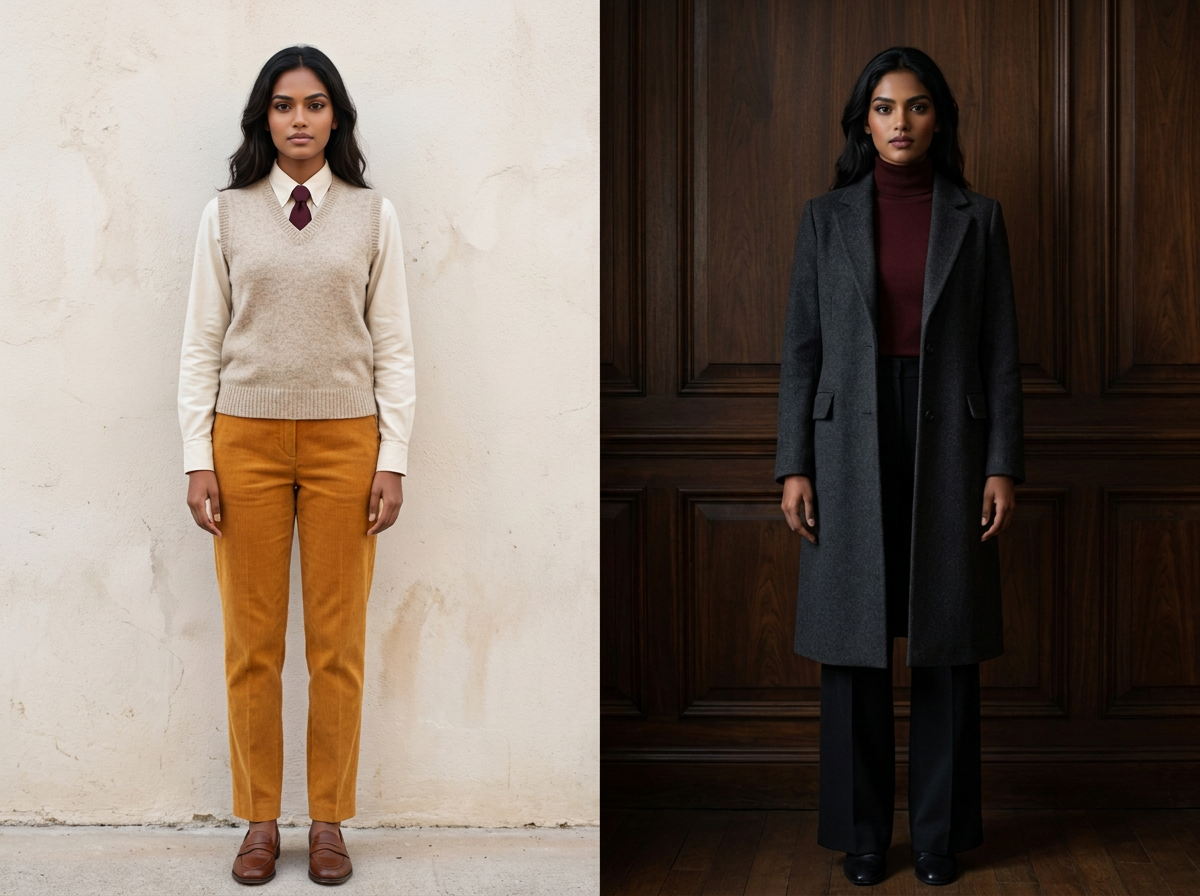
Left side: Librarian chic. Right side: Dark academia. Neither is wrong, but they send different messages.
Several aesthetics could get confused with this one because several of them share a wardrobe with it almost item for item. What separates them is not the clothes but what the clothes are saying.
Three of the five — preppy, old money, quiet luxury — are mainly about class. They differ in how they signal it, but the subject underneath all three is money and where yours came from. Two of them — twee and academia — are about mood. Librarian chic is the only one in the group whose subject is competence, and that is why it behaves differently from all five.
Librarian Chic vs. Twee
The closest relative and the most common mix-up, especially with the eccentric dialect, because the two overlap on patterned tights, cardigans, Peter Pan collars, thick frames and Mary Janes. Twee has always borrowed from bookworm dressing, and its revival is enormous — videos about twee fashion have passed a billion views on TikTok.
The split is age and approval.
Twee performs girlishness, and beneath the polka dots and the bow-trimmed flats there is a request to be found endearing. Librarian chic makes no such request. This woman stopped asking permission a decade ago and has been enjoying herself since. Twee channels the early sixties in pastel; librarian chic reaches for the seventies in mustard and rust.
Librarian Chic vs. Dark Academia (or Light Academia)
Academia aesthetics are obviously about school. The fantasy is pursuing knowledge in institutions with more history than you know what to do with. Dark academia does it in charcoal and oxblood with Gothic architecture and a faint air of doom. Light academia does it in cream and honey with spring light and optimism.
Librarian chic is about working. It is not the person studying the collection, but the one who keeps it. That entirely flips the register. Academia wants you to feel something. Librarian chic wants you to look like the person to ask. It is also the reason the clothes are more mobile — you cannot shelve books in a floor-length wool cape.
Librarian Chic vs. Preppy
Oxford, sweater vest, loafer, tie, tweed — the vocabulary is preppy's, borrowed wholesale. The difference is what has been stripped out.
Preppy signals membership. The crest, the school colors, the club, the team, the whole grammar is about belonging to an institution usually one you did not choose so much as inherit. Librarian chic removes every one of those markers. What replaces institutional belonging is expertise, which is the one form of status you can acquire without having been born into it.
Librarian Chic vs. Old Money
Old money is preppy's wealthier cousin, and it broadcasts inherited social tradition through equestrian motifs, traditional tailoring, and the occasional crest. Its subject is lineage, and lineage is the one thing that cannot be bought this year.
Librarian’s Chic’s subject is knowledge and you don’t need money to pull it off. The grad assistant dialect celebrates thrifted and moth-worn knitwear, and it is arguably the most convincing version of the aesthetic. Old money collapses the moment the money is gone. Librarian chic has no such dependency.
Librarian Chic vs. Quiet Luxury
What separates Quiet Luxury from Old Money is material focus. Unbranded, neutral palette, and structural drape, no lineage required or logo permitted. Where old money says my family has been here for generations, quiet luxury says this cashmere costs more than you think.
Librarian chic does not care about fiber quality in the same way. A thrifted Shetland vest with a moth hole in the shoulder is excellent librarian chic, but disqualifying for quiet luxury. Librarian Chic requires structure and legibility, which you can get at any price. Quiet luxury also has no room for pattern mixing, eccentricity, or tolerance for visible wear, all three of which are load-bearing here.
Making Librarian Chic Yours
Starting the Journey
The Beginner's Approach:
One white oxford, fits well
One Shetland or lambswool sweater vest
A pair of wool flannel or corduroy trousers
Loafers, any tier
A silk tie from a thrift bin
Practice buttoning the vest partway
Intermediate Moves:
Add the second vest (a tailored waistcoat this time)
Introduce the Peter Pan collar
Try patterned tights under a solid skirt
Layer the cardigan over the vest over the shirt
Buy the coat that ends the outfit
Start pattern mixing with texture, not graphics
Advanced Levels:
Three visible collars in one outfit (advanced)
Two graphic patterns plus a solid, held together by one shared color
The tie worn long and loose over a turtleneck
The Emma Corrin move (short-sleeved layer over long-sleeved layer)
Vintage sourcing as the primary shopping method
The full menswear-suiting-plus-tie outfit, entirely fluent
Adaptation Tips:
Office librarian chic (oxford + vest + trouser + real shoes)
Weekend librarian chic (Shetland + corduroy + loafer)
Evening librarian chic (silk blouse + wool trouser + loafer + subtle tie)
Travel librarian chic (cardigan-as-outerwear + wide trouser + comfortable loafer)
Event librarian chic (waistcoat as jacket + trouser + ankle boot)
The Future of Librarian Chic

Where It's Heading
Emerging Directions:
The tie becomes permanent in womenswear
More patterned hosiery in the mainstream
The vest replaces the blazer as the default third piece
Peter Pan collars migrate into everyday shirting
Texture-as-pattern becomes the mainstream approach
The trend absorbs into wardrobes rather than exits — the fate of every trend that's built on real garment categories
Why It Will Last (a While)
The Enduring Appeal:
Built on timeless garment categories
Layering is functional
The palette is wearable
It’s more flattering than most trends
It bridges preppy and academia
It looks better in real life than on the runway (rare)
Librarian Chic Conclusion
Librarian Chic suggests that competence can be aspirational and layering is visible thinking.
In a world of maximalist logos, main-character costume dressing, and aesthetic tribes competing for TikTok algorithm attention, Librarian Chic refuses to shout.
Whether you're building your first Shetland-vest-and-oxford combination, hunting archival Brooks Brothers on The RealReal, or learning to knot a silk tie, Librarian Chic reminds us that fall 2026's most legible trend is also its most wearable.
Overdue first edition optional. 📚👔✨
