
Normcore: When Trying Not to Try Became the Ultimate Try
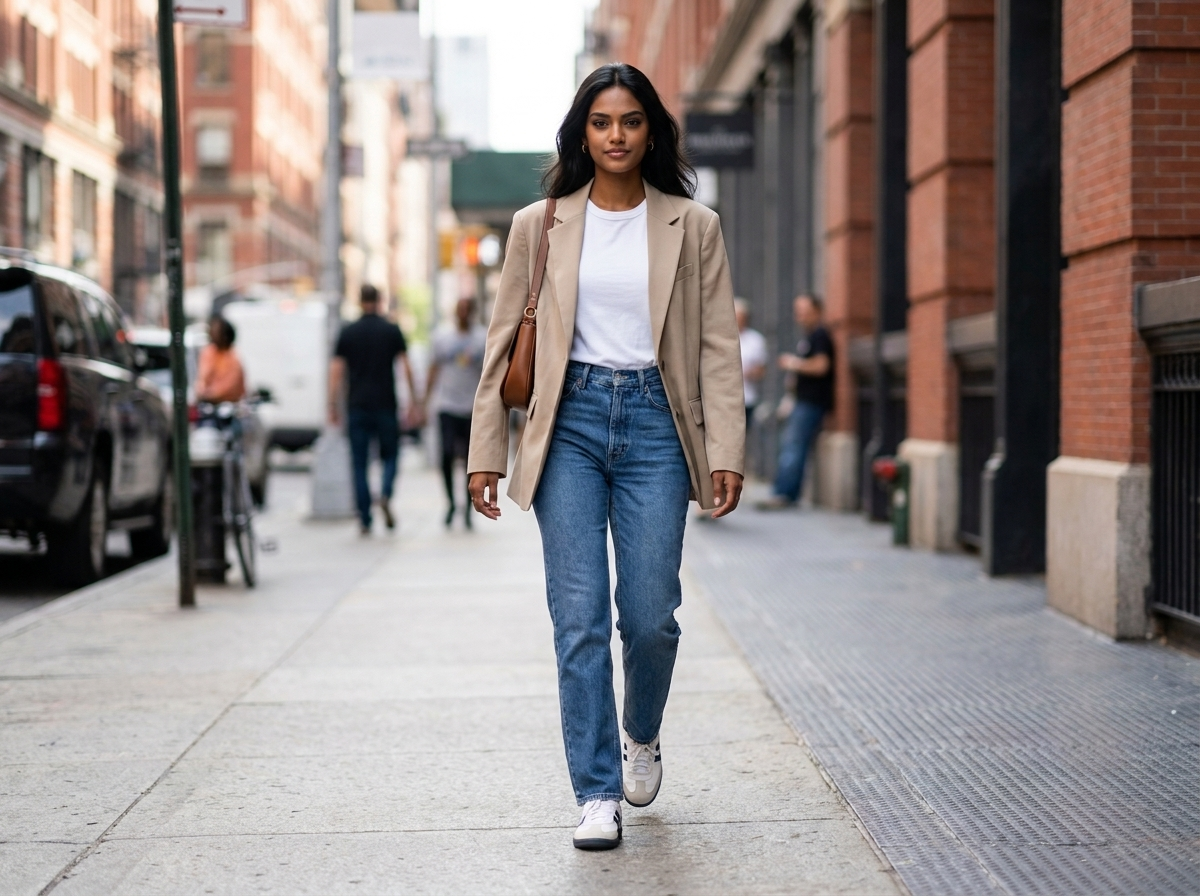
Table of Contents
In the autumn of 2013, a tiny brand-consulting agency with the hilariously serious name K-HOLE published a paper titled: "Youth Mode: A Report on Freedom." It read like a dusty sociology textbook, circulated like secret rebellion memo, and ignored by everyone outside of a some Brooklyn hipsters for about a year. But buried deep inside was a word that would change ten years of fashion: normcore.
Normcore looked at streetwear's logo obsession and high fashion's peacocking and said, "but what if we just... didn't?" It's the sartorial bland anti-statement. The goal is looking exactly like a middle-aged tourist from Ohio circa 1996. This is the aesthetic that turned dad sneakers into grails and made Uniqlo the coolest brand in Brooklyn.
Where every other aesthetic screams "look at me," Normcore whispers "please don't," which of course makes everyone look. It's the belief that ultimate confidence requires no signaling, that being unremarkable is remarkable. Think Steve Jobs turtlenecks, Jerry Seinfeld's sneaker collection, and Larry David's entire existence.
The Normcore Promise
What It Sells:
Freedom from trend cycles
Post-fashion consciousness
Democratic accessibility
Effortless anti-cool cool
The status of not needing status
What You Get:
Actually comfortable clothing
People asking "are you okay?"
Mom-brand rehabilitation
Costco appreciation society membership
But also: never wondering what to wear
Cultural Context

The original concept had nothing to do with fleece vests or dad sneakers. In a culture obsessed with standing out, K-HOLE said true freedom might be not standing out.
Then the internet did what the internet does, and normcore got a simpler meaning: just dress like a suburban dad. Jerry Seinfeld, in his blindingly white sneakers and pleated mom jeans, became the king of the trend. It is wild to think about, because the trend is built on a giant lie: you have to care a lot to look like you don't care at all.
Why plainness became a flex
Before 2013, fashion was all about giant brand logos, flashy reality TV stars, and early Instagram. Normcore was the ultimate comeback: what if the coolest thing you could wear was something unremarkable?
In borrowing from Silicon Valley, the “tech founder” uniform (plain tee, hoodie, jeans, discreetly expensive sneakers) made looking plain very cool for rich people. Normcore took this idea to the streets: dressing down to show you don't need to dress up. The catch is that this only works if people know you could dress up if you wanted to.
Is Normcore Ironic or Sincere?
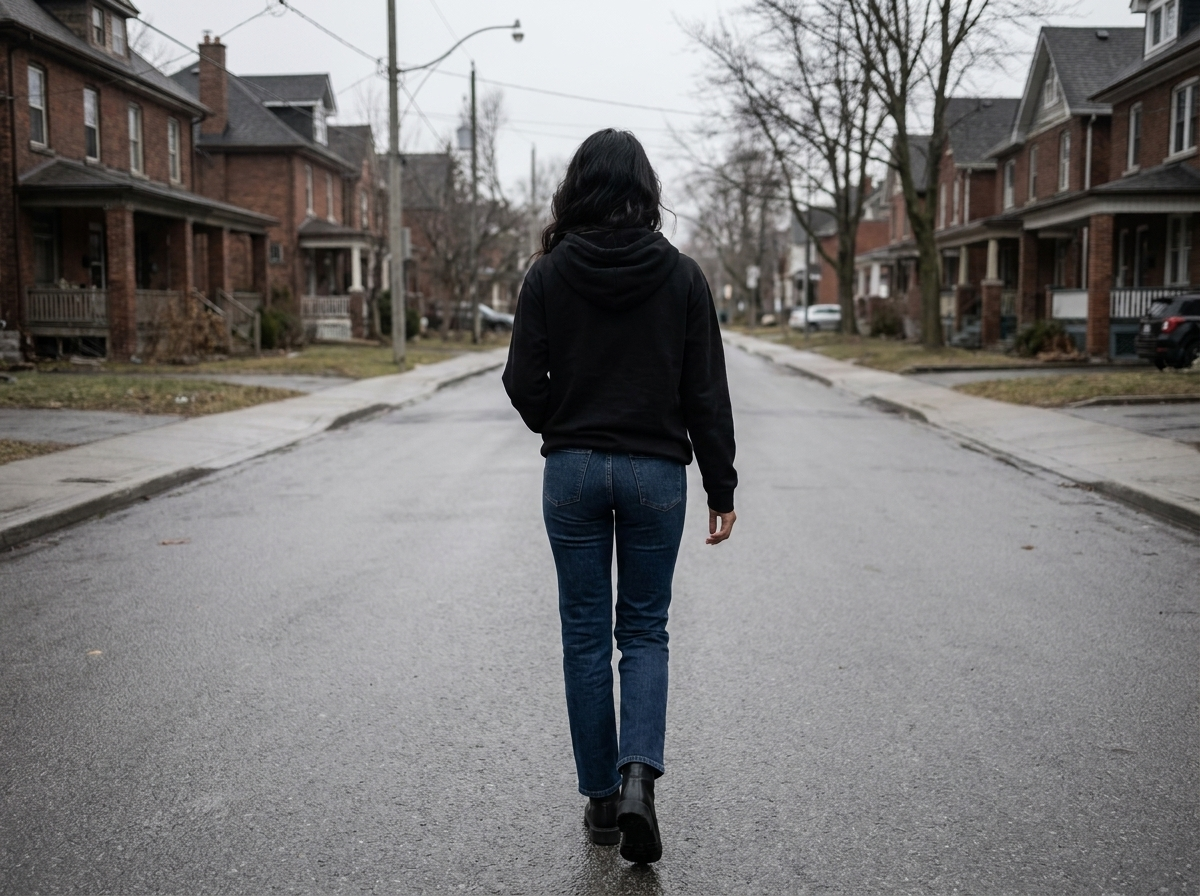
When hipsters started buying New Balance sneakers and turtlenecks, were they laughing at the fashion world, or were they just looking for comfy shoes? The real answer is likely both.
The style lasted for over ten years, rotating through names like "dadcore," "gorpcore," and the "quiet" luxury trends of the 2020s. But the basic instinct is identical: restraint is cooler than showing off. If you've ever wondered how a fifteen-dollar plain white tee and a three-hundred-dollar plain white tee can share the same cultural vibe, this is the reason.
Whose normcore, exactly?
Most associate normcore with tech-bros, which leaves out the most interesting part: how different it feels for women. A guy wearing a plain t-shirt and jeans, is just dressed. A woman wearing the same thing, is saying no to the pressure to spend hours getting ready. For women, normcore was rebellion.
That “opt-out” connects normcore to two other major trends: athleisure and streetwear. Athleisure took workout gear out of the gym. Streetwear took skateboard culture and turned it into a cool, exclusive club. While they aren't exactly like Seinfeld's style, they both agree that old rules of fashion are dead.
We’ll dive into both of these later, because for most women today, they are the main ways to start dressing normcore.
What this guide will and won't do
It would be easy to write ten thousand words about New Balances and call it a day, but Normcore is more interesting as a cultural experiment than a shopping list. We'll get to the shopping list. But it'll make a lot once we exposed the contradictions underneath.
The Authenticity Argument
Normcore's Honesty:
No pretense maintained
Democratic accessibility
Time reclaimed from fashion
Money saved
Attention deflected
Wardrobe simplified
The Catch:
Elevated Normcore is expensive
The irony can be exhausting
Actual invisibility is impossible
Trend cycles catch up (it happens)
Anti-fashion is still fashion
The uniform can feel boring
Defining Normcore
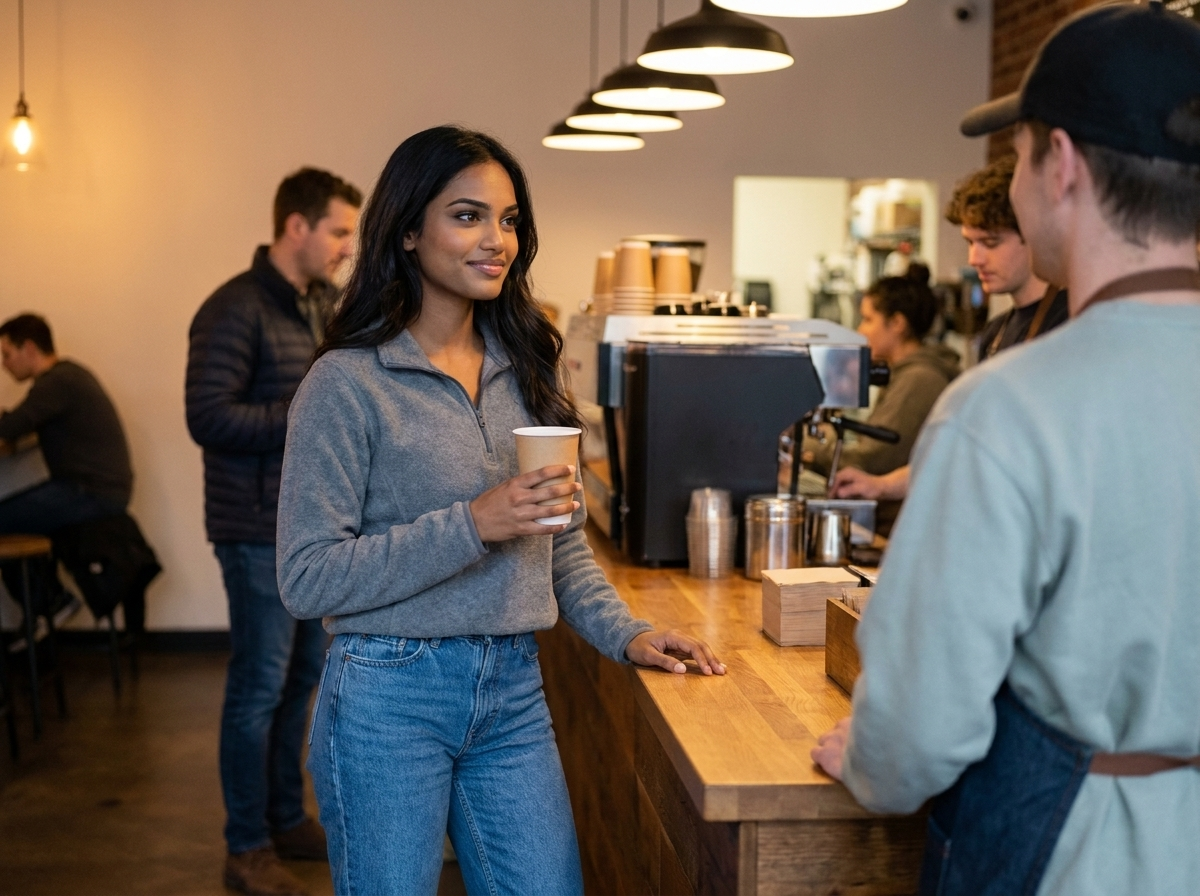
Ask ten people to define normcore most will say something like "wearing basic stuff on purpose," which is true, but it doesn’t explain anything. It lumps together a woman wearing a fitted white t-shirt and premium jeans, and a guy who hasn't bought new clothes since 2011.
Even though they look similar, they are not doing the same thing. The trend lives in the gap.
Looking Simple Is Not The Same As Laziness
Here is the ultimate test: would your outfit look good in a close-up photograph?
Real normcore is incredibly picky about tiny details. A plain white t-shirt in the wrong size just looks like a boring shirt; but a t-shirt with the perfect thickness, length, and shape is a smart decision. The same goes for jeans. Average observers won't notice these details. It is a secret language meant only for people in the know.
The original idea was about giving up. But making normcore look good requires you to be an expert in fit, fabric, and shapes because you don't have a giant logo to hide behind. A wild outfit made of emerald velvet can hide a bad fit. But a plain white t-shirt has nowhere to hide. So the style that’s “not trying” is actually one of the hardest to pull off.
The insider signals hiding in plain sight
Because normcore can't rely on branding the way logomania does, it developed its own signal system.
It's not just "sneakers," but a New Balance model in a colorway popular among insiders long before it hit the streets. The weight and cut separates a fleece jacket from high-quality to cheap mall knockoff. This is normcore's secret handshake: it pretends to be for everyone, but rewards a deep, nerdy knowledge.
Let's be honest, because most fashion guides completely skip it: normcore done well is not cheap or easy.
Knowing which shade of grey looks "thoughtful" rather than "depressing" requires serious fashion education. In a loud, wild outfit, your skill is in style and layer. In Normcore, skill is at the checkout counter, and then invisible.
Female Normcore Icons
Steve Jobs gets credit for turning the personal uniform into a corporate philosophy (more about him below), but women had also mastered the same idea.
Ellen DeGeneres: Crisp shirts, relaxed trousers, sneakers, and blazers. Her wardrobe made the case for practical tailoring long before “gender-neutral basics” became a retail category.
Whoopi Goldberg: Loose trousers, boots, vests, roomy shirts, and layers chosen for life rather than spectacle. Her version is less minimalist than classic Normcore, but it carries the aesthetic’s core belief: comfort can be a point of view.
Diane Keaton: Menswear-inspired trousers, belts, hats, turtlenecks, white shirts, and a refusal to dress according to anyone else’s expectations. More theatrical than Normcore at times, but foundational to its “this is simply what I wear” confidence.
Frances McDormand: Functional shoes, unfussy denim, workwear layers, simple dresses, and zero visible interest in becoming decorative for the camera. The patron saint of looking like a real person with somewhere to be.
Sofia Coppola: Fine knits, straight-leg jeans, simple flats, neutral coats, and quiet, repeatable silhouettes. She is the softer, more polished bridge between ’90s Mall Normcore and Elevated Normcore.
Julia Louis-Dreyfus as Elaine Benes: Blazers over tees, straight jeans, loafers and sneakers, practical bags, uncomplicated shirts. Elaine’s wardrobe is a useful reminder that ordinary clothes become iconic when they have personality.
The lesson from all of them: a uniform does not have to be boring. It just has to be yours.
Callout
Steve Jobs: The Man Who Made the Uniform a Brand
Steve Jobs is the specific figure we've dancing around since previous discussion of the tech-world uniform, and he deserves a callout of his own, because he didn't just wear Normcore — he engineered it.
The story, as Jobs told his biographer Walter Isaacson, starts with a visit to a Sony factory in Japan in the early 1980s, where Jobs learned the company's employees wore uniforms designed by Issey Miyake — the same designer behind some of the era's most celebrated avant-garde fashion. Jobs asked Miyake to design a similar vest for Apple; employees hated it. But Jobs and Miyake stayed close, and Jobs eventually asked the designer to make him a personal supply of the black turtlenecks he'd admired — reportedly around a hundred of them, enough, as Jobs put it, to last the rest of his life. Paired with Levi's 501 jeans and New Balance 991 sneakers, that turtleneck became his uniform for the next three decades, worn at nearly every product launch until his death in 2011.
What makes this worth flagging in a normcore guide specifically is the gap between the story and the myth. The popular read on Jobs's uniform is pure normcore logic before the term existed: plain, unbranded, repeated daily to eliminate decision fatigue. But the turtleneck itself was custom-made by a globally renowned designer, produced in a private run just for him. It's the Model Off-Duty archetype's tension, discussed back in Section 5, playing out a decade before the archetype had a name — restraint that photographs as effortless because the resources and relationships behind it were never visible in the first place. Jobs didn't invent the founder uniform, but he's arguably the person most responsible for turning "plain, repeated, unbranded" into a legible signal of seriousness that Tech Bro/Sis and the broader tech industry are still borrowing from today.
Historical Roots
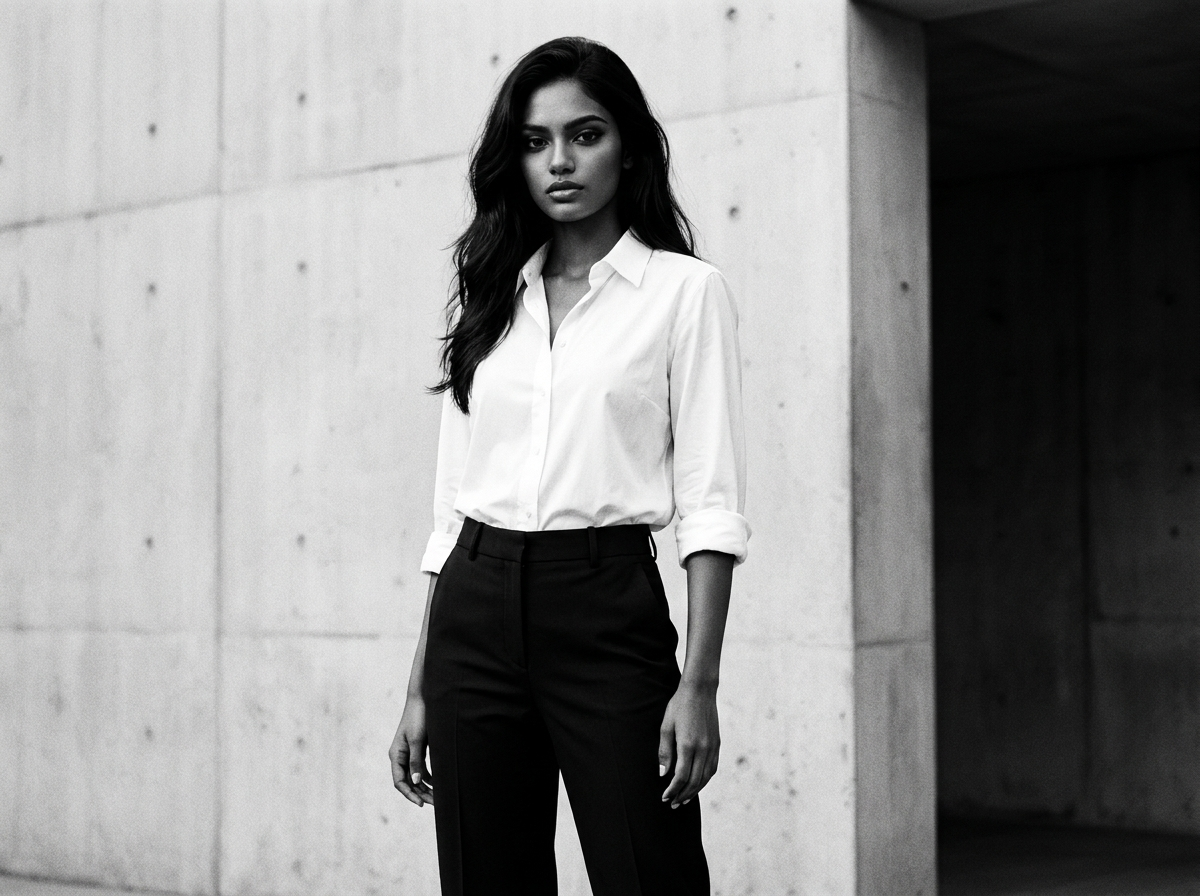
Every aesthetic loves to claim it has a long, royal family tree, and normcore is no exception. While the 2013 K-HOLE report gave the look its official name and shiny internet packaging, the story has a much older and weirder history. To trace it right, we have to look past modern style blogs and dive into 1990s minimalism, tech-nerd anti-fashion, and a decades-long debate.
The 90s minimalism that set the table
Nineties minimalism’s fashion was a reaction to the 1980s shoulder pads and logo-forward maximalism. It said that a well-made plain garment carried more authority than a busy one. This is, more or less, the same argument normcore makes twenty years later, just more casually.
It puts normcore in a recurring cycle rather than a one-off internet joke. Fashion has swung between maximalism and minimalism for a long time, and normcore is the most recent swing of that pendulum.
Nineties minimalism was still, unmistakably, fashion. Normcore took the same underlying logic and applied it to gym shoes, plain tees, dad jeans.
That's the real innovation.
The tech-world detour
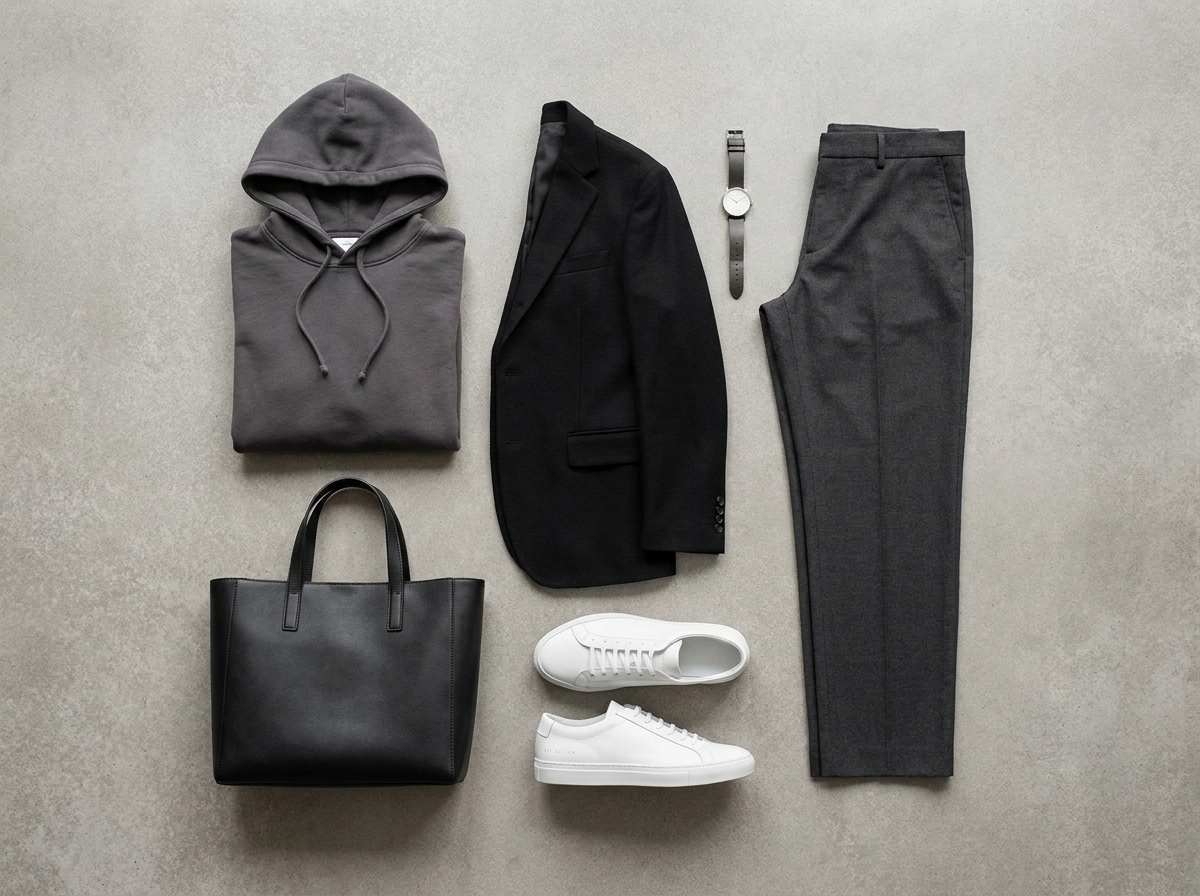
We mentioned earlier that Normcore’s origins are in Silicon Valley, but the fashion industry underplays this part. Long before K-HOLE published its report, the tech giant uniform was: plain t-shirt, hoodie, jeans, and sneakers costing either twelve dollars or four hundred…you can’t tell. The uniform served a purpose but it also did status work. Dressing like you didn't care about clothes signaled that your attention, and your money, cared about more serious things.
A twenty-three-year-old founder in a plain hoodie is focused; a twenty-three-year-old in the same hoodie without the company just underdressed. Normcore absorbed this dynamic more or less, and it's part of why it has always had an uneasy relationship with class signaling. It works best as a flex when the wearer's status is already established elsewhere.
Where women's fashion history complicates the story
Here's a thread most accounts of normcore skip: the idea of women downplaying feminine dress codes as rebellion didn't start in 2013, either. Look at Katharine Hepburn in trousers, Coco Chanel stripping away corsetry, Mod’s shapeless dresses fighting the feminine form. None of these moments are "normcore" but they're making the same argument: opting out of decorative femininity can itself be a style statement.
How the internet compressed the whole cycle
The last piece of the historical picture is really about speed. Nineties minimalism took years to move from runway to mainstream wardrobe. Normcore, by contrast, went from an obscure trend report to mainstream in under two years, likely because of how internet media redistributes ideas. Style blogs picked up the K-HOLE report attached it to reference points like Seinfeld, and "dressing like your dad" traveled far faster and further than the original ever could have on its own.
Normcore was arguably one of the first major fashion trends to be popularized online instead of a runway, which makes it an early case study. It also explains why normcore has cycled in and out of relevance more times than a single decade-old trend probably should have.
Carrying this forward
All of this sets up something important for the sections ahead.
Normcore isn't a single, coherent idea with one clean origin story; it's several older ideas that converged under one internet-friendly name in 2013. That layered history will matter once we get into the wardrobe breakdown. It explains why normcore can look so different depending on who's wearing it and why.
Core Wardrobe Elements
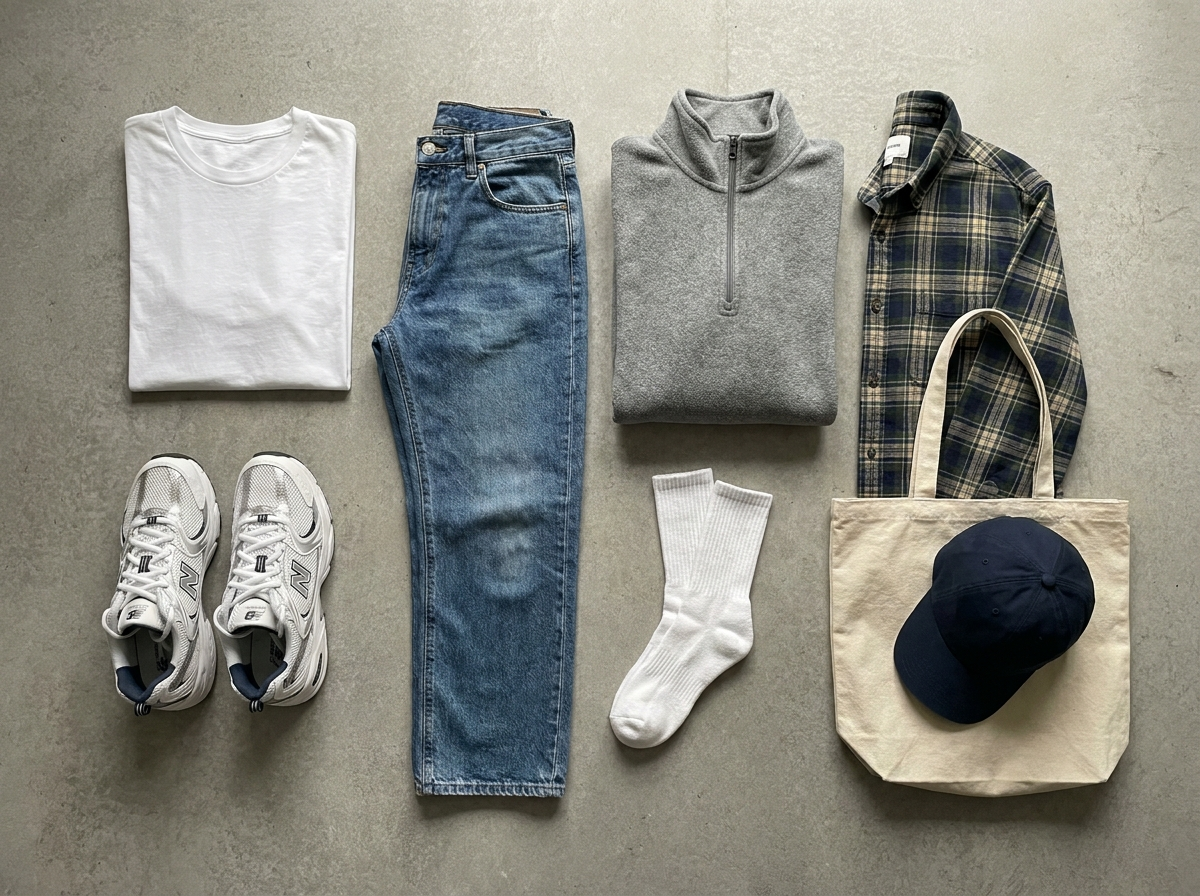
Every aesthetic eventually needs an inventory. Unlike a maximalist or Boho wardrobe, normcore runs on a tight rotation of maybe eight or nine pieces. Understanding what each piece is actually doing matters more here because the wardrobe is small enough that nothing can hide.
The plain t-shirt
Start with the plain crew or slightly boxy t-shirt, in white, grey, black, or a faded, worn-in version of any of the three. This is normcore's foundational garment. A too-long hem or clingy fabric push the tee from "basic" into "just a t-shirt," full stop. A mid-weight cotton holds its shape through a day of wear in a way thin, fast-fashion jersey doesn't.
A tee has the least room to hide cheap material.
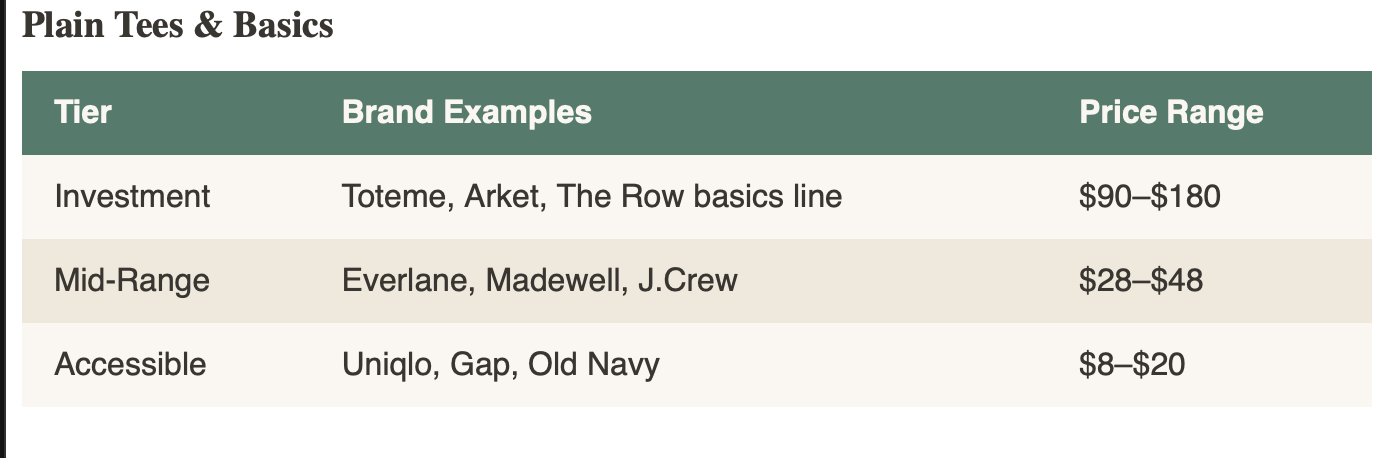
Investment-tier tees come from labels specializing in elevated basics, using heavier-weight cotton or cotton-blend fabrics engineered to hold their shape and drape over repeated washes.
Mid-Range basics come from reliable basics-focused retailers that prioritize affordable consistent fit and decent fabric weight.
Accessible-tier tees are where budget carries real risk in this category. Thin, see-through jersey undermines the whole look faster than almost any other single mistake.
Spend slightly more within the Accessible bracket on tees and denim, and cut costs elsewhere in the wardrobe.
Straight-leg and mom jeans
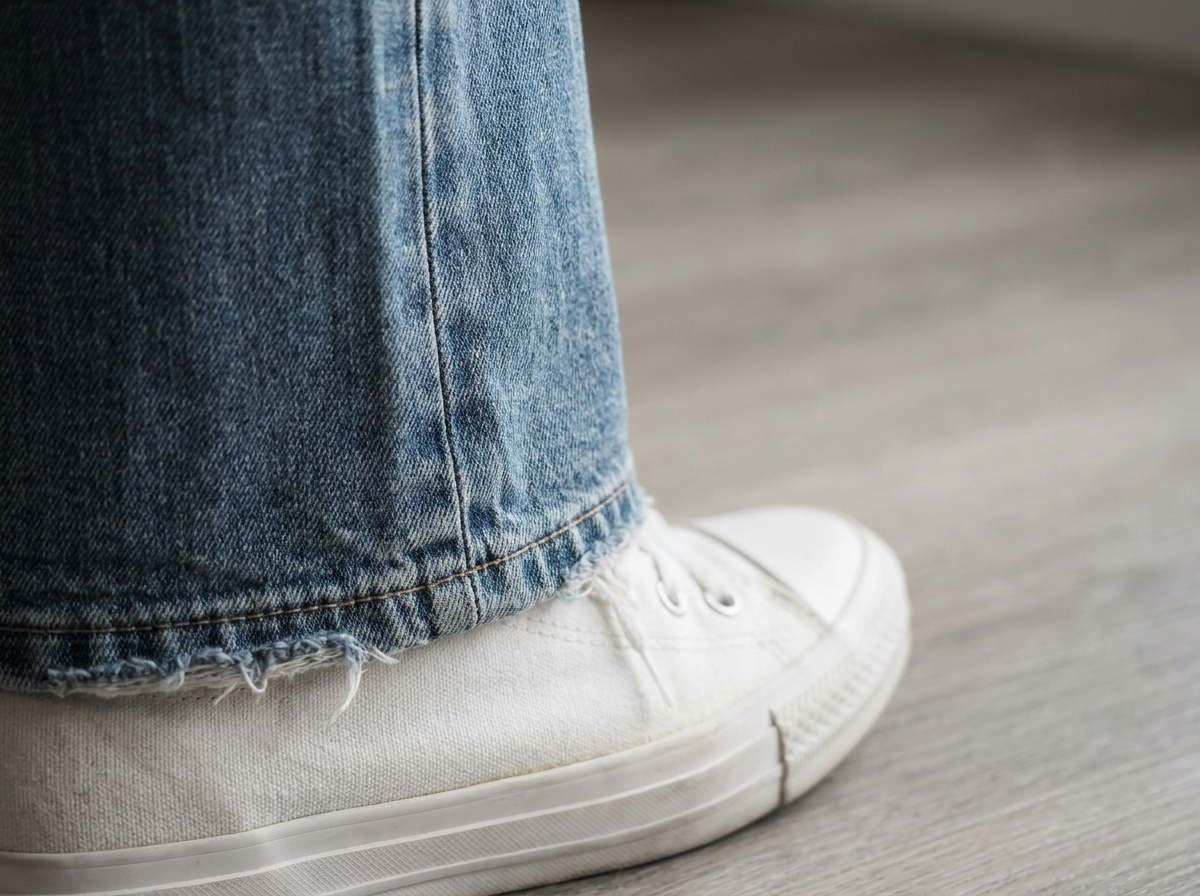
Denim is one of the places the aesthetic draws a firm line.
Skinny jeans read as trying. Normcore denim is either straight-leg or a true, higher-rise mom cut, with room through the leg.
A stark, dark indigo is too polished; heavy distressing is trying in the opposite direction. The sweet spot is a mid-fade, slightly worn wash that looks like it's been in regular rotation for a couple of years.
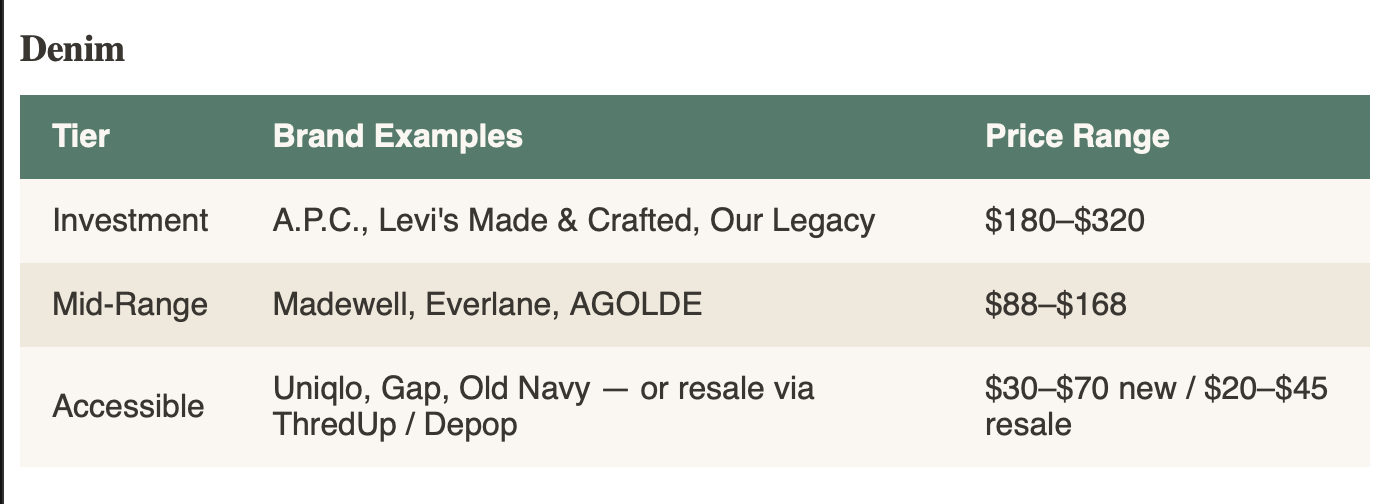
At the Investment tier, denim means raw or selvedge construction, often Japanese-milled, with a weight and hand-feel that holds its shape through years of wear. This is where the Scandi Minimalist archetype spends the bulk of its budget, since the fabric quality does the signaling work that a logo would do elsewhere.
Mid-Range denim shifts to well-constructed straight-leg or mom-cut jeans from reliable denim-forward label. They’re not raw, but finished, with an engineered wash.
At the Accessible tier, vintage and secondhand mom jeans, from platforms like ThredUp, The RealReal, or Depop, often have the authentic, decades-worn quality that new denim tries to fake. A pair of secondhand vintage Levi's outperforms more expensive new pairs imitating the worn look.
The unbranded sneaker
The sneaker is Normcore’s most misunderstood signal.
The sneaker here isn't unbranded but quietly branded. The brand mark is small or muted in color, not the point of the shoe's design the way it would be on a hype sneaker.
Chunky running-shoe silhouettes from athletic brands work better than more overtly fashion-forward sneaker brands, because part of the sneaker's job is to look functional.
The irony is a handful of these plain sneakers have themselves become status objects.
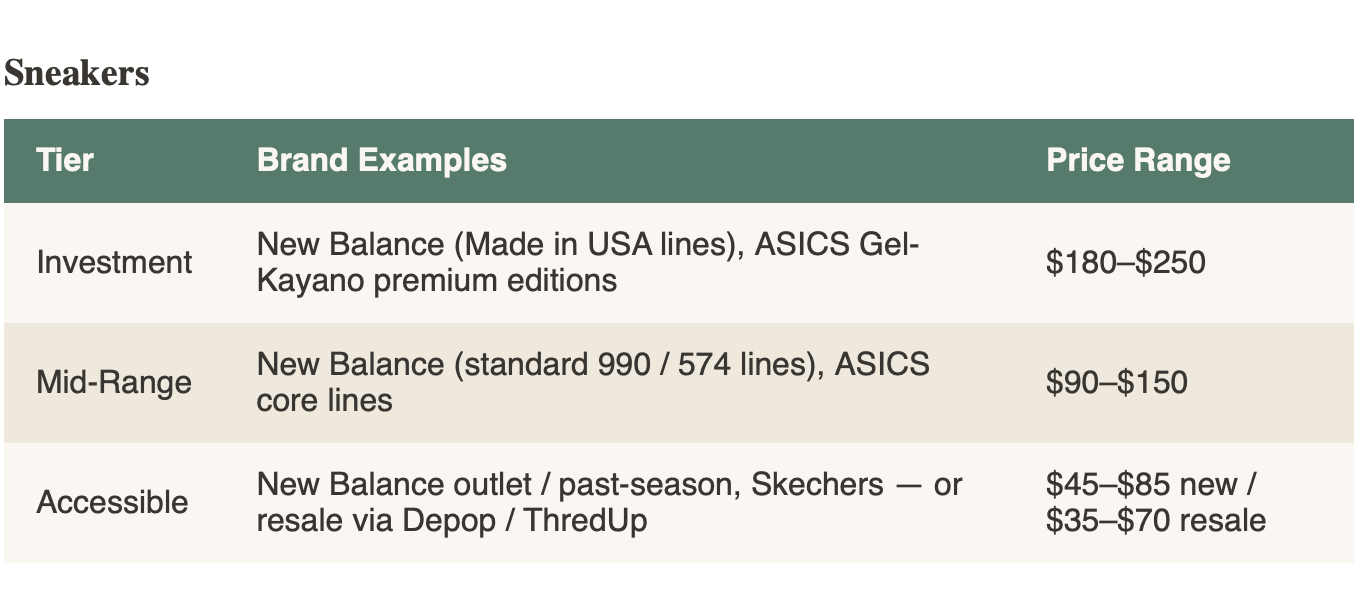
Investment-tier sneakers favor technical running silhouettes from athletic heritage brands, chosen for build quality and a muted colorway.
Mid-Range sits in accessible versions of the same silhouettes. The classic dad-style running shoe, still well-constructed, still in the right muted tones, just without the premium materials.
Accessible-tier sneakers can either through budget-friendly versions or through resale, a gently used pair in the right silhouette and colorway does Normcore’s job just as good.
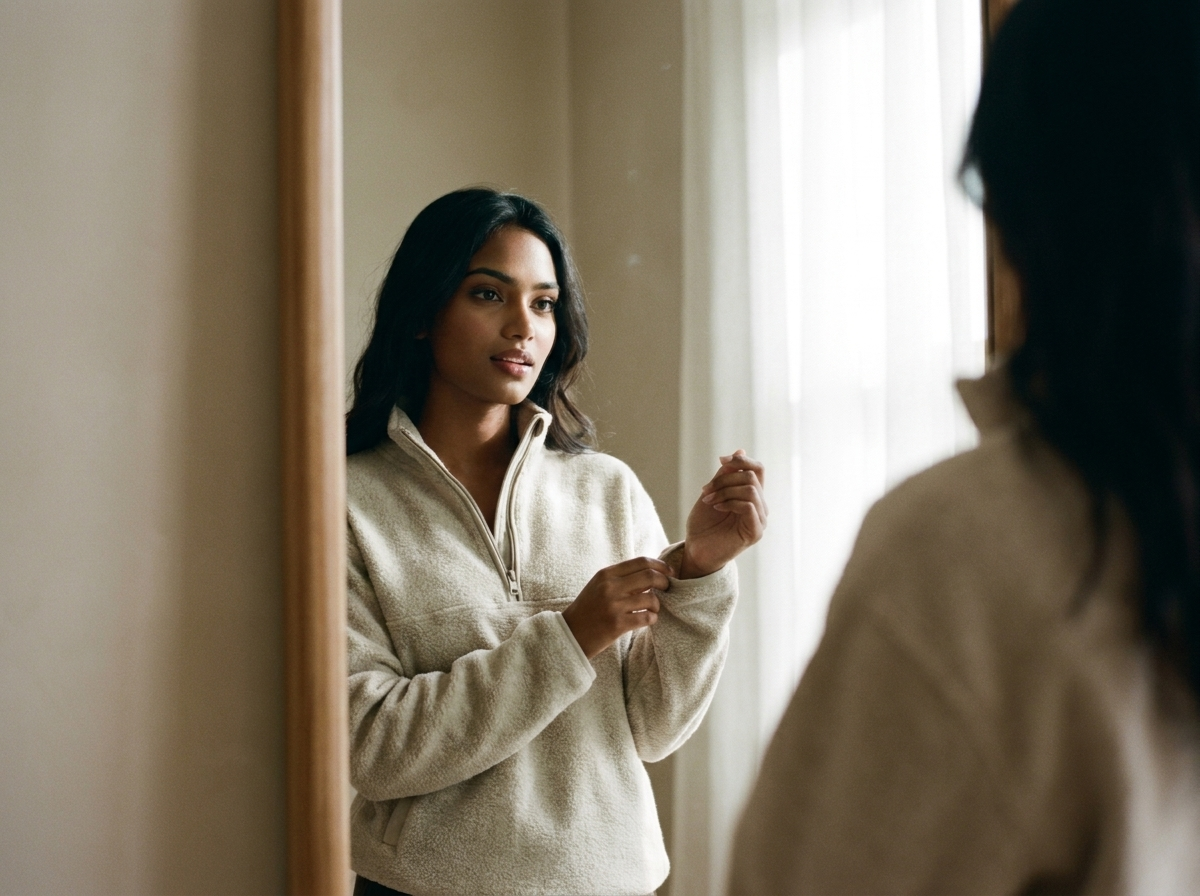
Fleece and quarter-zips
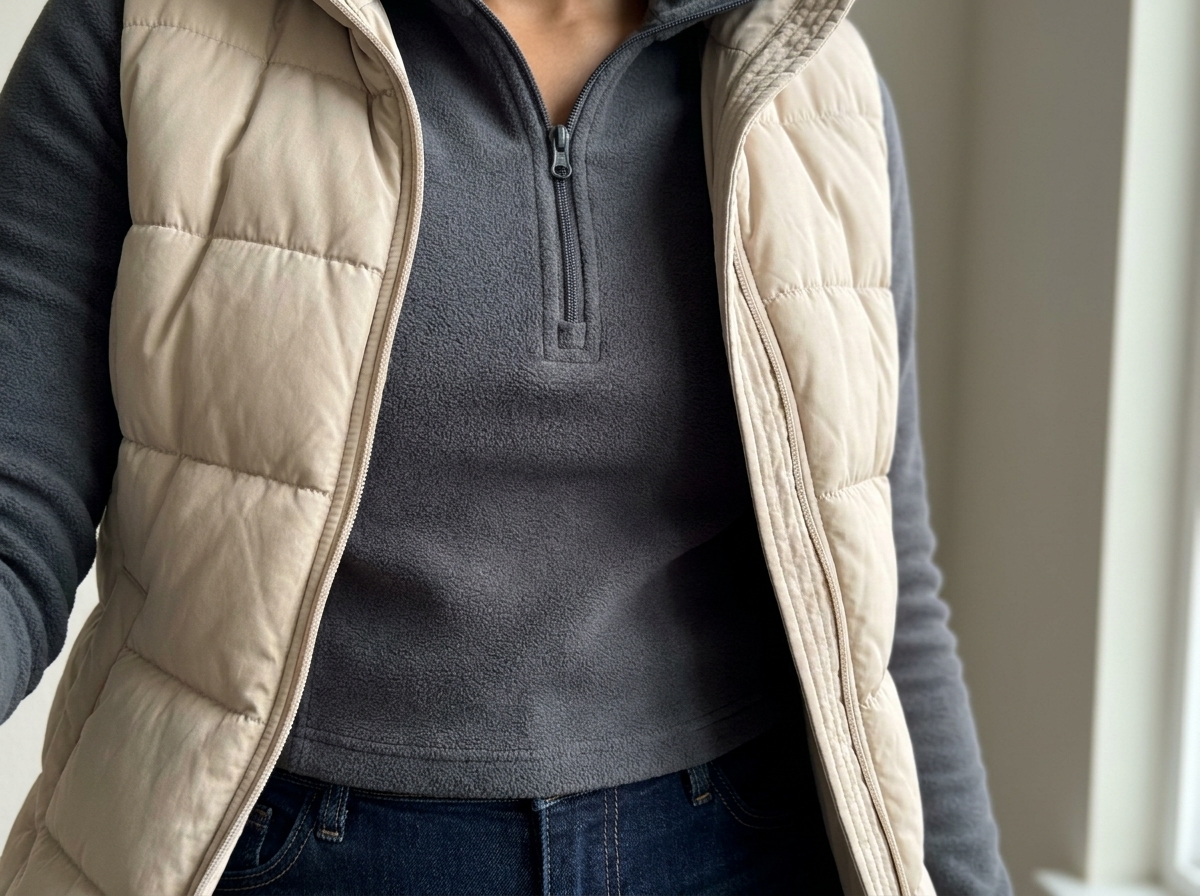
Outerwear in Normcore is function-first. Fleece has a soft, matte quality that photographs well in the muted palette, and the quarter-zip silhouette has become something of a shorthand across several adjacent trend cycles (gorpcore, dadcore/momcore, and now this current wave of "quiet" everything).
A fleece in a saturated, sporty color is athletic gear; the same in oatmeal, stone, or navy is an aesthetic choice.
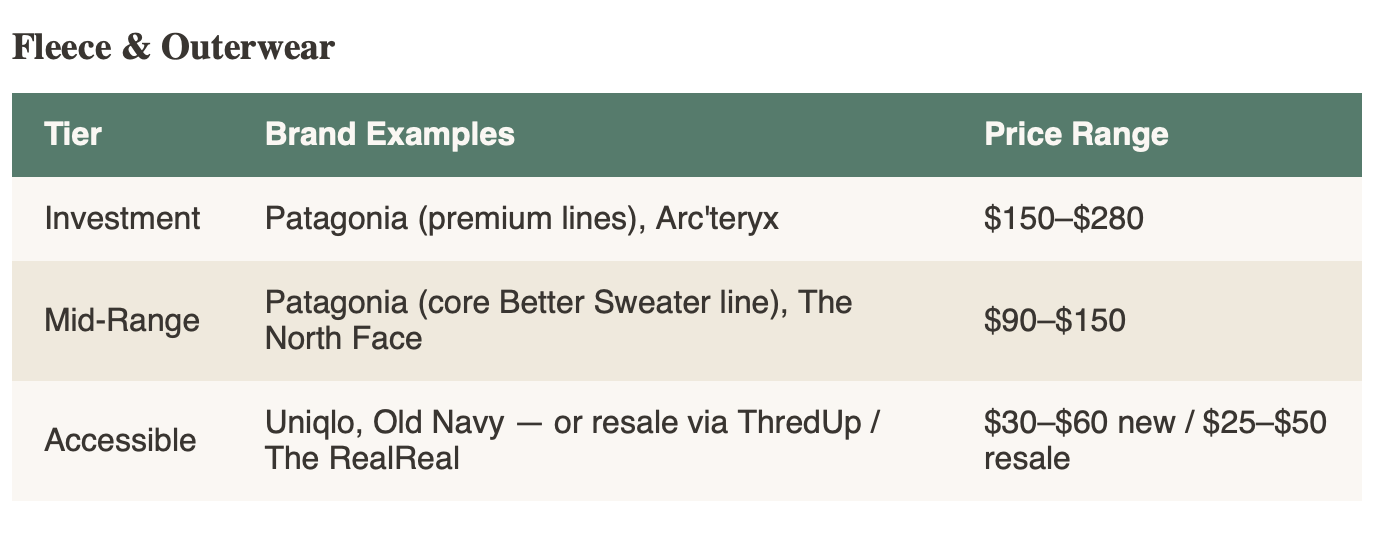
Investment-tier fleece and quarter-zips come from technical outdoor brands, chosen the way the Gorpcore does best, for real insulation and construction quality.
Mid-Range versions come from mainstream retailers' outdoor or athletic lines, offering a similar silhouette and reasonable warmth without the premium technical fabric.
Accessible-tier fleece is one of the easiest categories to source secondhand, since fleece pullovers and quarter-zips tend to survive resale racks in good condition.
The oversized button-down or shirt-jacket
Layered over a tee or worn open, an oversized plain button-down introduces a more relaxed, borrowed-from-menswear silhouette without tipping into full streetwear territory.
The oversizing here is one of the few places the aesthetic allows itself real volume. The shirt is a size or two up on purpose, with shoulder seams sitting past the natural shoulder line.
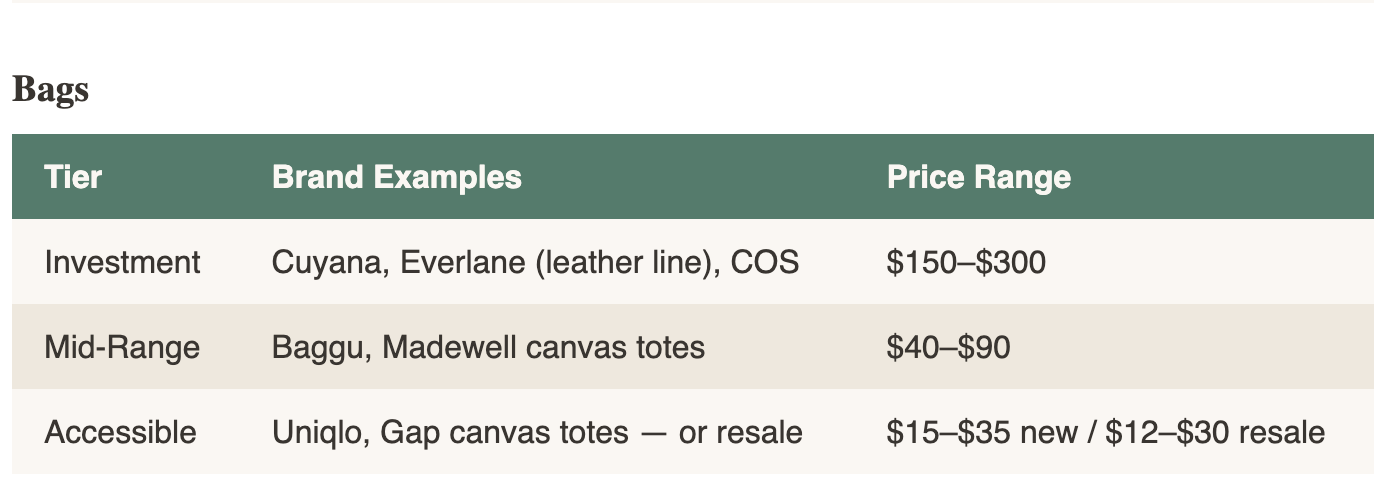
The tote or utilitarian bag
Rounding out the wardrobe is a a canvas tote, structured crossbody, or a sporty nylon bag. Leather handbags with hardware or branding are outside normcore's vocabulary.
Investment-tier bags in this wardrobe are structured totes or crossbody bags from labels specializing in excellent leather goods or technical nylon construction.
Mid-Range versions replicate the same utilitarian silhouettes in canvas or nylon from mainstream retailers.
Accessible-tier bags are straightforward: a simple canvas tote or nylon crossbody from almost any retailer does the job, since this category relies far less on fabric literacy than denim or tees.
Plain socks, visible on purpose
A small detail, but referenced constantly: crew socks, usually white, visible above the sneaker.
This detail traces back to the aesthetic's dad-style origins, intentionally unglamorous. Wearing them plain is a small fluency signal in the aesthetic's internal logic.
Baseball caps and beanies
Headwear stays understated in a plain black, gray, or navy baseball cap or a ribbed beanie in the colder months. Logos tend toward small and utilitarian. The cap and beanie say that are completing the aesthetic's argument that getting dressed shouldn't require much conscious styling.
Shopping the Normcore Dream
Normcore shopping is less about finding rare pieces than building a wardrobe with enough unremarkable options that getting dressed is suspiciously easy. The ideal purchase is not exciting in the fitting room. It is the black trouser, gray sweatshirt, white tee, or everyday sneaker.
Buy the version that fits, works with your real life, and can survive being washed, worn, and ignored. The goal is to look like your clothes have already proved themselves.
Where to Build the Wardrobe
The Foundational Circuit
Stores that understand a tee does not need a backstory.
Uniqlo: The mothership of Normcore. Start here for heavyweight tees, crewneck sweaters, puffers, easy trousers, Heattech layers, and the kind of clean basics that make a wardrobe function.
Gap: The original source for ’90s Mall Normcore. Denim, logo-free sweats, striped tees, relaxed khakis, and classic jackets all live here with an appropriate amount of mall nostalgia.
Old Navy: The value commitment. Best for inexpensive tees, activewear, simple dresses, pajamas, and the practical basics you want multiples of without developing an emotional attachment.
L.L.Bean: The heritage authentic. Canvas totes, sturdy fleeces, flannels, rain layers, hiking-ready outerwear, and the pieces that make Coastal Normcore or Gorpcore feel real rather than styled.
Lands’ End: The catalog classic. A dependable source for practical outerwear, cotton knits, polos, and quiet layers with an almost aggressively sensible charm.
J.Crew: The prep-Normcore crossover. Go here when you want chinos, striped knits, button-downs, lady jackets, and elevated basics that feel a little more polished without becoming formal.
Banana Republic: The office-uniform source. Its best lane is relaxed tailoring: simple trousers, soft blazers, fine knits, clean loafers, and pieces for Normcore that needs to attend a meeting.
The Elevated Sources
When “just a black sweater” needs excellent shoulders.
COS: The European elevated. Architectural trousers, boxy tees, sculptural bags, minimal dresses, and outerwear that makes a very good case for owning fewer things.
Arket: The Scandinavian minimum. Straightforward knitwear, durable cotton basics, relaxed denim, and clean outerwear with just enough shape to feel intentional.
MUJI: The Japanese philosophical. Quiet, useful, logo-free basics for people who believe a wardrobe can be calming. Excellent for tees, knitwear, simple pants, and no-drama layers.
Everlane: The transparent basic. Particularly useful for straightforward denim, tees, everyday shoes, relaxed workwear, and the Millennial Basic portion of the program.
Lemaire: The elevated-uniform fantasy. Soft tailoring, beautiful neutrals, architectural shapes, and the kind of simple pieces that explain why a collar, seam, or drape can be worth caring about.
The Row: The aspirational option—the famous “$2,000 white tee” concept. You do not need to buy it to understand the lesson: perfect fabric, perfect fit, no unnecessary decoration.
Toteme: The Swedish sensible. Minimal coats, straight trousers, refined knits, sleek boots, and polished layers for Elevated Normcore with a quieter-luxury edge.
The Authenticity Sources
This is where Normcore becomes less curated and more convincing. A slightly worn sweatshirt, sensible fleece, or genuine old dad jacket often has more personality than a brand-new item designed to imitate one.
Costco / Kirkland Signature: The unironic commitment. Sweatshirts, socks, underwear, leggings, outerwear, and sensible basics bought in quantities that suggest you have thought ahead.
Target: The value pilgrim. Best for basics, simple loungewear, affordable tanks, tees, socks, and useful accessories—not necessarily the place to build your entire personality.
Marshalls / TJ Maxx: The lucky-find strategy. Go in with a list, especially for denim, athletic layers, basic sweaters, practical bags, and discounted sneakers. Leave if the list becomes “whatever is shiny.”
Local thrift stores: The genuine authenticity source. Look for worn-in denim, vintage crewnecks, old leather jackets, cotton button-downs, uncomplicated cardigans, and men’s-section outerwear.
The Sneaker Sources
Shoes matter more than most people expect in Normcore. A good sneaker does not need to be a hype release; it needs to look intentional, stay comfortable, and work with jeans, trousers, sweats, and skirts.
New Balance: The 990 pilgrimage. A classic choice for Dadcore, Tech Bro/Sis, and any outfit that needs a little practical authority.
Nike outlet: The Cortez acquisition. Ideal for Seinfeld-Core, ’90s Mall Normcore, and slimmer retro-sneaker looks.
Foot Locker: The mall commitment. Good for trying on classic sneaker silhouettes in person and finding a pair that feels more everyday than collector-grade.
Zappos: The comfort focus. Useful when you know your preferred style but need better sizing options, practical reviews, or a shoe that can survive actual walking.
REI: The outdoor crossover. For trail runners, weather-ready shoes, hiking boots, and Gorpcore pieces that need to be functional, not merely outdoorsy in theory.
Local shoe stores: The Merrell moment. Often the best place to find a comfortable, unglamorous shoe that becomes unexpectedly central to your wardrobe.
Investment Strategy
The basic rule: spend where wear, comfort, and construction matter. Save where an item will be washed constantly, replaced often, or intentionally look uncomplicated.
Splurge On
A great everyday sneaker.
A New Balance 990v6, well-made leather sneaker, or genuinely supportive walking shoe is worth paying for if it will become your default. Normcore falls apart fast when the “practical” shoe hurts.Quality denim.
A dependable pair of Levi’s Vintage Clothing, vintage Levi’s, or well-fitting straight-leg jeans earns its cost through repetition. Find the rise, wash, and leg shape that work for you, then stop hunting.One excellent cashmere or merino sweater.
Not ten precious sweaters—one durable, comfortable neutral you will actually wear. Choose crewneck, V-neck, or cardigan based on your life, not an imaginary capsule wardrobe.A functional winter puffer or weatherproof coat.
Buy for your climate. A coat that is warm, waterproof, and easy to layer beats a photogenic coat that makes winter feel personal.A structured everyday bag.
Especially for Tech Bro/Sis, Office Casual, or Elevated Normcore. It gives simple outfits a sense of purpose and prevents the backpack from doing all the styling.One good watch.
A classic Timex, Casio, or similarly unfussy everyday watch does the job beautifully. It should look like you wear it to know the time, which is precisely why it works.
Save On
T-shirts: Hanes packs, Uniqlo, Gap, Old Navy, and Target are more than capable. Buy enough to keep your favorites in rotation.
Sweatpants and sweatshirts: Costco, thrift stores, and basic mall brands are the ideal hunting ground. A perfectly soft gray crewneck does not need a luxury origin story.
Underwear and socks: Multipacks always. Normcore does not require a silk-blend sock budget.
Simple tanks and layering tees: These are workhorses, not heirlooms.
Trend-adjacent accessories: Baseball caps, nylon bags, inexpensive sunglasses, and seasonal fleece layers should stay affordable unless you know they will become permanent fixtures.
Everything else, honestly: Normcore is strongest when your wardrobe does not feel over-financed. Save your money for comfort, fit, and the pieces that will carry the most actual life.
The Normcore Manifesto
The Critics and the Comebacks
What They Say:
"You're not even trying"
"That's not fashion"
"You look homeless (in a boring way)"
"You're missing the point of style"
"You dress like a tourist"
What We Say:
The not-trying is the trying
Fashion is exhausting anyway
Comfort matters
Style is a construct
Tourists are honest
Normcore Archetypes
’90s Mall Normcore
The Food-Court Minimalist
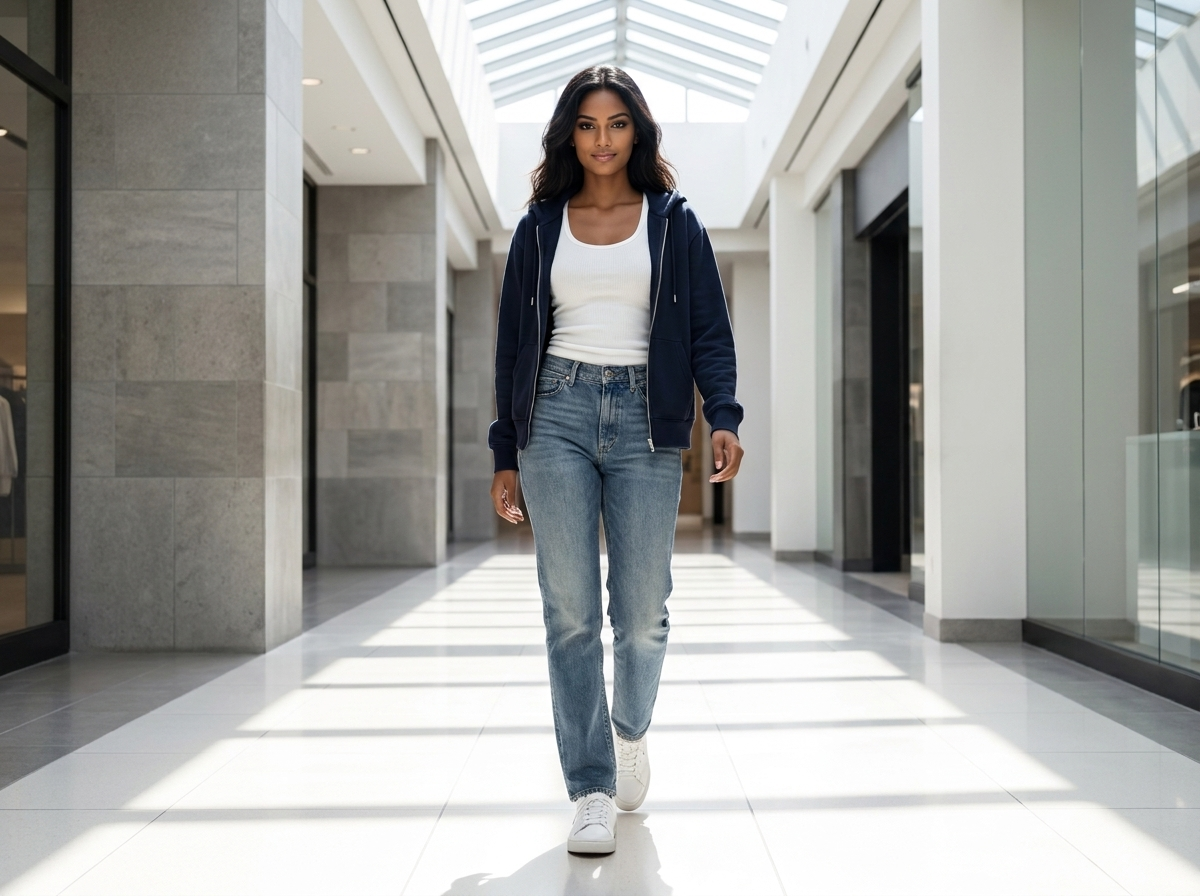
The Vision: The most ordinary outfit in the mall, somehow remembered twenty years later.
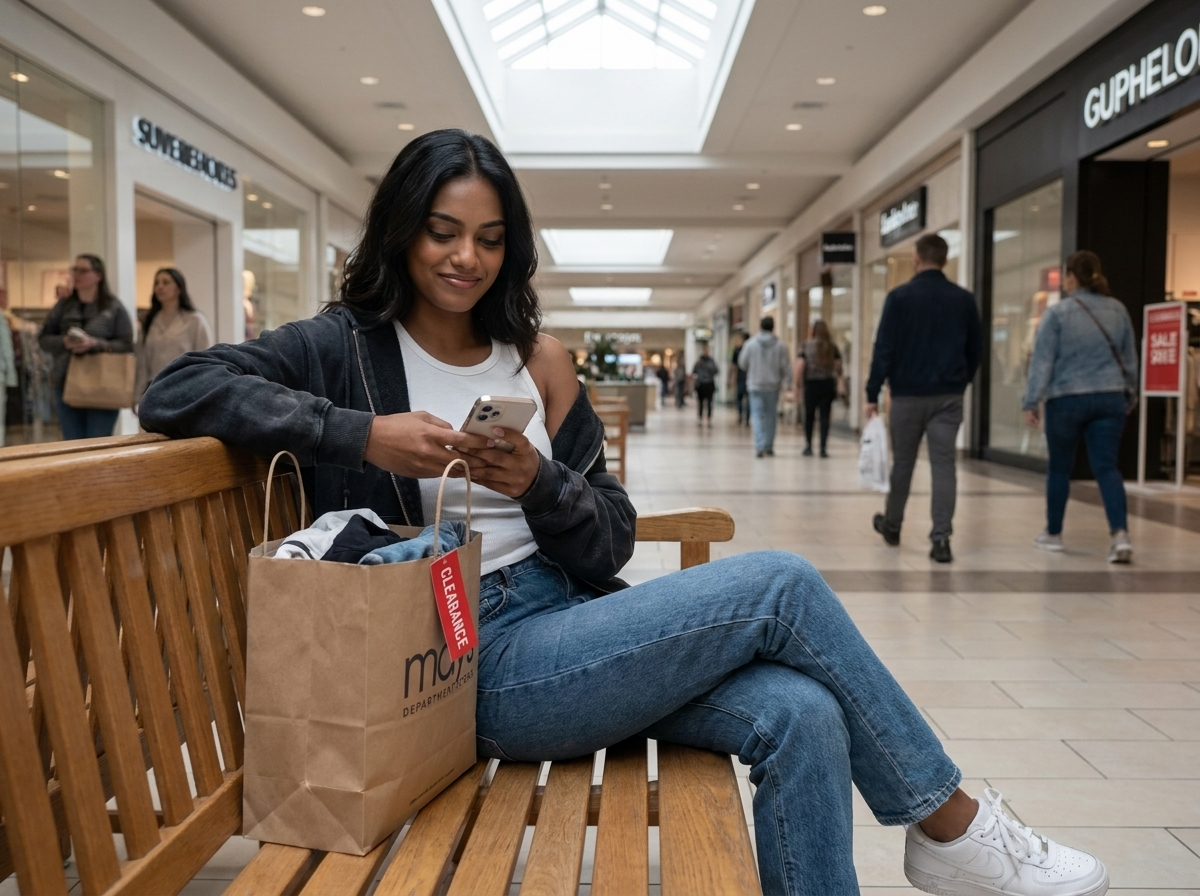
This is Normcore with a little fluorescent nostalgia. Think of the woman who has one hand around an iced coffee, a small shopping bag tucked under her arm, and absolutely nowhere formal to be. The clothes are simple, slightly sporty, and unfussy—but the proportions are deliberate enough to feel current.
Straight-leg or relaxed mom jeans
Ribbed tanks and fitted baby tees
Zip-up hoodies in heather gray, navy, or faded black
White sneakers, especially low-profile retro styles
Nylon shoulder bags or mini backpacks
Simple hoop earrings, tiny sunglasses, claw clips
Mall-brand energy: Gap, Old Navy, Abercrombie basics, J.Crew outlet, Express circa 1998
The point is not to recreate a teen movie costume. Keep it edited: one nostalgic element at a time. A baby tee and relaxed jeans work. Add chunky butterfly clips, a logo belt, platform sandals, frosted lip gloss, and a rhinestone bag, and you have left Normcore for Y2K.
The Vibe: “I’m just running errands,” but the errands include browsing the clearance rack for ninety minutes.
Soccer Mom Chic
The Competent Casual
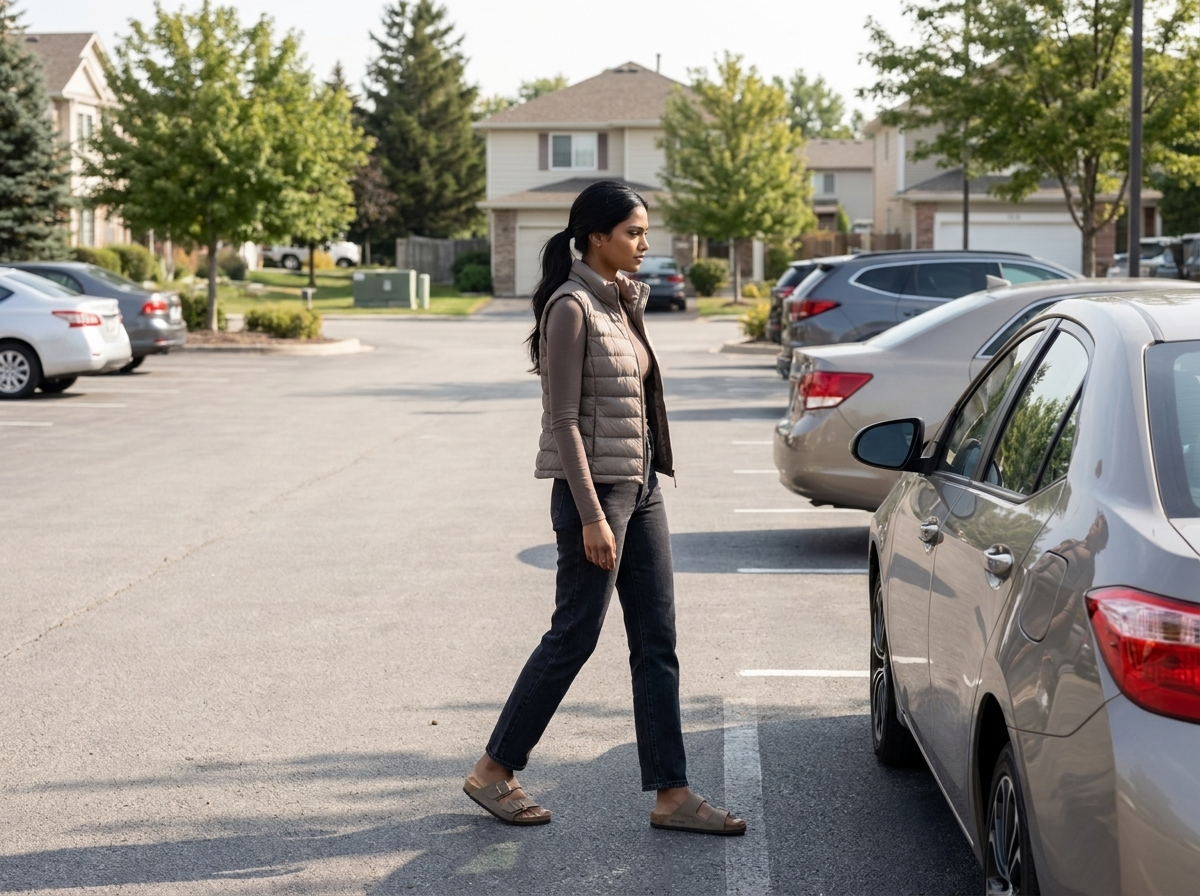
The Vision: Busy, polished, and dressed for weather, snacks, carpools, and an unexpectedly good latte.
Soccer Mom Chic is often dismissed as accidental fashion, which is exactly why it works so well as Normcore. It is built around practical layers and pieces that genuinely earn their place in the outfit. The modern version is less suburban stereotype, more woman who knows what she needs and does not require a trend report to get dressed.
Athleta or Lululemon (light)
Dark straight-leg denim or black leggings
Ponytail default
Puffer vest, utility jacket, or lightweight quarter-zip
Minivan committed
Danskos or Birkenstocks
Simple gold hoops, a watch, and sunglasses that can survive a car cupholder
The secret is structure. If everything is oversized and athletic, it can turn into “I slept in the pickup line.” Balance a roomy sweatshirt with fitted leggings, or relaxed jeans with a neater tee and polished sneaker.
The Vibe: She has granola bars, hand sanitizer, and excellent boundaries.
Seinfeld-Core (for Women)
The Ironic Sincere
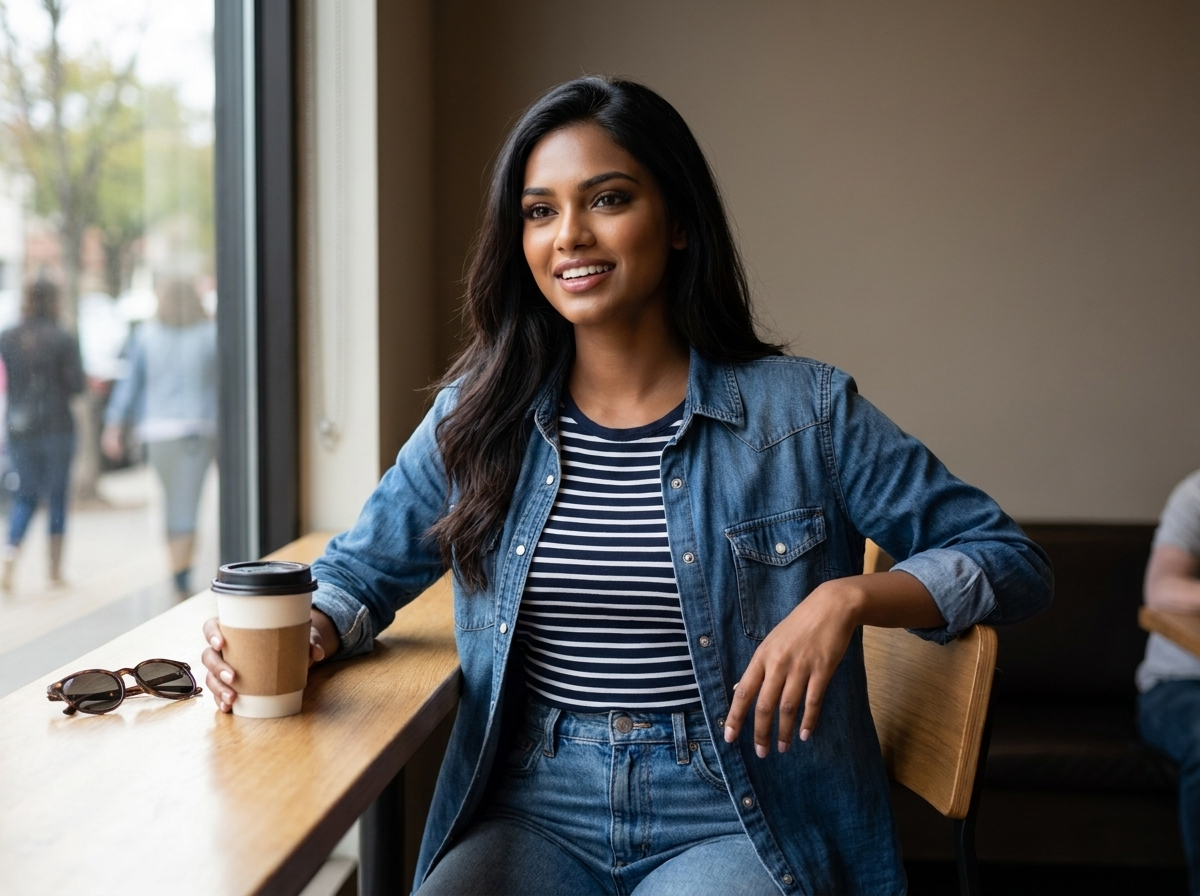
The Vision: ’90s sitcom authenticity, with a little downtown Manhattan absurdity.
Seinfeld-Core has a slightly awkward charm. It is practical, mildly oversized, and built from the kind of clothes a woman might wear to meet a friend for coffee, argue about nothing for an hour, then accidentally attend a comedy show.
High-waisted straight jeans
Nike Cortez or other slim retro sneakers
Crewnecks under relaxed blazers
Ribbed tanks, striped tees, and uncomplicated button-downs
Leather shoulder bags
Simple belts, hoops, and small sunglasses
Puffy pirate shirt, only for advanced practitioners
The trick is to keep it wearable. A blazer over a crewneck is funny only because it is also a genuinely good outfit. Resist piling on every ’90s sitcom reference at once.
The Vibe: She has a very specific opinion about cereal and a rent-controlled apartment fantasy.
Tech Bro/Sis
The Founder-Adjacent Uniform
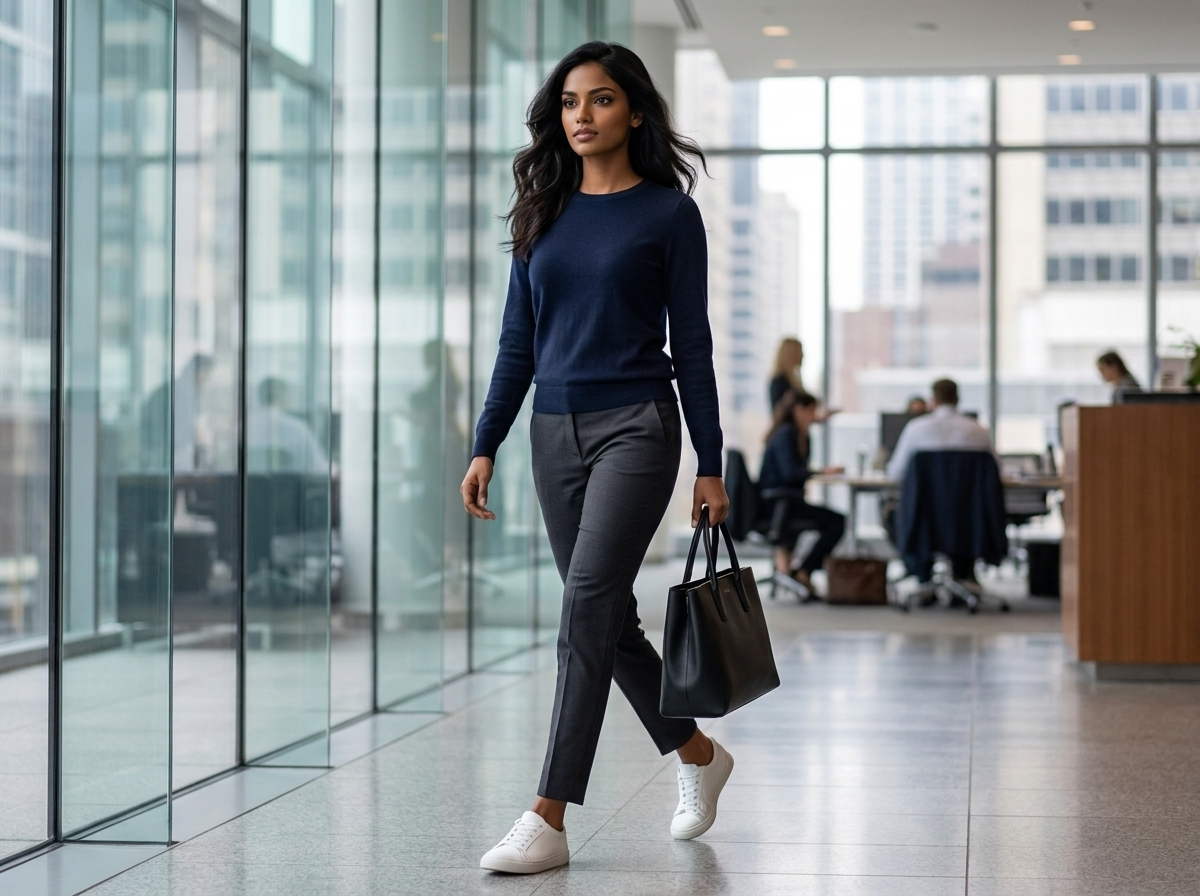
The Vision: Serious person, busy calendar, better things to think about than clothes.
Tech Bro/Sis is the most direct descendant of Normcore’s original professional-uniform roots: plain hoodies, unremarkable sneakers, and clothes selected to remove decision fatigue. For women, the silhouette stays intentionally simple but gets a little more structure—better proportions, a sharper layer, and a bag that can go into an actual meeting.
Solid hoodie in charcoal, navy, black, or heather gray
Straight-leg jeans, tailored trousers, or clean black leggings
Quiet sneakers: Veja-style, New Balance-style, sleek runners, or minimalist leather pairs
Oversized blazer thrown over the hoodie for meetings
Fine-knit crewneck or plain tee as an alternative base layer
Structured tote or leather shoulder bag in place of the backpack
Minimal jewelry, practical watch, laptop always nearby
This is the sub-aesthetic with the clearest status coding. It says, “I am competent, my work is interesting, and my outfit is not the subject of this meeting.” The effect relies on quality and fit: a hoodie that holds its shape, trousers that skim rather than sag, sneakers that are clean.
Context does a lot of work here. In tech, design, media, and creative-industry settings, it reads as capable and current. In a more traditional office, the exact same hoodie-and-sneaker combination may simply read underdressed. Add the blazer, structured bag, or polished trouser when you need the message to land correctly.
The Vibe: She has a deck to revise, a 4:30 stand-up, and no interest in corporate cosplay.
Gorpcore
The Prepared One
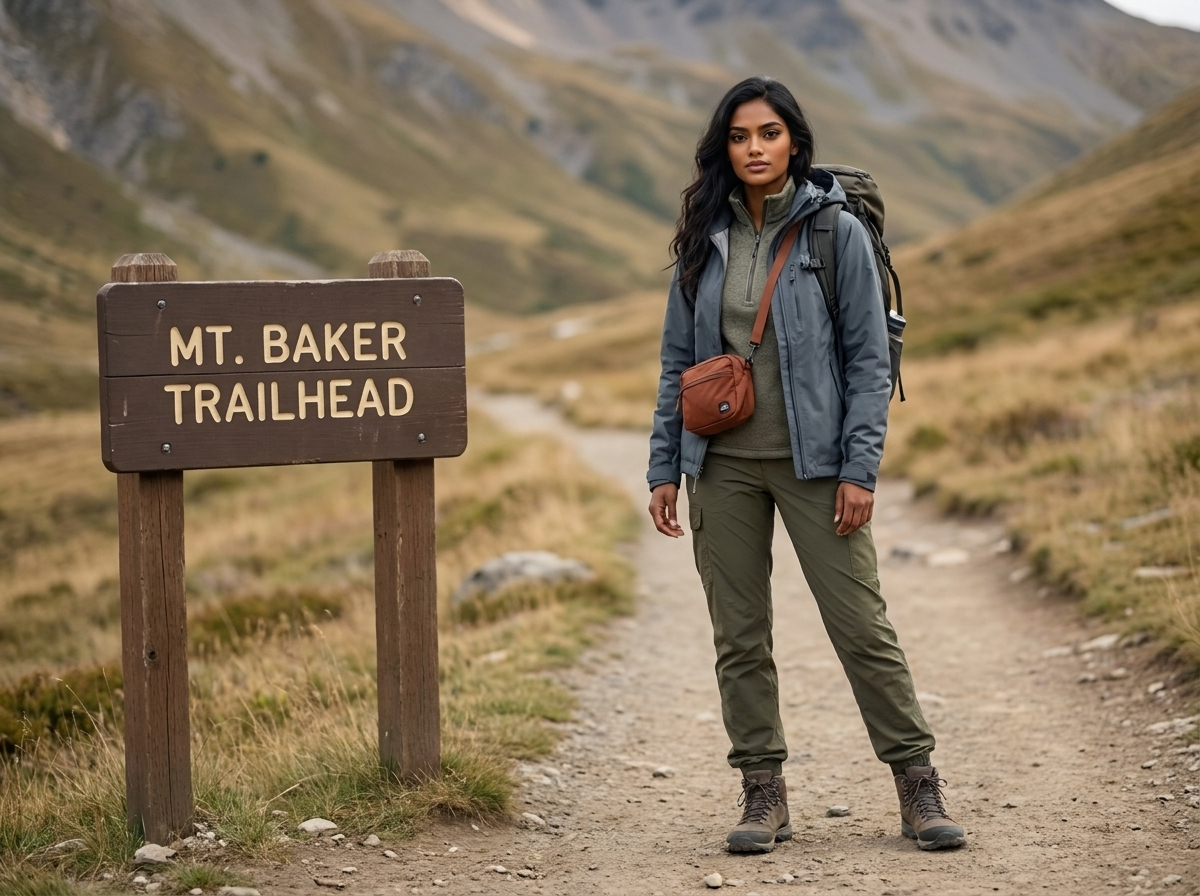
The Vision: Outdoor gear that is allowed to be outdoor gear.
Gorpcore borrows directly from hiking, camping, trail running, and technical outerwear, but functionality is not optional. The fleece should be warm. The jacket should repel rain. The pockets should hold things.
Technical shell or waterproof windbreaker
Insulated fleece, quarter-zip, or lightweight down layer
Cargo pants, nylon trousers, hiking shorts, or relaxed utility pants
Trail sneakers, hiking boots, or technical sandals
Crossbody sling, belt bag, or practical backpack
Visible zippers, adjustable cords, ripstop nylon, and actual pockets
Earth tones, slate, moss, black, rust, cobalt, and occasional high-visibility accents
Gorpcore is less interested in appearing stylish than in being ready for the weather, a long walk, or a spontaneous weekend outside.
It naturally overlaps with athleisure and streetwear, especially when paired with leggings, sneakers, or oversized fleeces. To keep it Gorpcore, choose at least one true outdoor piece: a technical shell, trail shoe, utility pant, or insulated layer. Otherwise, it can quickly become regular athleisure with more pockets.
The Vibe: She can find the trailhead, charge her phone, and produce a snack from one of twelve zippered compartments.
Millennial Basic
The Post-Trend Fatigue
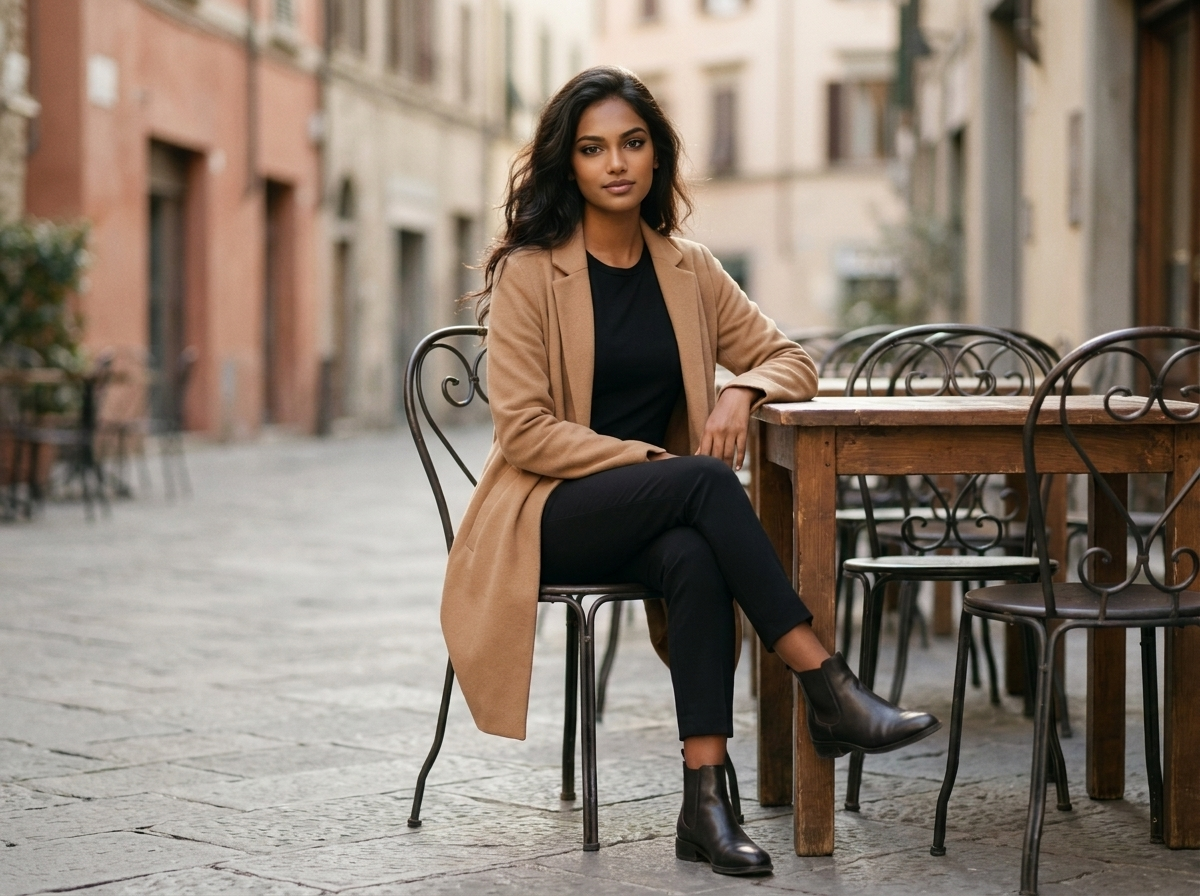
The Vision: A wardrobe assembled after realizing trends require entirely too much maintenance.
Millennial Basic is Normcore for the woman who has made peace with owning the same great black leggings for six years. It is clean, reliable, internet-literate, and deeply committed to the idea that a good basic does not need a reinvention every season.
Everlane-style tees and trousers
Straight jeans, black ankle pants, and simple dresses
Allbirds, Veja-style sneakers, or Chelsea boots
Denim jacket, utility jacket, or long cardigan
Crossbody bag, canvas tote, and practical sunglasses
Neutral home-goods palette: ivory, gray, camel, olive, black
One excellent water bottle, likely within reach
This aesthetic works best when the pieces are fresh and well-fitting. The danger is letting “basic” become “tired.” Replace pilled knits, stretched tees, and sneakers that have truly completed their journey.
The Vibe: She has a podcast recommendation and a sourdough starter.
European Normcore
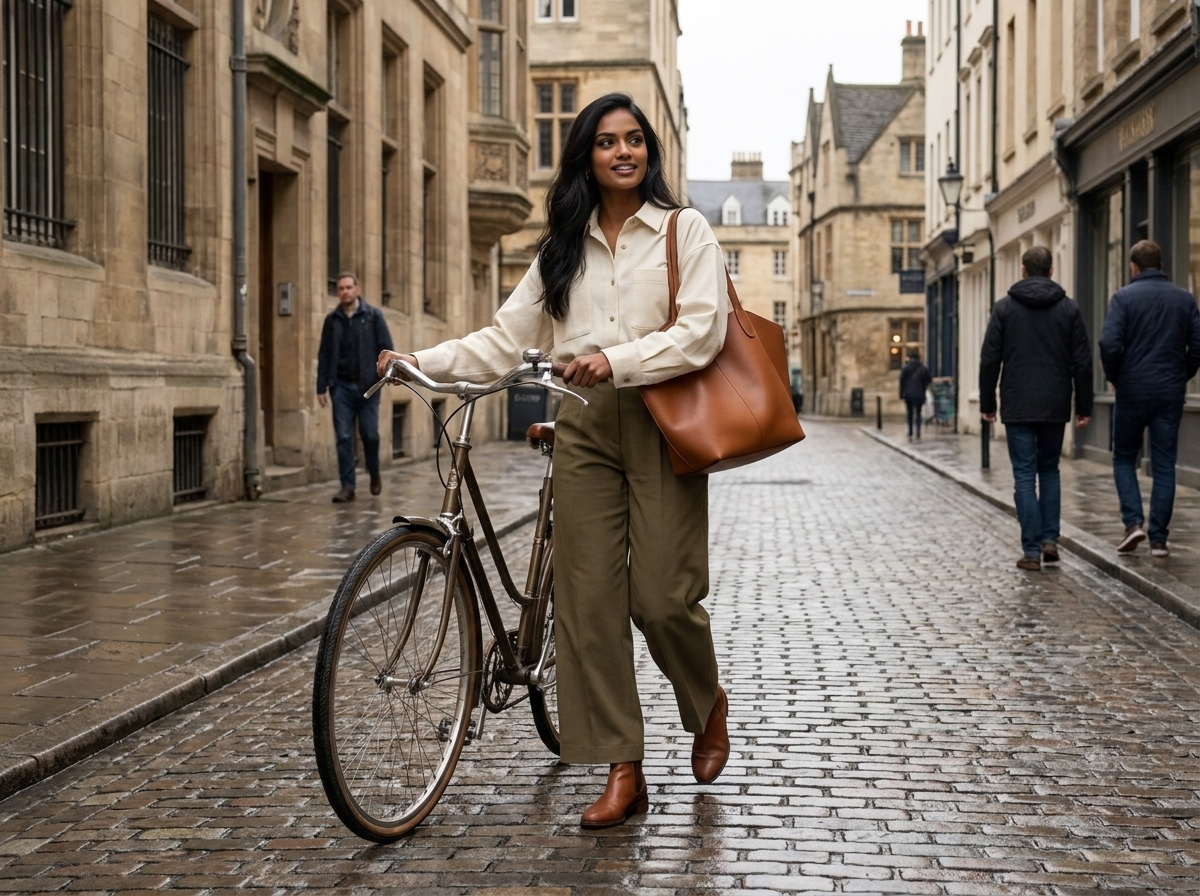
The Berlin/Copenhagen Elevation
The Vision: Studied banality: ordinary clothes, exceptional proportions.
European Normcore treats simplicity as a design exercise. The palette is restrained, the silhouettes are relaxed but intentional, and every piece has enough shape to suggest she may own a beautiful lamp and have opinions about public transit.
COS and Arket-style relaxed tailoring
Black, charcoal, cream, slate blue, olive, and deep brown
Boxy shirts, wide trousers, long wool coats, and refined knitwear
Minimal leather sneakers, loafers, or sturdy ankle boots
Oversized tote, sculptural shoulder bag, or practical crossbody
Fine silver or gold jewelry, if any
Bicycle-friendly layers and weather-proof outerwear
This should not become a costume of all-black severity. The look needs ease: a soft knit, loose trouser, imperfectly tucked shirt, or practical shoe. It is architectural, not intimidating.
The Vibe: She bikes to the gallery, buys excellent bread, and owns exactly one chair that is somehow art.
One False Move: Normcore Mistakes
One False Move… and You’re Just Underdressed
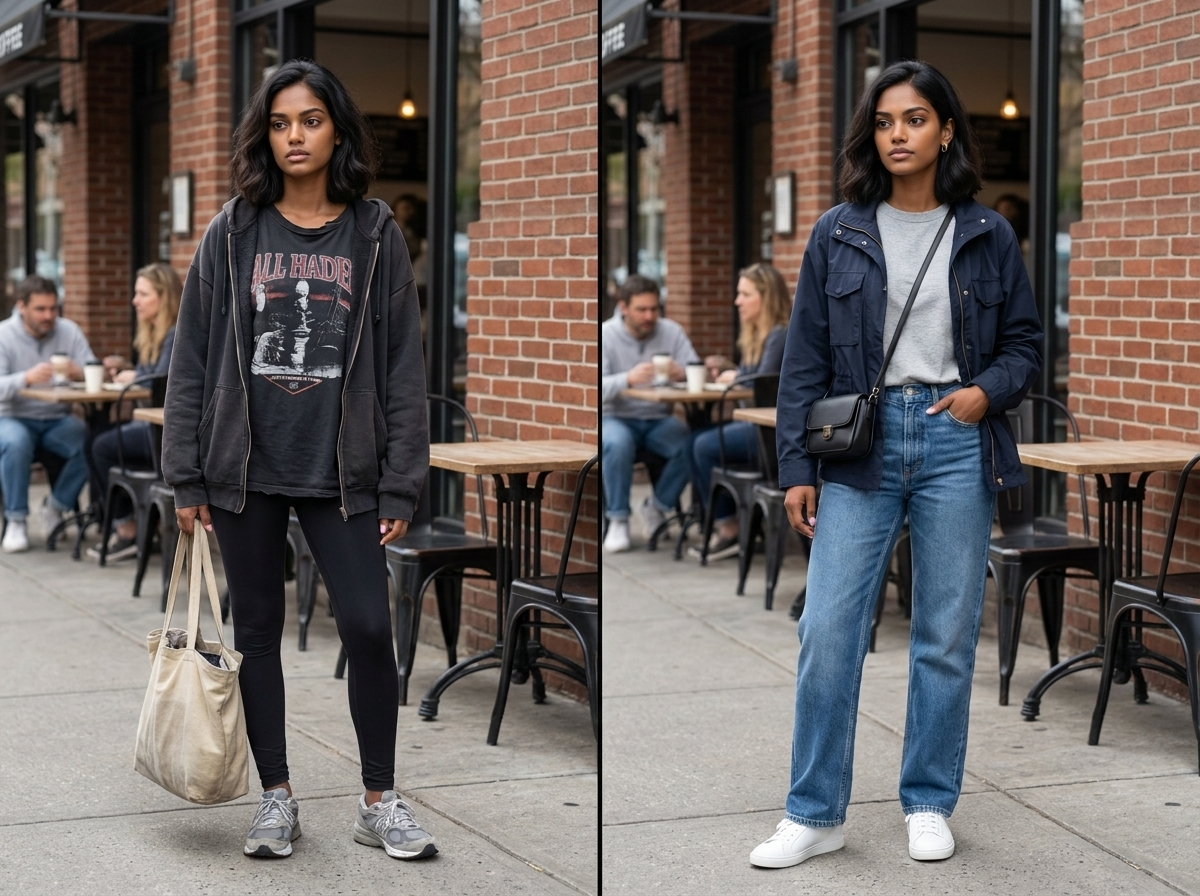
Normcore is ordinary on purpose.
The outfit looks easy because the choices have been edited down. When the clothes are stained, stretched, or pilled, “I do not need to perform fashion” signal turns into “I did not need to get dressed.”
Normcore can absolutely be a gray sweatshirt and sneakers. But they should be a gray sweatshirt you chose, sneakers that are still structurally capable of supporting a human foot, and pants that fit.
What Goes Wrong
People confuse anti-trend with anti-effort.
Normcore is not about looking expensive, overdressed, or styled to within an inch of your life. But it does require maintenance. The white tee needs to be white enough to read as intentional. The denim needs a shape. The sweatshirt needs to look soft, not like it has been emotionally processing your entire winter.
The boring pieces are the outfit. That means they have to be good.
The Wrong Outfit
A faded black graphic tee with a stretched collar, leggings that have gone slightly transparent, old running shoes with gray soles, an oversized hoodie covered in mysterious lint, and a tote bag full of receipts.
Nothing is wrong with any one of these pieces in private. Together, they do not make a Normcore look. They make an errand you did not want to run.
This is giving: “The dry cleaner has seen me more put together.”
How to Fix It
Keep the same general formula, but upgrade the condition and proportions: a substantial white or heather-gray tee, straight-leg jeans or clean leggings, fresh sneakers, and one useful outer layer. Add a small hoop, structured crossbody, baseball cap, or watch if the outfit needs a final point of view.
The goal is not more fashion. It is more intention.
One False Move… and Your Outfit Is Sponsored by the Pickup Line
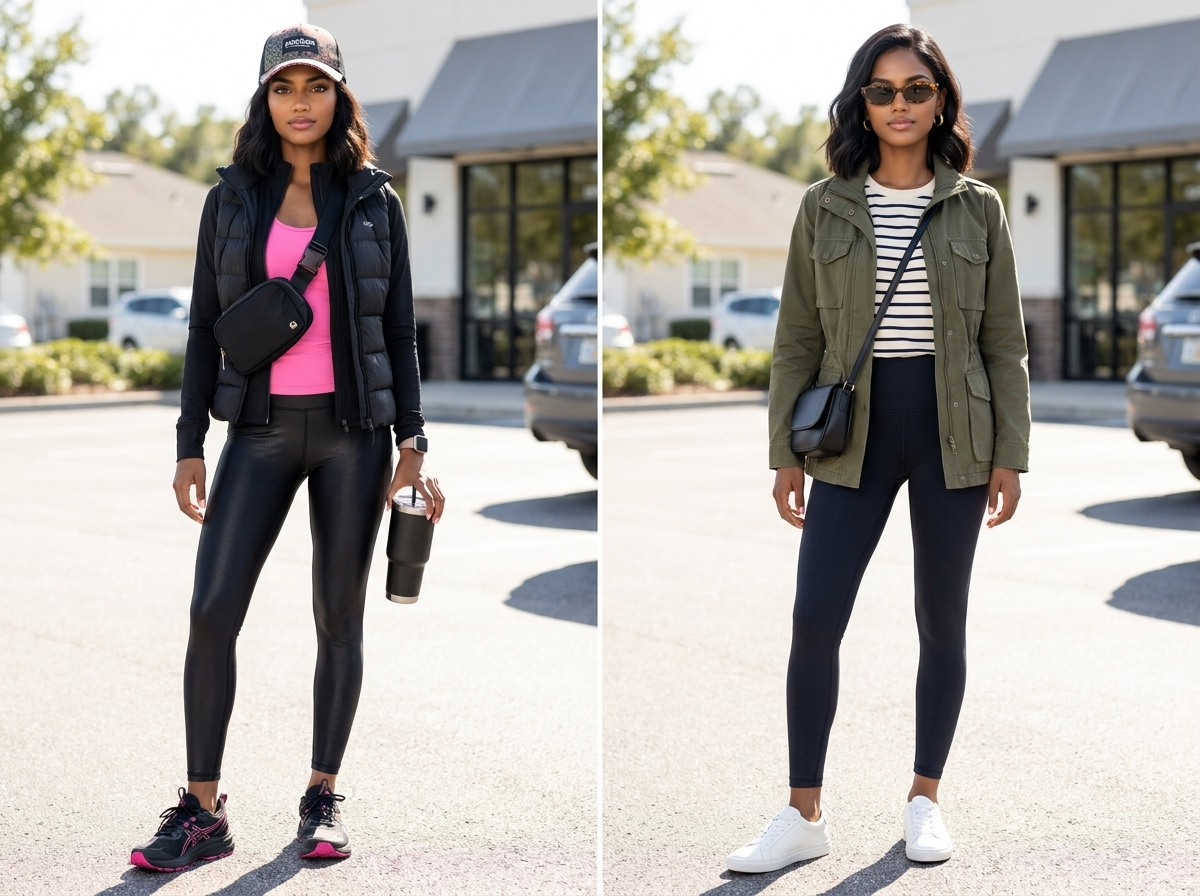
Soccer Mom Chic dresses prepared for weather changes, errands, unexpected schedule changes, and coffee runs.
The danger is making every single item athletic, oversized, or aggressively practical. Then it’s no longer relaxed but looks as though you may be called to substitute-teach gym class with no notice.
The chic part of Soccer Mom Chic is important. She has snacks, boundaries, and a jacket that works with the rest of the outfit.
What Goes Wrong
Too much performance fabric at once.
Leggings are fine. A quarter-zip is fine. A baseball cap is fine. A belt bag is fine. But when they arrive with running shoes, a puffer vest, a giant branded water bottle, wraparound sunglasses, and a matching activewear set, the look leaves Normcore and enters competitive carpool territory.
The outfit needs at least one element that says, “I got dressed today,” not merely, “I dressed for a possible 5K.”
The Wrong Outfit
Black leggings, a bright matching workout tank and zip jacket, chunky running shoes, a logo baseball cap, puffer vest, oversized belt bag, smartwatch, and a giant insulated tumbler.
It is practical. It is coordinated. It is also prepared to yell, “Orange slices are in the cooler!” from across a soccer field.
This is giving: “She has a folding chair with cupholders in the trunk at all times.”
How to Fix It
Choose one active foundation and introduce structure somewhere else. Try dark leggings with a crisp striped tee, neutral sneaker, utility jacket, and leather crossbody. Or pair relaxed straight-leg jeans with a quarter-zip, polished white sneaker, and a baseball cap.
Let the outfit have one athletic note, one practical note, and one polished note. That is the sweet spot.
One False Move… and you’re hiking directly into brunch
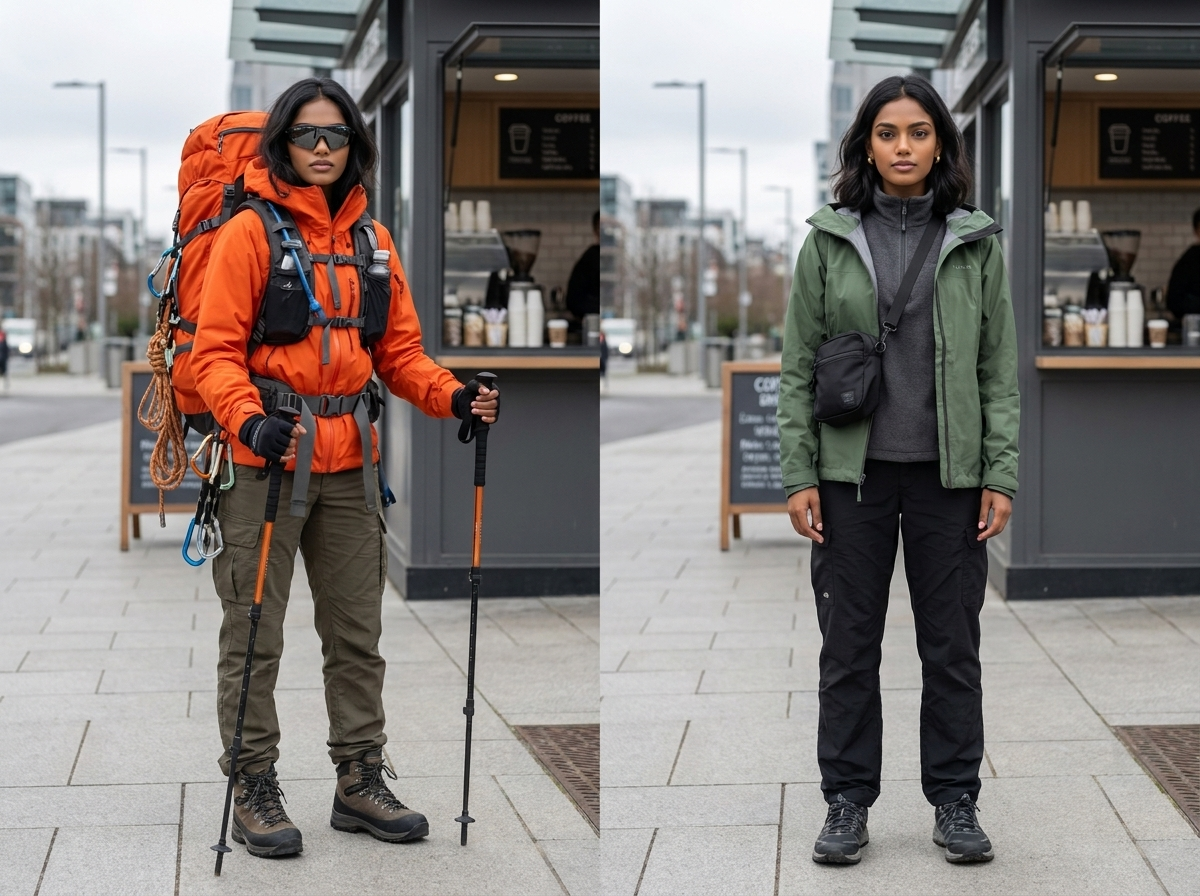
Gorpcore’s shell should block rain. The fleece should be warm. The trail shoe should be able to handle a trail. Its appeal comes from taking outdoor clothing seriously enough to wear it in ordinary life—not from pretending a Sunday coffee run is a Himalayan expedition.
The problem begins when every piece of gear arrives at once.
A technical jacket is Gorpcore. Trail sneakers are Gorpcore. Cargo pants, a compact sling bag, and a useful fleece can all belong in the same outfit. But add a hydration vest, a giant backpack, carabiners, trekking poles, a survival whistle, wraparound sunglasses, and boots built for crossing a glacier, and you are no longer casually outdoorsy.
You are waiting for your group to assemble at the trailhead.
What Goes Wrong
The best Gorpcore outfits include one or two pieces that do something: a waterproof shell, an insulated layer, a trail sneaker, a ripstop utility pant. The rest of the look gives those pieces room to work.
When every item is technical, strapped, zippered, and visibly prepared for weather events, the outfit becomes gear inventory. There is a difference between looking ready for a long walk and looking like you have been instructed to evacuate.
The Wrong Outfit
A bright technical shell over a bulky hiking fleece, cargo pants with every pocket visibly full, heavy trekking boots, a hydration vest, a giant backpack, a belt bag, carabiners clipped to belt loops, wraparound sunglasses, and hiking poles carried into a café.
It may be highly functional. It is also preventing the rest of the brunch table from finding the napkins.
This is giving: “She ordered avocado toast at base camp.”
How to Fix It
Choose one real outdoor hero piece, then build around it with simpler layers. Try a moss-green waterproof shell over a charcoal fleece, relaxed black ripstop trousers, trail sneakers, and one compact crossbody sling. Or wear a technical quarter-zip with straight-leg jeans, practical hiking-inspired boots, and a plain tote.
The goal is to look as if you could walk five miles in unexpected rain—not as if you are personally leading the rescue operation.
One False Move… and You’re Late for Freshman Seminar
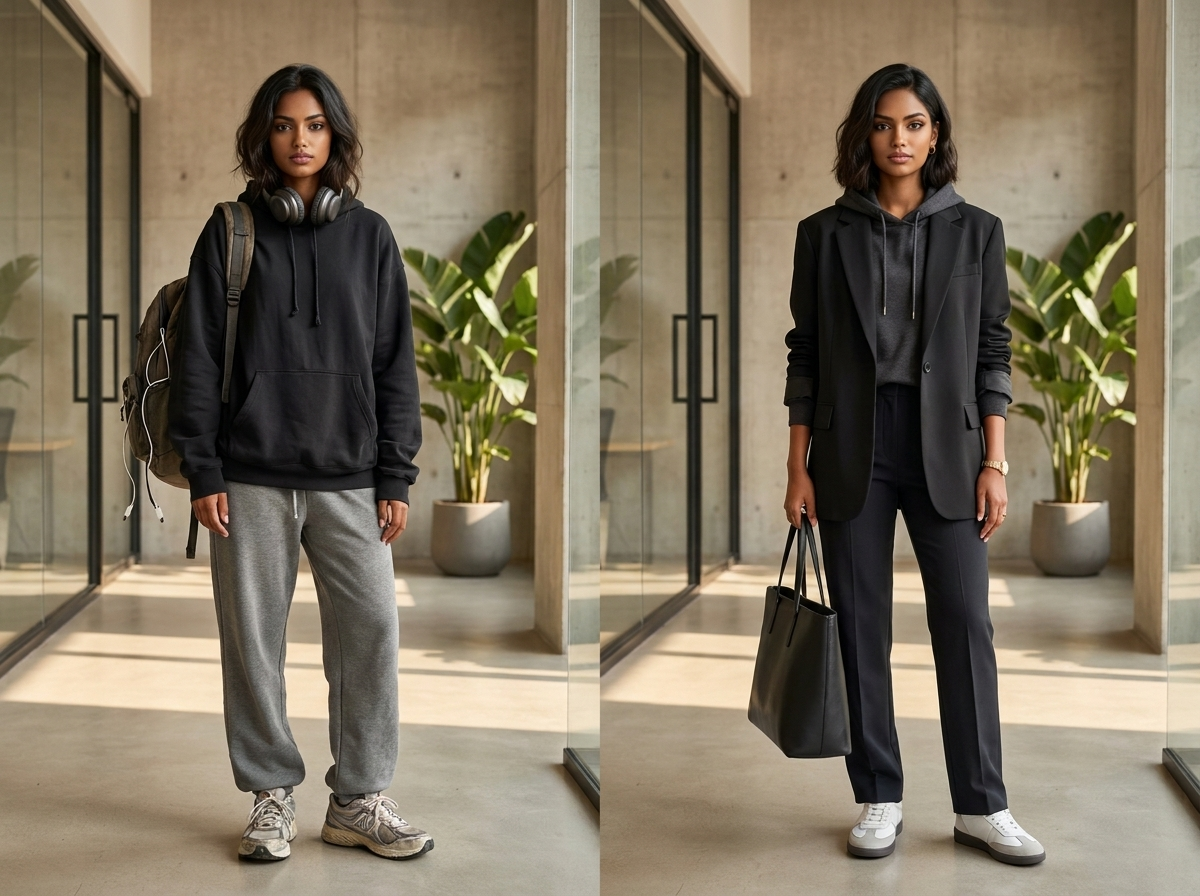
Tech Bro/Sis is supposed to communicate competence with a low tolerance for wardrobe drama: the good hoodie, quiet sneakers, clean trousers, and perhaps a blazer thrown over the whole situation when a meeting appears on the calendar.
The aesthetic is simple, but it is not student dressing. The difference is structure.
A plain hoodie can look sharp. A sneaker can look professional. But when the hoodie is oversized, the joggers are rumpled, the backpack is sagging, and the shoes have seen three semesters and a dormitory stairwell, the outfit becomes “I have a paper due at midnight and have not yet opened the document.”
What Goes Wrong
Tech Bro/Sis depends on a few subtle signals: a hoodie that holds its shape, clean sneakers, trousers that fit, a structured tote, a polished outer layer. Remove those signals and the same clothes become generic campus basics.
The founder uniform is not just a sweatshirt. It is a sweatshirt paired with enough purpose to suggest the wearer has a calendar, a salary, and opinions about a product roadmap.
The Wrong Outfit
A wrinkled oversized black hoodie, gray sweatpants, dirty running shoes, a giant canvas campus backpack with loose charging cables escaping from the zipper, bulky headphones, and a water bottle covered in stickers.
Nothing here is inherently bad. It just looks like you are speed-walking across campus because you forgot there was a quiz.
This is giving: “She has a 9:30 lecture, a group project she resents, and exactly $14.26 in her checking account.”
How to Fix It
Keep the hoodie, then give it a job. Pair a clean charcoal or navy hoodie with straight-leg jeans, tailored black trousers, or crisp black leggings. Add a long blazer or structured coat, fresh minimalist sneakers, and a leather tote or refined shoulder bag.
The outfit should still feel comfortable enough to work from a café for six hours. It should just look like you own the café’s software company rather than need its Wi-Fi password.
One False Move…and it’s a ’90s sitcom Halloween costume
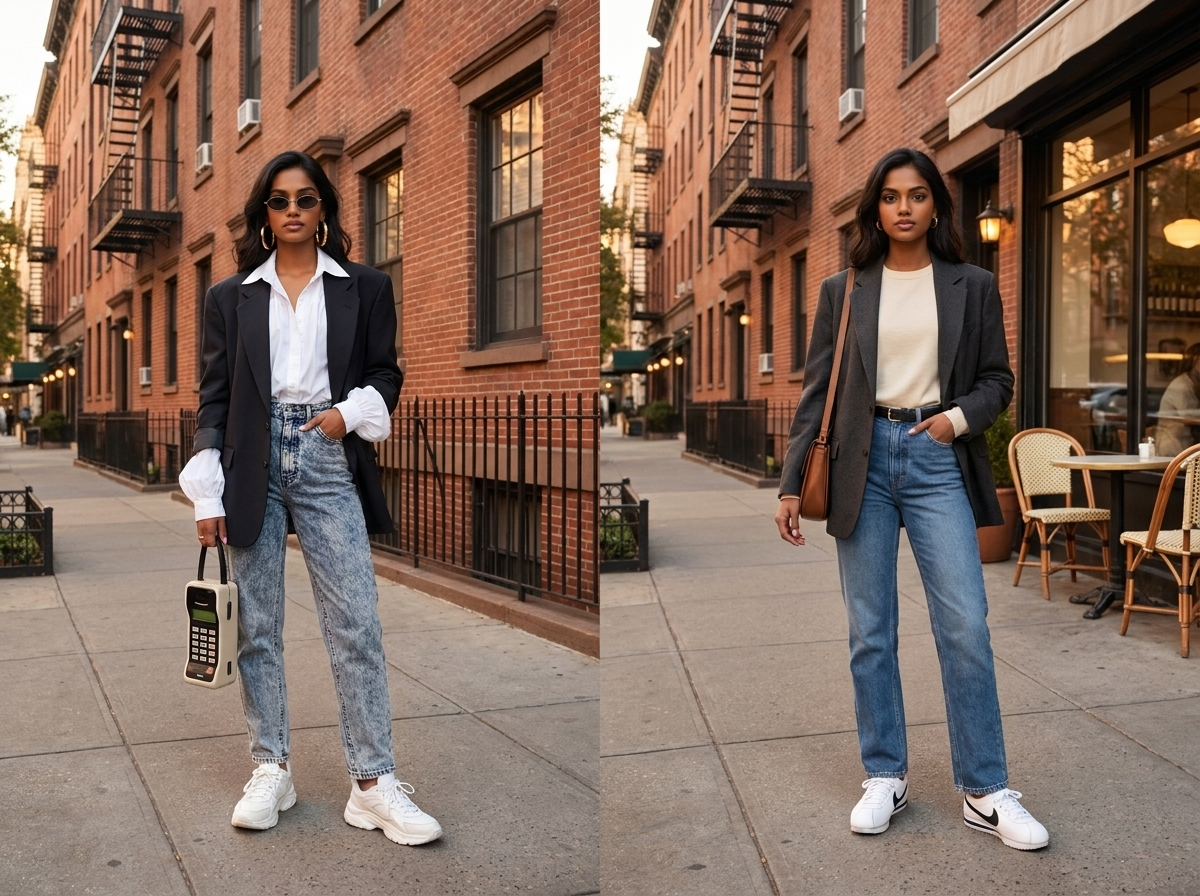
Seinfeld-Core works because it borrows the slightly awkward, practical charm of a ’90s Manhattan sitcom wardrobe. The clothes are familiar: relaxed blazers, high-waisted jeans, crewnecks, slim sneakers, leather shoulder bags, a shirt that is mildly odd but still believable as something a woman might wear to meet a friend for coffee.
The mistake is treating every reference as mandatory.
A blazer over a crewneck is Seinfeld-Core. High-rise jeans and Nike Cortez are Seinfeld-Core. A puffy pirate shirt can even be Seinfeld-Core, if you are feeling advanced. But when the pirate shirt arrives with giant shoulder pads, acid-wash denim, tiny sunglasses, chunky dad sneakers, a novelty bag, and the energy of someone about to audition for a themed improv show, you have gone too far.
The outfit should feel like it belongs in a sitcom, not like you are playing “Woman Who Owns a Rent-Controlled Apartment” at a costume party.
What Goes Wrong
Seinfeld-Core is funny because it’s built on the accidental appeal of normal with slightly mismatched outfits—not on recreating a screen grab down to the last aggressively ’90s detail.
You’re going for downtown authenticity, but the danger is dressing like you are about to explain the concept of Festivus to strangers.
The Wrong Outfit
An enormous gray blazer with exaggerated shoulder pads over a bright white pirate blouse, acid-wash mom jeans, chunky white sneakers, tiny oval sunglasses, huge gold hoops, a novelty handbag, and a scrunchie that has seen things.
Every piece is technically from the era. Together, they are working harder than the entire cast.
This is giving: “She is late to a comedy-club audition and has a very specific cereal grievance.”
How to Fix It
Choose one or two sitcom references, then make the rest modern and simple. Try a relaxed charcoal blazer over a soft cream crewneck with high-waisted straight jeans, slim retro sneakers, and a plain leather shoulder bag.
If you wear the pirate shirt, let it be the joke. Keep everything around it quiet enough for the outfit to remain a real outfit.
Making Normcore Yours
Normcore is a useful way of thinking about clothes: identify what you wear, make those pieces fit and function, and stop treating every new microtrend as a mandatory group project.
Normcore does not require an entirely new wardrobe. It may require fewer new things than any other aesthetic in this guide. Start with the pieces you already own, notice what they have in common, and build a uniform that makes ordinary life easier.
Starting the Journey
The Beginner’s Approach
Begin with a tiny, wearable foundation:
One Uniqlo Supima cotton tee
Medium-wash Levi’s 501s
New Balance 574s or clean Stan Smiths
A blank baseball cap
A basic Champion-style hoodie
Comfort, accepted joyfully
That is enough. You do not need a capsule-wardrobe spreadsheet or a luxury tote. Wear the tee with the jeans. Wear the hoodie over the tee. Wear the sneakers with everything. Go with the version that feels most like yourself.
Intermediate Moves
Once you know which basics work, the next step is repetition. This is where you stop shopping for an imaginary life and begin dressing for the one you have.
Identify your best uniform and repeat it.
Build trend resistance: not every new silhouette needs to enter the home.
Start a dependable sneaker rotation.
Try Uniqlo U—the Christophe Lemaire–designed line—for better proportions.
Dial in the fit of your basics: hems, rises, sleeve lengths, and shoulders.
Develop confidence in being a little bland on purpose.
The intermediate Normcore dresser has learned an important truth: the tenth outfit idea is rarely better than the three excellent ones you already own.
Advanced Levels
Advanced Normcore is about understanding what makes a basic worth owning.
The Row basics are considered, perhaps from a respectful distance.
Lemaire becomes a possibility rather than a mood board.
Master vintage sourcing.
You have an identifiable personal uniform.
Trend immunity reaches impressive levels.
You notice trends, appreciate them, and continue wearing the same perfect trousers.
At this level, an outfit may look simple to anyone who does not understand construction, fit, or fabric. That is part of the private joke. You have spent years refining the art of looking as though you got dressed in five minutes.
Adaptation Tips
Normcore is most successful when it follows your actual calendar.
Office Normcore: An Oxford shirt or neat tee, relaxed chinos or tailored trousers, clean sneakers or loafers, and a structured tote. Add a blazer when the room requires one.
Weekend Normcore: Fleece, jeans, a simple sneaker, and a cap. The best weekend outfit should survive a coffee run, a grocery store, and an accidental two-hour walk.
Date-Night Normcore: Dark denim, a fine cashmere or merino knit, clean leather boots or sleek sneakers, and one small piece of jewelry. The goal is effortless—not emotionally unavailable.
Travel Normcore: Soft layers, fleece, straight-leg pants or relaxed denim, supportive sneakers, and a bag that actually fits your charger, water bottle, and snacks. Comfort is not a failure of imagination.
Event Normcore: A good blazer over a Uniqlo tee, straight black trousers or dark jeans, polished shoes, and a simple bag. You are still yourself; you have simply acknowledged the invitation.
Summer Normcore: Cotton tees, loose denim or tailored shorts, uncomplicated sandals or canvas sneakers, a baseball cap, and linen if you must. Keep it breathable, slightly rumpled, and free of aspirational European-resort cosplay.
The finished Normcore wardrobe should feel like clothes that fit your body, support your life, and leave you free to think about literally anything else.
Now, if you'll excuse me, I need to run errands in my New Balance 990s, my Uniqlo Supima tee, and my medium-wash Levi's. I'll be at Costco, then the hardware store, then possibly a walk in the park. No one will notice me, which is exactly the point, though secretly I hope one person clocks the Lemaire tag under my collar. 👖👟✨
