
Balletcore: The Art of Everyday Elegance En Pointe
Table of Contents
When the Barre Meets the Sidewalk
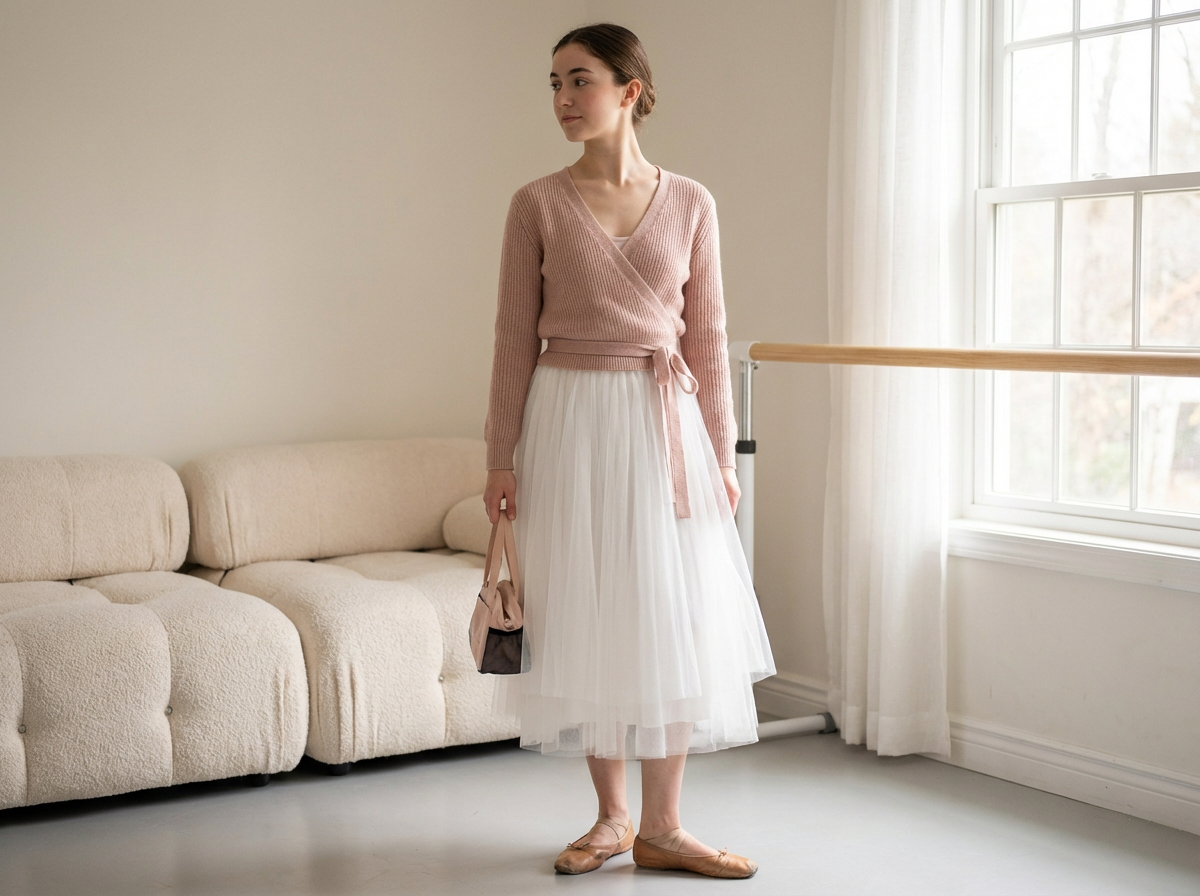
The balletcore aesthetic combines ballet-inspired elegance with everyday street style
Ballet has always lived in that in-between space—half fantasy, half discipline. It’s soft tulle and aching muscles, pink satin and ruthless precision, beauty built on repetition. Balletcore takes that world and pulls it off the stage, off the barre, and straight into everyday life. No pointe shoes required. Just the vibe.
This aesthetic is about romanticizing the idea of ballet. Balletcore is what happens when Swan Lake meets street style, when the ballet class you quit at seven comes back as a lifestyle choice.
Within the larger romantic and feminine aesthetic family, balletcore is the disciplined sister. Less whimsical than coquette, more structured than cottagecore, quieter than soft girl. It favors wrap silhouettes, posture, and restraint.
At its heart, balletcore is treating the everyday as worthy of grace. The barre may be imaginary, but the elegance is very real.
What Is Balletcore? (Understanding the Ballet-Inspired Aesthetic)
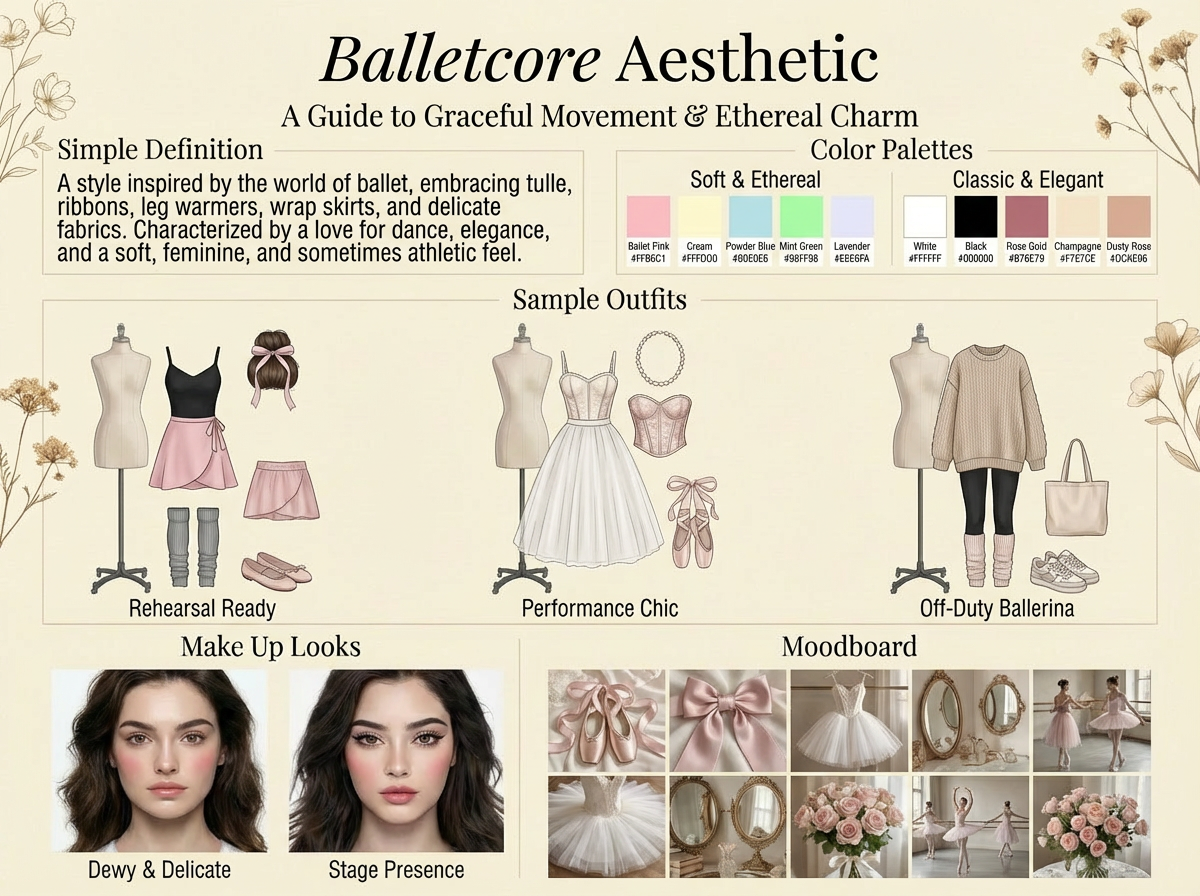
The Core Definition of Balletcore Fashion
At its simplest, balletcore is a fashion and lifestyle aesthetic inspired by ballet. This is important. You don’t need a childhood résumé at the barre. It borrows the grace and discipline from ballet.
Visually, balletcore translates traditional studio elements into everyday clothing. Leotards become bodysuits. Warm-up wraps turn into cardigans. Tulle skirts leave the rehearsal room and show up at brunch. It’s a studio-to-street aesthetic, where dancer staples are reinterpreted for real life—coffee runs, workdays, errands, and dates.
What sets balletcore apart from other feminine aesthetics is its restraint. This is not maximal romance or playful frill. Balletcore values:
Grace over trendiness
Softness without sloppiness
Structure without stiffness
Restraint instead of excess
Rather than screaming for attention, balletcore discreetly floats by.
The Balletcore Fantasy vs. Reality
The Fantasy:
Floating through life in tulle
Natural grace in every movement
Effortless flexibility
Living in a constant state of ethereal beauty
Always warming up in leg warmers
The Reality:
Never actually took ballet
Tulle skirts paired with sneakers
Grace is performative
Stretching optional
Leg warmers for aesthetics only
Balletcore prioritizes styling over skill and aesthetic movement over athletic discipline. It’s about how clothes imply motion, how posture changes an outfit, and how softness and structure create elegance.
This distinction keeps balletcore accessible.
Why Balletcore Isn't Costume or Cultural Appropriation
There’s a difference between cosplay and translation. Cosplay tries to replicate a role exactly. Balletcore interprets the visual, emotional, and cultural cues of ballet and adapts them for everyday life.
You’re not claiming the training, the discipline, or the lived experience of professional dancers. You’re engaging with the imagery—the wrap silhouettes, the restrained palette, the emphasis on posture and movement, the quiet elegance that ballet has shaped for centuries. Fashion does this all the time. We wear tailoring inspired by equestrian culture without riding horses. We wear varsity jackets without playing sports. Balletcore follows the same logic.
For people who never had the opportunity to take ballet—whether due to access, cost, body politics, race, geography, or timing—balletcore can actually be a form of reclamation. It allows you to connect with a culture that wasn’t always open or welcoming, without having to ask permission.
Balletcore also shifts the focus away from exclusivity. It says ballet’s beauty doesn’t belong only to those who trained from childhood or fit a narrow ideal. It belongs in the way clothing moves, the way you stand a little taller, the way getting dressed becomes intentional instead of rushed.
Appreciation, in this case, looks like respect:
Acknowledging ballet’s discipline without imitating its suffering
Enjoying its visual codes without enforcing its body standards
Letting its elegance inform your life, not define your worth
Balletcore is about letting an art form shape how you move through the world, on your own terms.
Balletcore Origins & Why It's Trending in 2026
Why Balletcore Emerged Now
A post-pandemic return to beauty and ritual
Balletcore offers structure without rigidity. It feels calming and slightly ceremonial.
Femininity reclaiming seriousness
For a long time, overt femininity was treated as frivolous. Balletcore flips that script. Ballet has always been soft and brutal, delicate and demanding. This aesthetic reframes femininity as disciplined and powerful, not decorative or weak.
Nostalgia for disciplined childhood activities
Balletcore taps into those childhood memories of the “pretty” hobbies. Ballet, gymnastics, and figure skating. You remember the structure and the routines. Balletcore revives that feeling without the pressure.
TikTok’s romanticization of process
Social media shifted focus from results to rituals. Warm-ups. Morning routines. Stretching. Repetitious “Get ready with me” content. The balletcore world is where the process is the aesthetic.
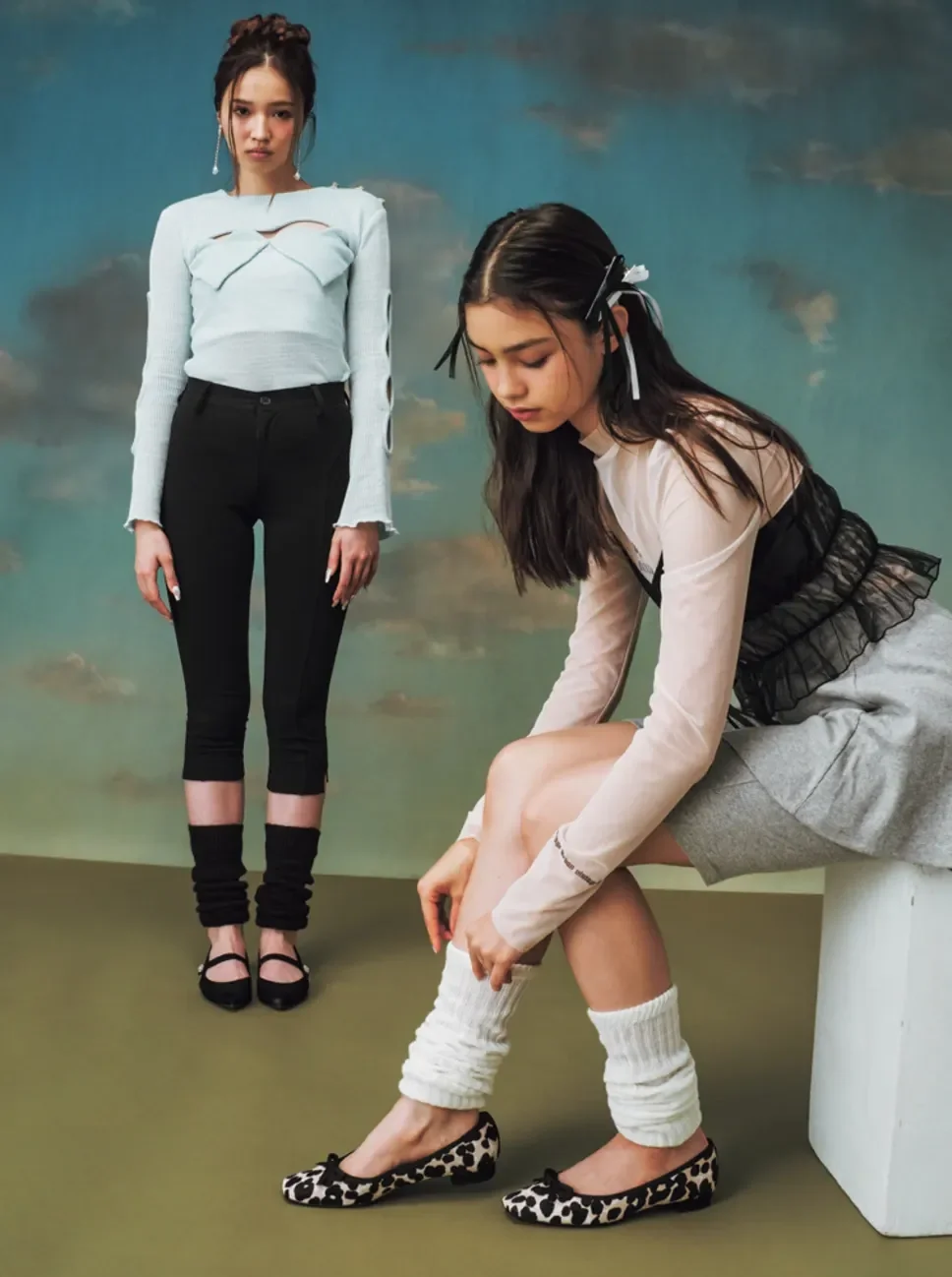
Image Source: Aesthetics.Fandom
Cultural & Media Influences
Film & Performance
Black Swan cemented ballet as dark, obsessive, and visually iconic
Ballet biopics and behind-the-scenes documentaries pulled back the curtain on discipline
Stage recordings made ballet feel accessible, intimate, and cinematic
Fashion Cycles
Y2K revival brought back ballet flats, wrap tops, and delicate silhouettes
A move away from chunky footwear toward low-profile shoes
Renewed interest in softness, sheer fabrics, and body-aware tailoring
Social Media & Aesthetic Culture
“Soft discipline” content: gentle, structural routines
Ballet-inspired influencers (many non-dancers) translating studio visuals to streetwear
Aesthetic mashups making ballet modern, wearable, and low-pressure
Fashion Timeline Snapshot
2020–2021: Comfort with Ballet DNA
Ballet-inspired loungewear during lockdown
Soft leggings, wrap sweaters, and cozy knits
Ballet flats quietly re-enter the chat
2022: High Fashion Validation
Luxury brands reinterpret ballet silhouettes
Runways legitimize balletcore as fashion, not costume
The aesthetic shifts from niche to editorial
2023–2024: Trend Explosion
Balletcore goes mainstream
TikTok and Pinterest drive visibility
Variations emerge: dark balletcore, casual balletcore, romantic balletcore
2025 and Beyond: Refinement & Subgenres
Less literal, more styled interpretations
Cleaner lines, better tailoring, stronger capsules
Balletcore settles in as an aesthetic language—not a fleeting trend
Balletcore’s rise makes sense because it answers a cultural craving: structural softness, purposeful beauty, femininity with backbone.
Balletcore Aesthetic Codes (Visual Language)
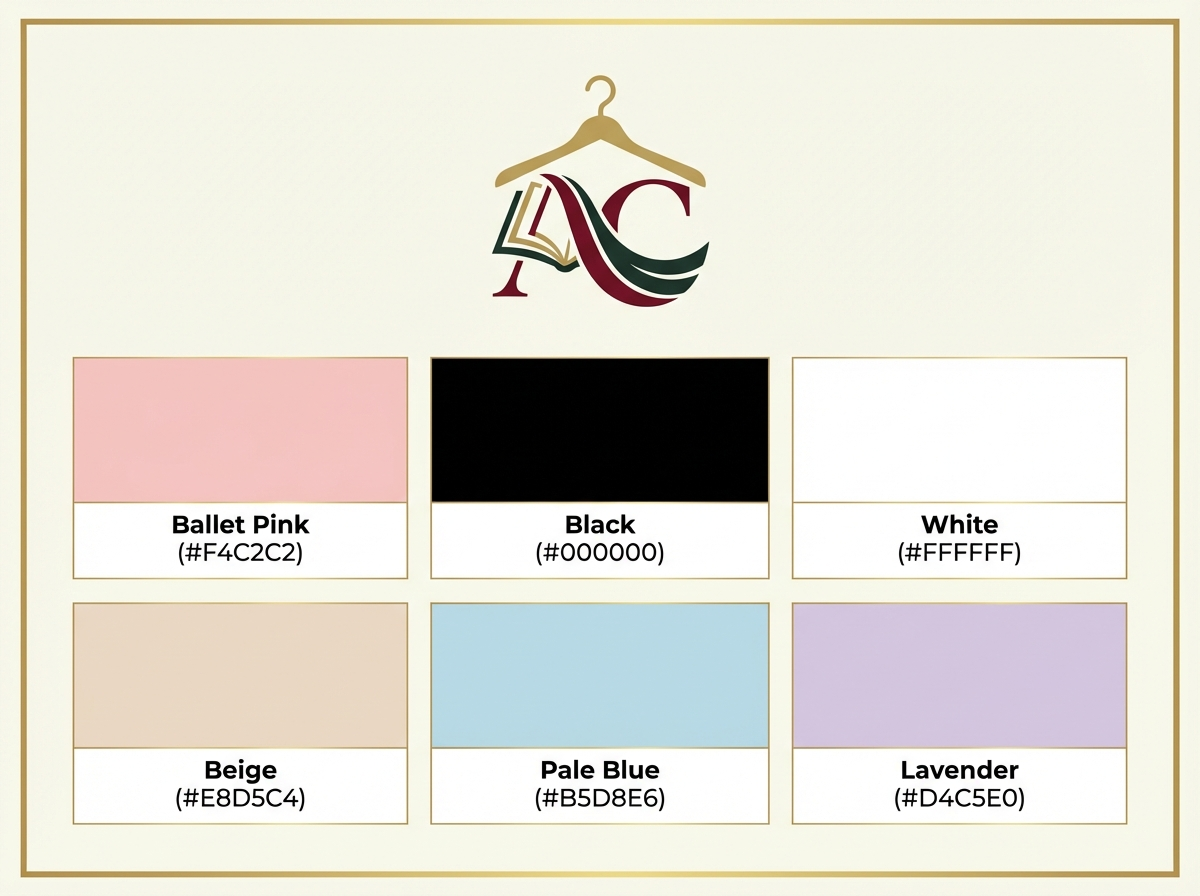
The balletcore color palette features soft pinks, blacks, whites, and muted pastels.
Balletcore works because it follows a very specific visual grammar. When something feels “off,” it’s usually because one of these codes has been broken.
Think of this section as the rulebook you can bend, but probably shouldn’t ignore.
The Balletcore Color Palette (Pink, Black, Nude & More)
The Core Palette
Balletcore lives in a soft, controlled color world:
Pink (every variation: blush, ballet slipper, dusty rose)
Black (studio classic, grounding and dramatic)
White (clean, rehearsal-ready)
Nude (skin-adjacent, subtle, intentional)
These colors reference traditional ballet uniforms, but more importantly, they keep the look quiet and cohesive.
Supporting Pastels
Used sparingly, never loudly:
Pale blue
Lavender
Soft ivory
Muted grey
If a color feels sugary or neon, it’s out.
Essential Balletcore Fabrics: Tulle, Satin & Knits
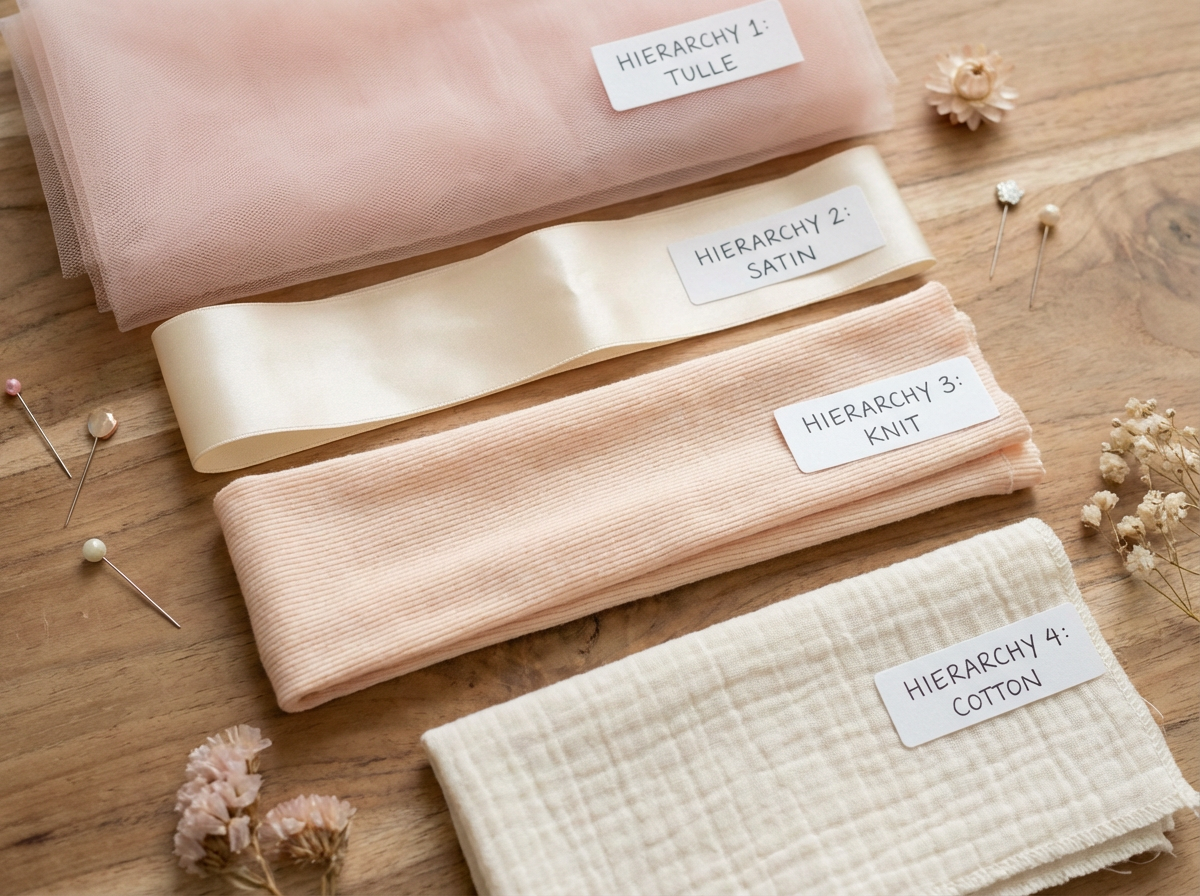
Balletcore fabric hierarchy: tulle leads, followed by satin, knits, and cotton.
Not all fabrics are equal in balletcore. There’s a clear ranking:
Tulle – the fantasy fabric
Satin – soft shine, controlled elegance
Knits – warmth, softness, practicality
Cotton – grounding base, never the star
The higher the fabric sits in the hierarchy, the more intentional it should feel. Tulle is a moment. Cotton is support.
Finish Rules
Matte is safest
Soft sheen is acceptable
Glitter, sequins, and sparkle are not invited
Balletcore is about light-catching fabric, naturally, not aggressively.
Balletcore Silhouettes That Create Grace
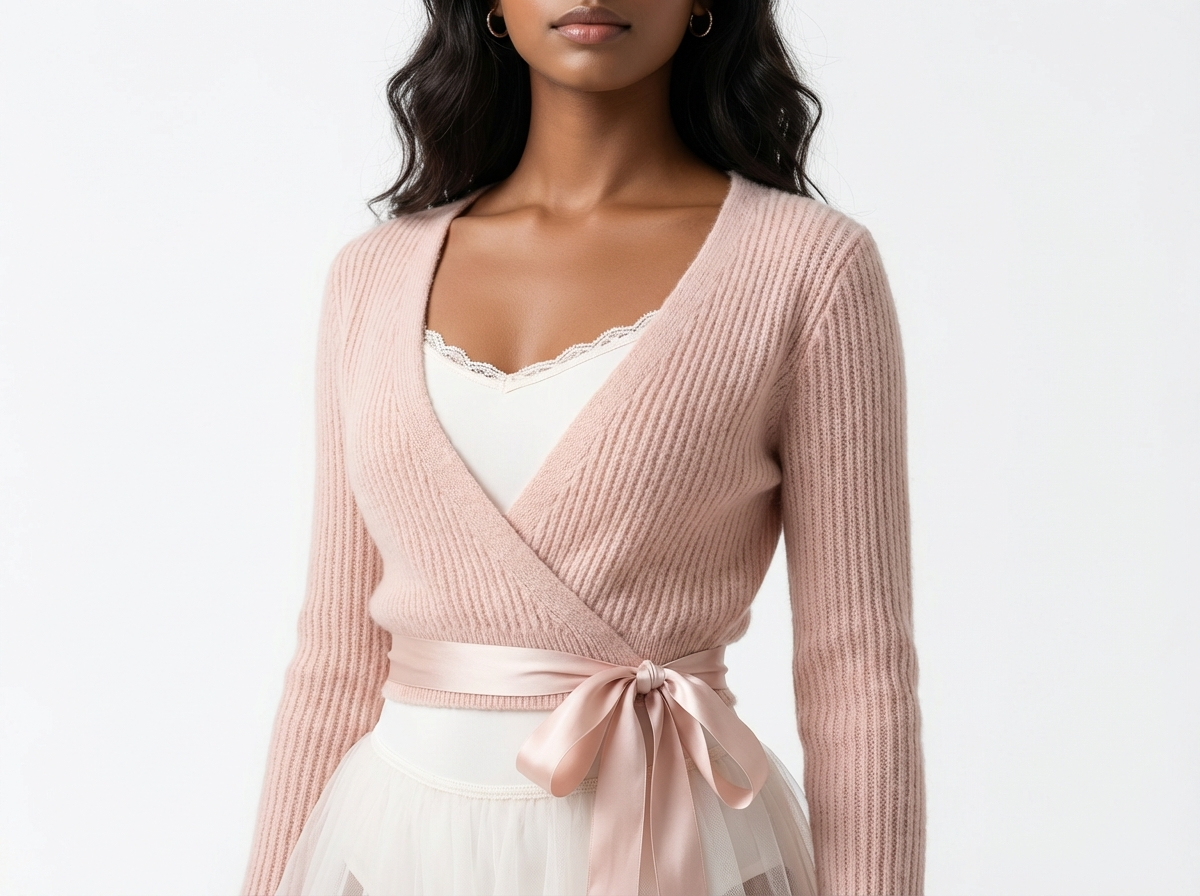
Balletcore silhouettes are designed to suggest movement—even when you’re standing still.
Wrapped Shapes
Wrap cardigans
Ballet-style tops
Tied sweaters and skirts
Wrapping creates softness while maintaining structure, a core ballet contradiction.
High Necklines
Scoop, bateau, mock necks
Dancer-inspired cuts
Elegant without being revealing
This keeps the look refined, not costume-y.
Fitted + Flowing Contrast
Snug bodice + airy skirt
Close-fitting top + relaxed bottom
Structure paired with softness
Nothing is skin-tight head to toe. Balance is key.
Lengthened Vertical Lines
Midi skirts
Straight-leg pants
Seam placement that draws the eye up and down
Balletcore favors elongation over exaggeration. The goal is grace, not drama.
Signature Details
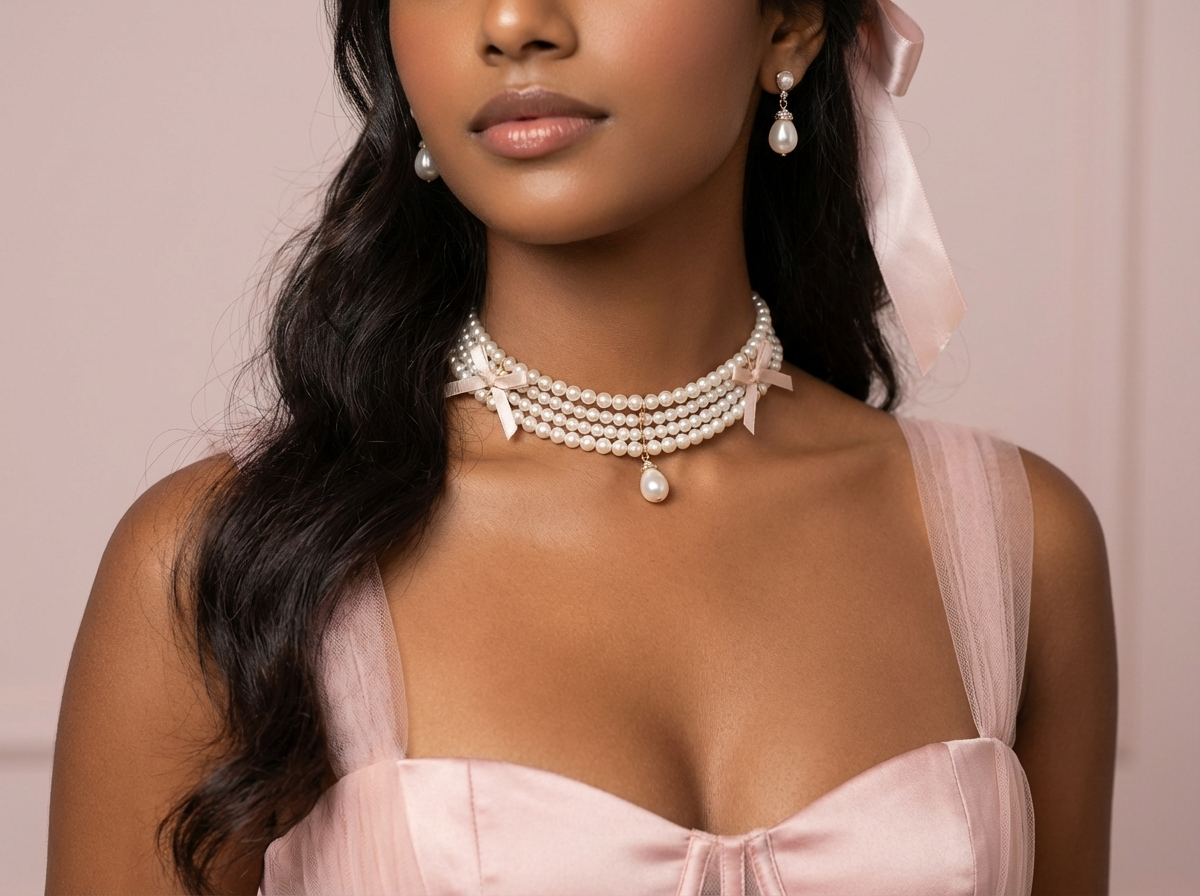
Details are where balletcore whispers instead of shouts.
Textural & Structural Accents
Ribbons (ties, straps, lacing)
Ruching (controlled, never messy)
Elastic bands (visible but intentional)
Crisscross elements (especially at necklines and backs)
These echo balletwear without copying it directly.
Jewelry-Level Embellishments
Pearls (small, classic)
Bows (tiny, architectural, not childish)
The rule here is simple:
If a detail becomes the main character, it’s too much.
Balletcore visual language is all about suggestion over statement. When done right, nothing feels loud, forced, or costume-like. Every color, fabric, and line looks chosen—because it is.
The Balletcore Wardrobe (15-Piece Capsule Edition)
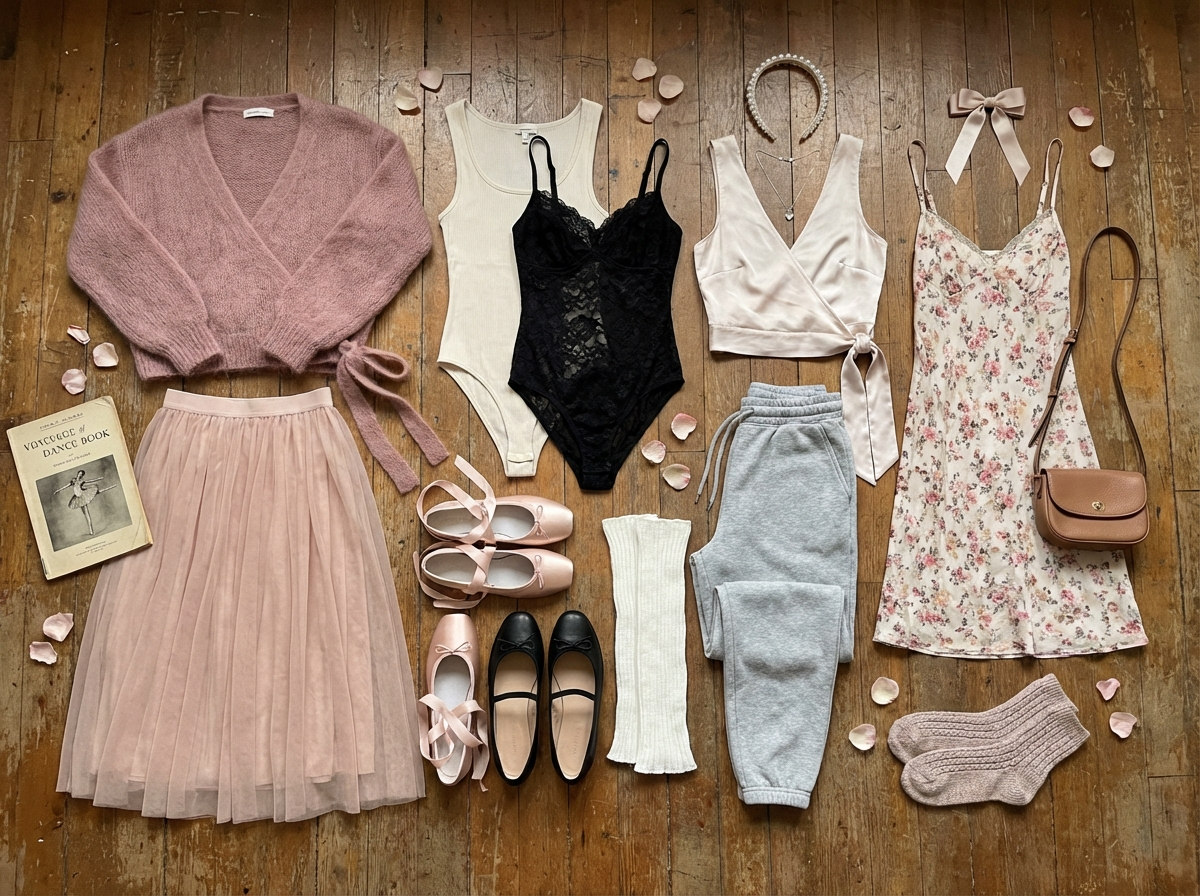
A complete 15-piece balletcore capsule wardrobe for versatile, elegant styling.
Balletcore shines when it’s edited, not overbuilt. Instead of a sprawling closet of tulle and wrap tops, this aesthetic works best as a tight capsule—pieces that layer, repeat, and quietly signal grace without feeling costume-y. Think studio discipline, street practicality.
Below is a 15-piece balletcore capsule that can carry you through real life while still delivering the fantasy.
Balletcore Tops: Bodysuits, Wraps & Layers
15 clothing items total — mix, layer, repeat
Tops (6)
Cashmere or fine-knit wrap sweater – the anchor piece
Long-sleeve bodysuit (scoop or bateau neckline)
Leotard-inspired tank or short-sleeve bodysuit
Cropped shrug or bolero – soft structure, easy layering
Off-shoulder or dancer-neck knit top
Simple camisole with built-in support (satin or modal)
These tops do most of the work—layered, wrapped, tied, and repeated across seasons.
Dresses (3)
Bias-cut slip dress (midi length)
Empire-waist or fit-and-flare dress
Sheer or tulle-overlay dress (layerable, not precious)
These dresses can stand alone or layer under knits and wraps—very balletcore behavior.
Balletcore Bottoms: Tulle Skirts to Elevated Leggings
Tulle or mesh midi skirt – the fantasy piece
Wrap skirt (chiffon, mesh, or lightweight knit)
Elevated leggings (matte, thick, non-athletic finish)
Straight-leg or stirrup pants (neutral, tailored)
Balletcore bottoms balance softness with structure. No compression, no logos, no gym vibes.
Balletcore Outerwear
Cropped knit or fitted cardigan (for proportion play)
Long wrap coat or princess-seam wool coat
Balletcore outerwear frames the body instead of swallowing it.
Best Ballet Flats for the Balletcore Aesthetic
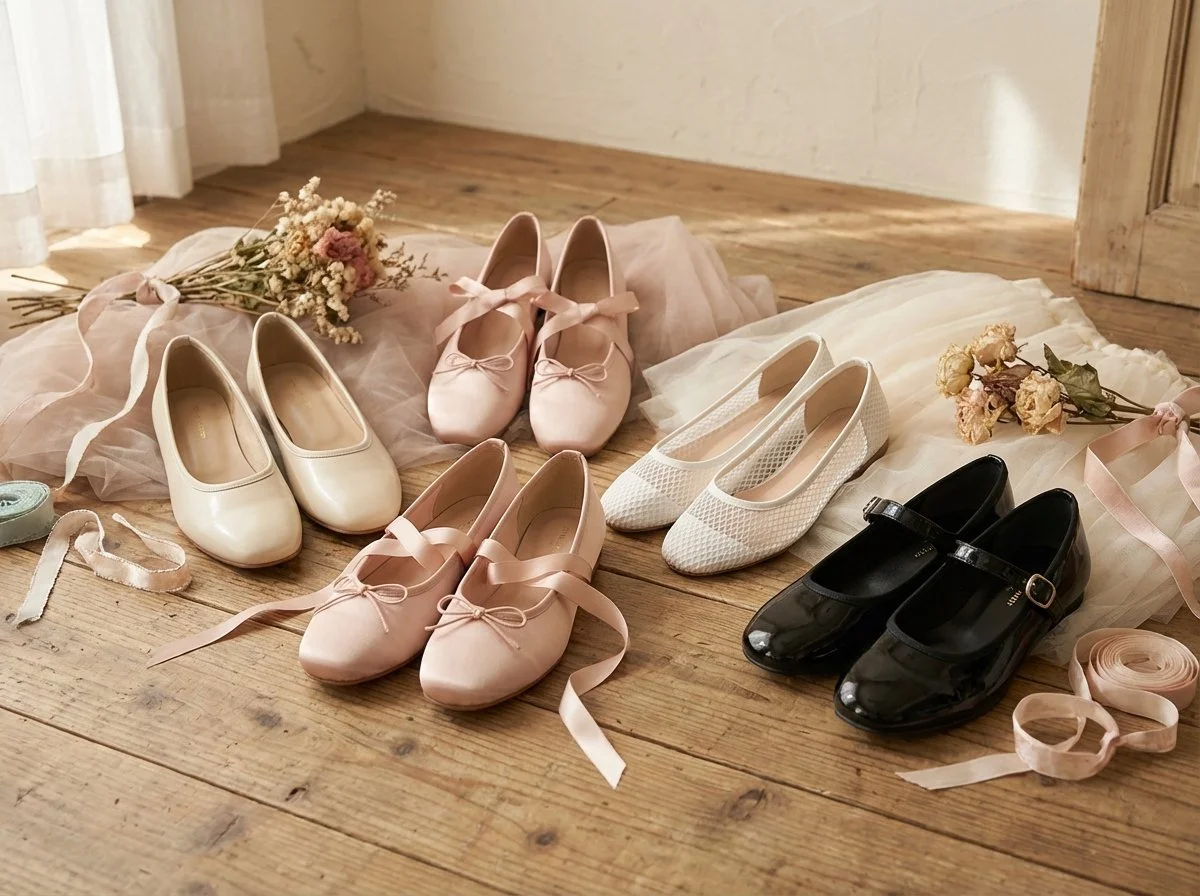
Ballet flats are the foundation footwear for any balletcore wardrobe
Yes
Ballet flats (leather, satin, or mesh)
Mary Janes with a low heel
Refined kitten heels or low pumps
No
Chunky soles
Heavy hardware
Loud logos
Anything that overpowers the outfit
Footwear should feel quiet, grounded, and elegant.
Accessories as Accents (Not Statements)
Balletcore accessories whisper.
Hair
Silk ribbons
Thin headbands
Visible bobby pins (intentional, not messy)
Jewelry
Pearl studs
Fine gold or silver chains
Minimal rings only
Bags
Small crossbody
Structured mini tote
Simple clutch
If an accessory becomes the focal point, it’s doing too much.
Why This Capsule Works
Everything layers
Every piece repeats
No single item feels costume-y alone
The silhouette always suggests movement
The wardrobe scales from errands to evenings
Balletcore is about choosing pieces that move well together—soft, structured, and intentional.
Balletcore Beauty & Presence
Balletcore beauty isn’t about transformation—it’s about refinement. The goal is to look intentional, composed, and softly expressive, not done-up or dramatic for the sake of it. Everything should feel like it belongs to movement.
Makeup Philosophy
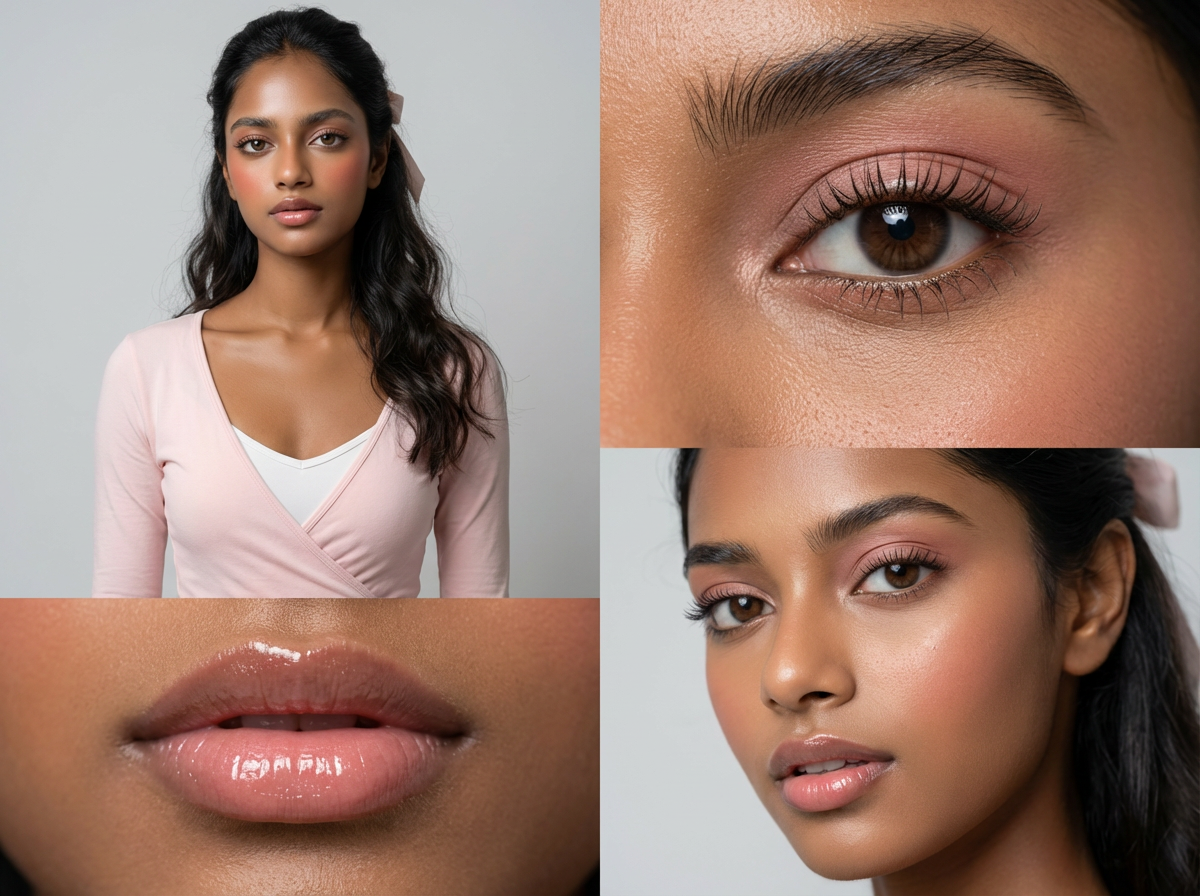
Clean, classic, softly theatrical
Balletcore makeup lives in the space between “barely there” and “quietly polished.” Skin comes first. Texture matters more than color. Nothing is harsh, heavy, or aggressively contoured.
Think:
Even, natural-looking skin
Softly defined eyes (elongated, not smoky)
A healthy flush, placed thoughtfully
Lips that look hydrated, not overdrawn
The face should look like it moves well—expressive without being loud.
Studio vs. Stage: Know the Difference
Studio beauty is everyday balletcore
Minimal makeup
Groomed brows
Soft blush
Natural lips
Effortless and wearable
Stage-inspired beauty is for evenings or events
Slightly stronger liner
More defined lashes
Subtle highlight on cheekbones
Still restrained—never drag, never glam
If it looks out of place in daylight, it probably belongs back on stage.
Hair as Structure
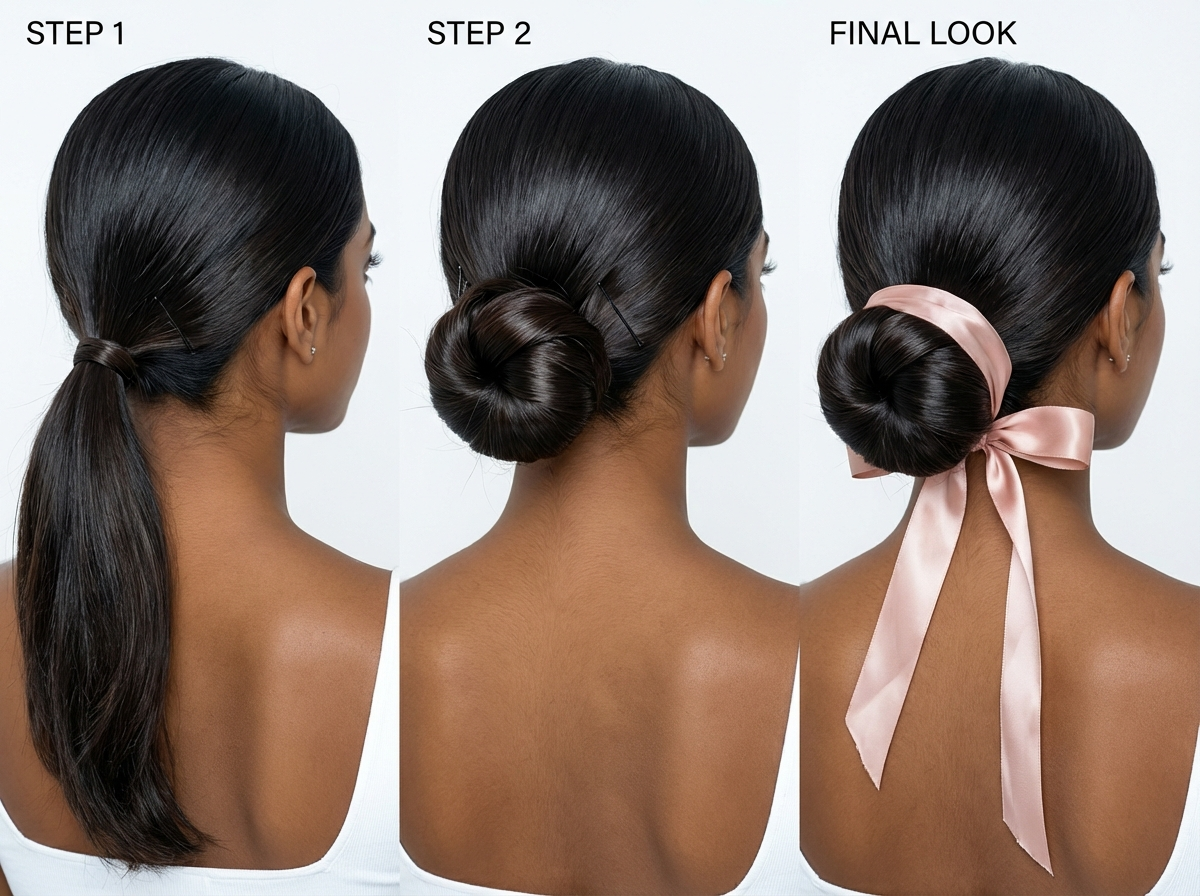
Hair is a core pillar of balletcore. It’s not an accessory—it’s architecture.
The Bun Taxonomy
Low bun: classic, grounded, timeless
High bun: polished, alert, performance-ready
Messy bun: off-duty dancer energy (intentional, not careless)
Braided bun: secure, detailed, quietly impressive
Each version communicates something slightly different, but all signal control and care.
Modern Adaptations
Slicked low ponytails
Half-up styles with ribbon ties
Low ponytails wrapped with hair or elastic
Face-framing pieces kept soft, not wispy
Hair should feel contained, not undone.
Essential Tools & Products
Bobby pins (visible is fine—styled is better)
Hair nets for clean buns
Strong-hold gel or pomade
Smoothing serum
Hair spray (used lightly)
Silk or satin ribbons
The rule: if it looks accidental, redo it.
The Ballet Body Conversation
This matters.
Balletcore as an aesthetic must be separated from ballet’s harmful body standards. Professional ballet has a long history of exclusion, pressure, and damage—and none of that needs to be carried into fashion.
Grace does not equal thinness.
Grace is about alignment, presence, and awareness—not size, weight, or shape.
Balletcore shifts the focus to:
Posture over proportions
Strength over fragility
Movement over appearance
Control over restriction
Anyone can stand taller. Anyone can move with intention. Anyone can choose softness without making themselves smaller.
When done responsibly, balletcore becomes an inclusive aspiration. No gatekeeping. No idealized silhouette. Just an appreciation for how grace exists in infinite forms.
Balletcore Outfit Formulas (Using the 15-Piece Capsule)
1. Coffee Run Balletcore
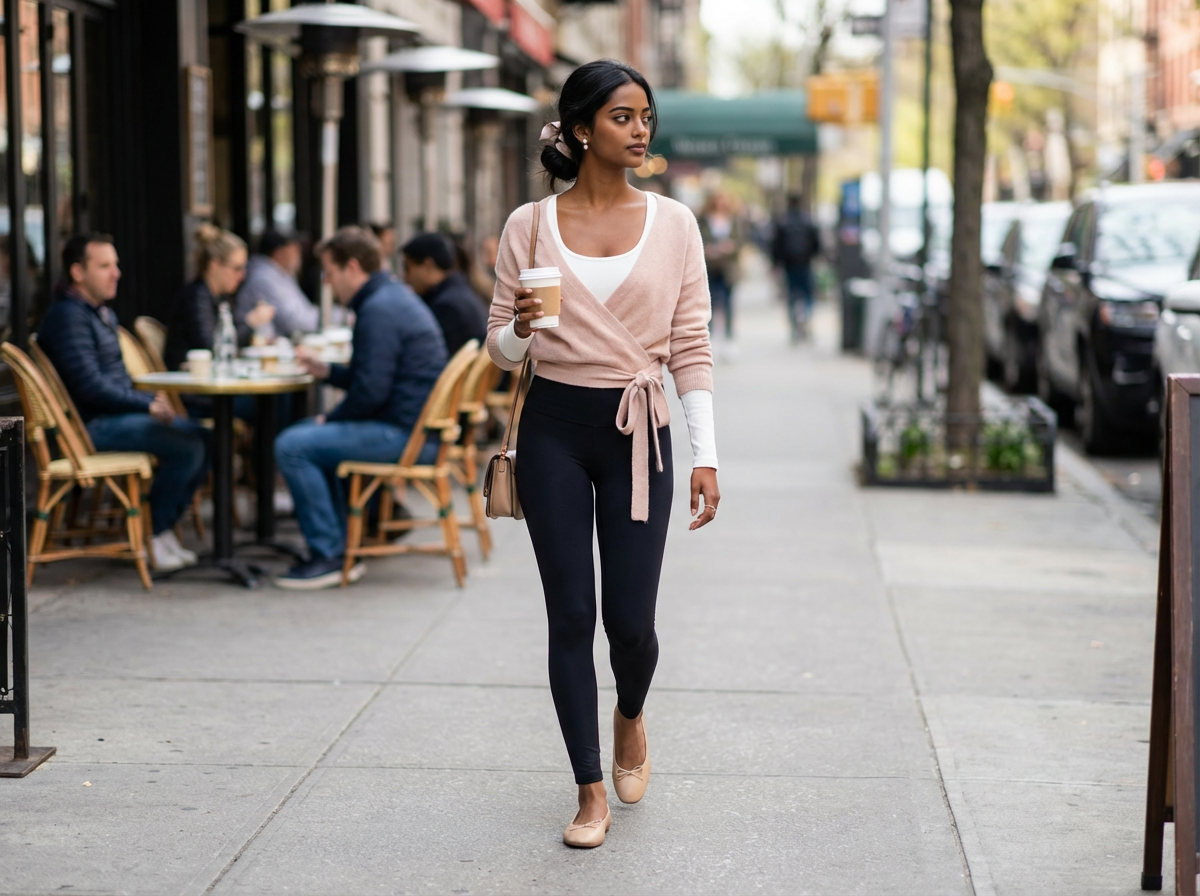
The Formula: Grace Meets Practical Comfort
Outfit Breakdown
Base: Long-sleeve bodysuit (scoop neckline) in nude or white
Layer: Cashmere wrap sweater in blush or oatmeal, loosely tied
Bottom: Elevated leggings (matte black, thick fabric)
Shoes: Leather ballet flats in black or nude
Hair: Low messy bun with silk ribbon loosely tied
Accessories: Pearl studs, small crossbody bag, minimal rings
Why It Works
This is balletcore at its most accessible. The bodysuit creates a smooth, dance-inspired line under the wrap sweater, while elevated leggings (not gym leggings—matte, substantial fabric) maintain the aesthetic without looking costume-y. The loosely tied wrap sweater suggests off-duty dancer energy without trying too hard.
Styling Notes
Let the wrap sweater drape open if it's warm—don't force the tie
The messy bun should look intentional, not rushed (3 bobby pins, visible)
Keep makeup minimal: groomed brows, soft blush, hydrated lips
If cooler: add the cropped knit cardigan over the bodysuit instead
The Mood
Unhurried. Composed. Like you woke up with time to stretch before leaving the house.
2. Work Balletcore
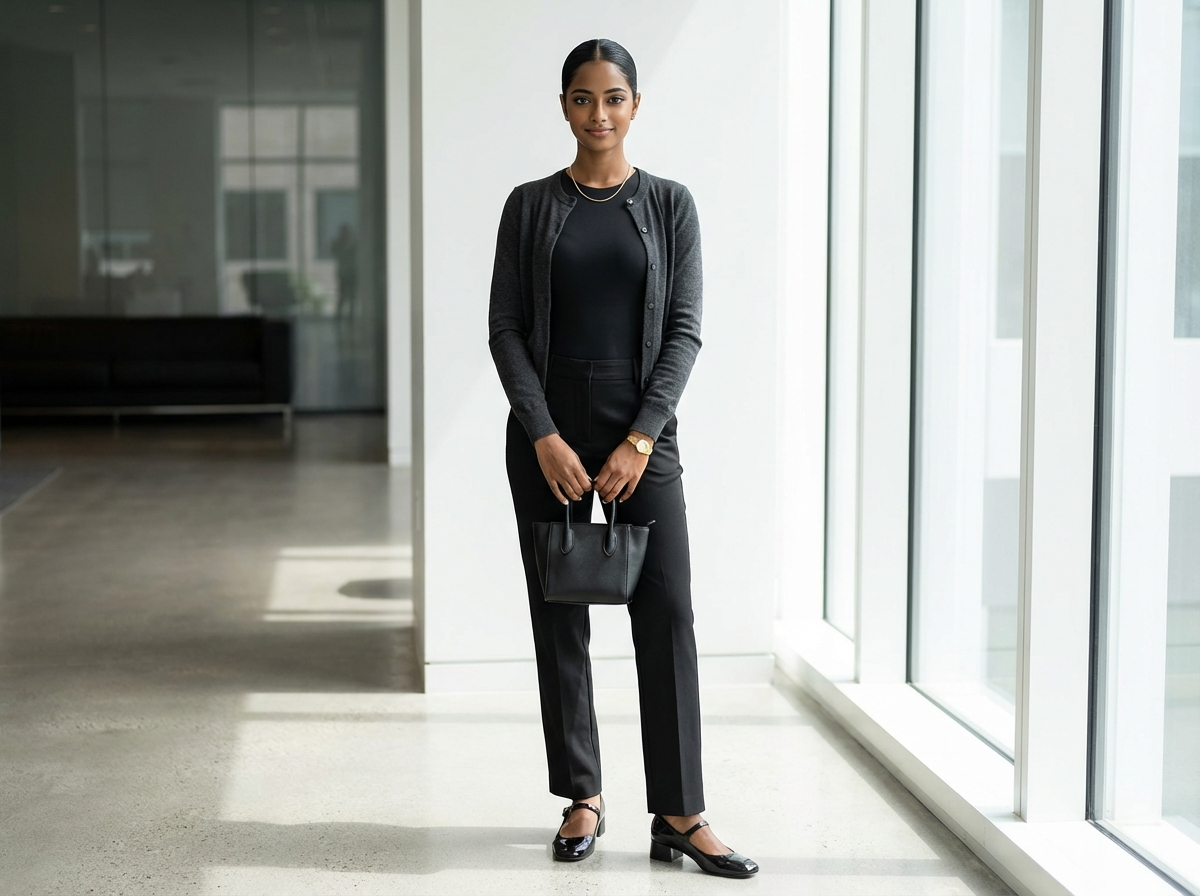
The Formula: Softness in a Professional Context
Outfit Breakdown
Base: Leotard-inspired tank or short-sleeve bodysuit in black
Layer: Cropped shrug or bolero (if conservative) OR off-shoulder dancer-neck knit top
Bottom: Straight-leg or stirrup pants in black, grey, or cream
Outerwear: Long wrap coat (for commute/meetings)
Shoes: Mary Janes with low heel OR refined kitten heels
Hair: Slicked low ponytail or low bun (polished, no fly-aways)
Accessories: Fine gold chain, structured mini tote, simple watch
Why It Works
This formula uses balletcore's discipline without its whimsy. The bodysuit creates clean lines under tailored pants, while the bolero or structured knit adds professionalism. Swap ballet flats for Mary Janes or kitten heels to elevate authority while maintaining the aesthetic.
Styling Notes
If your office skews conservative, layer the fitted cardigan over the bodysuit instead of wearing it alone
The wrap coat is your commute armor—keeps the look polished in transit
Hair should be secure and intentional, not "I forgot to wash it."
Keep jewelry minimal and quiet—no statement pieces
Alternative Version (Creative Office)
Swap the pants for the wrap skirt in lightweight knit paired with sheer tights and ballet flats. Add the cropped knit cardigan for polish. This leans slightly more romantic while staying work-appropriate.
The Mood
Capable. Elegant. Like you have your life together even when you don't.
3. Date Night Balletcore
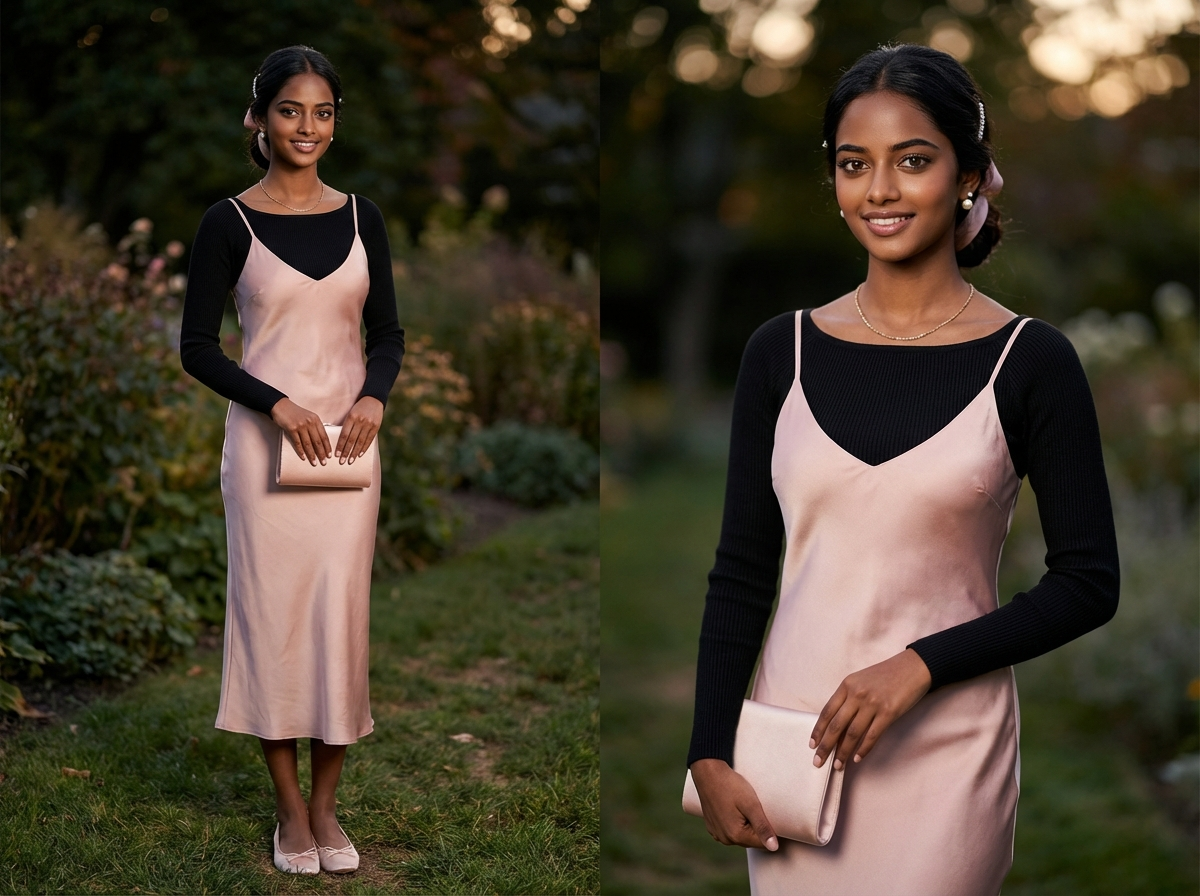
The Formula: Romantic Without Trying Too Hard
Outfit Breakdown
Dress: Bias-cut slip dress (midi length) in blush, champagne, or black
Layer: Off-shoulder or dancer-neck knit top worn underneath (if cool) OR cropped shrug over shoulders
Shoes: Satin ballet flats OR refined kitten heels
Hair: Low bun with silk ribbon woven through, or half-up with visible bobby pins
Accessories: Pearl studs, delicate gold chain, simple clutch or structured mini tote
Why It Works
The bias-cut slip dress is inherently graceful—it moves with you, catches light, and feels elevated without being overdone. Layering the knit underneath (visible at the neckline/sleeves) adds balletcore's signature wrapped softness while keeping you warm. The satin ballet flats keep it date-appropriate without sacrificing comfort.
Styling Notes
If the slip dress feels too minimal, the off-shoulder knit layered underneath creates beautiful dimension
The ribbon should be intentional, not girlish—think structured bow, not floppy
Makeup: slightly stronger than daytime—elongated liner, defined lashes, natural flush
If going darker: choose the black slip dress with sheer black tights
Alternative Version (Warmer Weather)
Empire-waist or fit-and-flare dress along with satin ballet flats, hair down with silk ribbon as a headband, and pearl studs. Simple, soft, romantic.
The Mood
Quietly confident. Soft but not fragile. Like you chose elegance over trends.
4. Weekend Errands Balletcore
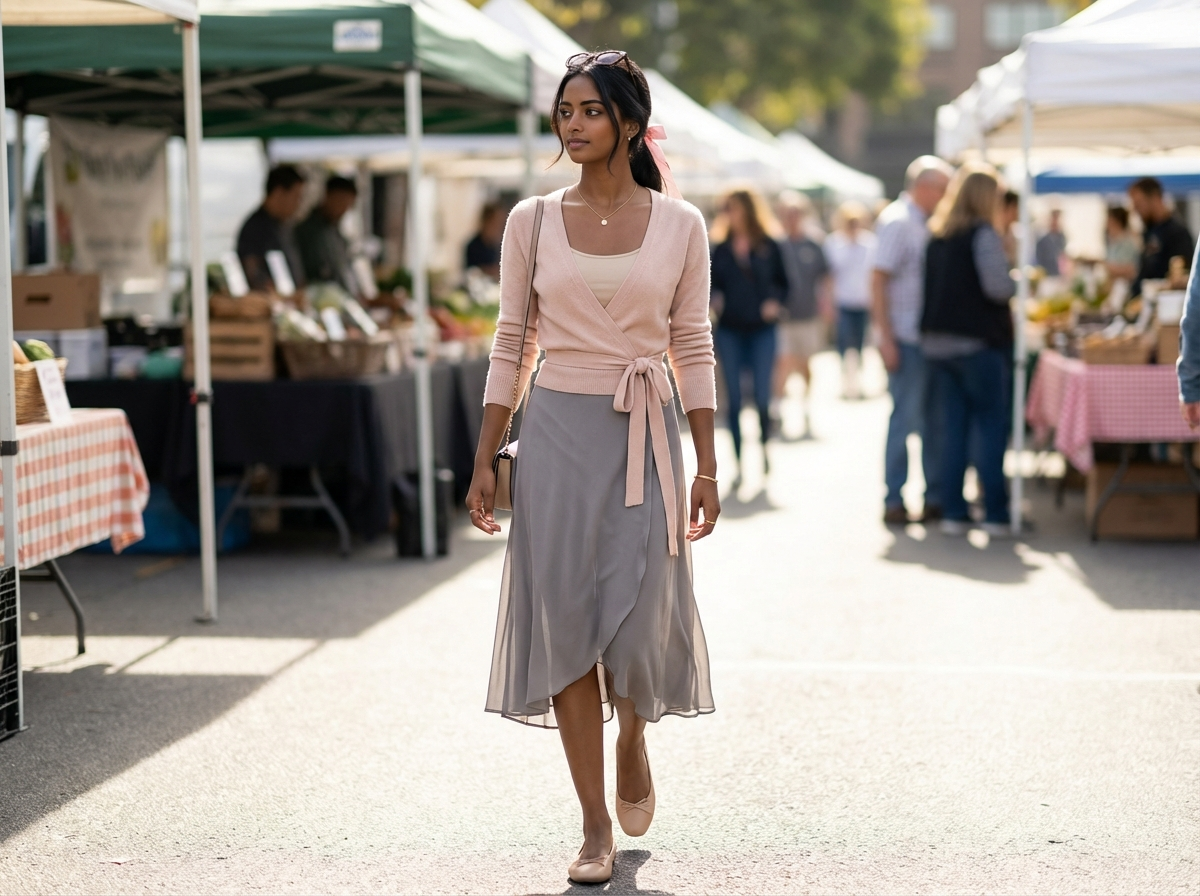
The Formula: Lived-In Elegance for Real Life
Outfit Breakdown
Base: Simple camisole with built-in support (satin or modal) in white or nude
Layer: Cashmere wrap sweater tied at waist over cami
Bottom: Wrap skirt (chiffon or lightweight knit) in black, blush, or grey
Shoes: Canvas or leather ballet flats
Hair: Low ponytail wrapped with hair elastic, or half-up with ribbon
Accessories: Small crossbody bag, sunglasses, minimal jewelry
Why It Works
This is balletcore's sweet spot—soft, practical, and genuinely wearable. The wrap skirt feels intentional without being precious, and the camisole-under-sweater combination layers beautifully for fluctuating temperatures. Ballet flats ground the look in everyday reality.
Styling Notes
The wrap sweater can be worn normally or tied around waist for casual ease
If running multiple errands, the crossbody keeps hands free while maintaining proportion
Hair should feel effortless—not undone, but not overly styled
Swap the wrap skirt for elevated leggings if truly running around (grocery store, gym pickup)
Alternative Version (Cooler Days)
Long-sleeve bodysuit + straight-leg pants + cropped fitted cardigan + ballet flats. This is casual balletcore's most repeatable formula—structured but comfortable, polished but not trying.
The Mood
Grounded. Intentional. Like getting dressed is an act of care, even for mundane tasks.
5. Evening Event Balletcore
The Formula: Quiet Drama for Special Occasions
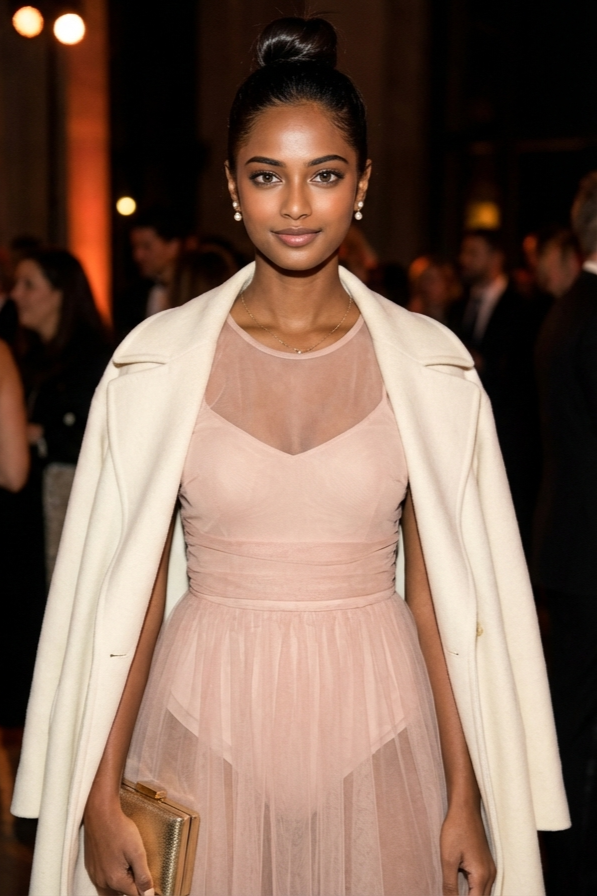
Outfit Breakdown
Dress: Sheer or tulle-overlay dress (layerable, midi length) in blush, ivory, or pale blue
Underlay: Leotard-inspired tank bodysuit worn underneath sheer dress
Outerwear: Long wrap coat in cream or camel (for arrival/departure)
Shoes: Satin ballet flats OR low pumps (if the event demands)
Hair: High bun (polished, performance-ready) or braided low bun
Accessories: Pearl studs, fine gold chain, structured clutch
Why It Works
The tulle-overlay dress is balletcore's signature fantasy piece, but layering it over a bodysuit keeps it wearable and appropriate. The wrap coat adds sophistication for arrival and frames your silhouette without overwhelming the dress. The high bun signals "this is intentional" without costume drama.
Styling Notes
The bodysuit underneath is non-negotiable—sheer without structure reads unfinished
Hair should be secured with multiple bobby pins and light hairspray (it's an event, make it hold)
Makeup: slightly more defined than date night—soft highlight on cheekbones, hydrated lips with subtle color
The wrap coat is your confidence layer—wear it until the last possible moment
Alternative Version (Less Formal)
Empire-waist dress + cropped shrug + satin ballet flats + low bun with ribbon. This works for gallery openings, dinner parties, or theater nights where full tulle feels excessive.
5B. Evening Event: Dark Balletcore (Black Swan Variation)
The Formula: Theatrical Elegance Without Unraveling
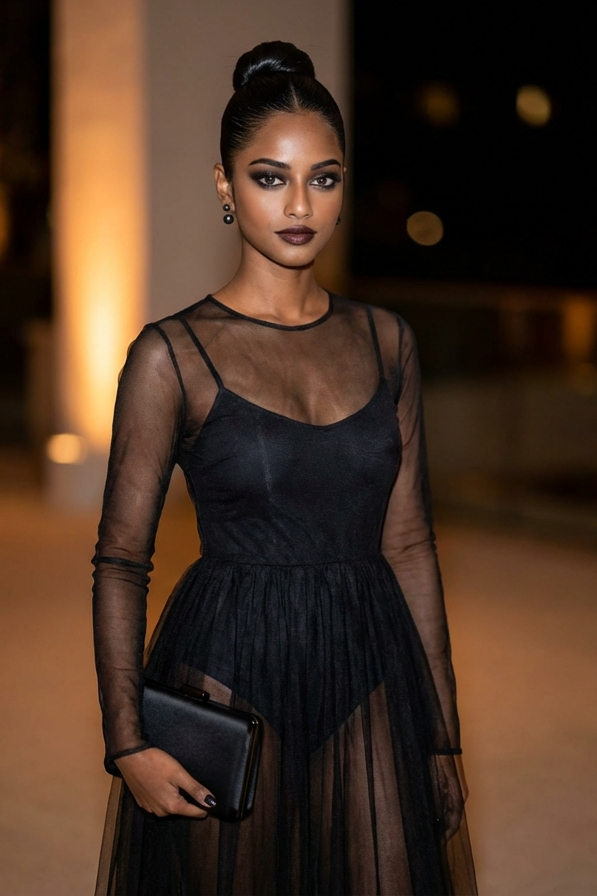
Outfit Breakdown
Dress: Sheer or tulle-overlay dress in black
Underlay: Black bodysuit (long-sleeve or tank) worn underneath
Layer (optional): Black wrap cardigan or shrug if needed for warmth
Shoes: Black satin ballet flats OR black mary janes with low heel
Hair: High bun (severe, sleek) OR low bun with visible structure
Accessories: Black pearl studs (if available) or minimal silver, black structured clutch
Why It Works
This takes the evening balletcore formula and intensifies it through color restriction. All black creates drama without accessories doing the work. The tulle becomes gothic instead of sweet, and the severe bun channels performance intensity.
Styling Notes
Hair must be slicked back—use strong-hold gel or pomade, no softness
Makeup: elongated black liner (not smoky, just defined), pale skin, dark lips optional
The key is restraint—resist adding fishnets, corsets, or obvious "costume" elements
Sheer black tights (not distressed) if bare legs feel too exposed
If you want texture: add a black mesh or lace layer, but keep it architectural
When to Wear This
Concerts, fashion-forward events, art openings, anywhere you want main-character energy without a literal costume. This is dark balletcore's wearable extreme—intense but grounded.
The Mood Difference
Classic evening balletcore: Soft confidence, romantic restraint.
Dark balletcore: Controlled intensity, quiet power, beautiful severity
Styling Principles Across All Formulas
The Balletcore Non-Negotiables
Everything should layer intentionally - No piece exists in isolation
Proportion matters more than coverage - Fitted + flowing, never all tight or all loose
Hair is architecture, not decoration - Messy must still be structured
Footwear grounds the fantasy - Ballet flats are the reality check
Restraint is the loudest statement - One feature piece maximum per outfit
How to Make Any Formula "More Balletcore"
Add a wrap element (sweater, skirt, coat)
Incorporate tulle or sheer layers (but ground with structure underneath)
Elevate your hair (any bun, ponytail, or ribbon instantly reads balletcore)
Switch to ballet flats (removes streetwear, adds dance reference)
Simplify accessories (pearls, single chain, nothing loud)
How to Make Any Formula "Less Costume-y"
Remove one ballet element (if wearing tulle skirt, skip the ballet flats)
Ground with modern basics (bodysuit + jeans still works if styled right)
Let hair be simpler (low ponytail > elaborate bun for casual contexts)
Mix in non-balletcore pieces (denim jacket over wrap sweater, sneakers with slip dress)
Quick Reference: Capsule Piece Usage Frequency
Based on these five formulas, here's how often each capsule piece appears:
Most Used (4-5 times):
Long-sleeve bodysuit
Cashmere wrap sweater
Ballet flats (leather or satin)
Pearl studs
Low bun hairstyle
Frequently Used (3 times):
Slip dress
Elevated leggings
Cropped cardigan/shrug
Small crossbody or structured tote
Situational (1-2 times):
Tulle-overlay dress
Wrap skirt
Straight-leg pants
Long wrap coat
Mary janes/kitten heels
This proves the capsule's efficiency: Six core pieces (bodysuit, wrap sweater, ballet flats, slip dress, leggings, cardigan) generate 80% of your balletcore wardrobe functionality.
These formulas demonstrate balletcore's real strength—it's a styling system, not a costume. Each outfit maintains the aesthetic codes (wrapping, softness, structure, restraint) while adapting to actual life contexts. The 15-piece capsule proves remarkably versatile when you understand how to layer, proportion, and repeat with intention.
Balletcore Variations & Sub-Aesthetics
Balletcore isn’t one look—it’s a visual language that shifts depending on mood, lifestyle, and how literal you want to be. These variations are modular by design. You can live in one, borrow from several, or move between them depending on the day.
Think of these as different roles played by the same dancer.
1. Classical Balletcore Outfit Ideas
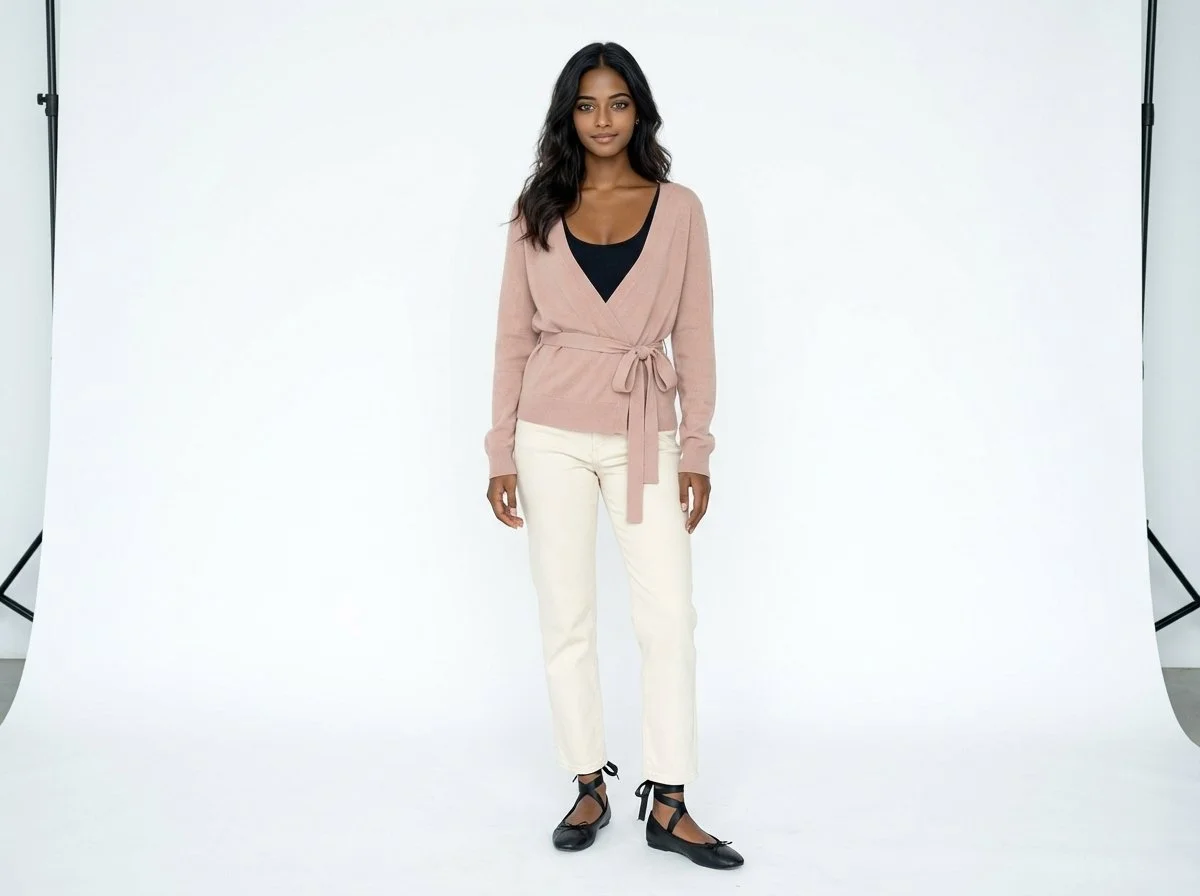
Authentic, studio-inspired
Mood & Attitude
Pure, disciplined, understated. This is balletcore at its most literal—quiet confidence, clean lines, no irony. It feels calm, focused, and intentionally minimal.
Key Pieces
Genuine ballet wrap sweaters
Leotards worn as bodysuits
Traditional wrap skirts
Canvas or leather ballet flats
Simple low buns or slicked hair
Best Occasions
Gallery visits
Brunch after pilates or yoga
Casual creative workdays
Weekend errands with polish
2. Dark Balletcore: The Black Swan Aesthetic
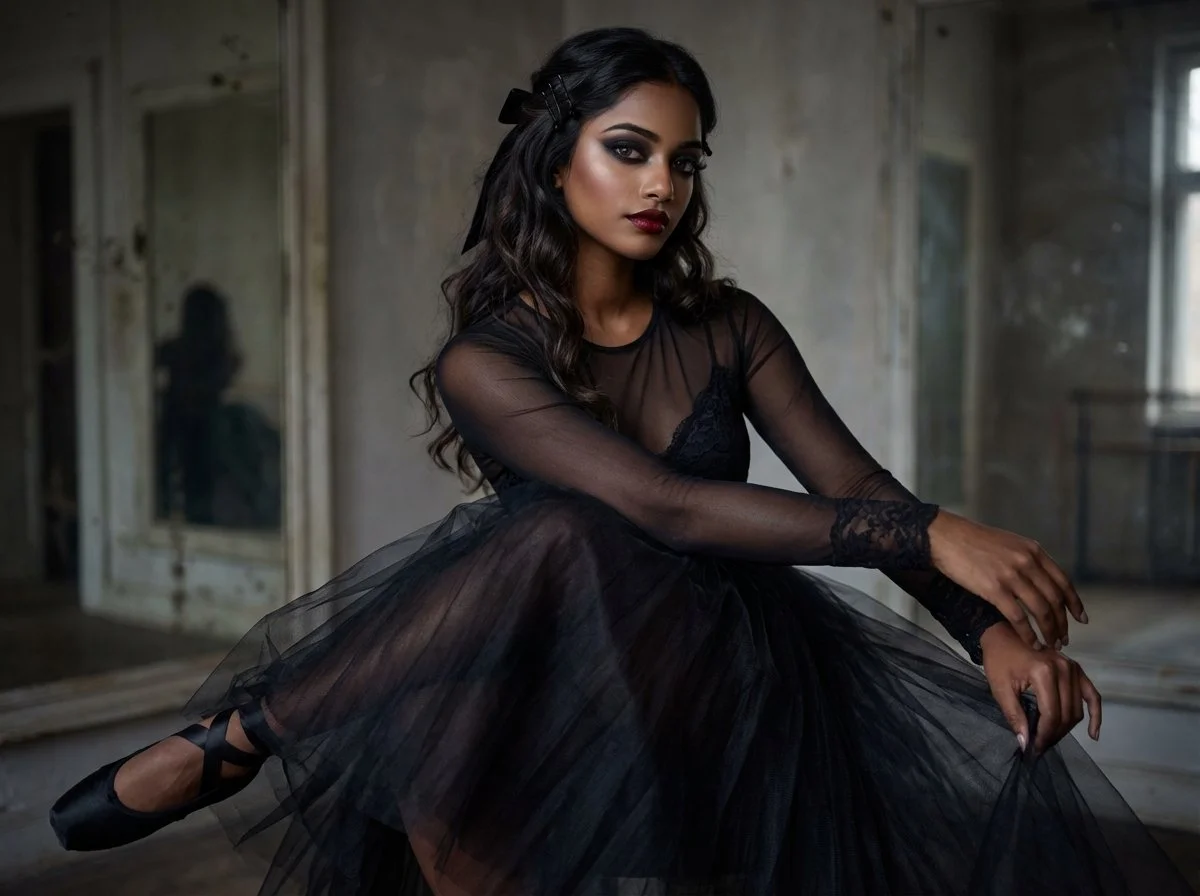
Gothic, dramatic, theatrical
Mood & Attitude
Intense. Obsessive. Beautifully unhinged. Inspired by ballet’s darker mythology—competition, sacrifice, and performance anxiety turned into fashion.
Key Pieces
Black tulle skirts or overlays
Sheer layers and mesh tops
Dark wrap knits
Distressed tights (intentional)
Feather, lace, or corset-inspired details
Best Occasions
Evening events
Concerts or theater nights
Fashion-forward dinners
When you want main-character energy
Pop-culture shorthand: Black Swan, but make it wearable.
3. Casual Balletcore for Everyday Wear
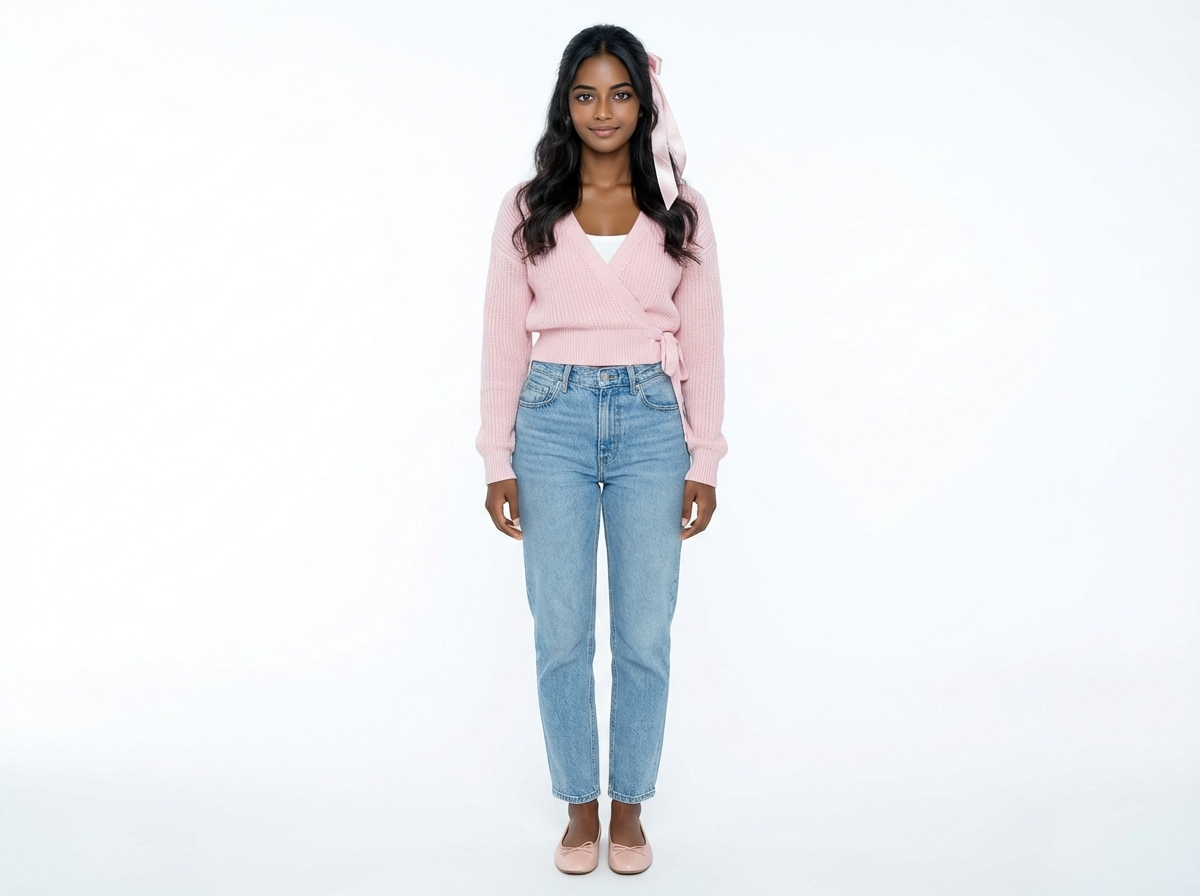
Everyday, wearable, work-friendly
Mood & Attitude
Soft discipline without the drama. This version prioritizes comfort and practicality while keeping the ballet influence subtle.
Key Pieces
Wrap cardigans over basics
Ballet flats with jeans or trousers
Bodysuits layered under knits
Minimal hair ribbons or pins
Neutral color palette
Best Occasions
Workdays
Travel days
Coffee runs
Casual dates
Real life, realistically
4. Romantic Balletcore Style Guide
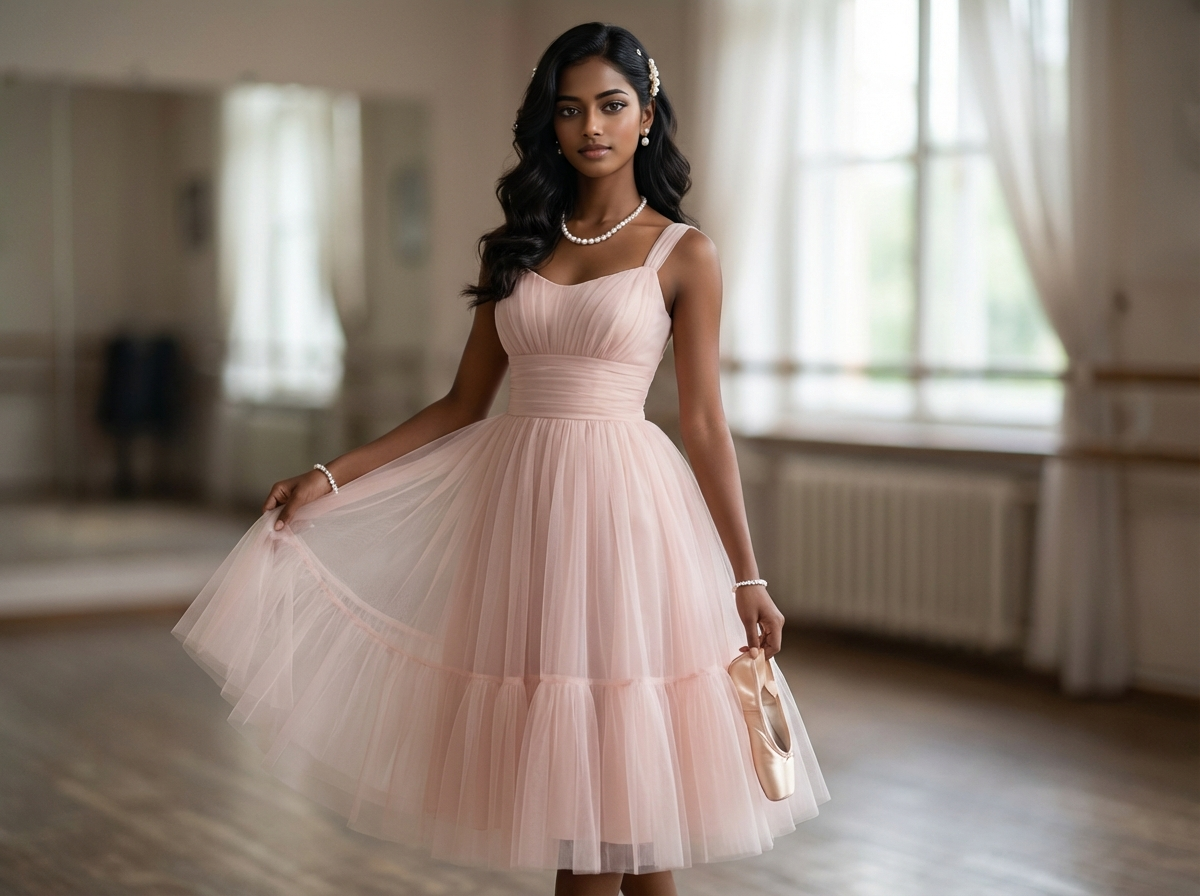
Cottagecore crossover
Mood & Attitude
Dreamy, nostalgic, extra feminine. This is balletcore leaning into fantasy—less studio, more storybook.
Key Pieces
Soft tulle midi skirts
Empire-waist dresses
Lace and chiffon layers
Pearls and delicate bows
Floral or pastel accents
Best Occasions
Garden parties
Spring events
Romantic outings
Afternoon tea energy
Soft-focus weekends
How to Use These Variations
You don’t need to pick just one.
Most people naturally blend casual balletcore with touches of romantic, classic, or dark, depending on mood and context.
That flexibility is the point.
Balletcore isn’t a costume—it’s a framework. How you perform it is entirely up to you.
Balletcore as a Lifestyle Aesthetic
Balletcore doesn’t stop at what you wear. At its best, it extends into how you organize your space, move through your day, and consume culture. This is where the aesthetic shifts from outfit to atmosphere—subtle, intentional, and quietly grounding.
Home & Environment
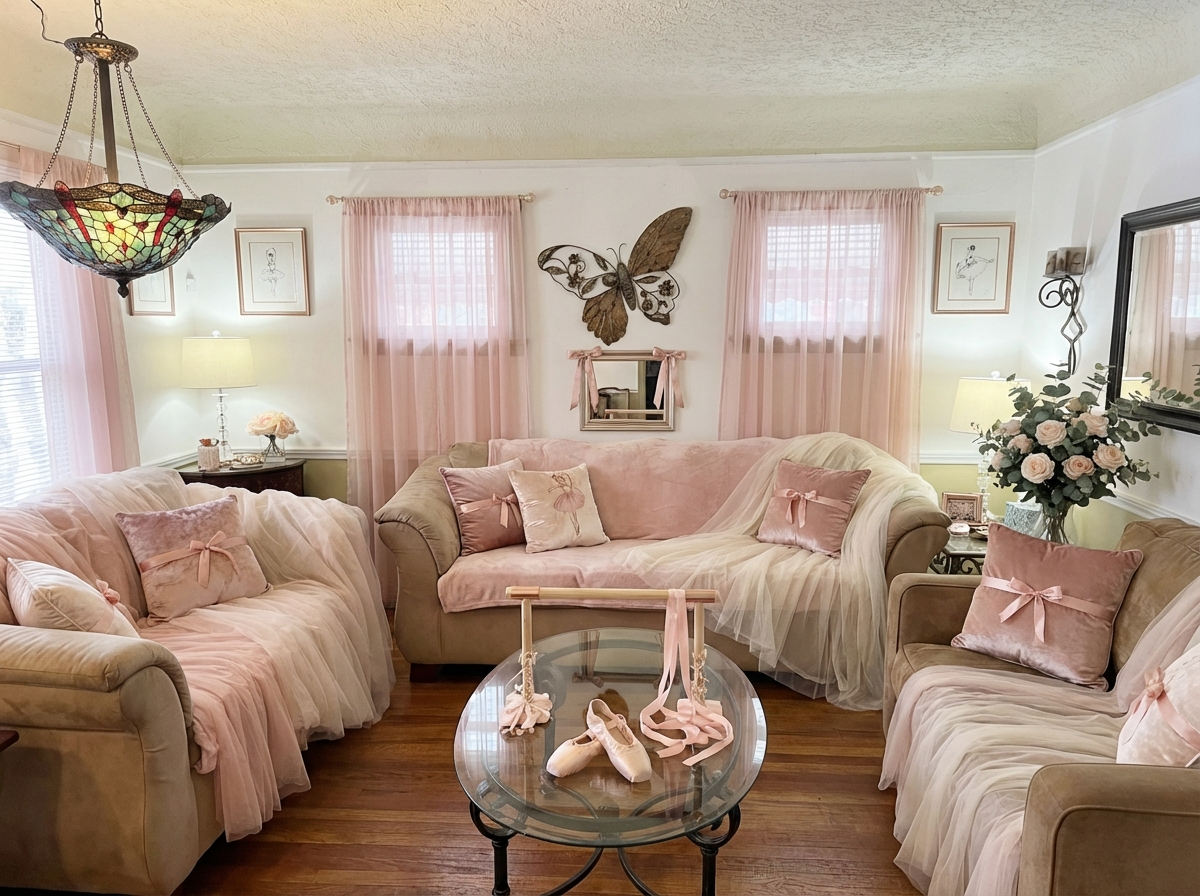
Minimalism, softened
Balletcore interiors favor calm over clutter. Not sterile minimalism—romantic restraint. Think fewer objects, but chosen with care. Everything has a place, and nothing feels rushed.
Key principles:
Clean surfaces with a few intentional accents
Soft textures layered into neutral spaces
Visual breathing room
Mirrors, light, and order
Mirrors aren’t about vanity here—they’re about light, reflection, and awareness. Natural light is prioritized. Spaces feel open, balanced, and gently structured. Balletcore homes feel like places where mornings unfold slowly and evenings wind down on purpose.
Decorative nods, not literal equipment
This is important.
A framed ballet sketch? Yes.
A soft pink throw? Absolutely.
A full barre bolted to the wall? Probably not.
Balletcore references ballet aesthetically, not functionally. The home supports the mood without turning into a rehearsal space.
Daily Rituals
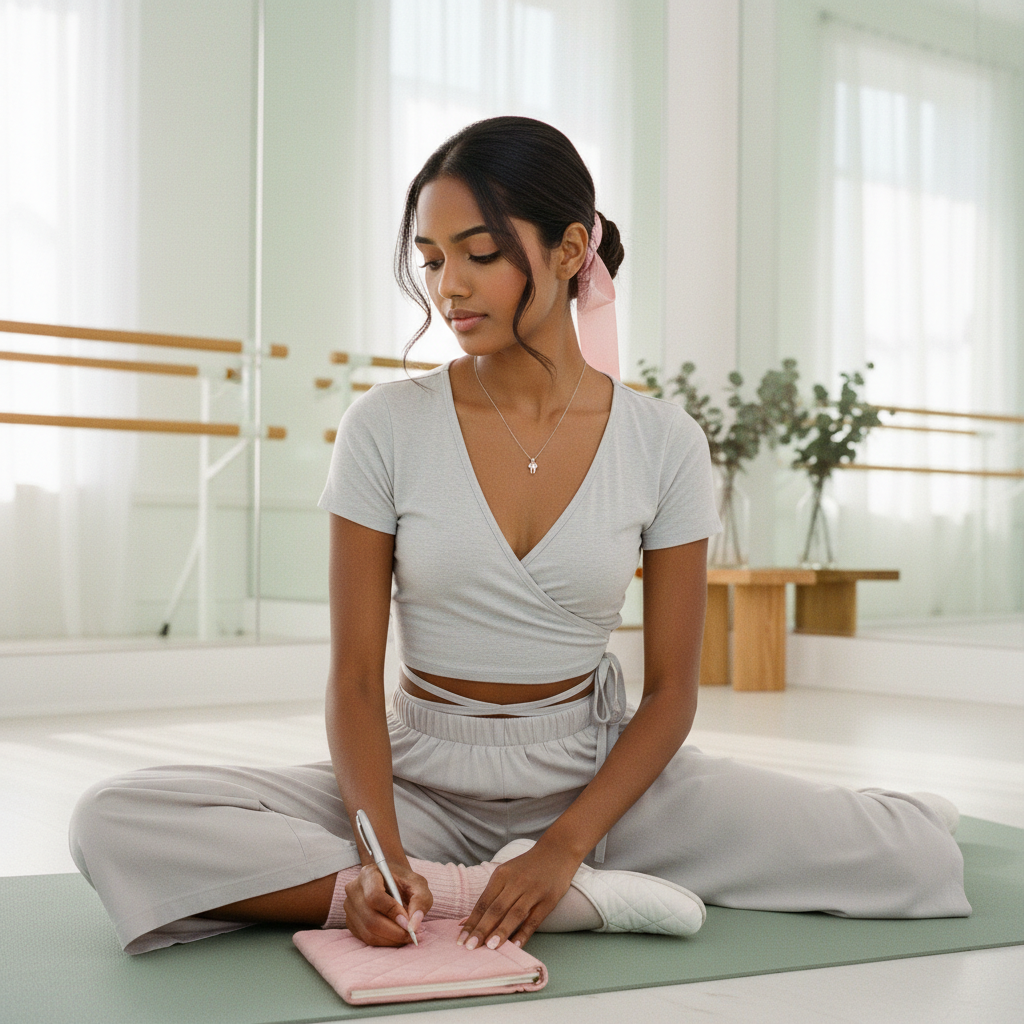
Balletcore lifestyle is built on ritual over productivity.
Stretching & posture awareness
Not workouts—check-ins.
A few morning stretches. A shoulder roll during the day. A posture reset while waiting in line. These moments are less about fitness and more about presence.
Movement as mindfulness
Balletcore treats movement as a way to reconnect with the body, not punish it. Walking becomes slower. Gestures become intentional. You move with yourself instead of against the clock.
Routine as aesthetic
Routines aren’t restrictive here—they’re comforting.
Morning prep done calmly
Clothes laid out with intention
Evenings that close gently
The routine itself becomes part of the beauty. Repetition isn’t boring—it’s grounding.
Cultural Consumption
Balletcore draws inspiration from how art is experienced, not just how it looks.
Movement-based art
Ballet performances (live or recorded)
Contemporary dance
Behind-the-scenes rehearsal footage
Sound & atmosphere
Classical music
Instrumental scores
Soft background compositions
These create emotional texture without demanding attention.
Stories & visuals
Artist biographies
Dance photography
Vintage performance posters
Sketches, paintings, and archival imagery
Balletcore culture consumption is slow, immersive, and visual-first. It feeds the aesthetic without overwhelming it.
Shopping Balletcore
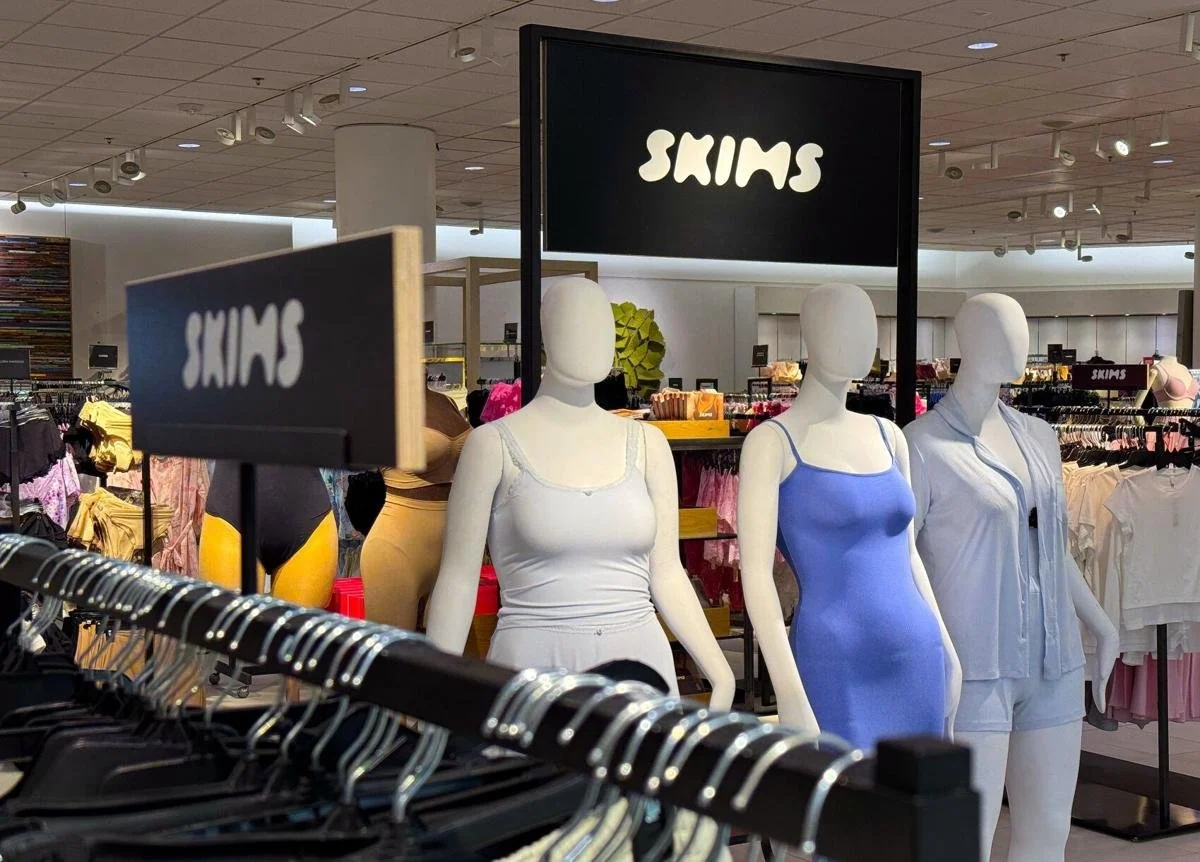
Image Credit: Nashville Post
Balletcore shopping is less about chasing trends and more about curating pieces that feel intentional, repeatable, and soft without being fragile. If it feels costume-y on the hanger, it probably won’t survive real life. The goal is elegance you can live in.
Where to Shop
High-End (for inspiration or investment pieces)
This tier sets the visual language—clean lines, impeccable fabrics, quiet drama.
Miu Miu – modern ballet silhouettes, wrap details
Repetto – iconic ballet flats, authentic roots
Simone Rocha – romantic, pearl-inflected balletcore
Cecilie Bahnsen – architectural tulle and volume
You don’t need to shop here to do balletcore—but it’s useful for understanding proportion and restraint.
Contemporary & Accessible (The Sweet Spot)
This is where most balletcore wardrobes really come together.
SKIMS – especially strong for balletcore foundations
Bodysuits that mimic leotards
Soft, matte fabrics
Neutral palettes that layer beautifully
Many of the capsule pieces in this guide came from here
Reformation – slips, wrap dresses
COS – minimalist balletcore
& Other Stories – knits and delicate silhouettes
If you’re building a model balletcore capsule, start with SKIMS for your base layers and build outward.
Authentic Dancewear (Selective & Intentional)
Perfect for wraps, knits, and layering—not full studio looks.
Tip: Shop these like elevated basics, not costumes.
Budget & Thrift Strategies
Thrift stores for wrap sweaters and cardigans
Vintage slips and bias-cut dresses
Dance store sale racks
Focus on fabric and cut, not labels
Skip anything that looks overly theatrical
Balletcore is forgiving on price point—but not on quality.
Making Balletcore Personal
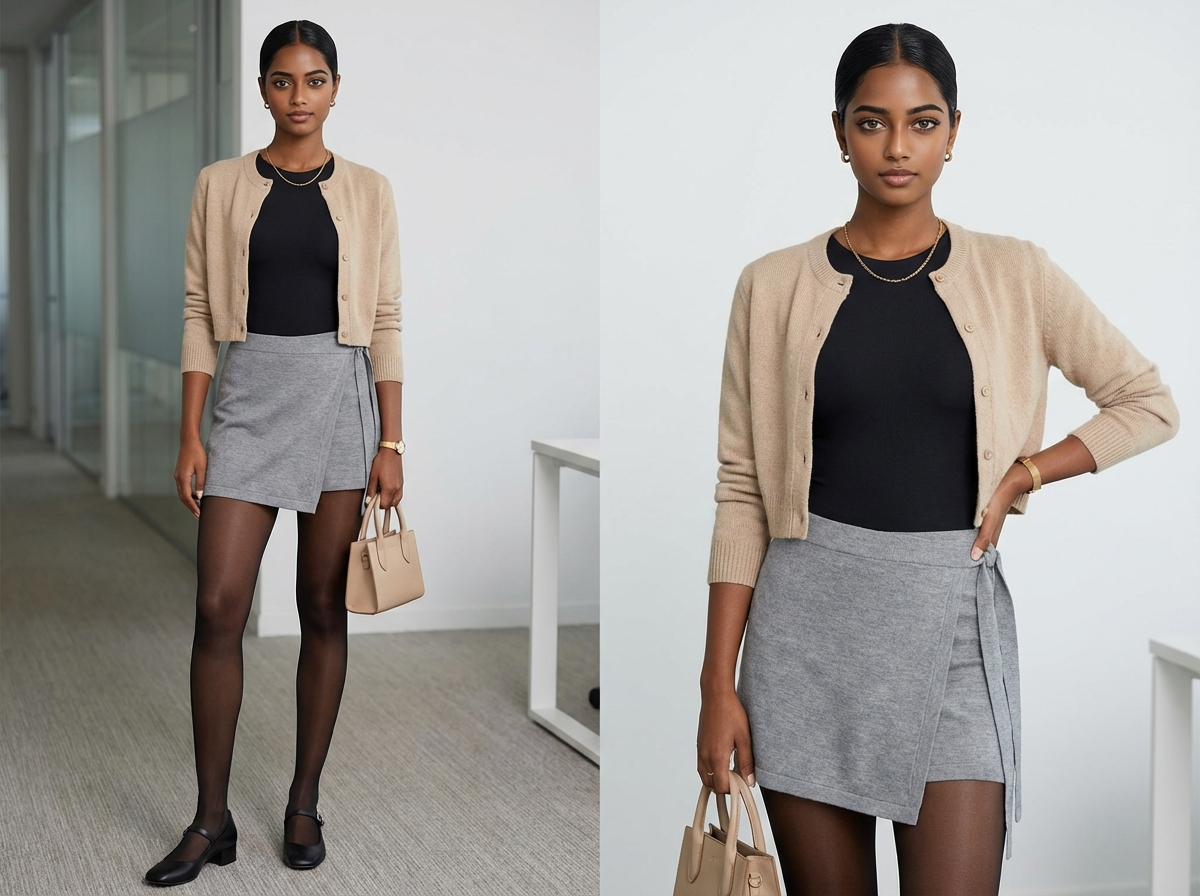
Balletcore works best when it stops trying to look like someone else’s fantasy and starts reflecting your real life. The aesthetic is a framework, not a uniform. Once you understand the codes, you’re meant to adapt them.
Personalization Paths
Color edits
If pink isn’t your thing, skip it. Balletcore functions just as well in:
All black
Cream and ivory
Grey and nude
Muted pastels or deep neutrals
The elegance comes from cohesion, not a specific shade.
Comfort-first versions
Balletcore doesn’t require discomfort.
Stretch knits instead of rigid fabrics
Flats over heels
Softer waistlines
Layering instead of restriction
If you can’t move in it, it’s not balletcore—it’s just dress-up.
Professional adaptations
For work and structured environments:
Wrap cardigans over tailored trousers
Bodysuits under blazers
Midi skirts with clean knits
Minimal hair accessories
The goal is polish without performance anxiety.
Cultural fusion
Balletcore blends beautifully with other aesthetics and cultural expressions:
Streetwear silhouettes
Vintage tailoring
Romantic academia
Personal heritage influences
Balletcore is strongest when it becomes a layer in your style identity, not the whole story.
Balletcore Without Ballet
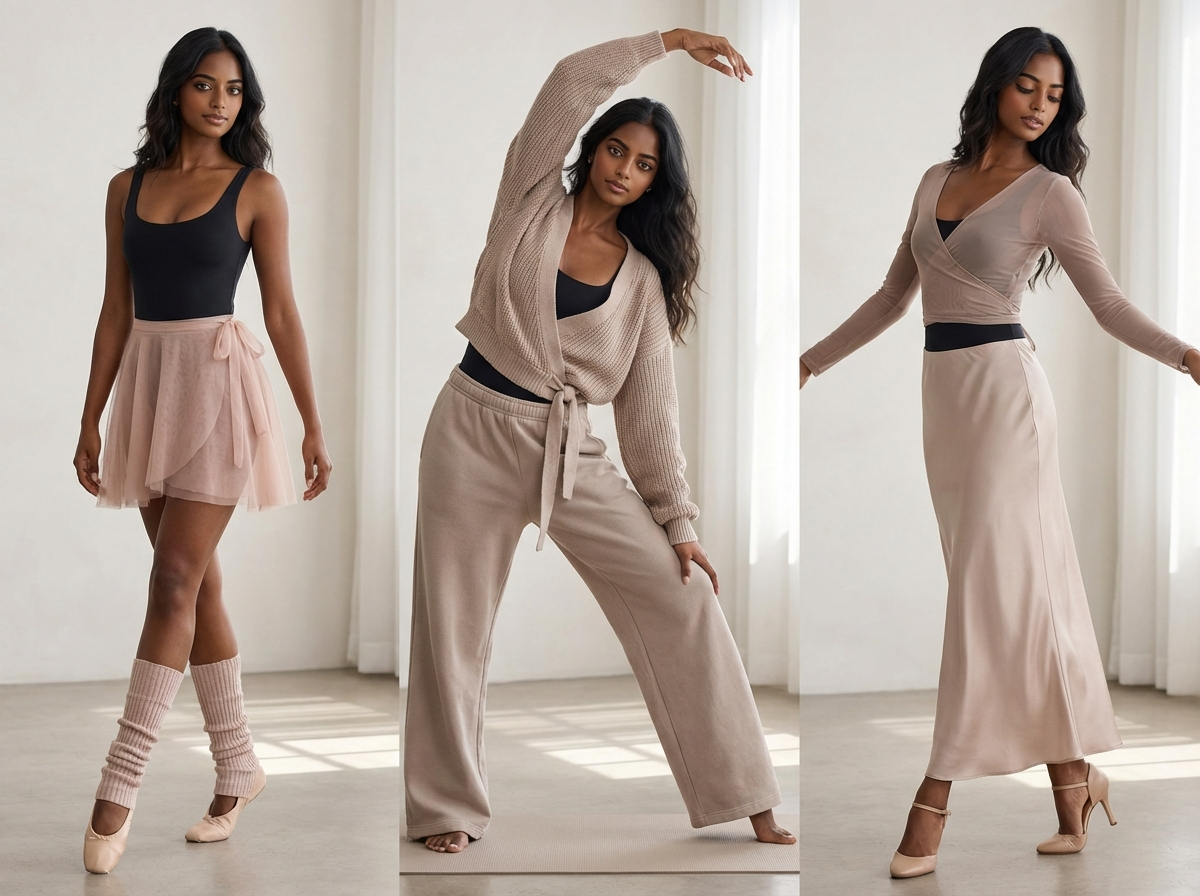
You don’t need ballet training to embody balletcore—because balletcore isn’t about mastery, it’s about awareness.
Alternative movement practices
Yoga
Pilates
Barre-inspired stretching
Walking with intention
Mobility routines
Any practice that connects you to your body counts.
Athletic elegance beyond dance
Grace exists in:
Martial arts
Gymnastics
Figure skating
Strength training
Even everyday movement done mindfully
Elegance is not exclusive to ballet—it’s a transferable skill.
Grace as learned behavior
Posture improves with attention.
Movement softens with practice.
Presence grows with repetition.
None of this is innate. All of it is learned.
The Future of Balletcore
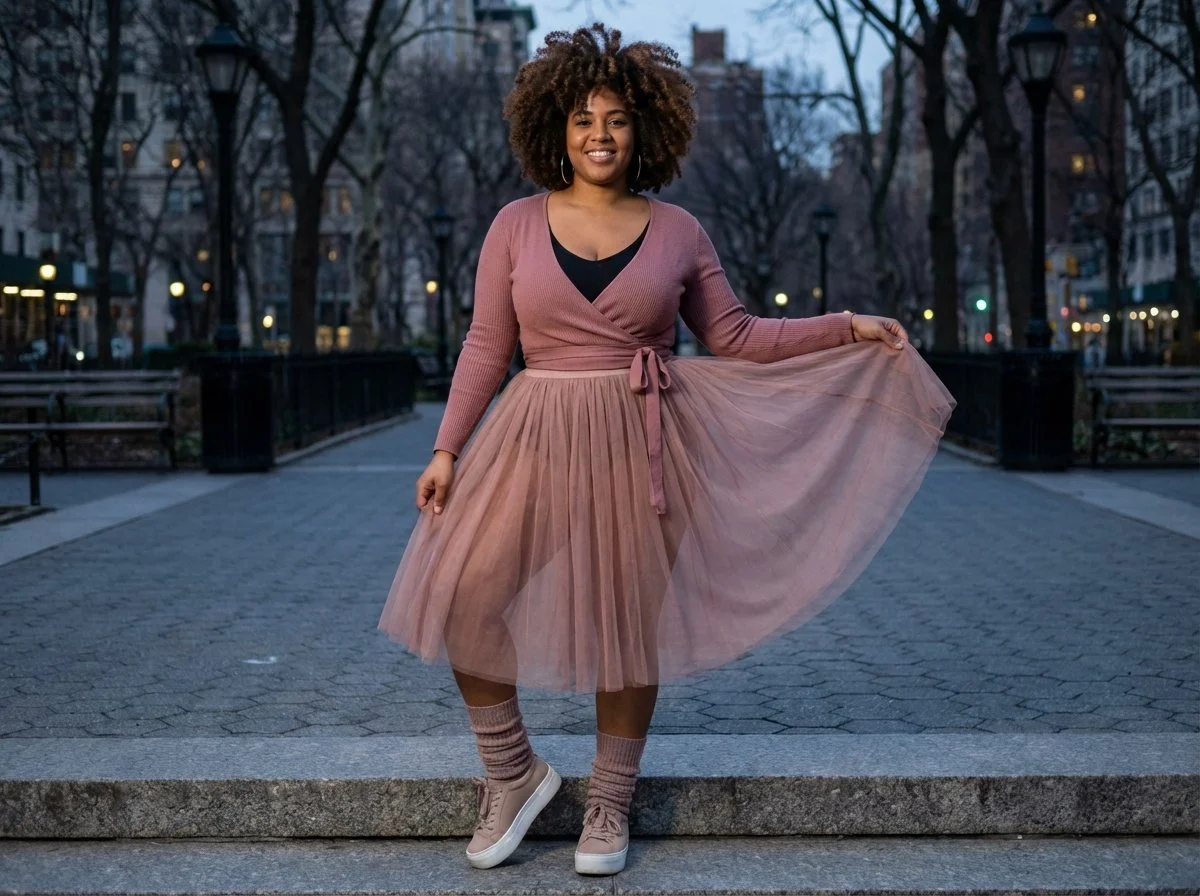
Balletcore is evolving—and that’s a good thing.
Sustainability
Longer-lasting staples
Thoughtful wardrobes
Quality over novelty
Fewer, better pieces
Technical fabrics
Breathable, flexible materials
Matte performance knits
Comfort without sacrificing structure
Broader representation
More body diversity
More racial and cultural inclusion
Less emphasis on one “ballet body”
More interpretations of grace
Enduring staples vs. trend peaks
Trends will come and go—bows, micro-wraps, ultra-sheer moments.
What stays:
Wrap silhouettes
Ballet flats
Soft knits
Intentional dressing
Movement-aware clothing
Balletcore isn’t fading—it’s settling.
Conclusion: Grace as a Daily Choice
Balletcore isn’t really about ballet.
It’s about how you show up.
It’s a mindset, not a costume. A way of choosing softness without losing strength. A reminder that getting dressed can be an act of care, not urgency.
When you embrace balletcore, you’re treating daily life like a quiet performance—one where intention matters more than spectacle. You stand a little taller. You move a little slower. You choose pieces that work with your body instead of against it.
Whether you go full tulle or just add a ribbon to your hair, whether you can do a pirouette or can barely touch your toes, balletcore reminds us that:
Grace is a choice
Beauty takes practice
Discipline can be aesthetic
Femininity is powerful
Movement is joy
Life is performance
The best balletcore is the one that makes you feel like the principal dancer in your own life – even if your stage is the subway platform and your audience is your coffee barista.
Now, if you'll excuse me, I need to practice my port de bras while waiting for my latte. Fifth position in the coffee line, anyone?
