
Cottagecore: The Complete Guide to Romanticizing Rural Life
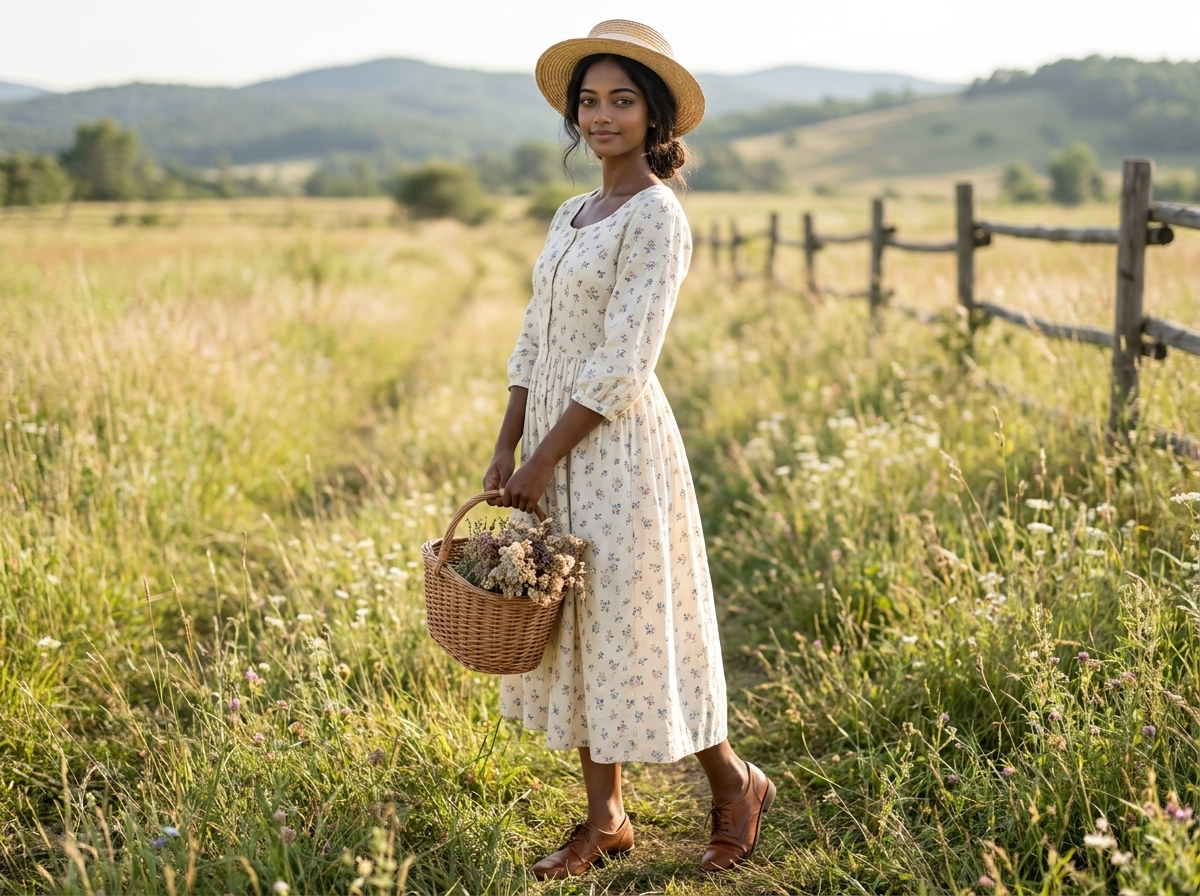
What’s the cottage core fantasy?
Picture waking up slowly, pulling on a cotton dress and padding downstairs to a kitchen smelling like the bread you set to rise last night.
That's what makes cottagecore different from most internet aesthetics. It sells a fantasy of a laid back lifestyle rather than glam and wealth.
Whether you're here because you've been deep in this aesthetic for years, or because you recently caught yourself watching a video of someone making jam in a sun-drenched farmhouse and felt a pang, this guide is for you.
We're going to cover what cottagecore is and what it isn't, where it came from and why it’s popular, how to dress it across every budget, and how to bring it into your home whether you have a garden or a windowsill.
Because cottagecore, done well, isn't naïveté. And you don't need a cottage to practice it.
The bread is already rising. Let's begin. 🌿
What is the Cottagecore Aesthetic?
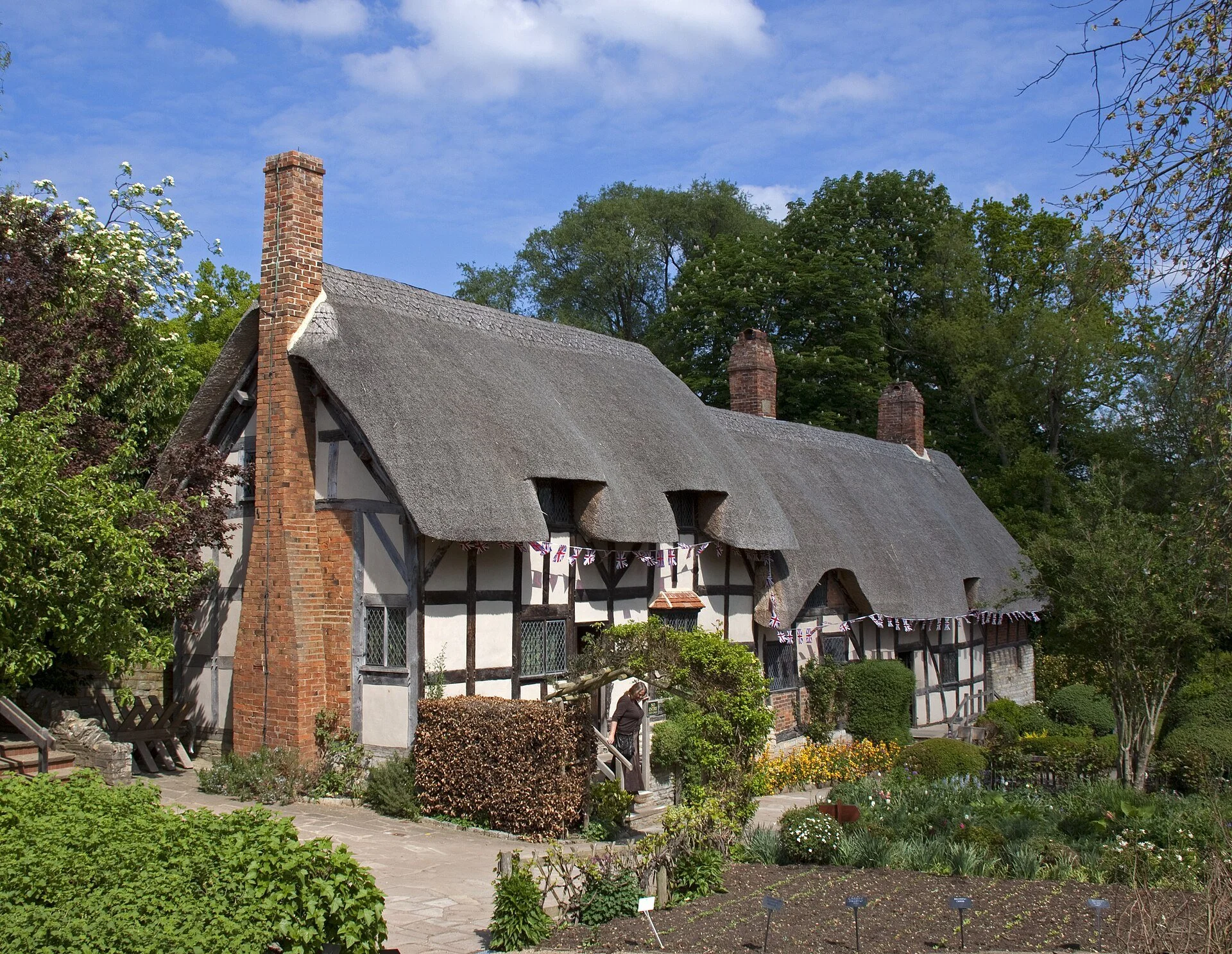
Tony Hisgett from Birmingham, UK - Anne Hathaway's Cottage in Stratford-Upon-Avon.
Cottagecore is an aesthetic movement centered on romanticizing rural and domestic life — specifically the pre-industrial version of it. It draws on the visual language of European countryside living, handmade craft traditions, and a deep relationship with the natural world, filtered through a contemporary longing for slowness, simplicity, and intentional beauty. It is as much a philosophy as it is a wardrobe.
The Cottagecore Formula
The formula, if you want one: rural fantasy + handmade life + pre-industrial nostalgia + intentional slowness. Everything that reads as cottagecore can be traced back to at least two of these four elements.
What unifies all of it is the underlying argument that modern life has optimized for the wrong things.
What is cottagecore?
Cottagecore is an aesthetic movement centered on romanticizing rural and domestic life — specifically the pre-industrial version of it. It draws on the visual language of European countryside living, handmade craft traditions, and a deep relationship with the natural world, filtered through a contemporary longing for slowness, simplicity, and natural beauty. It is as much a philosophy as it is a wardrobe.
The Philosophy of Cottagecore
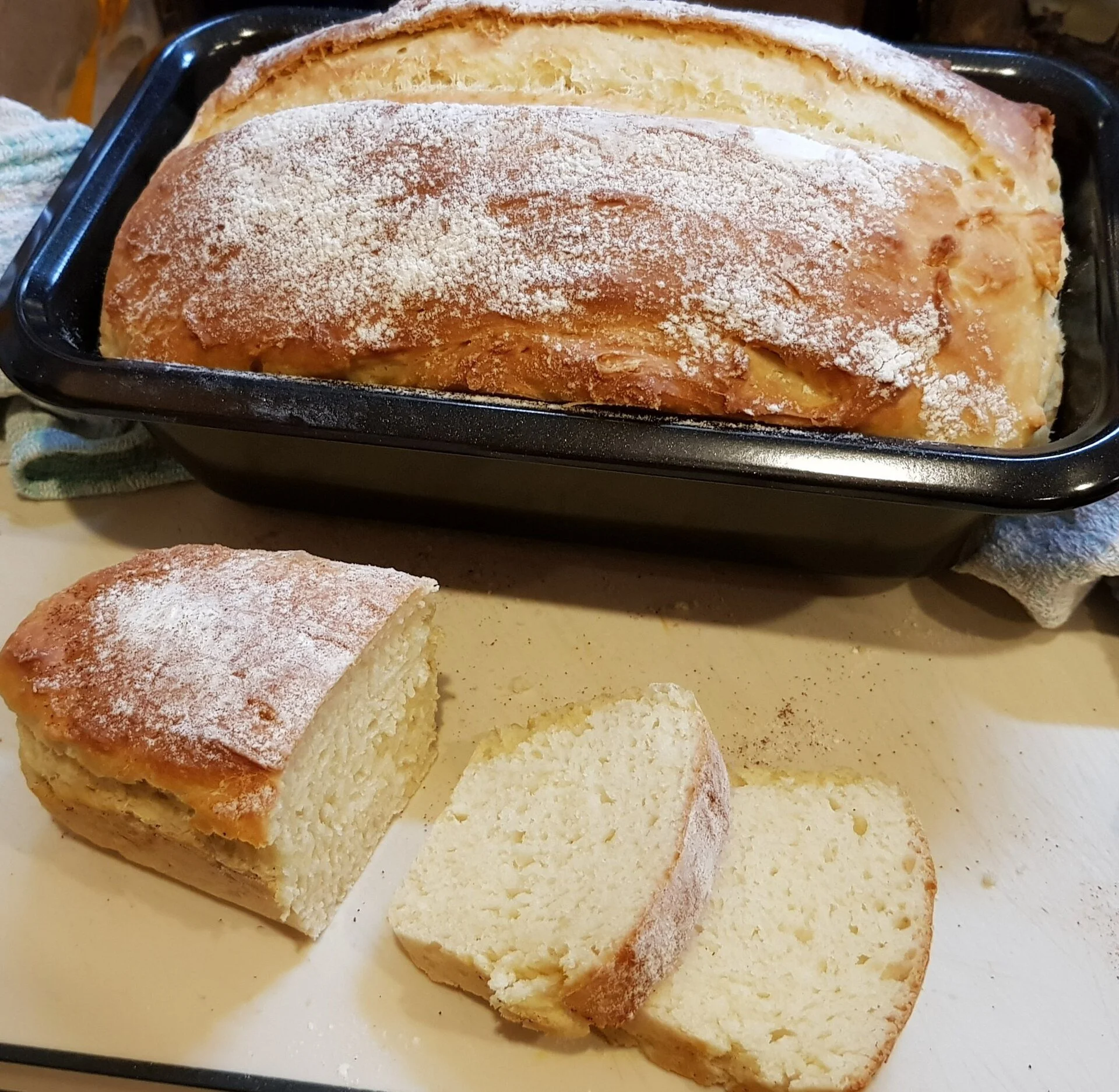
Baking bread is the main cottagecore hobby, signaling domesticated life.
Slowness ideal. Cottagecore presents a counterargument to today’s hustle and bustle as a status symbol. The ideal way to spend an afternoon is waiting for bread to rise and picking wildflowers.
Making as meaning. The cottagecore activities, baking, embroidering, pressing flowers, tending a garden all produce something tangible. In an economy that pushes for more and faster, holding something you’ve made with your hands brings a different kind of satisfaction.
Nature as anchor. A relationship with nature is non-negotiable for the cottagecore girl. It’s not just a weekend activity, but a way of life.
Beauty as necessity. Cottagecore finds beauty is things less than perfect like dried flowers the copper pot instead of the nonstick. The mismatched vintage teacups instead of the uniform set. The dried flowers on every surface. This is not frivolity — it's a deliberate argument that surrounded by beauty, people live better.
These values explain why cottagecore has attracted such a devoted following among people who will never own a garden, let alone a cottage. You don't need the land to hold the philosophy.
Where Did Cottagecore Come From? The Origin Story
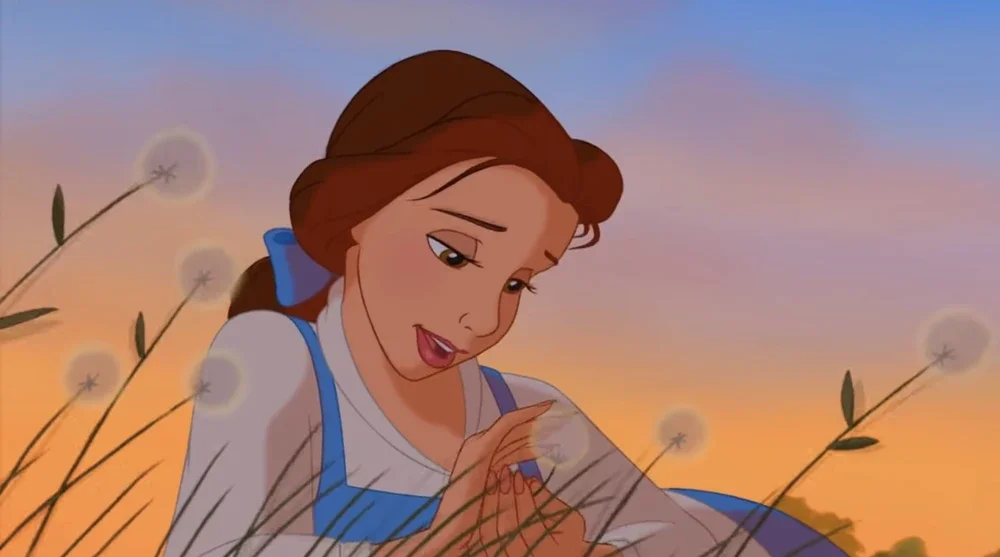
Belle from Beauty and the Beast (1991).
Every aesthetic has a creation myth. Cottagecore is the romanticizing of slow-paced domestic life using visuals based on English countrysides and cottages. Like Boho, it has roots in the Victorian Romantic art movement, the Beatrix Potter illustrations of the Peter Rabbit books, and classic children’s literature such as Rebecca of Sunnybrook Farm and Anne of Green Gables.
In the 1970s, there was the Romantic Revival of floral based aesthetics, especially in home decor, led by Laura Ashley and Gunne Sax. Even the Scandinavian concept of Hygge in the 2010s which emphasized cozy comfort.
Eventually these morphed into contemporary Cottagecore that became popular online in the early 2010s.
The Cottagecore Timeline: From Tumblr to TikTok
By 2017–2018, the term "cottagecore" emerged on Tumblr. Once there was a word, there were hashtags, and once there were hashtags, people found each other across the world.
2019 brought TikTok, and TikTok changed everything. Unlike Instagram’s follower dependent model, TikTok’s algorithm showcased niche content based on engagement. A video of someone baking in a linen apron, pressing flowers, or styling a prairie dress in a field could reach two million people. Cottagecore's visual language was oddly compelling on a platform built for rapid consumption.
Then came 2020.
How the Pandemic Made Cottagecore a Mass Movement
Even though the pandemic didn’t create cottagecore, it took an existing niche and gave it a mass psychological event.
When urban life collapsed overnight, people in apartments found rethought if city life was the dream after all. The concrete views and expensive square footage previously justified by access to everything suddenly seemed outdated.
Cottagecore offered the fantasy of a life centered on home, garden, and handmade things. Most people couldn’t really move to a rural cottage, but they could buy a prairie dress or sourdough starter.
Cottagecore’s search traffic, already climbing through 2019, spiked dramatically in mid-2020 and didn't come back down.
Taylor Swift's Folklore and the Cottagecore Moment
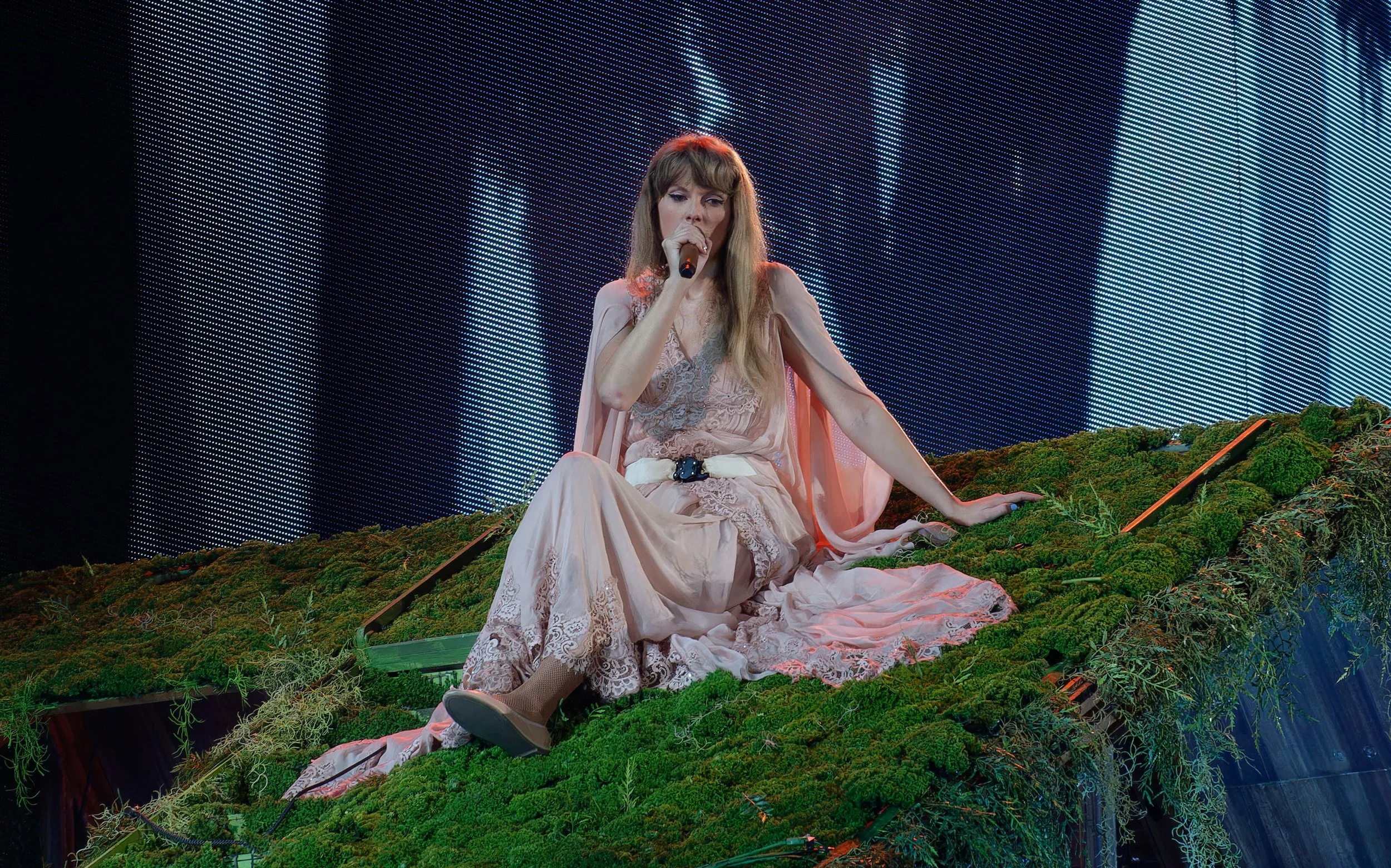
Taylor Swift during her folklore era.
In July 2020, Taylor Swift released folklore.
Folklore and its sister album evermore became the cultural permission slip for cottagecore. Swift made an album that sounded like it had been recorded in a cabin in the woods.
Swift made these albums during pandemic isolation, creating an aesthetic she called “indie folk”. However the internet preferred cottagecore.
"Cottagecore Taylor Swift" remains a high-volume search term. The cardigan music video is a cottagecore mood board with a Grammy. The folklore album cover, featuring Swift in a white dress in a dark forest, split the aesthetic gave both the light and dark registers mainstream visibility.
Millions of people who had never heard the term "cottagecore" found the aesthetic through Swift's work. The algorithm did the rest.
The Cultural Conversation: What Cottagecore Gets Right, What It Gets Wrong
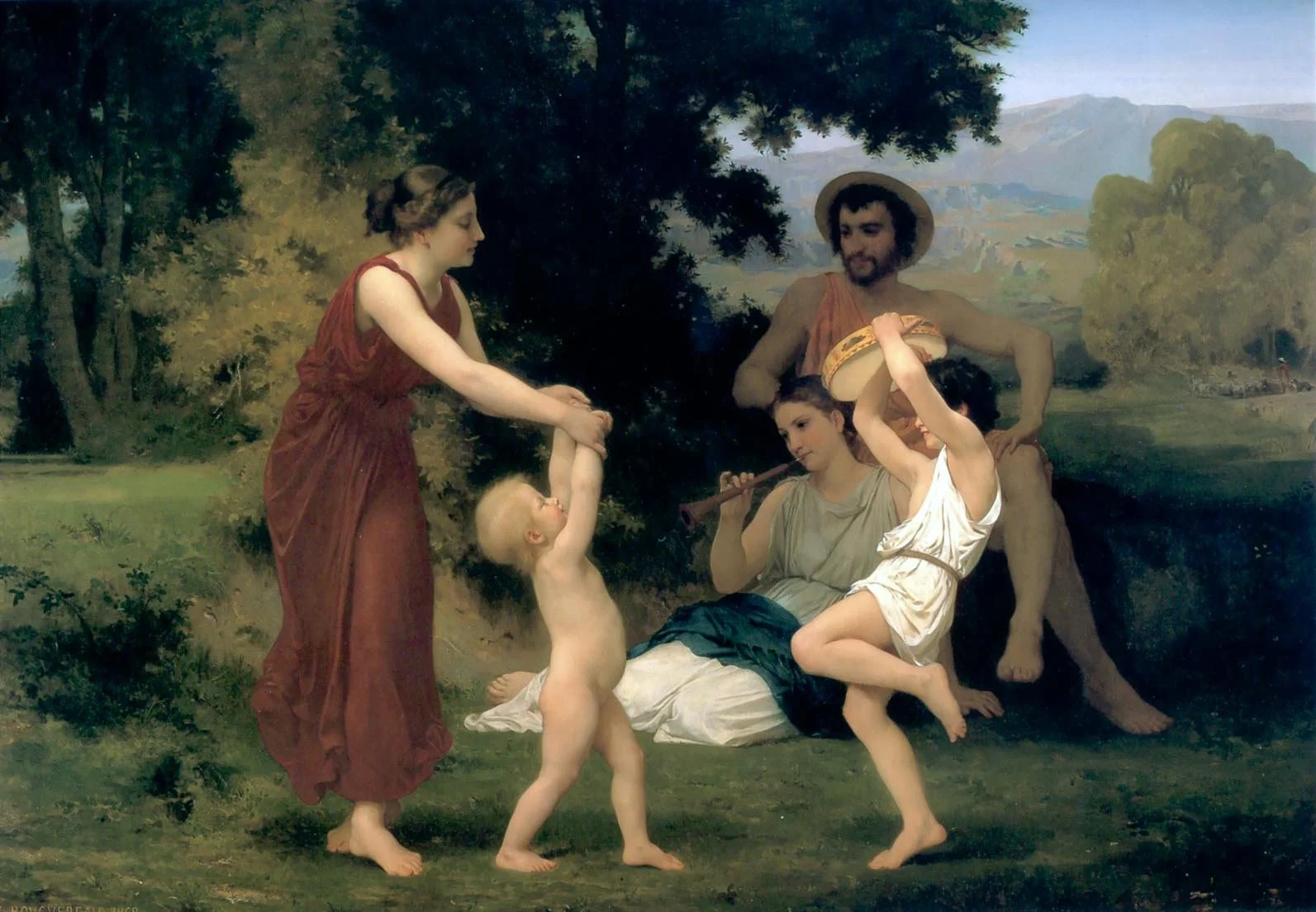
While TikTok and Taylor Swift explain the moment of cottagecore's mainstream arrival, they don’t explain why.
Late-stage capitalism fatigue. The hustle culture of the 2010s left many burned out. Cottagecore's anti-productivity stance is a response to that pressure.
Technology exhaustion. The aesthetic's preference for candlelight and handmade objects represents the desire to get away from screens. Making something with your hands is physical in a way that knowledge work is not.
Urban housing crisis. For many young people, the single-family home with a garden is not possible. The aesthetic offers a way to realize a dream without being paralyzed by it.
However, the moment cottagecore moved from Tumblr niche to mainstream trend, the quiet questions became unavoidable. While these topics aren’t comfortable to discuss, they’re not reasons to completely abandon the aesthetic…just to put more thought into your practice.
The Privilege Problem
The cottagecore lifestyle requires things that are not equally available.
Time: the time to bake bread from scratch, to tend a garden etc.
Space: a kitchen large enough to have open shelving, a garden, a room with linen curtains.
Money: for quality natural fiber clothing, cast iron cookware, for the farmers market.
These requirements mean that cottagecore, in its fullest expression, is more accessible to people who already have some economic security.
An aesthetic that represents a rejection of capitalist values ironically requires capital to practice well.
Cottagecore's values are available at every income level. The specific material expressions of those values are not.
What this means in practice: The window herb garden is as valid as the kitchen garden. The library book on botany is as valid as the private wildflower meadow. The values don't require the objects to be meaningful.
The Historical Erasure Problem
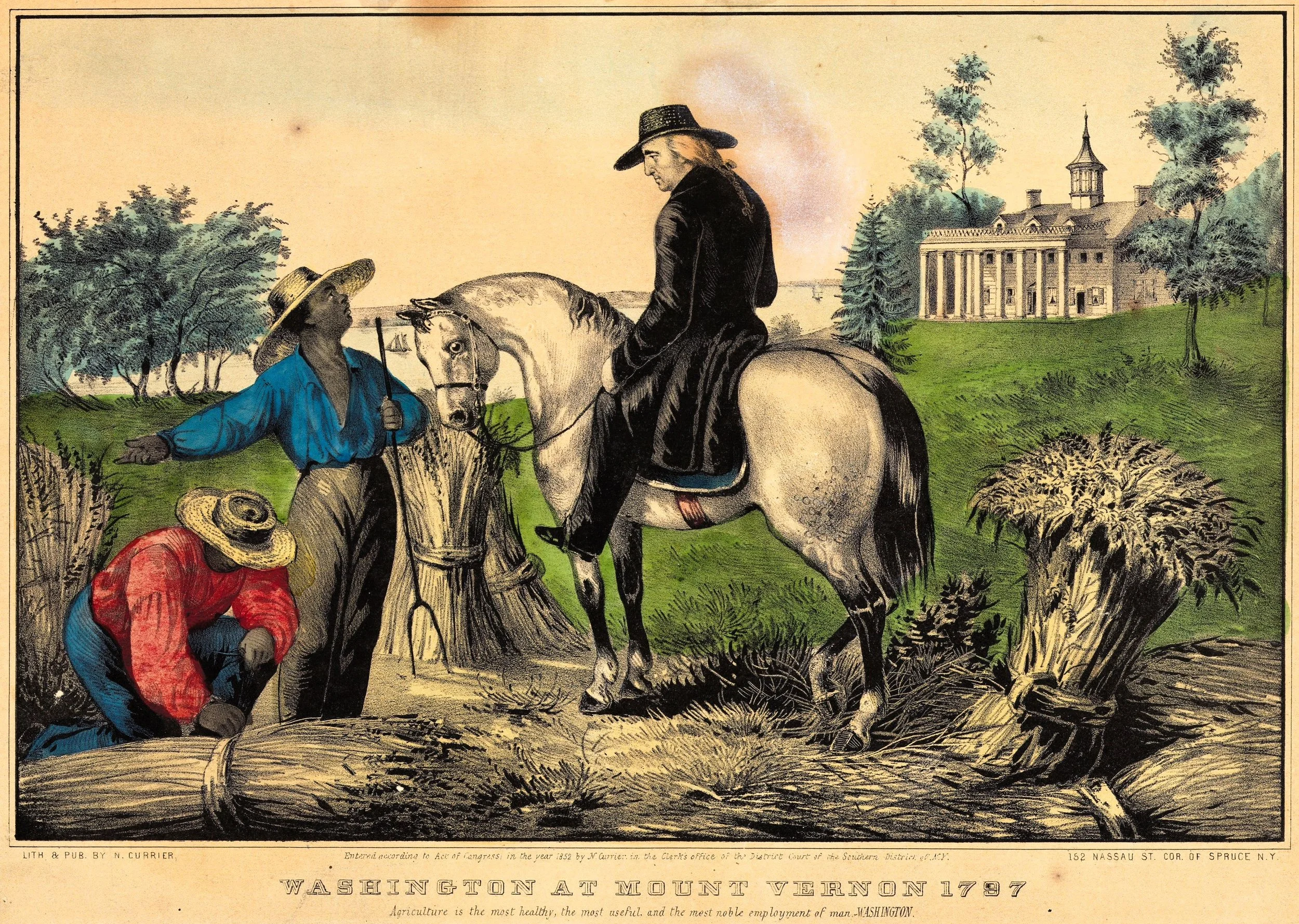
Cottagecore’s idealized imagery was often made possible by exploited labor of others.
Cottagecore romanticizes a past that was, for many who actually lived it, significantly harder than the fantasy shows.
Agricultural labor was backbreaking. Rural poverty was widespread, and often desperate. Women's domestic labor was unpaid and undervalued.
The European peasant life that serves as cottagecore's primary visual reference was organized around systems that were not, by contemporary standards, good for the people living them.
Cottagecore’s imagery is overwhelmingly white. The pastoral influence is mainly Northern and Western European. While this in itself isn’t a bad thing, oftentimes people of color during those eras were victims of exploited labor. This exploited labor was what made the idealized image possible.
The "simpler time" of the rural American idyll coincides with a history of racial violence.
The aesthetic has become more inclusive since its peak mainstream moment. While the progress is worth acknowledging, it’s also ongoing work.
What this means in practice: Amplify cottagecore content created by practitioners of color. Support agricultural and craft traditions from cultures beyond the Northern European pastoral. The aesthetic is large enough to hold a more honest and inclusive version of itself.
The Tradwife Controversy
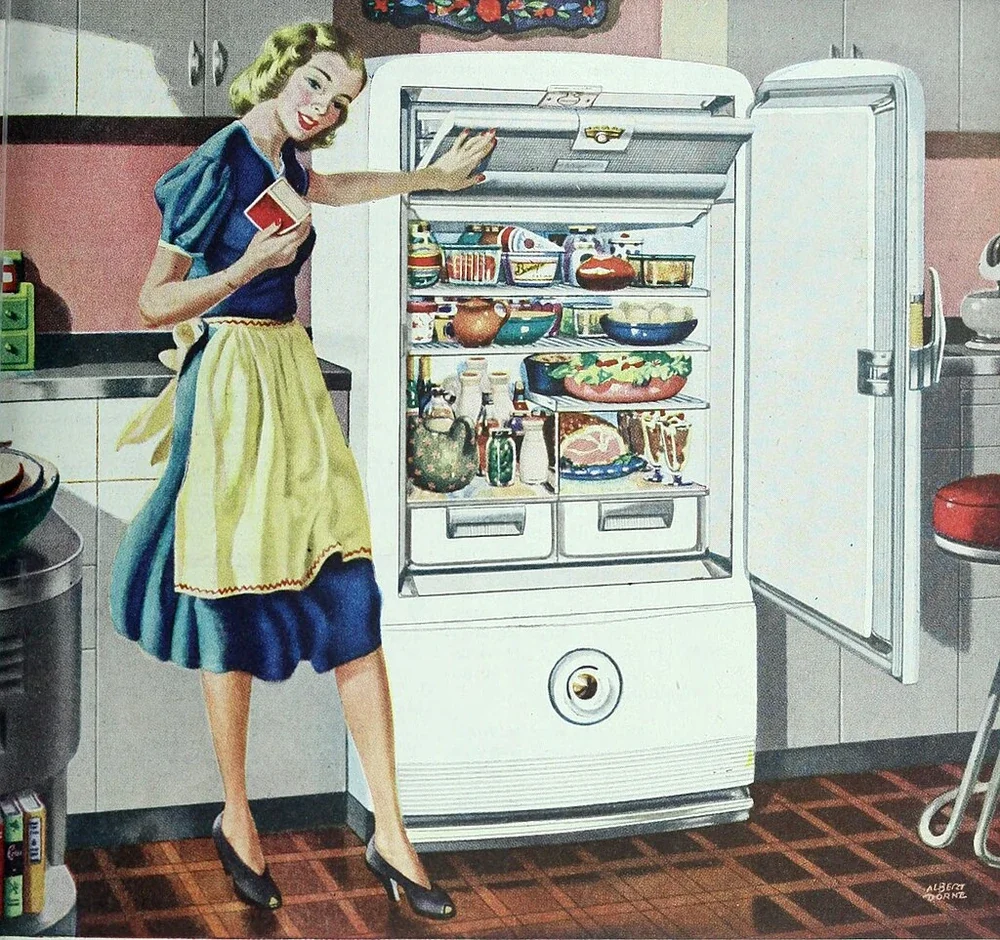
A refrigerator ad from Ladies Home Journal (1948)
The tradwife — short for traditional wife — is a social media phenomenon that advocates for a specific model of marriage and domestic life: the woman in the home, full-time, subordinate to her husband, without professional ambitions or independent economic life.
It faces controversy because it draws on a far-right ideology that glorifies the idea that views women as subordinates who only exist to serve.
The tradwife aesthetic draws heavily from mid-twentieth century domestic imagery and more recently from a romanticized version of pre-feminist rural life that overlaps visually with cottagecore.
But the ideology is what differs. Tradwife content advocates for:
Female submission to male authority within marriage
The rejection of women's professional and economic independence
A return to traditional gender roles of serving husbands and caring for children as full-time domestics.
The tradwife spectrum ranges from women who have chosen to prioritize homemaking to content creators who explicitly advocating for a pre-feminist social order as a political program. In social media, many “tradwife influencers” portray a glamorized, often unrealistic, version of this idea (i.e. cooking in high heels).
Cottagecore has traditional values, but anyone can practice them. The cottagecore girl bakes bread because she enjoys baking bread, not to please her husband.
The feminist reclamation argument, as applied to cottagecore, goes like this: domestic arts were historically devalued because they were considered women's work. Reclaiming them as creative practices asserts that work deemed “feminine” deserves recognition as a skill and an art.
The Bottom Line
Cottagecore is an aesthetic with both a philosophy and complications running through it.
The privilege problem doesn't mean the values of slowness and making are wrong. The historical erasure doesn't mean craft traditions are worthless. The racial exclusion doesn't mean the aesthetic is irredeemable.
The cottage in the imagination, the bread that will rise this afternoon, and the herbs on the windowsill, are all worth practicing. With eyes open. In whatever space is available.
That is, in the end, the most cottagecore possible approach.
The Cottagecore Wardrobe: What to Wear
Here is the thing about dressing for an aesthetic built around pre-industrial life: the clothes have to work harder than the fantasy. Anyone can save a Pinterest board of prairie dresses on dewy English mornings. The actual project is more achievable than most style guides suggest.
The cottagecore wardrobe is a vocabulary. Once you understand the grammar you can speak it at any budget, in any city, on any occasion.
How to Dress Cottagecore: The Style Rules
Before the shopping list, the principles. These are what separate a cottagecore wardrobe from a costume box of prairie-adjacent pieces.
Fabric: Linen, cotton, wool, silk — yes. Polyester, acrylic, anything that melts near a candle — no. If cost is an obstacle, secondhand natural fibers beat new synthetics every time.
Silhouette: The cottagecore silhouette is built for motion. Puff sleeves, full skirts, dropped waists, generous cuts.
Color: Cream, sage, dusty rose, mushroom, butter yellow, lavender, moss green, warm white, soft terracotta. The palette is everything you'd find growing in an English cottage garden or drying in a farmhouse kitchen.
Details: Embroidery, smocking, lace trim, pintucks, wooden buttons, crochet edging, puff sleeves, Peter Pan collars — these are the details that make a simple linen dress cottagecore rather than just beige. A plain white cotton blouse becomes cottagecore with embroidered flowers at the collar. A midi skirt becomes cottagecore when it's made of Liberty-print cotton.
Layering: Cottagecore dressing is rarely one piece. Layering is how the aesthetic accommodates the reality of moving between inside and outside, warm and cool, formal and practical.
The Key Pieces
The cottagecore wardrobe is built on five categories: dresses (prairie and pinafore silhouettes), tops (embroidered blouses and peasant styles), bottoms (full midi skirts and wide-leg linen trousers), outerwear (wool capes and oversized cardigans), and accessories (woven baskets, straw hats, and leather oxfords). Natural fibers throughout — linen, cotton, and wool — are non-negotiable.
The Cottagecore Dress: What to Look For
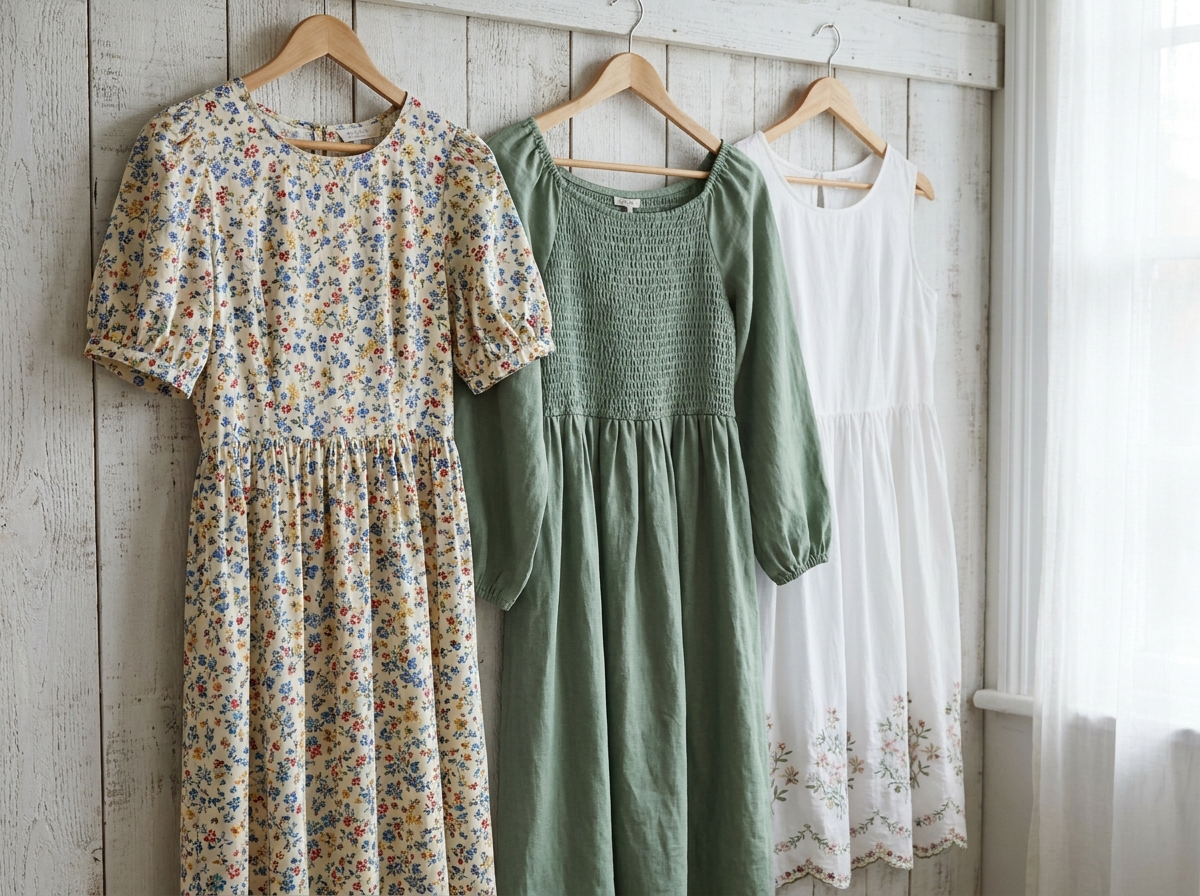
The dress is the load-bearing garment of the cottagecore wardrobe. The prairie dress is cottagecore’s most recognizable shorthand.
What to look for: Puff sleeves (the bigger, the more committed), smocked or fitted bodice, full midi or maxi length skirt, natural fiber fabric, small floral or botanical print, or solid in a palette color. Milkmaid silhouettes — fitted through the chest with a slightly dropped or Empire waist and full skirt — are the canonical shape. Apron dresses and nightgown-adjacent pieces work as well. Anything that suggests domestic life.
Investment tier:
Dôen — Their floral midi dresses in Liberty-adjacent prints with puff sleeves are the reference point for most cottagecore dressing. Expensive, worth it if dress is your primary mode, available secondhand on The RealReal.
Christy Dawn — Farm-to-closet brand, deadstock fabrics, genuine sustainability credentials. The Fiorella and Dawn dresses are the cottagecore signatures.
Son de Flor — Linen-focused, slightly more minimalist than Dôen, exceptional fabric quality. The Bloom dress is a perennial.
Mid-range tier:
Sézane — The Marguerite and Apoline dresses hit the silhouette correctly. French manufacturing, good linen quality, occasional florals that don't read as costume.
Boden — Their smocked and embroidered cotton dresses in muted florals are cottagecore at a reasonable price point.
Reformation — Better for the modern cottagecore than the full pastoral fantasy, but their linen dresses in sage and cream are wardrobe staples.
Accessible tier:
Altar'd State — Consistently strong for prairie silhouettes at accessible prices. Check their "Romance" category specifically.
Anthropologie sale section — Full-price Anthropologie is mid-range; sale Anthropologie is accessible. Patient shopping here yields genuine finds.
Free People sale — Same logic. Their boho-adjacent pieces cross cleanly into cottagecore territory in the right fabrics and prints.
ThredUp / The RealReal / Depop — For this tier specifically, secondhand is the strongest play. A $400 Dôen dress at 20% original price is the cottagecore shopping move of the year.
Cottagecore Tops and Blouses
The cottagecore top is a white cotton blouse with embroidered details, peasant necklines, pintucked fronts, puff sleeves, Peter Pan collars, and gathered shoulders. Simple base with craft detail.
The hierarchy of cottagecore tops:
White embroidered blouse (the foundation)
Peasant top with gathered neckline
Hand-knit or crochet sweater
Oversized cardigan in natural wool or cotton
Smocked crop top (for layering under pinafores)
Investment tier: Dôen blouses, Christy Dawn tops, Madewell's linen pieces
Mid-range tier: & Other Stories, Sézane, M.M. LaFleur's linen blouses (crossover-capable).
Accessible tier: Zara's linen blouses when they get the silhouette right (they do, inconsistently), H&M Conscious linen range, Uniqlo linen shirts. Etsy independent makers offer hand-embroidered blouses.
Cottagecore Skirts and Trousers
The midi skirt is the workhorse. High-waisted wide-leg linen trousers are an alternative. Bloomers for the deeply committed.
The midi skirt pairs with peasant blouses, fitted knits, and embroidered tops. Look for full rather than pencil silhouettes, natural fibers, and either solid palette colors or small-scale prints.
Wide-leg linen trousers are perfect for gardening, foraging, or farmers market navigation. In cream, sage, or warm white, styled with a loose blouse, they read as fully cottagecore when a skirt isn’t practical
Investment tier: Vince linen trousers, Eileen Fisher (the ultimate investment in linen bottoms that will outlast every trend), Dôen midi skirts.
Mid-range tier: Sézane skirts, Boden linen trousers, Madewell midi skirts in their better fabrics.
Accessible tier: Quince linen (exceptional quality-to-price ratio for linen basics), Uniqlo linen wide-legs, Target's seasonal linen pieces.
Cottagecore Outerwear: Capes, Cardigans, and Coats
A wool cape, a quilted jacket, a hand-knit shawl, or a thick oversized cardigan thick. The common thread: soft, natural, slightly dramatic, never technical.
The wool cape is the most committed and most practical for cottage core activities. Seek secondhand wool capes if possible, they were made to last.
The oversized cardigan in natural wool or cotton-cashmere, in cream, mushroom, or sage, an oversized cardigan may be the most versatile piece in the cottagecore wardrobe.
Investment tier: Apiece Apart capes, Totême for the more polished end, vintage wool coats sourced from estate sales or The RealReal.
Mid-range tier: Boden quilted jackets, J.Crew wool coats in softer silhouettes, Sézane knitwear.
Accessible tier: Quince cashmere cardigans (genuinely remarkable at this price point), Uniqlo wool blends, vintage wool finds from ThredUp sorted by fiber content — wool, cashmere, cotton only.
Cottagecore Accessories: The Complete List
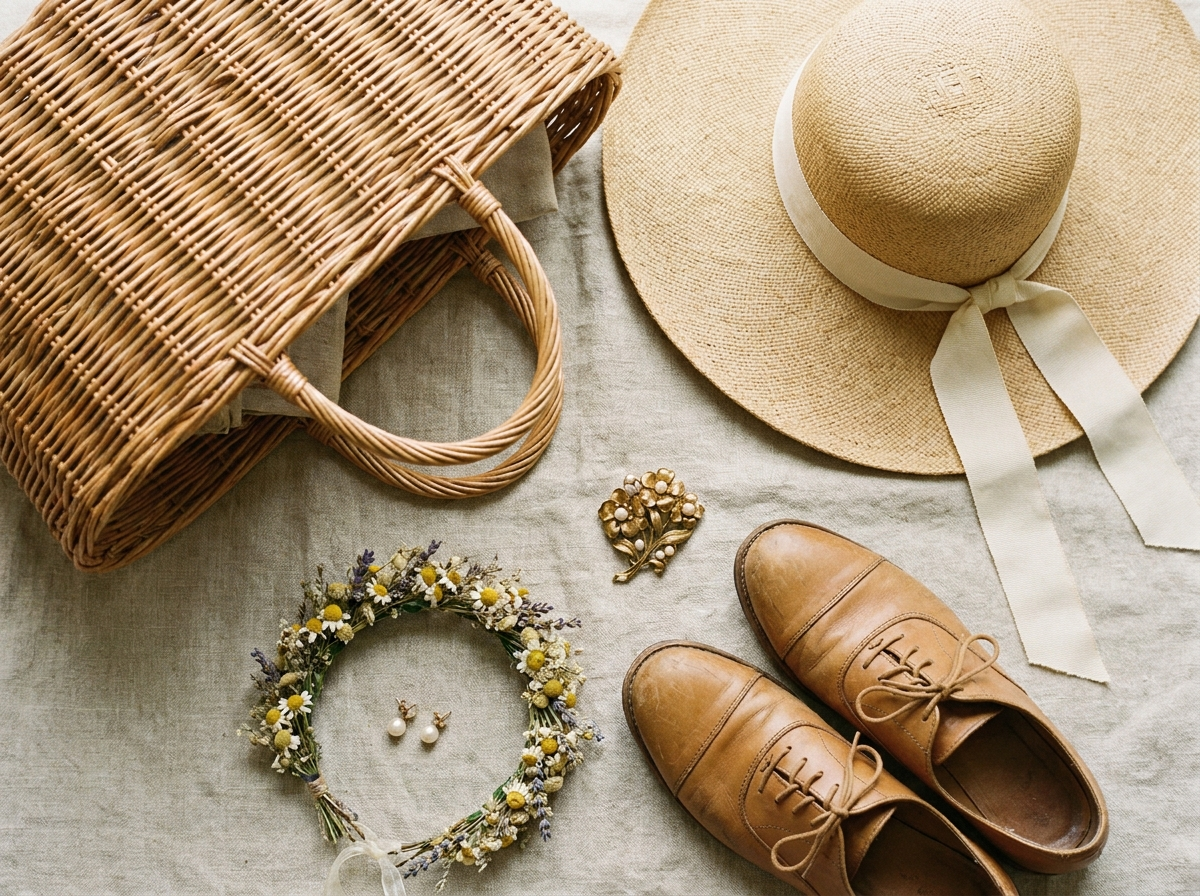
Cottagecore aesthetic has a specific accessories vocabulary, and deviating from it breaks the register.
The woven basket is a must have. A woven market basket, a rattan bag, a wicker tote: these function as both bag and declaration. Sources: farmers markets, import shops, Etsy, World Market for accessible options.
The straw hat is the summer cottagecore essential. Go with an unstructured straw hat with a grosgrain ribbon or dried flower trim.
Footwear: Leather oxford shoes, Mary Janes, ankle boots in brown or tan leather, garden clogs (Dansko or vintage wooden clogs for the committed), or bare feet. Avoid synthetic soles or athletic DNA.
Jewelry: Vintage brooches, cameo pendants, delicate gold chains with botanical charms, pearl earrings (small, not statement), hair ribbons worn as actual ribbons.
The dried flower crown is the most committed accessory choice. Worn correctly it reads as charming. At any other moment, it requires confidence.
The Cottagecore Starter Capsule
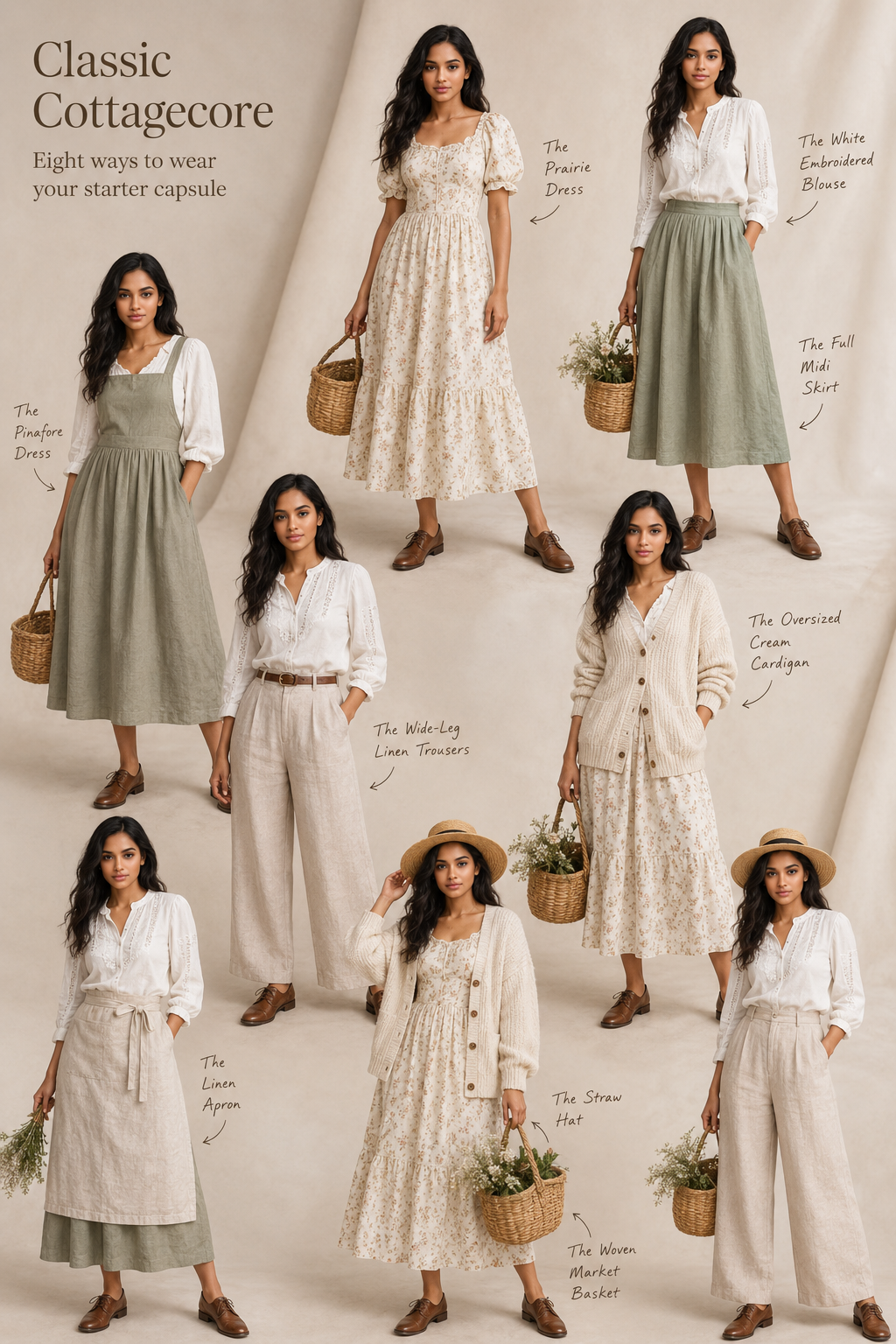
These are cottagecore’s load bearing pieces and every item works with everything else. Ten items, a minimum of fifteen outfits.
The Prairie Dress — cream floral cotton, the anchor piece
The White Embroidered Blouse — the top foundation
The Full Midi Skirt — in sage or mushroom, the workhorse bottom
The Wide-Leg Linen Trousers — the practical cottagecore alternative
The Pinafore Dress — layers over the blouse, standalone in summer
The Oversized Cream Cardigan — the three-season layer
The Woven Market Basket — the load-bearing accessory
The Leather Oxford Shoe — the canonical footwear
The Straw Hat — the summer anchor accessory
The Linen Apron — the piece that makes the rest feel intentional
Cottagecore Outfit Formulas: 4 Complete Looks
Four complete looks:
Look 1: The Canonical Prairie dress in cream floral cotton + woven basket + straw hat + leather oxford shoes. Hair loosely braided or in a low bun. No visible jewelry beyond small gold earrings. This is the look that every cottagecore mood board reaches for.
Look 2: The Practical Cottager Wide-leg linen trousers in sage + white embroidered blouse + woven leather belt + canvas lace-up shoes + linen tote. Garden clogs optional. The look you can carry heavy baskets in, walk through mud, and spend three hours at a farmers market without managing a full skirt.
Look 3: The Literary Pinafore dress in dark mushroom or forest green + white cotton blouse underneath + small vintage brooch at collar + ankle boots + leather satchel. Hair down or in a loose half-up. This is Cottagecore inflected toward Dark Academia. The bridge look for the aesthetically bicultural.
Look 4: The Modern Cottager Oversized cream cardigan + midi slip skirt in dusty rose + white tank underneath + ankle boots + rattan crossbody bag. This is the least committed cottagecore look and the most wearable in urban contexts.
The Urban Cottagecore Wardrobe
Most cottagecore style guides are written for rural territory. You can still pull it off in the city.
What changes in urban cottage core is the styling context. In a city, the woven basket is a grocery bag and a commuter tote. Wear the prairie dress to the farmers market, the library, or the coffee shop. The straw hat is for the rooftop, the park, or a walk through the neighborhood.
The aesthetic was always partly a philosophy rather than a location. You don't need a garden to wear linen or cottage to carry a basket.
The Cottagecore Color Palette: Every Shade, Every Hex Code
The cottagecore color palette is built on warm, muted, nature-derived tones: cream and warm white, sage green, dusty rose, mushroom and warm taupe, butter yellow, lavender, moss green, terracotta, and warm oatmeal. Every color in the palette exists somewhere in a garden, forest, or farmhouse kitchen — nothing saturated, nothing synthetic, nothing that couldn't have been made from a natural dye.
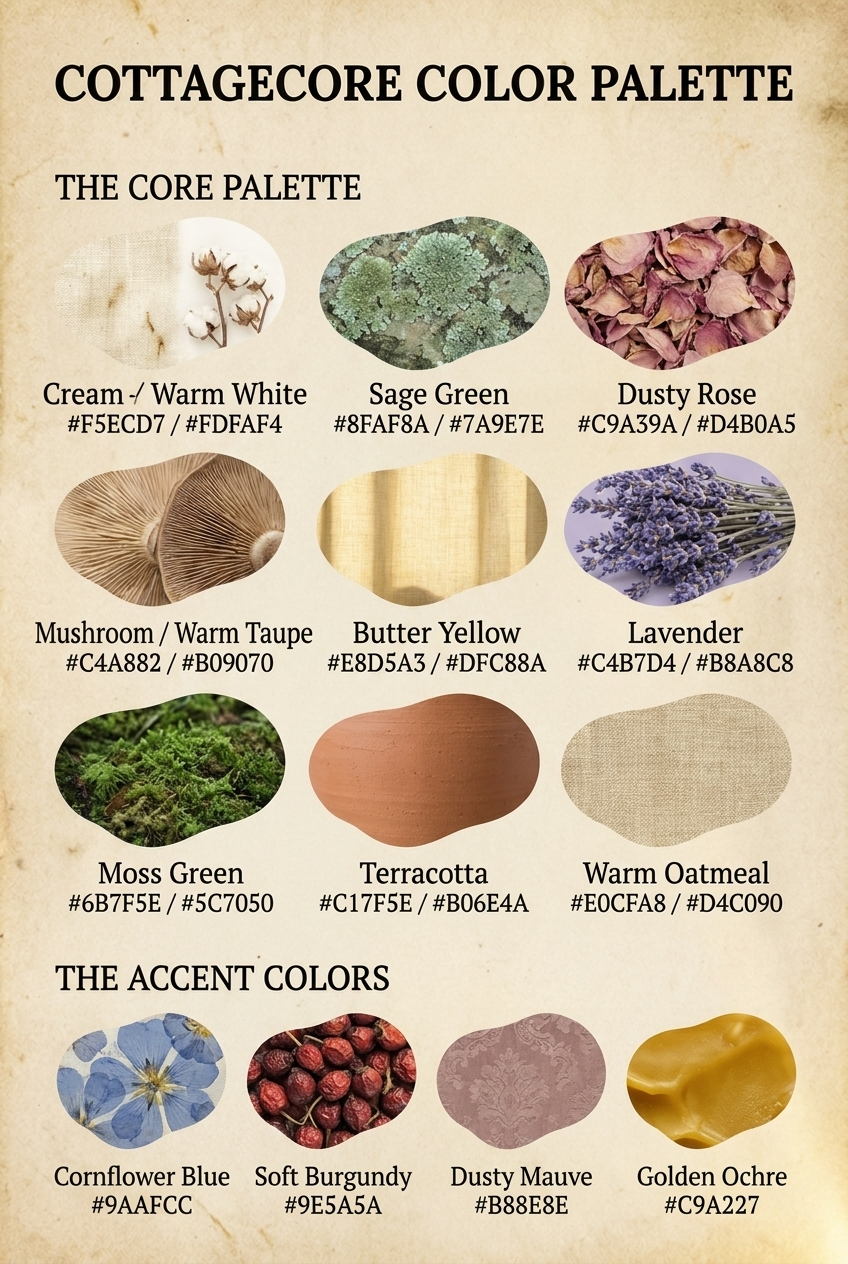
The Foundation Colors / The Mid-Tone Colors
Cream and Warm White #F5ECD7 / #FDFAF4 Not bright white, which reads as clinical and contemporary, but the warm, slightly yellowed white of aged linen, fresh bread, and cotton dried in sunlight.
Sage Green #8FAF8A / #7A9E7E The green of herb gardens and lichen-covered stone walls. Sage sits in the middle of the green family, the dusty, slightly grayed green of something that has been growing in dappled light for a long time. It is the most versatile color in the cottagecore palette, functioning as both neutral and accent.
Dusty Rose #C9A39A / #D4B0A5 Cottagecore dusty rose has been out in the sun. Pairs with cream for the softest possible combination; pairs with sage for something more grounded.
Mushroom and Warm Taupe #C4A882 / #B09070 The brown family in the cottagecore palette runs through mushroom, taupe, wheat, and oatmeal. Mushroom is the color of dried botanicals, earthenware pottery, and the underside of a field mushroom. It is the palette's workhorse neutral, darker than cream and warmer than sage.
Butter Yellow #E8D5A3 / #DFC88A Butter yellow is warm, soft, and barely-there — closer to cream than to yellow in its muted incarnation. It functions as the palette's warmth anchor.
Lavender #C4B7D4 / #B8A8C8 The gray-adjacent purple of dried lavender bundles. Lavender in the cottagecore palette is more of an accent than a foundation, appearing in florals, embroidery, and occasional statement pieces. It is the palette's most whimsical color and the one most likely to tip toward Fairycore if overused.
Moss Green #6B7F5E / #5C7050 Where sage is pale and dusty, moss is deeper and richer. Moss functions as a near-neutral in autumn and winter and as a rich accent in spring and summer. It pairs beautifully with cream and mushroom, and is most common in outerwear and heavier knits.
Terracotta #C17F5E / #B06E4A Terracotta in a cottagecore wardrobe functions best as an accent among creams and sages. More than one, and the palette risks tipping away from the pastoral and towards southwestern.
Warm Oatmeal #E0CFA8 / #D4C090 The color between cream and mushroom. Oatmeal is cottagecore’s most honest neutral. In a wardrobe built on natural fibers, oatmeal pairs well with linen.
Cottagecore Accent Colors
Accents in the cottagecore palette belong in florals, embroidery details, and occasional statement pieces.
Cornflower Blue #9AAFCC The blue of bachelor's buttons and summer sky at midday. Appears most naturally in small florals and embroidery rather than as a dominant color.
Soft Burgundy #9E5A5A The deepest color in the cottagecore family — the red of dried rose hips, autumn apples, and Victorian mourning jewelry. Burgundy in cottagecore is quiet and muted, never bright. It appears in heavier fabrics like velvet, wool flannel in autumn and winter, and is the color most likely to anchor a Dark Cottagecore outfit.
Dusty Mauve #B88E8E Somewhere between dusty rose and burgundy — the color of old damask, faded embroidery thread, and the inside of a dried rose. More complex than pink, warmer than burgundy, and very useful in florals and layered textile arrangements.
Golden Ochre #C9A227 The deepest, most saturated color in the palette — the yellow of autumn leaves, beeswax, and pressed botanical prints. Used sparingly.
How to Use the Cottagecore Color Palette: The 60/30/10 Rule
The cottagecore palette works on a 60/30/10 ratio: 60% foundation colors (cream, warm white, oatmeal), 30% mid-tone colors (sage, mushroom, dusty rose, butter yellow, moss), and 10% accent colors (lavender, terracotta, cornflower blue, burgundy, golden ochre). This ratio prevents the palette from reading as washed out while keeping it within the muted, nature-derived register the aesthetic requires.
The cottagecore palette operates on a simple hierarchy: foundation, mid-tone, accent.
Foundation colors — cream, warm white, oatmeal — are the base layer. They appear in the largest pieces: dresses, blouses, linen trousers, bedding, walls.
Mid-tone colors — sage, mushroom, dusty rose, butter yellow, moss green — carry the aesthetic identity. They appear in skirts, cardigans, accessories, soft furnishings, and the background of florals.
Accent colors — lavender, terracotta, cornflower blue, burgundy, golden ochre — provide depth. They appear in embroidery, small florals, jewelry, dried botanicals, and single statement pieces.
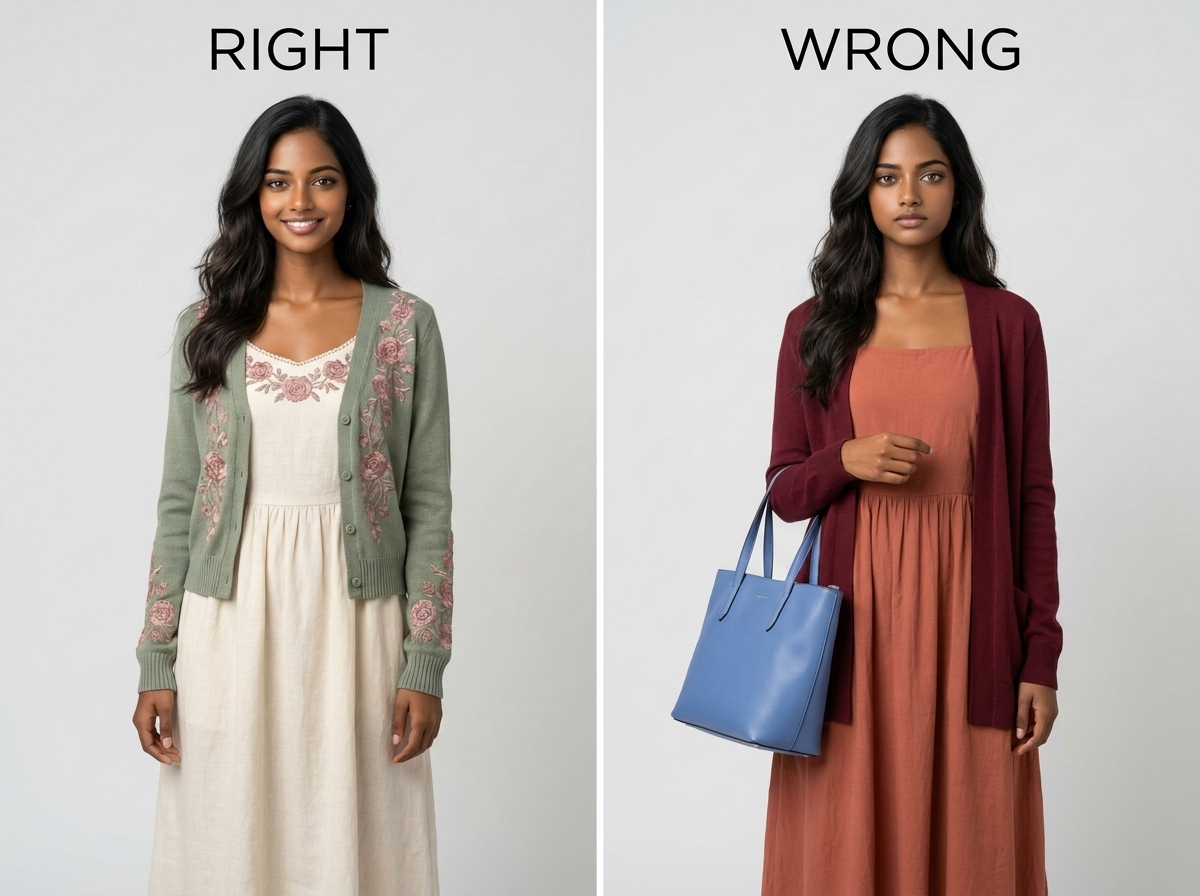
The ratio to aim for, whether in a wardrobe or an interior: 60% foundation, 30% mid-tone, 10% accent. This is why a cottagecore outfit in cream dress + sage cardigan + dusty rose embroidery detail works, and a terracotta dress + burgundy cardigan + cornflower blue bag does not.
Colors That Don't Belong in the Cottagecore Palette
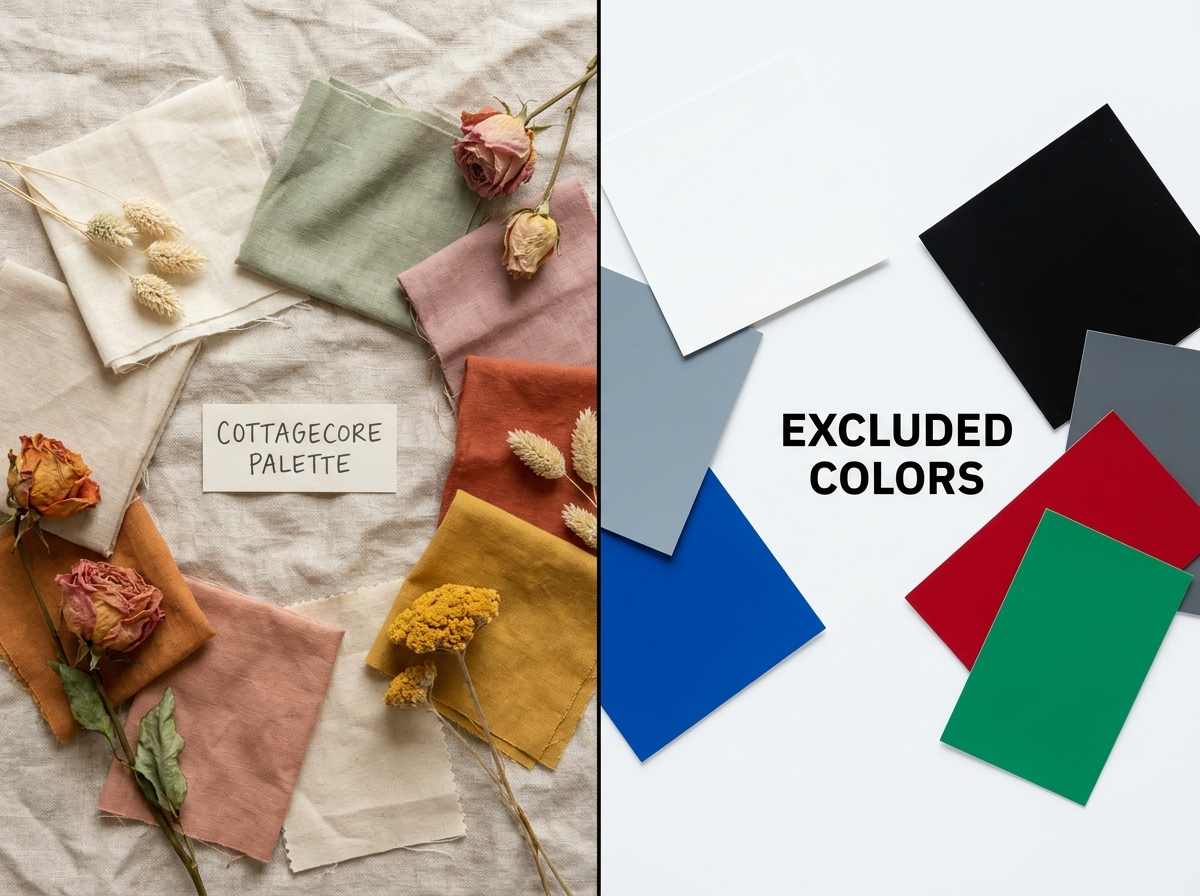
Cool grays and blues
Bright, saturated colors
Black (belongs to Dark Cottagecore specifically)
Bright white (too clinical — cream only)
Cool grays and blues — Cottagecore is warm. A cool gray reads as Scandinavian minimalism. A bright navy reads as preppy. A cobalt reads as maximalist. None of them belong here.
Bright, saturated colors — Bright coral, kelly green, royal purple: these are the colors of things made in factories, not gardens.
Black — with one exception. Black belongs to Dark Cottagecore. If you're drawn to black, you may be Dark Cottagecore.
Bright white — The distinction between cream and bright white seems small until you put them next to each other, at which point it becomes obvious. Bright white reads as contemporary and clean. Cream reads as aged and organic. Cottagecore wants aged and organic.
The Cottagecore Seasonal Color Palette

The cottagecore palette deepens and lightens with the natural world.
Spring: Butter yellow, lavender, soft dusty rose, and fresh sage dominate. The palette is at its lightest. Cream is everywhere. The overall effect is a watercolor painting that hasn't dried yet.
Summer: Cornflower blue appears. Butter yellow deepens slightly. Florals become more present. The palette stays light but gains a little warmth from the season.
Autumn: Mushroom and warm taupe move to the foreground. Moss replaces sage. Terracotta and golden ochre appear as accents. Burgundy begins. The palette does the same thing the trees are: moving toward warmth before the cold arrives.
Winter: Cream deepens toward oatmeal. Moss and burgundy carry the color. Lavender retreats. Dark Cottagecore's influence is most felt here. This is the season where the palette comes closest to the gothic register.
Cottagecore Beauty: Skin, Hair, Makeup, and Fragrance
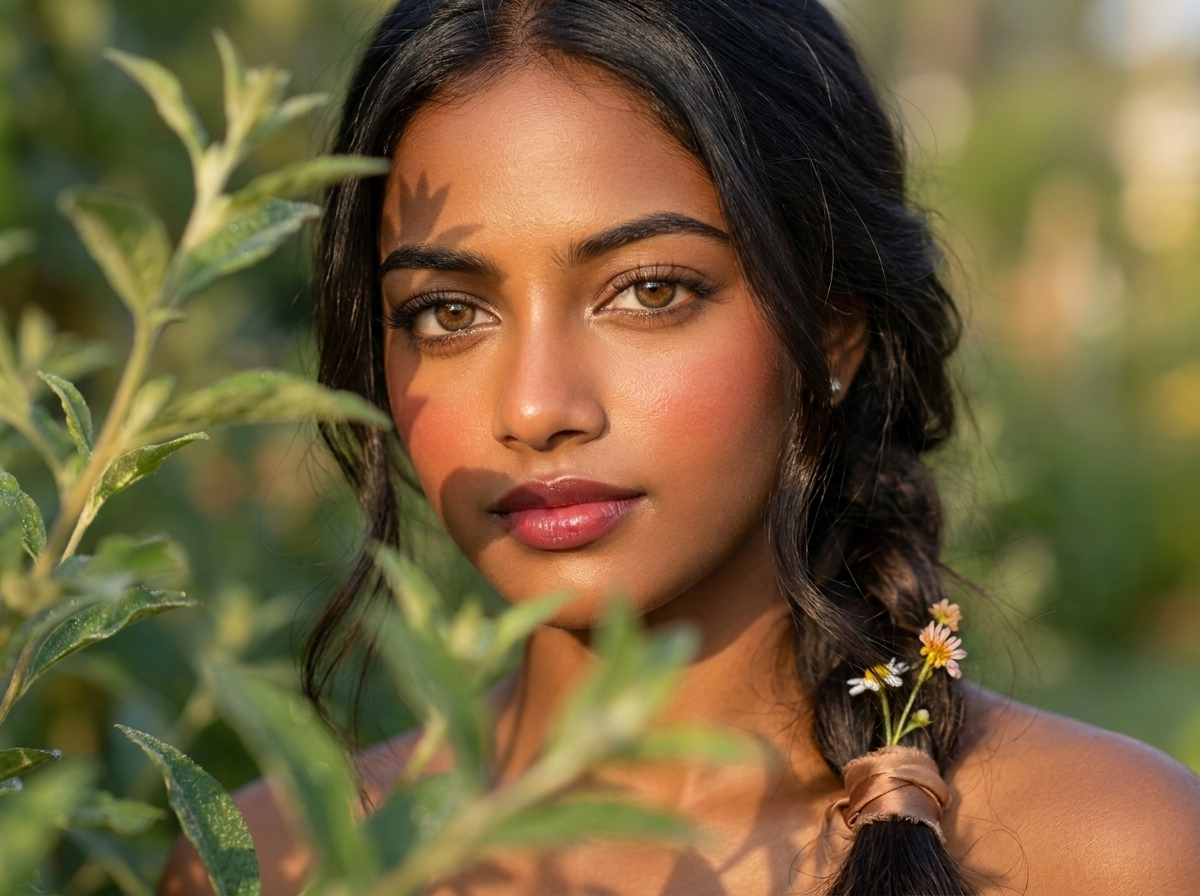
Cottagecore beauty values sunlight and simple. The key is to look like you’ve been outside with the slightly flushed cheeks and freckles. The look of having just come in from the garden.
This is a low-maintenance look but in a different way.
Cottagecore Skin: The Natural Flush Base
Cottagecore skin is lightly flushed, not matte, but not glassy either.
The skincare philosophy: Cottagecore beauty values natural ingredients and simple routines. The cottagecore girl may even make her own beauty products as a fun hobby.
The base: Lightweight. The cottagecore base is a tinted moisturizer or a skin tint rather than a full-coverage foundation. Freckles, if present, are visible not covered. They are, in the cottagecore beauty canon, practically an accessory.
The flush: A cream blush in a color that mimicking the face's natural flush is the most important element of the cottagecore face. Apply with fingers rather than a brush for the most natural result.
Investment tier
Westman Atelier Vital Skincare Complexion Drops
RMS Beauty Un Cover-Up Cream Foundation
Ilia Beauty Skin Rewind Complexion Stick
Mid-range tier
Glossier Skin Tint
Rare Beauty Positive Light Tinted Moisturizer
Tower 28 SunnyDays SPF Tinted Sunscreen
Accessible tier
e.l.f. Halo Glow Liquid Filter
Neutrogena Hydro Boost Concealer (for spot coverage only)
Maybelline Dream Fresh BB Cream.
Cottagecore Makeup: The Botanical Face

The cottagecore makeup look’s brief: enhance what the garden would enhance. Rosy cheeks from fresh air. Bright eyes from good sleep. Lips slightly stained from whatever fruit was in season.
Cottagecore Eye Makeup
A wash of warm earth tone across the lid, a thin line of brown or warm black along the upper lash line for definition, but smudged rather than crisp. Mascara in brown rather than black for most colorings reads as more natural. No sharp cat-eye or heavy liner.
Investment tier
Charlotte Tilbury Pillow Talk Eye Shadow Quad
Westman Atelier Eye Pod in Sable
Mid-range tier
Too Faced Natural Eyes Palette
e.l.f. Putty Eyeshadow in Toasted Praline
Accessible tier
NYX Ultimate Shadow Palette in Warm Neutrals
Essence Eyeshadow in the matte earth tone range
Cottagecore Brows: Natural and Brushed Up
Full, natural, and brushed upward with a clear or tinted brow gel. The laminated, microbladed, architecturally perfect brow is not cottagecore.
Investment tier:
Anastasia Beverly Hills Clear Brow Gel
Benefit Gimme Brow+ Volumizing Eyebrow Gel.
Mid-range tier:
NYX Professional Makeup Control Freak Eyebrow Gel
e.l.f. Brow Lift
Cottagecore Lip Color: The Berry Stain
The goal of cottagecore lips is to look like they’ve been eating berries. A tinted lip balm or a sheer lipstick applied and blotted beats a lip liner and full-coverage lipstick.
Investment tier:
Laneige Lip Sleeping Mask (worn during the day as a tinted treatment)
Charlotte Tilbury Lip Cheat in Pillow Talk
Mid-range tier:
Glossier Generation G in Jam or Zip
Rare Beauty Kind Words Matte Lip Liner worn alone
Accessible tier:
Burt's Bees Tinted Lip Balm in Rose
Maybelline Lifter Gloss in Blush
e.l.f. Sheer Slick Lipstick
The finishing element: A very light dusting of a finely milled translucent or peachy powder across the nose and forehead. Optional but effective.
Cottagecore Nail Colors and Ideas
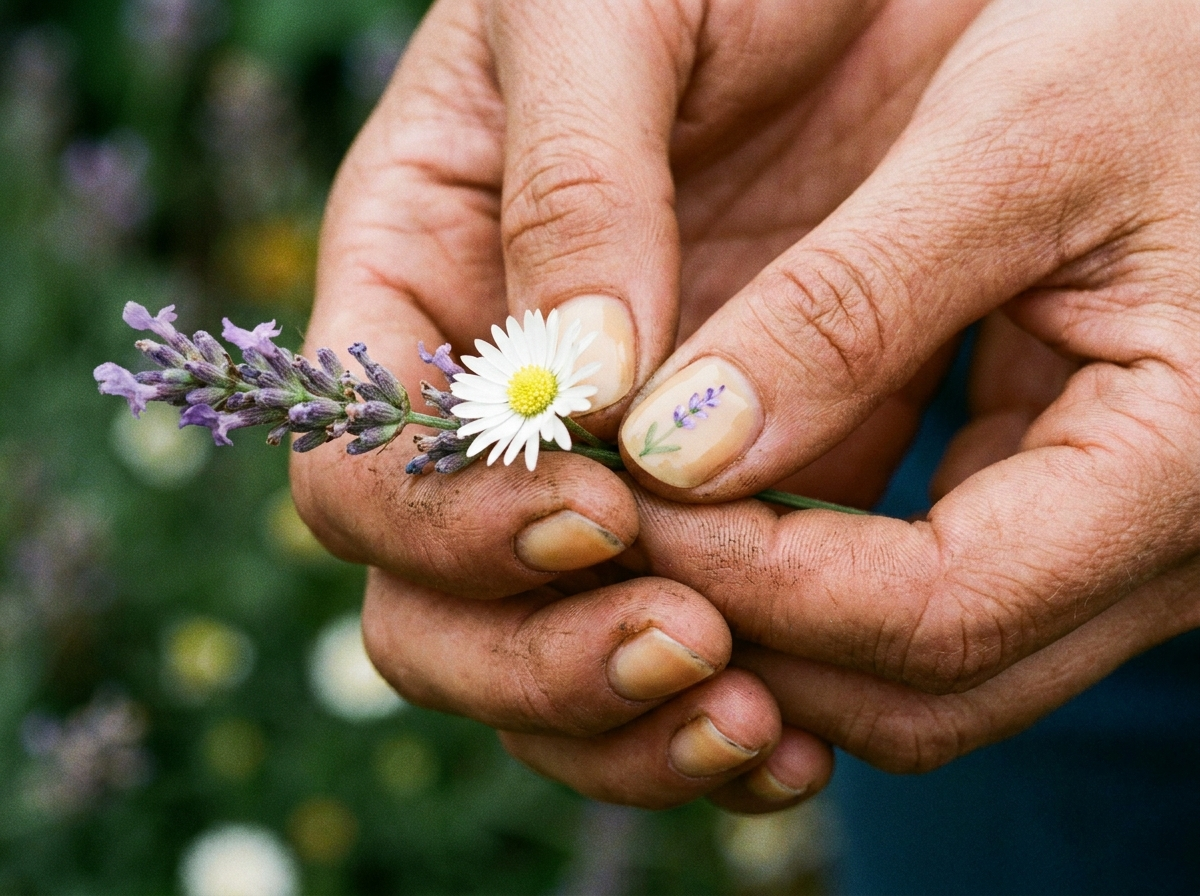
The length of the cottagecore nail is short to medium. The shape is rounded or oval.
The palette: Sheer pinks, creams, soft mauves, warm nudes, and the occasional dusty sage or lavender. The occasional botanical nail art for the more committed end of the aesthetic.
The finish: Soft in satin or cream.
Investment tier
Essie in Topless and Barefoot, Ballet Slippers, or Spin the Bottle
Olive and June in the nude-pink range
Mid-range tier:
OPI in Bubble Bath, Tickle My France-y, or Be There in a Prosecco
Sally Hansen Miracle Gel in the sheer pink range
Accessible tier:
Wet n Wild in the cream nude range
e.l.f. Nail Polish in sheer botanical tones
Sinful Colors in Easy Going or Vacation Time
Cottagecore Hair: Loose, Low, Messy
Hair should look like it was arranged by someone who had better things to do and got distracted halfway through.
This requires more technique because the accidentally disheveled look is about thirty minutes and a few key tools.
The texture: Cottagecore hair is not blown out, flat-ironed, or chemically processed. Waves, natural curl or the slight frizz is encouraged.
For naturally straight hair, a salt spray or texturizing spray applied to damp hair and left to air dry produces a slight wave and texture. For naturally curly or wavy hair, use a curl cream or light gel that defines without crunching.
The styling philosophy: Loose, low, imperfect. Allow some pieces to escape.
Cottagecore Hairstyles: The Complete Guide
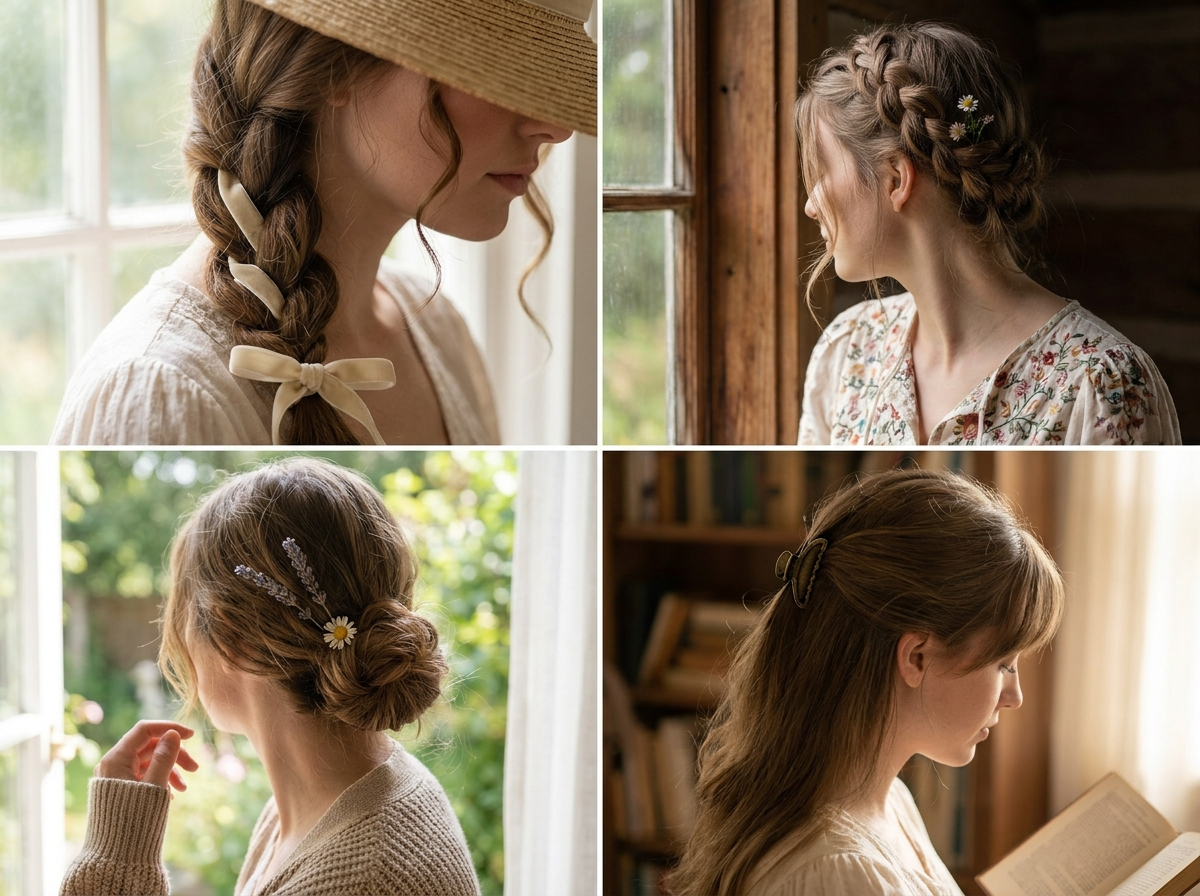
The Loose Braid The most canonical cottagecore hair style. A three-strand braid begun at the nape of the neck, worked loosely so it has more volume than a tight braid.. Wisps escape at the temples and along the part. Secured with a ribbon rather than a hair tie where possible.
The Milkmaid Braid Two braids begun at either side of the head, wrapped across the crown and pinned. The version that works for the aesthetic looks like it was done in a mirror with inadequate light. The overly perfect milkmaid braid reads as costume.
The Soft Updo Hair gathered at the nape or the crown in a manner that suggests it was put up quickly. A low bun with the texture retained rather than smoothed. A twisted half-up with the ends tucked rather than pinned.
The Half-Up The most versatile of the cottagecore styles. The top section of hair gathered and secured while the rest hangs loose. The gathered section should be slightly loose. The loose section should have texture.
The Loose Waves Salt spray or texturizing product applied to damp or dry hair, scrunched gently. A few pieces tucked behind an ear. A flower, if the season and the occasion support it.
Cottagecore Hair Accessories
A ribbon, a vintage clip, a dried flower crown transform a basic style into an aesthetic statement.
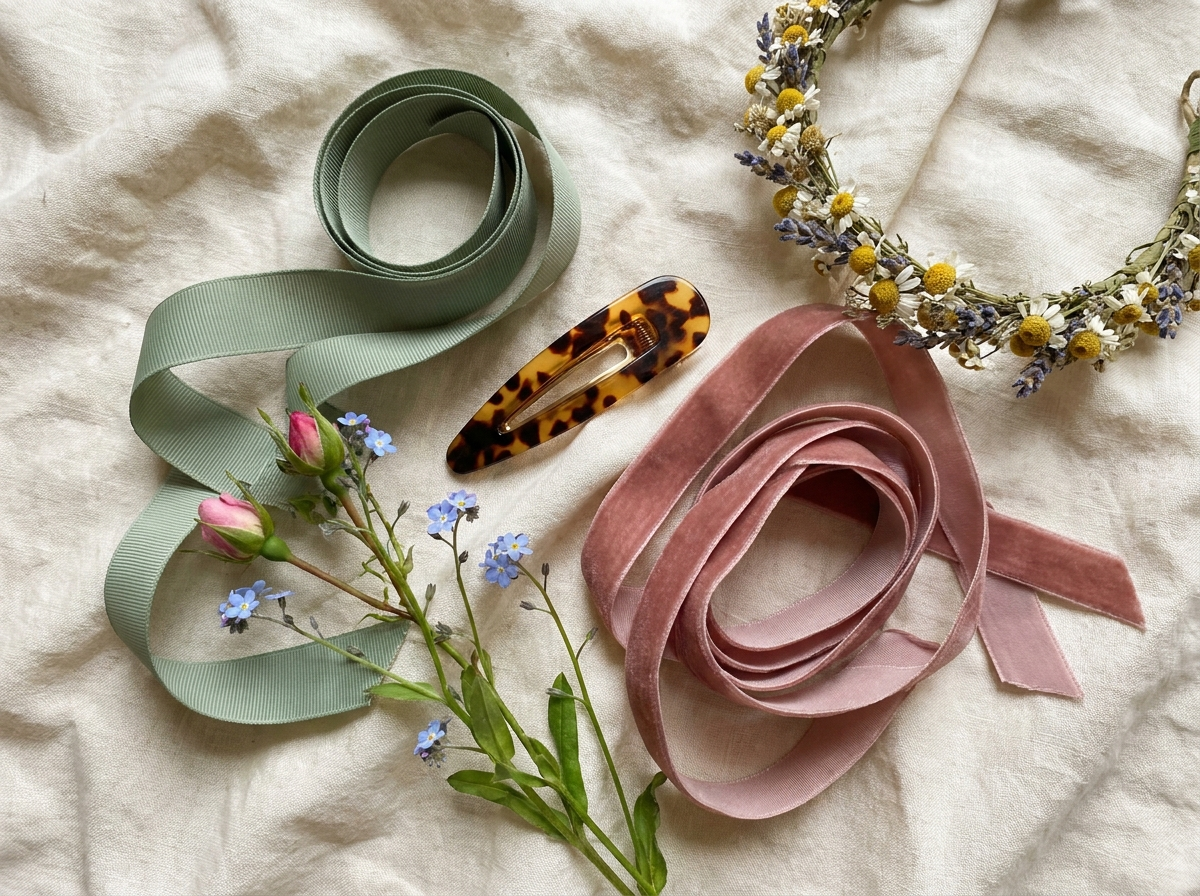
Ribbons: Grosgrain in cream, sage, or dusty rose. Velvet in burgundy or forest green for autumn and winter. A piece of lace ribbon for the most committed. Worn tied around a braid, a bun, or a ponytail, or as a headband tied at the crown with the ends trailing. Sourced from fabric shops, vintage haberdashery, or the ribbon section of any craft store.
Vintage clips and barrettes: Celluloid tortoiseshell, enamel florals, carved resin have the most character.
Dried flower crowns: The most committed cottagecore hair accessory requires either a garden, a farmers market, or a very good florist. Made from dried rather than fresh flowers because dried flowers hold their shape and color the same way. Chamomile, lavender, baby's breath, and small dried rosebuds work great. Wear loosely on the head, not gripped tight.
Fresh flower stems: A simpler alternative to the crown is a single flower stem tucked behind an ear or woven into a braid. A sprig of lavender, a small daisy…whatever is in bloom in the garden or the farmers market this week. This is the cottagecore hair accessory that requires the least and delivers the most.
Cottagecore Fragrance and Perfume
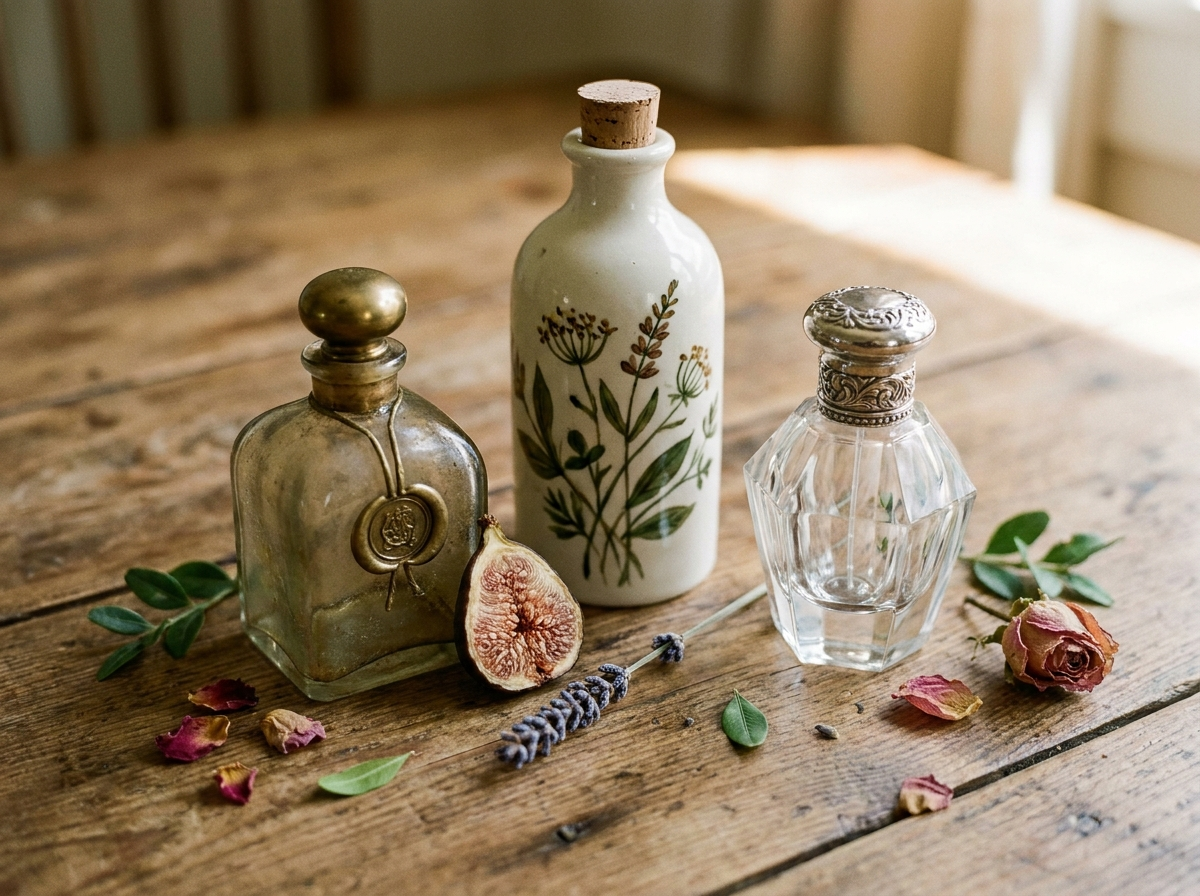
Cottagecore fragrance is botanical, green, and slightly earthy. The fragrance family is floral-green, chypre, or soliflore avoiding heavy synthetics. The impression should be of a garden in the morning, not a department store counter.
Right:
Rose (especially the slightly sharp, slightly green note of a real rose rather than the sweetened version)
Lavender
Green tea
Fresh fig
Vetiver and oakmoss in the base
Violet leaf
Chamomile
Beeswax
Iris root.
Wrong:
Heavy musks
Dominant sweet vanilla
Synthetic fruit
Investment tier:
Diptyque Philosykos — Fresh fig, fig leaf, and white cedar. The smell of a fig tree on a warm morning, which is exactly as cottagecore as it sounds.
Jo Malone Peony and Blush Suede — Soft, slightly powdery, floral without sweetness. The dressing table version of the garden.
Maison Margiela Replica Flower Market — Green stems, rose, peony, and the specific smell of water in a flower bucket. The florist's version of the cottagecore fragrance ideal.
Mid-range tier:
Ellis Brooklyn WEST — White flowers, musk, and something slightly green underneath. Wearable and genuinely beautiful.
Skylar Capri — Clean, slightly botanical, appropriate for people who find most fragrance overwhelming.
Floral Street Arizona Bloom — Saguaro blossom, musk, and green notes. More meadow than garden, but firmly in the aesthetic.
Accessible tier:
Pacifica French Lilac — Good at this price point. Soft, slightly herbal, not synthetic-sweet.
Herbivore Botanicals Hinoki — Hinoki cypress and botanicals. More forest than garden but very much in the family.
Schmidt's Naturals Wondermint — For those who prefer the herb garden end of the spectrum. Fresh, green, useful.
The essential oil alternative: Lavender, rose, and vetiver essential oils blended in a carrier oil produce a wrist scent that is more botanical than most commercial fragrances and costs a fraction of the price.
The Cottagecore Beauty Philosophy
The cottagecore beauty look says, without saying it: I spent my morning making or tending something, or walking somewhere that cost me nothing.
In a beauty culture obsessed with correction and coverage, that is a more radical position.
The Cottagecore Lifestyle: The Rituals
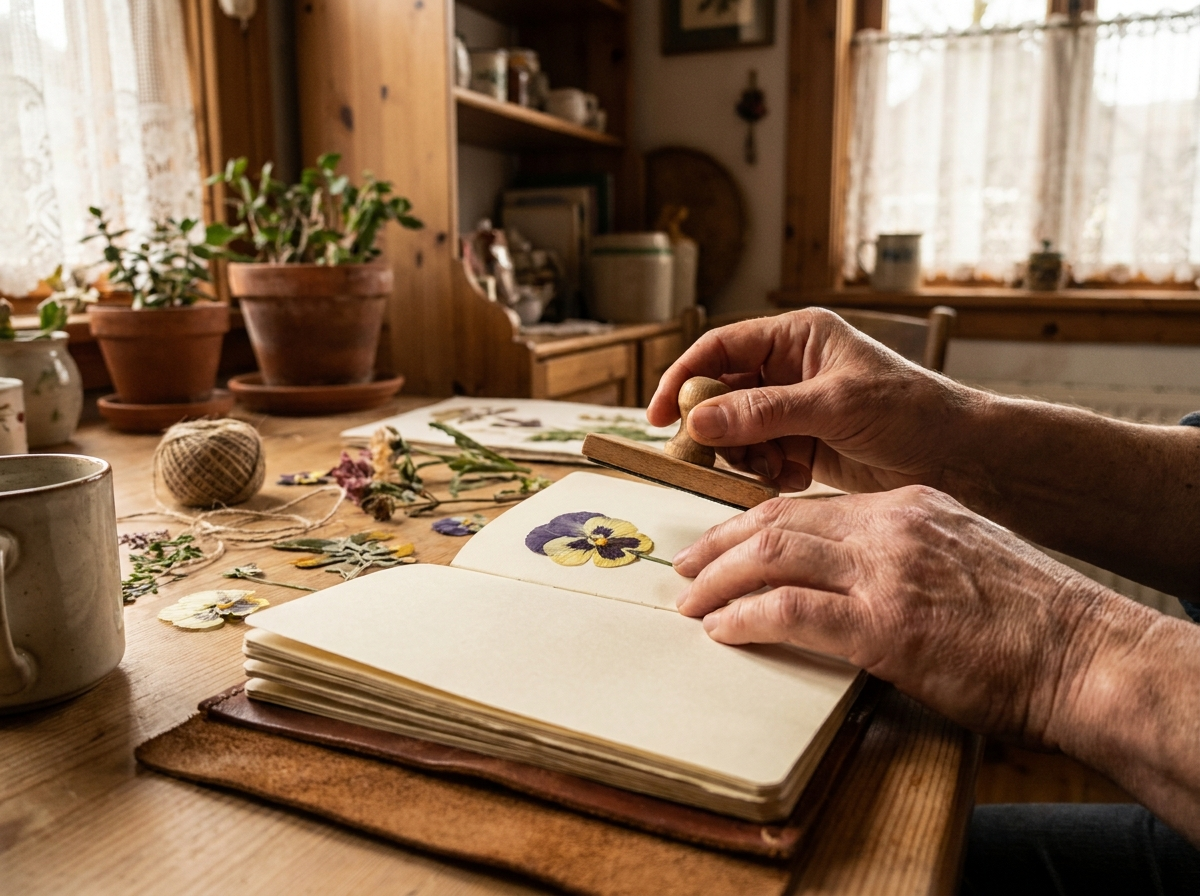
You know the surface cottagecore, dress, the basket and the dried flowers. But cottagecore, more than almost any other internet aesthetic, has a practice underneath the visual language. A set of things you actually do, not just wear or display. Rituals, in the old sense of the word: repeated actions that accumulate meaning over time.
This is the part of the aesthetic that doesn't photograph as easily as a prairie dress in a wildflower field. It photographs as hands pressing flour into a wooden surface, or a cup of tea going cold because the book was better than expected, or the particular mess of a craft project mid-completion that will look intentional in three days and chaotic right now. It is the aesthetic in motion rather than in still life, and it is, arguably, where cottagecore is most honestly itself.
The Daily Rituals
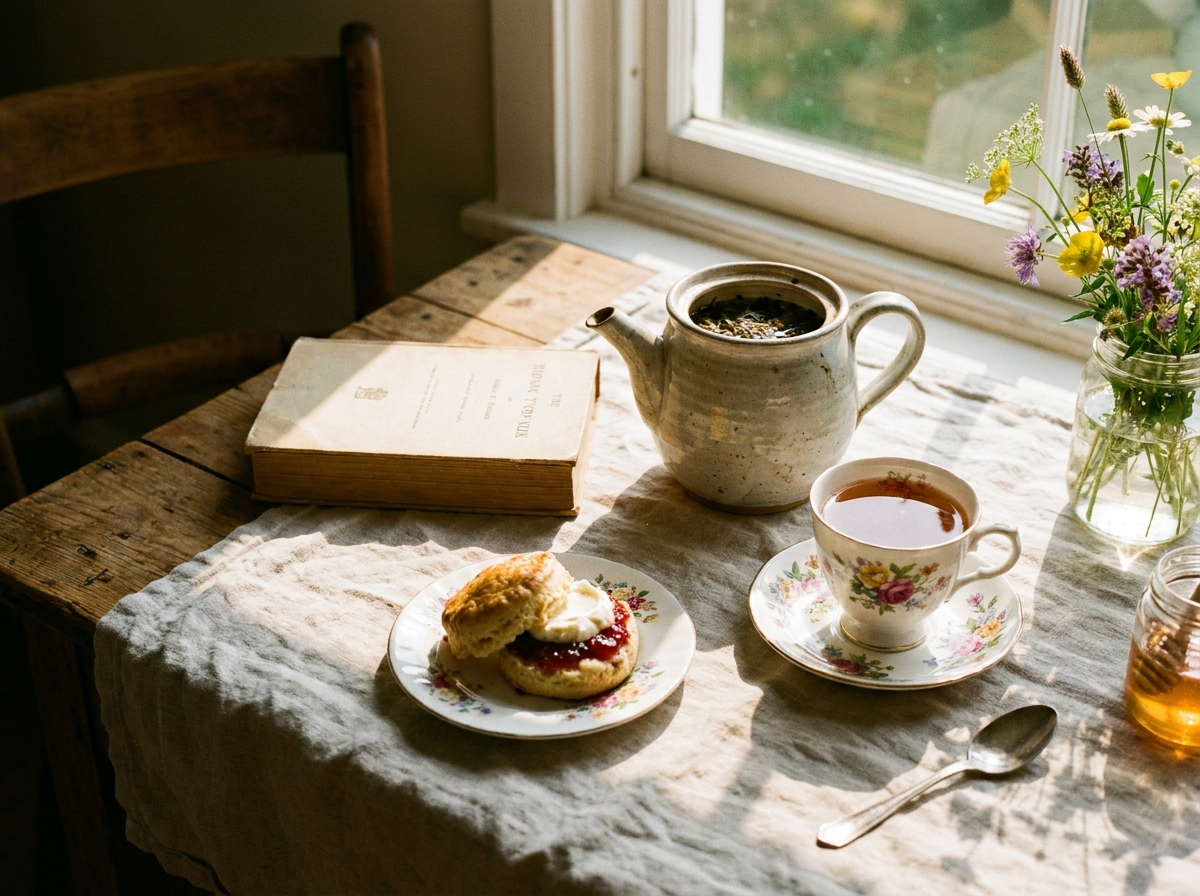
The cottagecore morning begins with a kettle, and moves at the pace of water coming to a boil.
Ideal morning beverage is tea enjoyed from a special or favorite mug. Go with loose leaf or quality bag. Tea forces you to slow down.
Baking is cottagecore’s most iconic daily activity. Cottagecore’s relationship with baking is about the process: the physical work, the knowledge, and the way it organizes a day around a living thing.
Pressing flowers appears frequently in cottagecore content. The pressed flower, mounted and framed months later, is a record of a specific day, garden, or season. It is the cottagecore aesthetic's answer to photography.
Foraging walks with a basket that returns with blackberries, or elderflower, or chestnuts, or whatever else is in season.
Journaling in the cottagecore tradition is writing as thinking. The cottagecore journal is written in, has pressed flowers, and crossed-out sentences.
The Seasonal Calendar
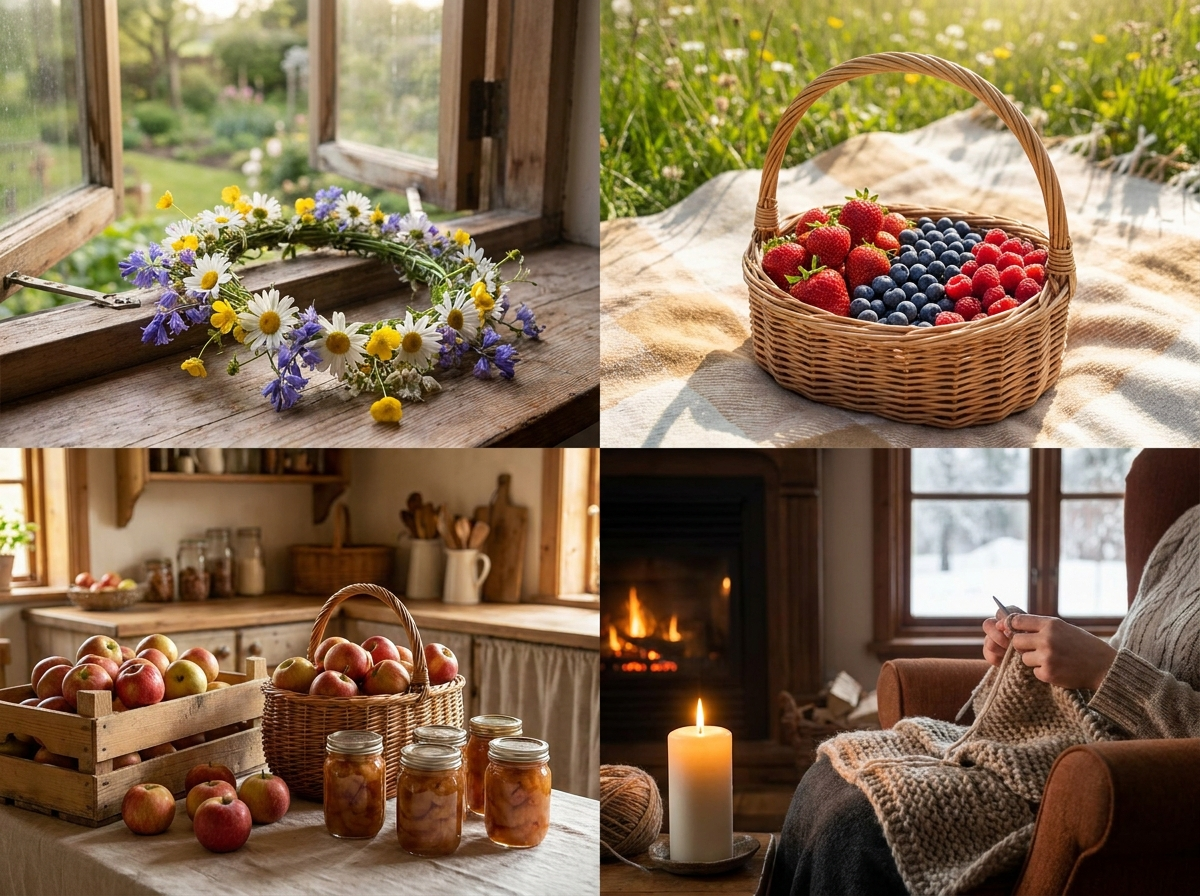
Cottagecore is a seasonal aesthetic in the way that a garden is seasonal.
Spring is the season of beginning. Seeds started on windowsills, the first foraging walk of the year, and the first afternoon warm enough to take tea outside. It’s the optimism of an April garden, before the slugs have found everything.
The cottagecore spring wardrobe is butter yellow and lavender, thin cotton, bare legs in a meadow.
Summer is the aesthetic's peak season. Berry picking is the summer activity. Lots of picnics with wicker baskets and cloth napkins, and trips to the farmers market.
Cottagecore summer involves rivers, streams and swimming holes, more pastoral than maritime.
Autumn is the cottagecore season par excellence. Apple harvesting. The first soup of the season. Knitting . It shifts from dried wildflowers to dried seed heads and autumn leaves. The wardrobe deepens into mushroom, moss and burgundy.
Autumn also brings what might be called the cottagecore preservation instinct of freezing, canning, drying, pickling.
Winter is where the natural world has stopped and the aesthetic goes indoors. It’s time for extended knitting projects, slow simmered soup and reading by the window while something bakes. The cottagecore winter is the hibernating winter of the natural world.
The winter aesthetic is most textile-focused and closest to Grandmacore. The garden rests, the dried flowers replaced by evergreen sprigs and bare branches. The candles are more necessary than ever.
The Creative Pursuits
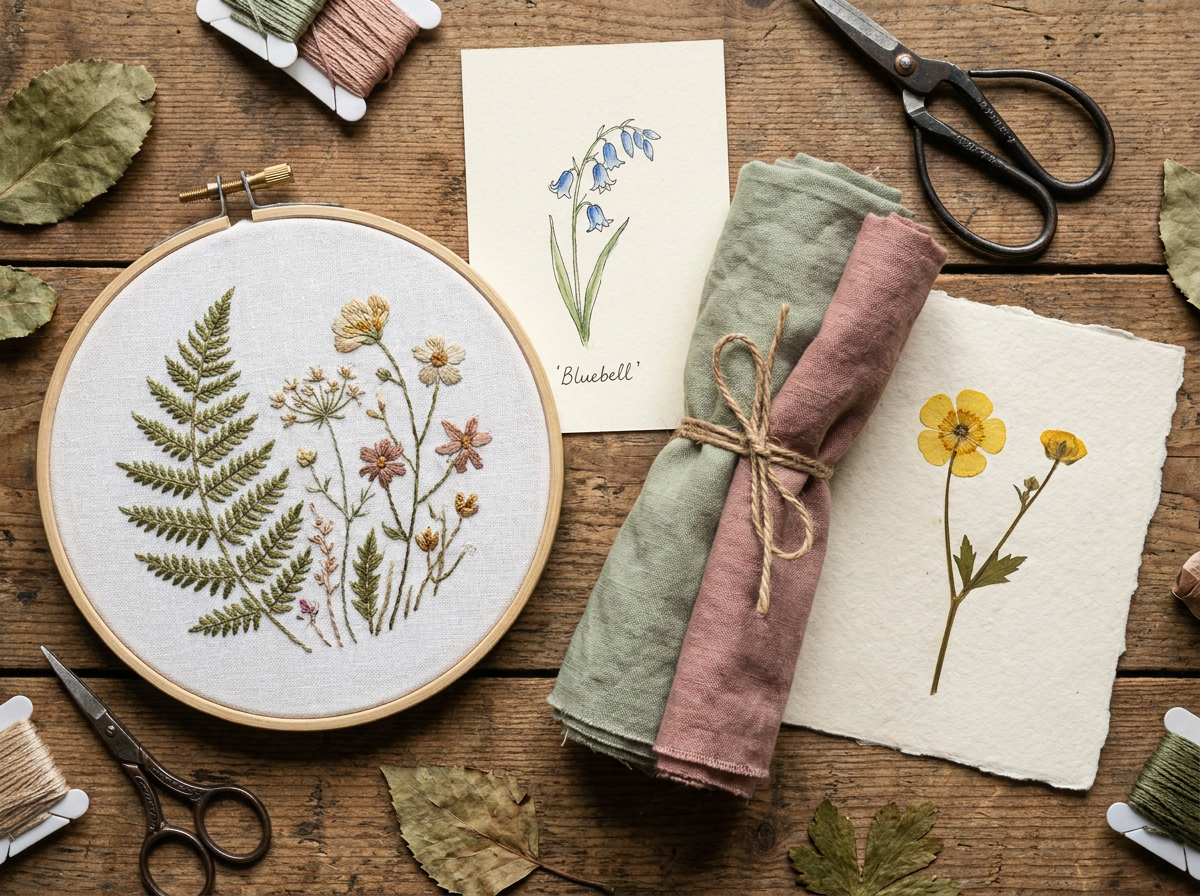
Cottagecore creativity is analog, slow, and oriented toward making.
Embroidery is the most common craft. All you need is a hoop, some fabric, a needle and thread in the palette colors. The entrance cost is low and the ceiling is as high as you want to take it. The subject matter is usually, botanicals, animals, poem text, or the occasional mushroom.
Natural dyeing is the more ambitious craft. It requires outdoor space, large pots, and the willingness to accept random results. Natural dyes from onion skins, avocado pits, black tea, and garden botanicals produce muted and complex colors. The process is slow and occasionally smelly.
Watercolor painting in the cottagecore tradition has a very specific brief: botanicals. Flowers, herbs, mushrooms, pressed leaves. The cottagecore watercolorist documents the natural world.
Candle making and soap crafting are at productive end of the cottagecore craft spectrum. These items are given as gifts, used in the home, occasionally sold at markets.
Herbalism is the practice of growing, drying, and using medicinal and culinary herbs. It involves the creation of tinctures and teas, salves and infusions. It takes plants seriously as medicine without entirely abandoning modern healthcare.
Cottagecore's Extended Family: Every Sub-Aesthetic, Explained
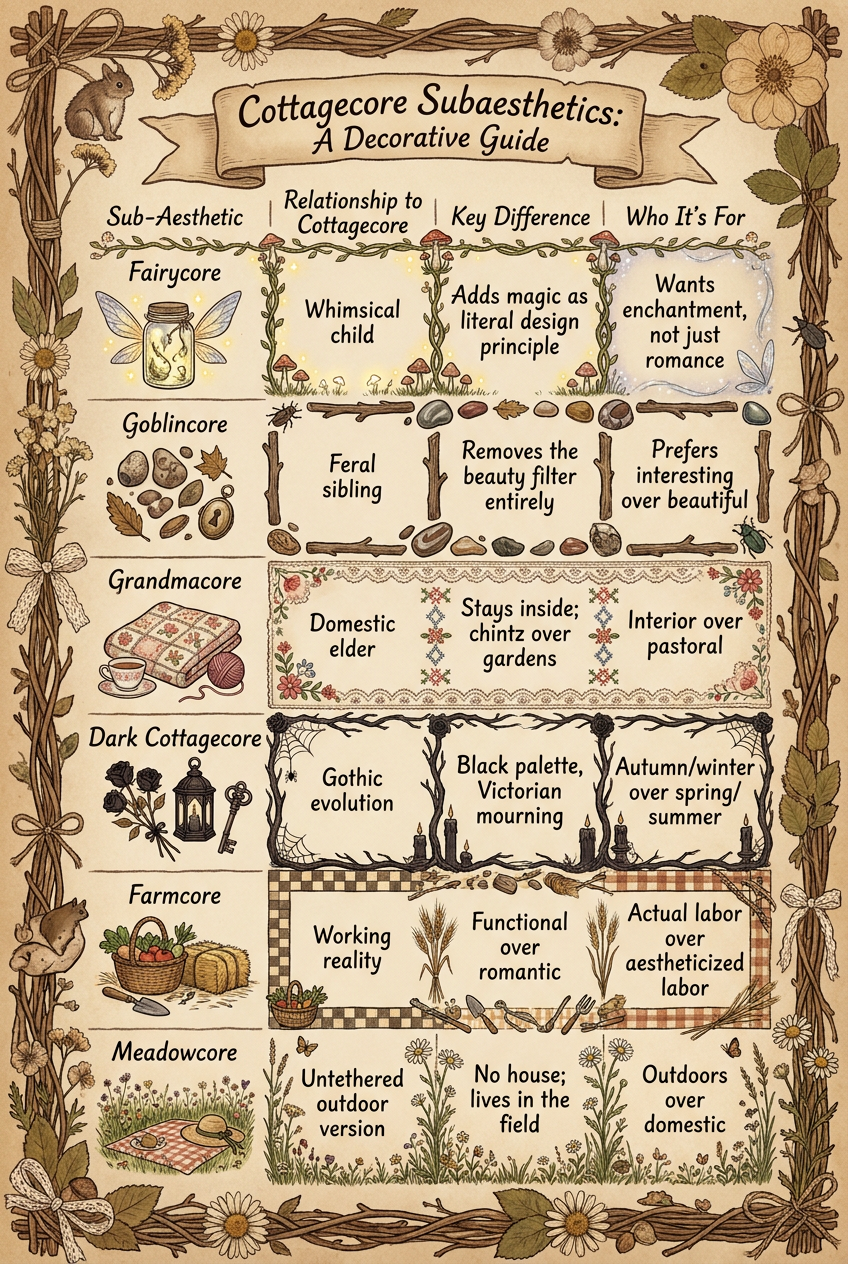
Cottagecore's extended family is large and interesting, likely because cottagecore’s core values allow for so many variations.
Understanding the sub-aesthetics helps because you may like cottagecore but lean towards something darker, wilder, more whimsical or ancient. Knowing the names give you a community, visual vocabulary and shopping guide. Another reason is that the differences between the subaesthetics are interesting. Knowing them helps you to may create your own unique combo.
These are cottagecore's closest relatives. Some are children. Some are siblings. One is the feral cousin nobody talks about at family gatherings.
Fairycore: When the Garden Gets Magical
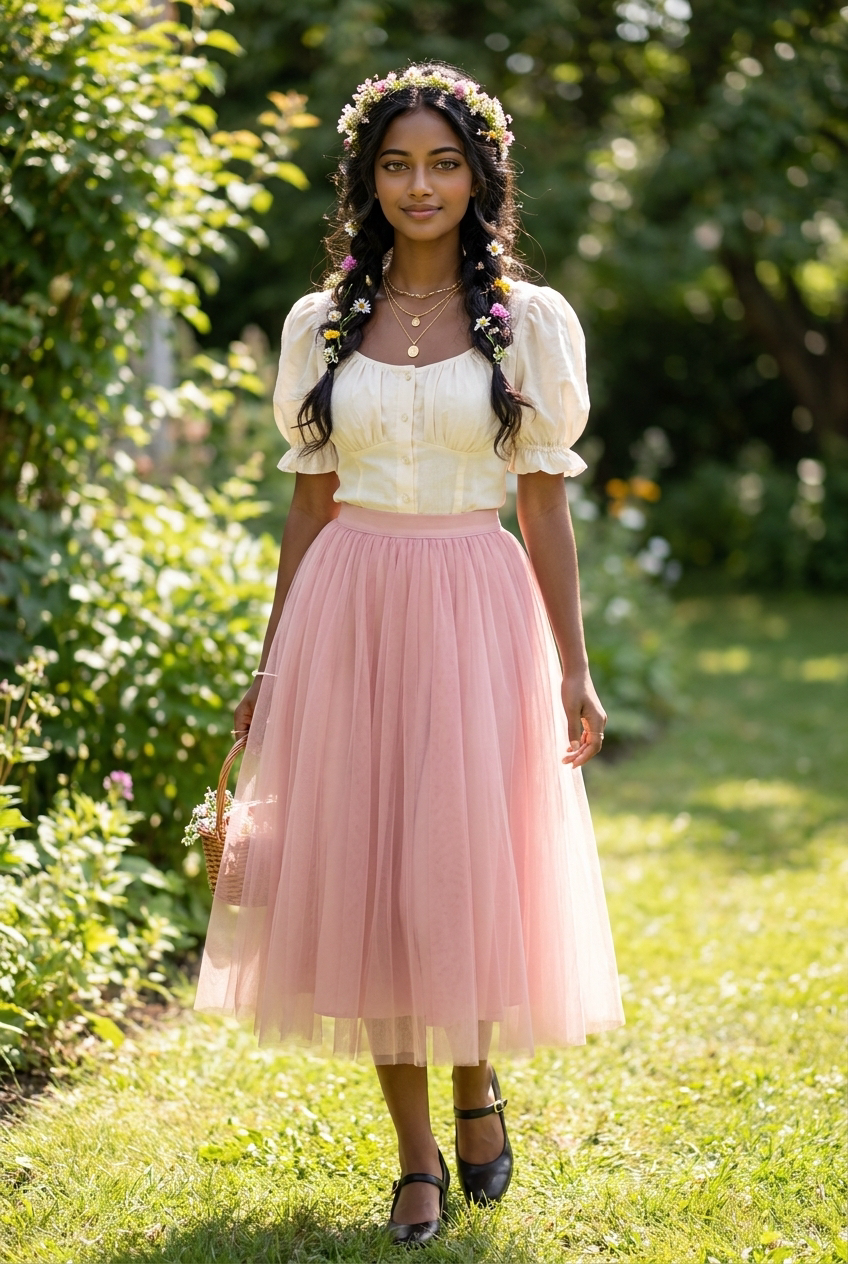
The relationship: Fairycore is cottagecore's most whimsical child. It’s the version that took the enchanted-garden energy.
What it shares with cottagecore: Natural materials, botanical obsession, feminine-coded soft silhouettes, a deep relationship with the non-human world.
Where it diverges: Fairycore adds magic as a literal rather than metaphorical. The mushrooms in a cottagecore aesthetic are foraged, dried, and in a ceramic bowl. In a Fairycore aesthetic, they are the size of furniture. Where cottagecore romanticizes the domestic, Fairycore romanticizes the liminal.
The visual signatures: Iridescent and holographic elements alongside the natural. Butterfly wings, crystal integration, fairy doors trees, Gossamer fabrics with linen. The palette extends into seafoam, pale gold, and opalescent white alongside the cottagecore cream and sage.
The wardrobe: Cottagecore's prairie dresses, taken further. They’re longer, layered, and with a train or a dramatic sleeve. Flower crowns are more elaborate and hair more fantastical.
Who it's for: Someone who finds cottagecore too grounded. Someone who wants the garden but wants something extra and more supernatural.
Goblincore: The Feral Sibling
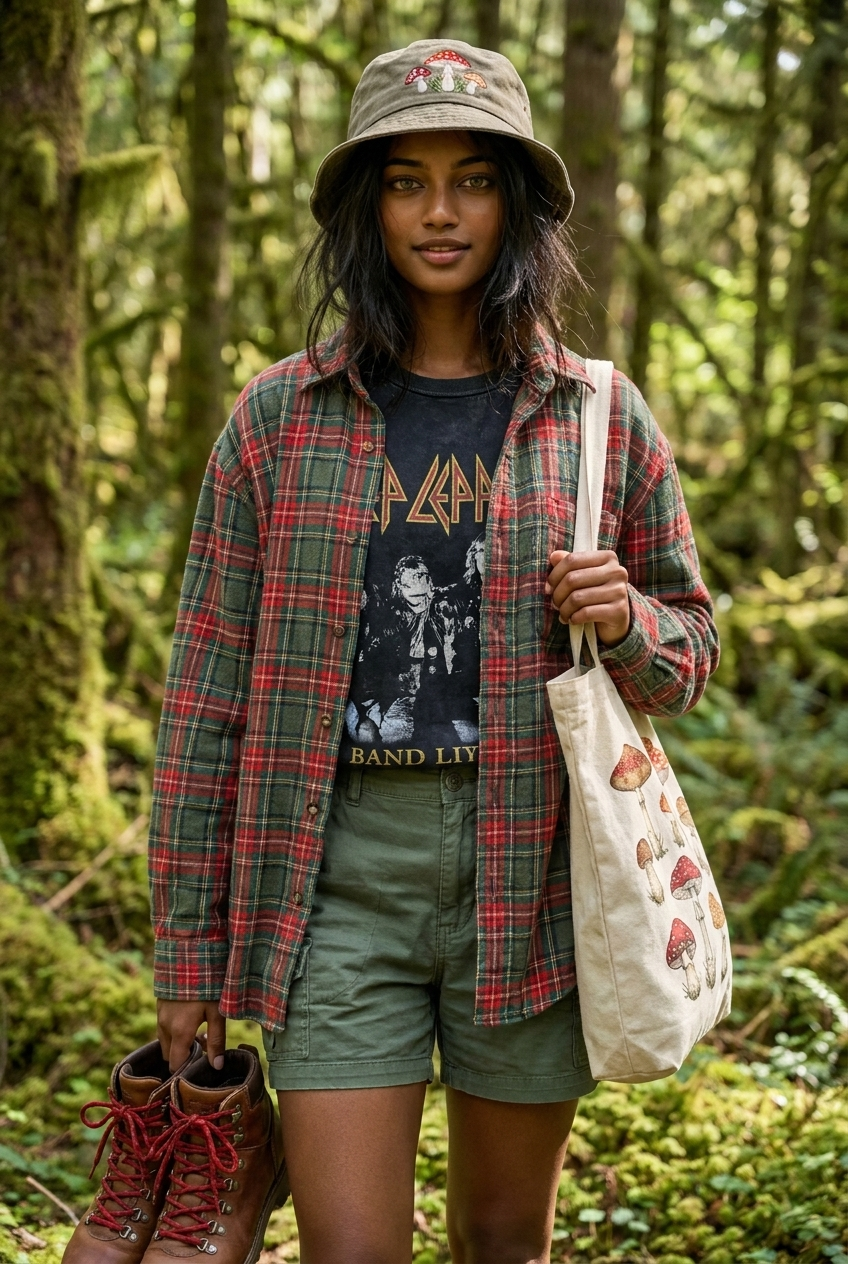
The relationship: If Fairycore is cottagecore's most elevated child, Goblincore is its feral sibling.
What it shares with cottagecore: Deep relationship with nature, rejection of mainstream beauty standards, handmade and found objects, and a counter-cultural stance toward consumerism.
Where it diverges: Goblincore celebrates the less pretty parts of nature. Bugs, mud, decay, bones, and fungi in their more alarming varieties. Where cottagecore makes the natural world beautiful, Goblincore makes it interesting…and the more interesting the better.
The visual signatures: Collected and displayed moss, bones and skull for decoration, taxidermy or insects in resin or display cases. The color palette runs through forest floor browns and greens, deep ochres…earth tones.
The wardrobe: Overlaps with cottagecore in its love of natural fibers and unstructured silhouettes, but adds dishevelment. Things look like they've been worn in a forest. Pockets are full of interesting rocks. There’s the occasional piece of bone or natural object as jewelry.
The philosophy: Where cottagecore says "I want to slow down and make beautiful things," Goblincore says "I want to go outside and collect everything I find interesting."
Who it's for: Someone who finds cottagecore too tidy and has an interest in natural history, foraging, mycology, taxidermy, or the parts of the natural world that don't make it onto mood boards.
Grandmacore: Cottagecore Ages Up
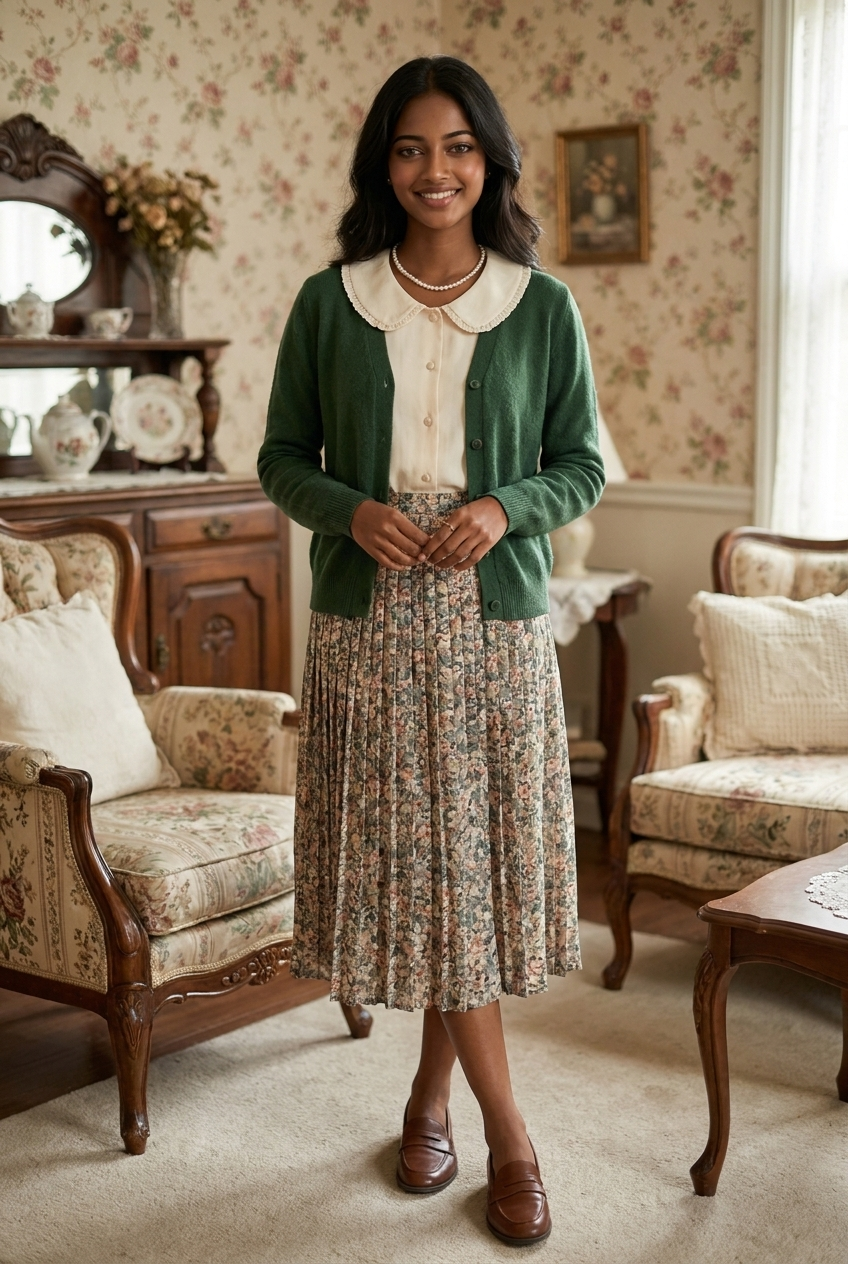
The relationship: Grandmacore, or grandmillennial, is the cottagecore that stayed inside.
What it shares with cottagecore: Natural fibers, handmade crafts, vintage objects, domestic rituals, a rejection of minimalist contemporary aesthetics.
Where it diverges: Grandmacore is primarily interior. Crafting is needlepoint, cross-stitch, or crocheted blankets.
The visual signatures: Floral wallpaper, recipe boxes, doilies, needlepoint pillows. The colors run warmer and more saturated than cottagecore; rose over dusty rose, gold over butter yellow, royal blue as an accent over cornflower.
The wardrobe: House dresses, cardigans with brooches and kitten heels. The grandmillennial interpretation adds a contemporary silhouette wearing these elements but the underlying reference is unchanged. The domestic aspect is work more than performed.
Who it's for: Someone who loves cottagecore but not the great outdoors. They love the material culture of their grandmother's generation. They’re drawn to more elaborate patterns like busy florals rather than cottagecore's more restrained small-scale prints.
Dark Cottagecore: Where the Garden Gets Gothic
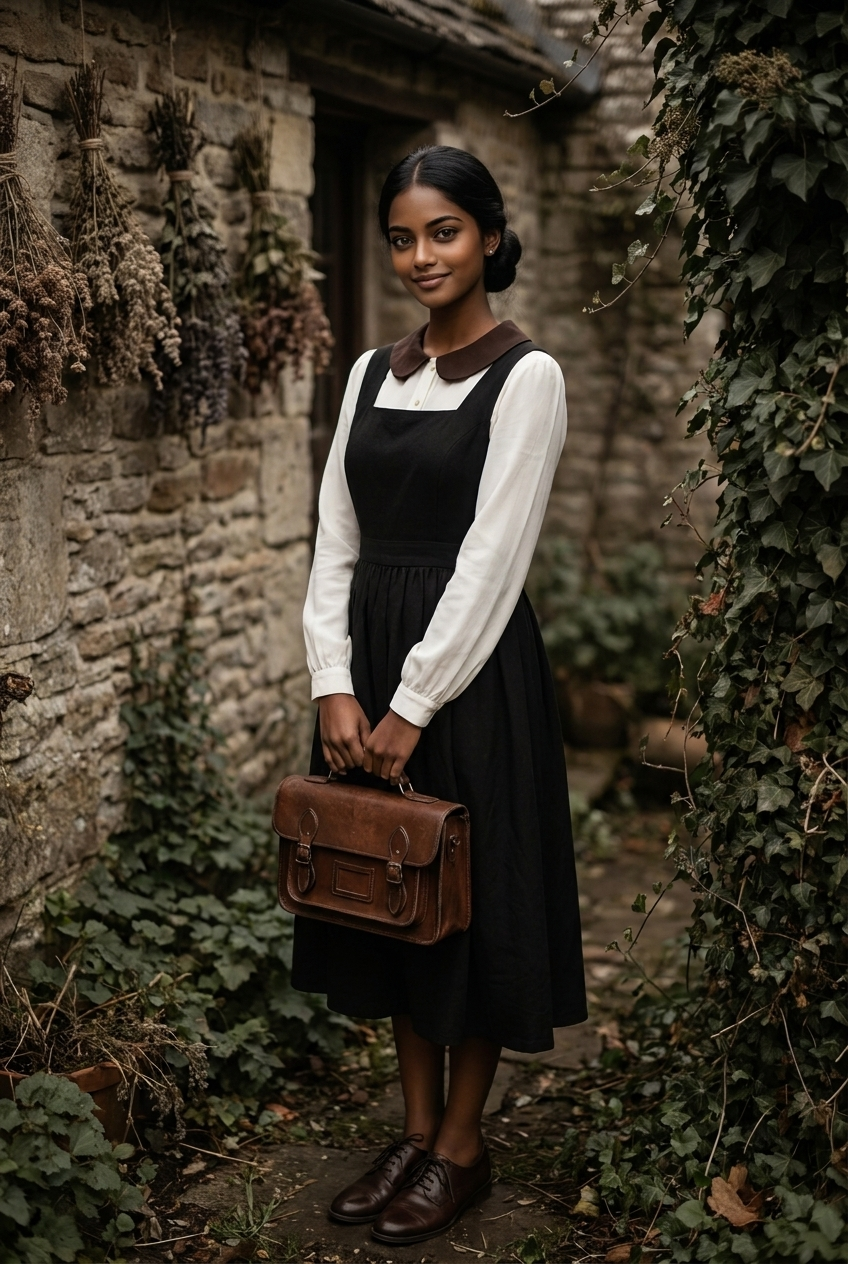
The relationship: Dark Cottagecore is cottagecore with its romantic instincts taken into gothic, melancholy, or the forest at night.
What it shares with cottagecore: Natural materials, handmade life, botanical obsession, feminine-coded soft silhouettes, a relationship with place and season.
Where it diverges: Dark Cottagecore adds black to the palette. It draws on Victorian mourning aesthetics, poisonous plants, and black roses. Where cottagecore loves spring and summer, Dark Cottagecore favors autumn and winter, the dying and dark seasons.
The visual signatures: The cottagecore silhouette in black, dark forest green or deep burgundy. Poisonous plant references are decorative motifs. A darker, older relationship with that includes death as part of the cycle.
The wardrobe: Prairie dresses and pinafores in black linen or deep forest green velvet. Black lace as the accent, and heavy boots. The overall silhouette is cottagecore but the palette is inverted.
Who it's for: Someone drawn to cootagecores domestic romanticism but also to gothic aesthetics, Victorian literature, and the parts of the natural world that bloom in the dark.
Farmcore: The Working Reality
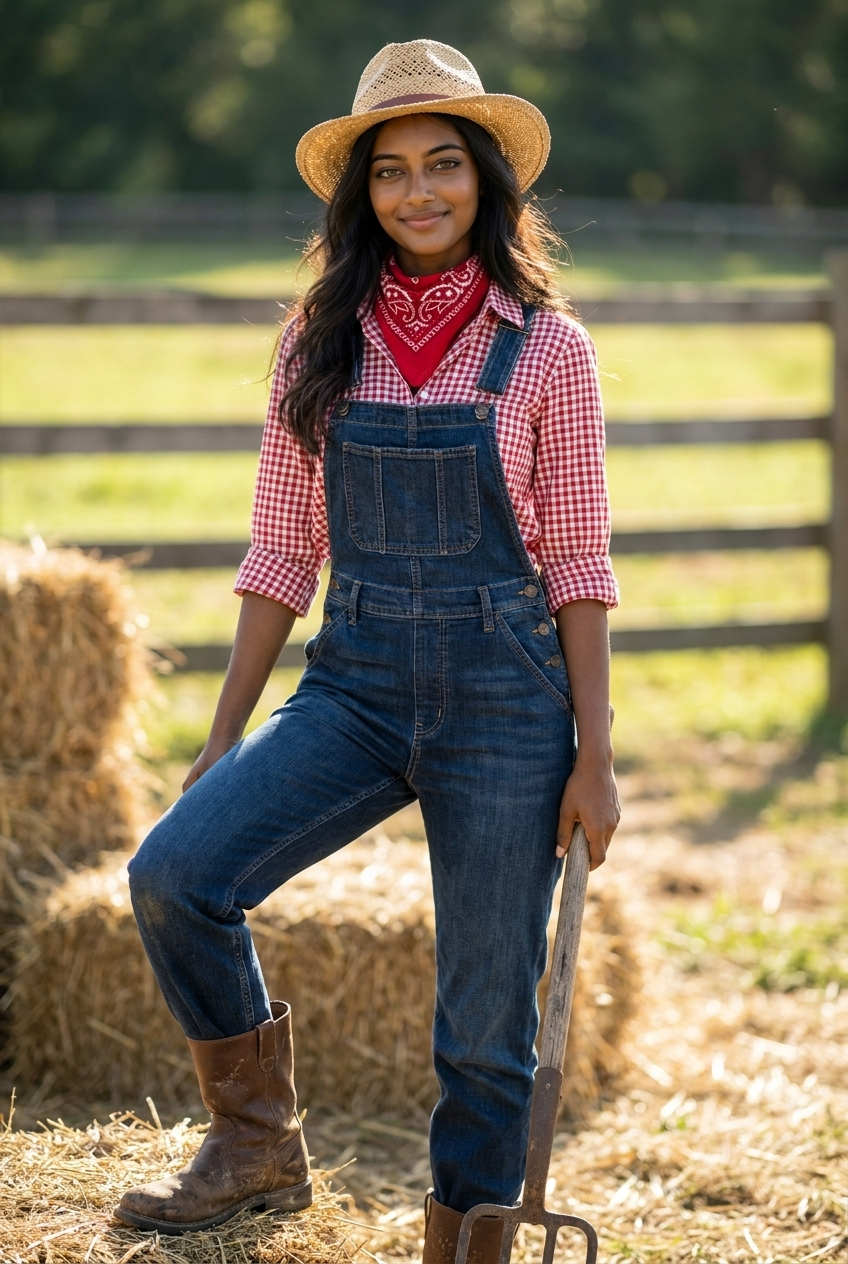
The relationship: Farmcore is what happens when you take cottagecore's rural fantasy and add actual agricultural labor. It is the version with dirt under the fingernails and no time for pressed flowers because the animals need feeding at 5am.
What it shares with cottagecore: Rural setting, natural materials, deep connection to food and land, a rejection of urban contemporary aesthetics.
Where it diverges: Farmcore is functional where cottagecore is romantic. You wear denim overalls because they hold up to work, not because they photograph well. The work boots are Blundstones, not leather oxfords. She takes care of real animals and grows vegetables on a larger scale, not just to be decoration.
The visual signatures: Denim as a primary fabric, work boots, canvas and plaid flannel. The palette is earthier and less muted than cottagecore including more terracotta and less dusty rose. The aesthetic is more interested in the beauty coming from hard work.
Who it's for: Someone who loves cottagecore's values but finds the aesthetic too decorative. They have or want actual land. They love the labor of agricultural life more than just the aesthetic.
Meadowcore: Cottagecore Untethered
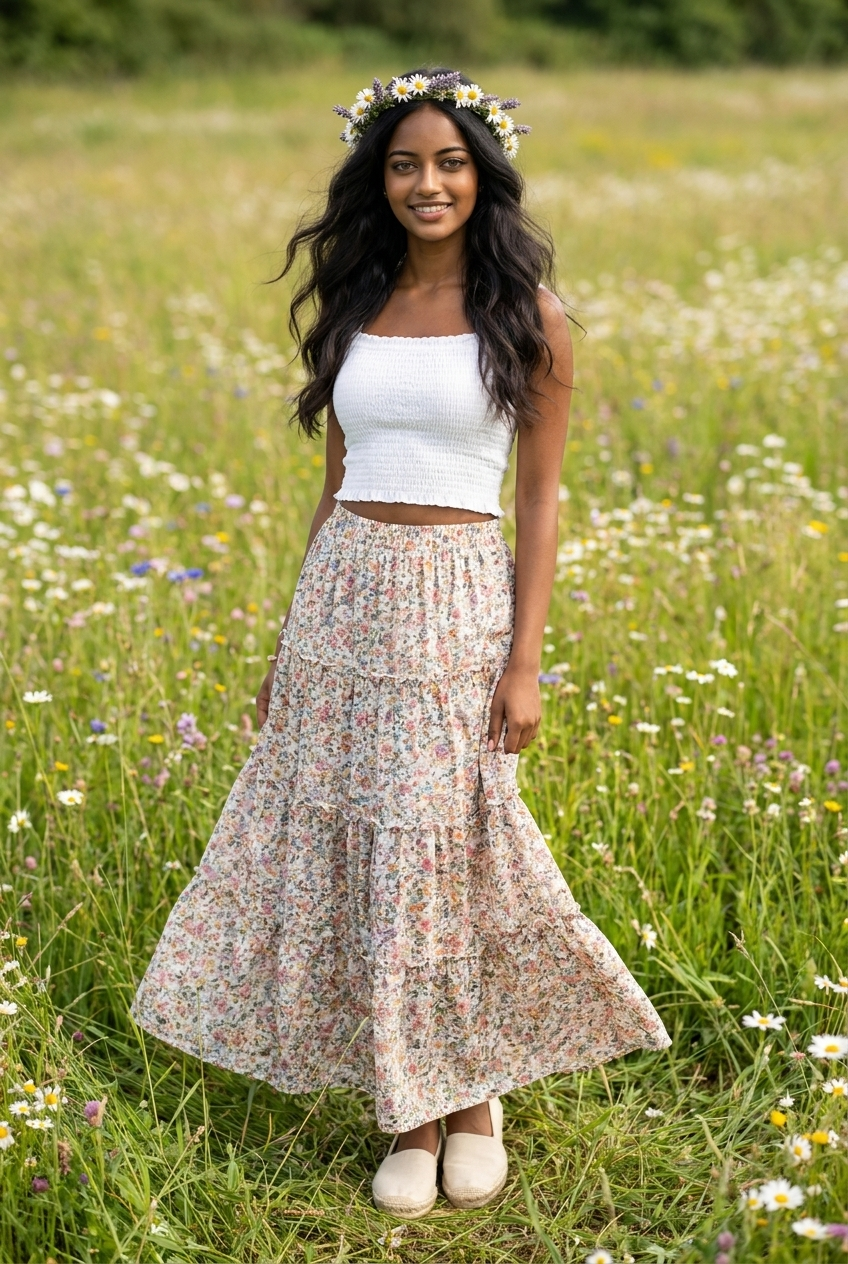
The relationship: Meadowcore is the version of cottagecore that left the house and stayed in the field.
What it shares with cottagecore: Natural world obsession, botanical focus, soft feminine silhouettes, a relationship with seasonal and outdoor life.
Where it diverges: Meadowcore removes the domestic architecture of cottagecore and replaces them with open sky. Everything that happens here happens outside, in long grass and wildflowers.
The visual signatures: Flowing dresses in wildflower fields, bare feet, flower crowns made on the spot. The hair is loose and wild in the wind. The color palette a mix of white, yellow, purple, and green resembling a field of wildflowers.
The wardrobe: Cottagecore's lightest pieces, taken outdoors. The longest, most flowing dresses with bare feet. The overall effect is less domestic than cottagecore, less whimsical than Fairycore, more the aesthetic of someone who loves the great outdoors. who has found their natural habitat and it is outside.
Who it's for: The person who loves cottagecore but finds the domestic interior less compelling. They’re happier in open spaces and find the meadow more fulfilling than the kitchen.
A Note on Navigation
These sub-aesthetics are not a ladder with cottagecore at the bottom and something more sophisticated at the top. They are unique sensibilities that share a family resemblance. You may practice Meadowcore in summer, and drift toward Dark Cottagecore as the evenings get shorter.
The question is not "which one am I" but "which one is true right now".
Comparisons: Cottagecore vs. The Neighborhood
Every aesthetic has “cousins”, or aesthetics which with they share characteristics but there are clear differences.
These are cottagecore's closest neighbors in the broader aesthetic landscape.
Cottagecore vs. Boho
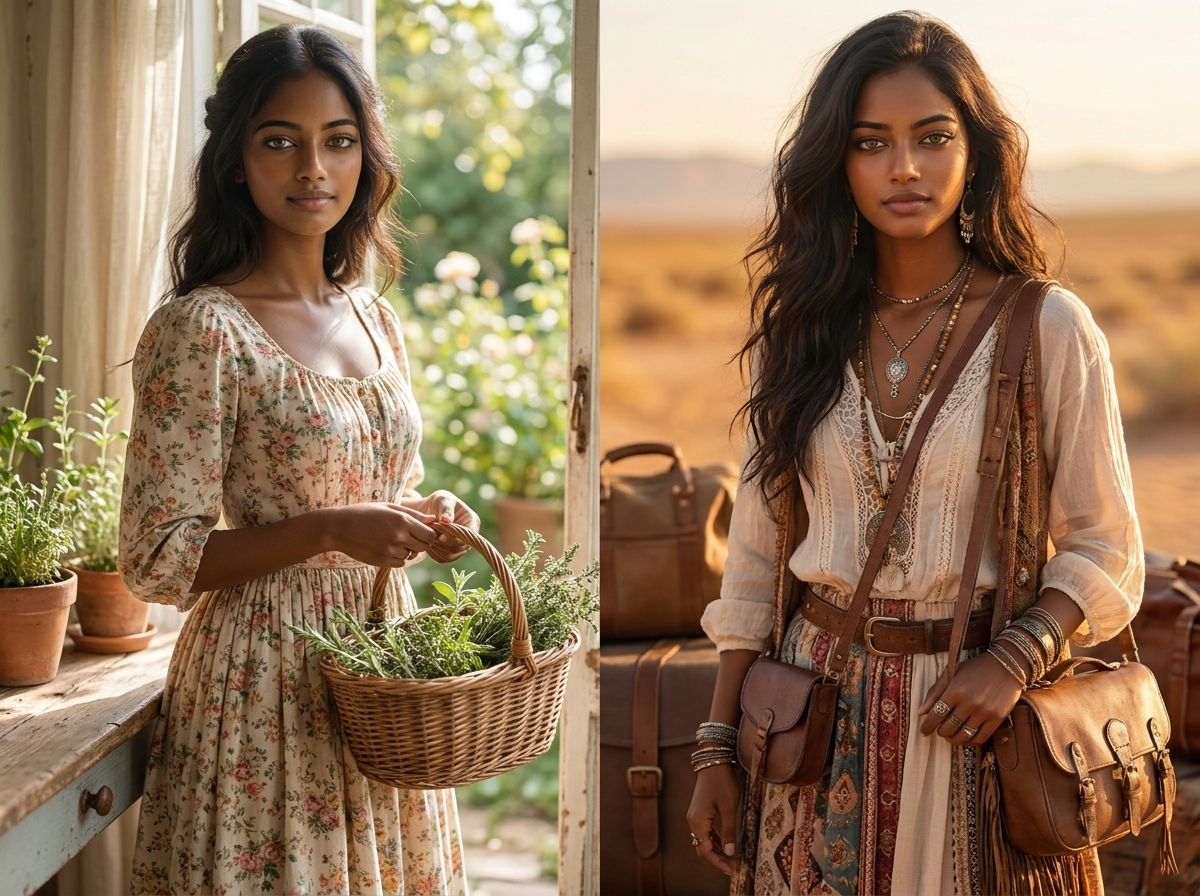
The surface similarity: Both aesthetics love flowing silhouettes, natural fibers, and romanticism about the non-contemporary world. Both have strong anti-establishment undertones. Both look very good at a farmers market.
The fundamental difference:
The boho aesthetic belongs to the nomad. It includes layers that work across climates, that pack well, and accessories that are acquired along the way.
Cottagecore is rooted, even if it's a fantasy location.
The wardrobe distinction: Both share flowing midi skirts, embroidered blouses, and natural fiber fabrics. Boho runs warmer and more saturated while cottagecore is cooler and more muted. Boho accessories travel: the layered necklaces, the stacked rings, the leather cuffs. Cottagecore accessories are domestic: the vintage brooch, the woven market basket, the hair ribbon.
The philosophy distinction: Boho rejects the fixed address and the settled life. Cottagecore rejects the commute and the open-plan office and the hustle, in favor of the home and the garden.
Who might be both: The person who summers in one beautiful rural place and spends the rest of the year moving.
Cottagecore vs. Light Academia
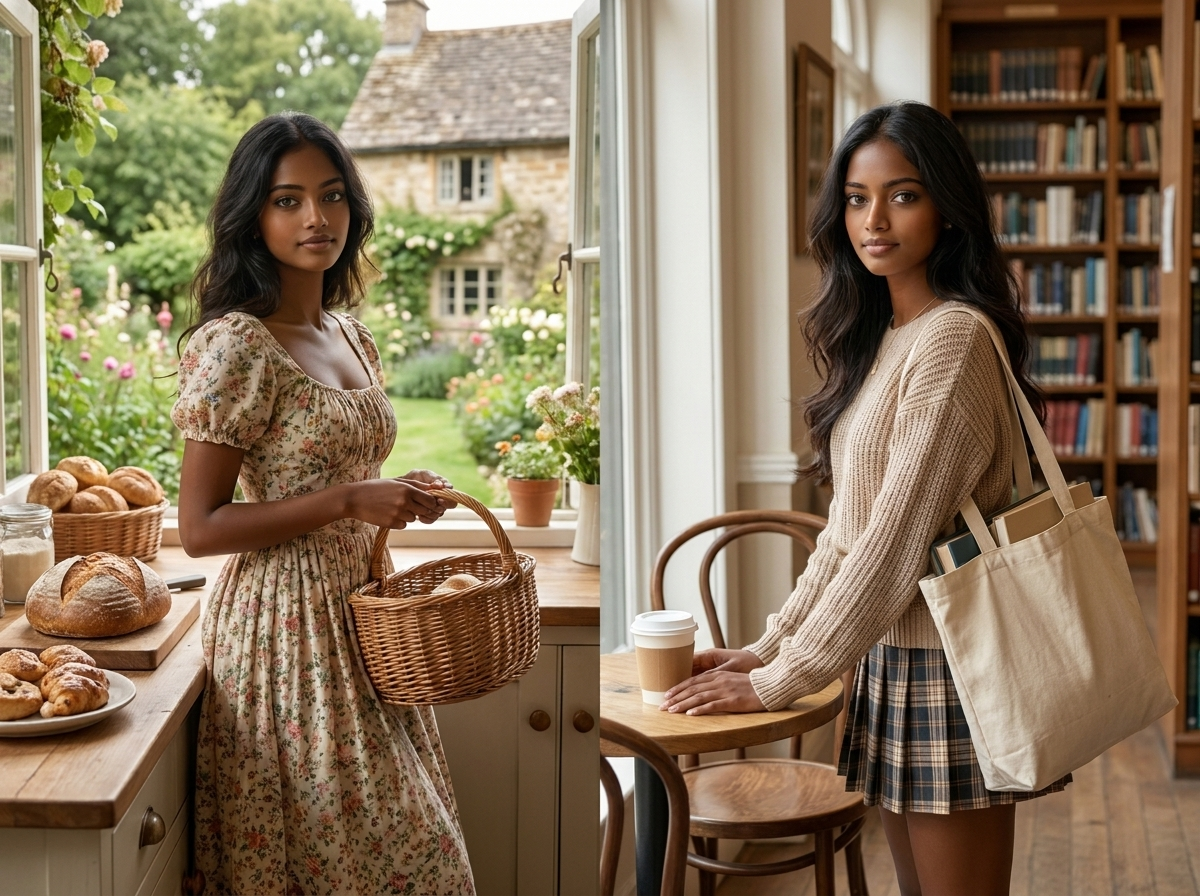
The surface similarity: Of all the aesthetics in cottagecore's neighborhood, Light Academia may be its closest visual cousin. Both favor cream and warm neutral palettes. Both love natural light, books, and journaling. Both dress in natural fibers and have strong literary associations and attract readers and writers.
The fundamental difference: Light Academia is the aesthetic of the student who loves being a student. Where Dark Academia is obsessed with the weight and danger of knowledge, Light Academia is happy to learn. It is the sunnier, more optimistic member of the academic aesthetic family.
Cottagecore's spiritual home is the garden and the kitchen. Cottagecore presses flowers to press flowers. The Light Academia might press flowers while learning about the history of botanical illustration.
The wardrobe distinction:
Both aesthetics share: cream and warm neutral palette, natural fiber fabrics, a slight vintage inflection, Oxford shoes, cardigans, midi skirts in muted tones.
The distinguishing question: what’s in the bag? The cottagecore bag carries produce, craft supplies, a journal, something from the garden. The Light Academia bag carries books, notebooks, a thermos of tea for the library.
The philosophy distinction: Light Academia believes that the examined life is the good life. It is Socratic in its underlying philosophy, even when it's just wearing a knit vest and drinking Earl Grey in a library.
Cottagecore believes that the handmade life is the good life. It is Morris-ite in its underlying philosophy — the Arts and Crafts conviction that beauty made by human hands is worth more than beauty produced by machine.
Who might be both: The person who spends the morning reading and the afternoon in the garden. The student of natural history or botany or environmental humanities. The person whose bookshelf holds both literature and seed catalogues.
Cottagecore vs. Romantic Feminine
The surface similarity: Both aesthetics favor soft, feminine-coded clothing in a muted, pretty palette, florals, and lace. Both have been accused of being regressive and both have been reclaimed as expressions of chosen femininity.
The fundamental difference: Romantic Feminine is beauty as performance. Cottagecore is beauty as environment.
The Romantic Feminine aesthetic dresses for being seen. It is not primarily connected to nature or the domestic life. It is the aesthetic of the drawing room, the promenade, the occasion.
Cottagecore dresses for itself. Cottagecore would wear the same dress alone in the garden on a with no one watching.
The wardrobe distinction: Romantic Feminine skews dressier: the corset detail, the structured bodice, the statement sleeve designed for rooms. Cottagecore skews more practical within its softness: the apron dress, the pinafore, the embroidered blouse under a plain linen skirt. Romantic Feminine accessories are for looking at, Cottagecore accessories are for using.
Who might be both: The person who dresses romantically for occasions and retreats to cottagecore for daily life.
Cottagecore vs. Coastal Grandmother
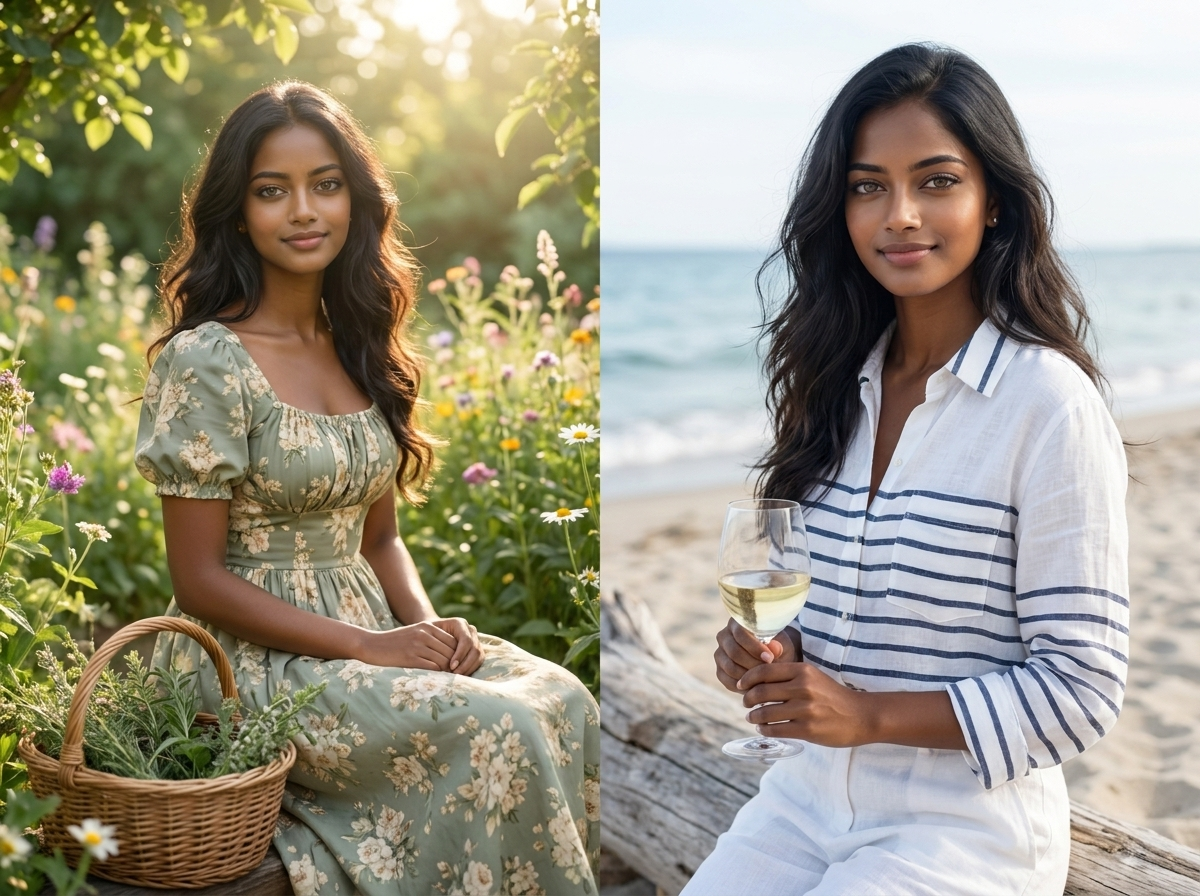
The surface similarity: Both are escape fantasies. Both favor natural fibers and muted palettes. Both are, at their core, about a quality of life rather than a look.
The fundamental difference: The Coastal Grandmother aesthetic imagines a destination: the house on the water, the linen wardrobe for a specific latitude, or the white wine on a specific porch at a specific hour.
Cottagecore imagines a return to a simpler time, a slower pace, or to a way of living that existed before. It is nostalgic where Coastal Grandmother is aspirational.
The class register: Coastal Grandmother is, frankly, an upper-middle-class fantasy — the linen wardrobe, the good white wine, or the beach house. Cottagecore is more democratically accessible and is more self-conscious about the access questions.
The palette: Both palettes are muted and natural, but they come from different natural worlds. Coastal Grandmother's palette is of the sea: bleached linen white, navy, warm sand, faded blue. Cottagecore's palette is of the garden and forest: cream, sage, dusty rose, mushroom, moss. The overlap is in the neutrals but the accent colors are entirely different.
Who might be both: The person who summers at the coast and retreats to the countryside for autumn.
Final Thoughts
Here is the number one rule of cottagecore:
Pay attention.
Not to your phone, not to your metrics. To the morning light. To the smell of something baking. To the way a plant on a windowsill looks different in October than it did in July.
In a culture obsessed with hustle, hustle, hustle, slow down on purpose. Take an afternoon to press a flower, bake a loaf, or sit with an embroidery hoop. It doesn’t require an audience. It doesn’t generate content unless you choose to. It’s worth doing in private, which is probably the most countercultural thing about it.
The real life cottagecore may not involve a literal cottage, but it’s something you can take with you. It’s you having tea in the morning or taking a walk to the farmers market on a Saturday morning. It’s the little choices you make daily to live at a natural pace and without fanfare.
Remember that this doesn’t require perfection. The sourdough will fail. The embroidery will have a section you'll always see and no one else will notice. The garden will have its difficult weeks. The goal isn’t perfection but the practice.
Go tend something. Make something with your hands. Sit with your tea before it goes cold for once.
The bread is already rising. 🌿
