
Nautical Aesthetic: When Your Wardrobe Dreams of the Sea
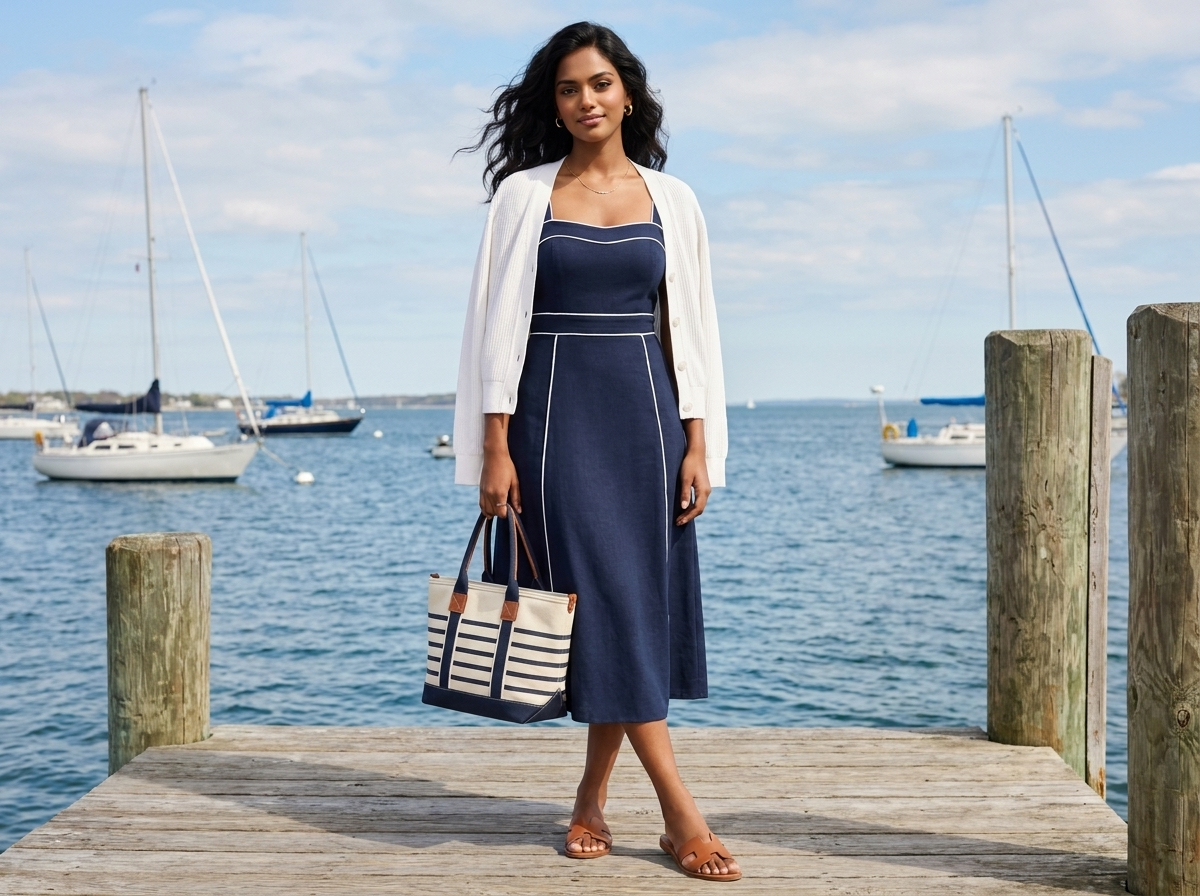
Picture five objects:
A Breton stripe top with a boat neckline.
A double-breasted navy blazer with gold buttons.
White wide-leg trousers.
Leather boat shoes.
A canvas tote with rope handles.
You’ve known this aesthetic your entire life.
Nautical is fashion's oldest fantasy. It’s the only aesthetic that began as a survival uniform and evolved over two centuries and two different coastlines.
The sailors who wore heavy canvas and horizontal stripes in the 1800s were dressing for North Atlantic winters and visibility in rough seas. The women photographed in Saint-Tropez in the 1960s wearing those same stripes were dressing for a life lived close enough to the water.
We'll cover where nautical came from, what it is, how the French and American traditions shaped two expressions of the same impulse, and how to wear it without looking like you're costuming.
What Is the Nautical Aesthetic?
-
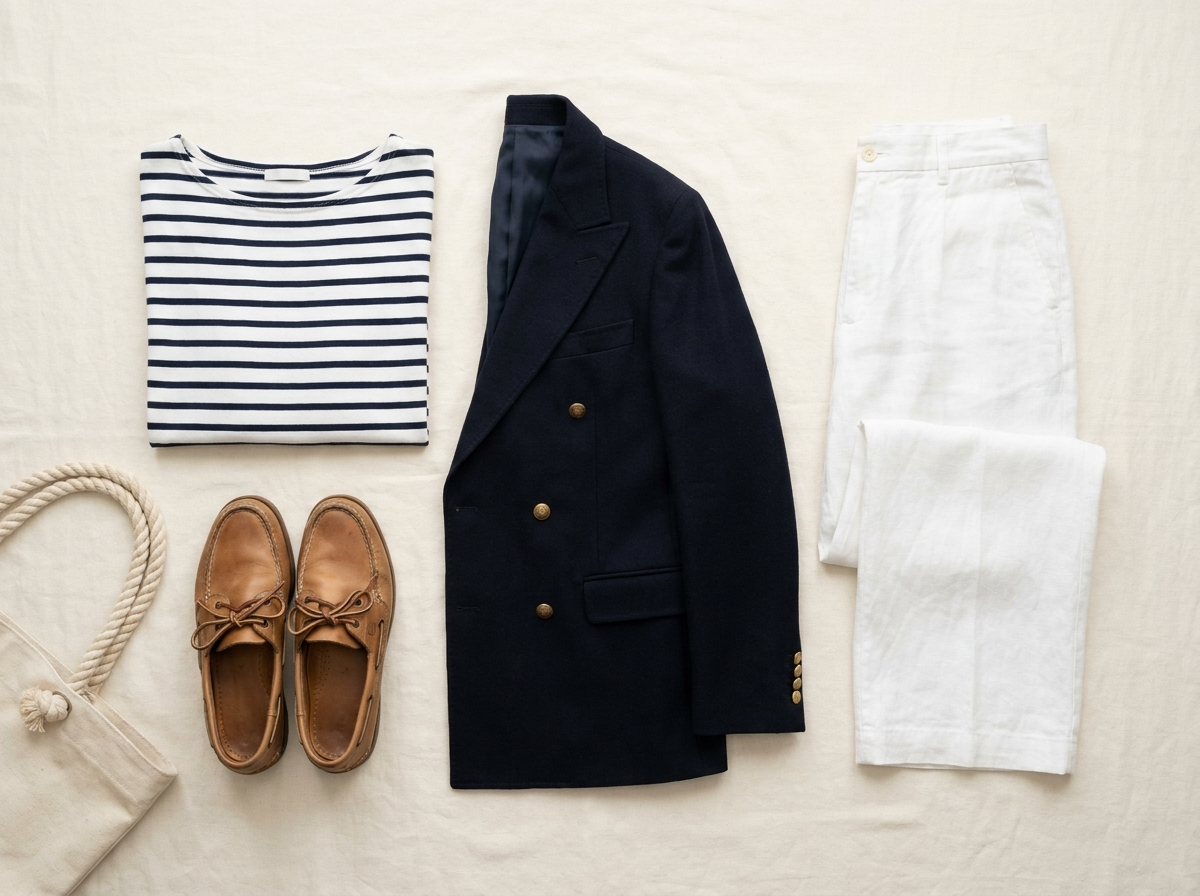
The nautical aesthetic is a fashion tradition rooted in maritime history that translates the functional clothing of sailors into a wardrobe built around the fantasy of coastal life.
It is defined by a color palette of navy, white, and red and a clean silhouettes and quality materials.
Nautical is a fashion tradition rooted in real maritime history, inspired by sailor attire. It consists of a color palette of navy, white, and red. It values clean silhouettes and quality materials over ornamentation. Where most aesthetics are built around a mood or a moment, nautical is built around a place.
Nautical dressing is about the suggestion of departure. Breton stripe says: I am not entirely landlocked. The navy blazer says: I could board something. The worn boat shoes say: I already have.
What It Is — and What It Isn't
| Nautical | Coastal Grandmother | Preppy | French Girl | |
|---|---|---|---|---|
| Energy | Ready to depart | Already arrived | Institutionally at home | Effortlessly indifferent |
| Relationship to the sea | Active — adjacent to water | Passive — gazing at water | Inherited — owns property near water | Incidental — happens to summer there |
| Color palette | Navy, white, red | Cream, white, linen neutrals | Navy, pastels, neon accents | Navy, white, Breton stripe — but looser |
| Silhouette | Clean, structured | Relaxed, flowing | Fitted, collegiate | Undone, unstudied |
| The tell | Gold buttons, rope details, horizontal stripe | Linen, straw, reading glasses on a chain | Embroidered motifs, Nantucket Reds, needlepoint | Silk scarf, basket bag, red lip |
| Danger zone | Looking like a costume | Looking like a catalog | Looking like a caricature | Looking like you tried |
| Cultural touchstone | Chanel on the Riviera, Kennedy compound | Nancy Meyers film set | Brooks Brothers, Martha's Vineyard | Brigitte Bardot, Saint-Tropez |
The most important different is between nautical and coastal grandmother, because they share so much vocabulary.
The History: From Survival Uniform to Style Statement
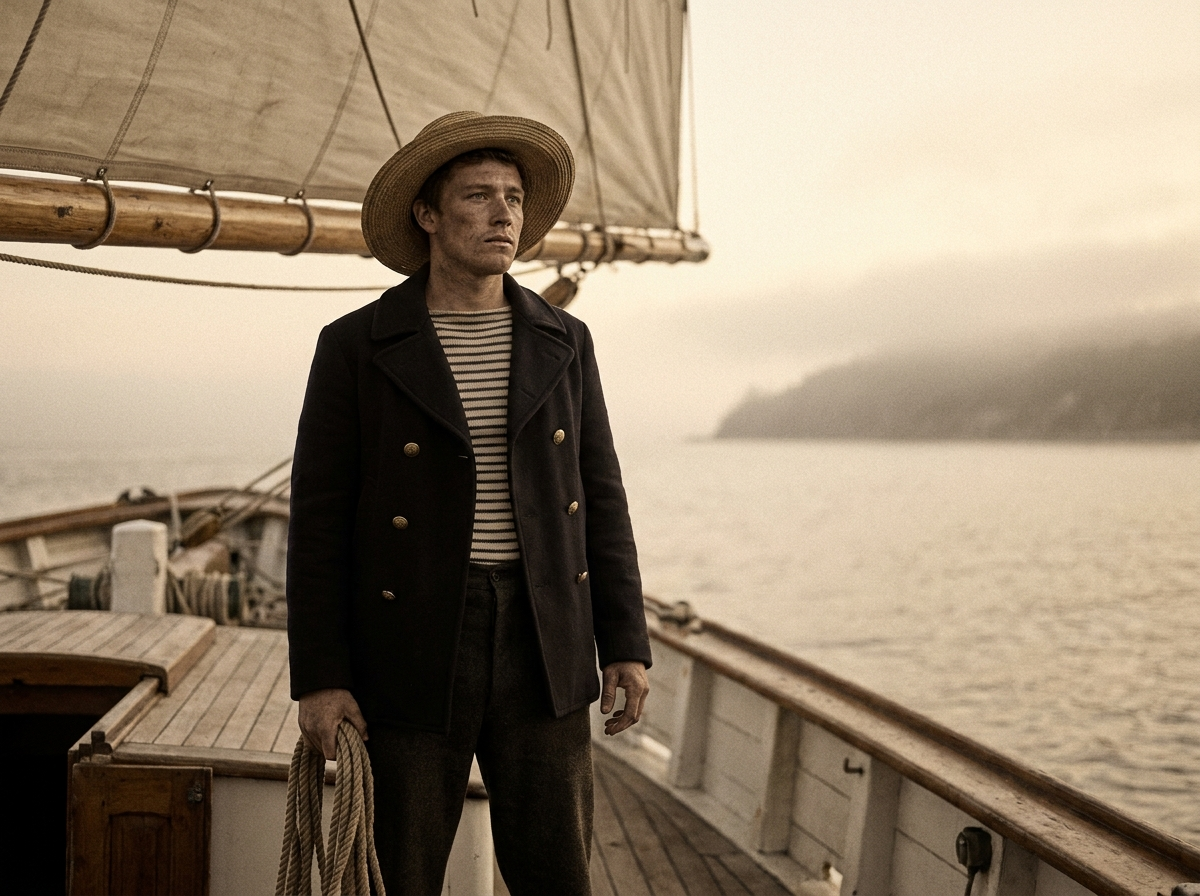
Before the mid-1800s, the sea was a workplace, not a vacation. When railways made seaside tourism accessible, the sailor's wardrobe became the costume of those who came to watch the sea rather than work it. That's where nautical fashion really began.
The foundational garments of the nautical wardrobe, heavy wool peacoats, horizontal-striped shirts, canvas trousers, were designed for survival in hostile sea conditions. Nautical uniforms consisted of navy wool, double-breasted construction, gold buttons, peaked caps, and a white shirt beneath. A captain’s uniform is the navy blazer’s ancestor.
The specific details worth noting for the nautical aesthetic's lineage:
The peacoat with the double-breasted closure — four or six buttons across, lapels wide enough to button against wind from either direction. This is the peacoat's formal cousin, and it's where the navy blazer's double-breasted preference comes from. The construction wasn't decorative; it was engineered for weather.
The gold buttons — on nautical line uniforms, these bore the company's house flag or an anchor. They distinguished rank and affiliation among officers and boatsmen. Fashion kept the buttons and dropped the rank system.
The peaked cap — the officer's cap is the direct ancestor of the nautical cap that sits at the edge of wearable-versus-costume. On an actual ship's officer it’s authoritative. On a civilian it’s fancy dress. The line between them is thinner than most people realize.
The white beneath navy — officer's dress shirts, white against the dark wool of the jacket, established the navy-and-white contrast that is now the non-negotiable color foundation. It was a uniform specification before it was a palette.
Movement One: The Victorians Invent the Coast

When railways made seaside travel accessible to the British middle classes in the mid-1800s, the ocean transformed overnight from a workplace into a leisure destination. Suddenly the coast was somewhere people chose to go. The sailor's wardrobe became the natural reference point for what coastal dressing should look like.
Striped bathing costumes, sailor-collar dresses for children, navy and white for the promenade. The working uniform of the sea became the costume of those who had come to watch it. The class inversion had begun.
Movement Two: Chanel and the Kennedys — Two Coastlines, One Idea
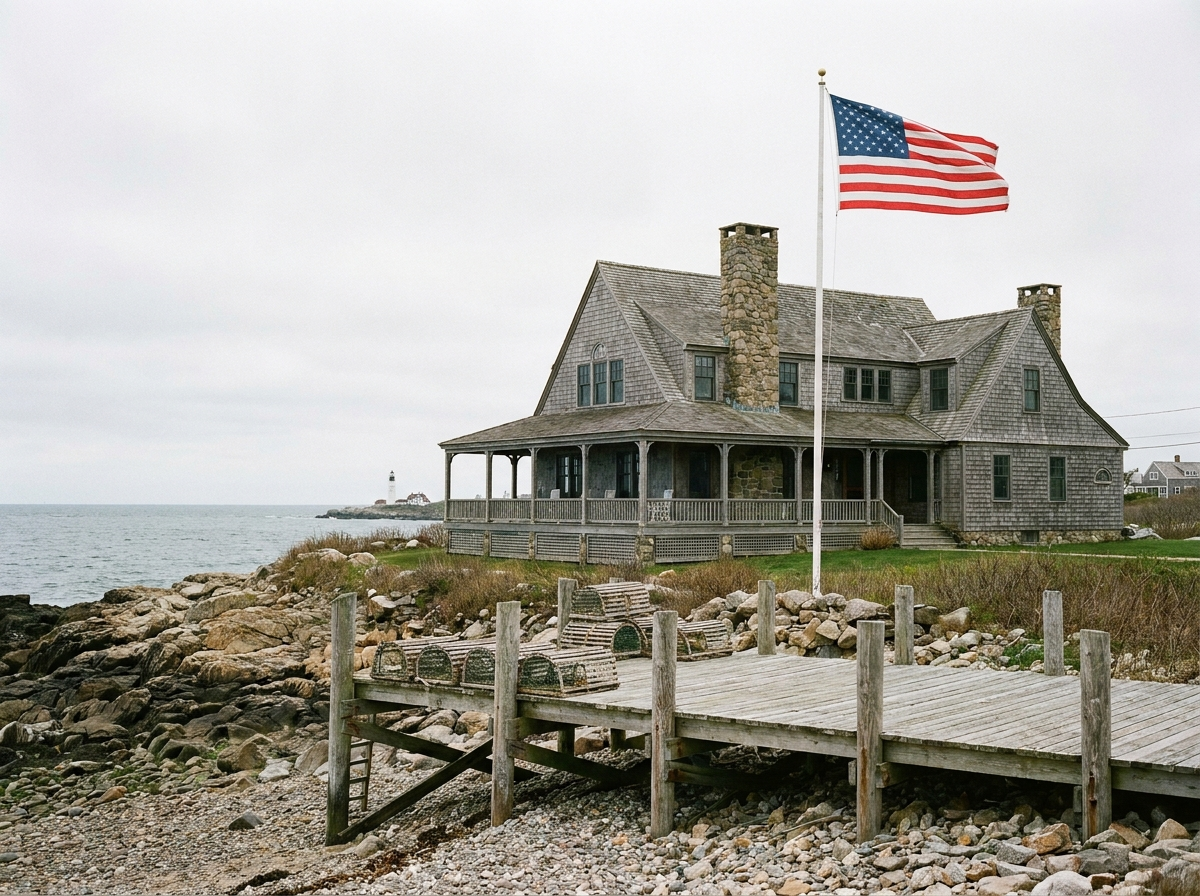
The transformation finished in the twentieth century, on two different shores.
In France, it was Coco Chanel.
In the 1920s, she borrowed the Breton stripe directly from the working sailors of Normandy and made it luxury, worn by women on the French Riviera. Chanel understood that the stripe's power came from its utilitarian origins.
Across the Atlantic, the same transformation happened through social architecture.
When the Kennedys brought that world to the mainstream in the early 1960s, Nantucket and the compound and the navy blazer with gold buttons became shorthand for old money coastal.
Two branches of the same tree.
The French tradition said: the working uniform, elevated through elegance.
The American tradition said: the maritime life, elevated through access.
Both fantasies built on the same foundation.
Nautical Aesthetic: The Cultural Reference Library
Film
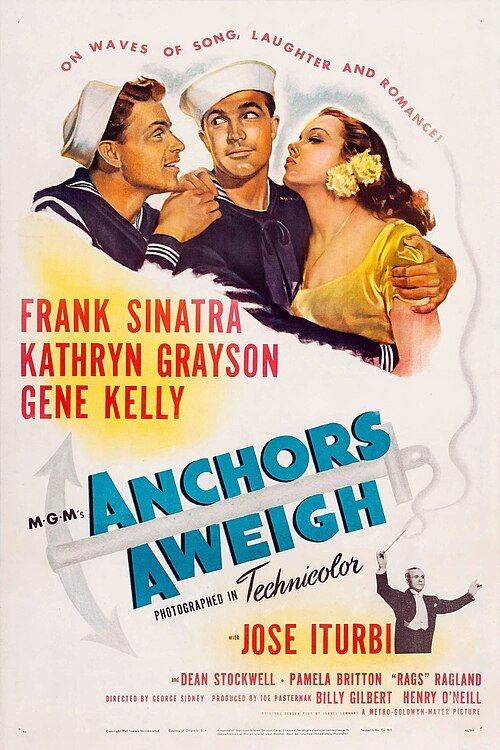
Movie poster for Anchors Aweigh starring Frank Sinatra and Gene Kelly. (Wikipedia)
French Riviera Tradition
And God Created Woman (1956) — Bardot in Saint-Tropez; the definitive French nautical mood board
To Catch a Thief (1955) — Grace Kelly on the Côte d'Azur; the American woman who out-Frenched the French
Stealing Beauty (1996) — Liv Tyler in Tuscany, but the coastal ease is pure Riviera nautical
American Prep Tradition
The Thomas Crown Affair (1968) — Steve McQueen sailing; possibly the best-dressed man ever on a boat
Summer Catch (2001) — Cape Cod, Nantucket energy, the aspirational American summer
Overboard (1987) — Goldie Hawn on a yacht; the comedy of class and the nautical wardrobe as shorthand for both
The Musical Tradition
Anchors Aweigh (1945) — Gene Kelly and Frank Sinatra in Navy whites; the aesthetic as pure Americana
On the Town (1949) — same energy, New York as the port; three sailors, one perfect day
South Pacific (1958) — the tropical extension of the nautical aesthetic; naval uniform meets island ease
The Titanic Question
Titanic (1997) — Look closely at the crew. You’ll see the peacoats, . Worth noting that nautical fashion and nautical setting are not always the same thing.
Television
Direct Nautical

Season 1 Cast Photo of The OC (Wikipedia)
The Affair (Showtime, 2014–2019) — Montauk setting; the wardrobe does quiet American prep nautical throughout
Below Deck (Bravo, 2013– ) — the reality television of actual yachts; literal nautical
Murder She Wrote (CBS, 1984–1996) — Jessica Fletcher in Cabot Cove; coastal grandmother before the term existed
Preppy-Nautical Crossover
Dawson's Creek (WB, 1998–2003) — Cape Cod setting; the early seasons are a nautical-prep wardrobe document
The OC (Fox, 2003–2007) — Newport Beach; the American prep-nautical aesthetic filtered through California
The Marvelous Mrs. Maisel (Amazon, 2017–2023) — the Catskills scenes, but also the overall palette; 1950s coastal Americana
French Tradition on Screen
Emily in Paris (Netflix, 2020– ) — contested on quality, unimpeachable on Breton stripe frequency
Call My Agent (Netflix, 2015–2020) — the real French wardrobe; understated, coastal, correct
Lupin (Netflix, 2021– ) — Paris, not coastal, but the French elegance that feeds into the Riviera tradition

Cover of Jaws by Peter Benchley (Wikipedia)
Music
The Literal Nautical Canon
Beyond the Sea — Bobby Darin (1959); the platonic ideal of nautical optimism
Sailing — Christopher Cross (1980); the yacht rock anthem, unironically perfect
Kokomo — The Beach Boys (1988); tropical nautical, the Florida extension
Rock the Boat — Hues Corporation (1974); disco nautical, genuinely excellent
Sitting on the Dock of the Bay — Otis Redding (1967); a classic about aimlessness near the water
Yacht Rock Proper (The Genre)
What a Fool Believes — The Doobie Brothers (1979)
Ride Like the Wind — Christopher Cross (1980)
Escape (The Piña Colada Song) — Rupert Holmes (1979); peak yacht rock absurdity
French Chanson / Riviera Tradition
La Mer — Charles Trenet (1946); the original French sea fantasy
Tous les garçons et les filles — Françoise Hardy (1962); the French girl who happens to be near the water
Moi je joue — Brigitte Bardot (1959); the actual soundtrack of the French Riviera moment
Books and Literature
The Great Gatsby — Fitzgerald; East Egg and West Egg as the original American coastal aspiration text
Brideshead Revisited — Waugh; the British aristocracy that feeds into the European tradition
Jaws — Benchley; Amity Island as the dark side of the American coastal aspiration
The Nautical Wardrobe
The nautical wardrobe has a clear hierarchy and understanding that hierarchy is what separates a coherent nautical wardrobe from a collection of maritime-adjacent purchases.
The Load-Bearing Walls: Breton Stripe and Navy Blazer
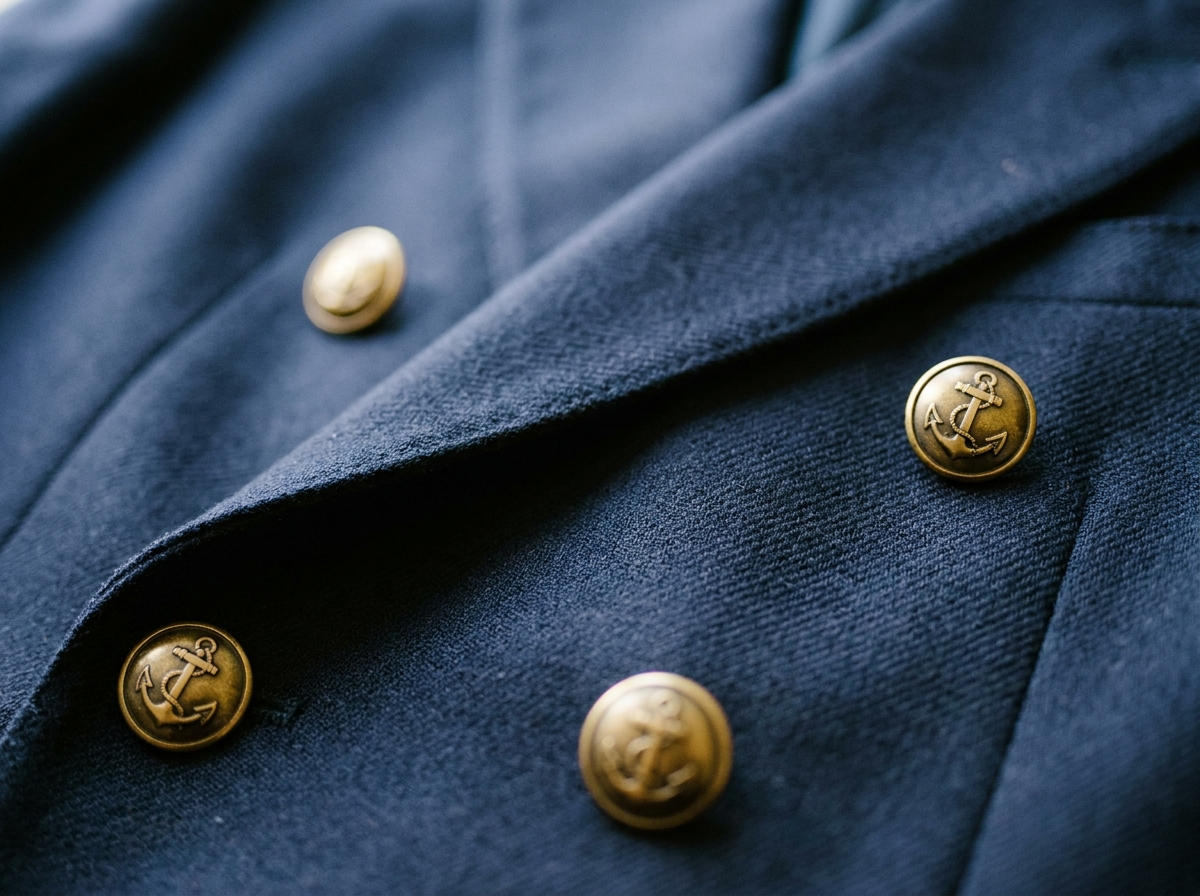
The Breton stripe top and the navy blazer with gold buttons are the two pieces on which the entire aesthetic rests.
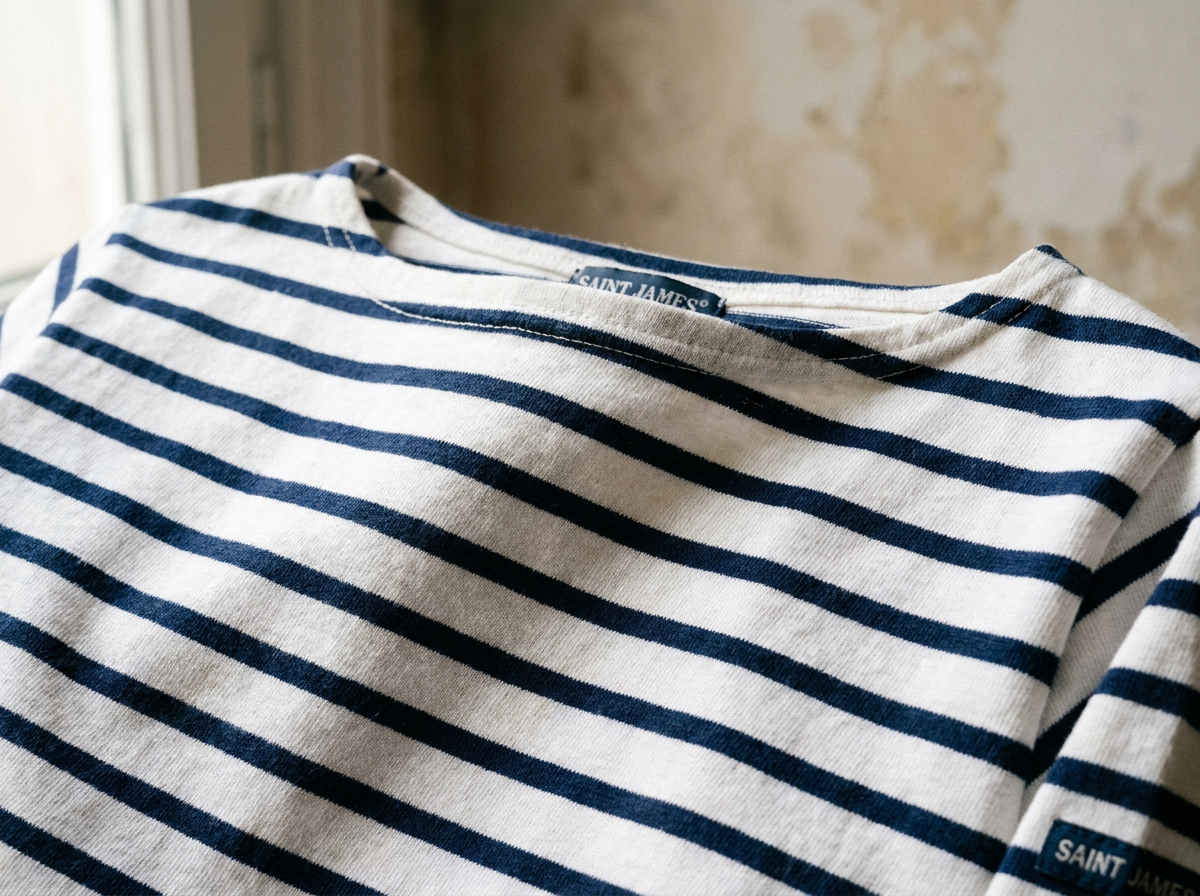
The Breton stripe connects Normandy fishing villages to Coco Chanel's atelier to your current wardrobe. The specifications matter more here than anywhere else in the wardrobe: boat neckline, navy stripe on white cotton, fabric substantial enough to hold its shape after washing. Avoid thin jersey Bretons.
Investment: Saint James, Armor Lux | Mid-Range: J.Crew, Petit Bateau | Accessible: Uniqlo, Gap
Where the Breton stripe is the aesthetic's soul, the blazer is its engine.
It is the single piece capable of elevating a striped tee into dinner and a swimsuit into a yacht club lunch. Gold buttons are a must. They make a navy blazer a nautical navy blazer; remove them and you have workwear.
Double-breasted is traditional; single-breasted is more practical.
Investment: Ralph Lauren, J.Press | Mid-Range: J.Crew, Banana Republic | Accessible: Zara, H&M
The Aspirational Tier: White Bottoms
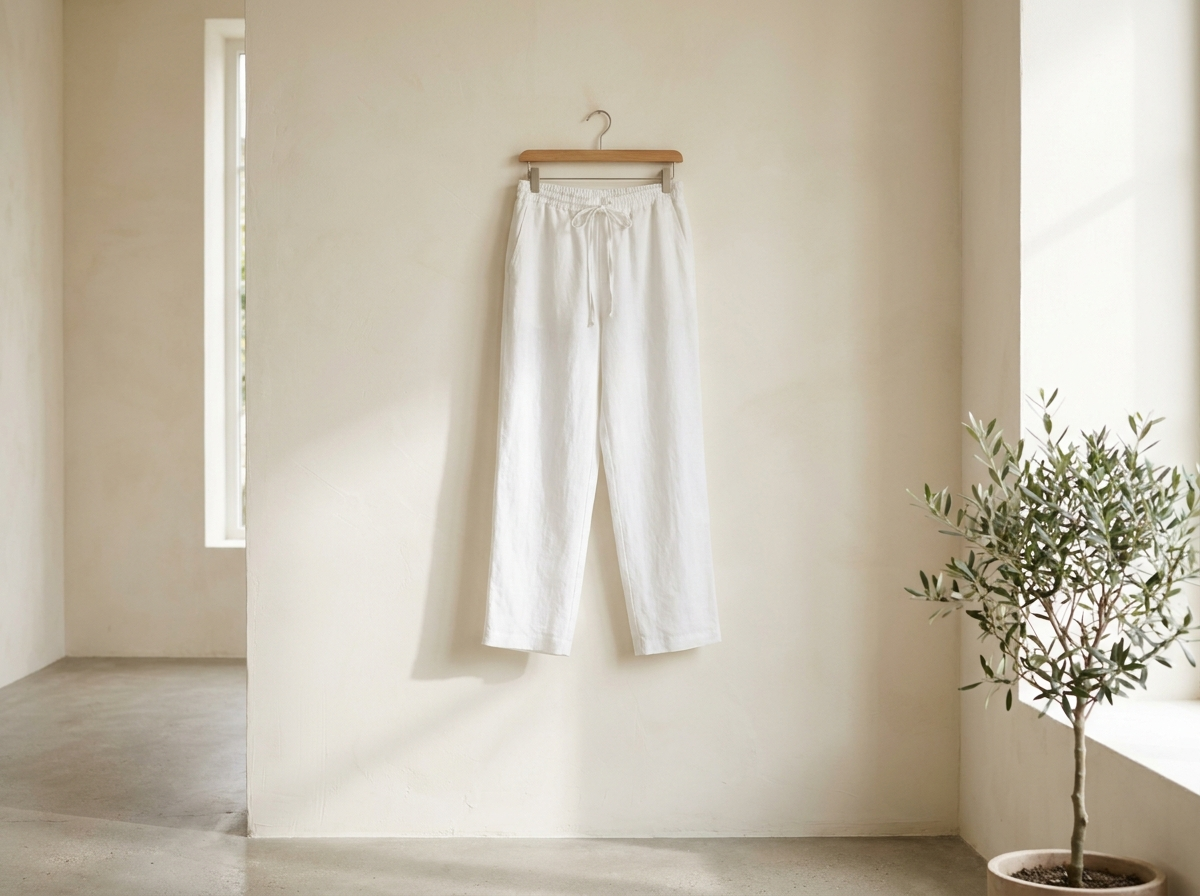
Navy and stripes are easy; white trousers require an acceptance that certain things will require dry cleaning, Wide-leg linen trousers are the most elegant expression. White jeans are the more practical entry point. White shorts for those warm summers.
These aren’t mandatory, but they’re worth it.
Investment: Vince, Eileen Fisher | Mid-Range: Mango, & Other Stories | Accessible: Target, H&M
-
An authentic Breton stripe top has a boat neckline, navy stripe on white cotton, and fabric that holds its shape after washing.
The stripe connects Normandy fishing villages to Coco Chanel's atelier.
The Supporting Cast: Footwear and Accessories
Footwear in the nautical wardrobe operates on the same French-American axis as everything else.
Leather boat shoes belong to the American tradition. White canvas sneakers belong to the French tradition.
Boat shoes — Investment: Quoddy | Mid-Range: Sperry | Accessible: Target
Canvas sneakers — Investment: Veja | Mid-Range: Superga | Accessible: Converse
Accessories in the nautical wardrobe follow a single governing principle: one literal maritime reference, everything else quietly coastal. The silk or cotton scarf in a nautical print — rope motifs, anchors, geometric navy — is the piece where that single reference lives most elegantly. Tied at the neck in the French manner, threaded through a ponytail, knotted on a bag handle: it does the thematic work so that nothing else has to. The canvas tote with rope handles rounds out the category — practical, historically grounded, and the rare accessory that both traditions claim with equal conviction.
Scarves — Investment: Hermès, Épice | Mid-Range: Madewell, J.Crew | Accessible: Zara, ASOS
Totes — Investment: Bembien | Mid-Range: L.L.Bean, Madewell | Accessible: Target
Add white when you're ready for the commitment. Let the footwear declare your tradition. Give the scarf the one literal reference. In that order, the wardrobe builds itself.
The Nautical Starter Capsule: 10 Pieces, Endless Miles of Open Water
The genius of nautical as a wardrobe system is its internal logic. Every piece works with every other piece. Ten pieces is enough to build a complete nautical wardrobe.
1. The Breton Stripe Top The authentic Breton with the navy stripe on white, boat neckline, and cotton substantial enough to hold its shape, is the single piece that has traveled from Napoleon's navy to Chanel's atelier to your local J.Crew. Get it right once and you'll wear it for a decade.
Investment: Saint James Ouessant | Mid-Range: Armor Lux, J.Crew | Accessible: Uniqlo, Old Navy
2. The Navy Blazer with Gold Buttons The load-bearing wall of the entire aesthetic. Double-breasted is traditional; single-breasted is more versatile. Either way, the gold buttons are non-negotiable — they're what separates a navy blazer from a nautical navy blazer. Wear it over a swimsuit at a beach club, over the Breton for dinner, over white linen trousers for an event. It does everything.
Investment: Ralph Lauren, J.Press | Mid-Range: J.Crew, Banana Republic | Accessible: H&M, Zara
3. White Wide-Leg Trousers White bottoms are the aspirational tier of nautical dressing. Wide-leg is the current silhouette, but the real specification is fabric: linen for actual coastal wear, cotton poplin for everyday. Pressed center crease optional but encouraged.
Investment: Vince, Eileen Fisher | Mid-Range: Mango, & Other Stories | Accessible: Target, H&M
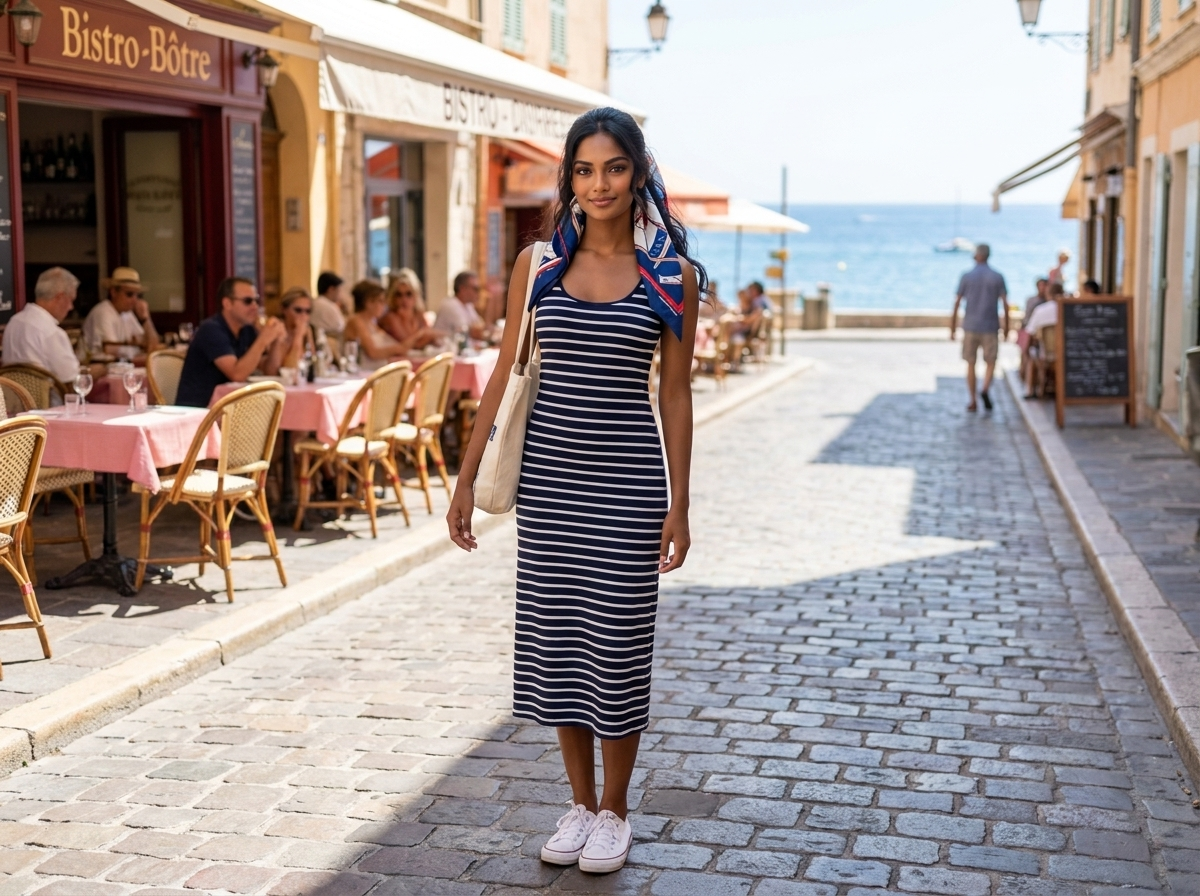
4. The Navy-and-White Striped Midi Dress The French tradition's answer to the blazer. Striped cotton, midi length, relaxed fit. This is the Saint-Tropez silhouette: Bardot energy without requiring Bardot confidence.
Investment: Sézane, Rouje | Mid-Range: & Other Stories, Reformation | Accessible: ASOS, Target
5. Well-Worn Leather Boat Shoes The footwear of the American tradition…specifically, Sperrys worn to the point of character. The key word is worn. Brand-new boat shoes are costume; boat shoes with salt stains and softened leather are authentic. Buy them early in the season and wear them constantly.
Investment: Quoddy | Mid-Range: Sperry | Accessible: Target, vintage/thrift
6. White Linen Shirt Tucked into navy trousers, it's French Riviera. Knotted at the waist over a swimsuit, it's Saint-Tropez. Worn open over the Breton stripe, it's a layering piece. Linen is mandatory. Cotton works, but linen breathes and wrinkles beautifully.
Investment: Vince, Equipment | Mid-Range: Mango, Everlane | Accessible: Uniqlo, Old Navy
7. The Canvas Tote with Rope Handles The French market bag and the American L.L.Bean tote are cousins and here they meet. Rope handles are nautical. A monogram is beloved by the prep tradition; but the French version prefers its canvas unmarked.
Investment: Bembien, Kayu | Mid-Range: L.L.Bean, Madewell | Accessible: Target, Trader Joe's
8. Navy Straight-Leg Jeans or Chinos The dark anchor. Navy jeans pull slightly more American prep; navy chinos pull slightly more French. Either works. Avoid distressing. These should look like they've been to a yacht club, not a music festival.
Investment: Frame, AG | Mid-Range: Madewell, Everlane | Accessible: Gap, Uniqlo
9. White Canvas Sneakers Where boat shoes carry American prep associations, white canvas sneakers carry no allegiance. They're equally French (every woman on the Île de Ré owns a pair of Veja) and American (the Keds tennis shoe predates the aesthetic entirely).
Investment: Veja | Mid-Range: Superga, Keds | Accessible: Converse, Uniqlo
10. The Silk or Cotton Scarf in Nautical Print The finishing piece tied at the neck in the French manner, threaded through a ponytail, knotted around a bag handle. Navy, white, red, with some combination of anchors, ropes, or geometric print. This is where you're allowed one literal nautical reference without tipping into costume territory. Use it wisely.
Investment: Hermès (if dreaming), Épice | Mid-Range: Madewell, J.Crew | Accessible: Zara, ASOS
Five Outfits From These 10 Pieces
Outfit 1: The Riviera Off-Duty Striped midi dress + white canvas sneakers + canvas tote + silk scarf tied in hair. This is the French tradition in full: one statement piece does all the work, everything else steps back. The scarf moves it from beach to bistro without changing a thing.
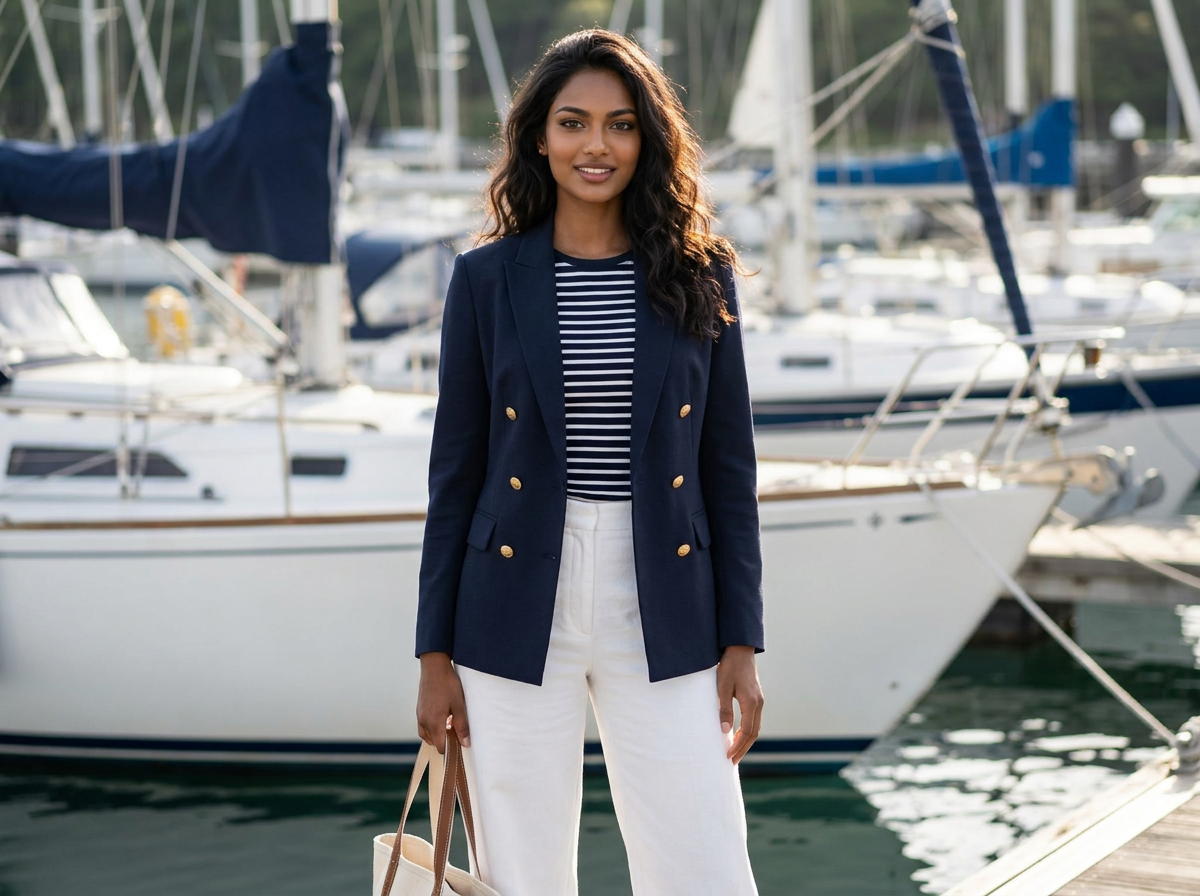
Outfit 2: The Yacht Club Classic Breton stripe top + white wide-leg trousers + navy blazer + leather boat shoes + canvas tote. The American tradition's formal mode — the outfit that actually earns the blazer's gold buttons. Pressed, intentional, and quietly expensive-looking regardless of what you spent.
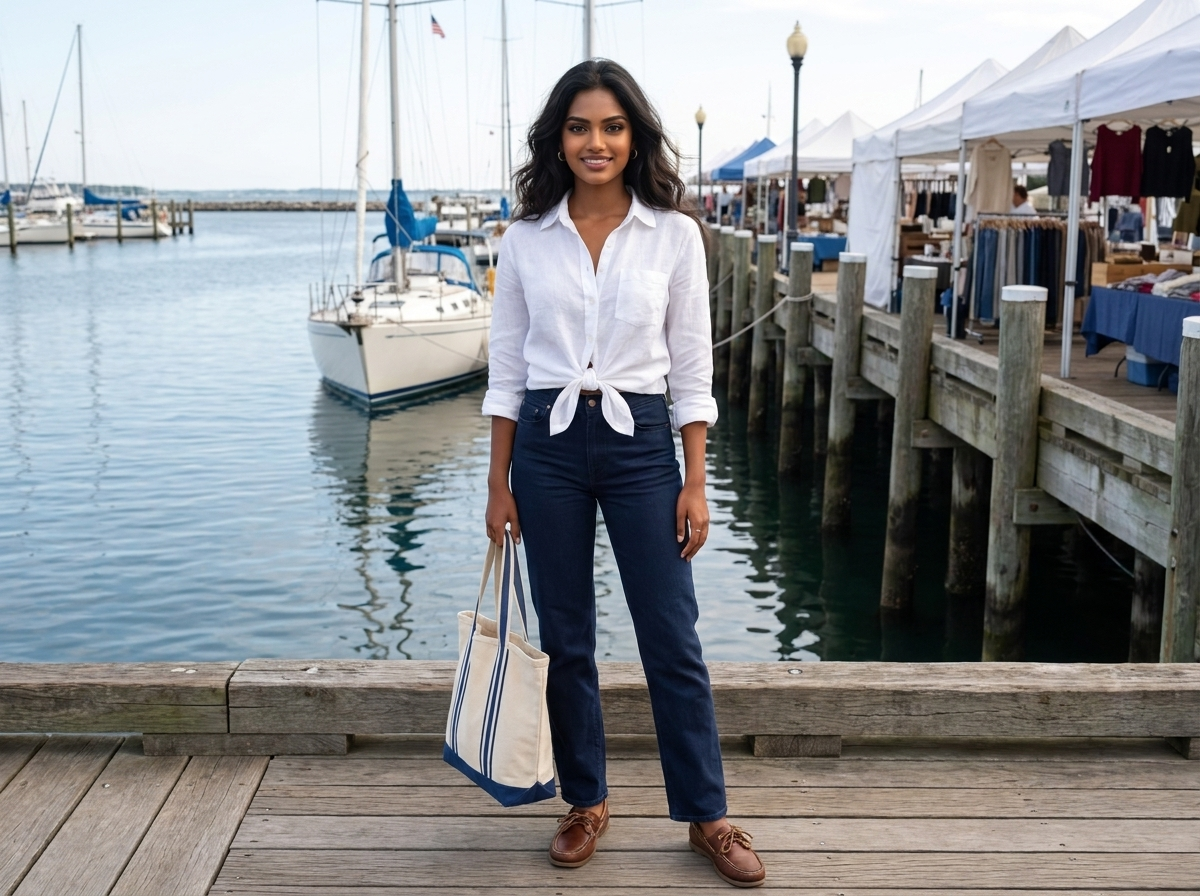
Outfit 3: The Saturday in Port White linen shirt (knotted at waist) + navy straight-leg jeans + leather boat shoes + canvas tote. Relaxed enough for a farmers' market, pulled-together enough for lunch on a terrace. Both traditions would claim this one.
Outfit 4: The French Weekend Breton stripe top + navy chinos + white canvas sneakers + silk scarf at neck. The Parisian version of casual — nothing technically interesting is happening, and yet the whole thing is completely correct. The scarf at the neck is the move that makes this French rather than simply dressed.

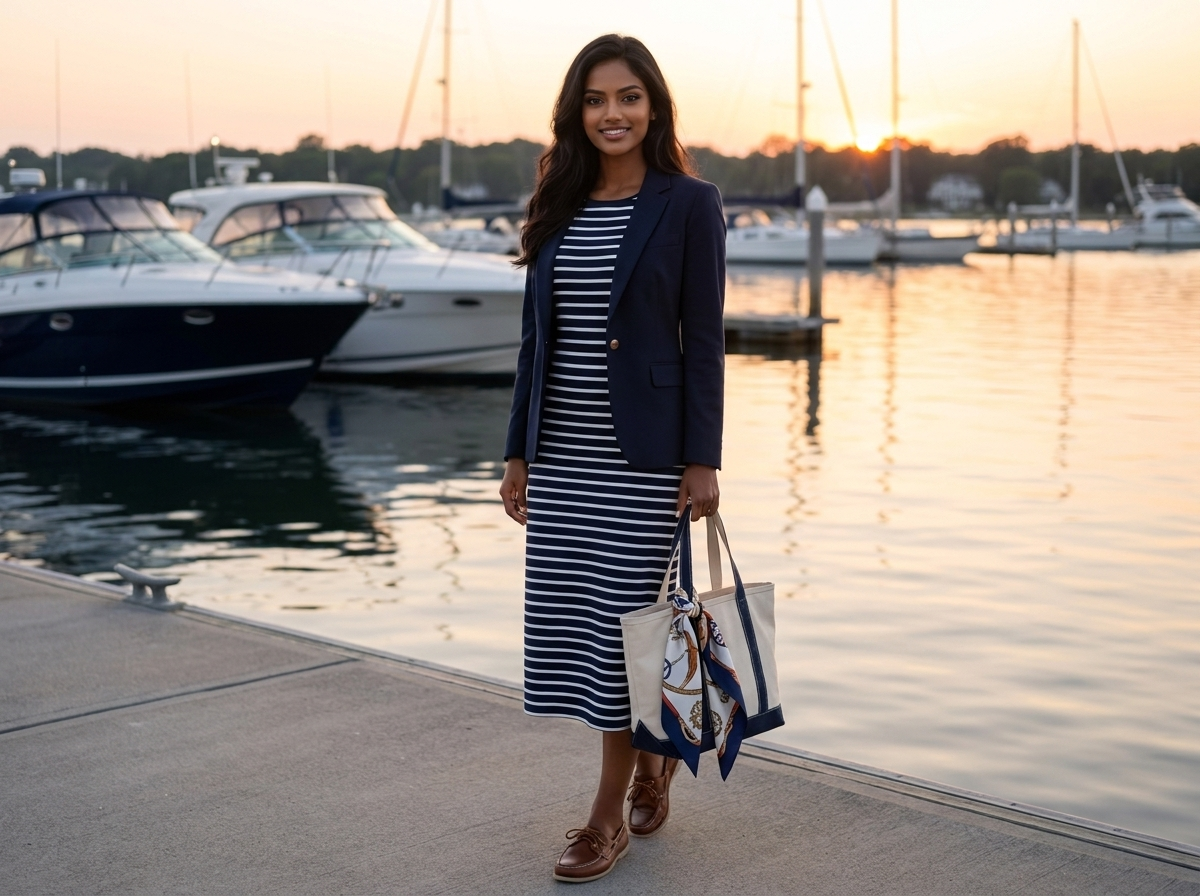
Outfit 5: The Effortless Evening Striped midi dress + navy blazer + leather boat shoes + silk scarf on bag handle. The blazer elevates the dress from daytime to evening without requiring a change of shoes or an entirely new outfit. This is why the blazer earns its spot as the load-bearing wall: it does the transitional work so you don't have to.
The Nautical Sub-Aesthetics
The nautical aesthetic has several faces. Knowing which one best suits you is more valuable than knowing the rules of nautical dressing in general.
French Riviera Nautical

The reference point: Brigitte Bardot in Saint-Tropez, sometime in the early 1960s, looking like she'd rolled out of bed and onto a yacht.
This is the original Chanel pivot with its the Breton stripes, high-waisted everything, and basket bags. The silk scarf does more work here than anywhere else, tied at the neck or in the hair, signaling "I am French and on vacation." Add espadrilles and red lipstick. Now you’re good to go.
(See how French Riviera Nautical relates to the French Girl aesthetic)
American Prep Nautical

The reference point: the Kennedy compound, Nantucket in August, a needlepoint belt that took someone's grandmother three winters to finish.
Where French Riviera nautical is about effortlessness, American prep nautical is openly about institutions — yacht clubs, prep schools, family houses that have names. Nantucket Reds. Embroidered whales. Pearl necklaces with the Breton stripe rather than instead of it. This is nautical as inheritance, and it wants you to know that.
(See how American Prep Nautical overlaps with Old Money and Preppy.)
-
The nautical aesthetic has four main expressions.
French Riviera Nautical draws on Bardot-era Saint-Tropez — Breton stripes and basket bags.
American Prep Nautical reflects yacht club and Nantucket culture.
Modern Nautical loosens the rules with oversized silhouettes, gender-neutral tailoring, and sustainable sourcing.
Yacht Rock Nautical plays the aesthetic for irony, channeling 1970s soft-rock album covers with terry cloth and popped collars.
Modern Nautical
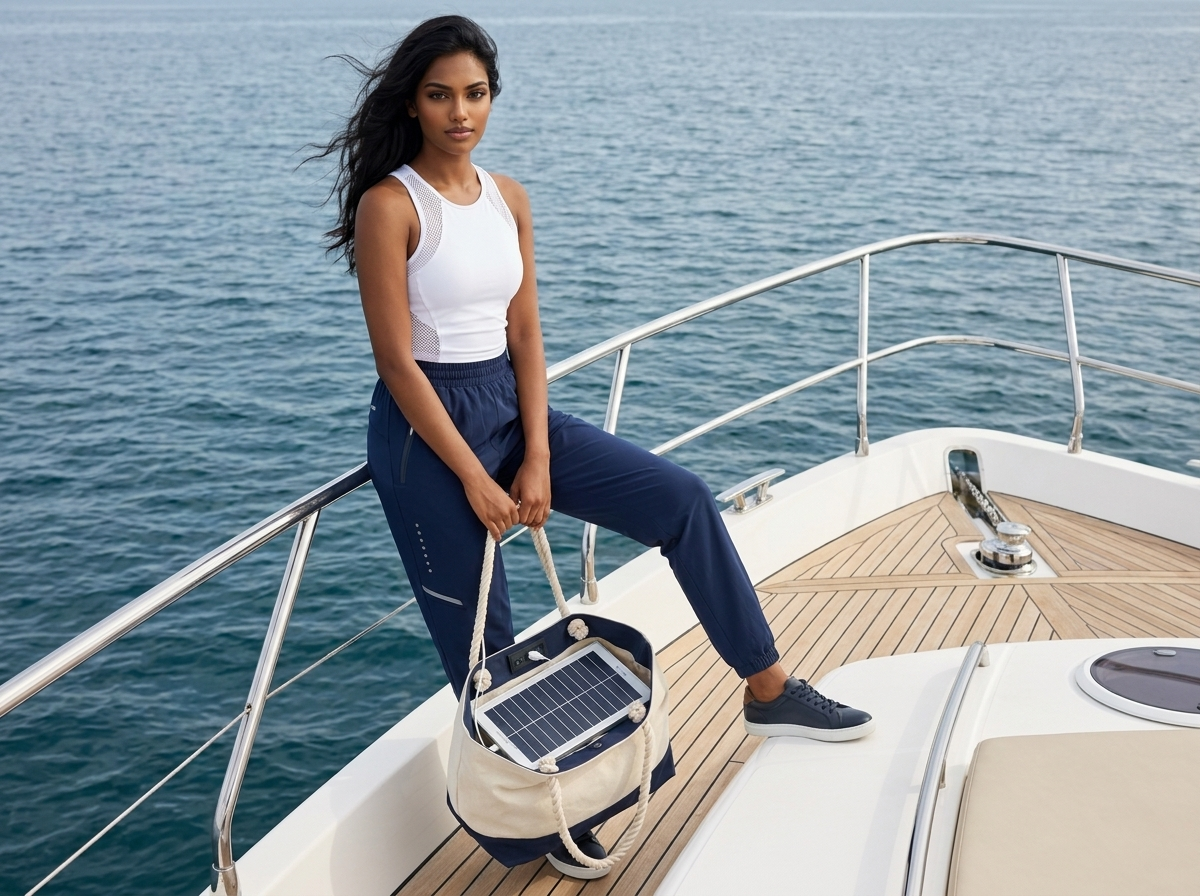
The reference point: an Instagram grid in 2024 — oversized blazers, wide-leg everything, a deliberate loosening of every rule above.
This is the contemporary recalibration: gender-neutral tailoring, sustainability-conscious sourcing, vintage pieces mixed with new. The stripes are still there, but the proportions have changed — looser, larger, more comfortable. Modern nautical takes the visual vocabulary and strips out the class anxiety, treating the aesthetic as design language rather than social code.
Yacht Rock Nautical
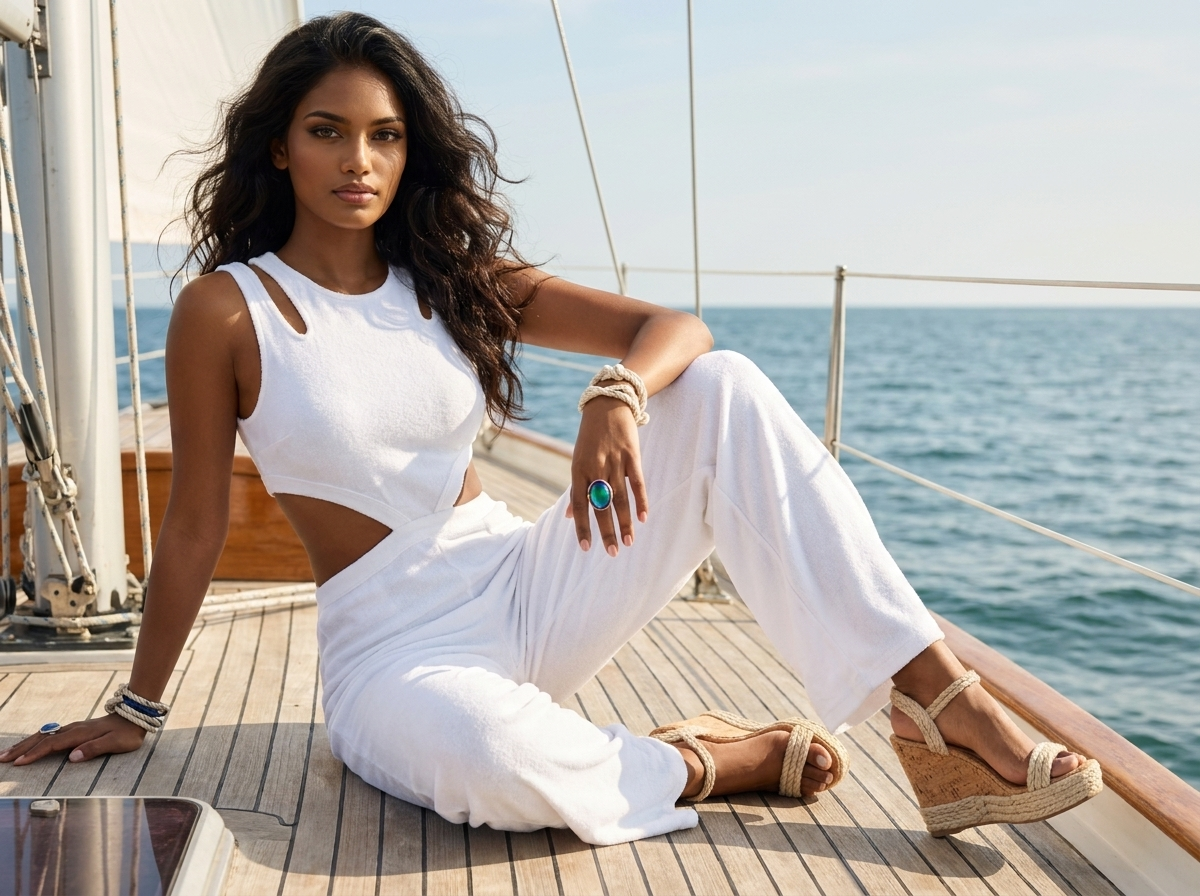
The reference point: a 1970s soft-rock album cover — terry cloth, short shorts, a popped collar, and a visor that nobody asked for.
This is the aesthetic's self-aware edge: nautical dressing played for irony rather than elegance. Tube socks with deck shoes. Polo shirts in colors no yacht club would actually permit. It's affectionate rather than mocking — a wink at how absurd the whole fantasy can get when pushed one notch too far.
How to Wear It Without Wearing a Costume
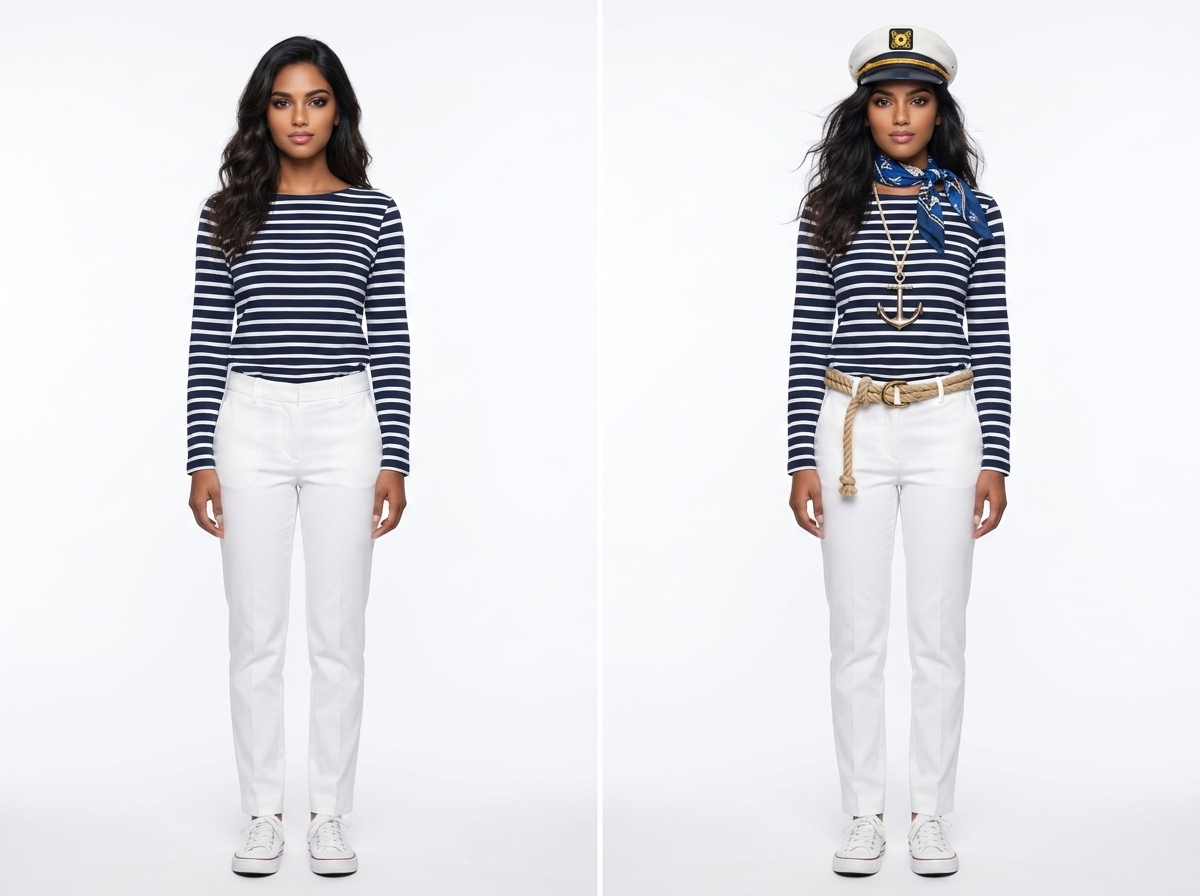
There is a version of nautical dressing that looks like you're about to host a themed party on a boat you don't own. Anchor-print everything. A captain's hat. A shirt that says something about the sea. This is the Halloween version that the real aesthetic tries to separate itself from.
The striped top plus the anchor necklace plus the navy blazer with brass buttons plus the rope belt plus the captain's hat is a costume, but the striped Breton alone is not a costume.
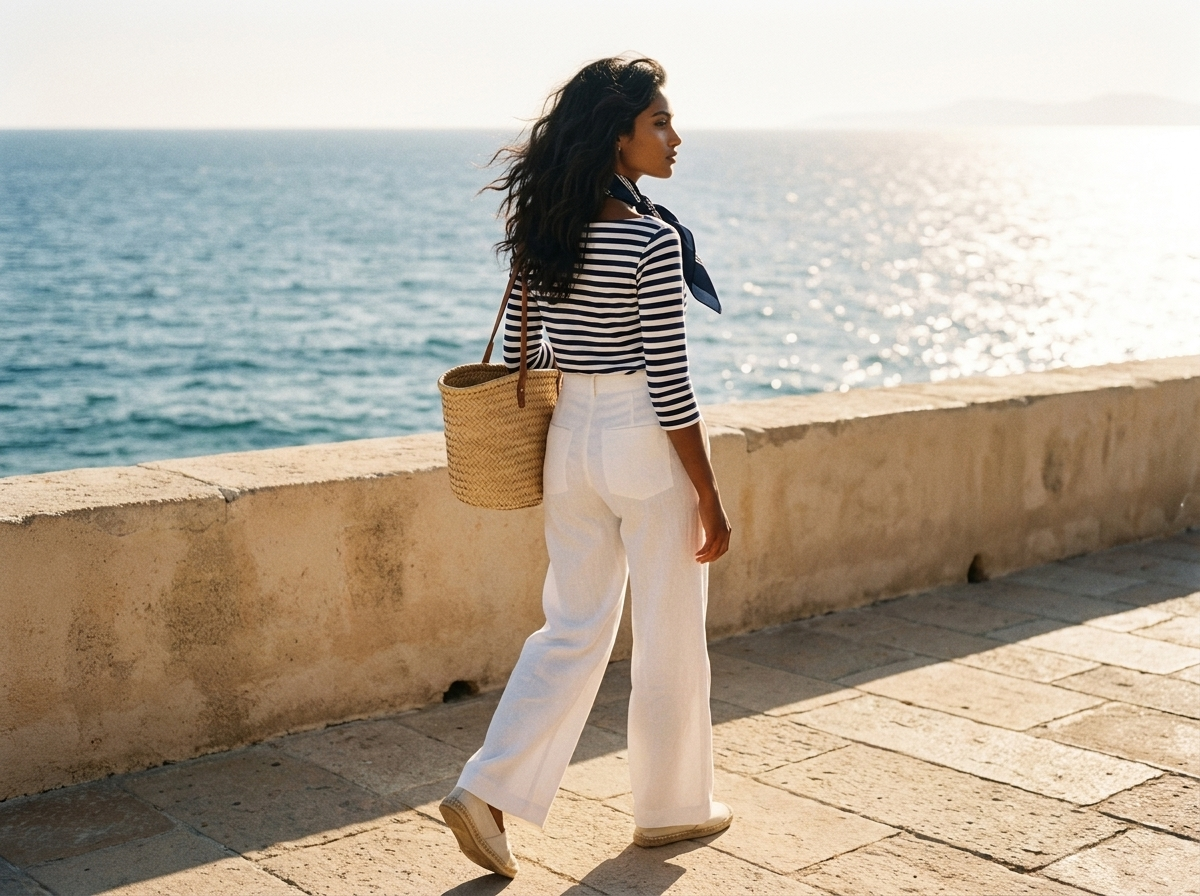
The governing rule applies across every aesthetic but matters more in nautical: one literal reference, the rest implied.
Navy trousers, white linen, or canvas sneakers on their own are not nautical. But put them together and you have an aesthetic.
This is also where the French and American traditions offer different strategies for staying on the right side of the line.
The French approach is a “less is more”. Fewer pieces, less literal, let the Breton stripe do the thematic work.
The American prep approach prioritizes quality and context like embroidered whale on the belt, but keeping the rest of the outfit understated.
Both strategies give you an outfit that suggests the sea without announcing it.
The coastal grandmother has already arrived so there’s no departure energy. Nautical is right on the horizon.
-
The governing rule of nautical dressing is one literal maritime reference, the rest implied.
The accumulation of maritime references is what tips nautical dressing into costume territory, not any single piece.
-
Nautical endures because it is built on something real — a working uniform, worn by people for whom life on the sea was not aspirational but necessary.
That foundation gives the aesthetic an authority that trend-driven looks can never manufacture.
Sailing Off

Every decade or so, nautical has its moment. And then the moment passes, but nautical remains.
Nautical has authentic history doesn't wash out.
What the aesthetic offers is a fantasy that remains appealing regardless of where you live or whether you've ever been on a boat. The fantasy of the horizon. The suggestion is that you are someone who could, at any moment, cast off and go.
Most of us are not that person. But dressed in navy and white, with a Breton stripe and a blazer with gold buttons, you can feel are. And fashion has always been about the small gap between who you are and who you aspire to be.
The sea doesn't care what you wear. But you look good anyway.
