
Maximalism: When More is More and Even More is Better
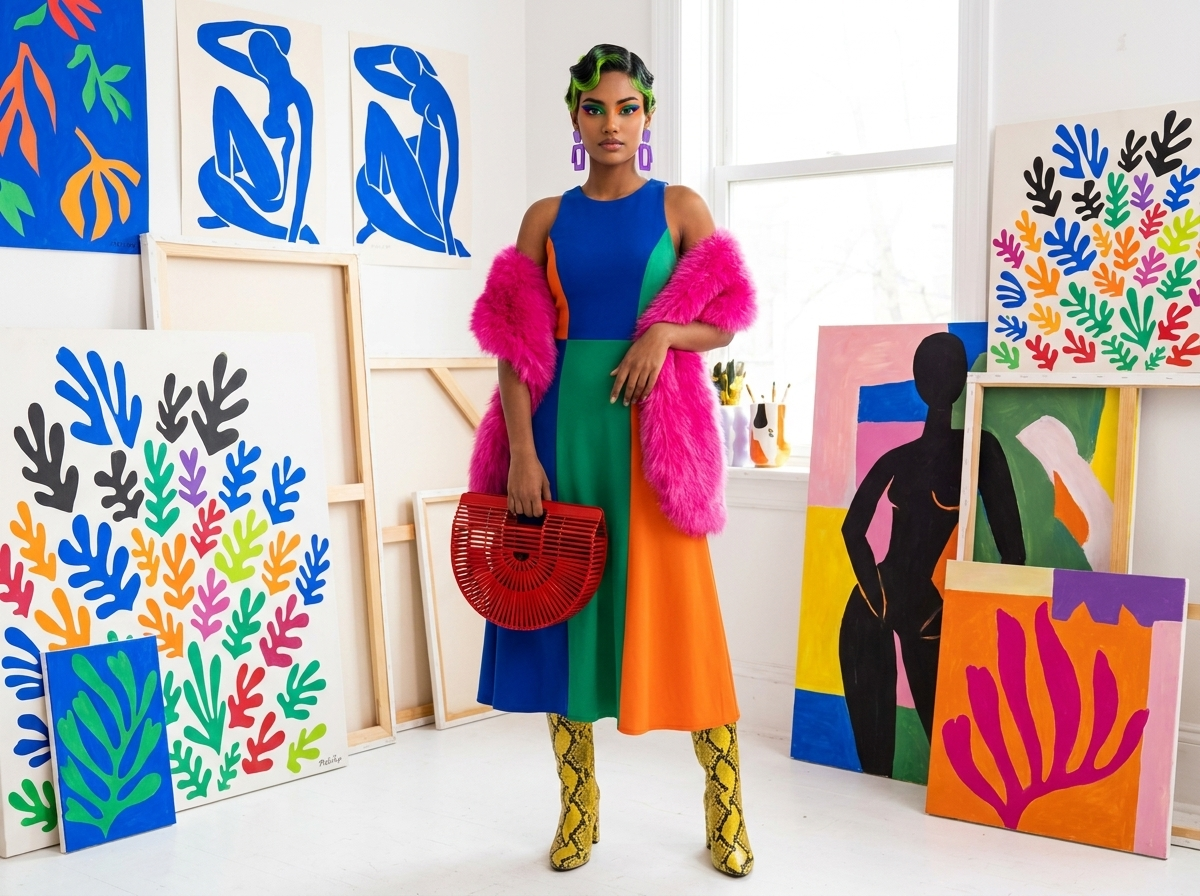
Table of Contents
Maximalism took one look at minimalism's boring closet and asked, "What if we stuffed this with loud leopard print, shiny sequins, and seventeen antique pins?" It is basically dressing up in giant exclamation points. It is a funny, stylish way of showing the middle finger to the whole "quiet luxury" trend of looking fancy but boring.
Yes, you can get sick of too much plainness. We do not mean art museums where empty space actually looks cool. We mean everyday culture, which spent the last ten years pretending that having good taste meant deleting everything fun. Sure, minimalism gave us fifty shades of boring beige oatmeal, but then maximalism crashed the party and yelled, "Absolutely not!"
Maximalism’s fashion philosophy is more is more. Joy is a design principle. The maximalist girl wears three patterns, seven necklaces, and a coat that could stop traffic. She is no wallflower.
Maximalism is not just random, messy chaos. Iris Apfel, the queen and patron saint of this style, famously wore seventeen bracelets at once. Not because she couldn’t decide which one, but because wearing all seventeen was right for the day.
The "quiet luxury" trend tried to convince everyone that dressing super plain was the only real way to look fancy and smart.
And then we have "norm-core," a trend that tech bosses in Silicon Valley turned into an entire lifestyle. Mark Zuckerberg famously explained that he wore the exact same grey t-shirt every day to save his brain from making useless decisions. Steve Jobs built his whole brand around a daily black turtleneck. The logic made sense, even if it was super depressing: if you take away the choice, you take away the stress, and you can just fade into the background.
Where quiet luxury whispers I have taste, maximalism shouts I have stories. Where the startup uniform says I am too serious for aesthetics, maximalism says aesthetics are serious. Maximalism always pops up right when everyone else is getting a little too comfortable blending in.
Maximalism promises that getting dressed every single morning can be a fun, creative art project. A maximalist's closet is not organized around what piece of clothing to wear, but rather around who you want to be today!
What is Maximalism in Fashion?
Maximalism is the fashion philosophy that dressing should be an act of deliberate abundance — mixing patterns, layering textures, stacking accessories, and treating personal style as a form of visual storytelling. Unlike minimalism, which prizes restraint, or normcore, which prizes invisibility, maximalism treats more as more: more color, more pattern, more personality, more presence. At its best, it is curated excess with a strong point of view — not chaos, but confidence.
A Brief History of Beautiful Excess
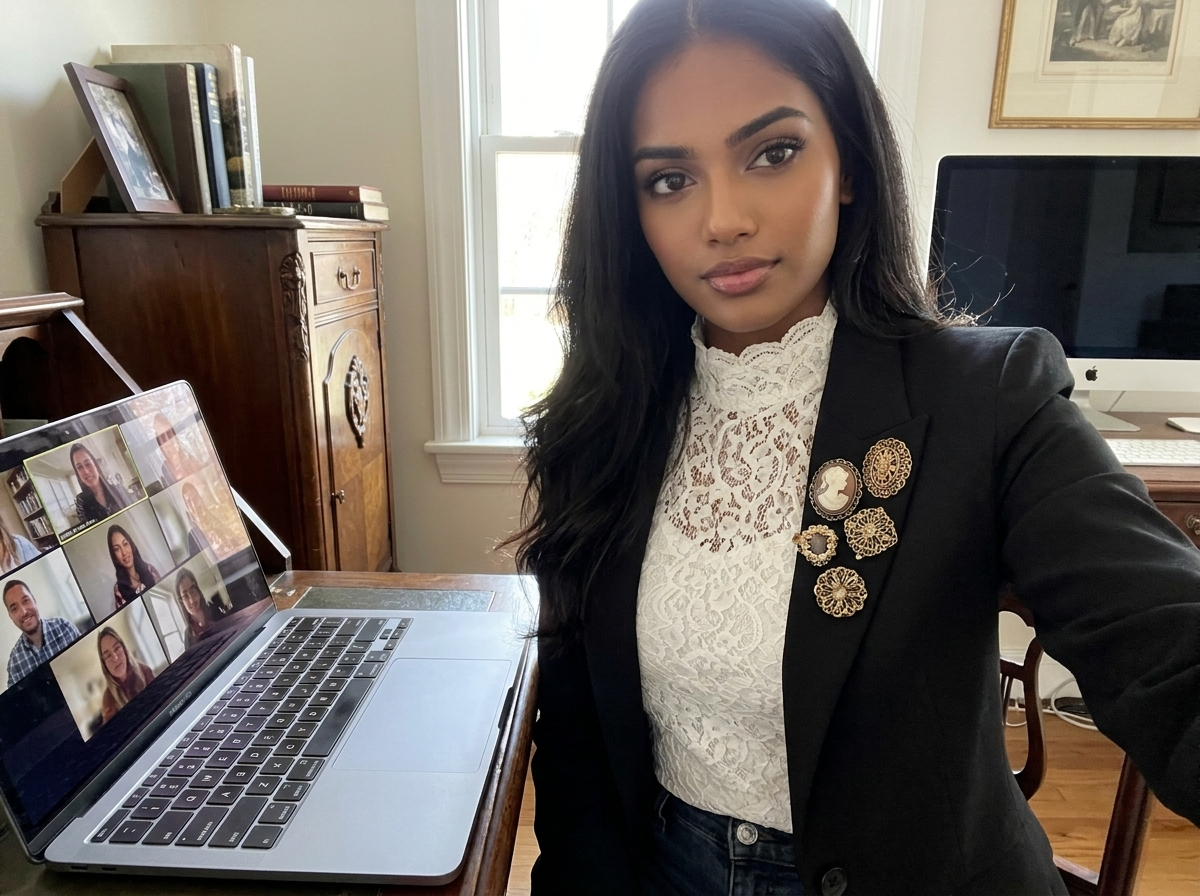
Fashion behaves exactly like a giant grandfather clock's pendulum. It swings all the way over to "boring and simple," and once everyone is asleep, it violently swings back to the other side. That loud, over-the-top side is what we call maximalism.
The history of wearing absolutely everything at once begins, like most bad financial decisions, back in the seventeenth century.
The Baroque era decided that the way to show power was to cover yourself in gold thread, lace, and enough layers to choke a horse. It was the seventeenth-century equivalent of parking a Ferrari in your driveway, except made of velvet. After that, the Rococo crowd pushed things even further with pastel silk hoop skirts so wide that navigating a hallway required athletic training, while their powdered wigs basically required building permits. Marie Antoinette, teamed up with her stylist Rose Bertin, spent a literal kingdom’s fortune on outfits, turning her into history's ultimate "too-much" Pinterest board.
Next, the Victorian era came along and made over-decorating extremely depressing. They swapped out massive hoop skirts for giant padded bustles on their backsides, and made a whole trend out of wearing shiny black jewelry to mourn the dead. They glued decorations onto collars, sleeves, furniture, and even their grief. When the Edwardian era finally ended, the Western world literally gasped as they unbuttoned their corsets. Soon, the 1920s flappers chopped off their hair and raised their hemlines, giving simple fashion its very first test drive.
It did not last. It never does.
Bold colors and print creeped back in the 1960s. Then, the 1970s exploded with Halston’s silky glamour, alongside Yves Saint Laurent’s fancy Russian and Chinese collections that piled on heavy embroidery. Disco made shiny sequins mandatory for basically every daily activity. Visually, the decade was an absolute riot.
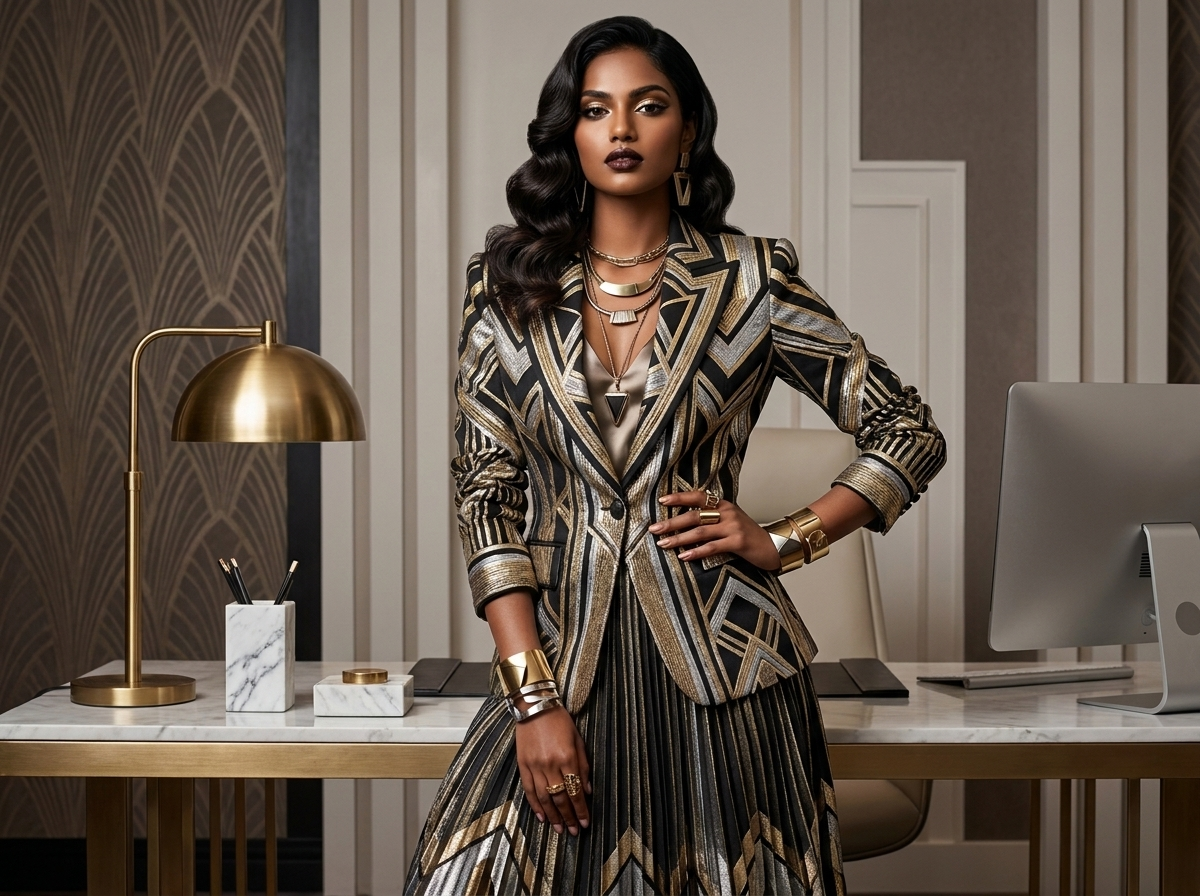
In the 1980s, fashion turned the volume knob up until the speakers exploded. It was the era of Christian Lacroix's puffball skirts and shoulder pads so massive they were sewn into underwear. TV shows like Dynasty and Dallas broadcasted absolute luxury into regular living rooms, convincing everyone that looking like a walking disco ball was a major life goal.
But the 1990s tried to ruin the party with minimalism. Designers like Calvin Klein, Helmut Lang, and Jil Sander basically ordered everyone to eat their fashion vegetables and practice self-control. Still, Anna Sui refused to behave. From her Greenwich Village base, she threw together hippie vibes, dusty vintage finds, and weird subculture leftovers to create collections that gave the finger to the decade's boring mood. Loud fashion just went underground, hiding out in costume departments and cool local boutiques, biding its time.
By the early 2000s, runway fashion had gone completely off the rails again. Meanwhile, the Louis Vuitton logo became a symbol for 'I have money and I want you to see it.' Paris Hilton and her crew made sure they were constantly photographed wearing head-to-toe loud fashion, proving that more was always more, especially when paparazzi were watching.
Style Icon
Iris Apfel: The Accidental Icon
Iris Apfel was born in Astoria, Queens, in 1921 — which means she spent the better part of a century being more interesting than everyone else in the room before the fashion world got around to noticing. Her mother owned a fashion boutique; her father dealt in glass and mirrors. She arrived, in other words, already surrounded by things that reflected and refracted the world beautifully, which perhaps explains everything that followed.
She and her husband Carl founded Old World Weavers in 1950, a textile firm that specialized in historic fabric reproduction and spent four decades restoring interiors at the White House across nine presidencies. This is the part of the Iris Apfel story that gets overlooked in favor of the bracelets, but it matters: she was a serious businesswoman and a genuine authority on textiles, craft, and the visual language of interiors for decades before anyone put her on a mood board. The maximalist aesthetic wasn't a retirement hobby. It was a life's education made visible.
Her ascent as a fashion icon began properly in 2005, when the Metropolitan Museum of Art's Costume Institute mounted Rara Avis: Selections from the Iris Apfel Collection — eighty-two ensembles and three hundred accessories that told a story of ornate bohemianism and the artistry of a wardrobe assembled entirely by whim and personal taste. It was the museum's first exhibition about clothing and accessories focused on a living person who was not a designer. She was eighty-four years old. The fashion world, characteristically, had kept her waiting.
The 2014 Albert Maysles documentary Iris made her a household name beyond the industry, and at ninety-seven she signed a modeling contract with IMG. She called herself, with characteristic precision, The Geriatric Starlet. Her most quoted line — "more is more and less is a bore" — contains the entire maximalist philosophy in eight words, which is the only kind of brevity she ever permitted herself. She died on March 1, 2024, at one hundred and two, having spent the last two decades of her life proving that fashion's obsession with youth was, like minimalism, a failure of imagination.
Then, right around 2008, the global economy crashed. Everyone panicked, felt guilty about their spending habits, and collectively wrapped themselves in sad, safe, beige coats.
In January 2015, Alessandro Michele presented his first collection for Gucci. In a single show, Michele rewrote the argument: maximalism could be intellectual and serious. He gave the house embroidered botanicals, Renaissance portraiture, and the entire animal kingdom rendered in silk. Maximalism finally had respectability.
Then the pandemic changed things yet again. Stripped of occasions, offices, anywhere to go, people dressed for joy, a phenomenon the fashion press labeled dopamine dressing. Cottagecore exploded. Color returned.
People bought the tiered ruffle skirt because it made them feel something. Joy, it turned out, was a great reason to get dressed.
Which brings us to the present. Maximalism is not staging a comeback. It never left. It was only dormant. Waiting for things to get boring enough that the pendulum swings back.
A BRIEF HISTORY OF MAXIMALISM
Maximalism has existed throughout fashion history — from Baroque embroidery and Rococo panniers to Victorian layering, 1970s disco glamour, 1980s excess everything, and the 2015 Alessandro Michele revolution at Gucci that gave the aesthetic its modern critical credibility. It resurges whenever the dominant culture becomes too boring. The current maximalist moment is, in part, a direct response to the quiet luxury era — the pendulum, as ever, swinging back.
Maximalism vs. Minimalism — The Case For More
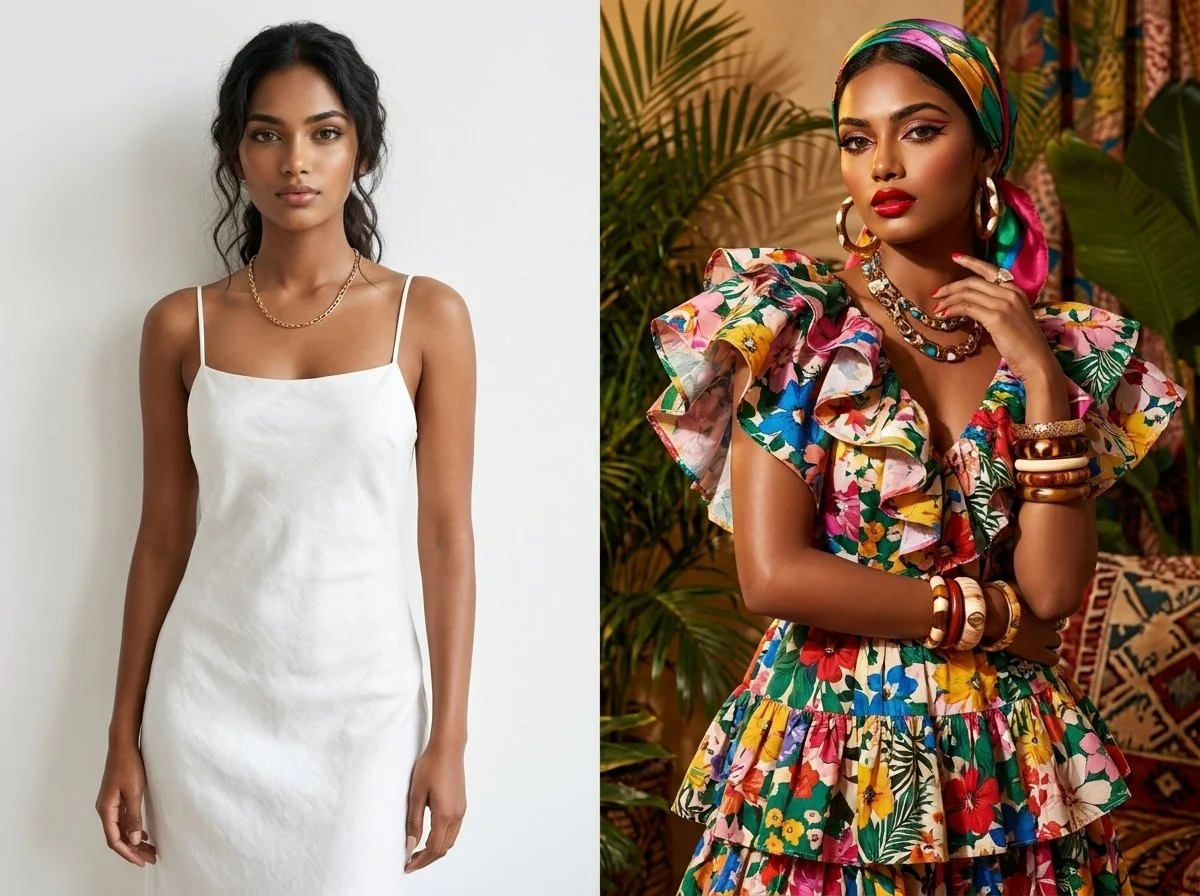
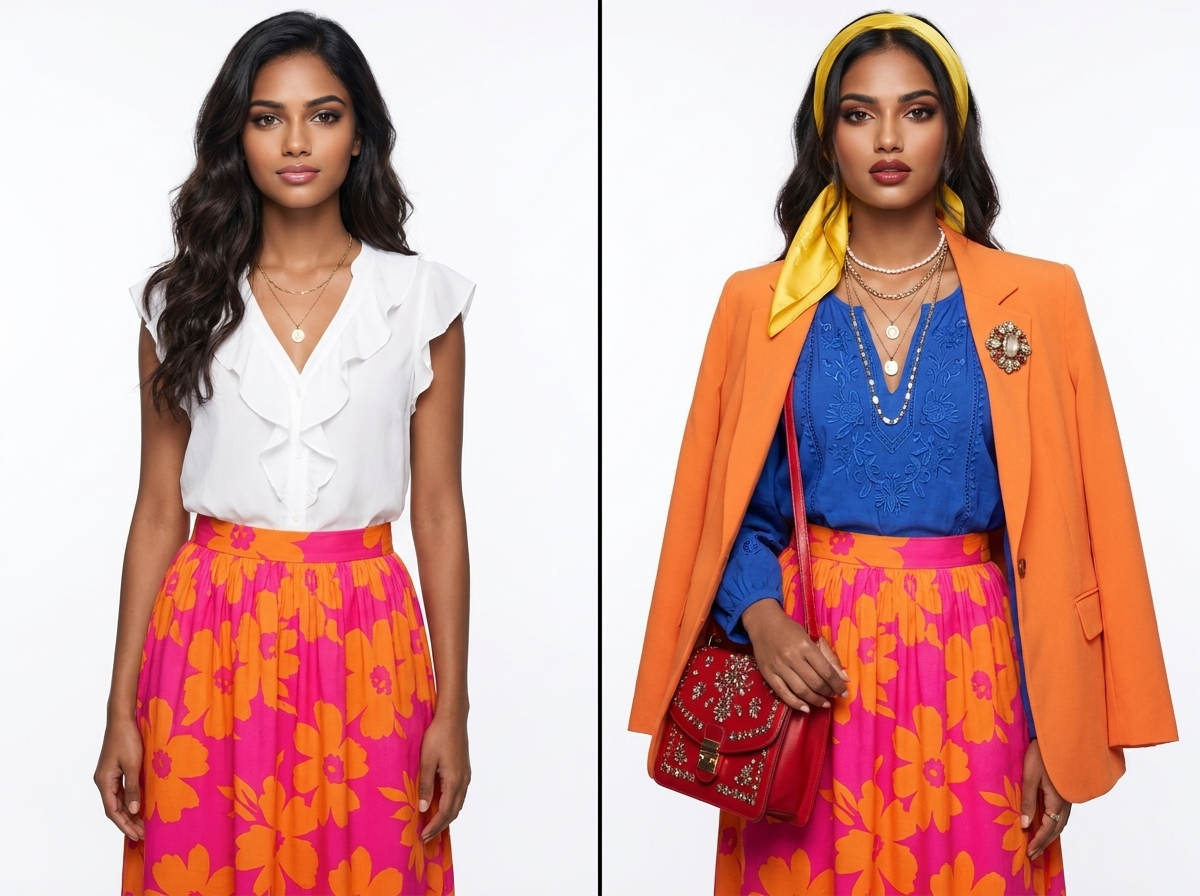
Side-by-side split image: minimalism look on left in vs. full maximalist look on right in summer brights
When the minimalist trend exploded in the 1990s thanks to designers like Calvin Klein and Helmut Lang, it was basically a big sigh of relief. The 1980s had been an absolute circus of giant hair and neon spandex. Minimalism stepped in like a giant, soothing eye-drops commercial, offering neat lines and fancy, plain fabrics to clean our collective visual palate.
Unfortunately, minimalism eventually turned into a sneaky way to show off how rich you were, and then into a weird moral contest about who could own the fewest things. That was the exact moment when minimalism stopped being cool and started being incredibly obnoxious.
Meanwhile, a maximalist wardrobe filled with cool thrift store finds, goofy costume jewelry, and flea market treasures is way more fun to look at. In maximalist thinking, looking awesome and loving your clothes is a million times more important than a fancy price tag.
Minimalism preaches less is more. But maximalism is all about more. More color, more texture, more story. The maximalist wants a wardrobe that is joy, in wearable form.
If you put two minimalists in their matching, tiny capsule wardrobes next to each other, they cannot tell you much of anything besides the fact that they both really love beige. Put two maximalists next to each other, and you will get two wildly different, hilarious life stories.
Now, this does not mean maximalism is the absolute boss of everything. Minimalism wins when packing a light suitcase, working in a corporate office, or if matching wild patterns in the morning gives you a massive headache.
But the fashion pendulum is swinging back. And it brings a smarter, funnier version of maximalism that has been doing its homework. This new maximalism knows its history, gets the funny class politics behind the hype, and has totally accepted that the boring critics who whine about it being 'too much' were never going to be invited to the fun table anyway.
Finding the Sweet Spot: Maximalism vs. Too Much
The golden rule of maximalist fashion is simple: more is only better when it there’s a reason. The goal isn't to be the loudest person in the hallway, but to write a story with your style. Great maximalist looks feel like an indie art gallery, not laundry pile. Every crazy pattern, bright color, fuzzy texture, and chunky ring should look like it was hand-invited to the party, not like it got lost and wandered in through the back door.
The easiest way to find this balance is to give your outfit a clear focal point. Maybe it’s a vintage checkered blazer, some dramatic neon earrings, or a bright green bag. Once you've chosen your star player, let the rest of your outfit act as the supporting cast. Even the most daring dressers understand visual hierarchy. Your eye needs to know where to land first before it starts exploring the smaller details.
Mix your statement pieces with some breathing room. If you are wearing a loudly patterned suit, go for super simple shoes. If your necklace looks like a museum piece, keep your neckline clean. If your jacket is covered in patches and pins, let your bag be low-key. Maximalism isn't about covering every square inch of your body; it's about creating harmony out of a lot of cool things.
Finally, remember that confidence is the secret sauce. Dressing loud should make you feel 100% yourself. If you are constantly tugging at your sleeves or feeling like the outfit is wearing you, you've probably crossed the line into a messy disaster.
Think of maximalism like a school orchestra. Every instrument has an important part to play, but they can't all blast a solo at the same time.
One False Move… and you're on your way to Clown College.
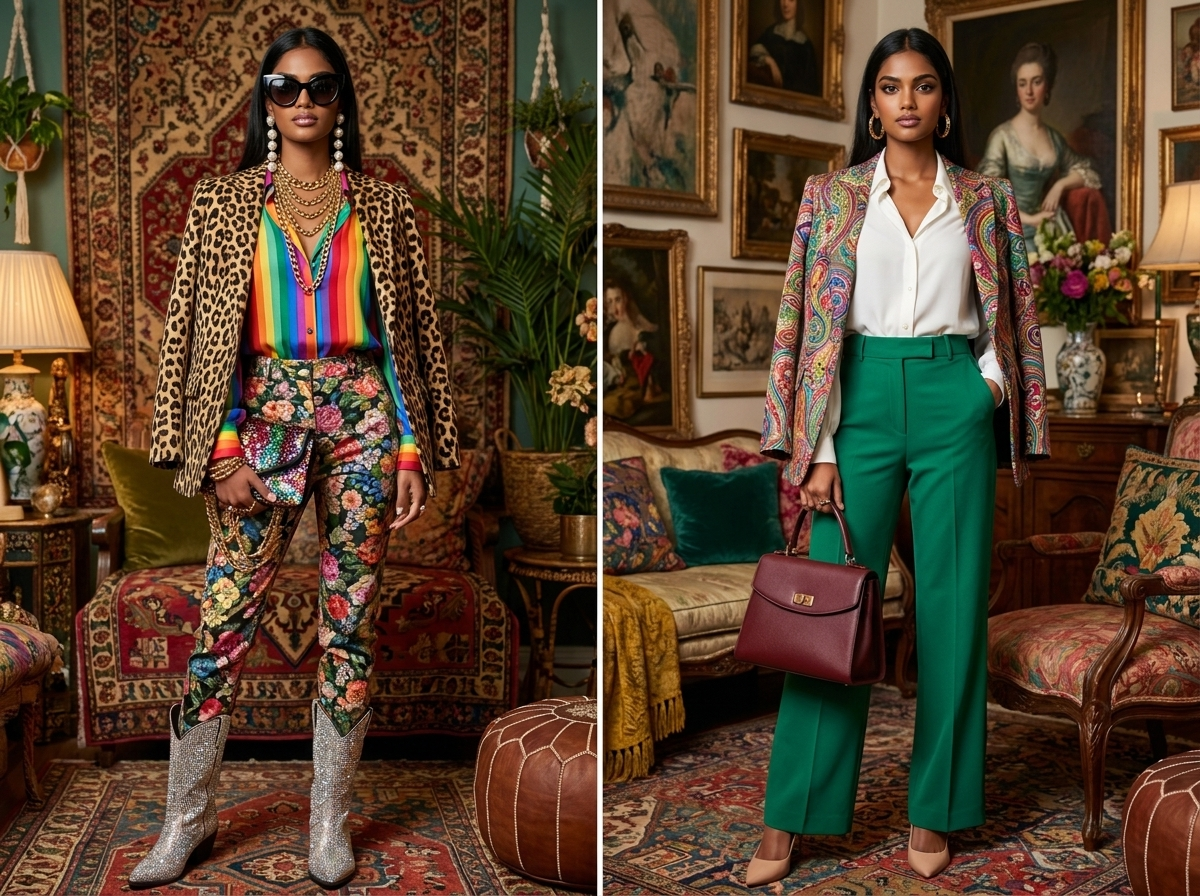
Left: Every individual piece has potential. Together? The outfit has entered its own three-ring circus. Right: The outfit is still bold—but it's no longer juggling.
There's a difference between looking like someone with impeccable taste and looking like someone who lost a bet at the costume shop. One extra statement necklace, one extra novelty print, one extra oversized accessory, and suddenly your outfit is auditioning for balloon animal duty.
More isn't automatically more. Sometimes more is just... louder.
What Goes Wrong
The biggest misconception about maximalism is that it means wear everything you love at once. It doesn't. Great maximalists still edit. They repeat colors and balance silhouettes.
When every piece is competing to be the main character, nothing wins.
How to Fix It
Choose one or two stars and let the supporting cast do its job.
If your trousers are boldly patterned, keep the jacket solid. If your jewelry is oversized, simplify the neckline. If your handbag is sculptural, maybe the shoes don't also need to be covered in crystals.
One False Move… and you're one feather boa away from cabaret intermission
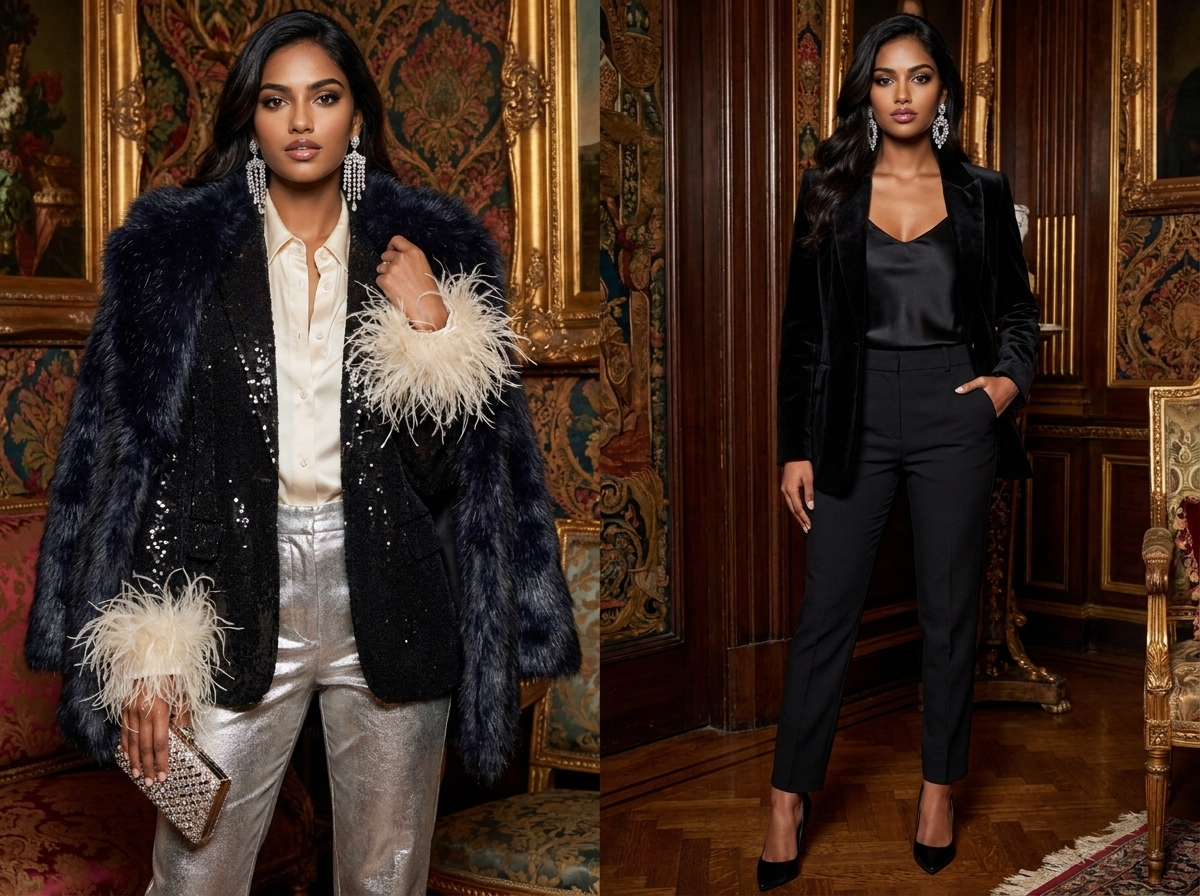
Right: It's fabulous. It's also giving "five-minute warning before curtain." Left: Still glamorous. Still dramatic. Just not accepting applause between courses.
Maximalism has always borrowed from theater, vintage glamour, and old Hollywood. That's part of its charm. But there comes a point where the outfit stops looking fashion-forward and starts looking like someone backstage is waiting for you to hit your mark.
If strangers expect you to break into jazz hands, you've probably gone a touch too far.
What Goes Wrong
Texture is addictive.
Sequins become velvet. Velvet becomes satin. Satin becomes feathers. Then come rhinestones, opera gloves, dramatic sleeves, oversized earrings, metallic heels, and suddenly you're dressed like the grand finale of a Vegas revue.
The problem isn't any one of these pieces.
It's that they're all trying to take a solo.
How to Fix It
Choose one theatrical element and let it own the room. If you're wearing sequins, skip the feathers. Feathers? Simplify the jewelry. If the sleeves are dramatic, let the shoes relax for the evening.
Fashion loves restraint almost as much as it loves drama.
One False Move… and Liberace files a copyright claim
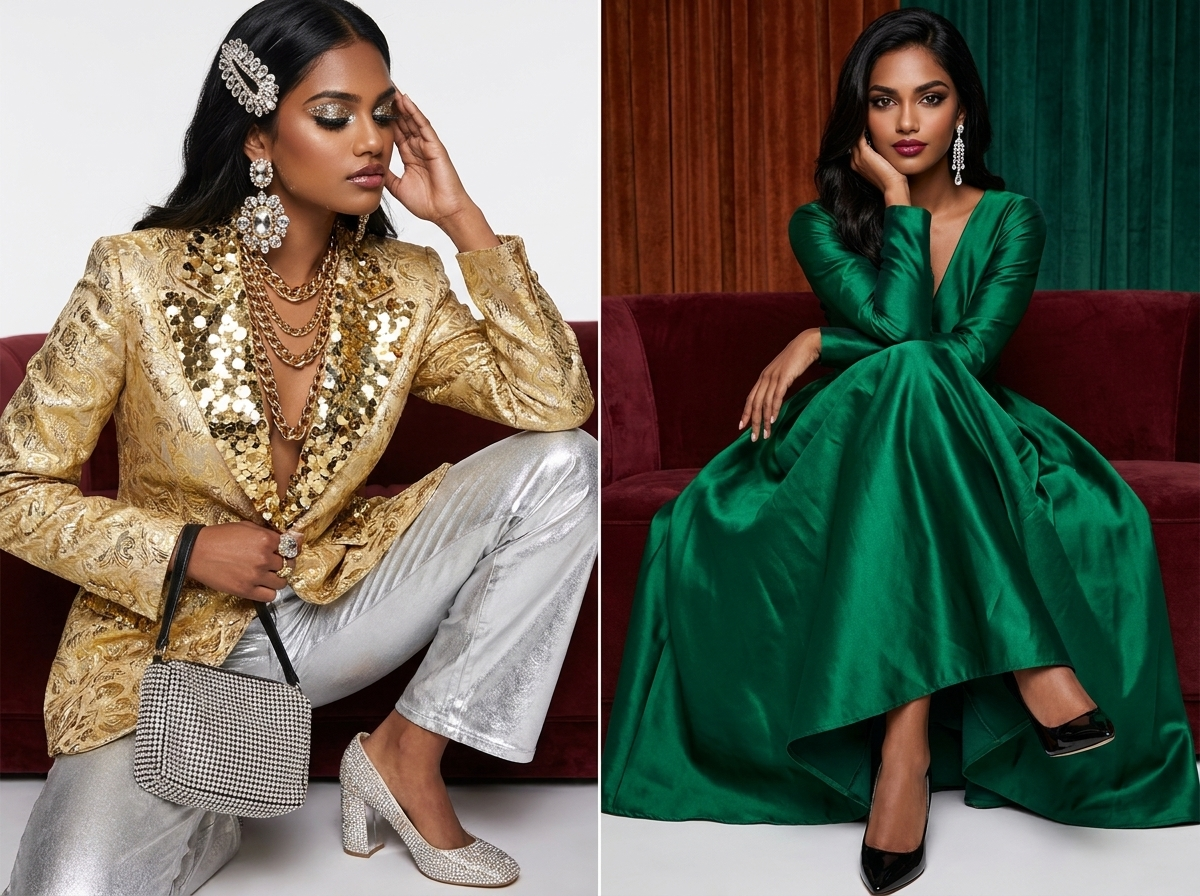
Left: Everything shines, nothing breathes. Right: Elegance. No sunglasses required.
Sparkle is one of maximalism's greatest pleasures. But sparkle is also the easiest place to lose perspective. There is a fine line between "luxurious" and "visible from low Earth orbit."
What Goes Wrong
Metallic fabrics. Crystal embellishments. Gold hardware. Statement jewelry. Beading. Brocade. Glitter makeup.
Individually, they're beautiful. Collectively, you've become your own lighting rig. Luxury isn't measured by how many reflective surfaces you can fit into one outfit.
The Wrong Outfit
Gold brocade blazer, silver metallic trousers, crystal-covered heels, rhinestone handbag, layered gold necklaces, oversized jeweled earrings, glitter eyeshadow, and a crystal hair clip.
Everything shines.
Nothing breathes.
How to Fix It
Pick one source of sparkle.
If your dress is embellished, keep the accessories polished rather than encrusted.
If your shoes are metallic, choose matte fabrics elsewhere.
Think of shine as punctuation—not the entire paragraph.
Your outfit should catch the light, not blind innocent bystanders.
The Right Outfit
Black tailored jumpsuit, gold metallic heels, sculptural gold earrings, satin clutch.
Or:
Emerald silk dress with crystal earrings and simple black pumps.
Elegant.
Expensive.
No sunglasses required.
Styling Rule
One reflective element elevates.
Two dazzles.
Five means satellites can probably see you.
THE MAXIMALIST ICONS
Maximalism's defining figures include editor Diana Vreeland, who built excess into editorial doctrine; Anna Piaggi, whose daily dressing was a fifty-year research project in wearable art; Iris Apfel, the movement's patron saint, who mixed haute couture with street market finds without hierarchy; Björk, who treats every garment as a conceptual argument; Harry Styles, who brought maximalism into the mainstream male wardrobe without apology; and Solange Knowles, whose public appearances function as rigorously curated aesthetic statements. What connects them is not a shared look but a shared conviction: that getting dressed is a serious creative act.
The Maximalist Visual Vocabulary: Color, Pattern, and Texture
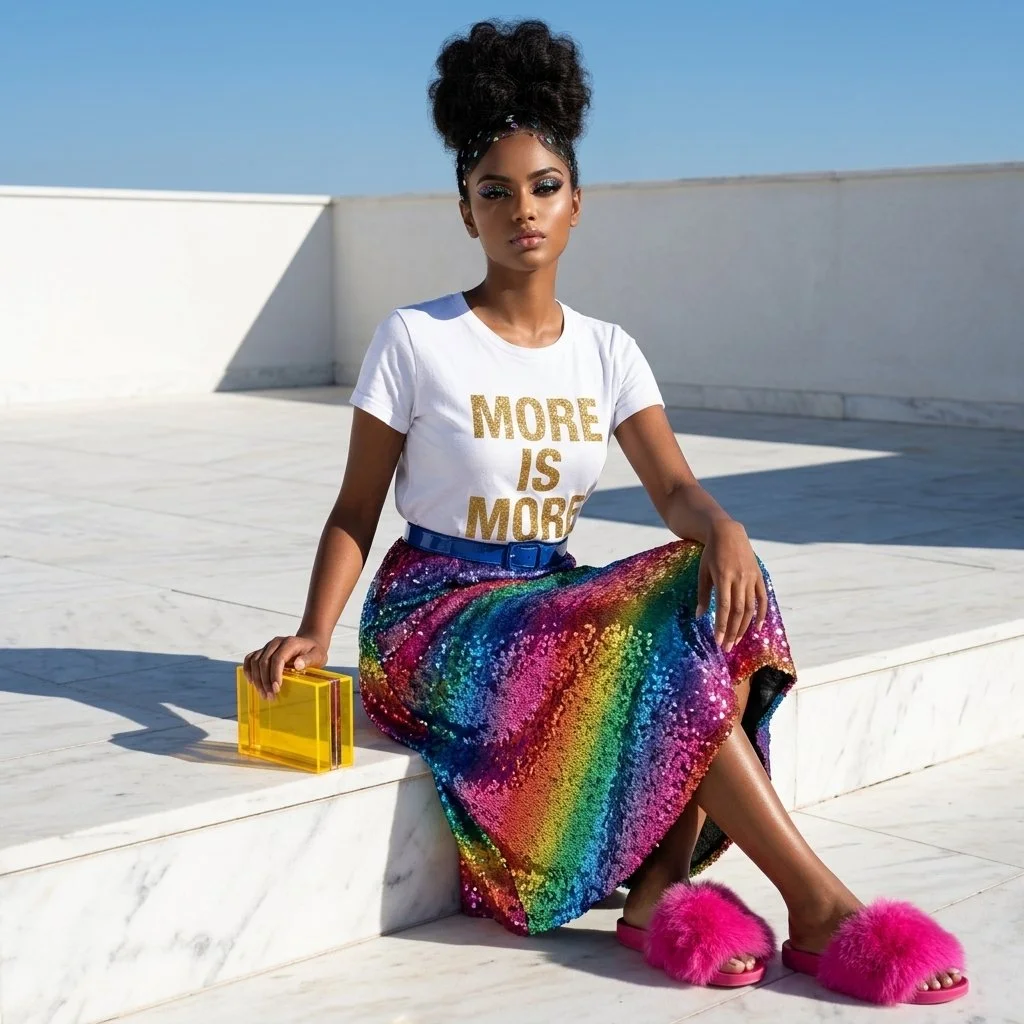
For minimalism, the golden rule is to edit, subtract, and throw things out. Maximalism shouts "more, more, and more!" Some argue this makes maximalism more entertaining because its rules are about freedom.
Maximalism relies on three main pillars: color, pattern, and texture. A seasoned maximalist juggles all three by figuring out how they can play nice together. If you use too much of one, it sounds like visual static. But when all three cooperate, they turn your outfit into a story everyone wants to read.
Color: All of Them, Together
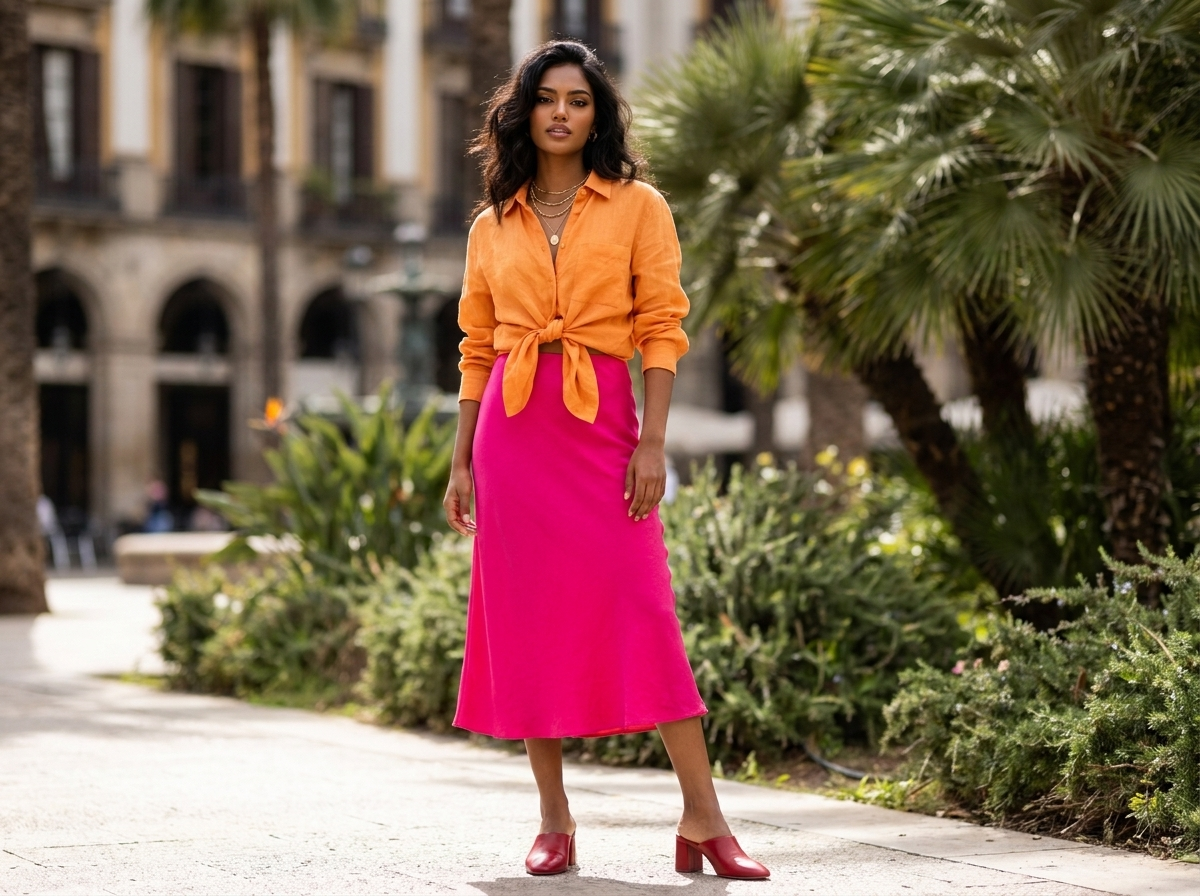
Hot pink midi skirt, orange linen button-down tied at the waist, gold layered necklaces, cherry red mules. The two colors will appear to fight each other in the mirror and resolve completely once you're out the door.
The first commandment of maximalist color is simple: nothing is off-limits.
This color palette isn't trapped in boring little boxes like "preppy nautical." Instead, it thrives on hot pink, cherry red, cobalt blue, and sunshine yellow. This doesn’t mean soft pastels aren’t in a maximalist's closet; they just show up on the maximalist's terms.
Wild Maximalist Color Combinations
Hot pink and orange: known as the Schiaparelli combo, this was turned into a high-art statement by the legendary, surrealist-loving Italian fashion house. These two shades look like they're in an aggressive wrestling match, but when styled, you stand out for all the right reasons.
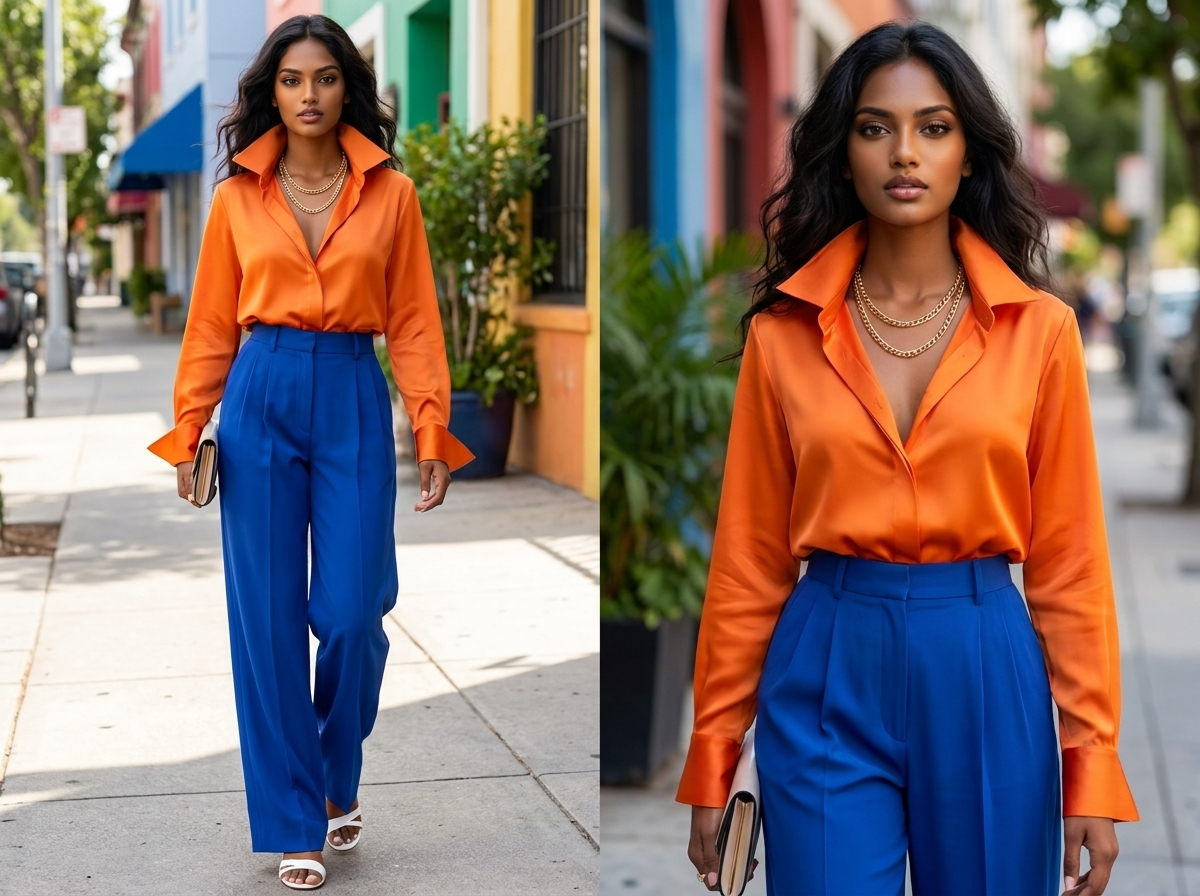
The secret is keeping the accessories warm-toned so the cobalt and tangerine have something to agree on. More wearable than it sounds in theory. More remarkable than it sounds in practice.
Cobalt and tangerine do the same thing at a different temperature.
Red and pink, once considered the Valentine's Day mistake, are now most sophisticated combination.
Jewel tones: Emerald, sapphire, ruby, and amethyst represent the historical anchor of the maximalist palette. Wearing them together creates a gorgeous kaleidoscope effect. A true maximalist never tortures herself by choosing between an emerald blouse and a sapphire skirt. She wears both and tops it off with ruby earrings.
Neon accents: the clever maximalist uses these like hot sauce—sparingly, and only for maximum drama. Picture a bright, sunshine-yellow handbag popping against a hot pink and cobalt outfit. Or neon chartreuse earrings clashing beautifully against deep burgundy and gold. Neon is the ultimate exclamation point of fashion.
Metallics: these get their own VIP category because they don't really clash with other colors; instead, they act like amplifiers. Gold, silver, and copper together creates a dazzling, shimmering effect that elevates everything else you're wearing.
Pattern: Yes, And
Two or more patterns worn together talk to each other.
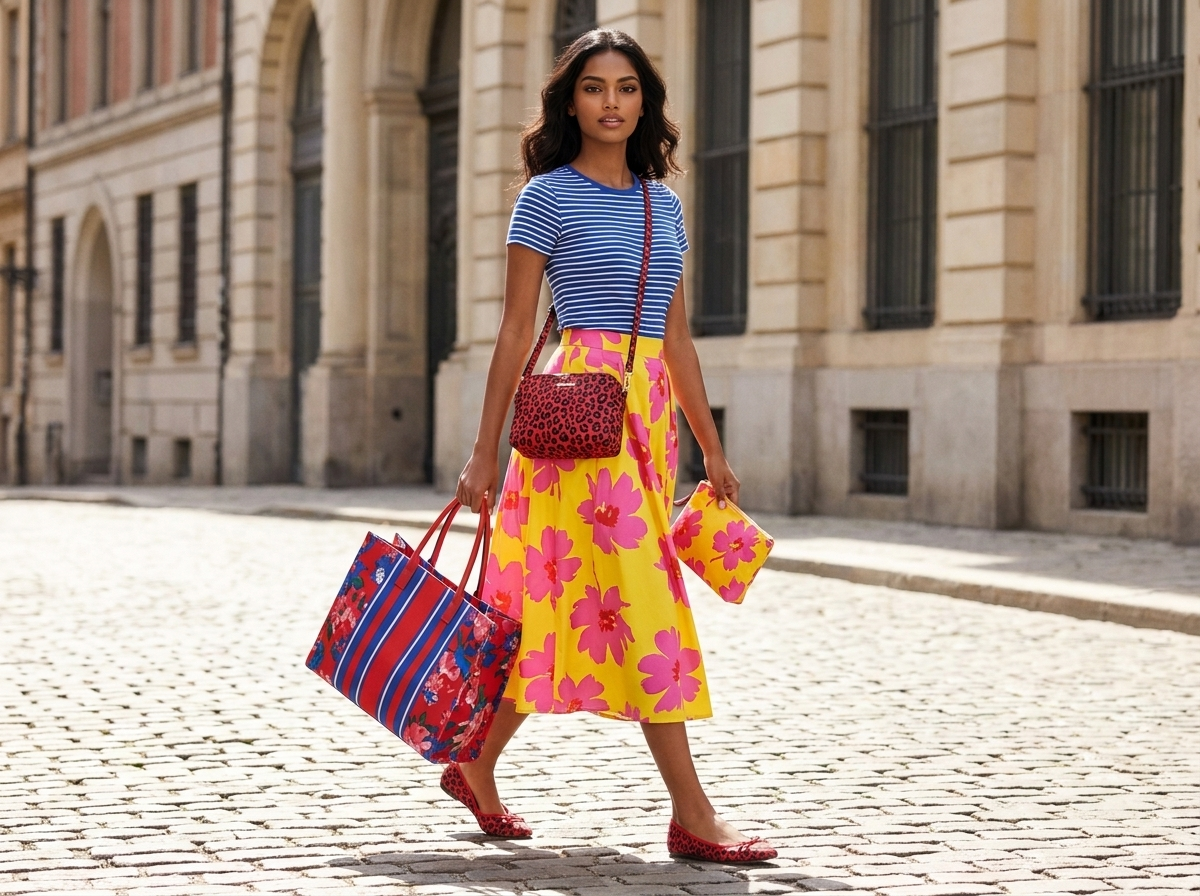
The easiest starting point is mixing florals and stripes. They work because they run on totally different wavelengths: florals are organic and curvy, while stripes are geometric and straight. They share just enough visual DNA to live together. Most beginners start here and quickly realize it's way easier than it looks.
Once you master that, you can move on to animal prints paired with geometric designs. Imagine leopard spots hanging out with houndstooth, or snakeskin clashing with a windowpane check. Plaid with paisley combines two classic, historical patterns to create something fresh and rebellious. Polka dots—the maximalist's secret weapon—work with almost everything because their clean shape acts like visual punctuation to anchor the wilder patterns.
The "three-pattern minimum" isn't a strict law so much as it is a test of your style confidence. Just remember that sticking to the same color family is the glue that binds the outfit together. Varying the size of your prints keeps any single pattern from hogging the spotlight and ruining the fun.
Texture: The Third Dimension
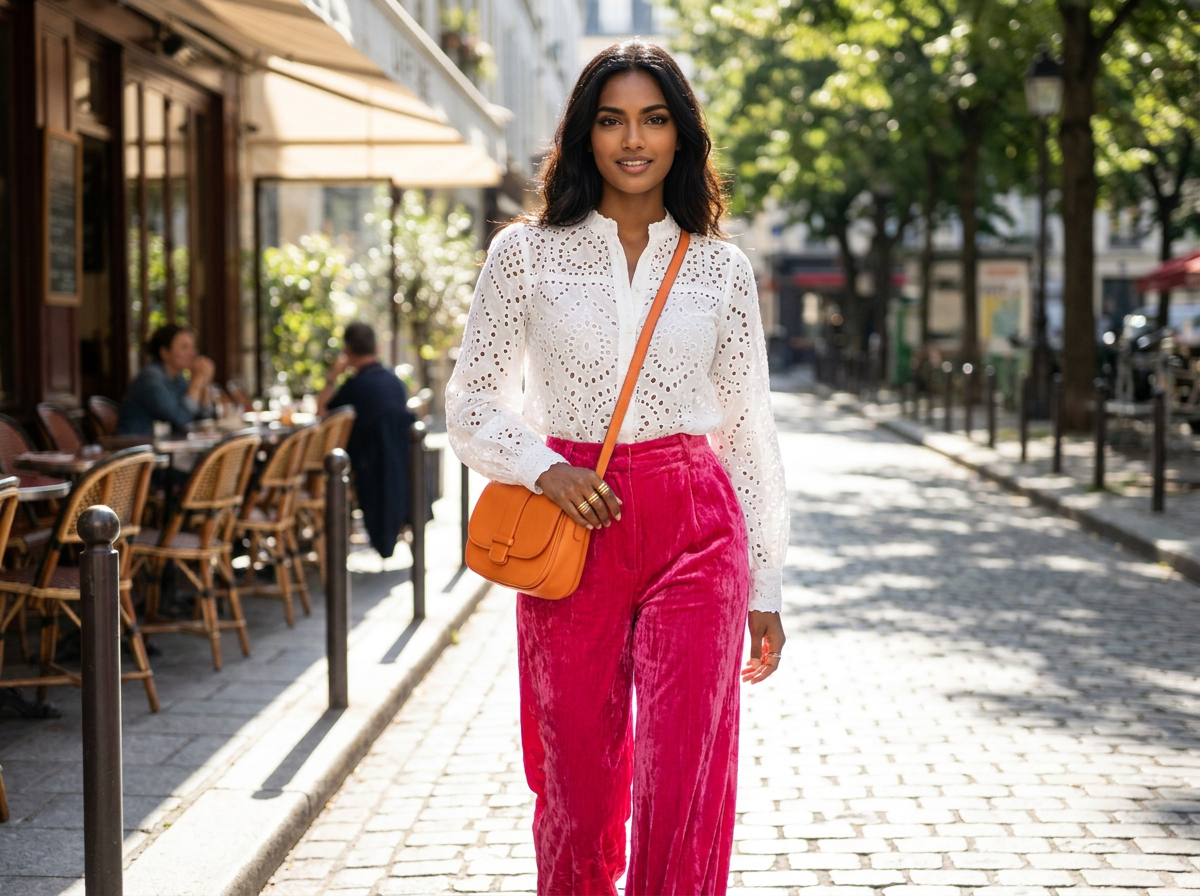
Texture gives your clothes that sweet 3D effect. Skipping out on texture in a wild outfit is like trying to paint a masterpiece using only one sad, lonely marker.
Velvet is a maximalist's best friend. Whether it is crushed, smooth, or covered in fancy stitching, makes every other fabric nearby look a little jealous. A true style wizard has zero issues wearing a full velvet outfit to lunch on a random Wednesday if the fashion vibes demand it.
In the same way, you do not have to wait for the sun to go down to wear shiny sequins. Walking around in sparkly sequins during broad daylight says "I am awesome," and you can bet everyone on the street will stop and stare.
Brocade is a heavy, thick fabric that feels like wearing a time machine. It is the one texture that links you directly to those ancient, super-extra eras like the Baroque and Rococo periods where people dressed like gold-plated palaces.
Embroidery is the ultimate texture because you can feel the human effort that went into stitching it. Beading, on the other hand, adds a different kind of heavy, metallic gravity to your look.
Feathers, lace, fur, and patchwork round out this chaotic treasure chest of fabrics. Feathers shake and shimmy whenever you take a step, making you the drama queen of the sidewalk. Lace adds cool little gaps of empty space, while patchwork mixes different fabrics together to tell five stories at the same time.
A true black-belt maximalist masterfully juggles all three elements: loud colors, crazy patterns, and wild textures. It takes some serious practice to pull off without looking like a runaway circus, but it is totally worth it.
The Maximalist Wardrobe — Clothing
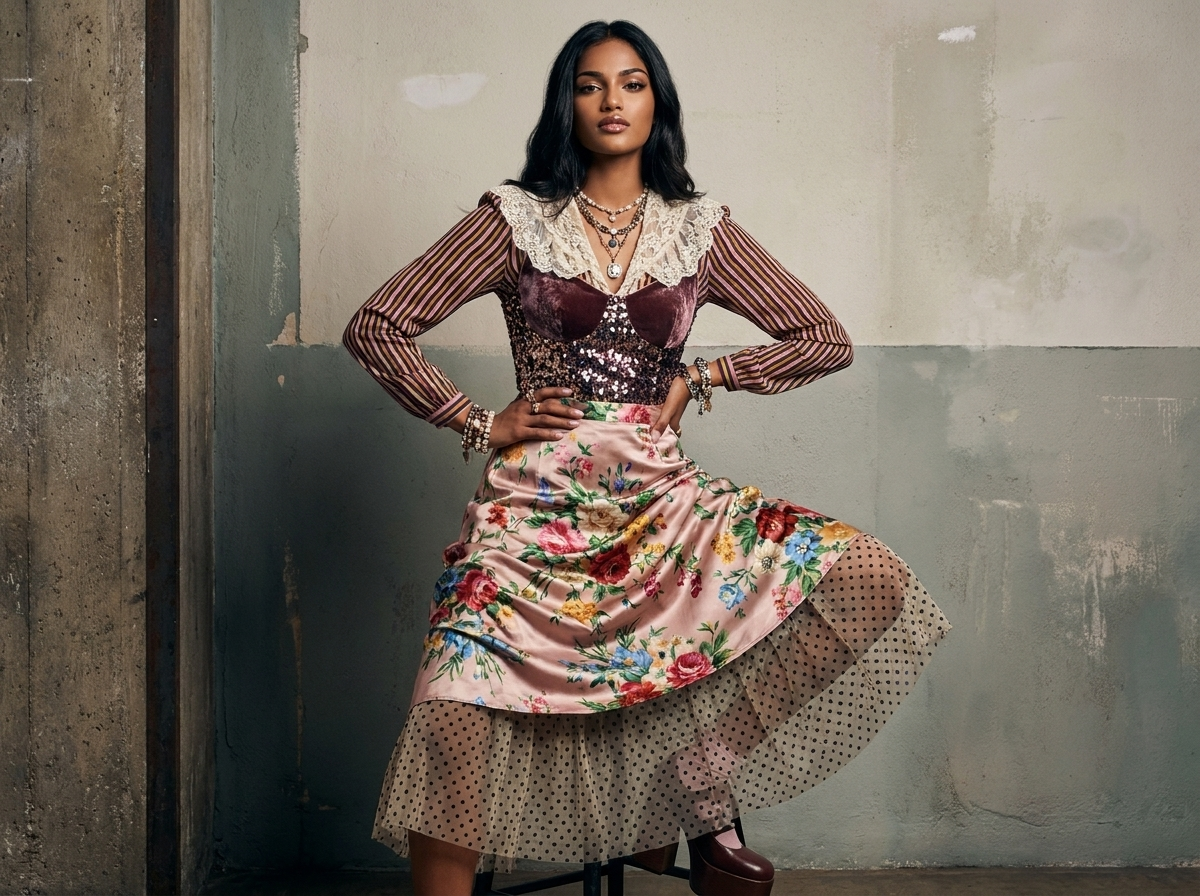
Florals, stripes, polka dots, velvet, sequins, and lace in one outfit, every maximalist principle present, confidence crucial
A true more-is-more wardrobe is a glorious, chaotic museum where a flowy 1970s peasant blouse hangs happily right beside a stiff, avant-garde Simone Rocha dress, which is crammed right next to a loud, retro Hawaiian shirt.
Now that we have set the stage for this beautiful fashion disaster, let us dive into the actual closet, beginning exactly where all extreme outfits must begin: with the ultimate, statement-making coat.
Outerwear: The Opening Statement
The maximalist coat doesn't just join your outfit; it stages a hostile takeover and hijacks the entire conversation. If you wear a colossally huge coat over your most basic everyday clothes, you're telling the world that you have major, uncompromising opinions about fashion. But if you layer a colossally huge coat over an already chaotic, massive outfit, you're shouting, "Self-control? I don't know her!"
The undisputed king of this look is the embroidered coat. We're talking heavy silk or thick wool covered in so many flowers it looks like a botanical garden exploded on you. It has the magical power to rescue any tragic outfit and make it look amazing. If you're willing to sell a kidney for fashion, Etro and Dries Van Noten make the ultimate investment versions. For those of us with normal bank accounts, Anthropologie has reliable, mid-priced options every year. However, if you want the real holy grail, you'll need to go internet-sleuthing on The RealReal or beg dedicated vintage dealers to sell you their best stuff.
[To see more of the embroidered coat, check out The Boho Capsule Wardrobe]
We need a moment of silence—or rather, a loud round of applause—for the brightly colored faux fur coat, because this is where we separate the casual fashion fans from the true, chaotic maximalists. Wearing a black fake-fur coat is just being a sensible person who wants to look dramatic in the winter. But wearing a fake-fur coat in screaming cobalt blue, neon tangerine, or fire-engine cherry red is such a loud statement that whatever you're wearing underneath is irrelevant. If you're on a budget, Free People and ASOS have got you covered. If you want to make your credit card weep, head straight to Saks Potts or Jakke for the investment versions.
Then there is the embellished blazer, which happily blurs the line between outerwear and a layering piece. You need at least two of these bad boys: one that won't get you fired from your day job, and another that is an absolute HR hazard.
Vintage Gucci blazers on The RealReal are the gold standard of inspiration here. If you want something mid-range that still packs a punch, brands like Never Fully Dressed and RIXO are your best friends. Finally, the heavy brocade blazer—which looks like it was stolen from a 17th-century palace but is covered in modern neon florals and geometric patterns—is the absolute best way to bring your inner Baroque prince into the 21st century.
Tops: The Pattern Begins Here
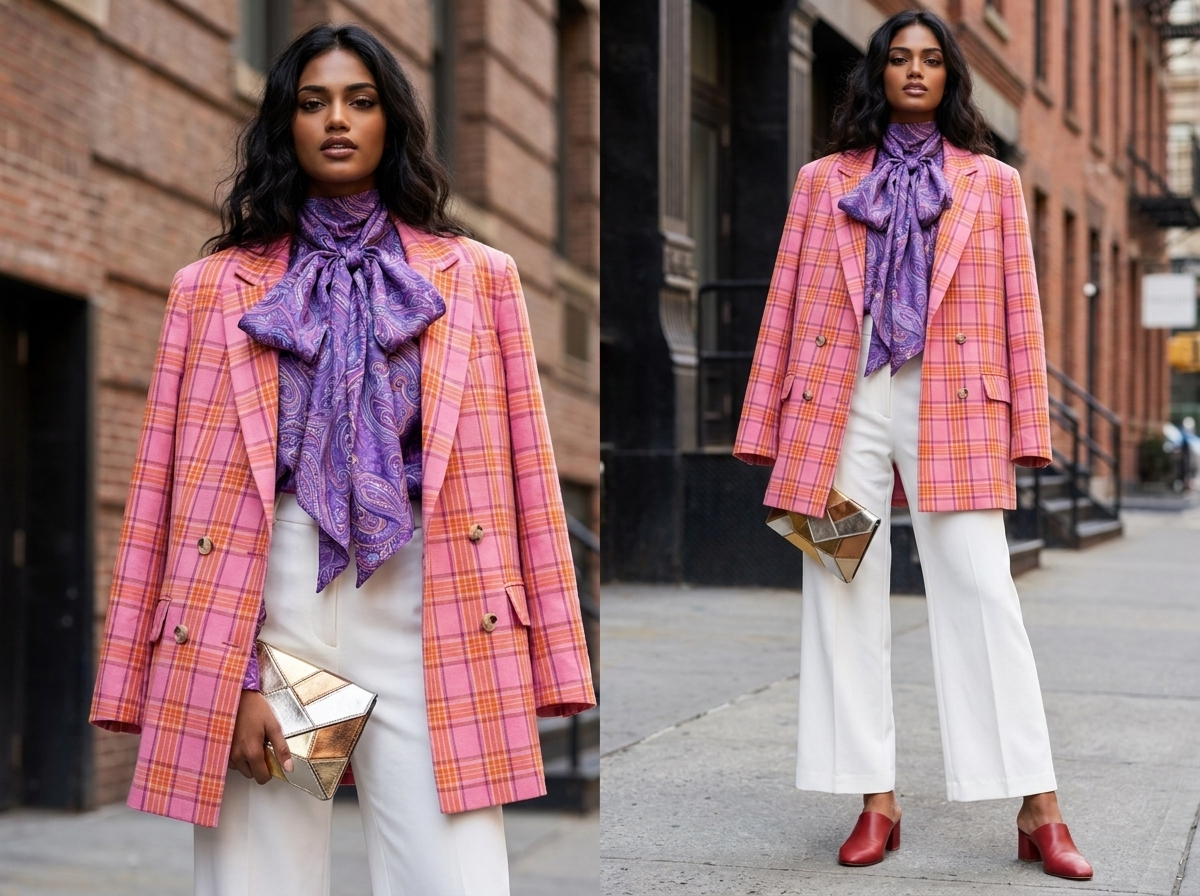
Let’s be honest: a true maximalist blouse is the absolute opposite of that sad, plain silk top sitting in a minimalist’s boring "capsule wardrobe."
If you want to look like a stylish fashion boss, the big pussy-bow blouse in a dizzying, chaotic print is your ultimate weapon. Zimmermann makes gorgeous, wallet-clearing versions covered in ruffled silk and dizzying patterns. RIXO and Faithfull the Brand cover the middle ground where you don't have to sell a kidney. If you want authentic retro patterns with actual street cred, you'll need to go digging through vintage shops on Depop and Etsy.
Then there’s the embroidered peasant or folk blouse, which is less about looking like a high-fashion model and more about celebrating cool global traditions. Christy Dawn and Ulla Johnson sell beautiful versions at upper-middle prices; Free People and Anthropologie make them at prices that won't make you cry; and the real deal—straight from Eastern European, Mexican, or Indian traditions—can be found through ethical importers or vintage shops, assuming you actually enjoy the exhausting hunt of internet shopping.
Don't even think about buying a plain, camel-colored cashmere crewneck if you want to call yourself a maximalist. The real prize of this wardrobe is the intarsia sweater, which literally has whole pictures knitted directly into the fabric like wearable art. Rowing Blazers makes hip modern versions, though Depop’s vintage sellers are the best places to hunt for the actual OG designs. Toss in some sparkly sequined cardigans, patchwork designs, and heavily beaded knits, and you've got the ultimate "more is more" sweater collection.
Bottoms: The Pattern Continues
The maximalist skirt is a walking billboard for the belief that wearing every single color, pattern, and swishy fabric at the exact same time screams, "This is who I am!" and look fun doing it. It’s fashion's way of refusing to play hide-and-seek.
Take the tiered ruffle skirt, which looks a bit like a wearable wedding cake. This is the piece that rescued us from our pajamas during the pandemic when we desperately needed a chemical rush of joy, thanks to trendy brands like Réalisation Par, Faithfull the Brand.
Sitting proudly in the center of any loud-fashion closet is the printed midi skirt. If you want the crème de la crème, you’ll want silk—or something close to it—which means emptying your savings account for Zimmermann and Ulla Johnson, spending a reasonable amount on Farm Rio or Never Fully Dressed, or hunting through thrift stores for the actual holy grails from the '70s and '90s.
When skirts just aren't happening, the maximalist trouser steps up by being ridiculously wide and loud. We are talking giant flowery palazzo pants, abstract wide-legs, and velvet flares that come in colors like "emergency-vehicle red" or "shocking cobalt blue" to keep the summer party going. Etro has been the undisputed king of these printed pants for ages, Marni takes things to a weird art-school level with mixed patterns, and honestly, the cheaper side of this market is good at making stuff that doesn't feel like cardboard.
For the maximalist who is forced to wear normal denim, embroidered jeans are the perfect loophole. The heavy embroidery does all the talking. Sadly, finding high-quality pairs in regular malls is nearly impossible, so your best bet is scouring vintage shops or bribing an artist on Etsy to custom-sew a pair.
Dresses: The All-In Commitment
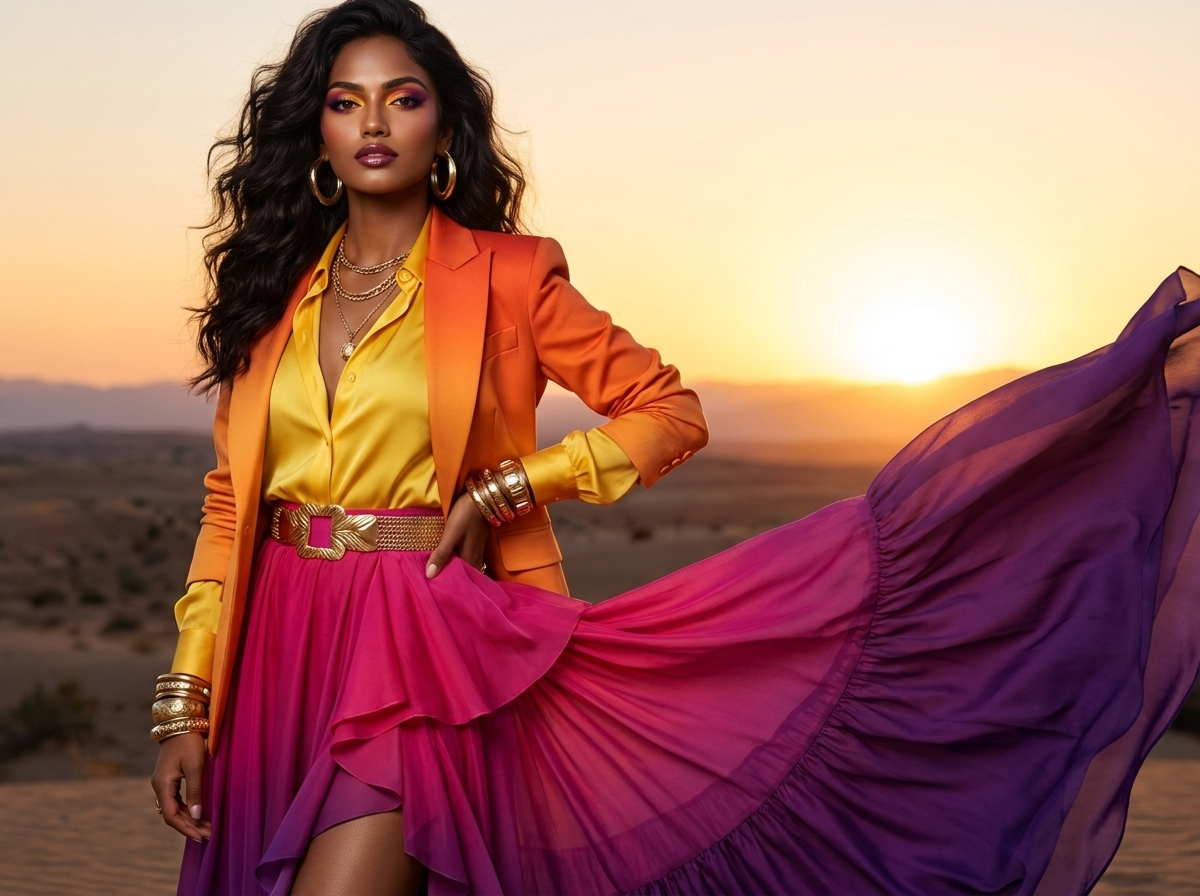
Arguing that a maximalist dress is just a single garment is like arguing that a three-ring circus is just a stroll in the park. It is the ultimate expression of the "more is more" lifestyle wrapped up in one piece of fabric.
The printed maxi dress is the ultimate day-to-night shapeshifter. Zimmermann's famous printed maxis have basically ruled this kingdom for twenty years; Ulla Johnson offers a more touchable, handmade vibe; Christy Dawn represents the earthy, eco-friendly flower-power side. For those of us keeping an eye on our bank accounts, Farm Rio brings loud Brazilian energy, while the vintage market is stuffed with amazing 1970s maxi dresses that work just as well.
The sparkly midi dress is the fancy royal of this over-the-top closet. Covered in sequins, beads, embroidery, or all three, it ignores the concept of "less is more" (and honestly, who cares?). Needle & Thread and Self-Portrait cover the middle-budget tier perfectly; the high-end dream tier goes from Simone Rocha's dark, romantic masterpieces to rare vintage Givenchy or Lacroix. As always, the best treasures are hiding in the dusty racks of vintage shops.
People underestimate the humble slip dress because it looks so simple, but it is actually the ultimate layering cheat code. Try it in a deep jewel tone under a structured blouse, over a cozy turtleneck, cinched with a sparkly belt, layered under a sheer floral top, or weighed down with seven necklaces and four chunky rings—the possibilities are endless.
The vintage dress wins the final crown because it is the actual birthplace of maximalism. You can pick between a wild 1970s halter dress, a poofy 1950s silk party dress, or an eighties-style brocade dress that would cost a month's rent brand new but costs pocket change on Depop.
Accessories — Where Maximalism Truly Lives
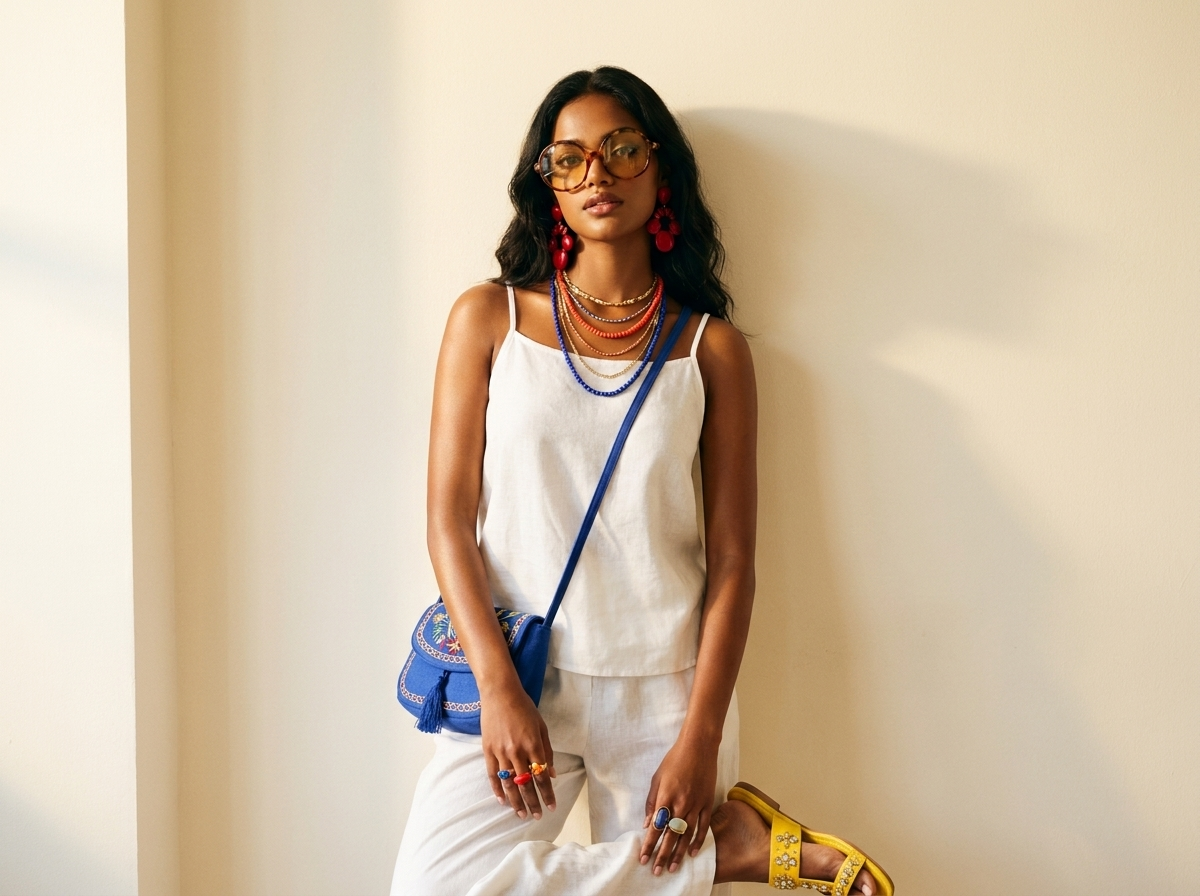
A maximalist outfit without accessories is a paragraph without punctuation. The most ordinary clothes on earth come to life through the power of accessories. The slip dress and the white linen shirt is one thing. Add seven necklaces, four rings, two brooches, and a fun shaped bag, now you’re maximalist.
This is why seasoned maximalists will tell you that the accessories budget deserves as much attention as the clothing budget. Clothes wear out. A great piece of jewelry, bag, or a pair of statement earrings last. They travel across decades of personal style evolution and become the things your daughter asks about.
Jewelry: The Mathematics of More
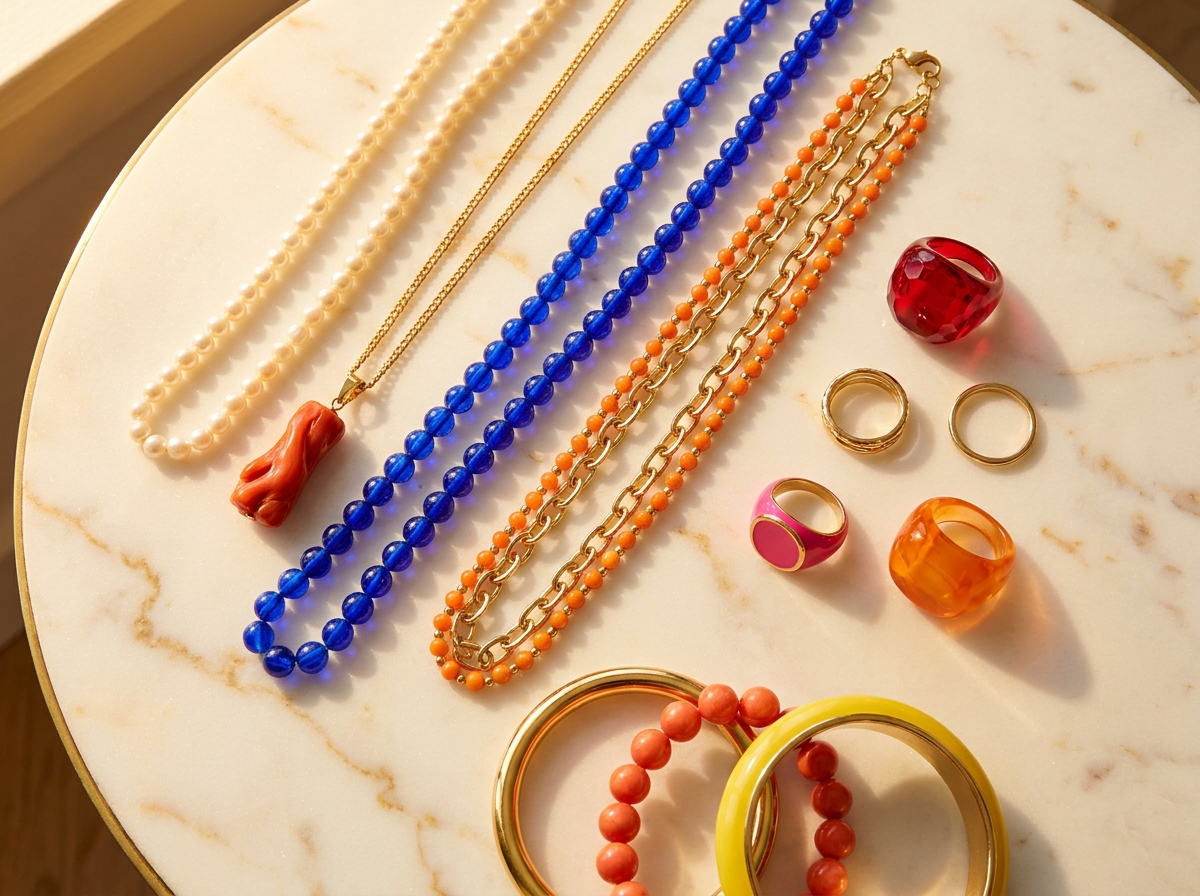
Asking if you can wear too much jewelry is like asking if a library can have too many books, or if a garden can have too many flowers. Well-meaning friends, bless their minimalist hearts, will look at your layers of gold and ask, "Isn't that a bit much?" But they miss the entire point of maximalism, which is to turn oneself into a walking museum.
Their worry relies on a silly theory that there is a strict limit on how many interesting things can occupy the same space. That is a myth. The real secret is about whether they are holding a fun conversation with each other.
Stacking your necklaces is the perfect gateway drug to this style.
The main trick is layering them at different heights: a tight choker sitting close to your throat, a medium chain resting nicely on your collarbone, a big pendant hanging down to your chest, and, if you are feeling extra dramatic, a very long chain that drops even lower. They should share a common thread, like a warm gold tone or a cool silver vibe, but they should absolutely not look like a matching set from a department store.
Thrift shops and antique markets are goldmines for finding these unique stacking pieces.
Rings operate under the exact same "more is more" math. A true maximalist looks at her fingers and sees ten blank canvases, treating every single knuckle as prime real estate. Delicate stacking bands sit proudly next to giant, loud cocktail rings, old-school signet rings, or bright resin and enamel pieces that pop with neon energy.
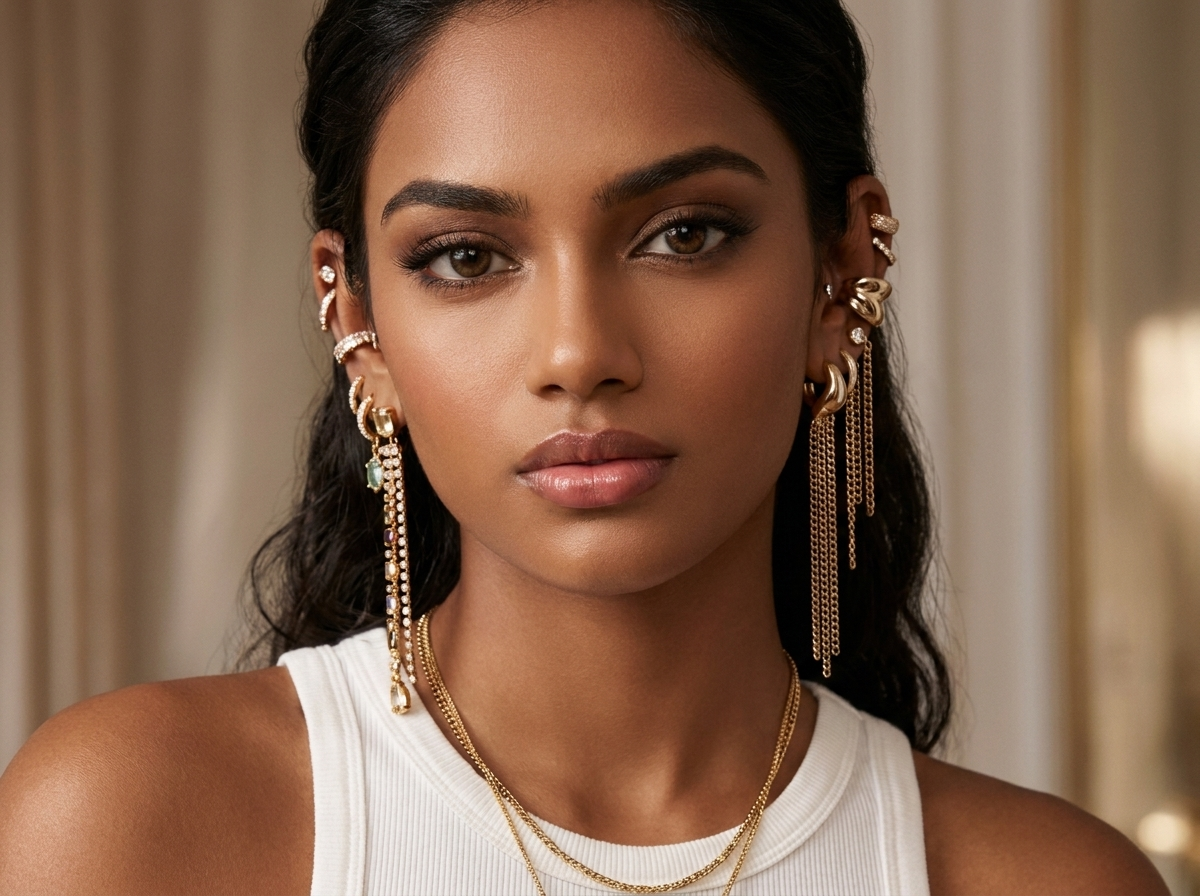
Earrings in the maximalist world follow a freeing rule: they do not need to match. The mismatched earring trend has gone from a weird fashion-runway trick to an everyday look, and maximalists were doing it way before it was cool.
Picture wearing giant, sparkling chandelier earrings to a casual lunch. Or digging up your grandmother’s dramatic clip-ons and pairing them with a sleek, modern ear cuff on the other side. You could even wear a bold, blocky geometric earring right next to a simple pearl stud on the same ear. The underlying truth here is that earrings frame your face, which is the most important real estate on your entire body.
Brooches have jumped in and out of fashion for decades, but the brooch is actually the most flexible secret weapon in your jewelry box. When you pin a whole bunch of them on your jacket at once, they turn into a wearable scrapbook of your life story.
Managing your bracelets means treating your wrist like a blank canvas waiting for paint. You start with a base of metal bangles that clink together when you move. Next, you anchor the whole look with a giant, heavy cuff. Finally, if you even bother to wear a watch, it must act like another piece of art—preferably a vintage one with a face cool enough to earn its spot next to all your other wrist treasures.
Bags: The Carried Statement
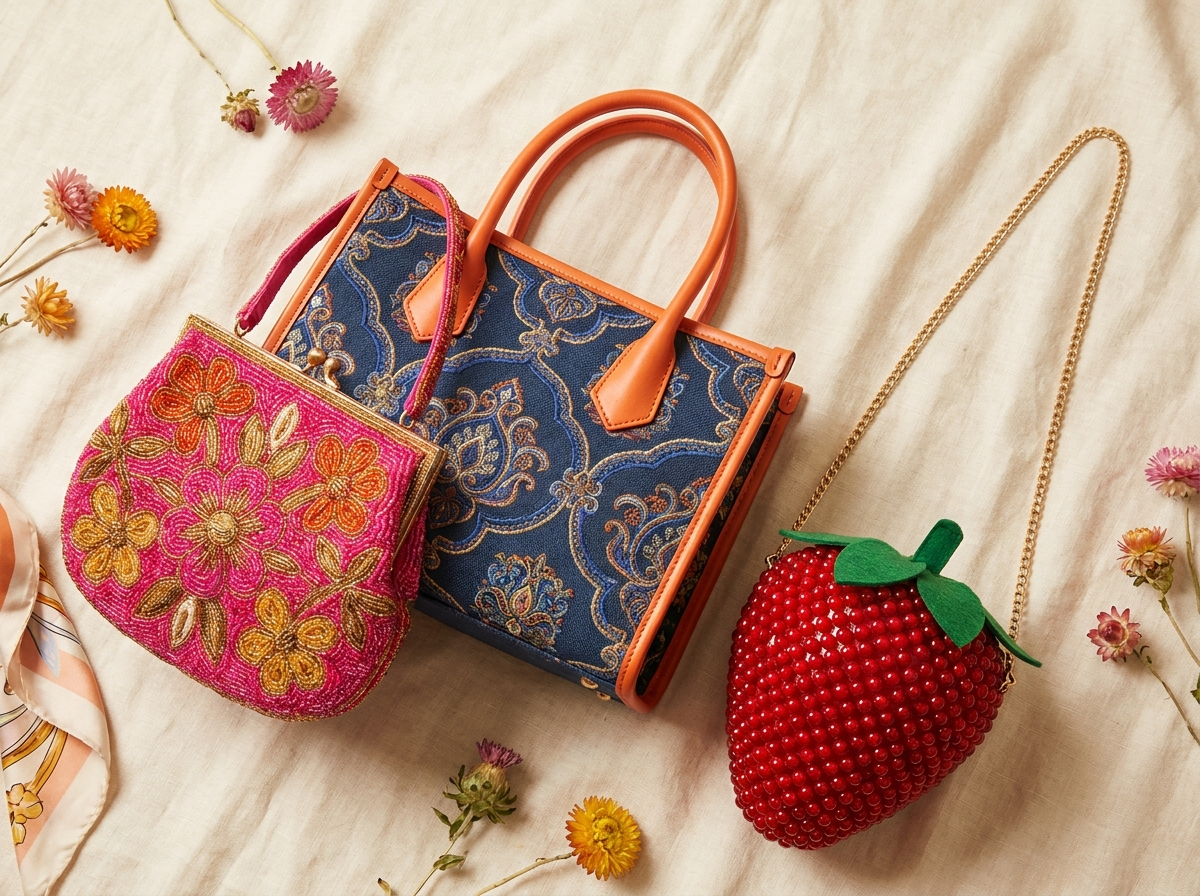
To think a purse is a utility drawer with a strap is to misunderstand the theater of getting dressed.
A maximalist bag is a loud, main character in a daily movie. This is the polar opposite of the minimalist's sad little capsule wardrobe, where someone buys a single, perfect black leather cube and carries it until the end of time (how incredibly exhausting).
The vintage statement bag serves as the anchor of the entire collection. Imagine parading a glittery, beaded disco bag in the harsh midday sunlight, or carrying a structured 1970s purse in a shade of neon mustard. These vintage pieces carry a certain weight because they were made by designers who didn't compromise on their weird, beautiful dreams.
A hand-embroidered or heavily beaded bag connects your closet to centuries of human craft and artistic history. Modern brands like Cult Gaia and Cleobella offer great mid-tier options, Etsy creators make custom treasures that won't break your budget, and the true holy grails lie in the vintage markets of the 1920s and 1970s.
We must treat the novelty bag with the utmost intellectual respect. It injects a sense of humor and surrealism into an outfit, which are highly serious design choices. Carrying a cherry-red strawberry purse is a bold statement of maximalism's main law: joy is a perfectly valid reason to design something.
Wearing multiple bags at once is the ultimate solution for those chaotic days when a single purse simply cannot hold all of your big personality.
Footwear: The Foundation That Speaks
For the maximalist, the shoe is the ultimate conclusion to the outfit's story.
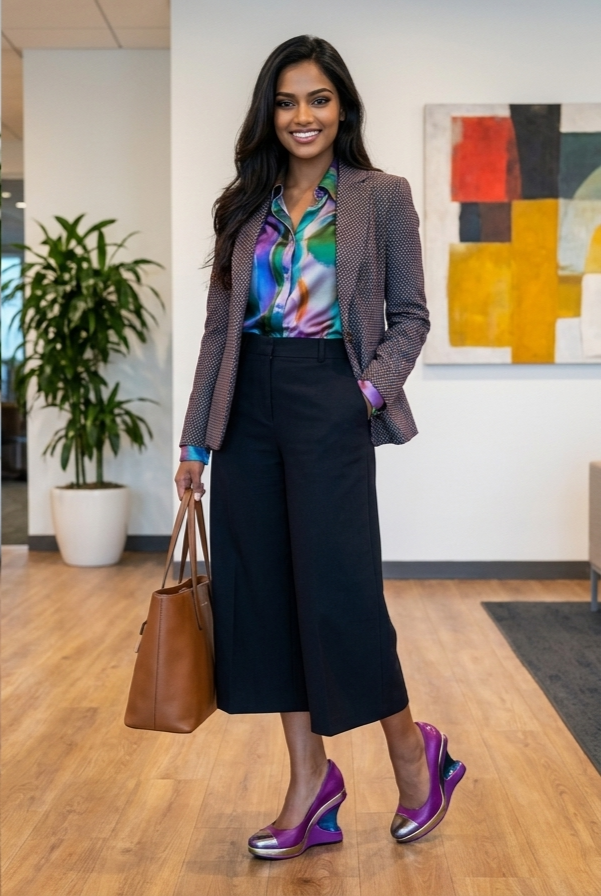
Glittery, decorated flat shoes have made a huge comeback lately, and style lovers are thrilled to play along. A simple ballet flat or sandal covered in shiny crystals, colorful beads, or detailed stitching turns a plain dress into a proud statement. While Mach & Mach offers gorgeous, luxury crystal heels for those with deep pockets, brands like Zara and ASOS offer shiny, budget-friendly options.
Wildly patterned boots are another brilliant option for your feet. Just imagine walking around in flower-print knee-high boots, bright cobalt blue cowboy boots in carved leather, or cherry-red ankle boots covered in embroidery. These shoes carry your fashion message all the way down to the dusty pavement.
Vintage shoes are their own treasure chest. These older shoes were created with real imagination and a passion for decorative flair. Think about wearing 1970s patterned fabric platform sandals, 1950s kitten heels updated in a bright modern color, or shiny 1980s party heels to the local farmers' market (because real maximalists know that fancy shoes belong everywhere, even next to the organic carrots).
Headwear and Hair Accessories: The Crown
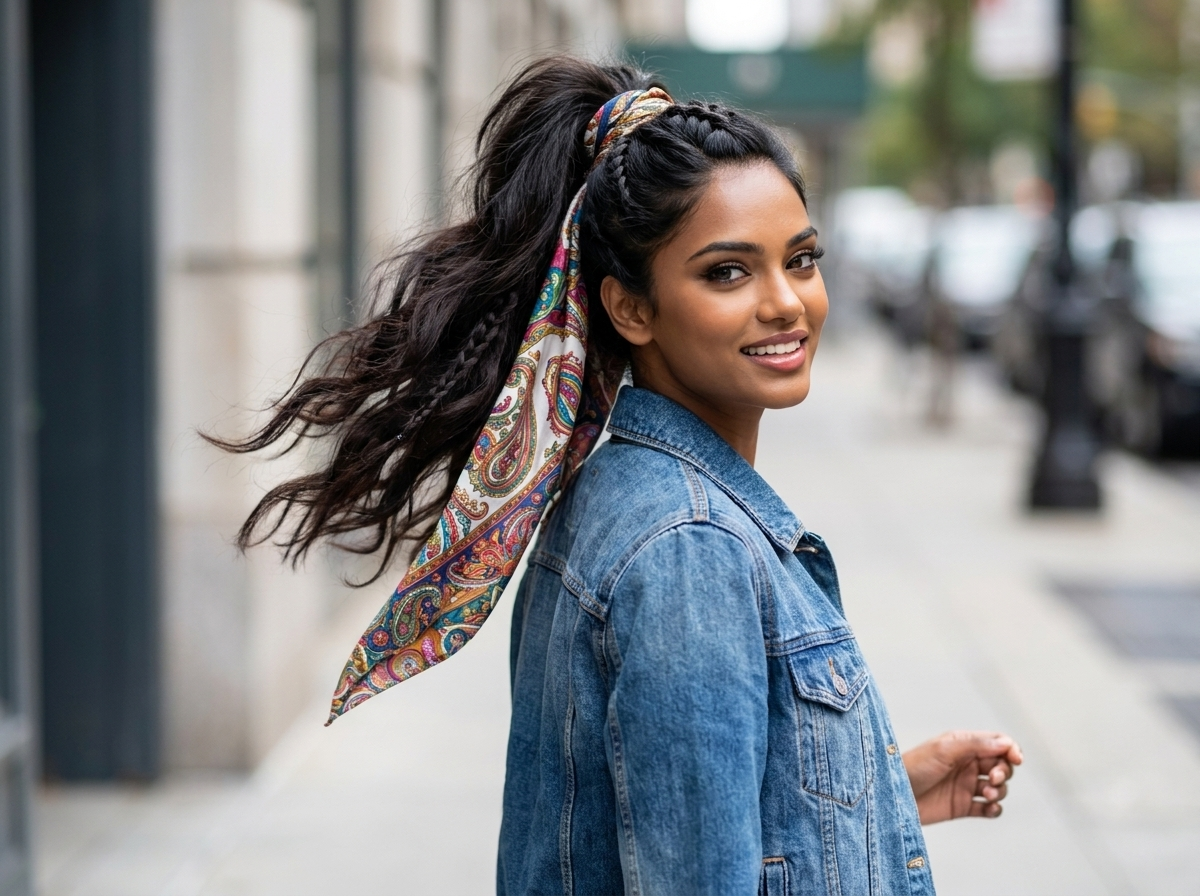
The head is real estate, and the maximalist never leaves real estate undeveloped.
Statement headbands are the most accessible entry point into head-level maximalism. Jennifer Behr and Lele Sadoughi produce versions at the investment-to-mid range; the vintage market produces has them at accessible prices, especially for the beaded and embellished examples from the 1940s and 1950s.
Vintage hats are a world of their own. The maximalist hat declares that the outfit extends to its absolute uppermost point.
Scarves are the most useful pieces in the maximalist accessories wardrobe. Wear it tied at the neck over a blouse collar for a 1970s reference, wrapped as a headscarf like a 1960s Italian film actress in a convertible, tied to the handle of a bag, and more. The Hermès silk square is worth the investment, but the vintage scarf market has comparable beauty at a fraction of the price.
Eyewear: The Punctuation Mark
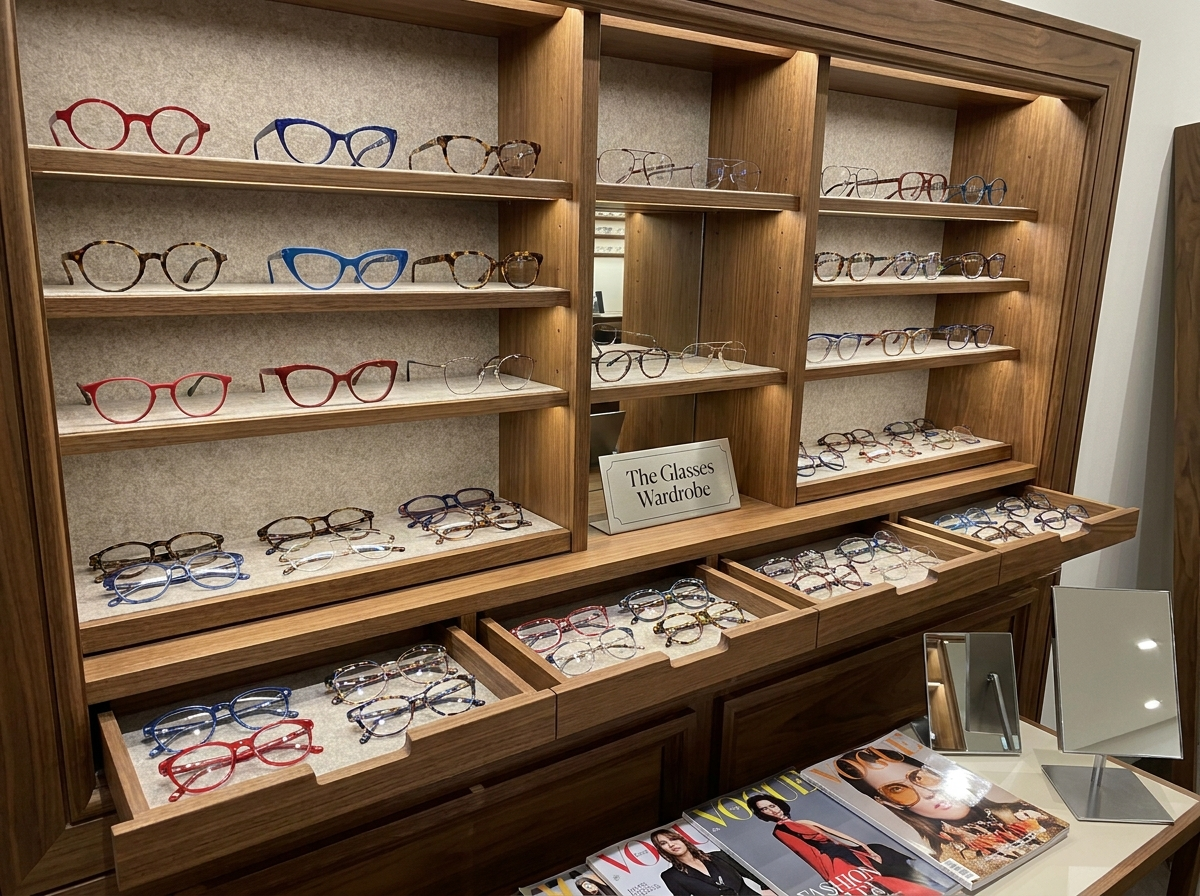
Iris Apfel understood something about glasses that the rest of the fashion world took decades to catch up to: eyewear is a statement piece on the most visible part of the body.
Oversized frames are the maximalist eyewear standard. Round frames in tortoiseshell or in a color extend the outfit's palette. Cat-eyes in unusual colorways are a notable face-level accessory. Look for vintage frames from the 1960s and 1970s at estate sales and specialist vintage eyewear dealers.
Tinted lenses in unexpected colors contribute to the visual composition from outside. The maximalist's sunglasses are, and should be, something that requires a second look.
The full accessories portrait, the stacked necklaces, ringed hands, embroidered bag, embellished shoe, the scarf, the hat, and the glasses are not excess for its own sake. It is someone who understands that the self is a complete aesthetic object.
How To Stack Jewelry The Maximalist Way
Start with necklaces at four lengths: choker, collarbone, chest, and long. They should share a metal tone or color family without matching. Add rings to multiple fingers in mixed metals and scales — cocktail rings beside stacking bands beside vintage signets. Layer bracelets from slim chains through to statement cuffs, mixing materials freely. Treat brooches as punctuation: pin them to lapels, bag straps, or hat brims in multiples. The goal is not coordination. It is conversation — each piece speaking to the others while remaining entirely itself.
Beauty — The Maximalist Face
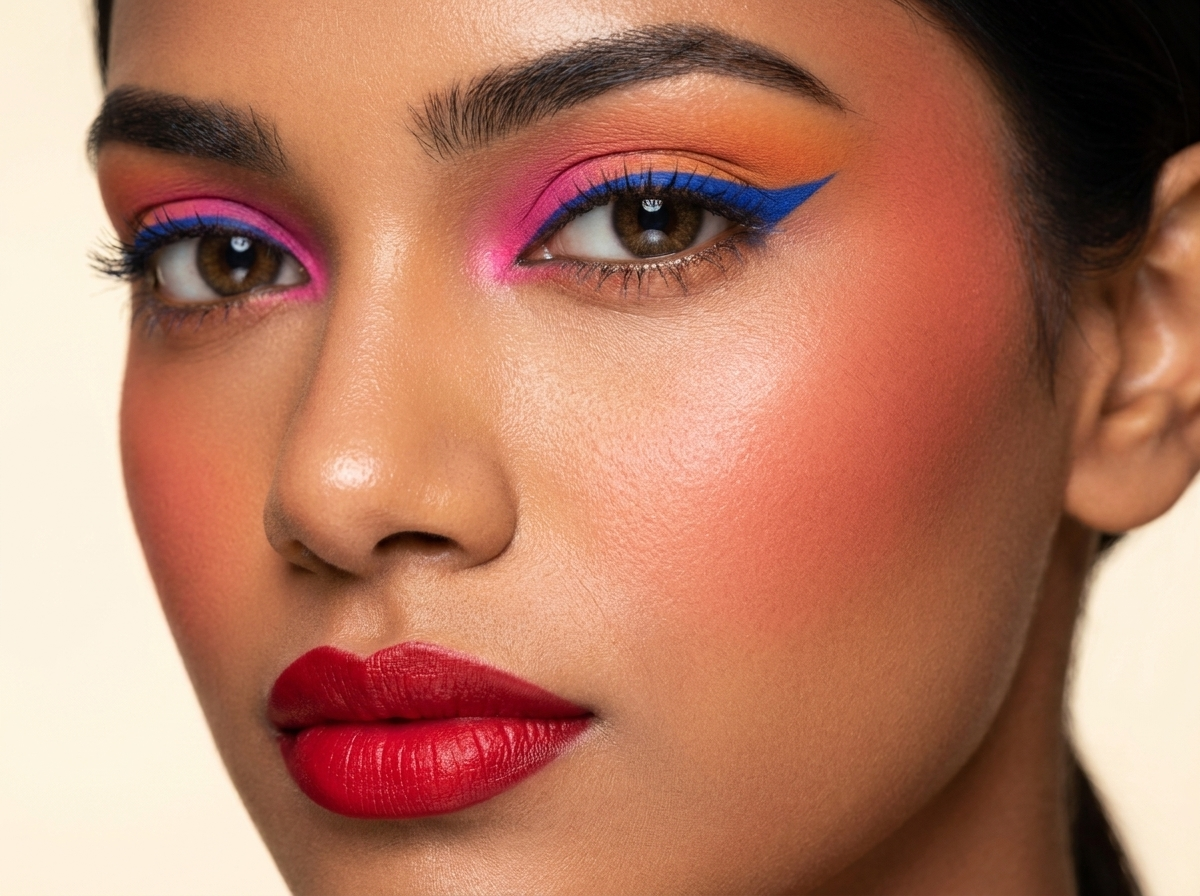
There is beauty advice that the maximalist has received and ignored her entire life.
The no-makeup makeup look. The barely-there lip. The maximalist notes this is useful for someone, and proceeds to apply blue mascara.
Maximalist beauty operates on the same philosophical foundation that self-presentation is a creative act, more is more , and that the face deserves the same commitment that the wardrobe receives. Maximalist beauty is selective, not always loud.
The Makeup Philosophy: All Features Welcome
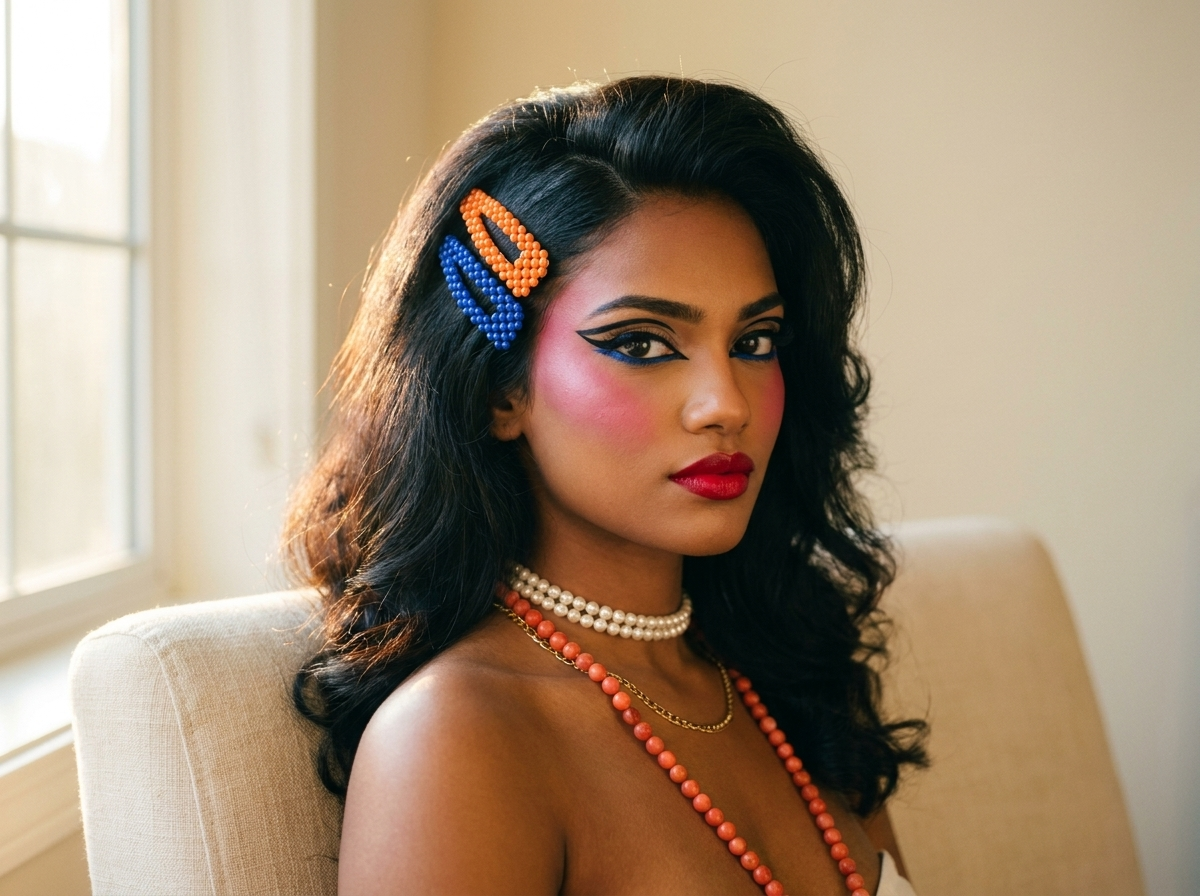
The beauty advice that says "bold eye or bold lip, never both" was written for people who find decision-making stressful. The maximalist answer to bold eye or bold lip is: yes, and cheek, and under the eye, and the inner corner, and possibly something at the brow bone.
Skin in maximalist beauty is not the stripped-back, barely-there canvas of the clean girl aesthetic. It is luminous, expressive, and the background against the rest of the composition. A good base in maximalist terms is why the eye isn’t chaotic. The same way the color bridge in a pattern-mixed outfit creates a logic that makes three competing prints match.
Blush
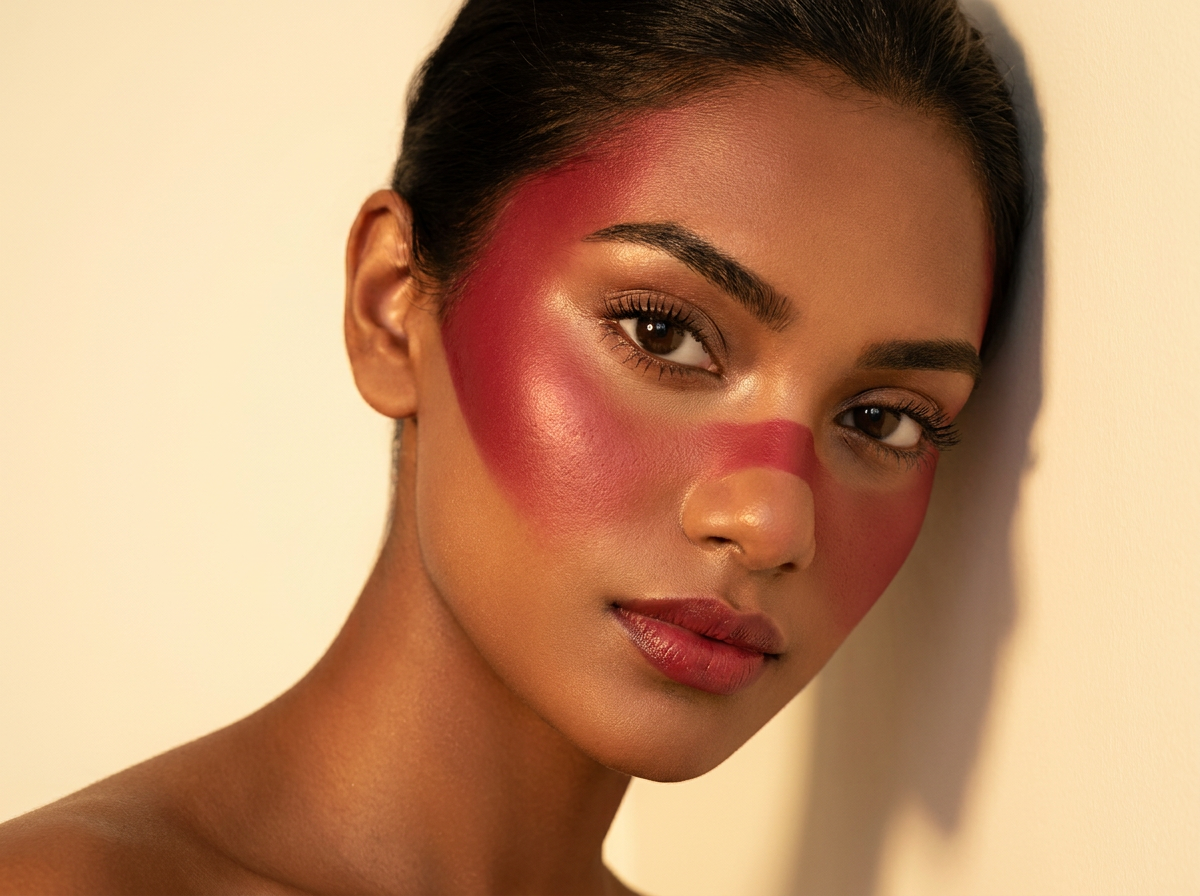
Blush, in the maximalist toolkit, is applied with the same commitment that the eyeshadow receives. The 1970s double blush (a deeper shade at the temple meeting a warmer tone at the apple of the cheek) treats the face as a canvas with multiple zones.
NARS's Blush in Orgasm and its deeper companion shades handle the mid-range version; Charlotte Tilbury's Cheek to Chic compacts provide the investment approach; and the accessible end belongs convincingly to e.l.f. and NYX, both of which produce pigmented powder blushes that perform beyond their price point.
Eyes
The maximalist eye is where the real work happens. The graphic liner look (black liner extended beyond the eye's natural boundary, drawn into geometric shapes) requires a felt-tip liner with a tip to make the geometry forgiving.
MAC's Fluidline and the Urban Decay 24/7 liner handle this at the mid-range; Charlotte Tilbury's Feline Flick at the investment end; NYX's Epic Ink Liner at the accessible level.
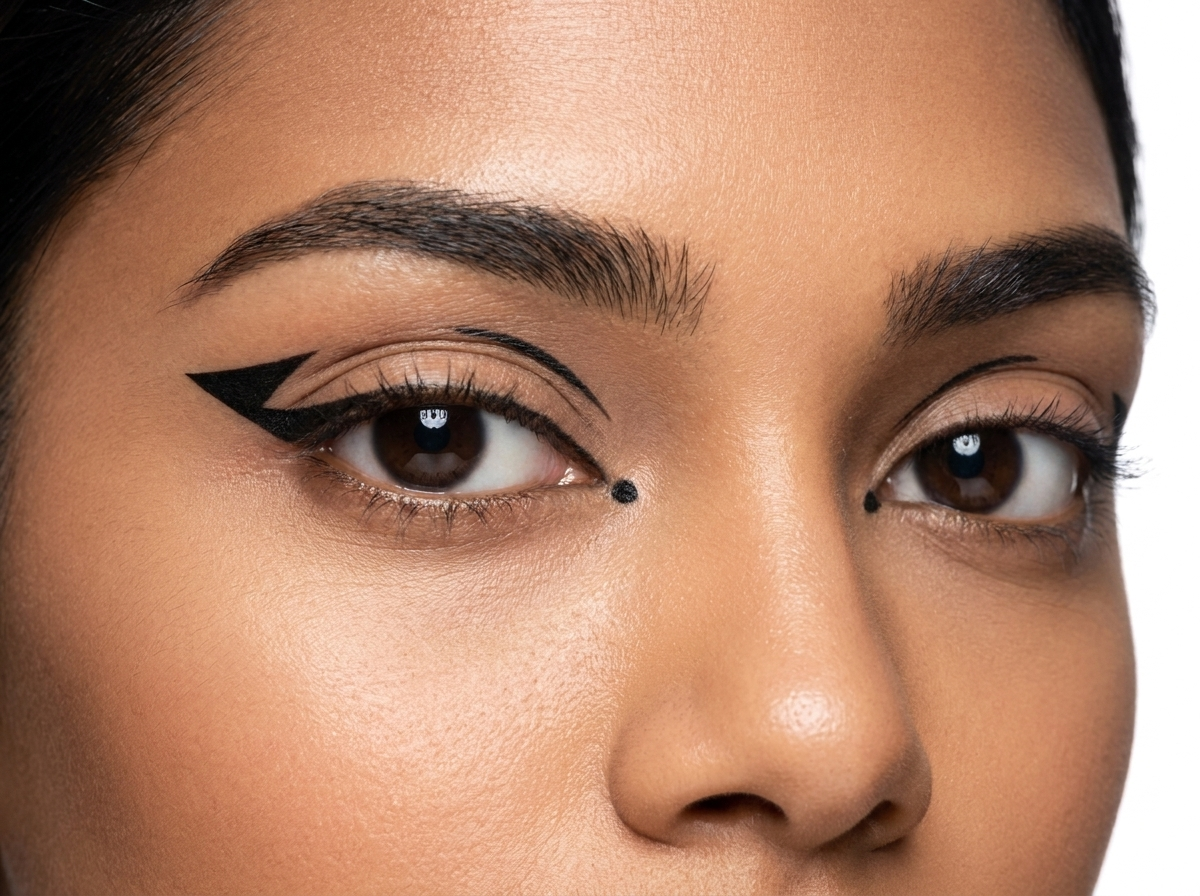
Eyeshadow in the maximalist context is color. Saturation is a virtue. The unexpected combination is more interesting than the conventional one. Think cobalt blue shadow in a graphic block across the lid. Hot pink at the inner corner meeting tangerine at the outer. Or a wash of cherry red on the lid that reads between editorial and alarming, and in person as the most interesting face in any room.
Pat McGrath Labs produces the category's finest pigmented shadows at the investment tier — the MatteTrance lipsticks and the Mothership palettes are the maximalist's beauty Gucci. Urban Decay's Naked palettes offer the mid-range; for the accessible tier, the NYX Professional Makeup line and the e.l.f. Power Grip range give color that overperforms at every price point.
Blue mascara deserves its own line because it is the most useful maximalist beauty instruction available and the one most ignored: wear blue mascara. Not navy. Actual cobalt or electric blue, applied to the upper and lower lashes because the lash movement distributes it differently.
Lancôme's Hypnôse Drama in blue, L'Oréal's Panorama Mascara in navy, and the various colored mascara options cycling through Urban Decay's range.
Lips
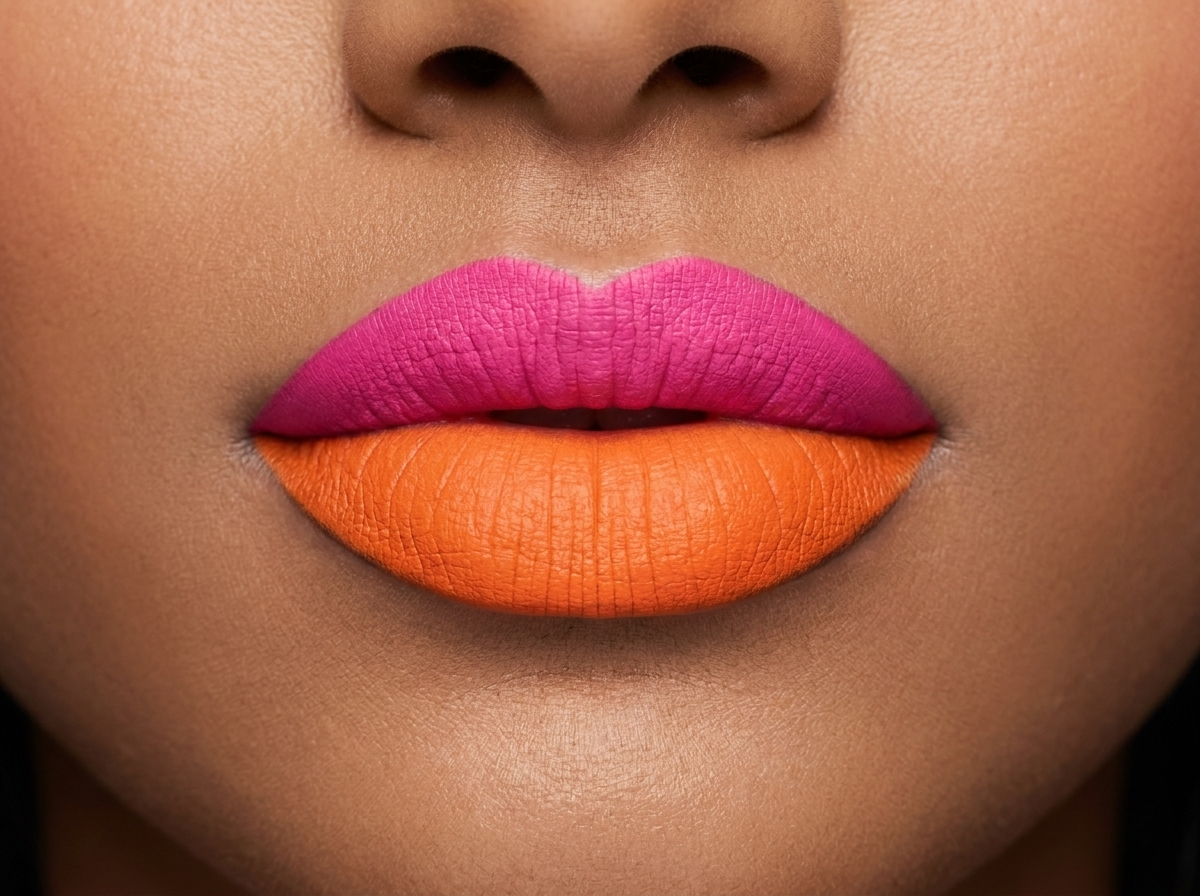
The lip in maximalist beauty is not the lip liner and gloss of the no-makeup look. Cherry red applied with lip liner and then layered with a gloss adds dimension. Hot pink in a matte formula that wears for hours. Liquid lip in a shade with no natural equivalent in human skin.
Charlotte Tilbury's Matte Revolution lipsticks and MAC's Retro Matte range handle the investment and mid-range versions respectively; NYX's Soft Matte Lip Cream produces comparable results at a fraction of the costn.
And remember: glitter and shimmer work for the everyday face, not just evening.
Hair: Volume as Conviction
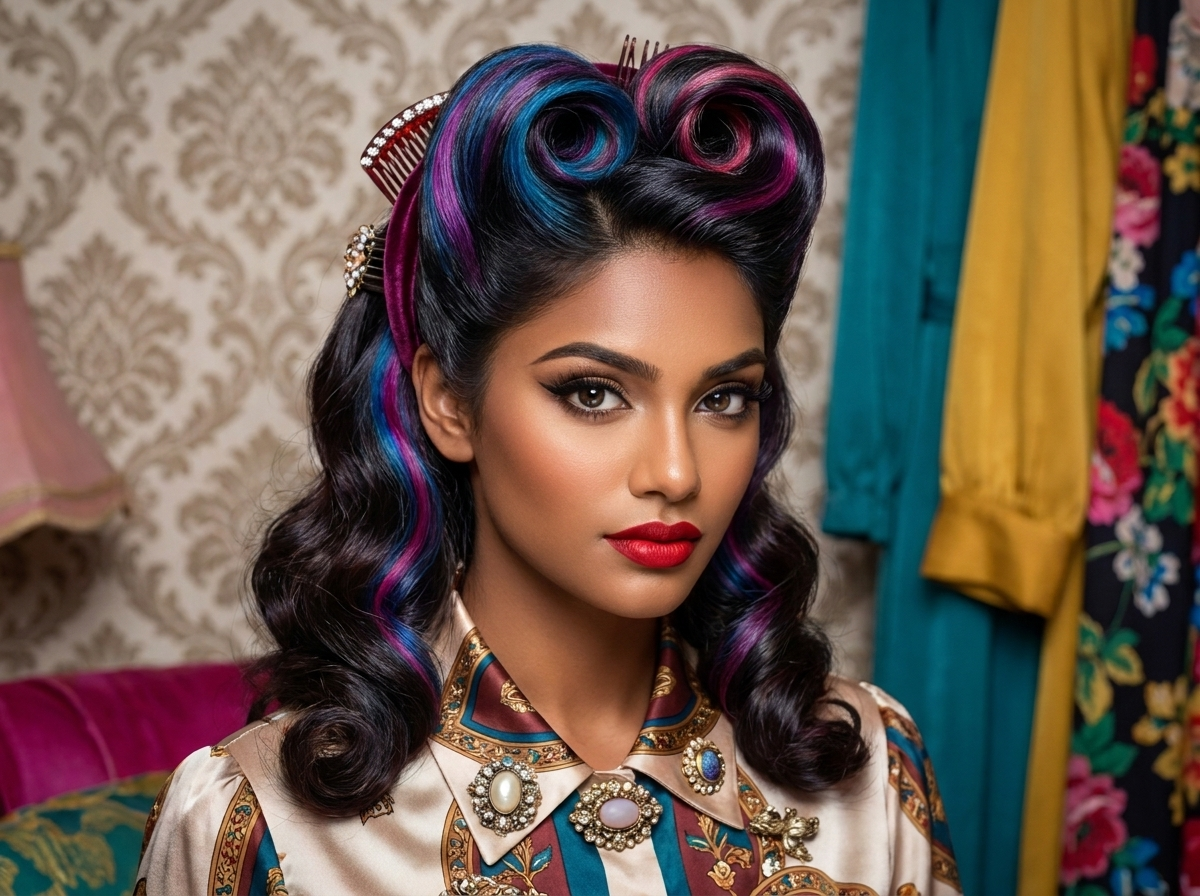
The maximalist's hair approach follows the same logic as everything else. Hair in the maximalist context is the crown of the visual composition.
Big hair has been both in and out of fashion for the better part of sixty years, which means it has long since transcended the fashion cycle. The blow-dried volume of the 1970s. The set and backcombed height of the 1960s beehive. All of these express the same principle: that hair, like clothing, is a medium where more is a choice and restraint is not automatically the more sophisticated one.
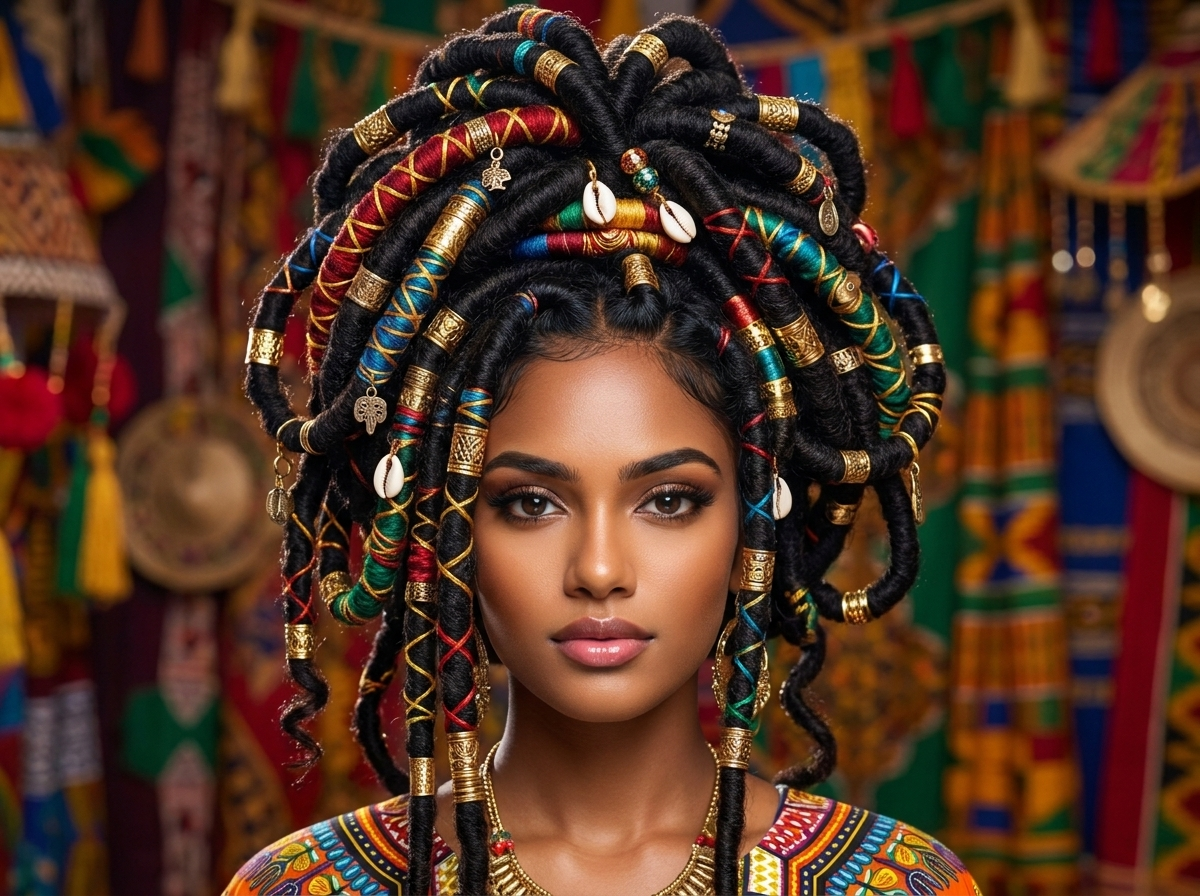
Color in maximalist hair runs from the subtly multidimensional to the entirely unambiguous. Vivid red in the Lucille Ball tradition. The platinum that bypasses blonde and cooler and more extreme. Hot pink in a world where professional women do not have pink hair. The hair is a canvas for multi-tonal color in the same way pattern mixing is to fabric.
Oribe's color-focused haircare range handles the investment maintenance tier; the Garnier Nutrisse and Schwarzkopf Live color ranges serve the accessible DIY.
The hair accessory wardrobe is where the maximalist's head-level strategy becomes most directly continuous with the accessories philosophy. Multiple clips worn simultaneously, a scarf tied as a headband, then as a bow, then a turban. Vintage hair combs worn in pairs on either side of a low chignon. Beaded headbands in various colors. The elaborate braided style that incorporates colored thread or ribbon into its structure.
Jennifer Behr and Alexandre de Paris produce investment-tier hair accessories worth the cost; the vintage market and Etsy's handmade hair accessory community produce equivalents at accessible prices, often with more character.
Nails: Ten Small Canvases
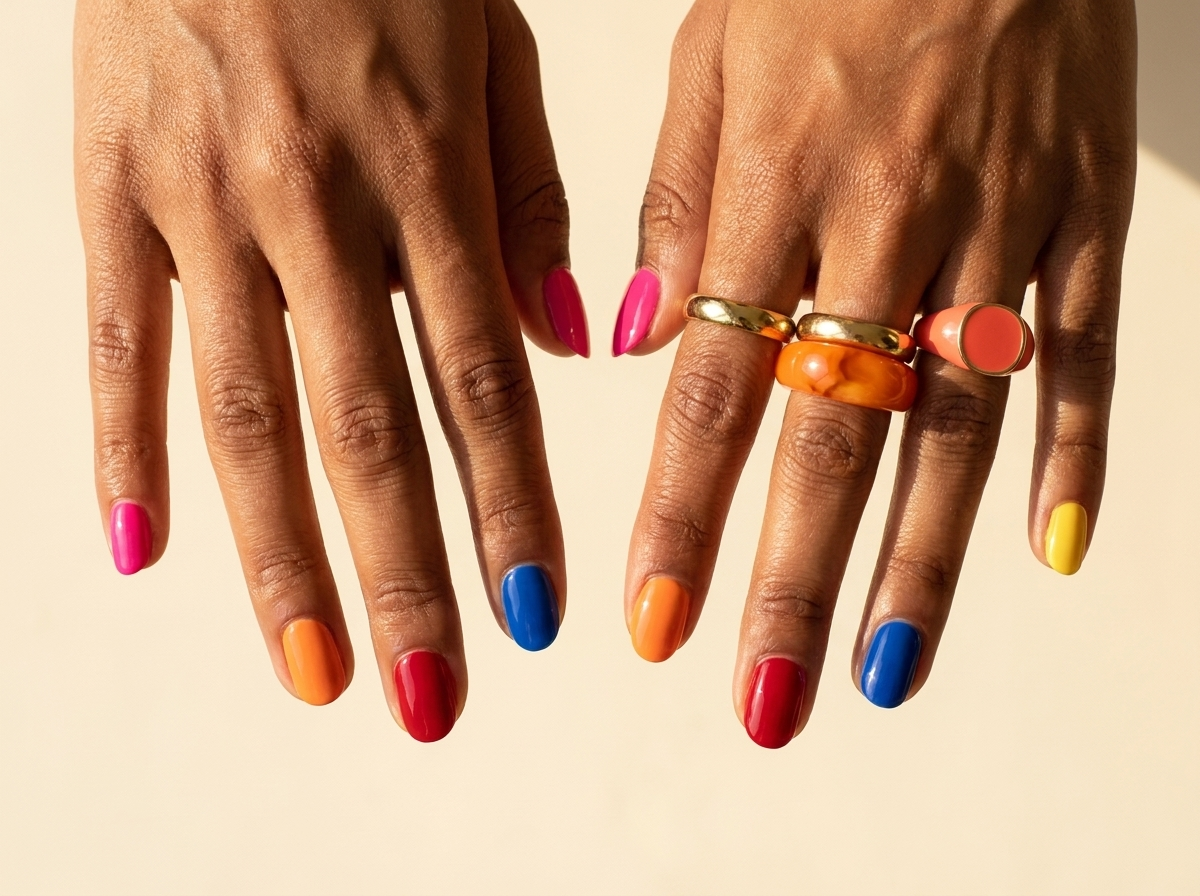
Maximalist nail theory believes ten nails means ten opportunities to make a visual statement.
The technique is the different-on-each-nail manicure: hot pink on the thumb, tangerine on the index finger, cherry red on the middle, cobalt blue on the ring, sunshine yellow on the pinky, the whole sequence repeated on the other hand with slight variations.
Nail art in the maximalist context extends from graphic to sculptural. Think hand-painted botanical motifs on a base of hot pink polish. Geometric color-blocking across the nail surface. Tiny painted faces, vintage motifs, abstract color relationships that require a very good nail technician. The investment nail salon is justified on the same grounds as the investment clothing piece: if you're going to look at something every day, it is worth being beautiful.
Three-dimensional embellishment includes gems, pearls, dried florals, and tiny charms. The press-on nail category, which has developed considerably in recent years, makes sculptural nail options available at the accessible tier; Impress and Static Nails both give affordable embellished options.
Fragrance: The Invisible Layer
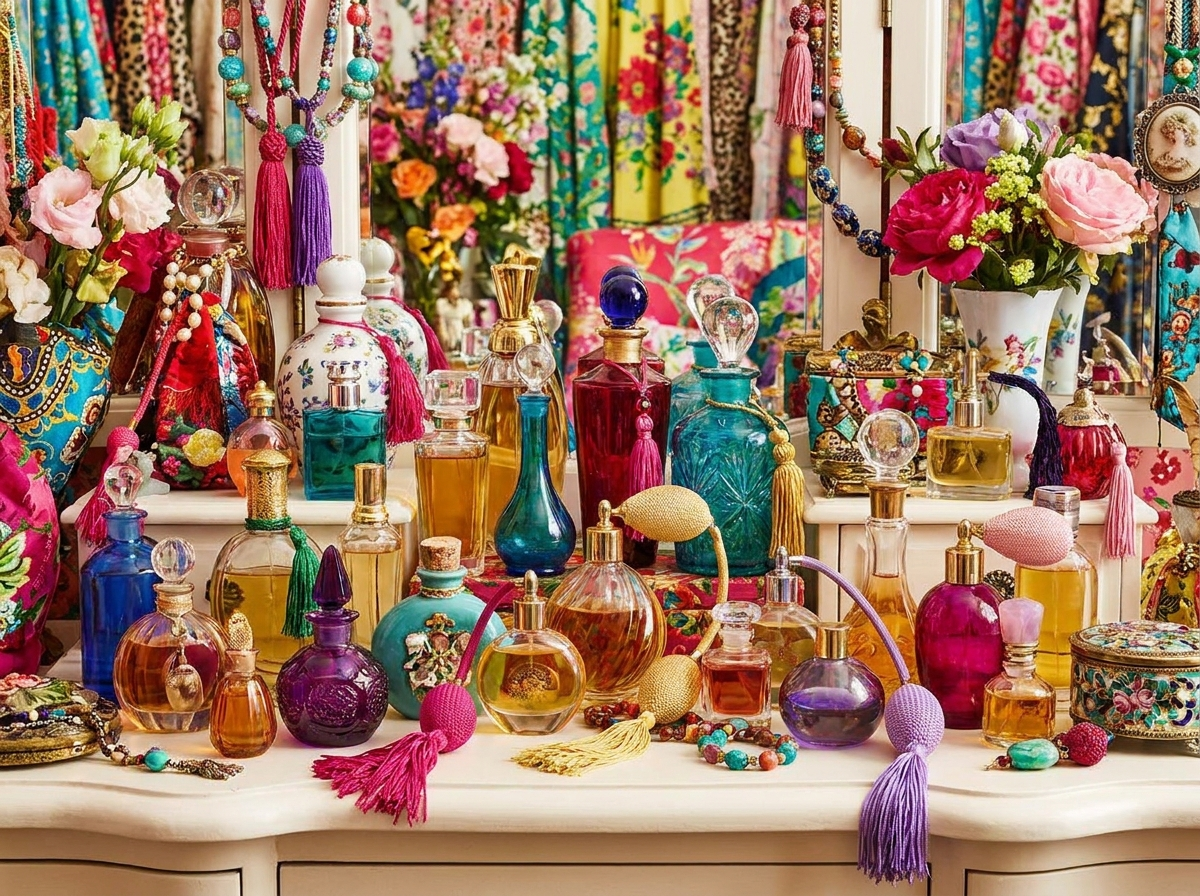
Fragrance cannot be photographed, which gives it a different relationship with the aesthetic's visual logic but makes it no less important. The maximalist's approach to scent follows the same additive principle that governs everything else: a layered approach that treats fragrance as a wardrobe.
Fragrance layering (applying two or more scents simultaneously) is the olfactory equivalent of the necklace stack. Think a base note of vetiver-heavy fragrance paired with the top note of a sharp citrus.
Fragrance houses of the 1970s and 1980s made complex scents, heavier on the animalic notes, more committed to the baroque, that the contemporary market rarely replicates. A bottle of vintage Guerlain Mitsouko or Rochas Femme, from an estate sale or a specialist dealer, brings something specia contemporary alternatives don’t reach. Maison Margiela's REPLICA line handles the accessible version; Serge Lutens and Juliette Has a Gun occupy the mid-to-investment tier.
The maximalist beauty practitioner knows what elements she is adding and why. The difference between maximalist beauty and the too much is the same as the difference between maximalist dressing and the overdressed.
Maximalism's Subgenres — The Many Languages of More
The vintage maximalist and the cultural fusion maximalist are often the same person on different days. The cottagecore maximalist and the dopamine dresser share a commitment to joy. The avant-garde maximalist occasionally produces something so conceptually rigorous that it circles back around to the romantic excess of the cottagecore approach.
They are the proof that maximalism has depth.
Vintage Maximalism: Dressing Across Decades
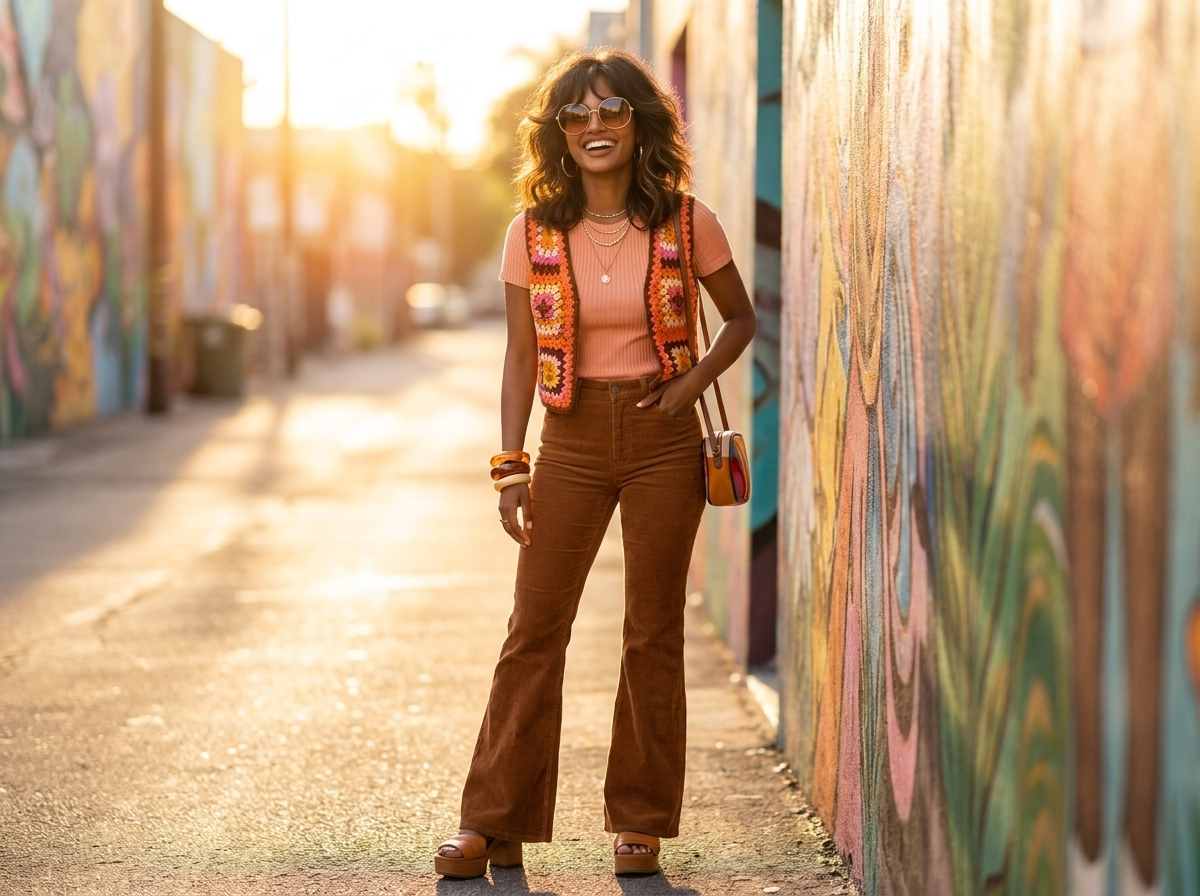
Vintage maximalism believes the most interesting clothes have already been made. Not all of them, but enough.
The vintage maximalist dresses across eras. The 1970s wide-leg trouser in a complex print is in same outfit as the 1950s embellished cardigan, 1980s sculptural earrings, and the 1990s slip dress worn over the whole composition.
The estate sale is her most sacred hunting ground. Unlike the curated vintage shop, the estate sale offers the mink beside the polyester, the 1960s beaded gown beside the 1990s exercise equipment.
What distinguishes vintage maximalism is her commitment to mixing and not limited to one era. She who dresses in 1940s pieces is a vintage dresser. She who wears 1940s shoulders with a 1970s print skirt and 1980s jewelry is a vintage maximalist.
Avant-Garde Maximalism: When Fashion Becomes a Proposition
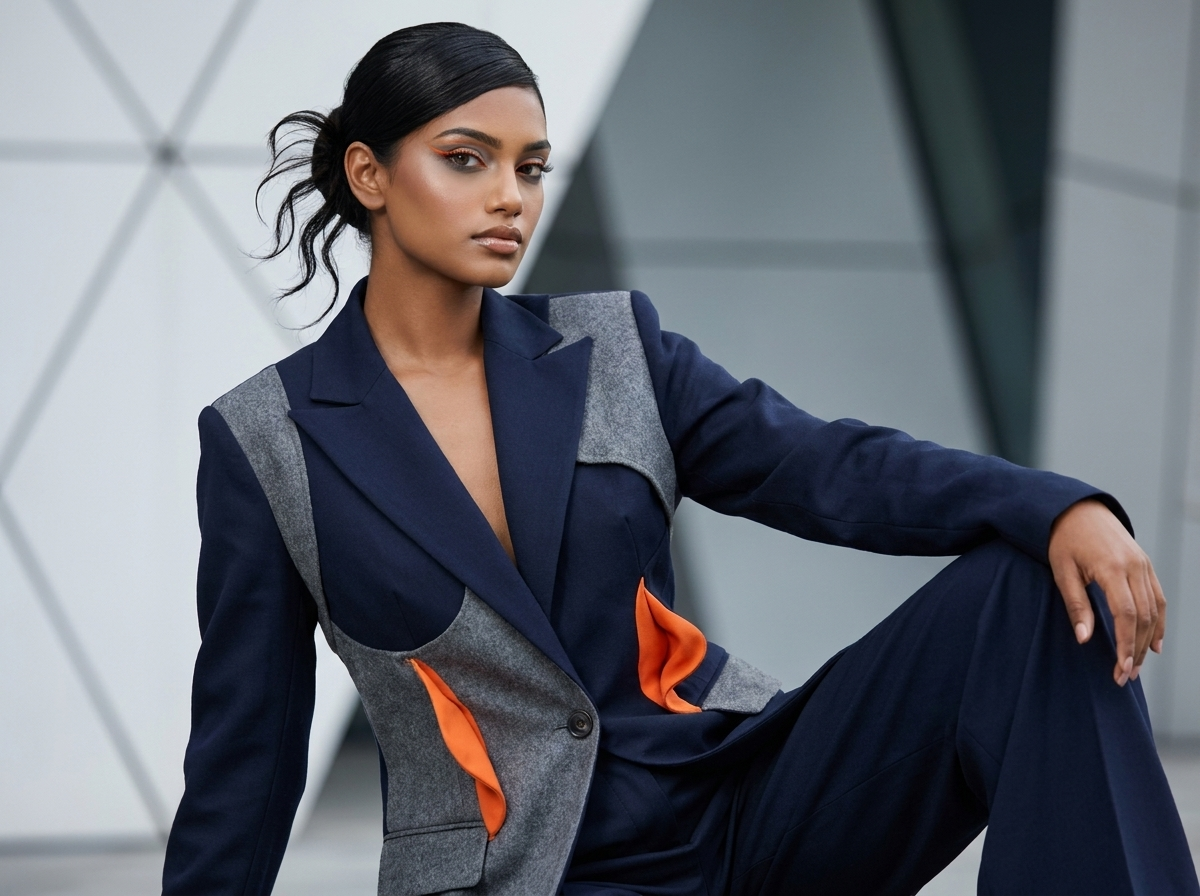
Where vintage maximalism is about accumulation and reference, avant-garde maximalism is about ideas. The avant-garde maximalist puts on seven necklaces because she loves jewelry. She wears a garment that makes you question why you assumed the body's relationship to decoration should be comfortable.
Comme des Garçons under Rei Kawakubo is the canonical reference. A Kawakubo adds more in the way that conceptual art adds more. The bumps and protrusions of the Body Meets Dress, Dress Meets Body collection of 1997. The flat two-dimensional shapes of 2012 that removed the body's curves from the conversation.
Maison Margiela under Martin Margiela provides the deconstructionist version. Iris van Herpen, whose 3D-printed and laser-cut works link between fashion and sculpture, represents the contemporary avant-garde maximalist at her most technically ambitious.
The avant-garde maximalist in daily life expresses the subgenre's logic through strong structural garments. Imagine the exaggerated sleeve that restructures the silhouette or the asymmetric hem that makes the outfit's geometry visible. The avant-garde maximalist's goal is to be interesting.
Cottagecore Maximalism: Florals on Florals, Lace on Lace
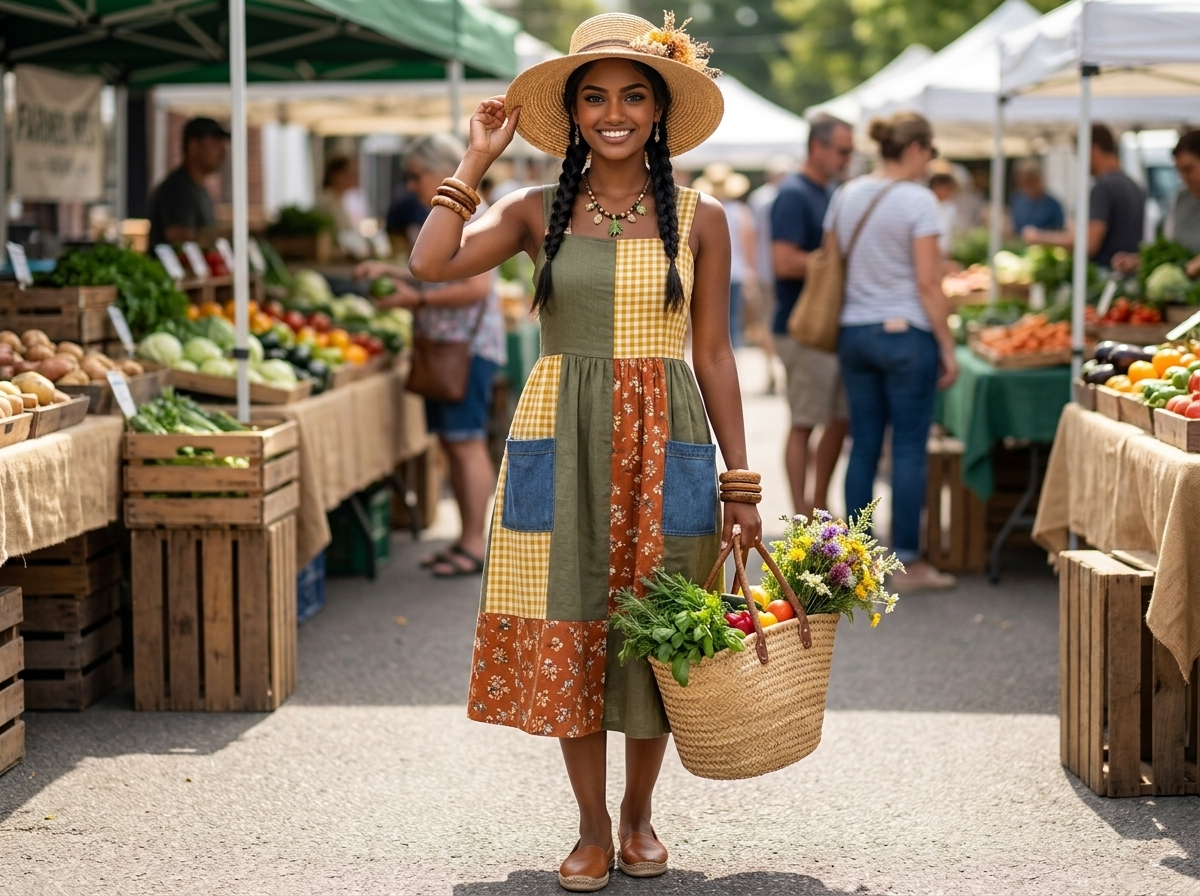
Cottagecore maximalism is the subgenre that the pandemic produced and that has, proved durable enough to survive it. The subgenre combines cottagecore's pastoral romanticism with maximalism visual abundance, producing something softer than most maximalist expressions but no less committed to the principle.
Cottagecore maximalism’s elements are distinguishable and rich enough to carry variation. Imagine florals on florals or lace layered over embroidery layered over more lace. The aesthetic is best described as what would happen if a Victorian greenhouse and a grandmother's wardrobe had kids.
What sets apart cottagecore maximalism from plain cottagecore is the maximalist excess. The cottagecore dresser might wear a floral dress with leather sandals. The cottagecore maximalist wears the floral dress over a lace blouse, adds a cardigan embroidered with additional florals, stacks pearl jewelry to the collarbone, pins a brooch to the cardigan's lapel, and wonders if her basket or embroidered cloth bag works better.
Cottagecore maximalism is the fantasy and this is both its charm and its cultural function.
Cultural Fusion Maximalism: The World's Textile Traditions
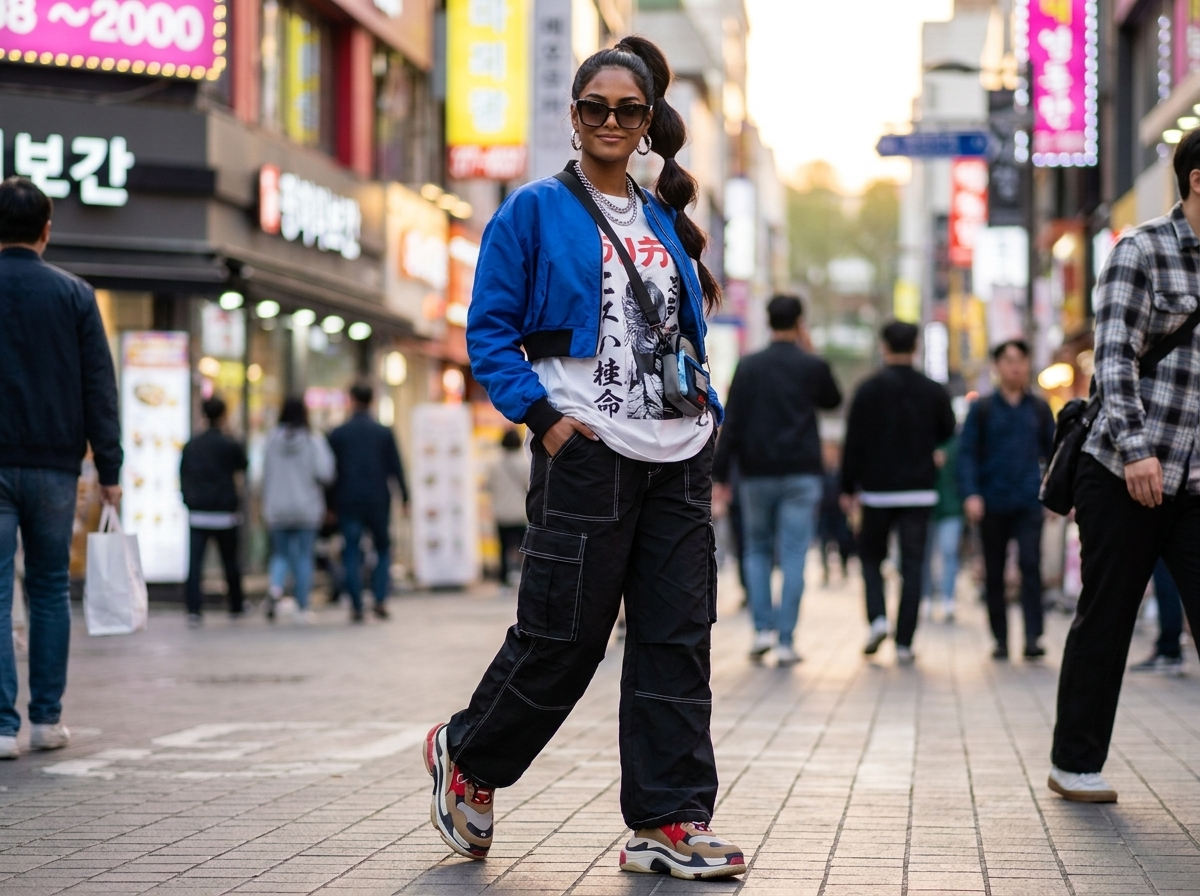
Cultural fusion maximalism has the richest aesthetic material. It draws on the depth and diversity of the world's textile and craft traditions and builds a visual practice celebrating global craft.
The cultural fusion maximalist who sources directly from artisan cooperatives and learns the cultural context of her clothes, is different from the person buying cheap imitations
Maximalism's love of pattern, embellishment, and craft draws it to the world's most extraordinary textile traditions, many of which exist in cultures outside the Western fashion canon.
The Indian Arts and Crafts Association, the fair trade networks that connect Western buyers directly to artisan cooperatives in Mexico, Guatemala, and across West Africa, is the sourcing infrastructure that cultural fusion maximalism.
Cultural fusion is richer than any single tradition could produce alone. This is maximalism's global ambition at its best: the conviction that beauty is all over the world.
Dopamine Dressing: The Science of Wearing What Makes You Feel Good
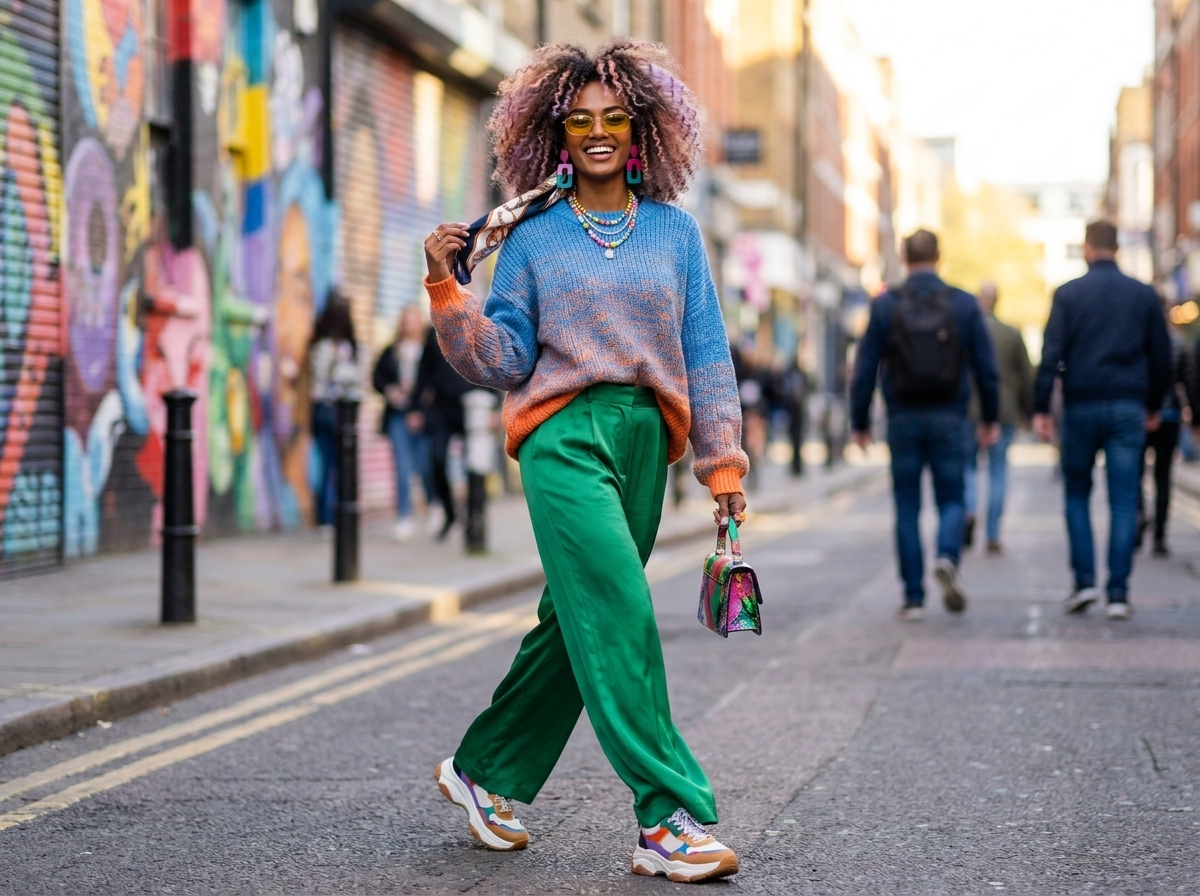
Dopamine dressing became a named phenomenon during the pandemic years and it has remained in the cultural vocabulary.
Color psychology research finds that warm, saturated colors produce physiological responses like elevated heart rate and increased alertness.
The dopamine dresser reaches for the brightest orange on energy days and saturated cobalt for calm and concentration. She uses her wardrobe the way a musician uses a playlist: updated to the day's requirements.
This subgenre has its own icon in Jonah Hill's stylist Ilaria Urbinati and its own design theorists in the colorist work of Valentino's Pierpaolo Piccioli. The subgenre is maximalism's most intellectually current expression.
WHAT IS DOPAMINE DRESSING?
Dopamine dressing is the practice of using clothing color and pattern intentionally to influence mood — reaching for the most saturated orange when energy is needed, the most joyful pattern combination when the day requires a reminder that joy is available. The term was coined by fashion psychologist Dawnn Karen and is supported by color psychology research showing that warm, saturated colors produce measurable physiological responses including increased alertness and elevated mood. It is maximalism's most psychologically explicit subgenre — the one that makes the connection between clothes and emotional state not a side effect but the entire point.
How to Style Maximalism — The Principles
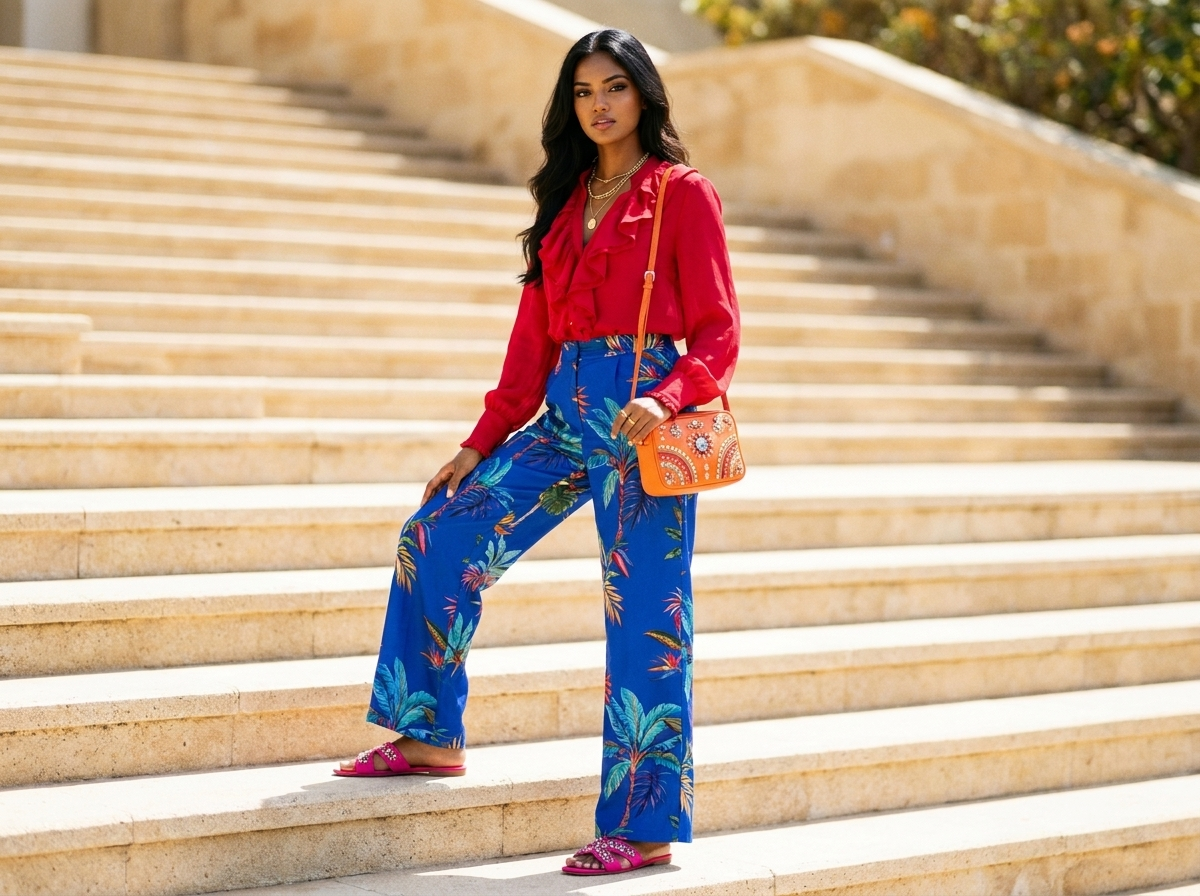
There is a gap between understanding maximalism and practicing it, and that is where most people stall.
Maximalism it involves more variables than minimalist dressing. The method provides the decision-making framework that makes the complex outfit feel inevitable.
Begin With the Anchor
Every maximalist outfit starts with the anchor and builds outward. This is the foundational principle of maximalist styling. The minimalist builds from basics. The maximalist begins at the statement.
The anchor can be anything. A printed skirt that it establishes the entire color story. A piece of jewelry so extraordinary that the clothes beneath it become the support structure for the accessories. The specific anchor is less important than the principle. Every maximalist outfit has a clear center of gravity.
Imagine the anchor is a hot pink and orange printed wide-leg trouser. The response is a cherry red ruffled blouse that picks up the red undertones in the print, a tangerine embellished bag that extends the warm palette, and gold jewelry that bridges everything.
Without an anchor the outfit is just exhausting noise.
Build the Color Story
The color story makes multiple elements coherent.
The best method for building a color story might be the three-color rule. Identify three colors that will do the outfit's primary work, and use the relationships between them — complementary, analogous, or triadic — for visual composition. Even though the hot pink printed skirt, the cobalt blue embroidered blouse, and the cherry red bag do not match, they share the same color family.
The color bridge makes the three-color rule work.
A color bridge is a piece, often an accessory, that contains two of the outfit's primary colors. The scarf contains both the hot pink of the skirt and the cobalt of the blouse is a bridge. The beaded necklace moves between cherry red and tangerine links the bag to the earrings.
Metal tone is the color story's most frequently neglected element. Gold jewelry with a warm palette. Silver with a cooler palette. Mixing metals requires the same color bridge logic. A piece between the gold and the silver, or a warm enough silver. Rose gold, copper, and bronze are bridging metels, pulling warm and cool together.
The Layering Logic
Maximalist layering is visual depth. Looking at an outfit and finding more in it the longer you look.
Each layer in a maximalist outfit should be unique in one of three ways: color, pattern, or texture. A floral blouse under a solid-color embroidered coat works because the blouse pattern contrasts with textured embroidery at the collar. A visible lace-trimmed slip visible beneath a printed midi skirt works because the lace's texture and pattern contrast with the flat print
When the layers are all the same length, it reads as bulk. When each layer is a different length the eye sees each layer. This applies the same compositional logic artist’s use when painting.
Proportion requires the most planning. Maximalism is not interested in the conventional proportion rules. Conventional proportion rules don’t apply to the maximalist. Where conventions encourage hiding and concealing, the maximalist is all about abundance. The proportion choices create visual balance across the whole composition.
The Grounding Piece
The grounding piece is the maximalist's one restraint. In any maximalist outfit with multiple elements, there is almost always one piece that does less than the others. The solid-color turtleneck beneath the embroidered coat and the printed skirt. The simple gold chain that between the chunky beaded necklace and the chandelier earrings. The unembellished leather belt breaking up a pattern.
The grounding piece is preventing things from getting too overwhelming. This is the instinct that separates the fashionable maximalist who always looks magnificent from the one looking like she dressed in the dark.
Finding the grounding piece requires practice. The beginner maximalist tends to add grounding pieces instinctively and then feel guilty about them. The advanced maximalist understands that restraining one element is what creates excess and not chaos.
The Rule of Conspicuous Difference
When combining two similar things, make the difference between them unmistakable.
Two floral prints should be different scales like a delicate chain beside a chunky beaded strand rather than two similar chains that blend into each other.
The maximalist's great stylistic enemy is the accidental match. Conspicuous difference makes the combination so undeniable that’s no accident. that no reasonable person could mistake it for an accident. Two things that are slightly different are confusing. The maximalist's always pushes toward the more obvious distinction.
The Editing Question
Maximalists edit.
This surprises people, but editing is not antithetical to maximalism. The minimalist edits by removing things. The maximalist asks whether each thing is earning its place.
The maximalist's editing process is conducted during the dressing process. As each element is added, ask: does this piece add something new? The fifth necklace duplicating the fourth adds should be replaced with something at a different length or in a contrasting material.
This that allows maximalism to be as complex as it is without becoming incoherent. Each element earns its place by performing a function.
The Beginner to Advanced Progression
The maximalist's development as a dresser follows a recognizable arc.
The beginner maximalist operates on instinct and enthusiasm. Her pattern mixing is tentative. Her jewelry stacking stops at three pieces. Her color combinations are adventurous by her previous standards but conservative by the maximalist's actual standards. The beginner is learning to trust her instincts and builds confidence.
The intermediate maximalist has begun to develop her specific aesthetic language. She can confidently mix three patterns. She can build a compositional jewelry stack. This is where the method becomes most useful.
The advanced maximalist simply gets dressed. She has her anchor piece, color story and grounding piece.
The only honest advice to give the beginner is: wear the thing that seems too bold or too much. Trial and error. The maximalist's education cannot be conducted any other way.
