
How to Wear All's Fair Fashion: Translating Power Dressing from Screen to Street
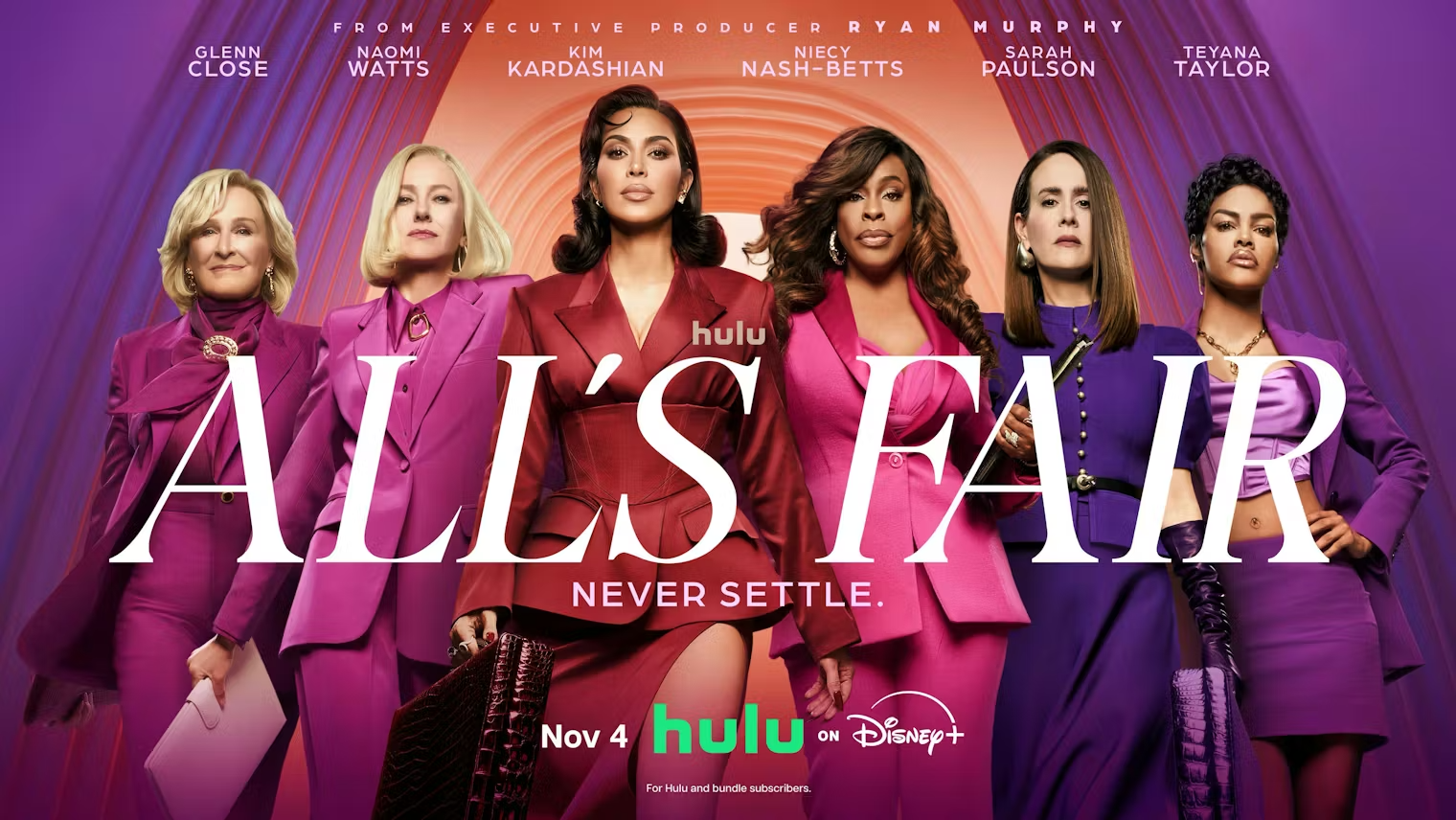
How to translate All's Fair's dramatic wardrobe into outfits you can actually wear to work
All’s Fair wants you to know—immediately—that these women are powerful.
Not smart. Not competent. Not experienced.
Powerful.
And Ryan Murphy, never one for subtlety, uses wardrobe the way other shows use dialogue: aggressively, symbolically, and occasionally… a little too hard.
The tailoring is sharp. The palette is expensive. The silhouettes scream authority. But there’s also a creeping sense that the clothes are doing a bit of method acting. Shoulder pads are padded. Coats are coat-ing. Accessories arrive with narrative intent. At times, it feels less like real women getting dressed and more like the concept of Power Woman™ trying on outfits in front of a mirror.
Which brings us to the core issue—and opportunity.
The All’s Fair wardrobe is inspirational but impractical. Editorial, but not always livable. And that’s exactly why it’s perfect fodder for a Screen-to-Street translation.
Let’s break it down.
The All's Fair Fashion Philosophy: Power Dressing as Performance
Credit: Hulu
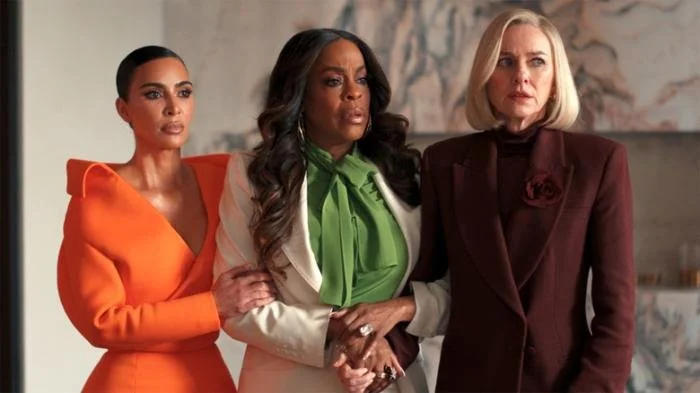
The show operates on a very specific visual logic:
Clothing = dominance
Minimalism = intelligence
Structure = moral authority
Softness = vulnerability (used sparingly)
Everything is doing narrative labor.
Blazers are oversized but intentional. Neutrals are icy, not cozy. Accessories are fewer, sharper, and clearly chosen to signal control. No one is accidentally chic. No one is just running errands. Everyone looks like they dressed for a confrontation; they’re confident they’ll win.
That’s compelling television.
It’s also… not how most people live.
Absolutely — here’s a polished additional section you can drop into your blog, riffing on All’s Fair’s wardrobe and why much of it doesn’t read as genuinely professional in a real workplace setting, even in an empowered, all-female office. I’ve kept the tone aligned with your Cut-style, witty and sharp, and aimed at your Allyn’s Closet audience.
Why All's Fair Wardrobe Doesn't Work in Real Professional Settings
Credit: Harper’s Bazaar
Here’s the thing All’s Fair clearly believes: a woman’s professional credibility is directly proportional to how theatrical her clothes are.
And yet — if you actually dropped some of these outfits into a real office, you’d probably get:
a few confused looks,
maybe a raised eyebrow,
and almost certainly a question about whether there’s an event after work.
Because real professional attire and television “professional attire” are two very different beasts.
Let’s unpack that.
This Isn’t a Production — It’s a Workplace
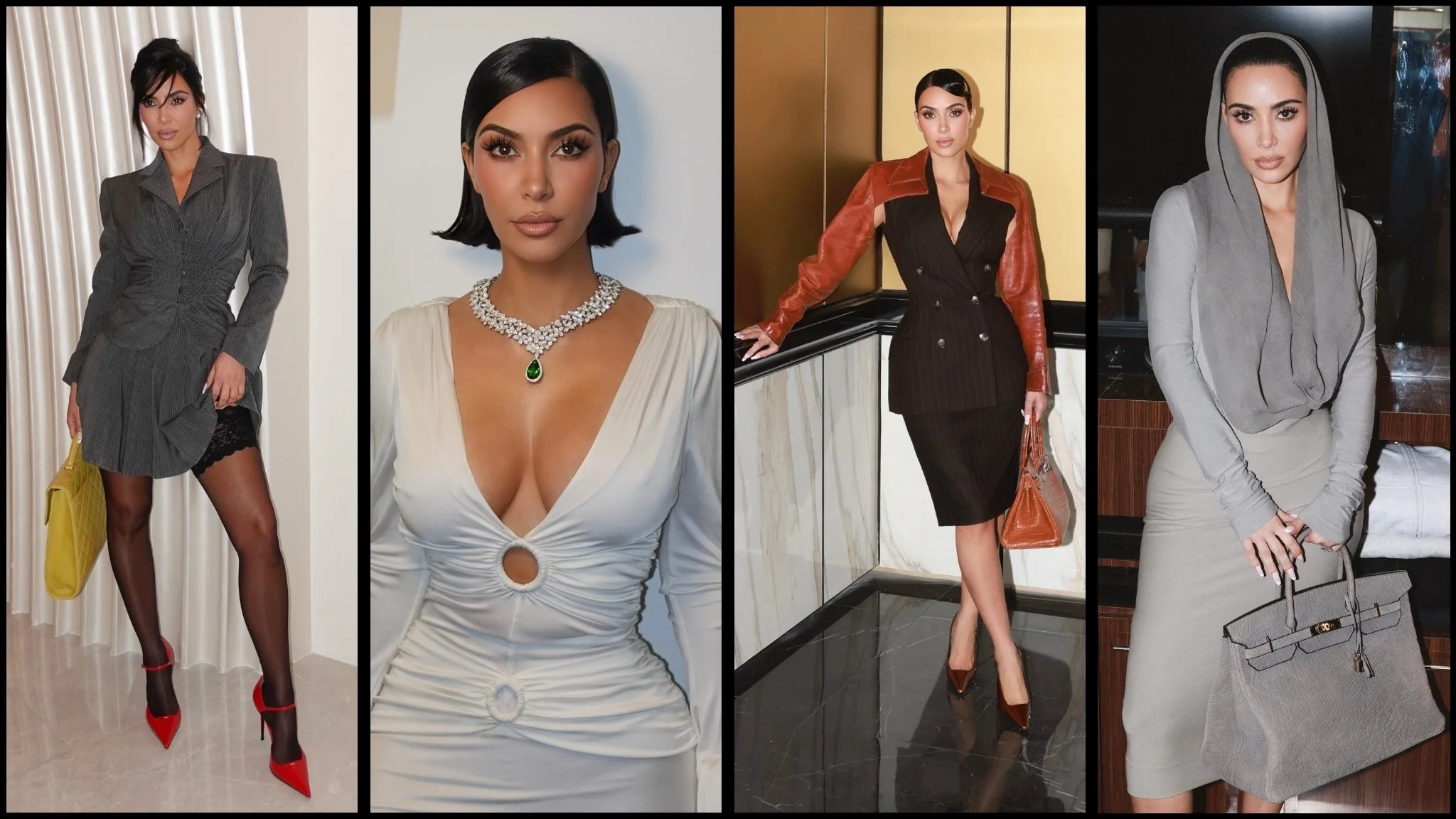
On the show, outfits often feel like costumes for a linguistic battleground. Dramatic collars, hyper-cinched waists, sculptural shoulders — these look incredible on screen, but in a practical work setting they:
overcommunicate intention, leaving no space for nuance,
prioritize visual impact over function, and
Often signal character, not competence.
In reality, people dress professionally to do work, not perform work. There's a difference.
“Professional” Doesn’t Always Mean “Theatrical”
Credit: Hulu
Most modern offices — even ones with empowered, mostly female leadership — don’t expect costumes. They expect:
clean tailoring,
appropriate proportions, and
comfort plus authority.
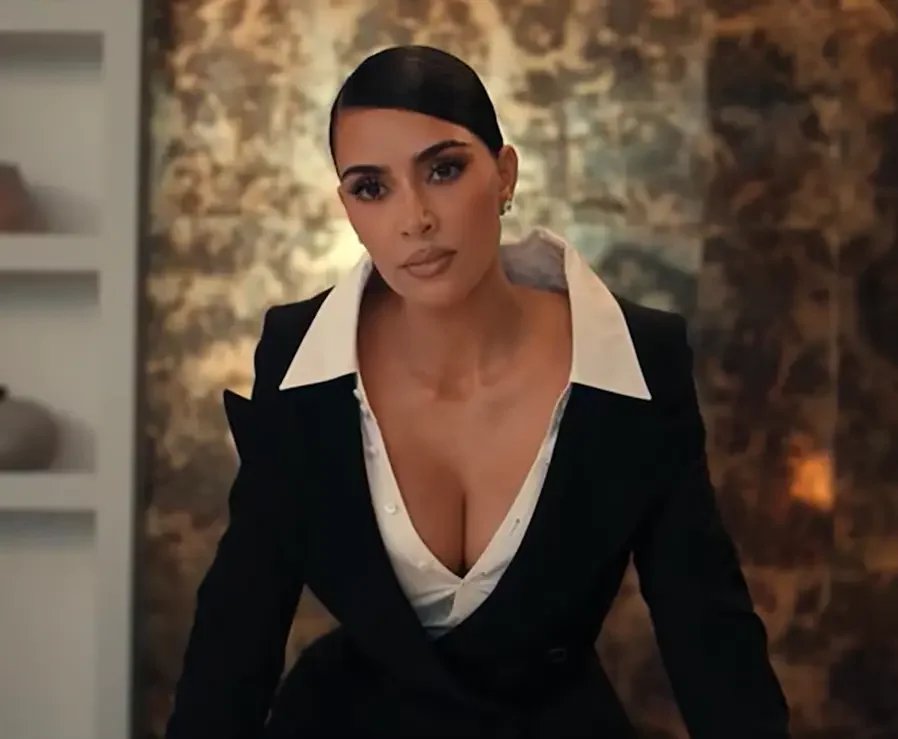
A sculptured Balenciaga suit might look cool on TV (or the runway), but it also reads as dramatic, not corporate. Real workplaces reward professionalism and credibility — not visual spectacle.
The Costume Problem: Clothes With No Practical Context
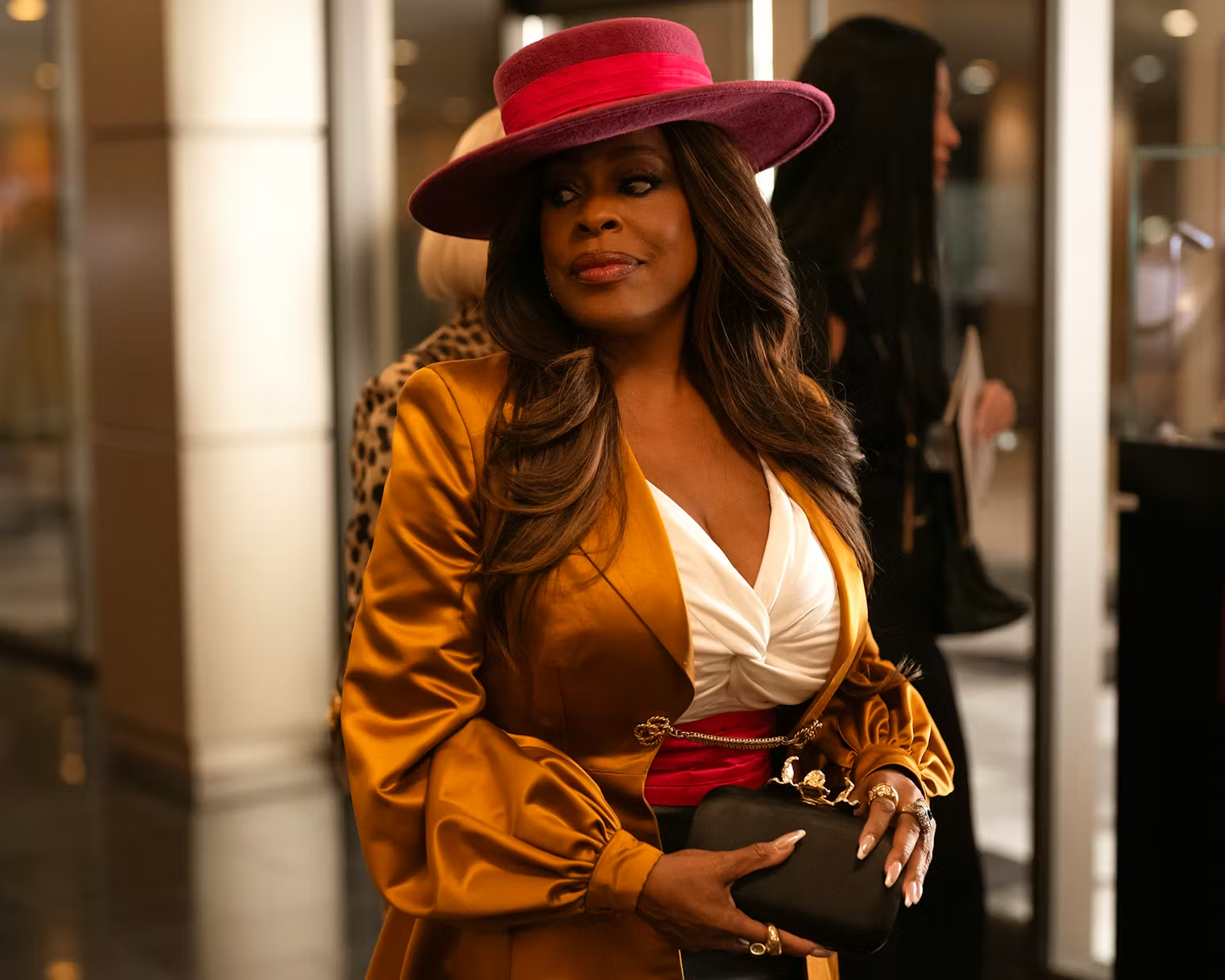
Many of the show’s outfits look like they were styled to tell the camera something, not to serve the human wearing them.
In a real meeting:
You’d struggle to sit comfortably in some of these pieces.
You’d look overdressed for a standard office day (even in creative or high-powered environments).
You’d send mixed messages: Are you here for business, or a photo shoot?
Professional attire should help you engage in work, not distract from it.
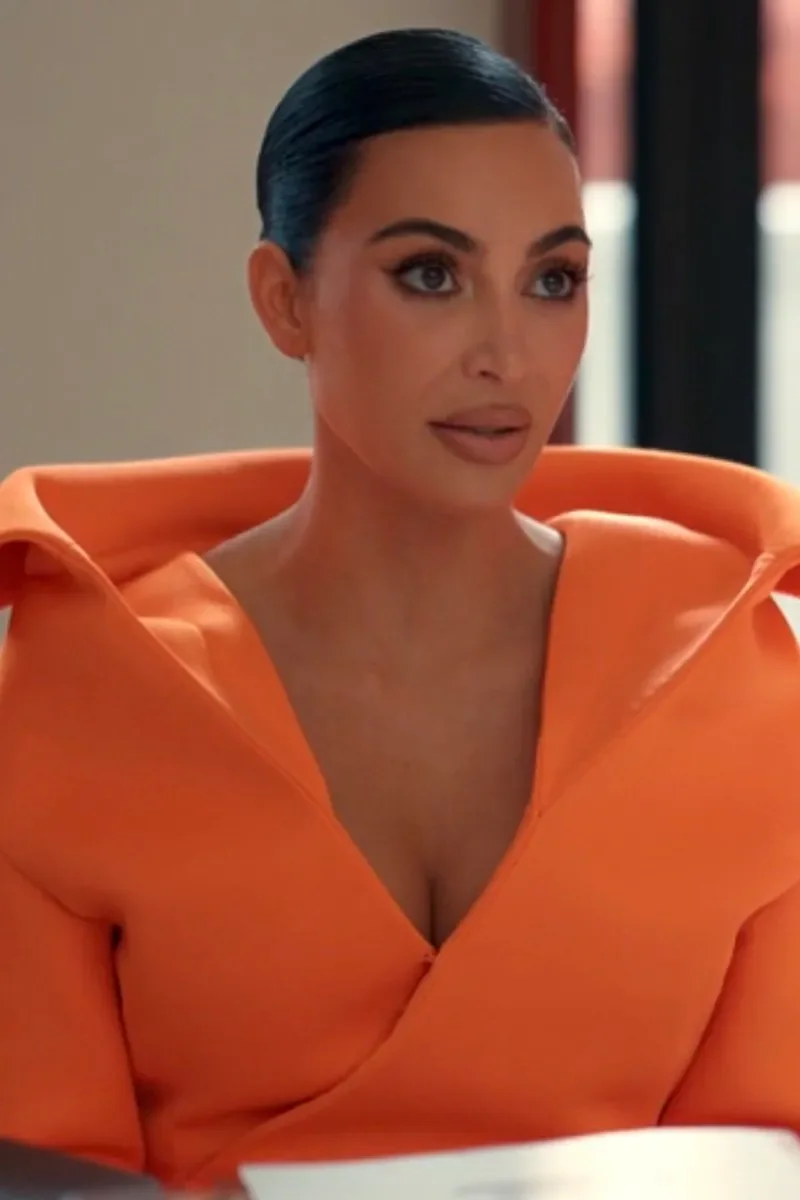
Credit: Hulu
Real Empowerment Doesn’t Need to Be Loud
Here’s the counterintuitive truth:
You don’t need exaggerated silhouettes or symbolic elements to look powerful.
You need restraint, clarity, and intention.
Whether you’re in law, tech, media, or corporate leadership, the most respected looks are:
tailored but functional,
confident without being theatrical,
expressive without being performative.
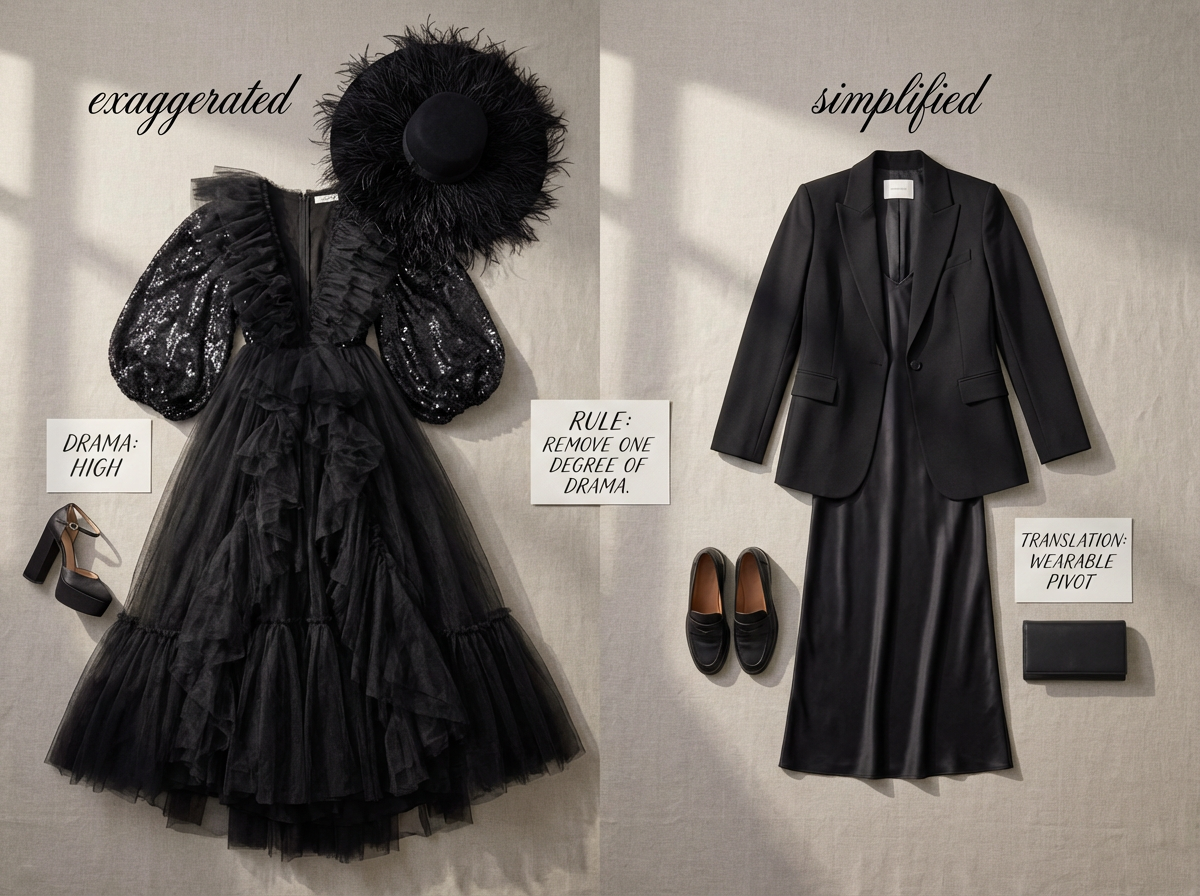
That’s why your translation rule — stripping away one degree of drama — isn’t just a style trick. It’s a professional strategy.
Why It Reads Costume-y On Screen
Here’s where the side-eye comes in.
The wardrobe sometimes crosses from power dressing into power signaling. The pieces aren’t just elevated—they’re heightened. There’s a lack of wear, softness, or personal messiness that real wardrobes inevitably develop.
In short:
The clothes are telling us too much
The styling leaves no room for interpretation
The looks are complete ideas, not outfits
It’s the difference between:
“This woman has authority”
and
“This outfit was styled to communicate authority.”
That distinction matters—especially if you’re trying to wear it outside a soundstage.
The Translation Rule: How to Adapt All's Fair Fashion for Real Life
The secret to making All’s Fair fashion wearable is simple:
Take the idea, not the execution.
Every look on the show works because of one strong element:
a coat
a blazer
a skirt
a silhouette
For real life, you keep that element—and soften everything else.
Let’s translate.
All's Fair Outfits Translated: From Screen to Street
Outfit #1: The Pink Pinstripe Power Fantasy
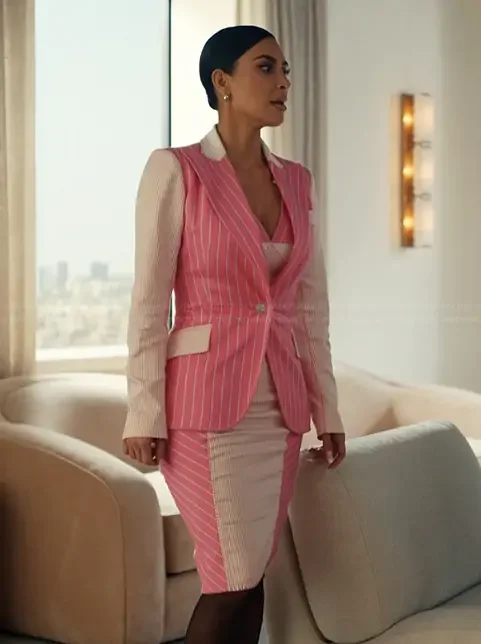
The TV version: Sculptural and symbolic, but not designed for real movement. Credit: Hulu
The TV Version: What Makes It Outrageous
The Original:
Pink and beige/cream color-blocked pinstripe suit
Asymmetric construction (pink diagonal across beige)
Super architectural tailoring
Waist cutout detail (because breathing is optional)
Pencil skirt with likely slit
The stance of someone who owns the building
Why It's TV/Editorial:
That diagonal color blocking is custom/couture
The waist cutout is pure drama
Pinstripes going in multiple directions (chaos)
This suit has a plot arc
You can't buy this at Nordstrom
The Wearable Translation: How to Style It IRL
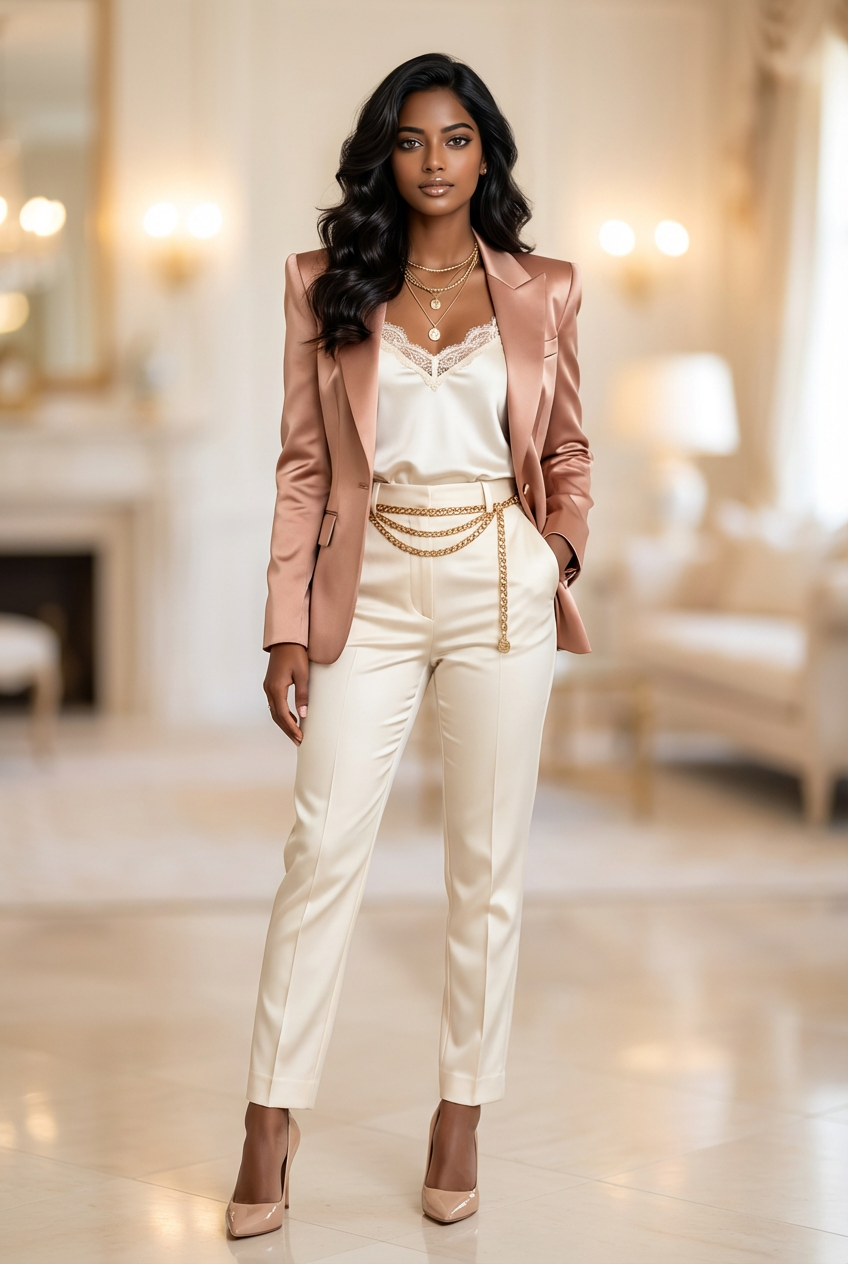
The wearable version: Rose gold satin + cream trousers = power without costume vibes
Translate it to:
Rose gold or dusty pink satin blazer with strong shoulders
Ivory silk camisole with lace trim peeking out
High-waisted cream trousers with subtle sheen
Pointed-toe pumps in nude patent
Layered gold jewelry, including a vintage chain belt
Hair in glossy waves, nude lip with gloss
Why it works:
The satin elevates everything. The lace says "feminine authority." The patent shoes add polish without screaming.
You keep the color confidence, lose the architectural cosplay.
What makes it glamorous but wearable:
Luxe fabrics are doing the heavy lifting — you're not wearing architecture, you're wearing really good clothes.
2. The Scarlet Corporate Villain Dress
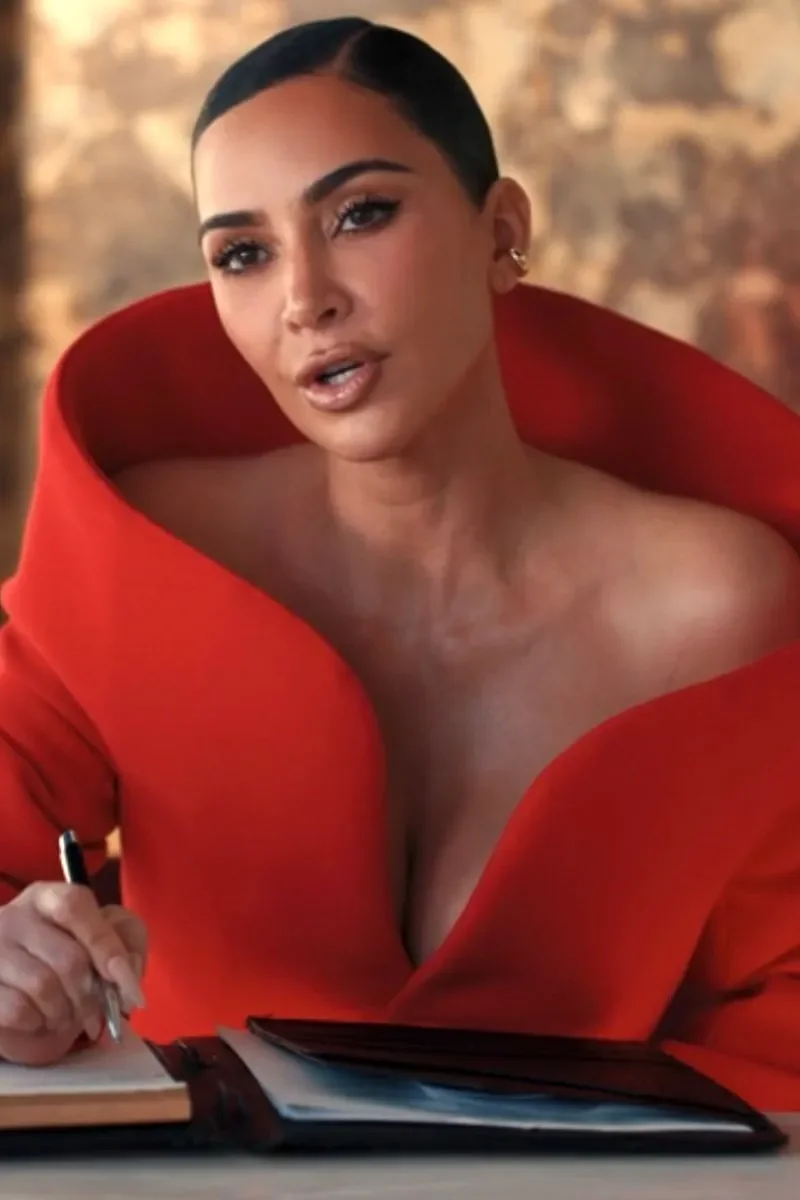
When your collar has more personality than some people's entire wardrobes. Credit: Hulu
The Outrageous Version (TV Costume)
Bright red Balenciaga structured blazer-dress
THOSE SHOULDERS (approaching aircraft carrier proportions)
Deep V that plunges to the waist
Double-breasted button detail
No visible underlayer (the dress IS the statement)
This is "power dressing" turned up to 11
Why It's TV/Editorial:
The V-neck requires a faith-based support system
The structure is so rigid that it could be load-bearing
You can't sit in this without planning
This red is aggressive enough to cause retinal damage
The Wearable Version
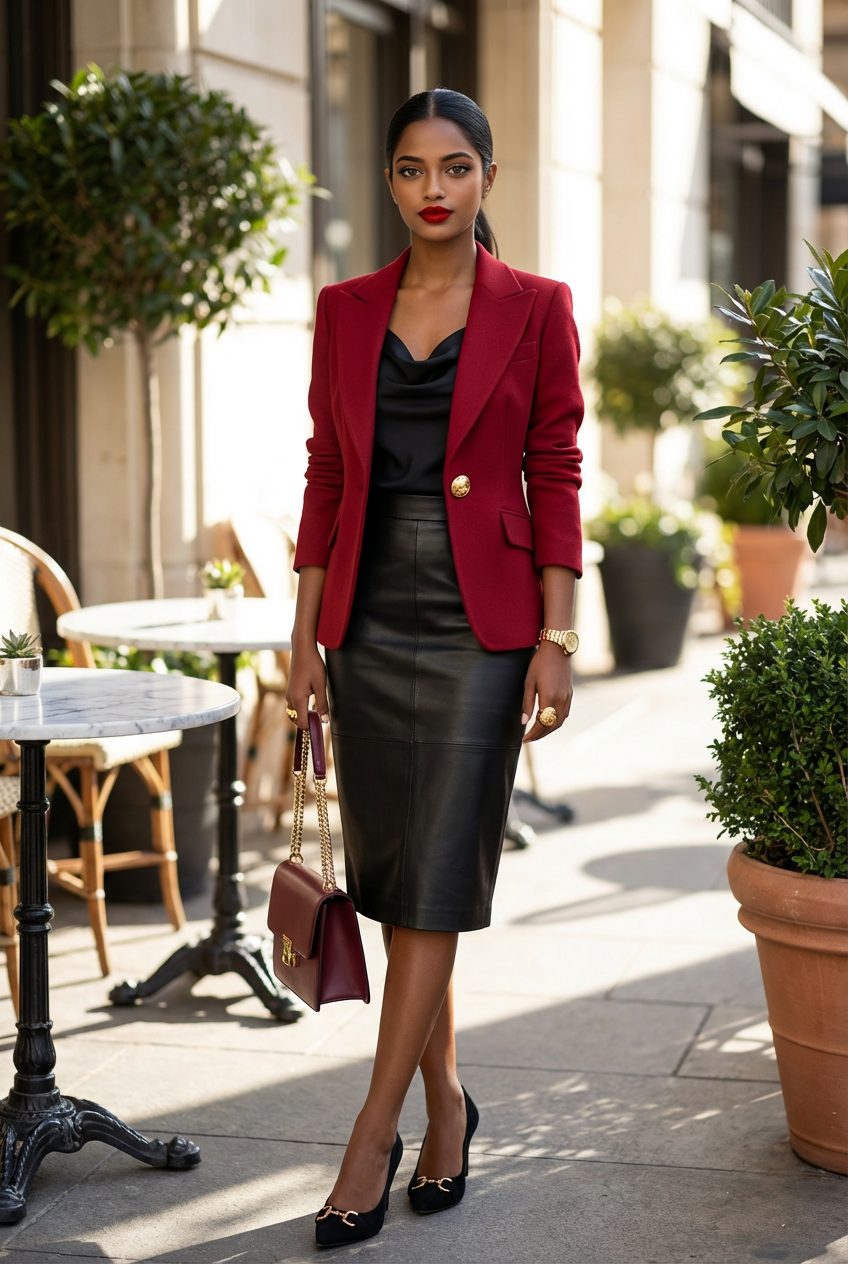
The wearable translation: Cherry red blazer + leather skirt = edge without theatrics
Translate it to:
Cherry red wool blazer with peaked lapels and a single statement button
Black silk shell with cowl neckline
Black leather pencil skirt hitting just below the knee
Black suede pumps with gold hardware
Structured burgundy bag with chain strap
Bold red lipstick, sleek low ponytail
Gold watch and single statement ring
Why it works:
The leather skirt adds edge. The cowl neck brings drama without a collar that needs its own zip code.
What makes it glamorous but wearable:
Mixing textures (wool/silk/leather) creates visual interest without costume vibes.
3. The Ruffled Executive Fantasy
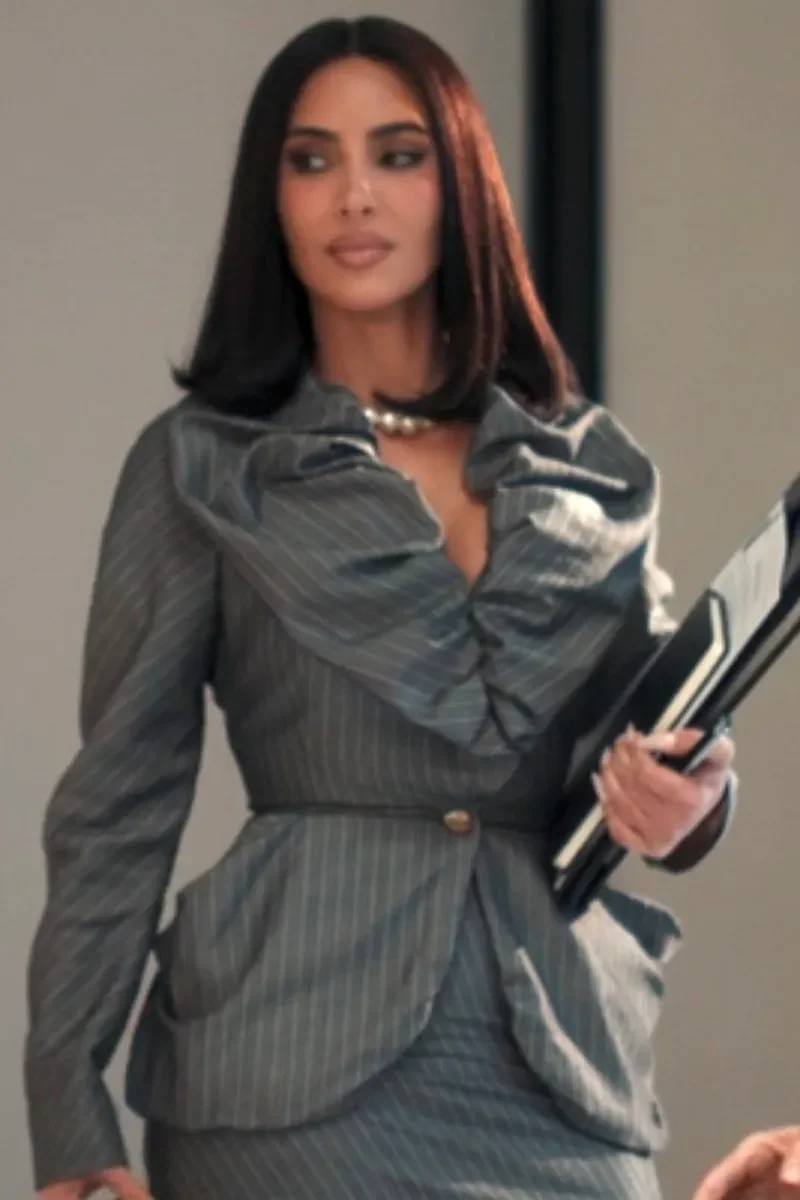
Ruffles + pinstripes: a lot of ideas happening at once
The Outrageous Version (TV Costume):
Gray pinstripe suit (but make it ARCHITECTURAL)
The twisted/draped situation at the chest (this is couture construction)
Cinched waist (that's not just tailoring, that's engineering)
Pearl choker (boss energy jewelry)
This is "merger and acquisition but make it fashion"
Why It's TV/Editorial:
That twist/drape requires internal structure and probably can't be recreated
The waist is snatched beyond normal tailoring
You can't actually work in this (try typing, reaching, existing)
That hair doesn't move in wind, rain, or reality
The makeup took 90 minutes minimum
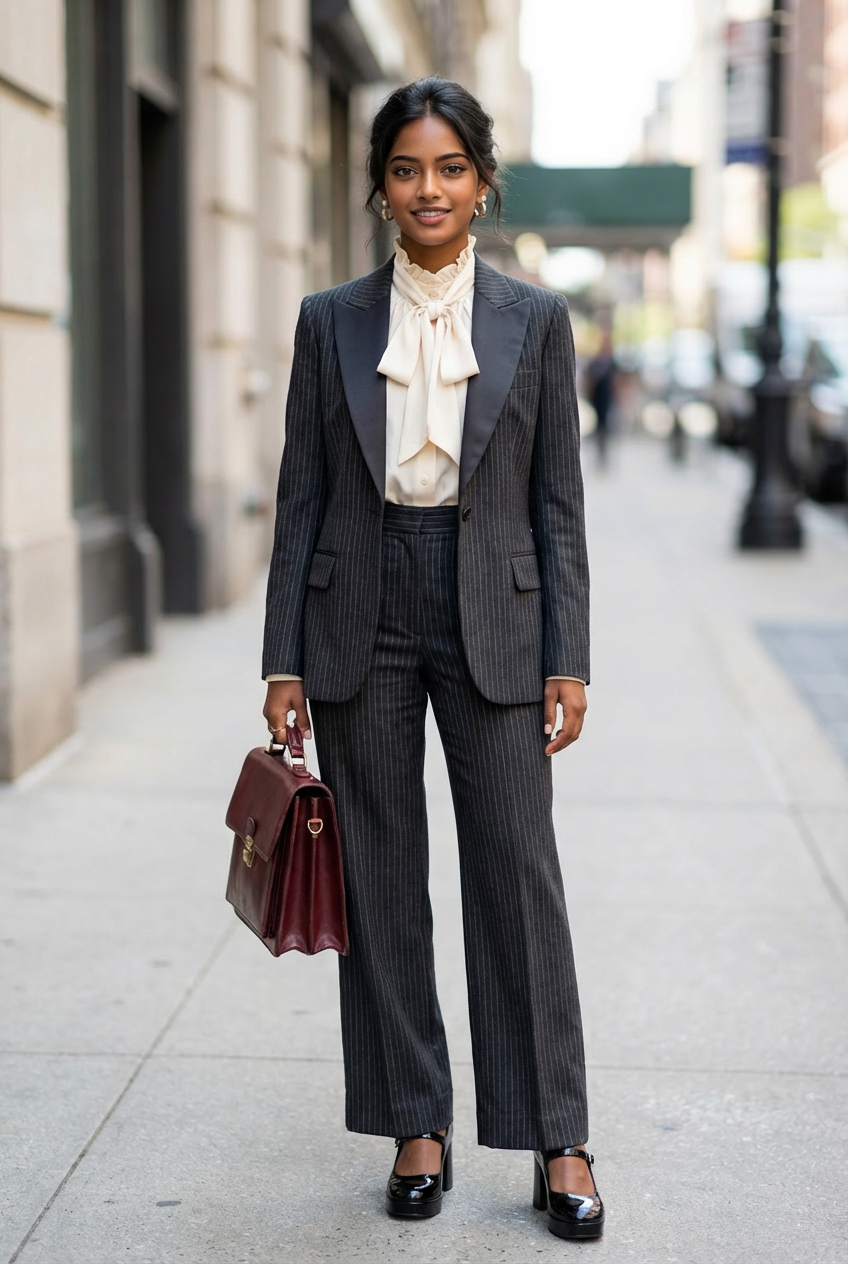
Controlled drama: The pussy-bow delivers femininity without the fabric avalanche
The Wearable Version
Translate it to:
Charcoal pinstripe blazer with silk lapels
Cream pussy-bow blouse (the refined ruffle)
High-waisted wide-leg trousers in matching pinstripe
Platform Mary Janes in patent leather
Vintage briefcase-style bag in burgundy
Pearl earrings mixed with modern gold hoops
Hair in French twist with face-framing pieces
Why it works:
The pussy-bow is your "controlled drama" — feminine without the waterfall effect.
What makes it glamorous but wearable:
Platform Mary Janes say "fashion person" without saying "I can't walk to my car."
4. The Hyper-Cinched Authority Suit
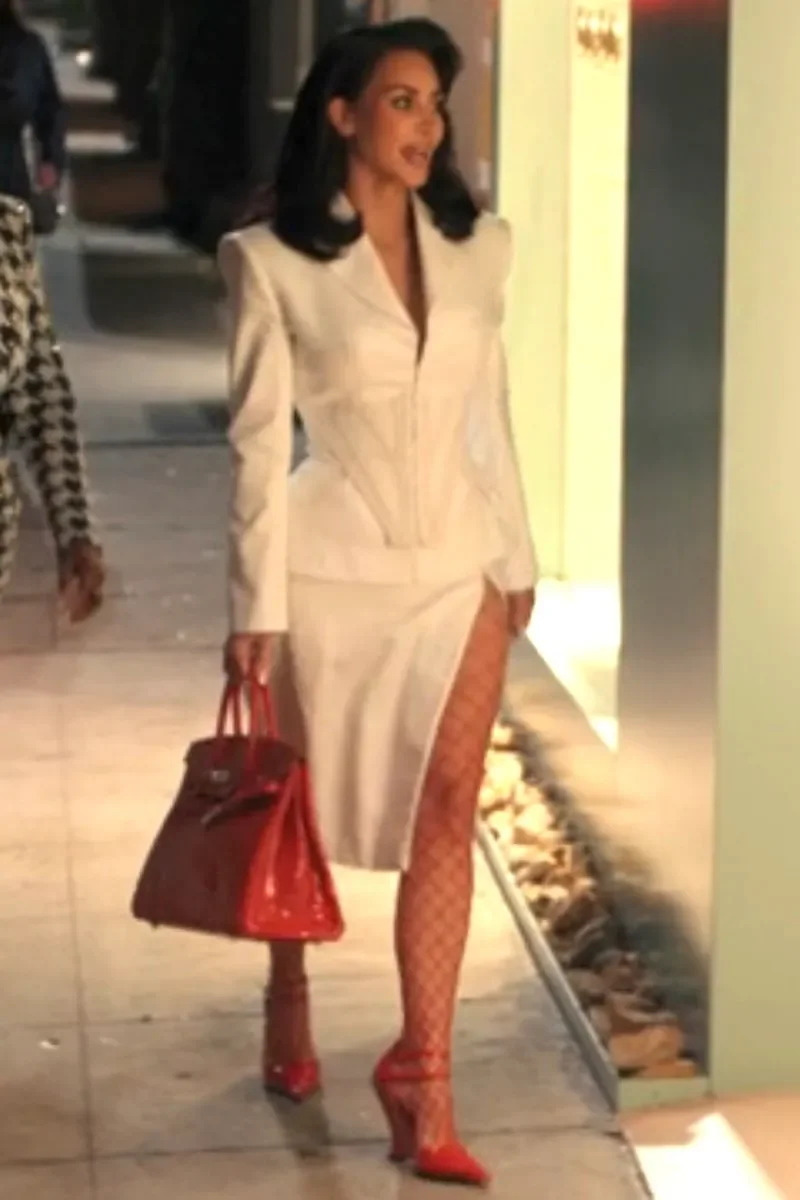
When your suit is so fitted, breathing becomes optional. Credit: Hulu
The Outrageous Version (TV Costume)
The Original:
Crisp white blazer dress with architectural shoulders
THAT CORSET WAIST (internal boning/structure)
The slit (approaching hipbone territory)
This is "boardroom dominatrix" energy
Why It's TV/Editorial:
That slit requires industrial-strength fashion tape
The internal corsetry needs professional fitting
White + thigh-high slit = impractical life choices
The patent red accessories are weaponized
You can't sit, eat, or exist normally in this
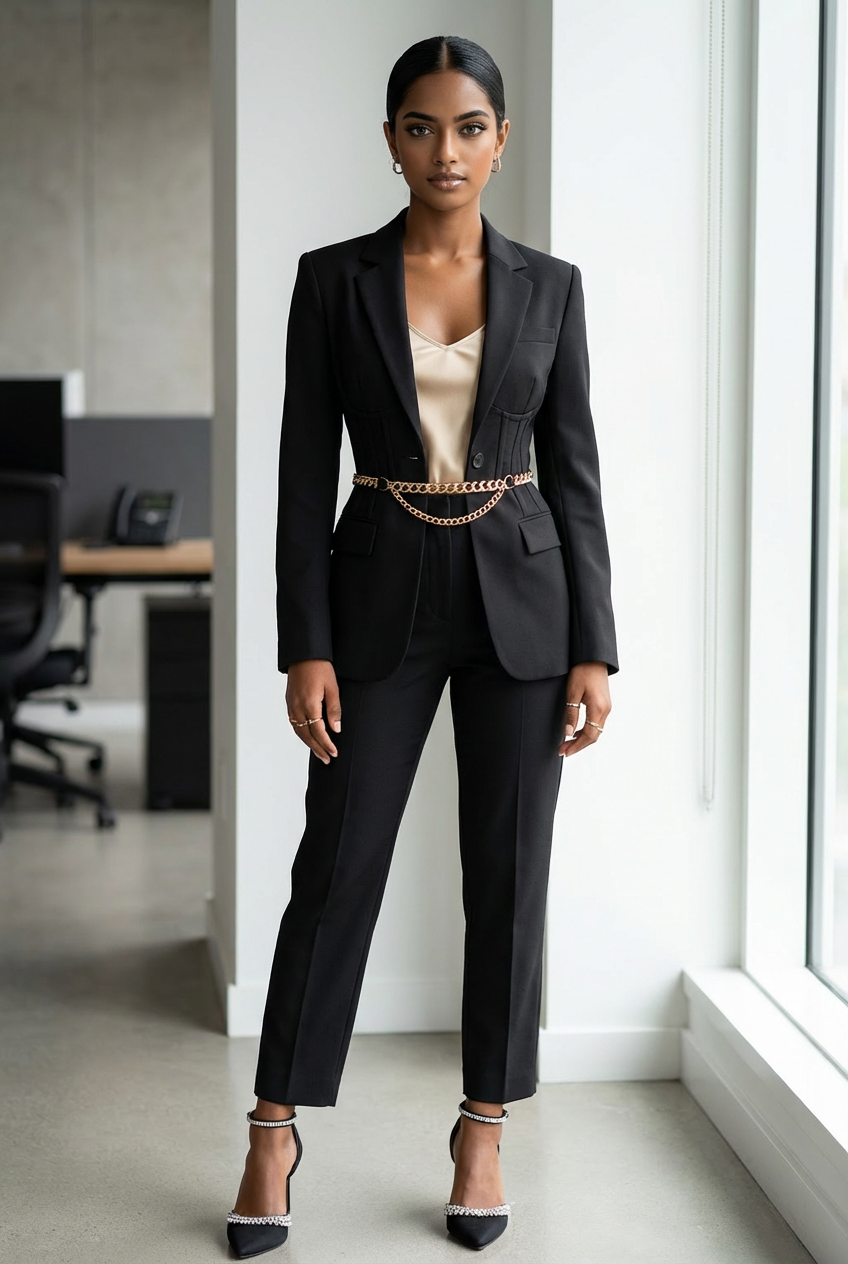
Built-in corset detailing gives that cinched moment without medical intervention
The Wearable Version
Translate it to:
Black blazer with built-in corset detailing at the waist
Champagne silk tank tucked in
High-waisted trousers with pressed crease
Ankle-strap heels with crystal detail
Chain belt worn over a blazer
Multiple delicate rings
Slicked-back bun, strong brow, glossy neutral lip
Why it works:
The corset detail gives that cinched moment without requiring a medical professional to remove your jacket.
What makes it glamorous but wearable:
Crystal details and chain belt add luxury touches that read as intentional, not try-hard.
5. Bonus: The Elephant in the Room
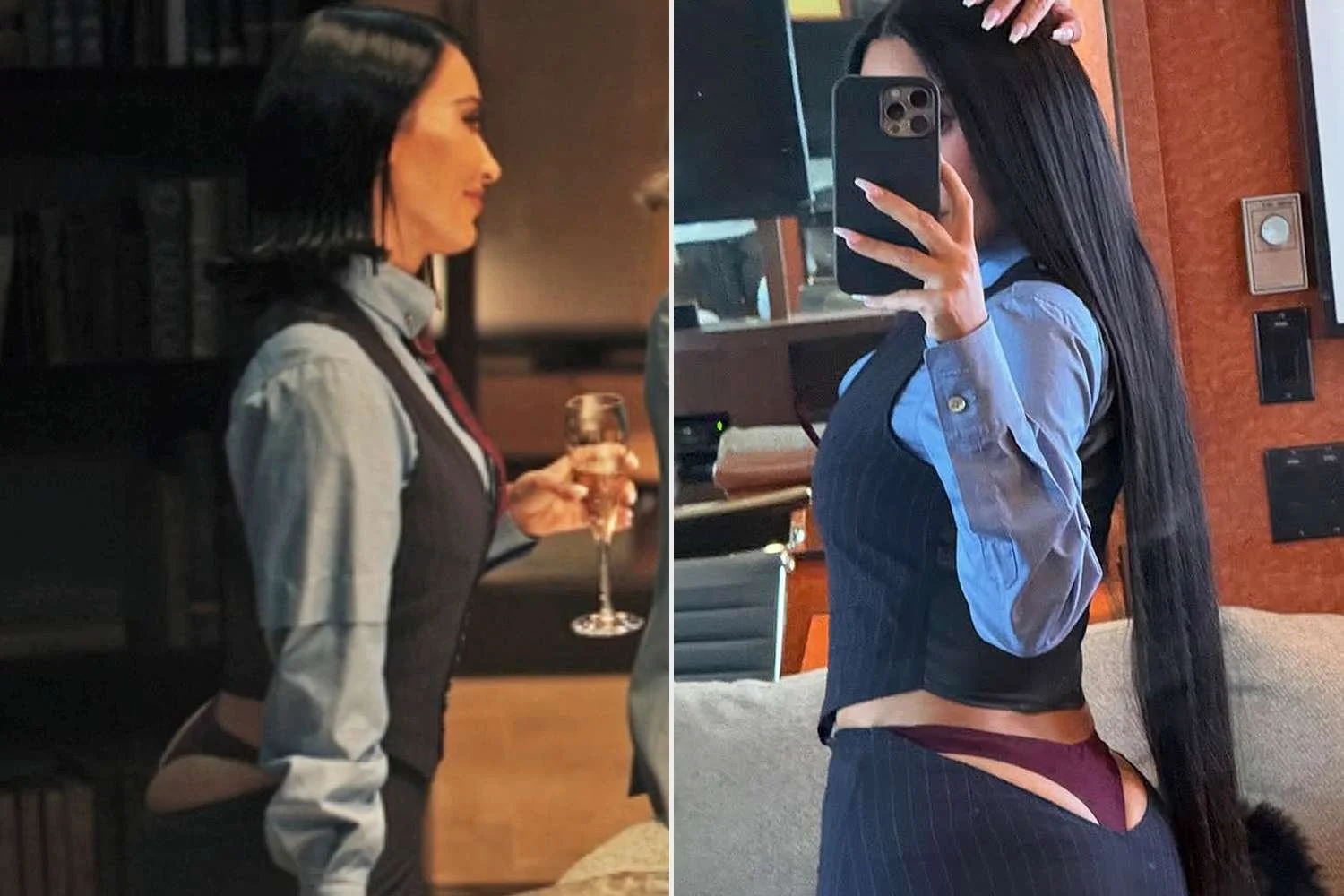
The Outrageous Version (TV Costume)
The Original:
Navy pinstripe vest (structured, fitted)
Light blue shirt (classic)
The cutout situation (👀)
This is "fashion week after-party," not "fiscal quarter review."
Why This is TV/Fashion Fantasy:
Those aren't work clothes, they're barely clothes
The cutouts require specific undergarments (or none)
This is for being photographed, not photocopying
HR would like a word
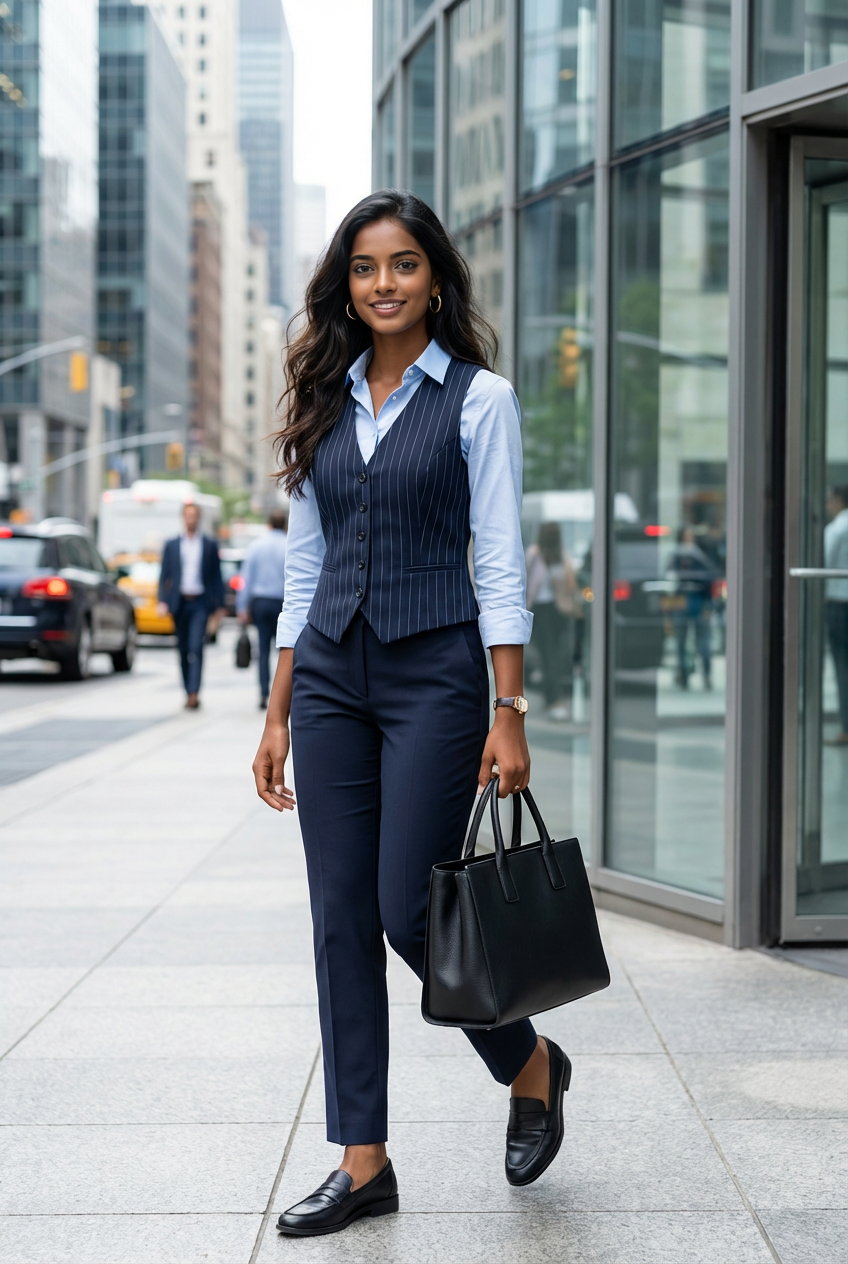
The Wearable Version (Daytime)
Translate it to
Navy pinstripe vest (fully lined, no cutouts)
White or light blue button-up shirt
Navy trousers (actual pants that cover you)
Black pumps or loafers
Structured bag
Why This Works:
Takes the color story and structure
Leaves the scandal at home
Actually appropriate for work
Still stylish and put-together
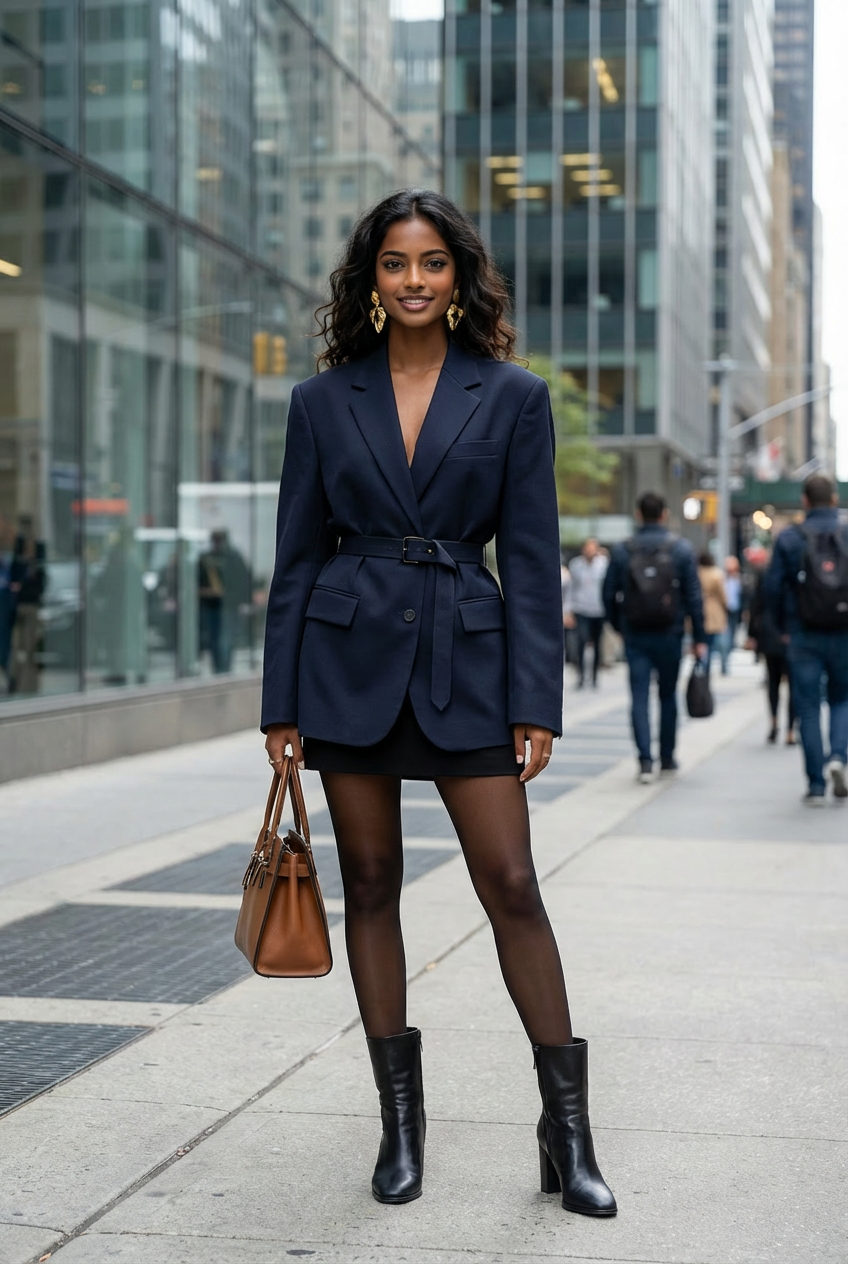
The Wearable Version (After Hours/Date Night Remix)
Translate it to:
Navy blazer (oversized, worn as dress)
Black mini skirt underneath (this confirms you're wearing clothes)
Sheer tights or bare legs (weather dependent)
Heeled boots or strappy heels
Statement earrings
Why This Works:
Sexy but not scandalous
Blazer provides coverage
Can transition from drinks to dinner
Sophisticated sexy, not shocking sexy
The Glamour Rules (Your New Gospel)
The DO's:
Luxe fabrics over crazy construction — Let satin, velvet, and silk do the talking
One dramatic element per outfit — Choose your fighter: texture OR color OR silhouette
Strategic shine — Patent shoes, metallic accessories, or satin lapels (never all three)
Controlled feminine details — Pussy-bow not ruffle avalanche, corset seaming not actual corseting
Mix your eras — Vintage bag with modern blazer, classic pumps with contemporary cut
The DON'T's:
Don't let your outfit enter a room before you do
Don't wear anything that requires an instruction manual
Don't combine more than two "look at me" elements
Don't sacrifice movement for mood
Don't wear TV villain unless you're actually on TV
The Reality Check:
If you have to ask, "Is this too much?" while standing in your bedroom, it's definitely too much for Tuesday.
Your clothes should suggest authority, not scream it.
Whisper wealth, don't shout it.
And most importantly: You should look like you got dressed, not costumed.
The Bottom Line:
These looks say "I have a corner office and excellent taste," not "I'm auditioning for Succession."
The Final Verdict
All’s Fair understands the visual language of power—but sometimes forgets that real women don’t dress like walking metaphors.
The fashion is best enjoyed as:
inspiration, not instruction
silhouette study, not shopping list
mood board, not uniform
Translate it down. Strip it back. Let one piece lead.
Because real power dressing doesn’t look like a costume.
It looks like someone who knows exactly what they’re doing—and doesn’t feel the need to explain it.
