
What Is Minimalism Aesthetic: The Complete Style Guide
Table of Contents
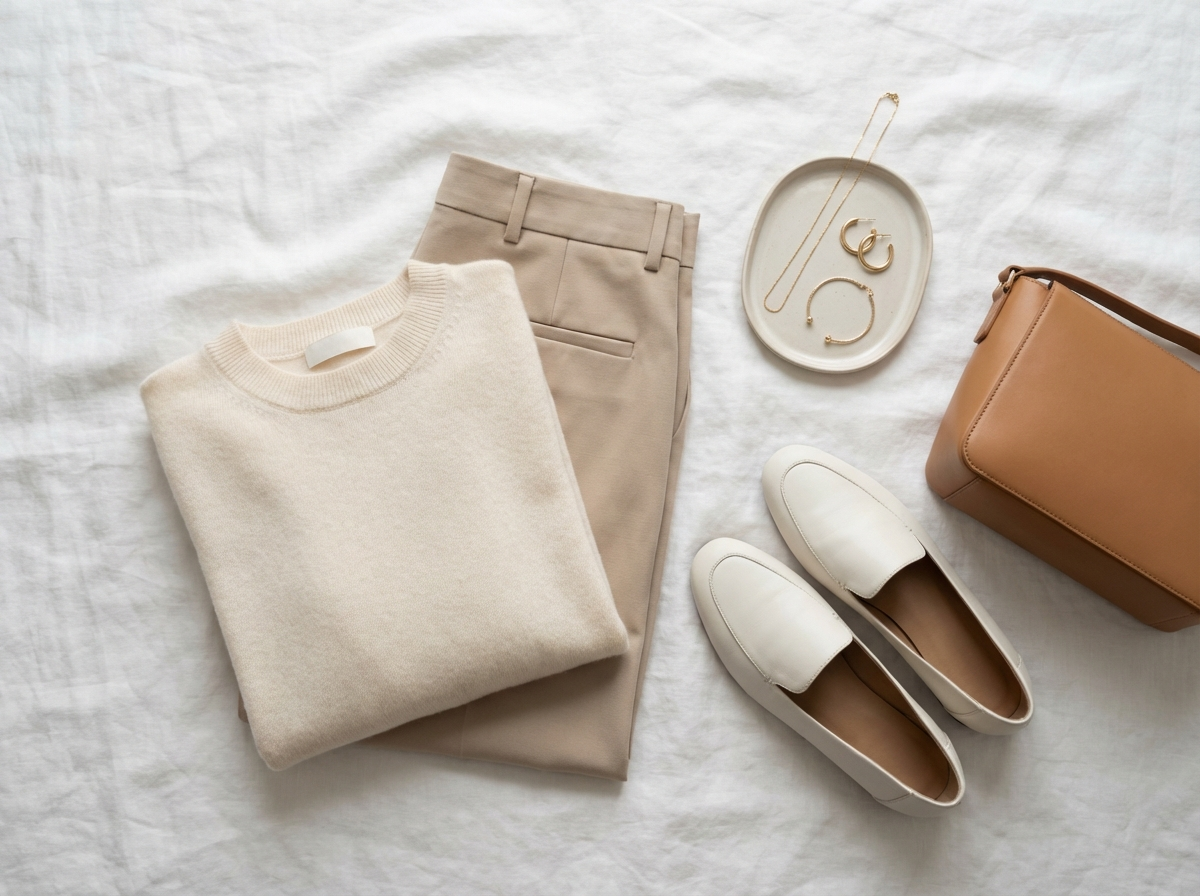
Minimalism aesthetic: intentional style built on quality neutrals and timeless silhouettes.
Minimalism has a branding problem.
Mention "minimalist style," and people immediately picture one of three things: a closet full of black basics, a rigid 10-item wardrobe, or impossibly expensive designer pieces. For others, the minimalism aesthetic feels cold, boring, or overly restrictive—like fashion stripped of joy.
Those assumptions are understandable. They're also completely wrong.
Minimalist style, when practiced well, isn't about deprivation. It's a skill—the ability to edit, refine, and style with intention. It's about making fewer pieces work harder and feel more like you, whether you're building a $800 starter capsule or a $12,000 investment wardrobe.
This guide teaches minimalism as a learnable system, not a look.
-
Minimalism aesthetic is an intentional, edited approach to personal style built around function, quality, and restraint. It uses neutral foundations, timeless silhouettes, and thoughtful styling to create cohesion and longevity—prioritizing clarity over excess and purpose over trends.
Core Elements:
- Neutral color palette (whites, beiges, grays, black)
- Quality over quantity wardrobe building
- Timeless silhouettes and clean lines
- Intentional styling with restraint
- Cost-per-wear thinking
Budget Range: $800–$12,000+ (accessible at all levels)
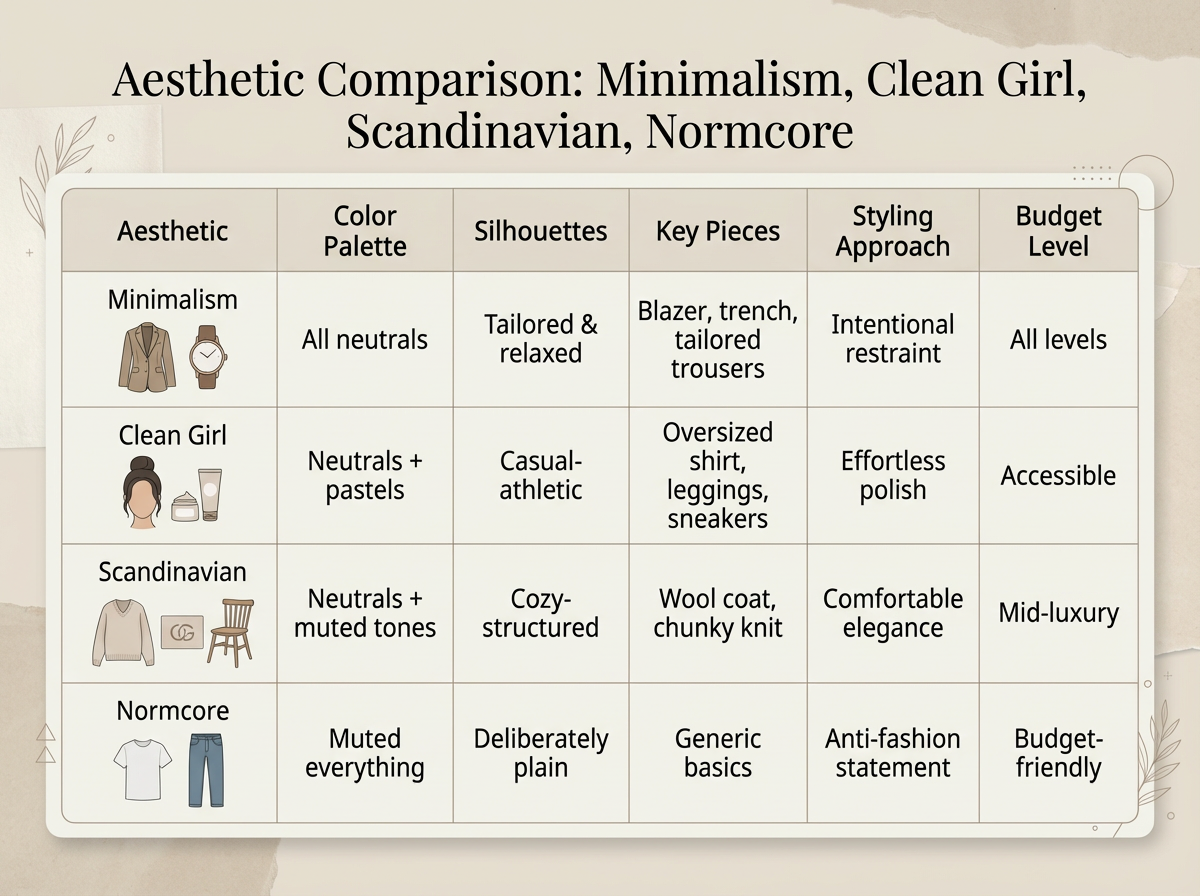
Related Aesthetics: Clean Girl, Scandinavian, Normcore
Why Minimalism Is So Misunderstood
Minimalism is often mislabeled as boring because it relies on restraint rather than spectacle. There are no loud prints demanding attention, no trend cycles to chase, no obvious “statement” pieces doing all the work.
People confuse minimalism with strict numerical rules: 10 items, 30 items, one uniform forever. In reality, minimalism has no universal item count.
And then there’s the cost myth. While luxury minimalism exists, minimalist style itself is not inherently expensive.
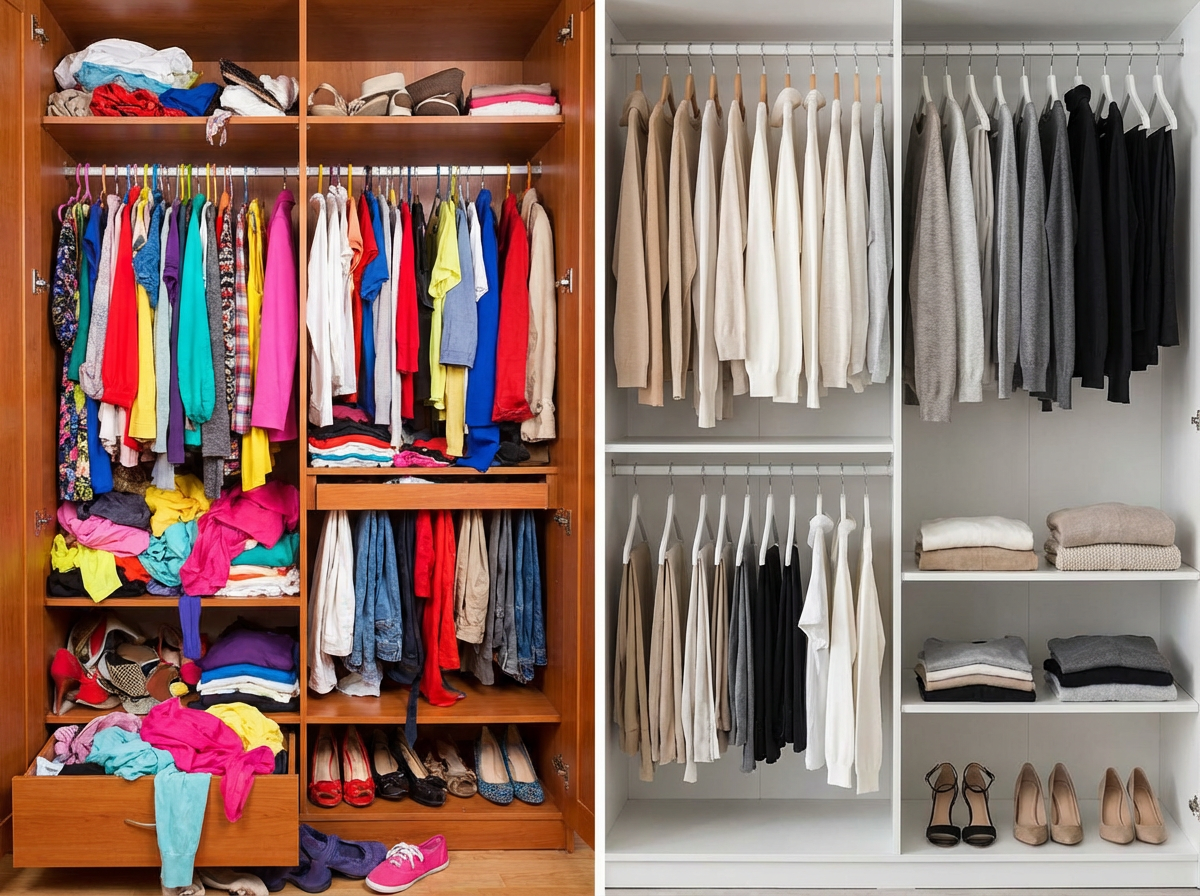
Minimalism isn't about deprivation—it's about intentional curation.
The Cultural Moment: Why Minimalism Matters in 2026
By 2026, we’re living in a state of near-constant visual input. Endless scrolling, rapid micro-trends, AI-generated imagery, and algorithm-driven aesthetics have created a kind of digital noise fatigue.
Minimalism is resurfacing as a response.
Minimalist style offers clean lines, neutral palettes, and thoughtful silhouettes. In a world where everything is optimized to be louder, faster, and more clickable, minimalism feels grounding.
Interestingly, minimalism isn’t replacing maximalism—it’s rising alongside it. Maximalism celebrates abundance, creativity, and expression. Minimalism offers structure, calm, and refinement.
Many wardrobes now live somewhere in between, borrowing elements of both.
Who This Guide Is For
This guide is for you if you love clean lines but still want personality in your outfits—if you’re drawn to simplicity but don’t want to disappear inside it.
It’s for you if you want fewer clothes without feeling boxed in or bored. If you’re tired of impulse buys and trend churn, but not interested in rigid fashion rules.
And it’s for you if you want timeless style without luxury pricing pressure. Minimalism doesn’t require designer labels. It requires clarity and a willingness to edit thoughtfully over time.
What You’ll Learn in This Guide
This isn’t a “throw everything out and start over” manifesto. It’s a practical deep dive into minimalism in real wardrobes.
We’ll start with understanding the principles that separate minimalist style from similar aesthetics. From there, we’ll move into wardrobe building, outfit formulas, and shopping.
We’ll also define how minimalism differs from Clean Girl, Scandinavian, and Normcore. While these aesthetics overlap visually, their methods differ.
Understanding the Minimalism Aesthetic Philosophy
Minimalism is rooted in broader design movements that valued clarity, function, and form.
Mid-century modernism laid much of the groundwork. Emerging in the mid-20th century, this design philosophy rejected unnecessary ornamentation in favor of clean lines, honest materials, and purposeful construction.
Alongside this Western influence, Japanese aesthetics played a crucial role in shaping minimalist thinking. Concepts like wabi-sabi encouraged a quieter relationship with objects. Rather than striving for visual excess, beauty was found in simplicity and balance.
At the heart of both traditions is a shared belief: less, but better.
Is Minimalist Style Expensive?
Minimalism is not expensive.
Luxury brands have popularized minimalist aesthetics, which has created the illusion that minimalism requires high price tags. In reality, minimalism can be budget-friendly because it emphasizes fewer purchases, repeat wear, and long-term use.
Minimalism is not boring.
Minimalist outfits may appear simple at first glance, but simplicity doesn’t equal lack of interest. In minimalism, visual depth comes from fabric choice, texture, silhouette, and proportion.
Minimalism is not trend-averse.
Minimalists don’t avoid trends—they filter them. A minimalist may adopt a trend quietly (a silhouette shift, a new neutral tone) without rebuilding their wardrobe every season.
Minimalism is not one-size-fits-all.
A minimalist wardrobe for a corporate professional will look different from one for a creative freelancer. Minimalism adapts to lifestyle. The philosophy stays consistent; the execution changes.
Core Aesthetic Principles of Minimalism
Quality over quantity
Minimalism prioritizes well-made pieces over large wardrobes. Fabric, construction, and durability matter because garments are expected to be worn often and for years.
Intentional curation
Every item in a minimalist wardrobe has a place. It fits well, works with multiple outfits, suits your lifestyle, and aligns with your aesthetic.
Functional beauty
Minimalist clothing is designed to be lived in. Comfort, movement, and practicality are part of the aesthetic. Beauty isn’t separate from function; it’s created through function.
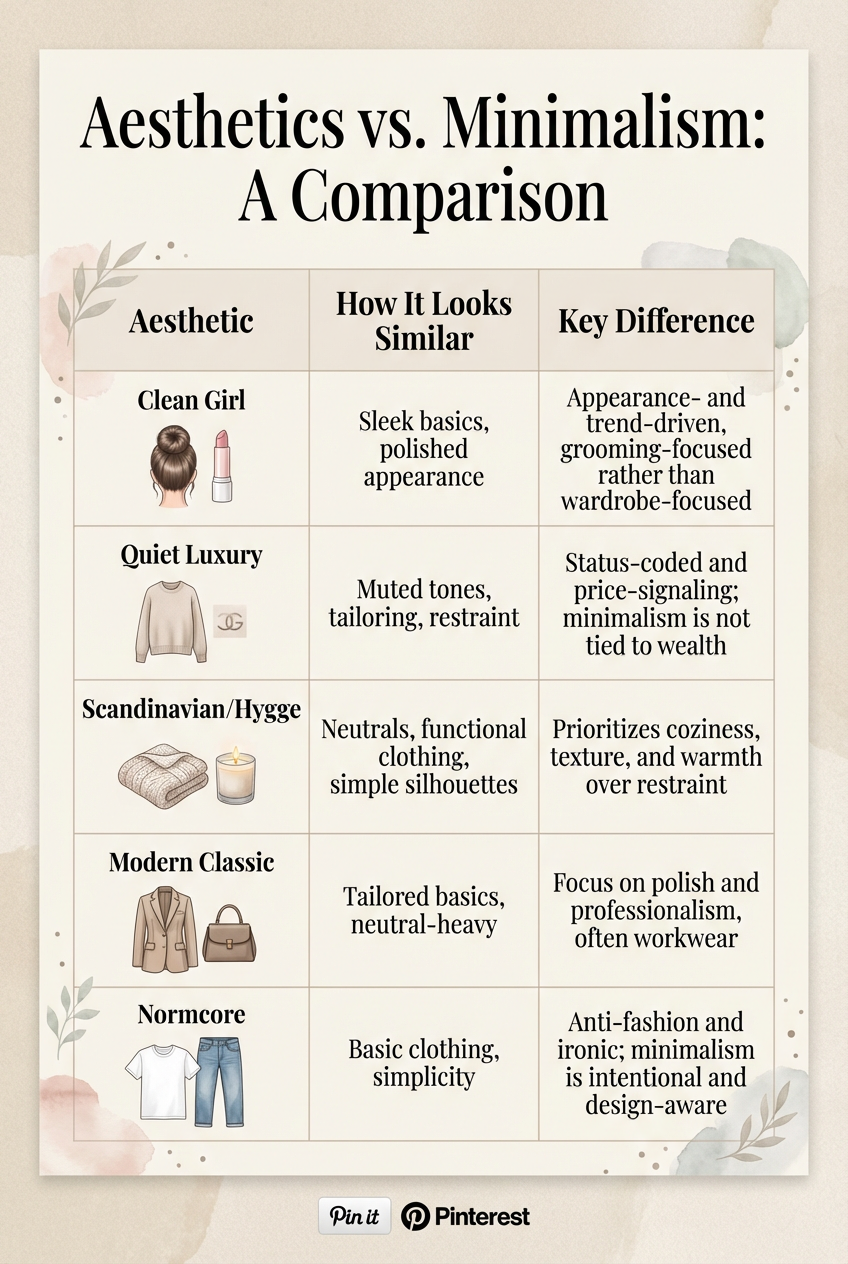
Minimalism vs Clean Girl Aesthetic
Minimalism is often grouped with other aesthetics that share surface-level similarities. Understanding the differences helps clarify what minimalism actually offers.
Minimalism isn’t about looking like any of these—it’s about using restraint and intention to build a wardrobe that works cohesively over time.
The Minimalist Color Palette: Neutrals, Accents & Texture
Color is where most people think minimalism begins—and where it often goes wrong.
Minimalist style isn’t about eliminating color. It’s about **controlling it**. A minimalist color palette creates cohesion, flexibility, and visual calm, allowing silhouettes, texture, and fit to do the heavy lifting. When done well, color becomes a quiet support system rather than the main attraction.
This section breaks down how minimalists actually use color—starting with foundational neutrals, layering in accents intentionally, and relying on texture to keep outfits from feeling flat.
Foundation Neutrals: White, Beige, Gray & Black
Foundation neutrals are the colors that make up the majority of a minimalist wardrobe. They’re chosen not because they’re “safe,” but because they **work together effortlessly** across seasons and settings.
White vs. Soft White (Real-Life Practicality)
Pure White (#FFFFFF)
Crisp, high-contrast, editorial—but often impractical for daily wear. Best used in structured pieces (button-downs, tees) or occasional outfits.
Soft White / Off-White (#F8F6F2 – #FAF9F6)
More forgiving, less stark, and easier to mix with creams and beiges. For most people, soft white is the more wearable minimalist choice.
Minimalist tip: Choose one white family and stick to it to avoid visual clash.
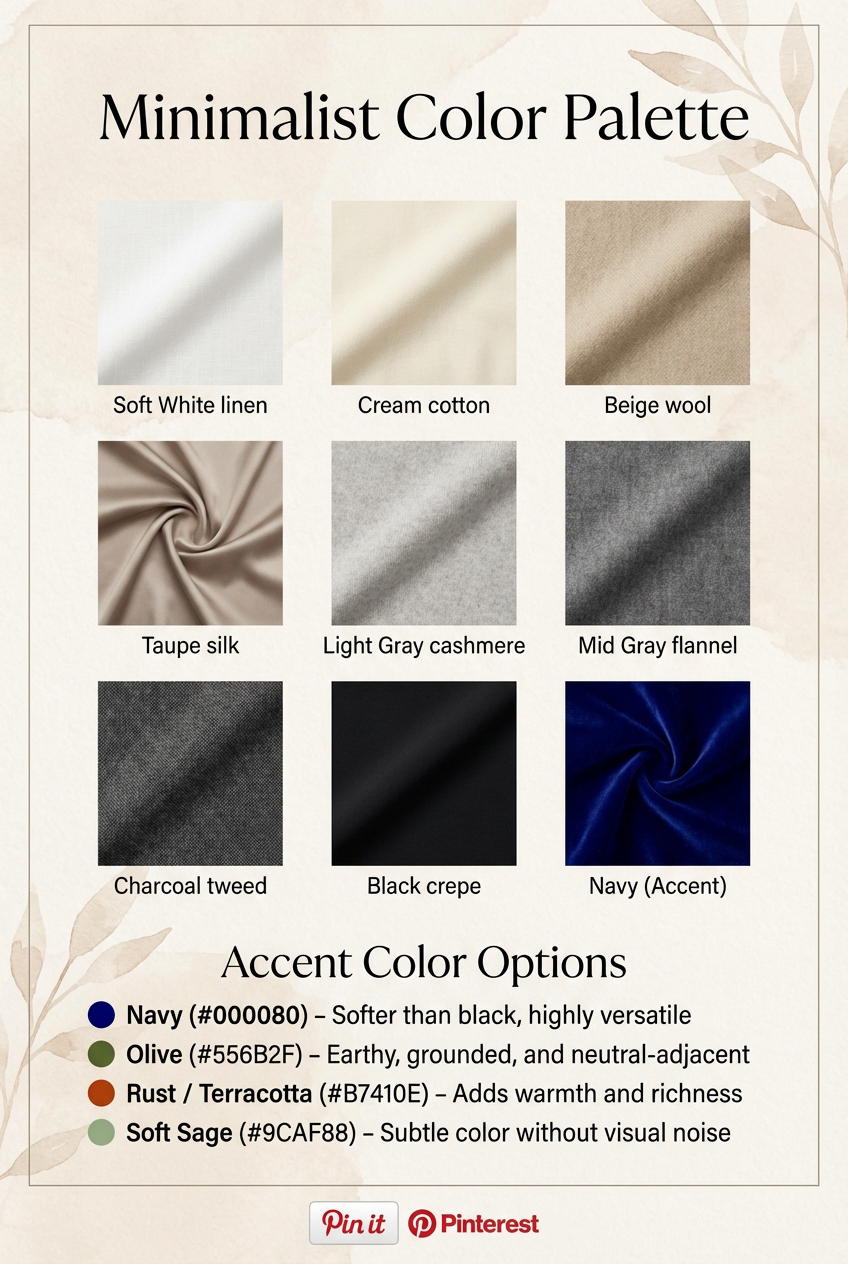
Foundation neutrals create cohesion; accents add personality.
Cream, Beige & Taupe (Warm Neutrals)
These tones soften minimalist wardrobes and add approachability.
Cream / Ivory (#F5F5DC) – Elegant, warm alternative to white
Beige / Sand (#E8D5C4) – A true wardrobe workhorse
Taupe (#B38B6D) – Bridges warm and cool palettes beautifully
Warm neutrals work especially well for:
Knitwear
Coats
Trousers
Accessories
They add depth without overwhelming the outfit.
The Gray Scale (Cool & Architectural)
Gray adds structure and modernity to minimalist wardrobes.
Light Gray (#D3D3D3) – Soft base for casual looks
Mid Gray (#808080) – Tailoring-friendly and versatile
Charcoal (#36454F) – A softer alternative to black
Grays shine in:
Tailored trousers
Blazers
Outerwear
Layering pieces
Black: Contrast, Not Default
Black (#000000) is powerful—but it’s not mandatory.
Minimalism often gets mistaken for “all black,” but black works best when used strategically, not excessively. Too much black can flatten outfits and feel severe.
Use black for:
Shoes
Bags
Structured layers
Contrast against lighter neutrals
Think of black as punctuation, not the entire sentence.
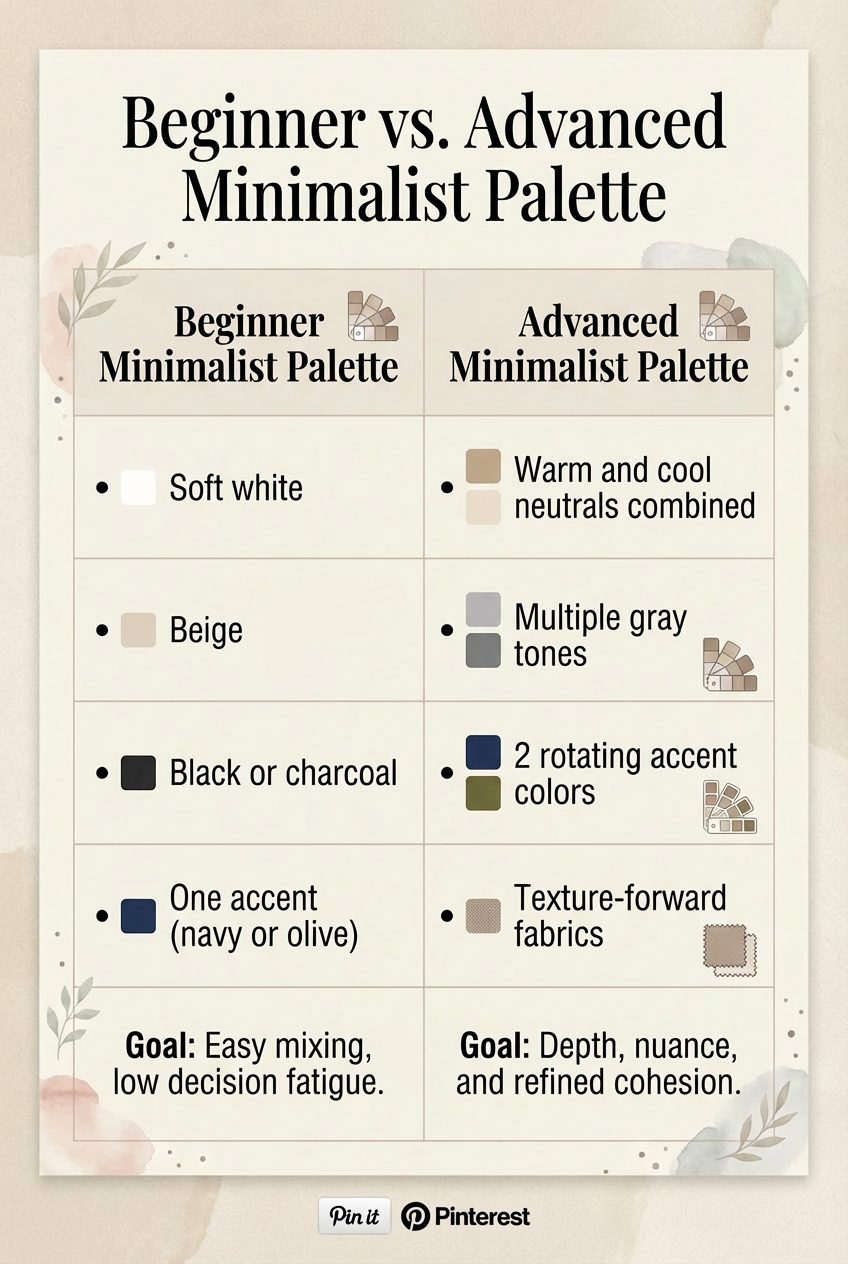
Minimalist Accent Colors: Navy, Olive, Rust
Navy (#000080) – Softer than black, highly versatile
Olive (#556B2F) – Earthy, grounded, and neutral-adjacent
Rust / Terracotta (#B7410E) – Adds warmth and richness
Soft Sage (#9CAF88) – Subtle color without visual noise
These colors integrate seamlessly because they behave like neutrals when styled thoughtfully.
How Many Accent Colors Is “Minimalist”?
A helpful guideline:
1–2 accent colors per season
No more than 10–20% of your wardrobe
Accents should:
Repeat across multiple items
Appear in different outfit contexts
Complement your core neutrals
If an accent only works with one outfit, it’s not minimalist—it’s decorative clutter.
How Minimalists Use Color (The Skill)
Minimalist color usage isn’t about rules—it’s about systems. Here’s how it works in practice.
Monochrome Layering
Monochrome doesn’t mean one exact shade. It means variations within the same color family.
Example:
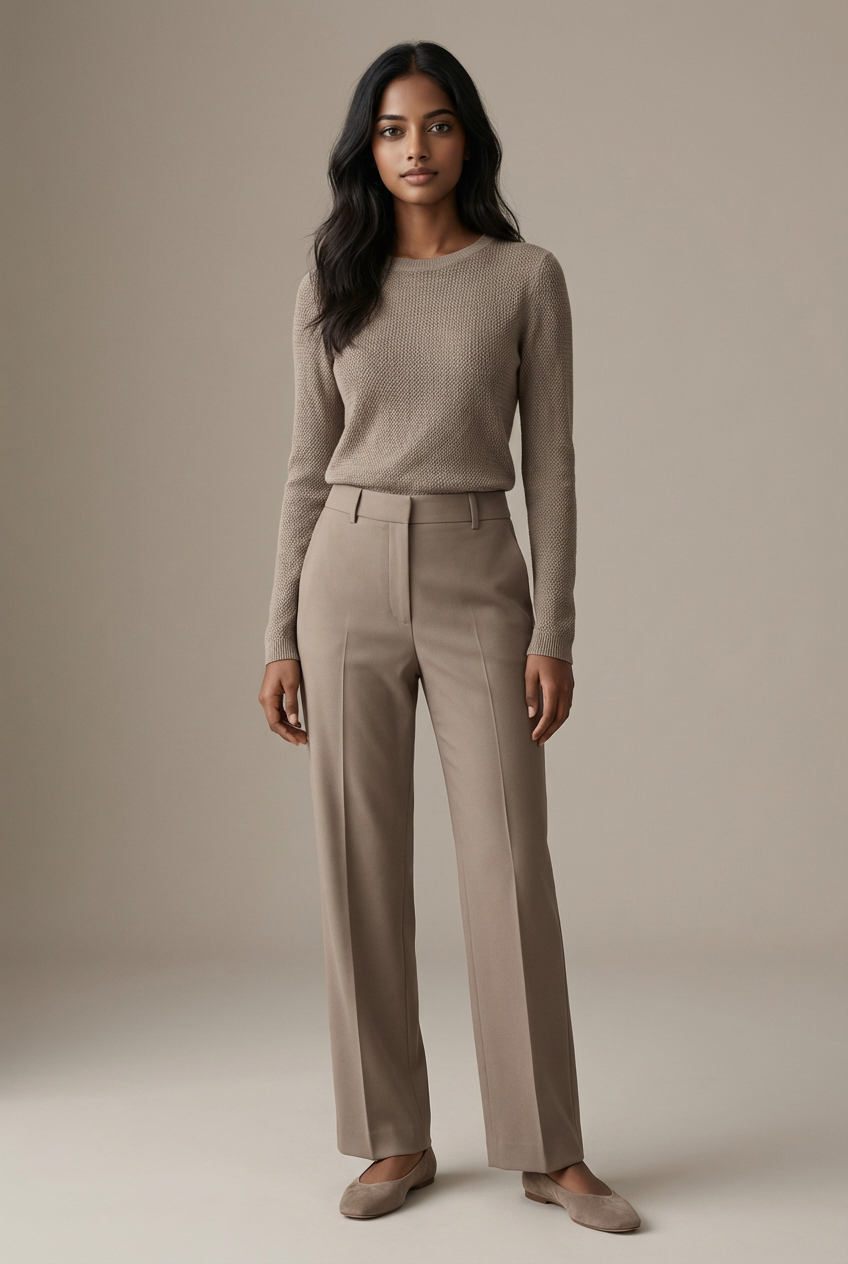
Cream knit + beige trousers + taupe coat
Charcoal tee + mid-gray trousers + dark gray blazer
Mixing tones creates depth without visual chaos.
Tonal Contrast
Tonal contrast uses light and dark within a single palette to define shape.
Examples:
Soft white top + camel trousers
Light gray sweater + charcoal pants
This keeps outfits clean while avoiding flatness.
The 80/20 Rule
A classic minimalist guideline:
80% neutrals
20% accents or contrast
The neutral majority ensures cohesion. The 20% keeps things interesting—through color, texture, or silhouette.
Seasonal Palette Shifts
Minimalism doesn’t mean wearing the same colors year-round.
Spring/Summer: soft whites, light gray, beige, sage
Fall/Winter: camel, taupe, charcoal, olive, rust
The base stays consistent; the weight and warmth shift with the season.
Texture = Visual Interest (The Secret Weapon)
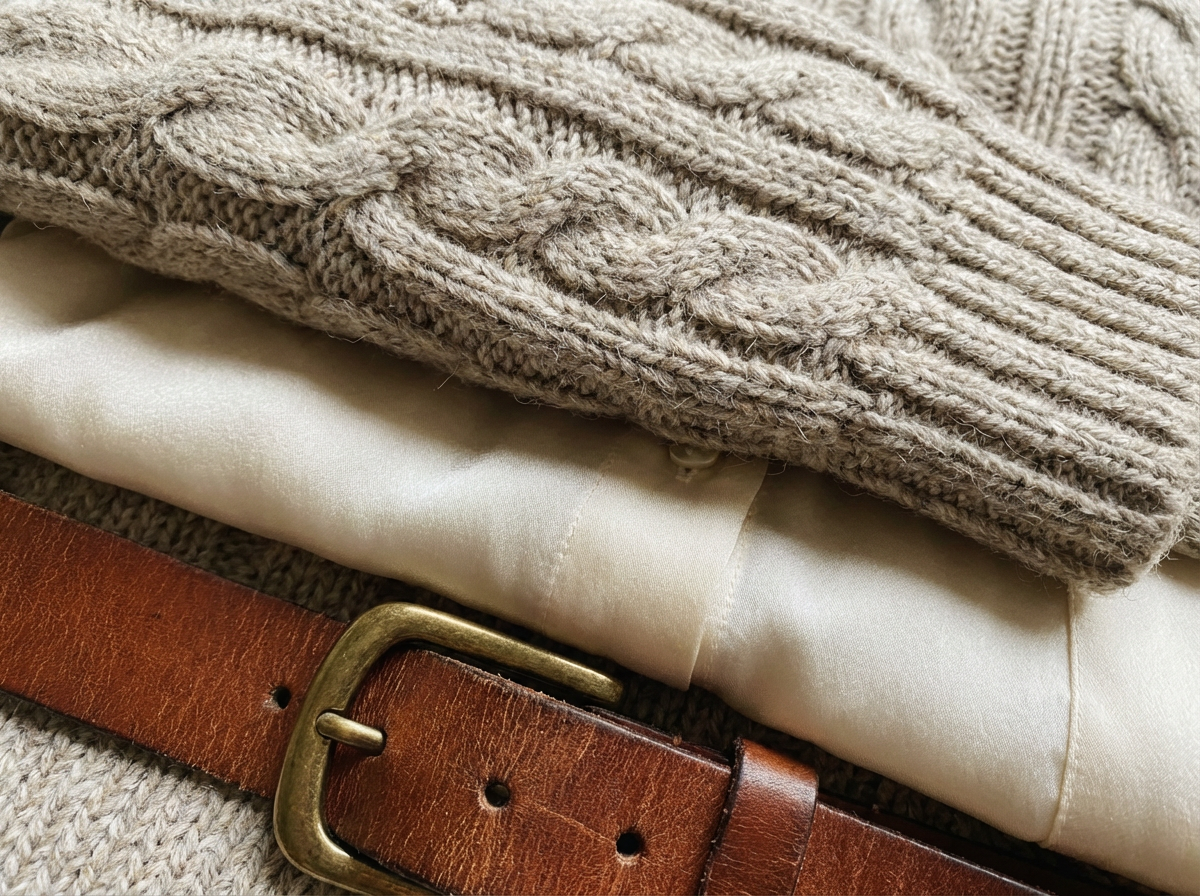
When color is restrained, texture becomes essential.
When color is restrained, texture becomes essential.
Fabric Weight
Lightweight cottons for layering
Structured wool for shape
Fluid silks for movement
Weight changes how color reads and adds depth without visual noise.
Natural Fibers (Why They Matter)
Natural materials age better and photograph better:
Wool
Cotton
Linen
Silk
Cashmere
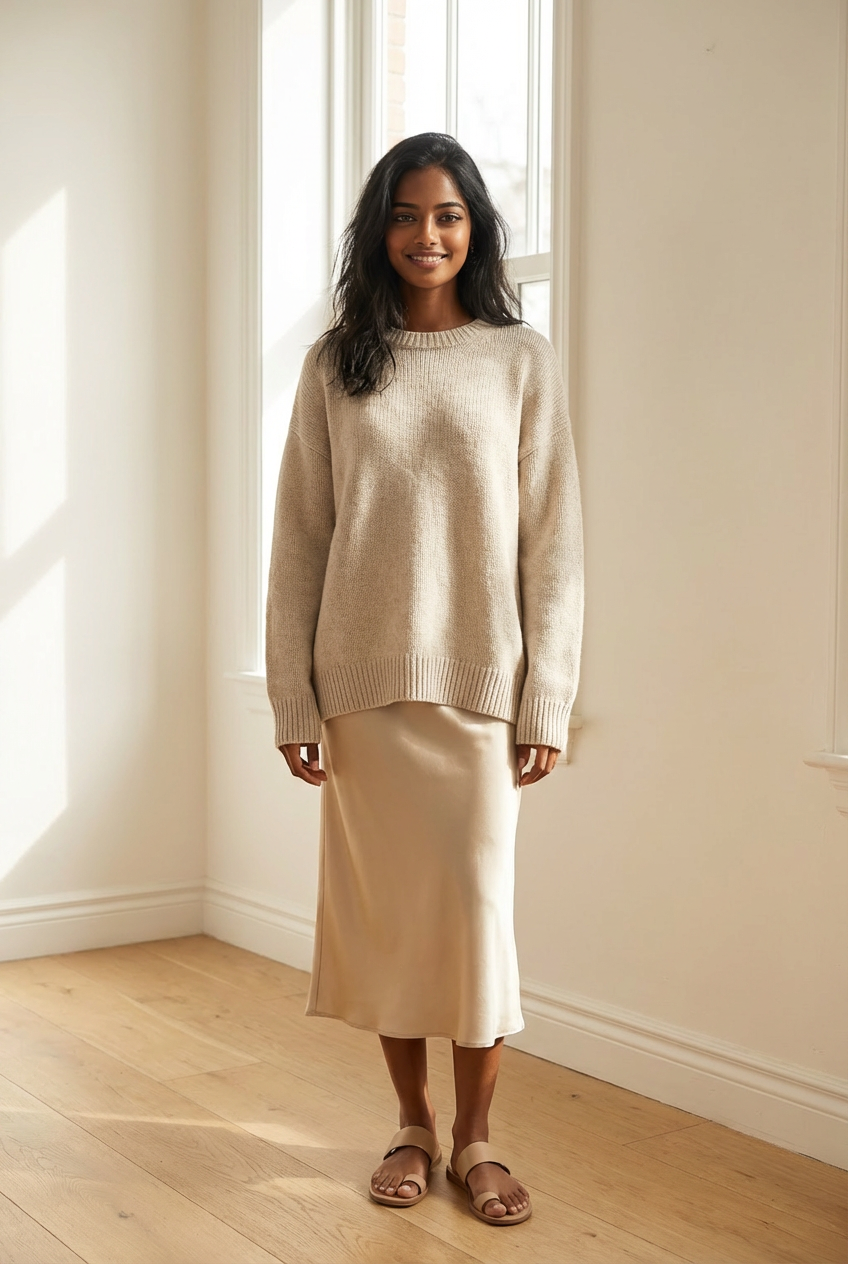
They hold shape, develop character, and enhance minimalist palettes naturally.
Weave & Drape as Design Tools
A ribbed knit, twill trousers, or matte silk blouse adds interest without needing color contrast. In minimalism, construction replaces decoration.
Final Thought on Color
Minimalist color isn’t about playing it safe—it’s about playing it smart. When your palette is intentional, getting dressed becomes easier, outfits look more polished, and your wardrobe works as a system rather than a collection of isolated pieces.
Color doesn’t disappear in minimalism. It just learns how to behave.
The Minimalist Wardrobe Framework: Building Your Capsule
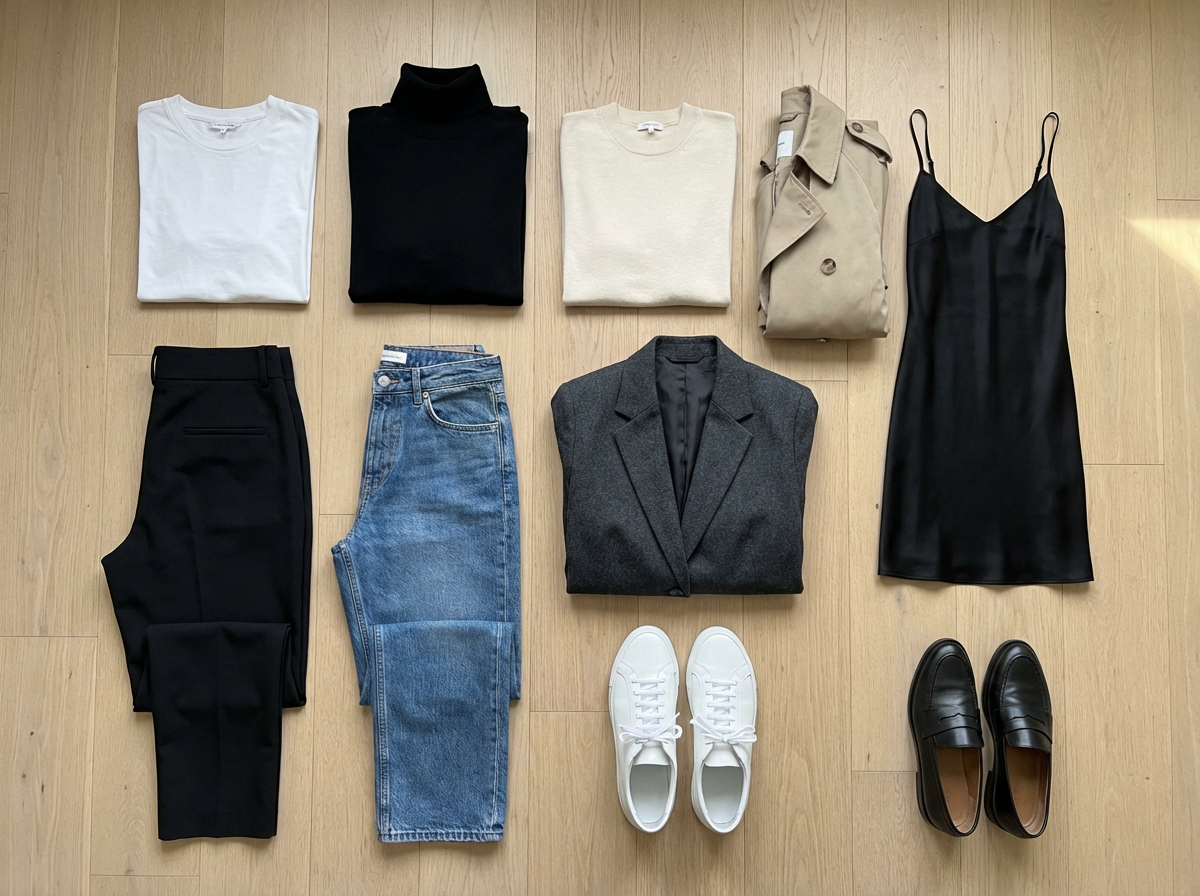
The 10-piece minimalist starter: a learning tool, not a permanent wardrobe.
A minimalist wardrobe isn’t about shrinking your closet to a headline-worthy number. It’s about building a system—one that makes getting dressed easier, outfits more repeatable, and purchases more intentional. When people struggle with minimalism, it’s rarely because they don’t like simple clothes. It’s because they’ve been given rules without a framework.
This section lays out that framework: how minimalist wardrobes are designed, how to personalize them for real life, and which pieces actually earn their place—across budgets and lifestyles.
Cost-Per-Wear Thinking (The Real Math of Minimalism)
Minimalism asks you to stop judging clothes by price alone and start judging them by use.
Cost-per-wear reframes shopping with one simple question:
How often will I realistically wear this? A moderately priced item worn weekly for years becomes far more “minimalist” than a cheap piece worn twice or an expensive piece saved for rare occasions.
This mindset naturally reduces impulse buying. It favors:
Neutral colors that repeat easily
Comfortable cuts you reach for instinctively
Fabrics that hold up to frequent wear
Minimalism isn’t anti-shopping. It’s anti-waste.
French Wardrobe Logic (Why It Works So Well)
French style is often referenced in minimalist conversations—not because it’s superior, but because it reflects the same principles in practice.
The logic is simple:
Own fewer silhouettes
Repeat them often
Focus on fit and confidence, not novelty
Wear the same pieces across casual and dressed-up contexts
A blazer isn’t “workwear” or “evening wear”—it’s just a blazer, styled differently. This mindset removes artificial outfit categories and allows one piece to do multiple jobs.
Why Numbers Matter Less Than Cohesion
You’ll see minimalism framed around numbers everywhere: 10 pieces, 30 pieces, 100 pieces. These numbers can be useful as *training wheels*, but they are not the goal.
Cohesion matters more than count.
A wardrobe with 40 pieces that share a palette, silhouette language, and quality level will feel simpler than a wardrobe with 20 unrelated items. Cohesion means:
Colors work together
Pieces layer easily
Shoes match most outfits
Nothing feels like an outlier
Minimalism lives in how pieces relate to each other, not how many hang in your closet.
Sub-Capsules: The Personalization Layer
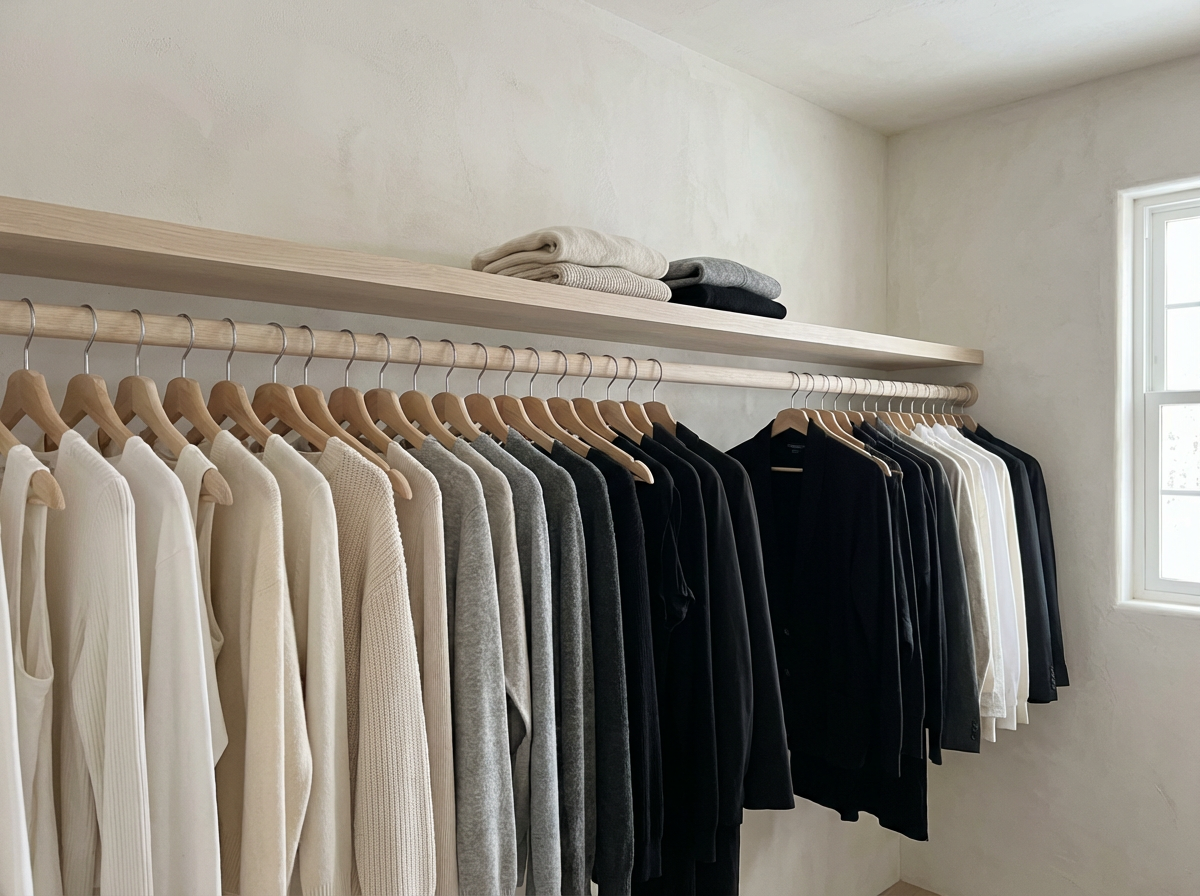
Minimalism only works when it adapts to real lives. Sub-capsules are how you personalize the philosophy without breaking it.
The 10-Piece Minimalist Starter Wardrobe
This is a learning tool, not a permanent wardrobe.
Purpose:
Reduce decision fatigue
Identify true favorites
Understand what you actually wear
A typical 10-piece starter might include:
3–4 tops
2 bottoms
1 layer (blazer or knit)
1 dress or jumpsuit
1–2 pairs of shoes
Wear this capsule for a few weeks. Notice what you miss—and what you don’t. That information is more valuable than any checklist.
The 25-Piece Everyday Minimalist Wardrobe
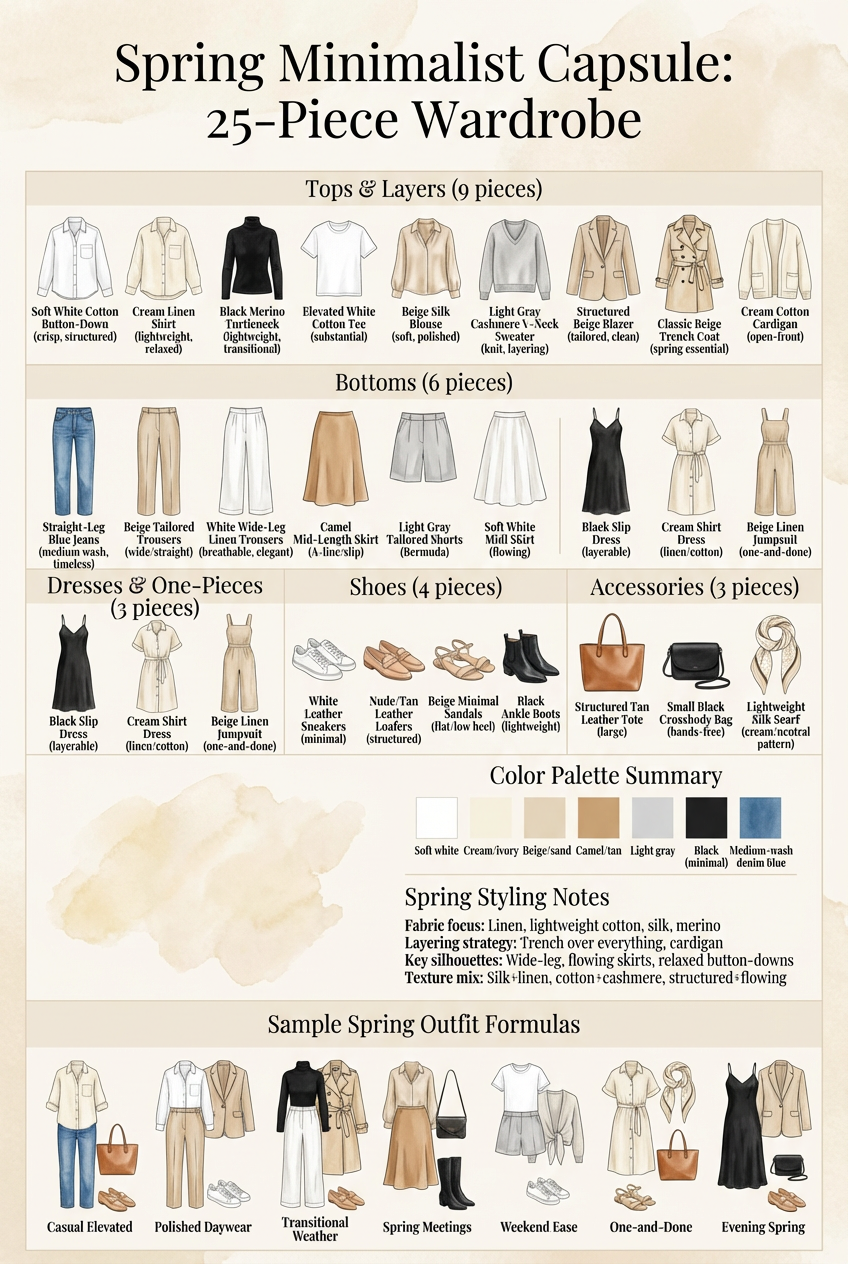
This is where minimalism becomes sustainable.
Purpose:
Cover most daily scenarios
Allow light seasonal rotation
Maintain simplicity without monotony
A 25-piece wardrobe can support:
Work and meetings
Errands and casual outings
Social plans
Travel
This size allows variation while keeping the wardrobe tight enough to stay cohesive.
Creative vs. Corporate Minimalism
Minimalism isn’t a single look—it’s a shared approach.
Creative minimalism often includes:
Relaxed tailoring
Interesting textures
Fluid silhouettes
Statement shoes or knits
Corporate minimalism leans toward:
Structured blazers
Tailored trousers
Clean lines
Neutral palettes with minimal contrast
Both are minimalist. The difference lies in how structure and expression are balanced.
Minimalism for Hybrid & WFH Lifestyles
Modern minimalism reflects how people actually live.
Hybrid wardrobes prioritize:
Polished tops (camera-ready)
Comfortable bottoms
Stretch fabrics
Easy layering
Here, minimalism means fewer “occasion-only” clothes and more versatile pieces that transition between home, errands, and meetings without outfit changes.
Essential Minimalist Pieces
(With Budget / Mid / Investment Mindset)
Minimalist essentials are not trend forecasts. They’re anchors—pieces that carry your wardrobe and make everything else easier to style.
You don’t need every item listed. Think of this as a menu, not a mandate.
Tops & Layers
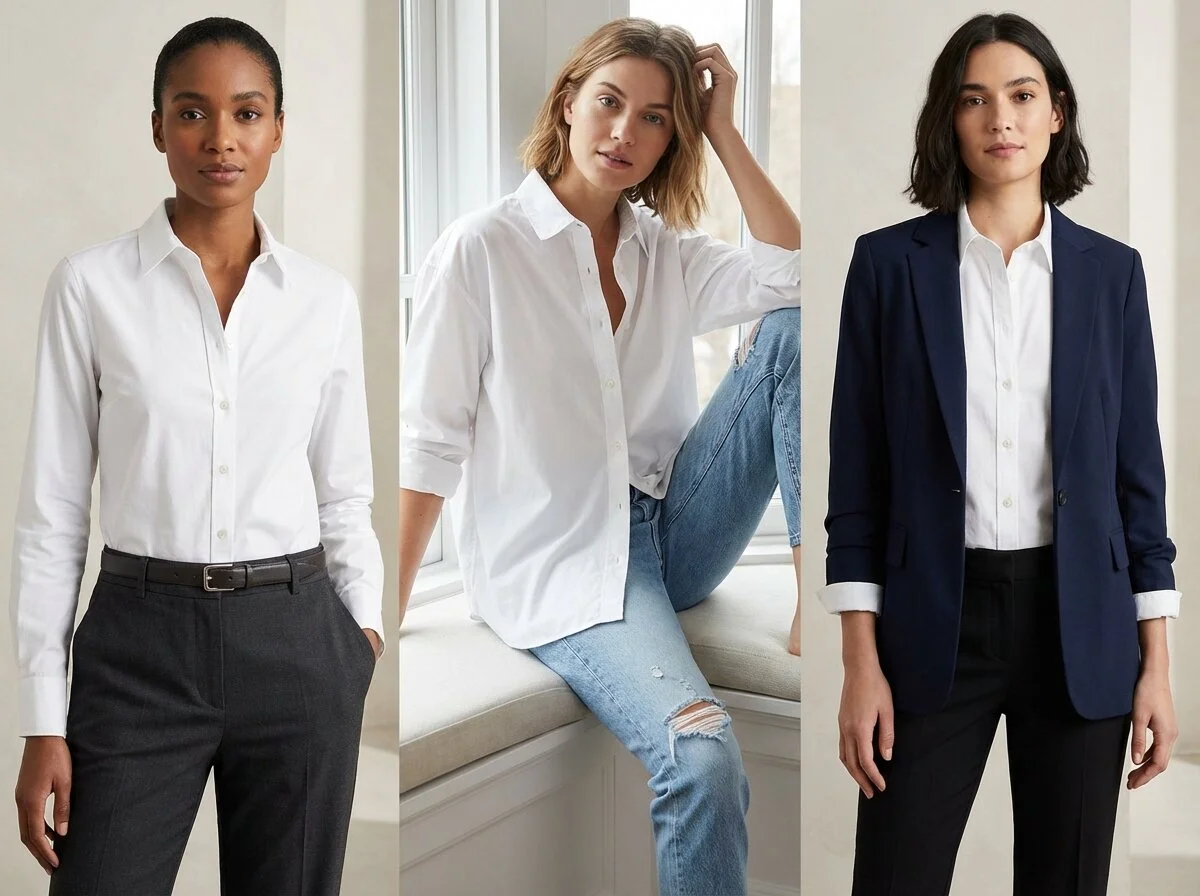
One piece, multiple contexts—the minimalist approach
White Button-Down
The foundation of countless minimalist outfits. Look for crisp cotton or poplin with enough structure to hold its shape.
Black or Neutral Turtleneck
Clean, streamlined, and endlessly layerable. Works solo or under blazers and coats.
Elevated Tees
High-quality cotton, substantial weight, and a flattering neckline. These replace flimsy basics and become everyday heroes.
Silk Blouse
Adds softness and polish. Ideal for work, evenings, or refined layering.
Cashmere or Merino Knit
Warm without bulk. Choose classic cuts over trendy shapes.
Structured Blazer
Instantly sharpens an outfit. Fit is non-negotiable—tailoring is worth it.
Trench Coat
A transitional essential. Works across seasons and outfits with ease.
Wool Coat
Your cold-weather anchor. Neutral color, clean lines, quality fabric.
What NOT to Buy (Tops & Layers)
Trend-driven cuts that date quickly
Thin fabrics that lose shape
Logo-heavy basics
Pieces that only work for one outfit
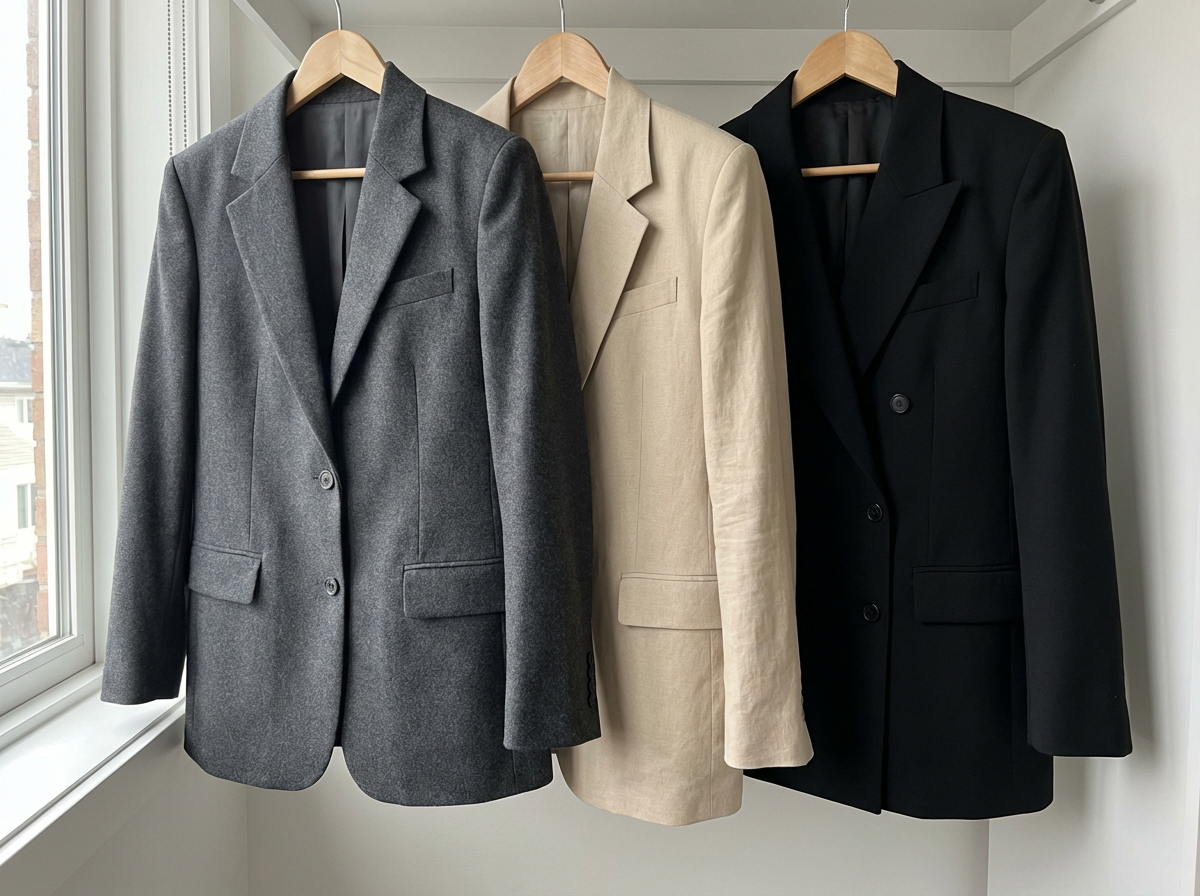
Structured blazers in neutral tones: instant polish.
Bottoms
Straight-Leg Jeans
Timeless and versatile. More adaptable than skinny or ultra-wide styles.
Tailored Trousers
A minimalist workhorse. Choose a neutral tone with structure and drape.
Midi Skirt
Balances femininity and practicality. Easy to dress up or down.
Wide-Leg Trousers
Add modernity while remaining classic when cut well.
Dresses & One-Pieces
Little Black Dress (LBD)
Minimalist versions are simple, versatile, and unfussy.
Slip Dress
Layerable year-round. Elegant without effort.
Shirt Dress
Functional, comfortable, and polished. A minimalist favorite for ease.
Jumpsuit
A one-and-done solution. Clean lines are key.
Shoes
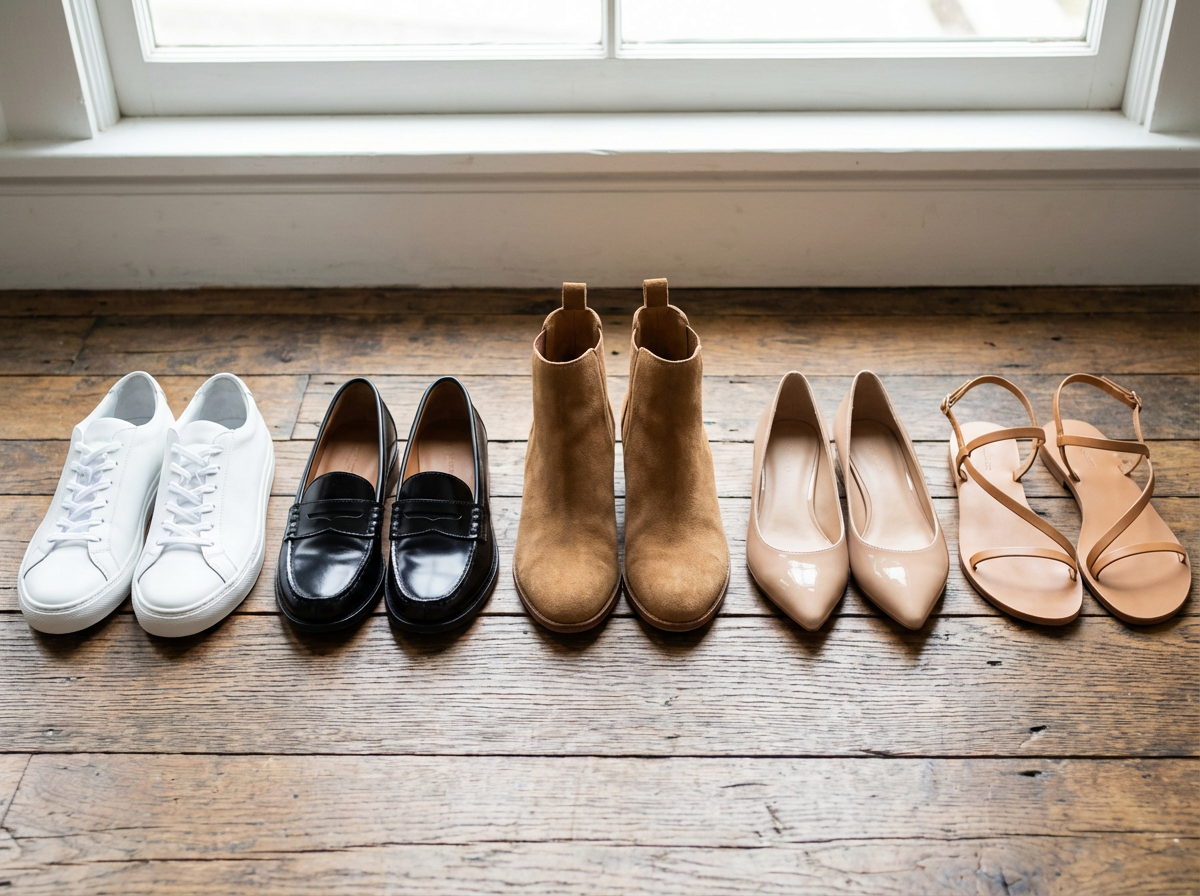
Minimal branding, maximum versatility
White Sneakers
Minimal branding, clean silhouette, comfortable construction.
Loafers
Structured, timeless, and practical for everyday wear.
Ankle Boots
Neutral leather or suede with a classic shape.
Minimal Sandals
Simple straps, supportive soles, neutral tones.
Pointed Flats
Polished without heels. Ideal for work and daily wear.
Accessories
Structured Bag
Defines the outfit. Neutral color, clean lines.
Crossbody Bag
Hands-free and practical without sacrificing style.
Simple Jewelry
Gold or silver, worn daily, minimal shapes.
Leather Belt
Adds structure and cohesion.
Optional Silk Scarf
For texture, accent color, or personal expression.
How to Build This Wardrobe (Without Starting Over)
Minimalism isn’t built in a weekend. It’s built through editing and replacement, not mass purging.
Start with what you own:
Identify your true workhorses
Notice which pieces feel effortless
Flag items that create friction
Then build slowly:
Replace low-quality basics first
Prioritize cohesion over variety
Upgrade the pieces you wear constantly
A minimalist wardrobe evolves with you. As your lifestyle changes, the framework adapts—but the philosophy remains the same.
The Goal of the Minimalist Framework
The point isn’t to own less for appearances.
It’s to own better, dress with ease, and remove unnecessary friction from your daily life.
When your wardrobe works as a system, style stops feeling complicated—and starts feeling intentional.
Minimalist Outfit Formulas: 12 Repeatable Looks
Below are 12 core outfit formulas you can return to again and again. Each includes a breakdown, best occasions, seasonal swaps, and styling cues.
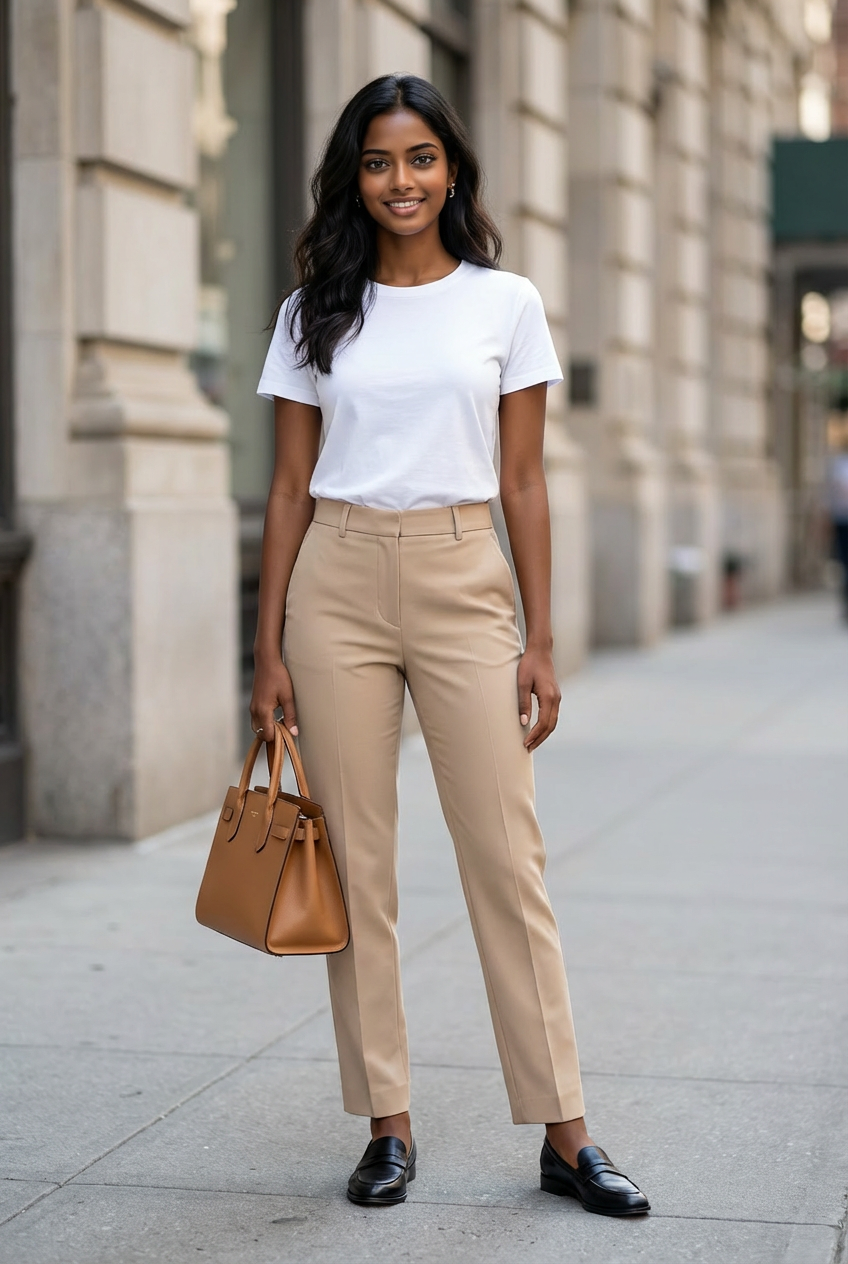
1. Tee + Tailored Trousers + Structured Shoes
Breakdown:
Elevated tee + tailored trousers + loafers or flats
Occasion:
Everyday, errands, casual meetings
Seasonal Swaps:
Winter: add a wool coat
Summer: lightweight trousers, linen tee
Styling Cue:
Tuck or half-tuck the tee for structure.
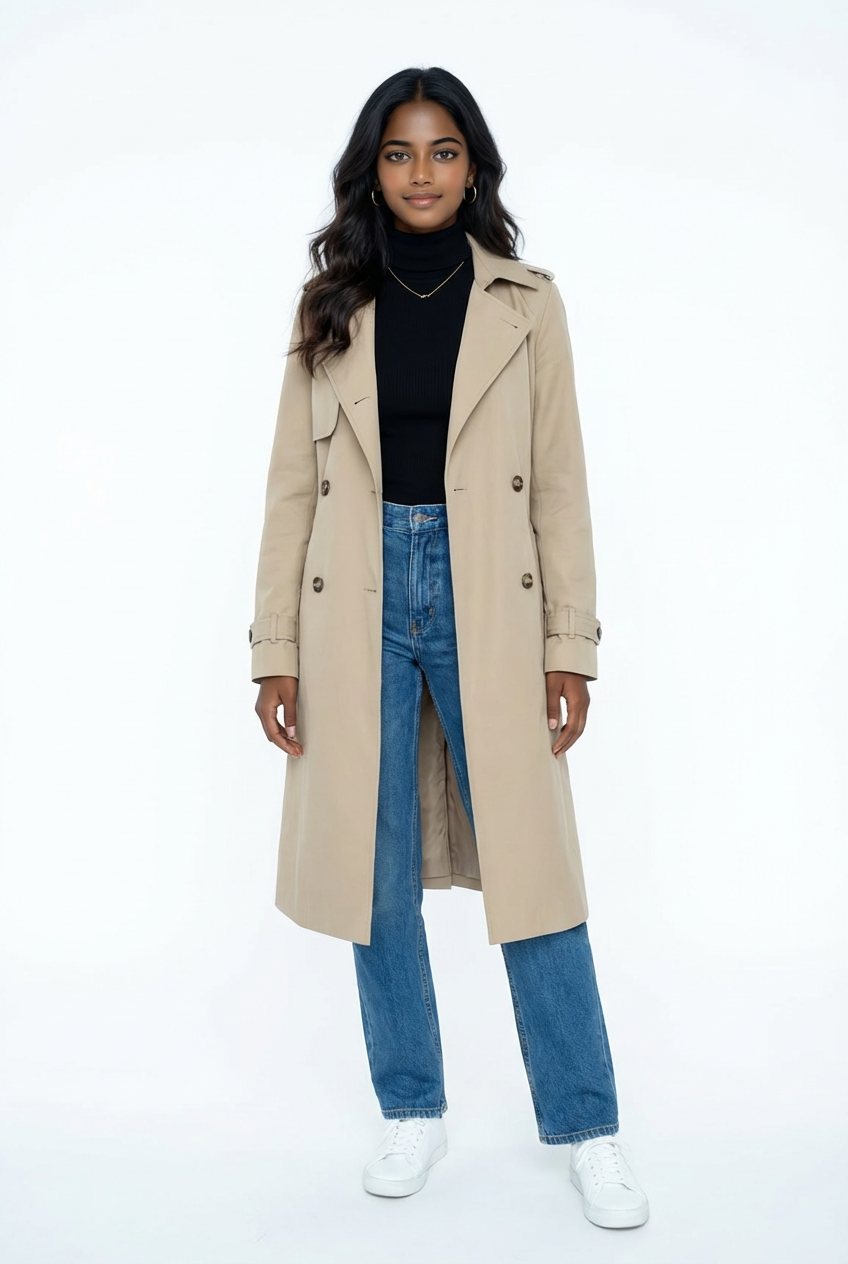
2. Turtleneck + Jeans + Trench Coat
Breakdown:
Neutral turtleneck + straight-leg jeans + trench
Occasion:
Casual days, travel, transitional weather
Seasonal Swaps:
Winter: swap trench for wool coat
Spring: lighter knit
Styling Cue:
Let the trench remain open for vertical lines.

3. Button-Down + Wide-Leg Trousers + Flats
Breakdown:
Crisp button-down + wide-leg trousers + pointed flats
Occasion:
Work, lunch meetings, polished daywear
Seasonal Swaps:
Summer: linen button-down
Winter: layer with a blazer
Styling Cue:
Slightly oversized shirt balances the volume below.
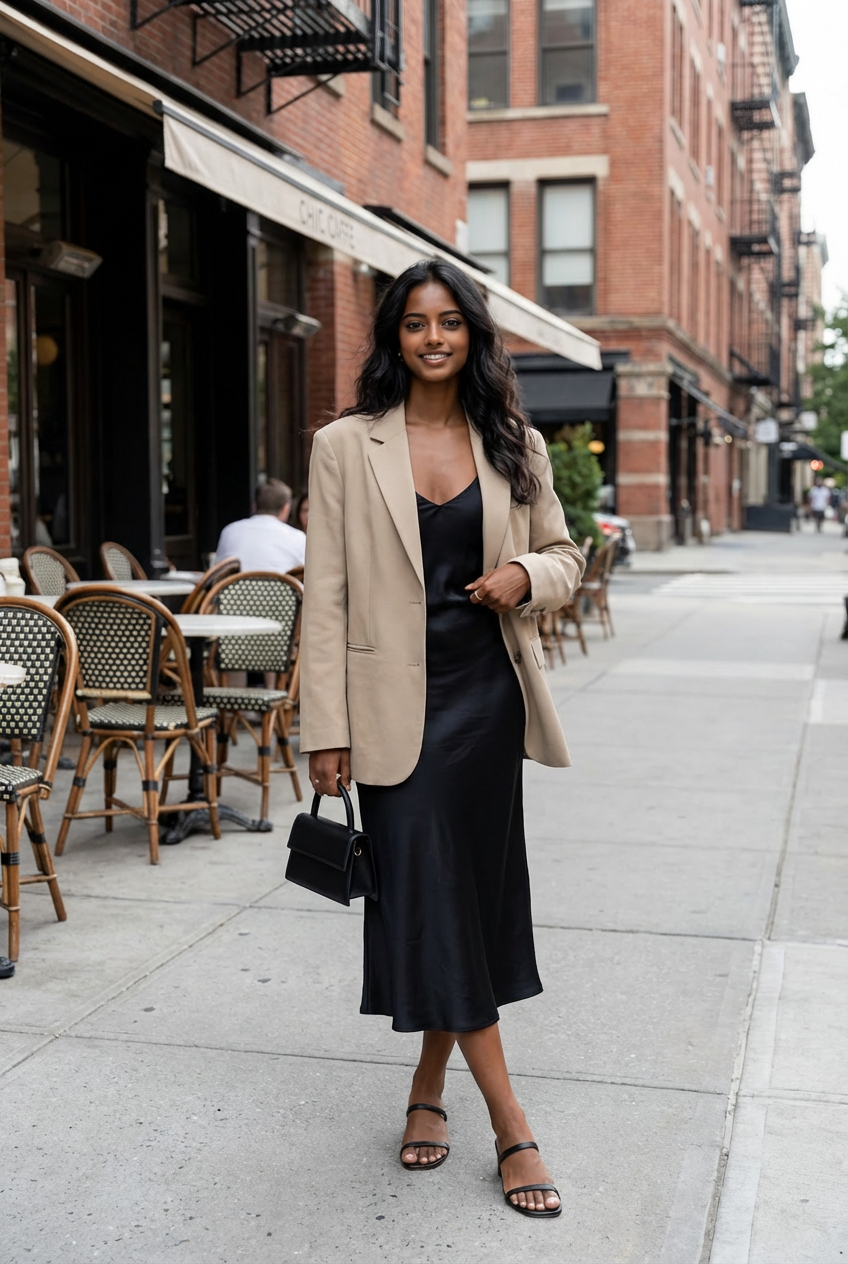
4. Slip Dress + Blazer + Minimal Shoes
Breakdown:
Slip dress + structured blazer + sandals or flats
Occasion:
Dinner, evening events, travel
Seasonal Swaps:
Winter: boots and tights
Summer: bare shoulders, lightweight blazer
Styling Cue:
The blazer adds authority; keep accessories minimal.
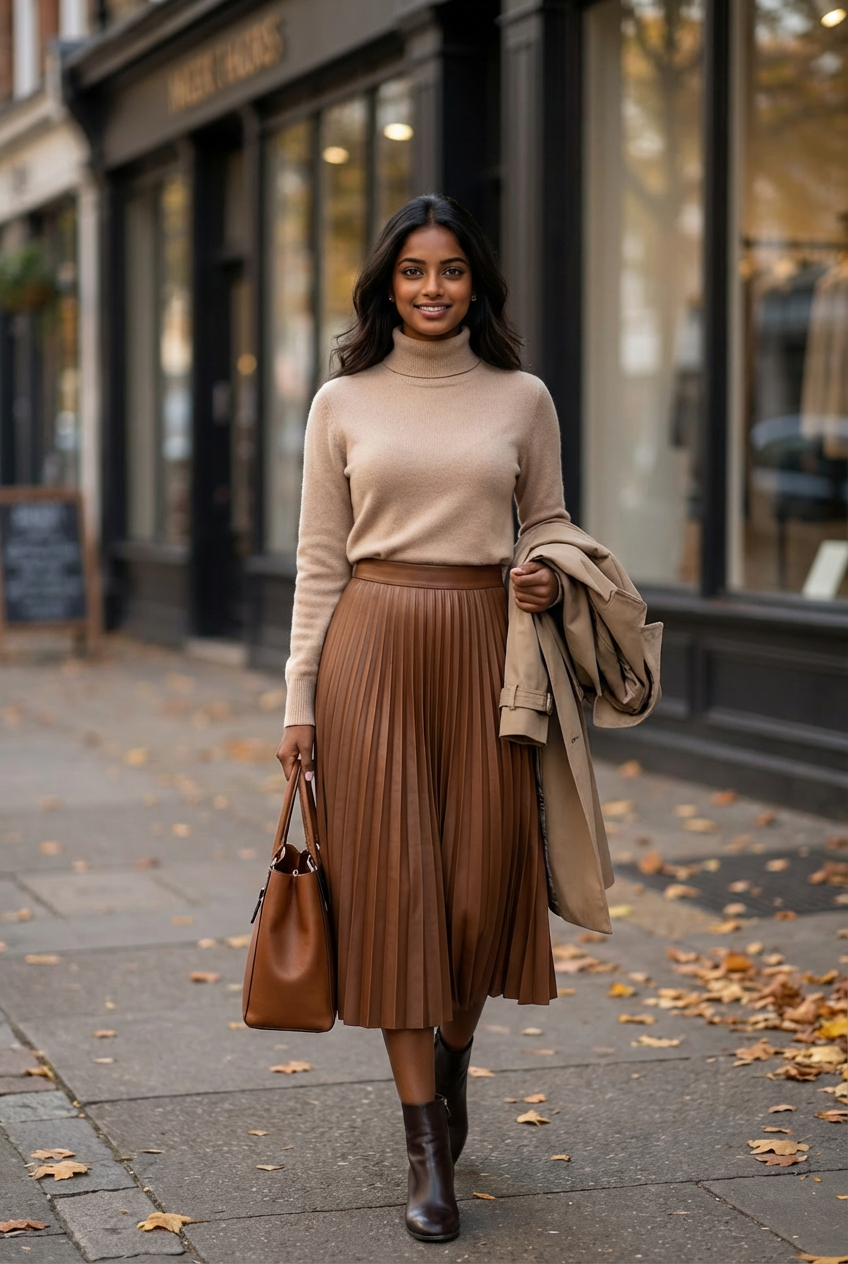
5. Knit + Midi Skirt + Boots
Breakdown:
Cashmere or merino knit + midi skirt + ankle boots
Occasion:
Work, casual evenings, transitional seasons
Seasonal Swaps:
Summer: lighter knit or tee
Winter: add coat and tights
Styling Cue:
Tuck or belt the knit to define the waist.

6. Blazer + Tee + Jeans
Breakdown:
Structured blazer + elevated tee + straight-leg jeans
Occasion:
Smart casual, meetings, everyday polish
Seasonal Swaps:
Summer: lightweight blazer
Winter: add scarf and boots
Styling Cue:
Roll blazer sleeves slightly for ease.
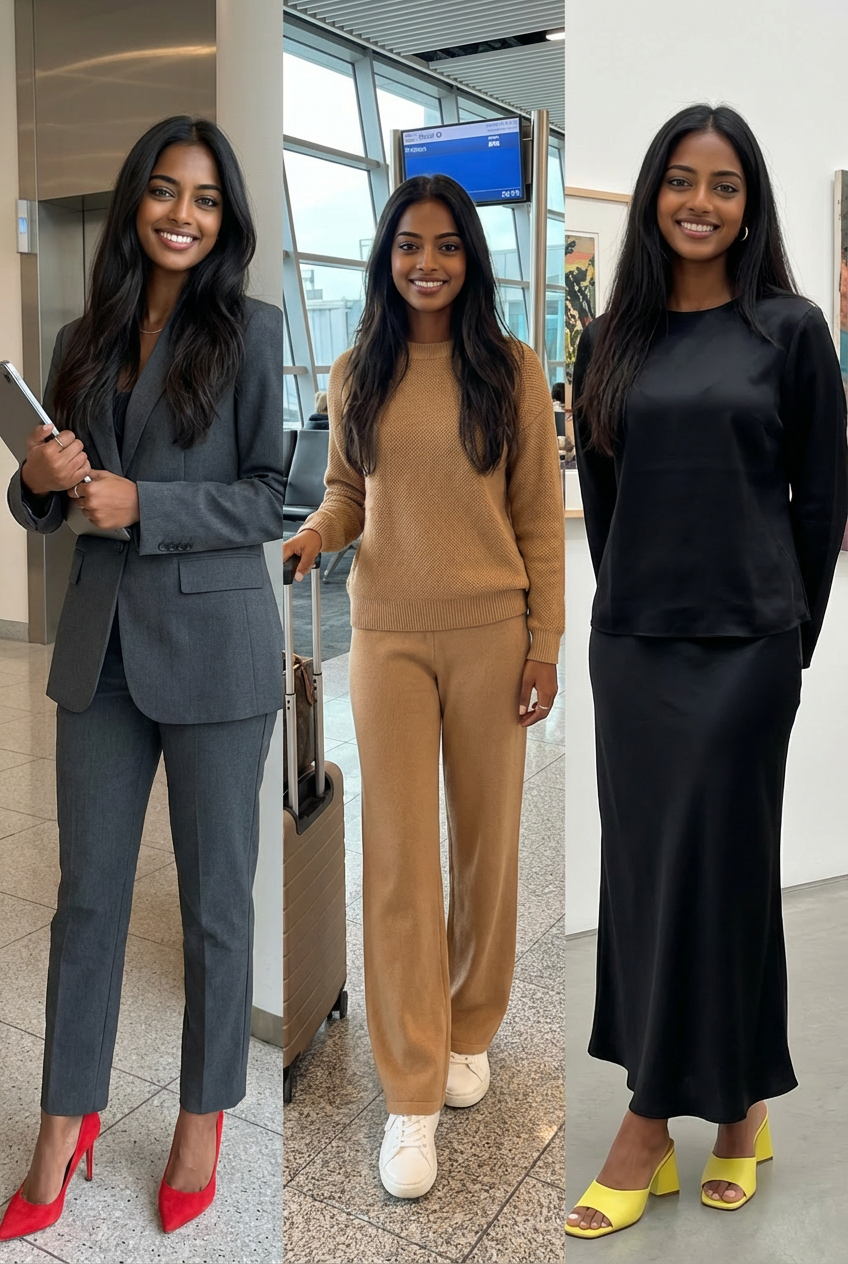
7. Monochrome Top + Bottom + Contrast Shoe
Breakdown:
Same-color top and bottom + contrasting shoe
Occasion:
Work, travel, minimalist statement outfits
Seasonal Swaps:
Adjust fabric weight rather than color.
Styling Cue:
Keep contrast intentional—one element only.
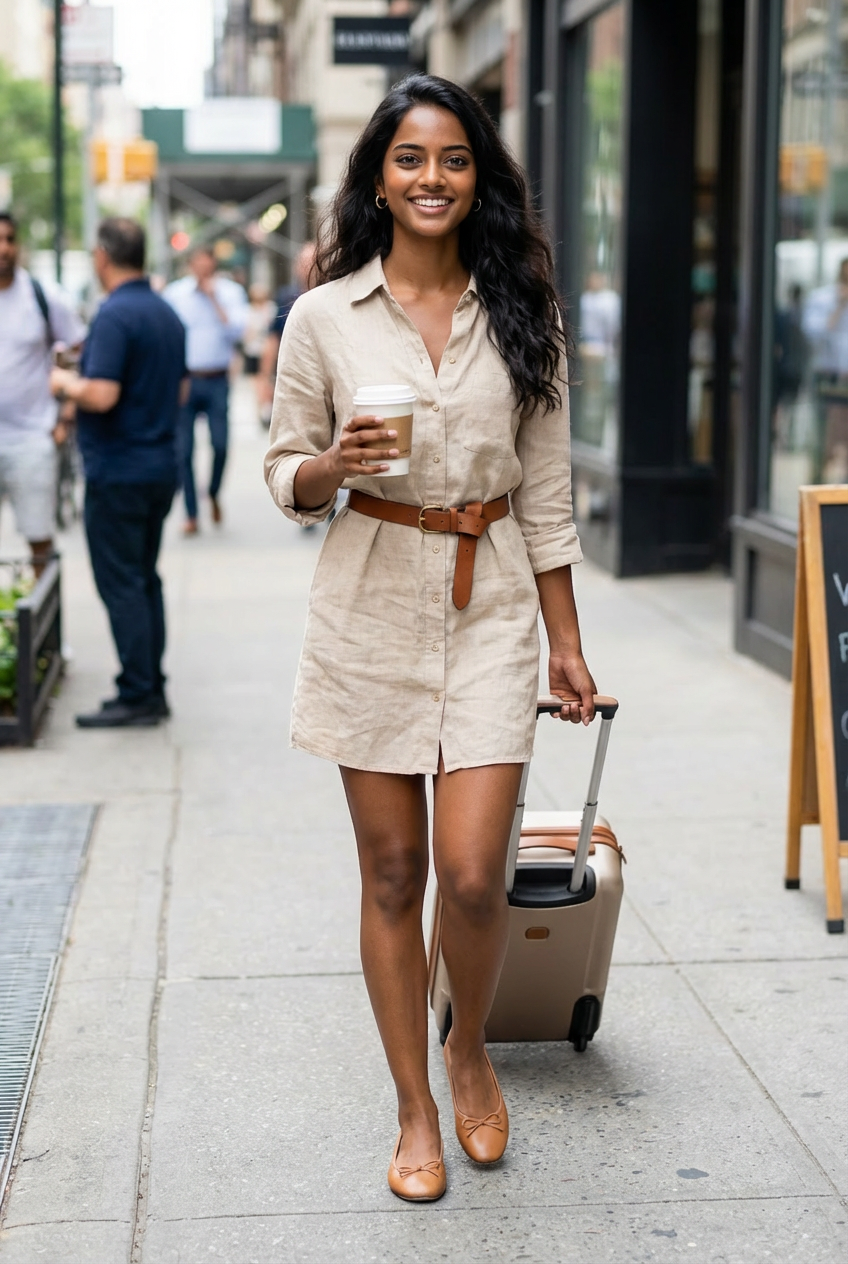
8. Shirt Dress + Belt + Flats
Breakdown:
Neutral shirt dress + leather belt + flats
Occasion:
Daytime events, work, travel
Seasonal Swaps:
Winter: layer with knit and boots
Summer: wear loose and unbelted
Styling Cue:
Belt adds structure; unbelted reads relaxed.
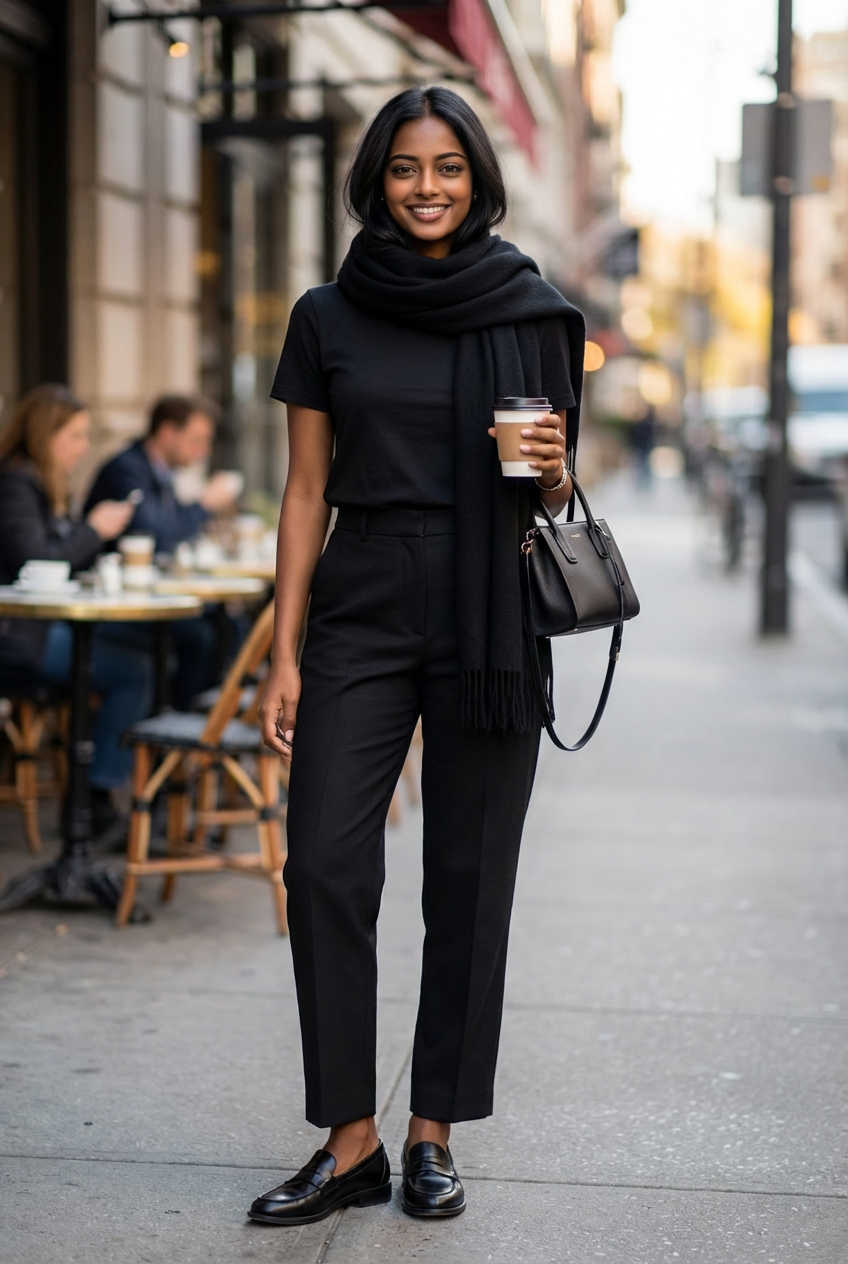
9. All-Black (or All-Neutral) with Texture Mix
Breakdown:
Single-color outfit + mixed textures
Occasion:
Evenings, city wear, elevated minimalism
Seasonal Swaps:
Swap fabrics, not colors.
Styling Cue:
Combine matte and sheen for depth.
10. Sweater + Trousers + Sneakers
Breakdown:
Clean knit + tailored trousers + white sneakers
Occasion:
Hybrid workdays, errands, casual meetings
Seasonal Swaps:
Summer: cotton knit
Winter: wool sweater
Styling Cue:
Keep sneakers minimal and clean.
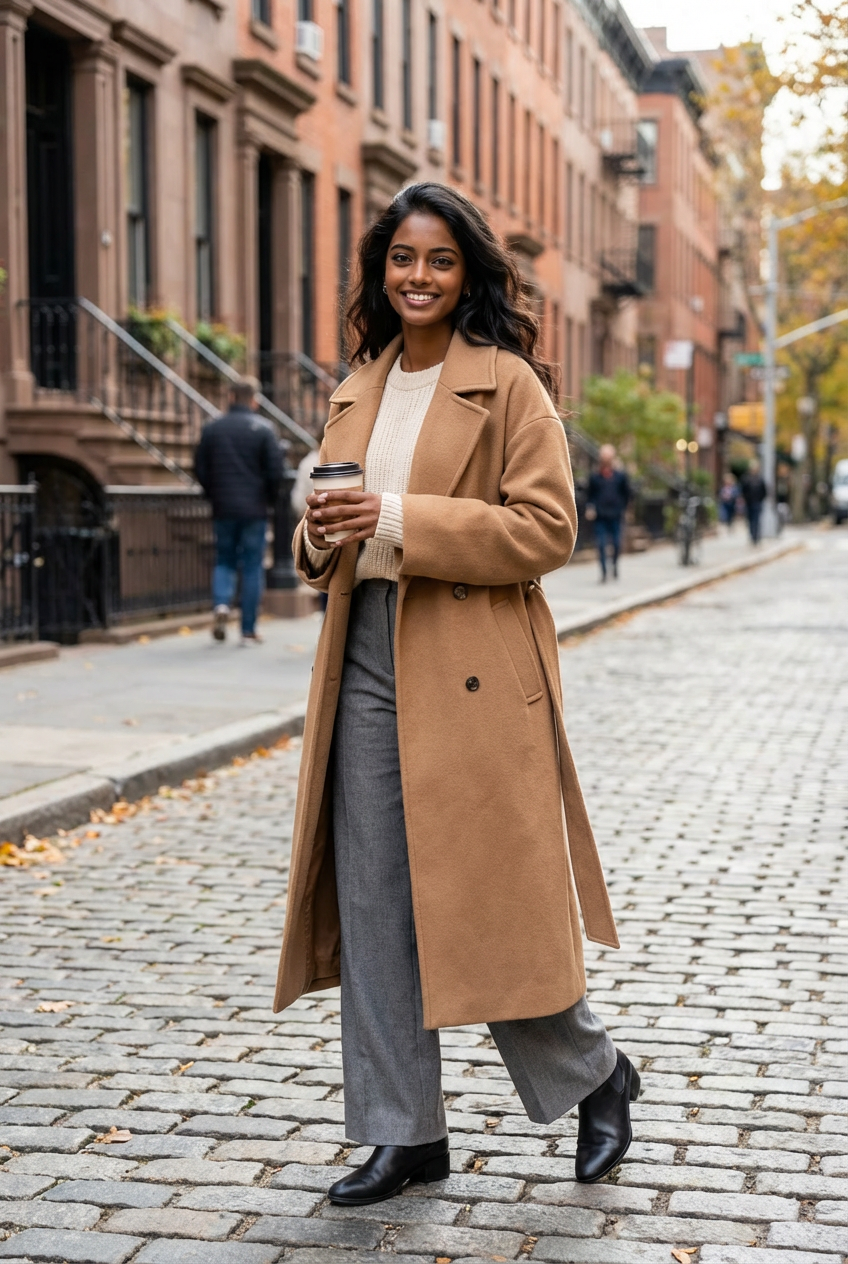
11. Coat-Centered Outfit
Breakdown:
Neutral base outfit + statement coat
Occasion:
Fall/winter daily wear
Seasonal Swaps:
Different coats define different moods.
Styling Cue:
Everything underneath should be simple.
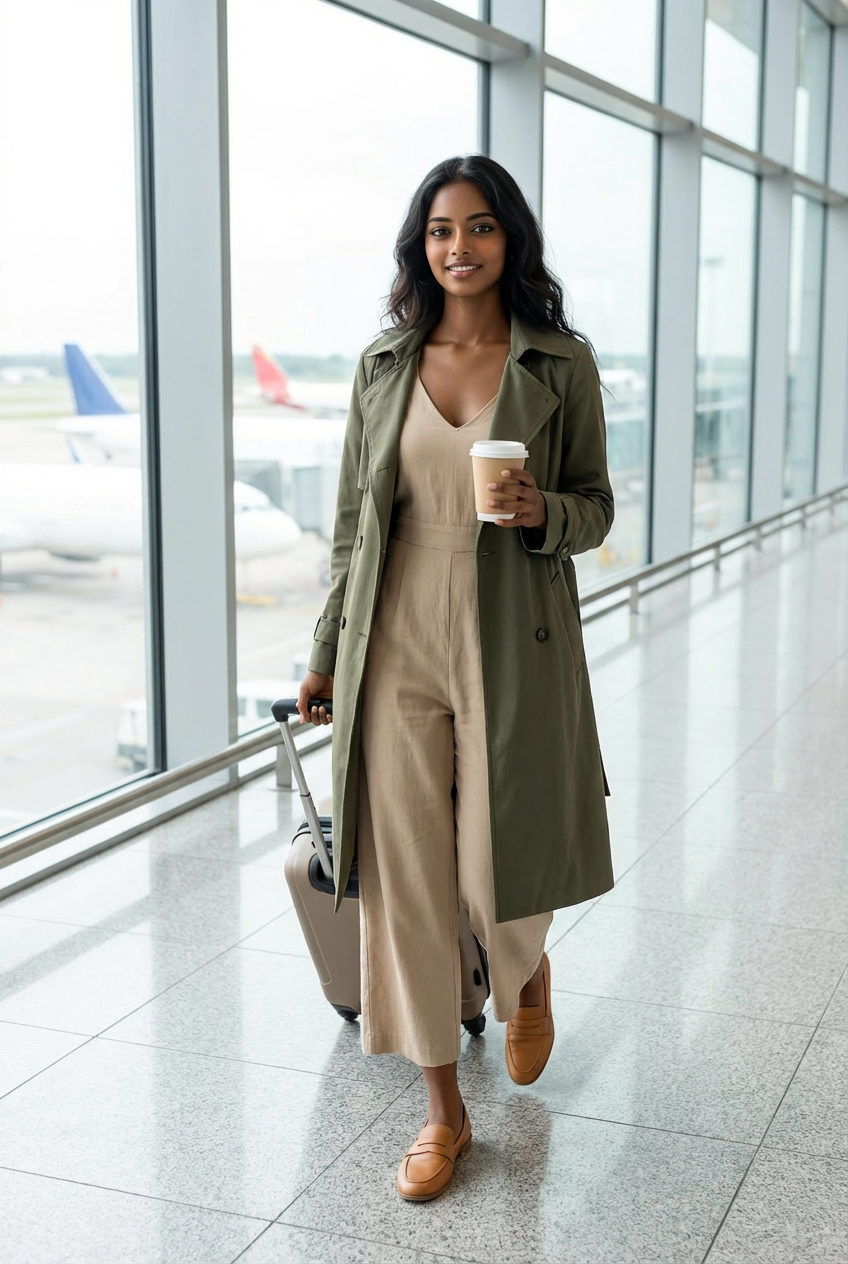
12. Jumpsuit + One Layer + Clean Shoe
Breakdown:
Neutral jumpsuit + blazer or coat + flats
Occasion:
Travel, casual events, one-and-done days
Seasonal Swaps:
Sleeveless vs. long-sleeve versions
Styling Cue:
Let the jumpsuit be the hero—keep accessories minimal.
Why Outfit Formulas Matter
Minimalist style isn’t about having fewer ideas—it’s about having better ones.
Outfit formulas free you from constant decision-making. They allow repetition without boredom and structure without rigidity. When you stop reinventing the wheel every morning, style becomes quieter, easier, and more confident.
Minimalism doesn’t ask you to dress less.
It teaches you how to dress on purpose.
Styling Details: Where Minimalism Becomes Chic
Minimalism doesn’t become chic because you bought the “right” pieces.
It becomes chic because you know when to stop, what to emphasize, and how to finish.
This is the difference between outfits that look simple—and outfits that look *intentional*. Styling is where minimalism turns from a wardrobe concept into a personal signature.
The Art of Restraint
Restraint is not absence. It’s control.
Minimalist outfits succeed when every element has a job to do—and nothing is added “just in case.” If your outfit feels close but not quite there, the solution is often subtraction, not addition.
When to Stop Adding
A useful checkpoint before you leave the house:
Does this outfit already have structure?
Is there already one point of interest (fit, texture, contrast)?
Am I adding this because it improves the outfit—or because I’m nervous?
Minimalist outfits usually fall apart at the *last 10%*: the extra necklace, the unnecessary scarf, the third layer that breaks the line. When in doubt, remove one thing and reassess.
If the outfit still works without it, you didn’t need it.
Jewelry Minimums
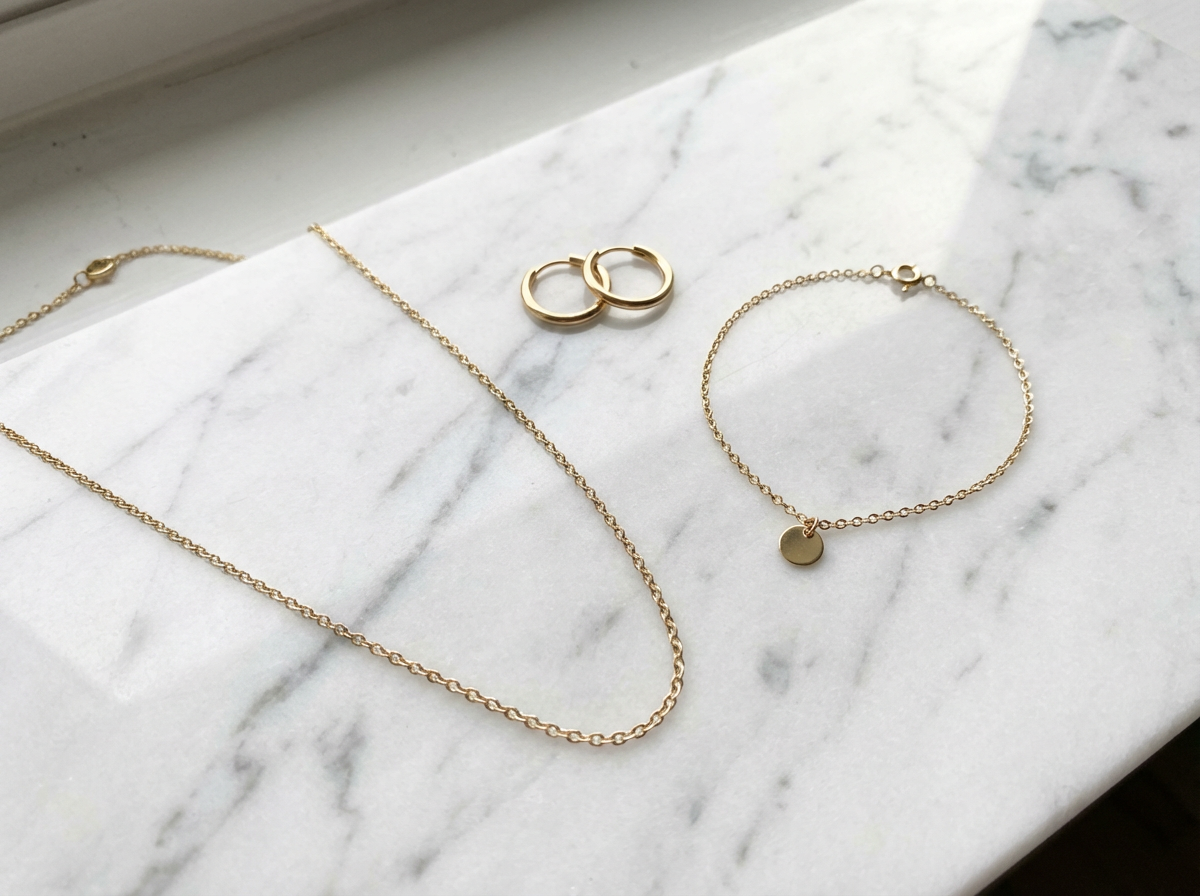
One category only—or two very small pieces max.
Minimalism doesn’t mean no jewelry—it means edited jewelry.
A strong minimalist guideline:
One category only (earrings or necklace or bracelet)
Or two very small pieces max (studs + thin chain)
Jewelry in minimalist styling should:
Echo the outfit’s tone (sleek with sleek, soft with soft)
Sit close to the body
Never compete with tailoring or fabric
If you notice your jewelry before the outfit, it’s too much.
The One Statement Rule
Minimalism allows statements—but only one at a time.
A statement can be:
A sharply tailored blazer
A dramatic coat
An architectural shoe
A bold silhouette (wide-leg trousers, oversized knit)
Once you choose the statement, everything else becomes the supporting cast.
Trying to make everything interesting results in visual noise. Let one element lead—and let the rest be quiet.
Fit & Silhouette Mastery
Fit is the backbone of minimalist style. Without it, even the best pieces look unfinished.
Tailoring: The Silent Upgrade
Tailoring is one of the most powerful tools in minimalist dressing—and one of the most overlooked.
Simple adjustments that change everything:
Hemming trousers to the correct length
Taking in a blazer waist slightly
Adjusting sleeve length
Defining shoulder lines
Minimalism rewards tailoring because there are fewer distractions. When fit is off, it shows immediately. When fit is right, the entire outfit looks elevated—even if the pieces are basic.
Proportion (Why It Matters More Than Trends)
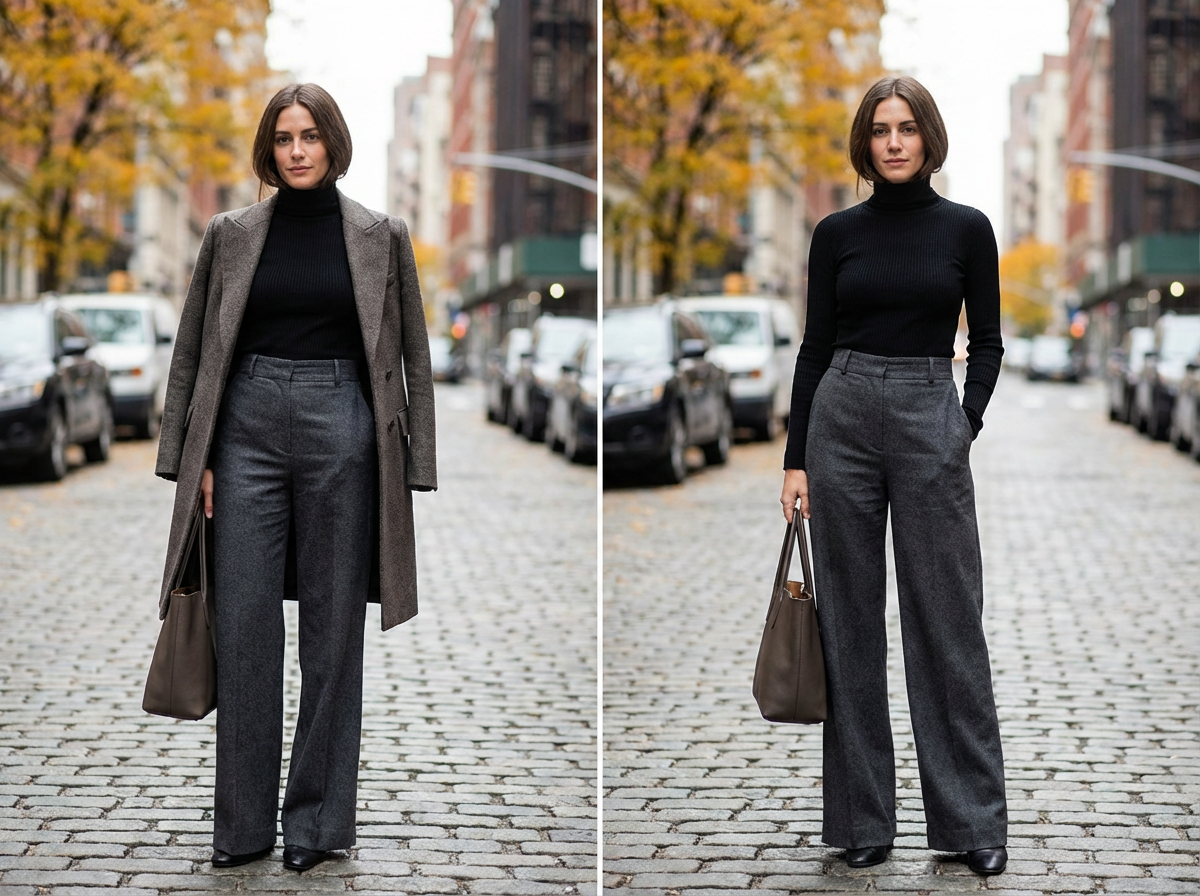
Proportion: one volume needs an anchor
Minimalist outfits rely heavily on proportion to create interest.
A few reliable proportion pairings:
Wide-leg trousers + fitted top
Oversized blazer + slim base layer
Long coat + cropped or tucked layers
Midi skirt + structured shoe
Think in terms of balance, not body rules. One volume needs an anchor. One long line needs a break. This keeps outfits dynamic without excess.
Minimalism for All Bodies
Minimalism is often presented narrowly—but the philosophy itself is body-neutral.
Minimalism works when you:
Choose silhouettes that feel intentional on your frame
Prioritize comfort and movement
Adjust proportions to suit your height and shape
Minimalism does not mean hiding curves or forcing straight lines. It means clarity—in fit, structure, and intention. A minimalist outfit that fits you well will always look more refined than one that follows someone else’s formula.
Why Styling Is the Difference
Two people can own the same minimalist wardrobe and look completely different.
The difference isn’t taste—it’s editing, restraint, and finish.
Styling is what makes minimalism feel intentional instead of accidental. It’s what turns a simple outfit into a confident one. And it’s what allows you to wear fewer pieces without ever feeling underdressed.
Minimalism isn’t about removing personality.
It’s about giving it room to breathe.
Minimalism as a Lifestyle Aesthetic
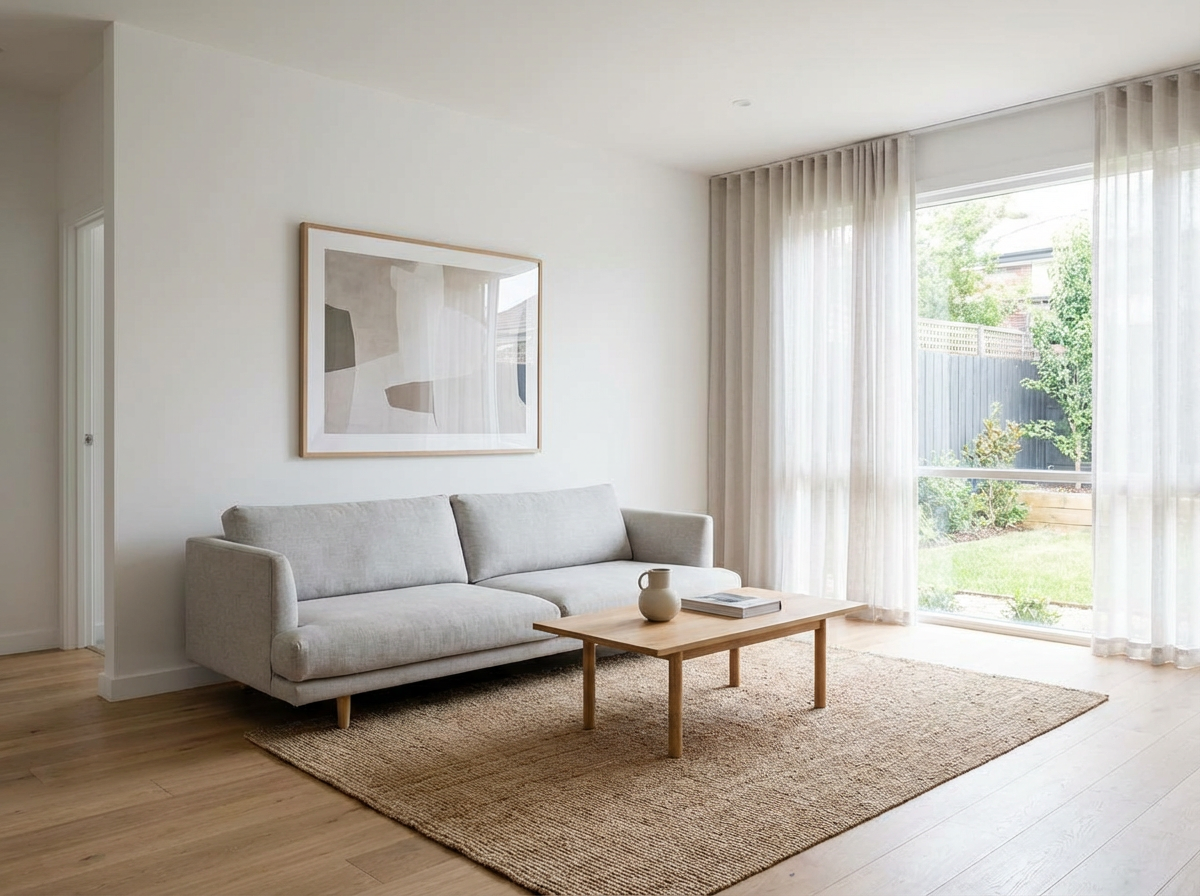
Minimalism doesn’t stop at your closet door.
For many people, the reason minimalist style feels so compelling isn’t just how it looks—it’s how it feels to live with. Minimalism, when practiced well, becomes a lifestyle aesthetic: a way of creating calm, cohesion, and clarity across what you wear, how you move through your day, and the spaces you inhabit.
At its best, minimalist style isn’t about restriction. It’s about alignment.
The Wardrobe ↔ Home Connection
One of the clearest signs that minimalism has moved beyond “fashion phase” into lifestyle is the natural overlap between wardrobe and home.
Visual Calm
Minimalist wardrobes and minimalist interiors share the same goal: reducing visual noise.
In clothing that looks like:
Limited color palettes
Repeat silhouettes
Fewer statement pieces competing for attention
In the home, it often shows up as:
Neutral or muted color schemes
Thoughtful spacing
Fewer, better-quality objects
When both align, decision fatigue drops. You’re not constantly reacting to excess—whether that’s cluttered closets or overstimulating outfits. Getting dressed becomes easier because your wardrobe already reflects the calm you want to experience.
Cohesion Without Rigidity
A common fear around lifestyle minimalism is that everything will start to feel sterile or overly controlled. True minimalism avoids this by prioritizing cohesion, not sameness.
Cohesion means:
Colors repeat naturally
Materials feel compatible
Nothing feels random or out of place
It doesn’t mean:
Everything matches perfectly
Personality disappears
Your home or wardrobe feels like a showroom
A minimalist lifestyle allows for softness, warmth, and individuality—it simply edits out what doesn’t support how you want to live.
Minimalism Across Fashion Capitals
Minimalism isn’t monolithic. Its expression changes depending on culture, climate, and values. Looking at how different fashion capitals interpret minimalism helps clarify how flexible the aesthetic really is.
Japanese Minimalism
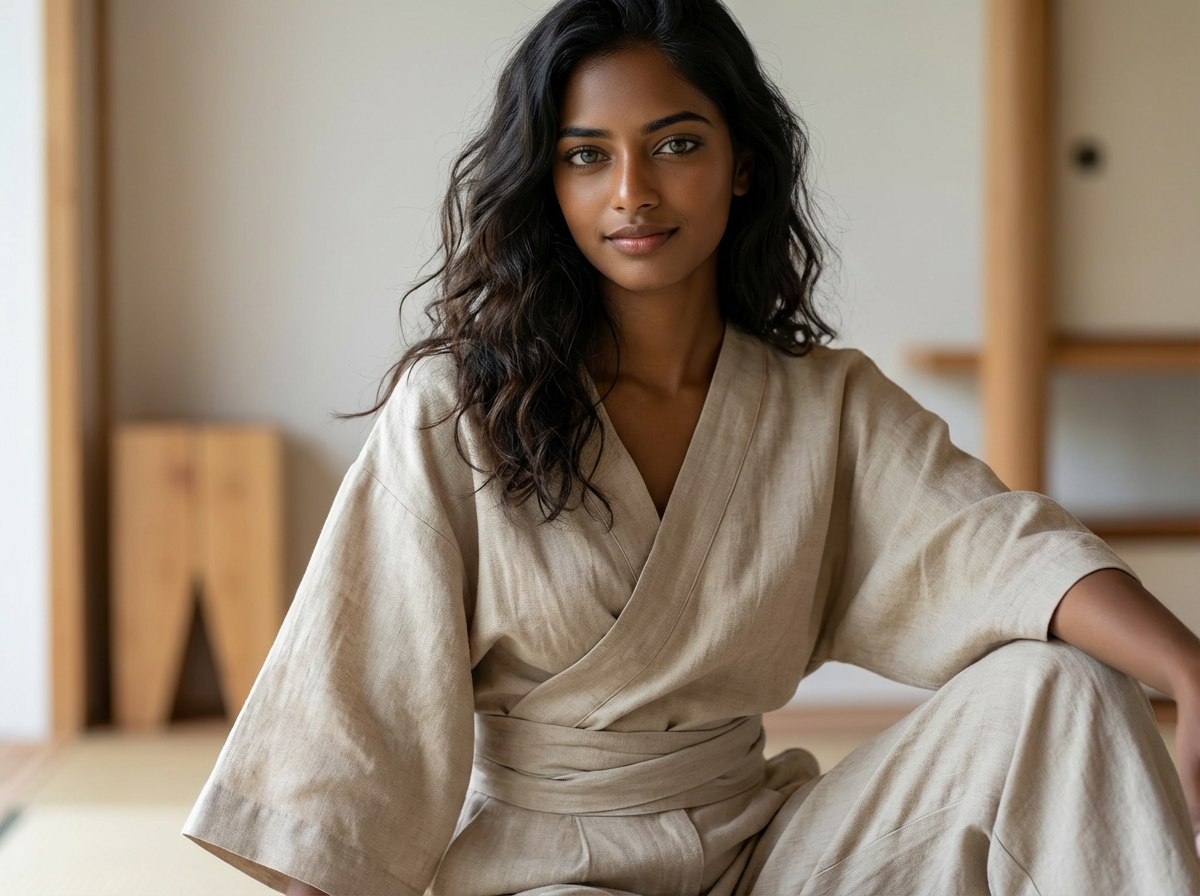
Japanese minimalism emphasizes balance, restraint, and intention over polish or trend alignment. Silhouettes are often relaxed or architectural, allowing fabric and form to speak for themselves. There’s a strong appreciation for negative space—both visually and conceptually.
Key traits:
Neutral, earthy palettes
Loose or sculptural silhouettes
Layering that feels thoughtful rather than decorative
A quiet, contemplative mood
This approach treats clothing as part of daily ritual rather than self-promotion, aligning minimalism closely with mindfulness.
Scandinavian Minimalism
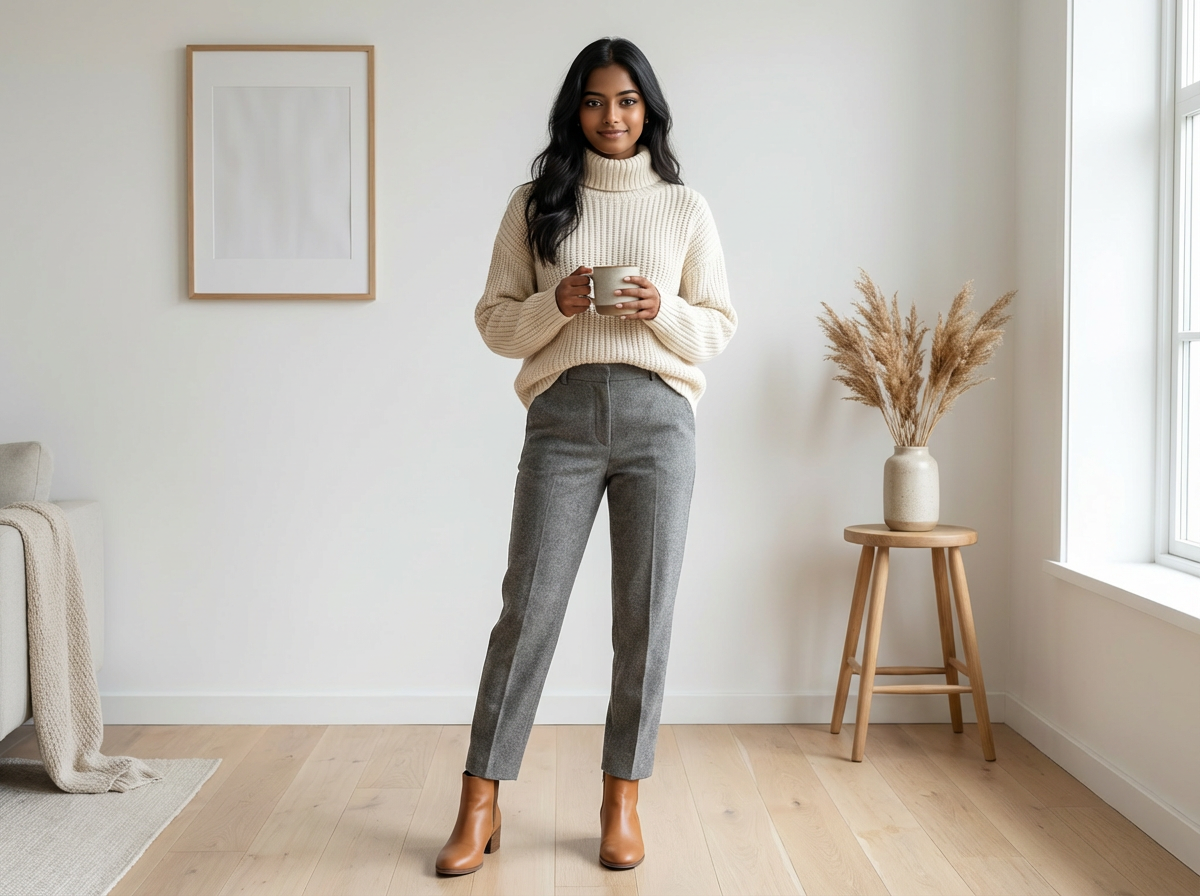
Scandinavian minimalism blends clean design with comfort and livability. While it shares minimalism’s love of neutrals and function, it adds warmth through texture and layering.
Key traits:
Cozy knits
Soft tailoring
Neutral palettes with gentle contrast
Practical, weather-aware styling
Here, minimalism supports real life—walking, commuting, layering—without sacrificing aesthetics. It’s minimalism that feels human and approachable.
French Minimalism
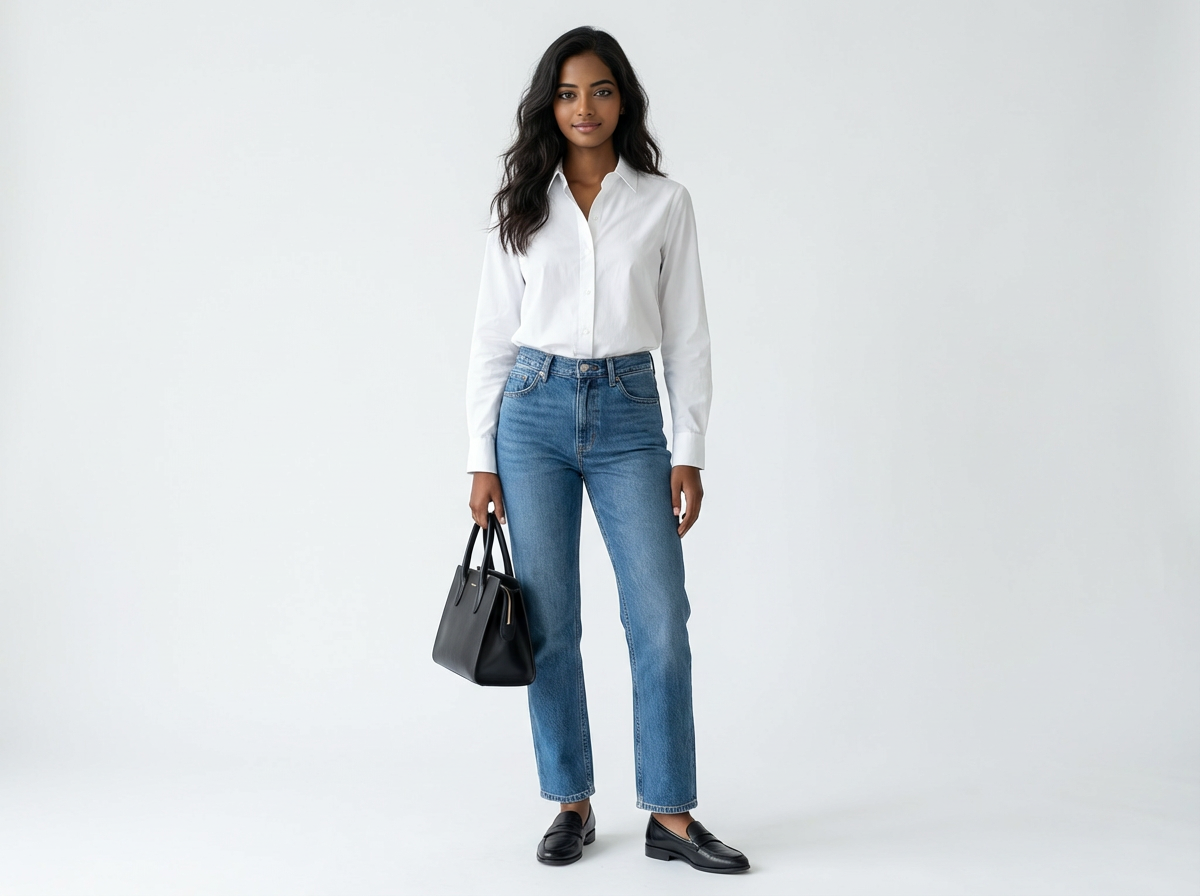
French minimalism focuses on effortless repetition and confidence. Rather than constantly refining or upgrading, it relies on wearing the same silhouettes repeatedly and trusting personal style.
Key traits:
Simple staples (button-downs, trousers, loafers)
Neutral palettes with occasional contrast
Light structure without stiffness
An emphasis on fit over variety
French minimalism feels timeless because it’s unconcerned with novelty. The clothes don’t change much; the styling does.
Style Icons & Inspiration
Certain public figures embody minimalist principles so consistently that they’ve become reference points—not because they wear “minimalist outfits,” but because they live the philosophy.
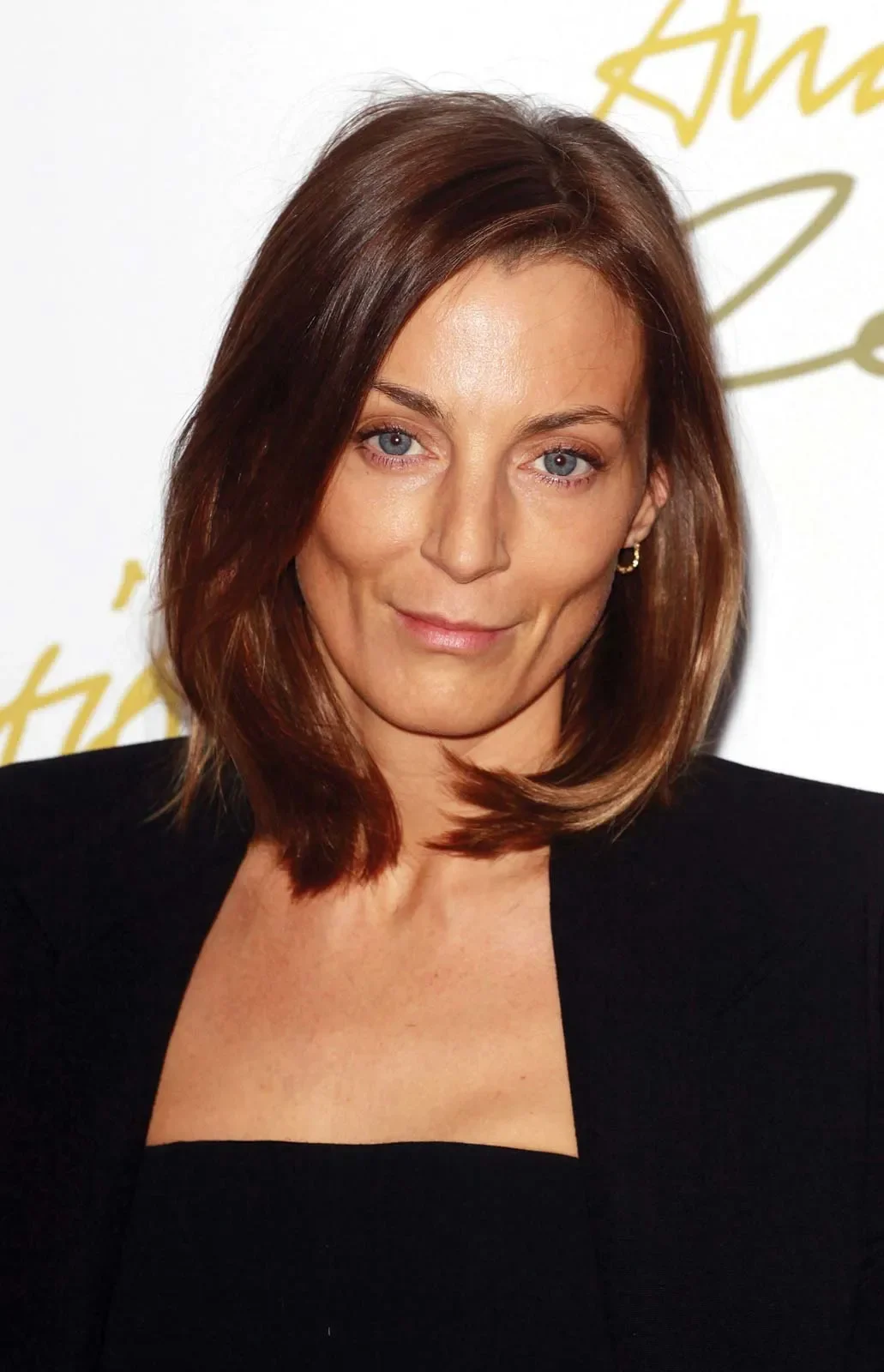
Fashion designer Phoebe Philo. Credit: Britannica
Phoebe Philo
Phoebe Philo represents minimalism at its most intellectual. Her approach centers on restraint, proportion, and purpose rather than surface-level trends. Her influence reshaped modern fashion by proving that quiet, thoughtful design could be powerful.
Why she matters: Minimalism as a design philosophy, not a trend cycle.
Jennifer Aniston
Jennifer Aniston’s enduring appeal lies in her consistency. For decades, she’s worn variations of the same silhouettes—tailored trousers, clean denim, simple tops—demonstrating how repetition builds timeless style.
Why she matters: Everyday minimalism that ages well and works in real life.
Tilda Swinton
Tilda Swinton embodies minimalist dressing as art. Her monochrome looks, dramatic proportions, and fearless restraint show how minimalism can be expressive without excess.
Why she matters: Sculptural, avant-garde minimalism rooted in intention.
Meghan Markle
Meghan Markle’s style reflects polished, public-facing minimalism. Neutral palettes, clean tailoring, and cohesive silhouettes define her wardrobe, especially in professional and formal contexts.
Why she matters: Minimalism adapted for visibility, leadership, and modern professionalism.
Conclusion: Minimalism as a Skill, Not a Rulebook
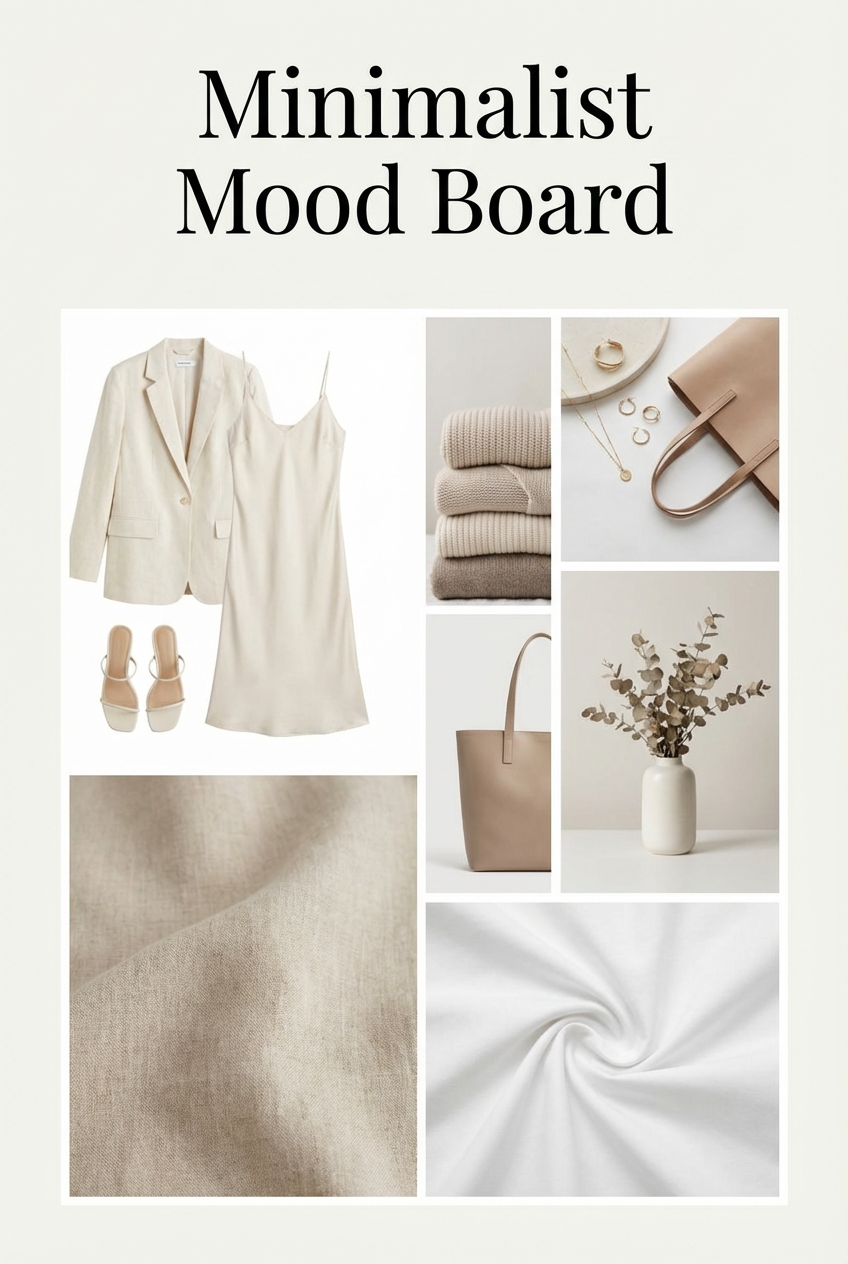
Minimalism is often presented as a destination: a perfectly edited closet, a fixed number of pieces, a look you either “have” or don’t. But real minimalist style doesn’t work that way. It isn’t something you buy, copy, or complete. It’s something you learn.
At its best, minimalism is a skill set—one that improves with practice, reflection, and time. The more you understand how color, fit, proportion, and repetition work together, the less you need novelty to feel stylish. Minimalism doesn’t remove creativity from your wardrobe; it gives creativity structure.
Core Takeaways
Minimalism is learned, not owned.
You don’t become a minimalist by purchasing the “right” coat or switching to neutral colors. You become one by learning how to edit, repeat, and style intentionally. Two people can own the same capsule pieces and look entirely different—because minimalism lives in decisions, not objects.
Editing matters more than buying.
Most wardrobes don’t need more pieces; they need clearer ones. Minimalism prioritizes subtraction over accumulation. Removing what doesn’t fit, doesn’t function, or doesn’t align with your life creates more impact than adding another “perfect” item ever could.
Personal taste comes first.
Minimalism isn’t a uniform. It’s a framework that adapts to your lifestyle, body, climate, and preferences. Soft or sharp, casual or tailored, creative or corporate—minimalism works when it reflects you, not when you force yourself into someone else’s version of it.
When these principles come together, minimalist style stops feeling restrictive. It feels supportive. Your wardrobe becomes easier to use, easier to trust, and easier to evolve.
